SJ

Sopan Joshi

Sopan Joshi has been a guest on 3 podcast episodes in the last 12 months. Latest: Supreme Court Oral Arguments, Oct 7, 2026.

Two years on the air

GuestHostMentioned

Guest appearances

Wed7Oct
Supreme Court Oral Arguments

Supreme Court Oral Arguments

[25-579] Department of Air Force v. Prutehi Guahan

Department of the Air Force v. Prutehi Guahan Justia · Docket · oyez.org · YouTube Argued on Oct 7, 2026. Petitioner: Department of the Air Force. Respondent: Prutehi Guahan. Advocates: Sopan Joshi (for the Petitioners) Caroline A. Flynn (for the Respondent) Facts of the case (from oyez.org) The U.S. Air Force operates Andersen Air Force Base at the northern tip of Guam, adjacent to Tarague Beach—a coastal area that sits above Guam's sole-source drinking-water aquifer and serves as habitat for endangered sea turtles. Since 1982, the Air Force has disposed of hazardous waste munitions at Tarague Beach through open burning and open detonation (OB/OD) operations, a method that involves igniting or exploding ordnance in open air. Under the Resource Conservation and Recovery Act (RCRA), the Air Force must obtain a permit every three years from the Guam Environmental Protection Agency (Guam EPA), which has administered RCRA on the island since 1986. The Air Force has renewed that permit on a triennial cycle without interruption. When its most recent permit approached expiration in September 2021, the Air Force submitted a renewal application to Guam EPA in May 2021—without first preparing any environmental review under the National Environmental Policy Act (NEPA). The application described planned OB/OD operations for 2021 through 2024 and proposed restarting open burning, which had been inactive since at least the early 2000s. The Air Force conducted no environmental impact statement, no environmental assessment, and offered no public comment opportunity before committing to that plan. Guam EPA accepted the application, held a public comment period, and issued a preliminary notice neither approving nor denying the application while it reviewed public comments. Meanwhile, under RCRA's automatic-extension provision, the Air Force continued OB/OD operations under its 2018 permit while the renewal remained pending. Prutehi Litekyan filed suit in the District Court of Guam in January 2022, alleging that the Air Force violated NEPA by submitting its RCRA permit renewal application without conducting the required environmental review; the district court granted the Air Force's motion to dismiss on three grounds—lack of standing, absence of final agency action, and failure to state a claim—and Prutehi Litekyan timely appealed to the U.S. Court of Appeals for the Ninth Circuit, which reversed all three holdings. Question 1. When the federal government submits a permit application to continue disposing of hazardous waste, does that submission count as a final, reviewable government decision under federal law? 2. Before submitting that permit application, must the federal government first conduct the broad environmental review that federal law generally requires—even though the hazardous waste permitting process already includes its own, more limited environmental review?
1 h 16 min

Wed22Apr
Supreme Court Oral Arguments

Supreme Court Oral Arguments

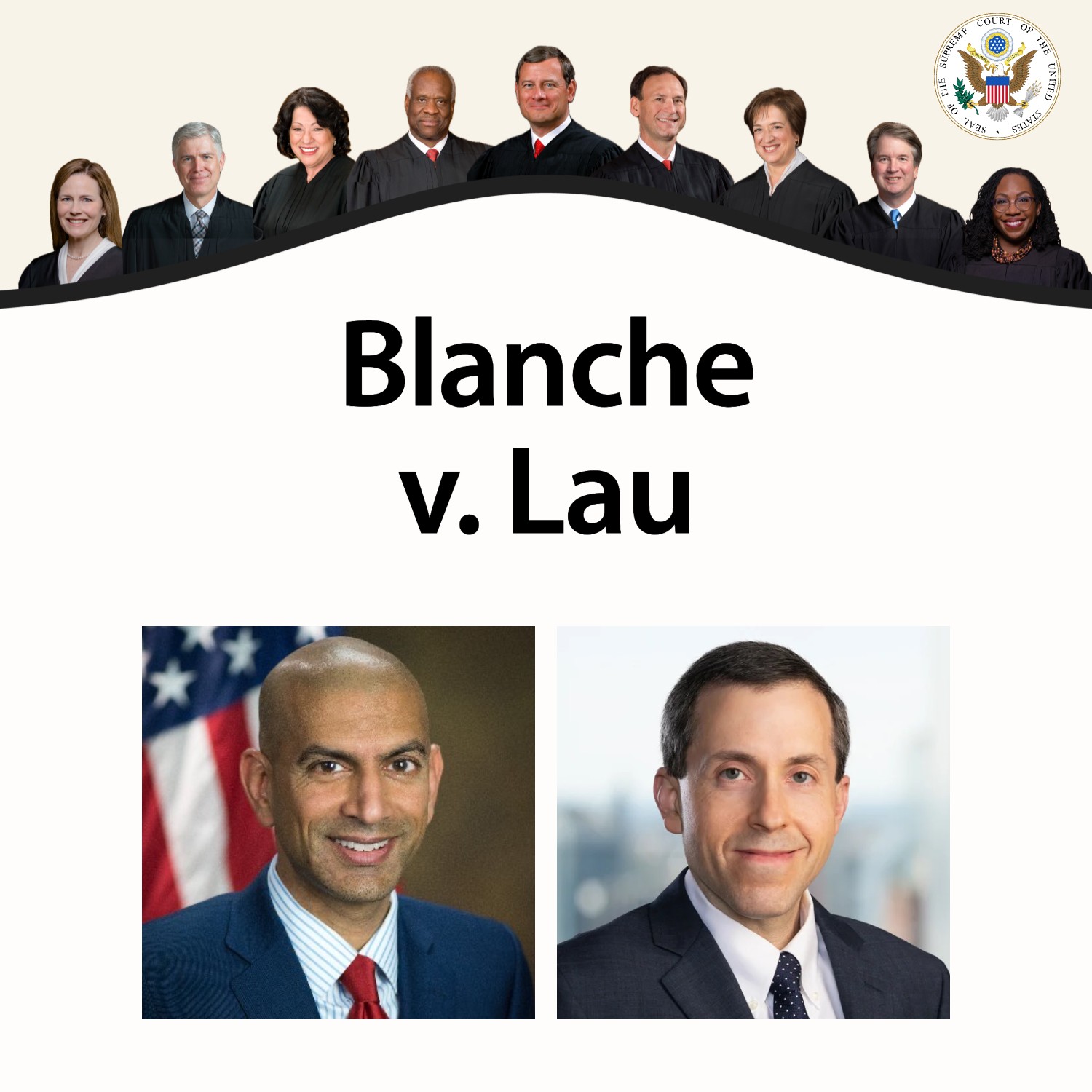
[25-429] Blanche v. Lau

Blanche v. Lau Justia · Docket · oyez.org Argued on Apr 22, 2026. Petitioner: Todd Blanche, Acting Attorney General. Respondent: Muk Choi Lau. Advocates: Sopan Joshi (for the Petitioner) Shay Dvoretzky (for the Respondent) Facts of the case (from oyez.org) Muk Choi Lau, a native and citizen of China, was admitted to the United States as a lawful permanent resident on September 7, 2007, after several years of traveling to the country as a nonimmigrant. On May 7, 2012, Lau was charged in New Jersey with third-degree trademark counterfeiting. While awaiting trial, he left the United States for a brief period. Upon returning on June 15, 2012, he presented himself at John F. Kennedy International Airport as a returning lawful permanent resident. However, because of his pending charge, immigration authorities declined to admit him outright and instead paroled him into the country pursuant to 8 U.S.C. § 1182(d)(5)(A). Over a year later, in June 2013, Lau pleaded guilty to the counterfeiting charge and was sentenced to two years’ probation. The Department of Homeland Security initiated removal proceedings against Lau in March 2014, charging him with inadmissibility under 8 U.S.C. § 1182(a)(2)(A)(i)(I) for having been convicted of a crime involving moral turpitude (CIMT). Lau argued that he should not have been treated as an arriving alien at the time of reentry and that he was eligible for a discretionary waiver under 8 U.S.C. § 1182(h). The immigration judge rejected both claims, and the Board of Immigration Appeals affirmed. Lau petitioned for review, arguing primarily that DHS lacked clear and convincing evidence to treat him as an applicant for admission on reentry merely due to a then-pending charge. The U.S. Court of Appeals for the Second Circuit agreed, holding that DHS erred in treating Lau as inadmissible based solely on unproven allegations at the time of reentry and granted his petition. The immigration judge ordered removal in 2018, and the Board of Immigration Appeals upheld that decision in 2021. The Second Circuit vacated the removal order in 2025 and remanded the case to terminate proceedings under the inadmissibility ground, reserving the possibility of future removal under a deportability provision. Question To remove a lawful permanent resident who committed an offense listed in Section 1182(a)(2) and was subsequently paroled into the United States, must the government prove that it possessed clear and convincing evidence of the offense at the time of the lawful permanent resident’s last reentry into the United States?

1 h 30 min

Wed4Mar
Supreme Court Oral Arguments

Supreme Court Oral Arguments

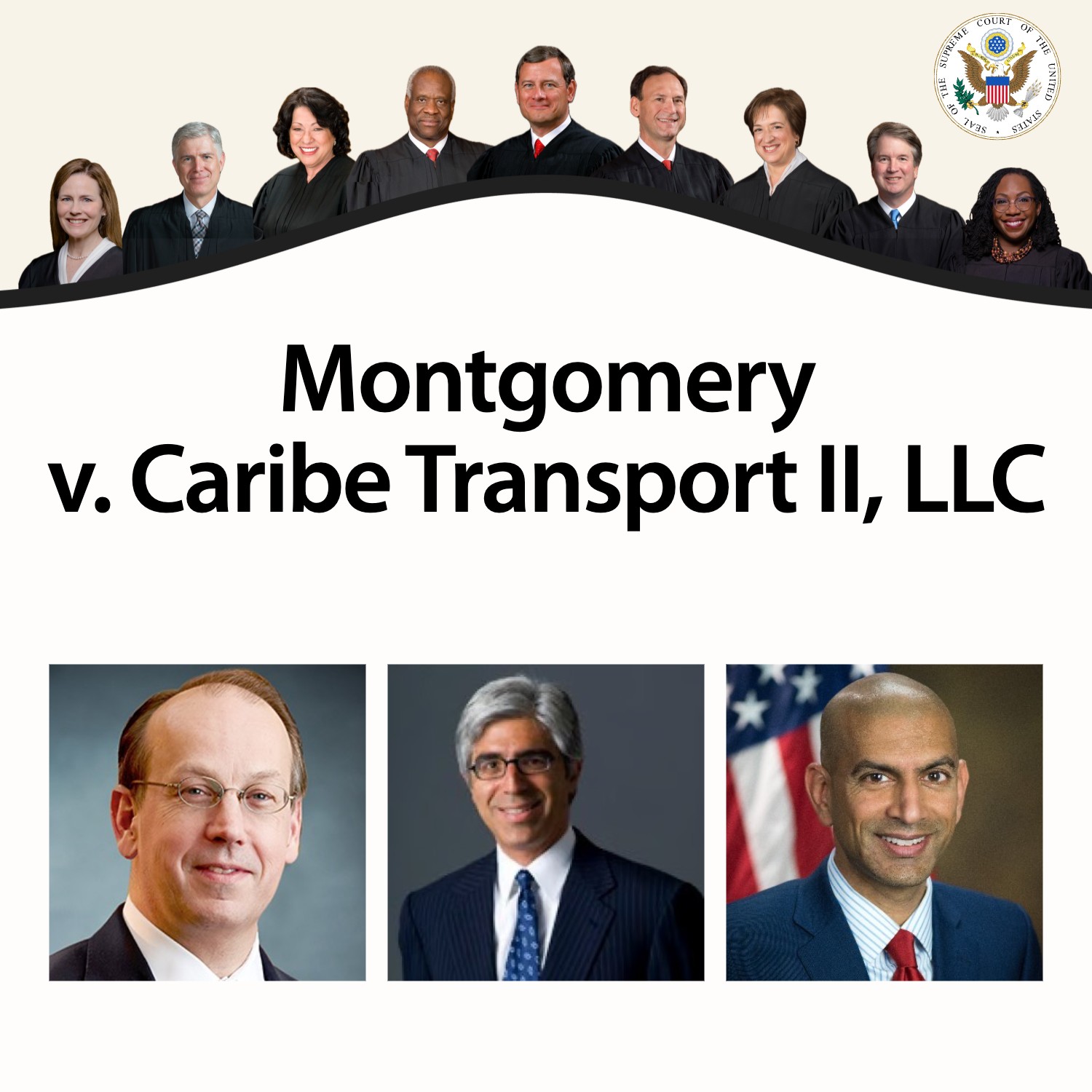
[24-1238] Montgomery v. Caribe Transport II, LLC

Montgomery v. Caribe Transport II, LLC Justia · Docket · oyez.org Argued on Mar 4, 2026. Petitioner: Shawn Montgomery. Respondent: Caribe Transport II, LLC. Advocates: Paul D. Clement (for the Petitioner) Theodore J. Boutrous Jr. (for the Respondents) Sopan Joshi (for the United States, as amicus curiae, supporting the Respondents) Facts of the case (from oyez.org) Shawn Montgomery was severely injured when his tractor-trailer, stopped on the shoulder of an Illinois highway, was struck by another truck. The other driver, Yosniel Varela-Mojena, was employed by the motor carrier Caribe Transport II, LLC (“Caribe”). C.H. Robinson Worldwide, Inc. (“Robinson”), a freight broker, had arranged for Caribe to haul the shipment. Robinson and Caribe operated under an agreement stating that Caribe was an independent contractor and retained exclusive control over its personnel and the manner of its performance. Montgomery sued the driver and Caribe, and also sued the broker, Robinson. His claims against Robinson alleged that the broker was vicariously liable for the driver’s negligence, arguing Caribe was Robinson’s agent. Montgomery also claimed Robinson had negligently hired the driver and the carrier. The district court granted judgment to Robinson on all claims. The U.S. Court of Appeals for the Seventh Circuit affirmed, holding that Caribe was an independent contractor, which defeated the vicarious liability claim, and that the Federal Aviation Administration Authorization Act preempted the state-law negligent hiring claim. Question Does 49 U.S.C. § 14501(c) preempt a state common-law claim against a broker for negligently selecting a motor carrier or driver?

1 h 40 min