Bekomm eine E-Mail, wenn Kannon in einem Podcast zu Gast istPodAppear prüft neue Folgen, sobald sie erscheinen, und lässt die weg, in denen Kannon nur erwähnt wird. Bis zu 15 Personen kostenlos, ohne Kreditkarte.Bis zu 15 Personen kostenlos, ohne Kreditkarte.
Kannon kostenlos folgen
Kannon Shanmugam

Kannon Shanmugam

American attorney (born 1972)

Kannon Shanmugam war in den letzten 12 Monaten in 3 Podcast-Folgen aus 2 verschiedenen Sendungen zu Gast, am häufigsten bei Supreme Court Oral Arguments (2-mal). Zuletzt: Supreme Court Oral Arguments, 5. Okt. 2026.

Kurzbiografie aus WikipediaFoto: United States Court of Appeals for the Ninth Circuit, Public domain, über Wikimedia Commons

Zwei Jahre auf Sendung

GastHostErwähnt

Gastauftritte

Mo5Okt
Supreme Court Oral Arguments

Supreme Court Oral Arguments

[25-170] Suncor Energy (U.S.A.) Inc. v. Commissioners of Boulder County

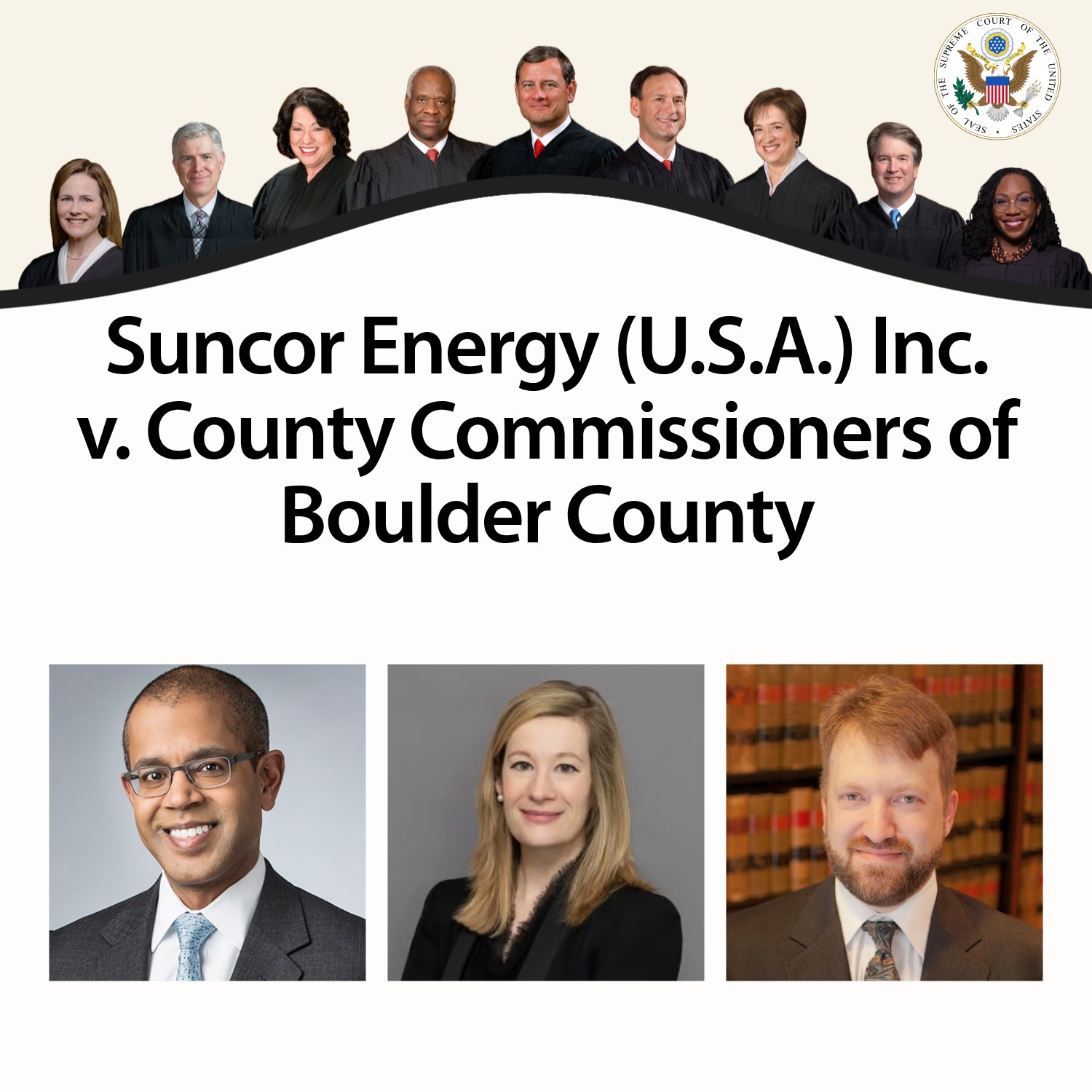
Suncor Energy (U.S.A.) Inc. v. County Commissioners of Boulder County Justia · Docket · oyez.org Argued on Oct 5, 2026. Petitioner: Suncor Energy (U.S.A.) Inc. Respondent: County Commissioners of Boulder County. Advocates: Kannon K. Shanmugam (for the Petitioners) Sarah M. Harris (for the United States, as amicus curiae, supporting the Petitioners) Kevin K. Russell (for the Respondents) Facts of the case (from oyez.org) Boulder County and the City of Boulder (collectively, "Boulder") sued Exxon Mobil Corporation and three Suncor Energy entities, alleging that the companies' decades-long production, promotion, refining, marketing, and sale of fossil fuels knowingly drove climate change and caused concrete harm to Boulder's property and residents. Boulder further alleges that the defendants compounded this harm by intentionally misleading the public about fossil fuels' role in accelerating climate change. The alleged injuries include flood damage, increased wildfire risk, drought, and physical damage to public buildings and infrastructure—costs Boulder claims it has absorbed and will continue to absorb. To recover those costs, Boulder asserts state common law claims for public nuisance, private nuisance, trespass, unjust enrichment, and civil conspiracy. Critically, Boulder seeks only monetary damages—not an injunction against fossil fuel operations or any form of emissions regulation. The defendants argue that these state-law claims are precluded because federal law—specifically the Clean Air Act, the federal common law of interstate pollution, and the federal foreign affairs power—occupies the field and bars state courts from adjudicating harms rooted in interstate and international greenhouse-gas emissions. Boulder filed suit in state court; the defendants removed the case to federal court, but after extensive litigation that included appeals to the U.S. Court of Appeals for the Tenth Circuit and two certiorari petitions in the U.S. Supreme Court, the Tenth Circuit affirmed the remand order and the case returned to the Boulder County District Court, which denied the defendants' motion to dismiss on preemption grounds. The defendants then petitioned the Supreme Court of the State of Colorado for extraordinary review under C.A.R. 21, which that court accepted and resolved in Boulder's favor on May 12, 2025. Question 1. Does the Court have statutory and Article III jurisdiction to hear this case? 2. Does federal law preclude state-law claims seeking relief for injuries allegedly caused by the effects of interstate and international greenhouse-gas emissions on the global climate?

1 h 47 minAbspielen in:

Mo5Okt
SCOTUS Oral Arguments

SCOTUS Oral Arguments

Suncor Energy (U.S.A.) Inc. v. Commissioners of Boulder County

Suncor Energy (U.S.A.) Inc. v. Commissioners of Boulder County, No. 25-170 Argued on Oct 05 2026. For petitioners: Kannon K. Shanmugam, Washington, D. C.; and Sarah M. Harris, Principal Deputy Solicitor General, Department of Justice, Washington, D. C. (for United States, as amicus curiae.) For respondents: Kevin K. Russell, Washington, D. C. Question Presented: BY THE PETITION, THE PARTIES ARE DIRECTED TO BRIEF AND ARGUE THE FOLLOWING QUESTION: WHETHER THIS COURT HAS STATUTORY AND ARTICLE III JURISDICTION TO HEAR THIS CASE. SEPTEMBER 28, 2026: JUSTICE ALITO WILL NOT CONTINUE TO PARTICIPATE IN THIS CASE. CERT. GRANTED 2/23/2026 QUESTION PRESENTED: Whether federal law precludes state-law claims seeking relief for injuries allegedly caused by the effects of interstate and international greenhouse-gas emissions on the global climate. Oral Argument Links: SCOTUS Oral Argument Page Transcript PDF Docket Links: SCOTUS Docket Page Question Presented Petition for a Writ of Certiorari (White Br.) Brief in Opposition (Orange Br.) Reply Brief in Support of Petition (Tan Br.) Cert. Stage Brief of the United States (Green Br.) Petitioner's Brief on the Merits (Blue Br.) Merits Stage Brief of the United States (Green Br.) Respondent's Brief on the Merits (Red Br.) Petitioner's Reply Brief on the Merits (Yellow Br.) Chapters: (00:00:00) Case Call (00:00:07) ORAL ARGUMENT OF KANNON K. SHANMUGAM (00:51:26) ORAL ARGUMENT OF SARAH M. HARRIS (01:11:34) ORAL ARGUMENT OF KEVIN K. RUSSELL (01:43:42) REBUTTAL ARGUMENT OF KANNON K. SHANMUGAM Disclosure, Disclaimer, and Credits: Independent feed. NOT affiliated with the Supreme Court of the United States or any other entity. Audio files from and links to the Supreme Court of the United States' website. Image credit to Ian Hutchinson, https://unsplash.com/photos/U8WfiRpsQ7Y

1 h 47 minAbspielen in:

Di28Apr
Supreme Court Oral Arguments

Supreme Court Oral Arguments

[24-856] Cisco Systems, Inc. v. Doe I

Cisco Systems, Inc. v. Doe I Justia · Docket · oyez.org Argued on Apr 28, 2026. Petitioner: Cisco Systems, Inc. Respondent: Doe I. Advocates: Kannon K. Shanmugam (for the Petitioners) Curtis E. Gannon (for the United States, as amicus curiae, supporting the Petitioners) Paul L. Hoffman (for the Respondents) Facts of the case (from oyez.org) Beginning in the 1990s, the Chinese Communist Party initiated a campaign of persecution—referred to as “douzheng”—against practitioners of Falun Gong, a spiritual discipline derived from Buddhism that grew rapidly in popularity across China. In 1999, the Party formally sought to eliminate Falun Gong through detention, forced conversion, and torture, designating it an illegal organization. To support these efforts, the Chinese authorities envisioned a nationwide surveillance system named the “Golden Shield,” designed to monitor online activity, identify practitioners, and facilitate their apprehension. Because China lacked the necessary technological infrastructure, Chinese officials sought help from Western firms. Cisco Systems, Inc., a U.S.-based tech company, allegedly responded with enthusiasm: from its headquarters in San Jose, California, Cisco pursued contracts, developed Golden Shield software and hardware, and provided training and support to Chinese security officers. Plaintiffs alleged that without Cisco’s technology—including advanced databases, real-time monitoring systems, and network optimization tools—Chinese authorities could not have effectively tracked, detained, or tortured Falun Gong adherents. Plaintiffs in this case include thirteen Chinese nationals and one U.S. citizen, Charles Lee, who claim they were targeted using Cisco’s technology and then detained, tortured, and subjected to psychological and physical abuse. Some plaintiffs reported multiple detentions and long-term surveillance; others described instances of torture facilitated by personalized information drawn from Golden Shield databases. Several allege that the abuses led to the deaths of family members. They contend that the design, development, and optimization of Cisco’s technology—and its tailored marketing to support Falun Gong persecution—enabled widespread human rights abuses undertaken by Chinese state and Party officials. The plaintiffs filed suit in the U.S. District Court for the Northern District of California in 2011, bringing claims under the Alien Tort Statute (ATS) and Torture Victim Protection Act (TVPA). The district court dismissed all claims, finding them insufficiently connected to the United States and lacking the necessary legal support for aiding and abetting liability. The U.S. Court of Appeals for the Ninth Circuit reversed in part, holding that aiding and abetting liability is actionable under both the ATS and the TVPA and that the plaintiffs plausibly alleged Cisco’s knowing participation in a domestic context. Question Does either the Alien Tort Statute or the Torture Victim Protection Act allow a judicially-implied private right of action for aiding and abetting?

1 h 57 minAbspielen in:

Warum PodAppear

Folge Menschen, nicht Podcasts.

Du hast Kannon in einer Sendung gehört. PodAppear findet für dich die nächste, und genauso für alle anderen, die du hören willst.

  • Eine Meldung, wenn die Person zu Gast istPer E-Mail: sofort oder gebündelt als Tages- oder Wochenübersicht. Dann nur noch auf Play drücken.
  • Gäste statt bloßer ErwähnungenFolgen, in denen ein Name nur fällt, landen getrennt. Eine Meldung heißt: Die Person ist wirklich in der Sendung.
  • Alle in einem FeedGründerinnen, Autoren, Sportler, Forscherinnen. Folge allen mit Namen, quer durch jede Sendung, in der sie auftreten.

Bis zu 15 Personen kostenlos, ohne Kreditkarte.