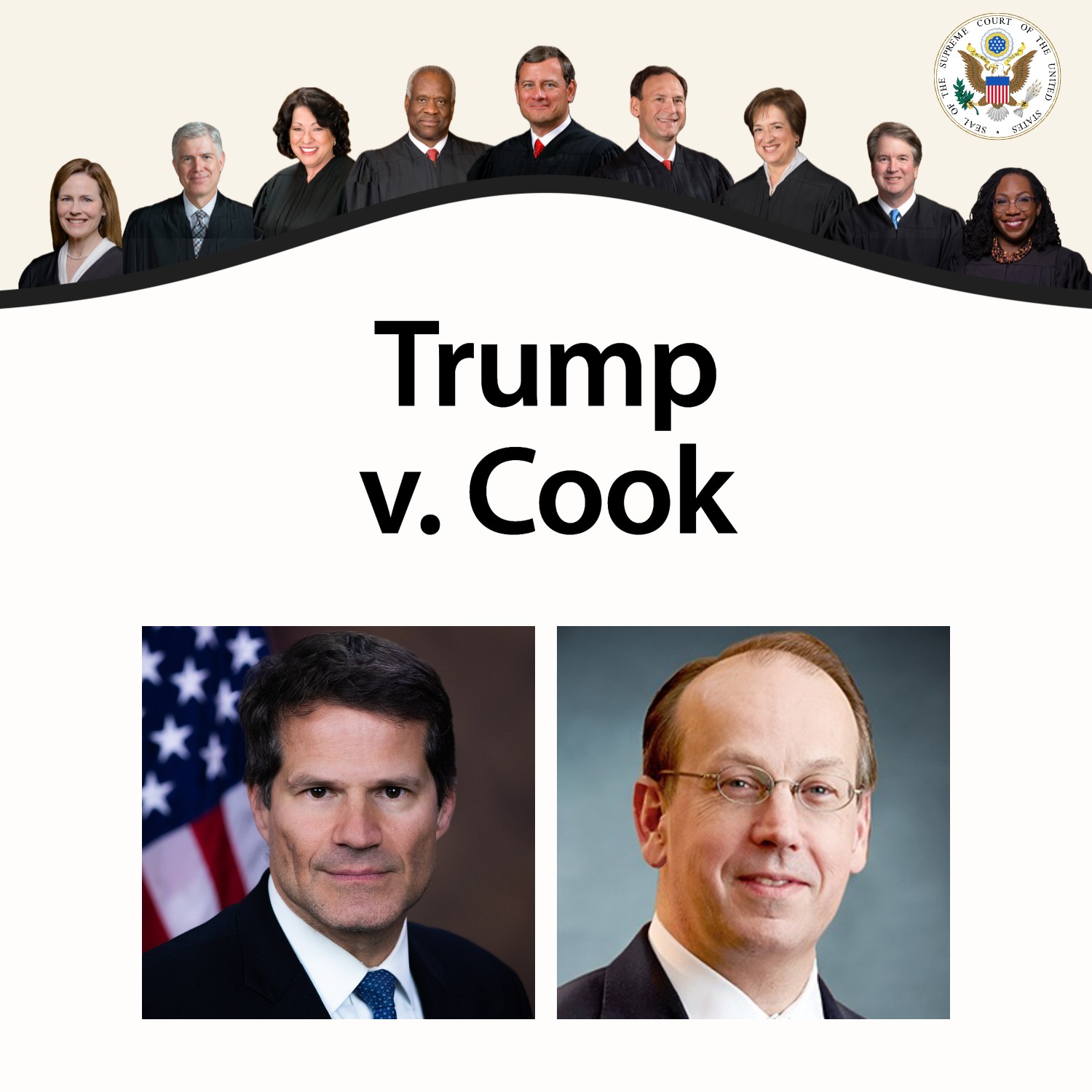
Paul Clement

Paul Clement

American lawyer (born 1966)

Paul Clement has been a guest on 5 podcast episodes in the last 12 months. Latest: Supreme Court Oral Arguments, Oct 14, 2026.

Bio from WikipediaPhoto: Office of the Solicitor General, Public domain, via Wikimedia Commons

Two years on the air

GuestHostMentioned

Guest appearances

Wed14Oct
Supreme Court Oral Arguments

Supreme Court Oral Arguments

[25-459] Salazar v. Paramount Global

Salazar v. Paramount Global Justia · Docket · oyez.org · YouTube Argued on Oct 14, 2026. Petitioner: Michael Salazar. Respondent: Paramount Global, dba 247Sports. Advocates: Joshua I. Hammack (for the Petitioner) Paul D. Clement (for the Respondent) Facts of the case (from oyez.org) Michael Salazar subscribed to an online newsletter from 247Sports.com in 2022, a website owned by Paramount Global that covers college sports recruiting. While logged into his Facebook account, Salazar watched videos on the 247Sports.com website. Paramount had installed Facebook’s tracking Pixel on the website, which collected and transmitted to Facebook information about Salazar’s video-viewing activity, including the video content name, its URL, and Salazar's Facebook ID. This disclosure allegedly occurred without Salazar’s knowledge or consent. In September 2022, Salazar filed a class action lawsuit against Paramount Global in the U.S. District Court for the Middle District of Tennessee, claiming violations of the Video Privacy Protection Act (VPPA). The district court denied Paramount’s motion to dismiss for lack of standing but granted its motion to dismiss for failure to state a claim, holding that Salazar was not a “consumer” under the VPPA because his newsletter subscription did not qualify as subscribing to audiovisual goods or services. The U.S. Court of Appeals for the Sixth Circuit affirmed the dismissal. Question Does the phrase “goods or services from a video tape service provider,” as used in the Video Privacy Protection Act’s definition of “consumer,” refer to all of a video tape service provider’s goods or services or only to its audiovisual goods or services?
1 h 25 min

Mon23Mar
Supreme Court Oral Arguments

Supreme Court Oral Arguments

[24-1260] Watson v. Republican National Committee

Watson v. Republican National Committee Justia · Docket · oyez.org Argued on Mar 23, 2026. Petitioner: Michael Watson, Mississippi Secretary of State. Respondent: Republican National Committee, et al. Advocates: Scott G. Stewart (for the Petitioner) Paul D. Clement (for the Respondents) D. John Sauer (for the United States, as amicus curiae, supporting the Respondents) Facts of the case (from oyez.org) Federal statutes designate the Tuesday after the first Monday in November as the uniform day for electing members of Congress and appointing presidential electors. While Mississippi requires voters to cast absentee ballots by this federal deadline, the state legislature amended its election code in 2020 to permit the counting of mail-in ballots received up to five business days after Election Day, provided they are postmarked by that Tuesday. This “postmark rule” allows validly cast votes delayed by mail service to be included in the final tally, a practice currently utilized by approximately thirty states. In 2024, the Republican National Committee, the Mississippi Republican Party, the Libertarian Party of Mississippi, and individual voters filed suit against Mississippi Secretary of State Michael Watson and county election officials. The plaintiffs argued that the federal statutes establishing a singular “election” day preempt Mississippi’s five-day receipt window, contending that an election is not legally concluded until officials actually receive the ballots. They sought to invalidate the state statute and enjoin officials from counting any absentee ballots received after federal Election Day. The district court granted summary judgment in favor of the state officials, ruling that the state law did not conflict with federal statutes. The U.S. Court of Appeals for the Fifth Circuit reversed, holding that federal law preempts the Mississippi statute because ballots must be both cast and received by Election Day. Question Do the federal election-day statutes preempt a state law that allows ballots that are cast by federal election day to be received by election officials after that day?

2 h 08 min

Wed4Mar
Supreme Court Oral Arguments

Supreme Court Oral Arguments

[24-1238] Montgomery v. Caribe Transport II, LLC

Montgomery v. Caribe Transport II, LLC Justia · Docket · oyez.org Argued on Mar 4, 2026. Petitioner: Shawn Montgomery. Respondent: Caribe Transport II, LLC. Advocates: Paul D. Clement (for the Petitioner) Theodore J. Boutrous Jr. (for the Respondents) Sopan Joshi (for the United States, as amicus curiae, supporting the Respondents) Facts of the case (from oyez.org) Shawn Montgomery was severely injured when his tractor-trailer, stopped on the shoulder of an Illinois highway, was struck by another truck. The other driver, Yosniel Varela-Mojena, was employed by the motor carrier Caribe Transport II, LLC (“Caribe”). C.H. Robinson Worldwide, Inc. (“Robinson”), a freight broker, had arranged for Caribe to haul the shipment. Robinson and Caribe operated under an agreement stating that Caribe was an independent contractor and retained exclusive control over its personnel and the manner of its performance. Montgomery sued the driver and Caribe, and also sued the broker, Robinson. His claims against Robinson alleged that the broker was vicariously liable for the driver’s negligence, arguing Caribe was Robinson’s agent. Montgomery also claimed Robinson had negligently hired the driver and the carrier. The district court granted judgment to Robinson on all claims. The U.S. Court of Appeals for the Seventh Circuit affirmed, holding that Caribe was an independent contractor, which defeated the vicarious liability claim, and that the Federal Aviation Administration Authorization Act preempted the state-law negligent hiring claim. Question Does 49 U.S.C. § 14501(c) preempt a state common-law claim against a broker for negligently selecting a motor carrier or driver?

1 h 40 min

Mon23Feb
Supreme Court Oral Arguments

Supreme Court Oral Arguments

[24-983] Havana Docks Corporation v. Royal Caribbean Cruises, Ltd.

Havana Docks Corporation v. Royal Caribbean Cruises, Ltd. Justia · Docket · oyez.org Argued on Feb 23, 2026. Petitioner: Havana Docks Corporation. Respondent: Royal Caribbean Cruises, Ltd., et al. Advocates: Richard D. Klingler (for the Petitioner) Aimee W. Brown (for the United States, as amicus curiae, supporting the Petitioner) Paul D. Clement (for the Respondents) Facts of the case (from oyez.org) The dispute centers on property in the Port of Havana now known as the Havana Cruise Port Terminal. In the early 20th century, the Cuban Government granted a 50-year concession to a predecessor of Havana Docks Corporation (Havana Docks) to build and operate piers and terminal facilities at the port. This concession, a usufructuary right, was extended to 99 years in 1920, with a scheduled expiration date in 2004. Havana Docks, a company organized under the laws of Delaware and determined to be a U.S. national, acquired the concession in 1928. In 1960, shortly after Fidel Castro came to power, the Cuban Government confiscated the concession, expropriating Havana Docks’ property and assets at the Port of Havana without compensation. Subsequently, Havana Docks filed a claim with the Foreign Claims Settlement Commission, which certified a loss of over $9 million stemming from the confiscation. After Title III of the Helms-Burton Act became fully effective in May 2019, Havana Docks sued several cruise lines, including Royal Caribbean Cruises, Ltd., Norwegian Cruise Line Holdings, Ltd., Carnival Corporation, and MSC Cruises S.A. Co., for “trafficking” in the confiscated port property when their ships used the Havana Cruise Port Terminal from 2016 to 2019. The district court initially issued judgments totaling over $100 million against the four cruise lines. On appeal, the U.S. Court of Appeals for the Eleventh Circuit affirmed the district court’s finding that Havana Docks is a U.S. national under the Helms-Burton Act. However, the Eleventh Circuit reversed the judgments related to the 2016-2019 conduct, holding that Havana Docks’ limited property interest, the 99-year concession, would have expired in 2004, meaning the cruise lines did not traffic in the confiscated property during that period. The court remanded the case for further proceedings on Havana Docks’ separate claims against Carnival for alleged trafficking between 1996 and 2001. Question Is the legal right to sue under Title III of the LIBERTAD Act tied to the confiscated property claim or the hypothetical, unexpired duration of the original property interest?

1 h 33 min

Wed21Jan
Supreme Court Oral Arguments

Supreme Court Oral Arguments

[25A312] Trump v. Cook

Trump v. Cook Justia · Docket · oyez.org · YouTube Argued on Jan 21, 2026. Petitioner: Donald J. Trump, President of the United States, et al. Respondent: Lisa D. Cook, Member of the Board of Governors of the Federal Reserve System. Advocates: D. John Sauer (for the Applicants) Paul D. Clement (for the Respondent) Facts of the case (from oyez.org) None Question None

1 h 58 min