DJ

D. John Sauer

D. John Sauer has been a guest on 4 podcast episodes in the last 12 months. Latest: Supreme Court Oral Arguments, Apr 29, 2026.

Two years on the air

GuestHostMentioned

Guest appearances

Wed29Apr
Supreme Court Oral Arguments

Supreme Court Oral Arguments

[25-1083] Mullin v. Doe

Mullin v. Doe Justia · Docket · oyez.org Argued on Apr 29, 2026. Petitioner: Markwayne Mullin, Secretary, Department of Homeland Security. Respondent: Dahlia Doe. Advocates: D. John Sauer (for the Petitioners) Ahilan T. Arulanantham (for the Respondents in Case No. 25-1083) Geoffrey M. Pipoly (for the Respondents in Case No. 25-1084) Facts of the case (from oyez.org) Congress created the Temporary Protected Status (TPS) program to allow foreign nationals from countries experiencing armed conflict, natural disasters, or other extraordinary conditions to live and work legally in the United States on a temporary basis. Federal law requires the Secretary of Homeland Security to periodically review conditions in each designated country and, after consulting with other government agencies, determine whether those conditions still justify protection. Syria has held TPS designation for years, shielding its nationals from deportation to a country ravaged by civil war and humanitarian crisis. Shortly after taking office in January 2025, President Trump issued Executive Order 14159, directing the Secretary to aggressively limit TPS designations. Secretary Kristi Noem then terminated TPS for Syria on September 19, 2025, with an effective date of November 21, 2025 — giving roughly 6,100 Syrian TPS holders weeks to lose their legal status, work authorization, and protection from deportation. Seven Syrian nationals with family ties in the United States sued, arguing that the termination violated federal immigration law, was arbitrary and capricious, and reflected discriminatory animus rather than a genuine, good-faith review of conditions in Syria. The district court granted the plaintiffs' motion and postponed the termination effective November 19, 2025; the government appealed and moved to stay that order, but the U.S. Court of Appeals for the Second Circuit denied the stay on February 17, 2026, concluding that the government had not demonstrated a likelihood of success on the merits or irreparable harm. Question Did the Trump administration lawfully end the Temporary Protected Status program for Syrian nationals?
1 h 46 min

Wed1Apr
Supreme Court Oral Arguments

Supreme Court Oral Arguments

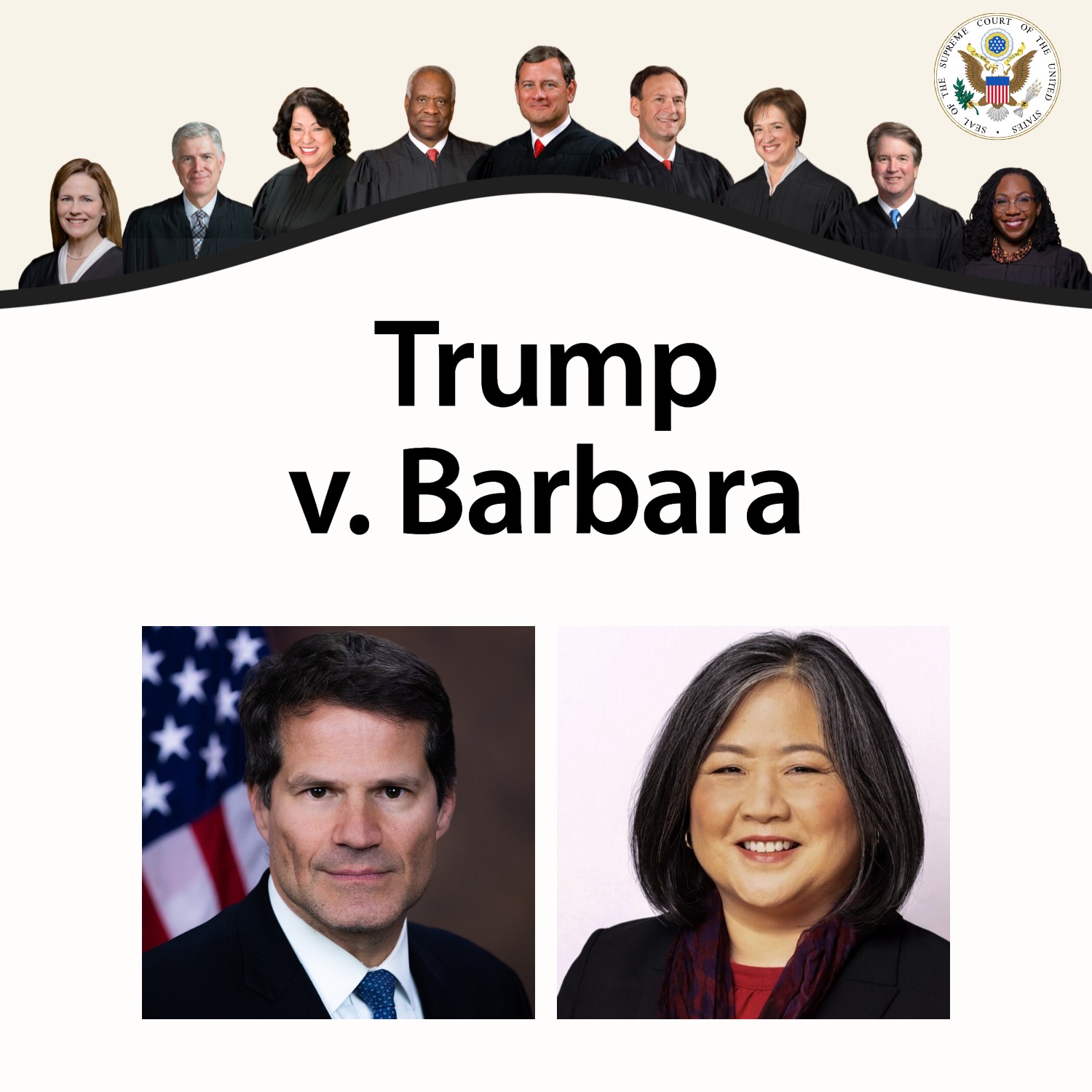
[25-365] Trump v. Barbara

Trump v. Barbara Justia · Docket · oyez.org · YouTube Argued on Apr 1, 2026. Petitioner: Donald J. Trump, President of the United States. Respondent: Barbara. Advocates: D. John Sauer (for the Petitioners) Cecillia D. Wang (for the Respondents) Facts of the case (from oyez.org) On January 20, 2025, President Donald J. Trump issued Executive Order No. 14,160, titled “Protecting the Meaning and Value of American Citizenship,” which declared that individuals born in the United States are not U.S. citizens at birth if their parents lack sufficient legal status. Specifically, the order directs federal agencies not to recognize citizenship claims for children born after February 20, 2025, if: (1) the mother was unlawfully present in the U.S. and the father was neither a U.S. citizen nor a lawful permanent resident (LPR), or (2) the mother’s presence in the U.S. was lawful but temporary and the father was not a U.S. citizen or LPR. The order was issued on the alleged basis that the Fourteenth Amendment’s Citizenship Clause does not confer birthright citizenship on such children because they are not “subject to the jurisdiction” of the United States in the constitutional sense. Three families challenged the order on behalf of themselves and similarly situated individuals. One class representative is Barbara, a Honduran asylum applicant whose child is due in October 2025. Another is Susan, a Taiwanese citizen in the country on a student visa whose daughter was born in April 2025; her child’s passport application was in progress at the time of the suit. The third is Mark, a Brazilian applicant for permanent residence whose son was born in March 2025 and initially received a U.S. passport. These families filed suit under pseudonyms, alleging that the Executive Order unlawfully strips their children of citizenship guaranteed by the Fourteenth Amendment and 8 U.S.C. § 1401(a). They seek to preserve access to citizenship-related benefits including Social Security, SNAP, and Medicaid. The U.S. District Court for the District of New Hampshire issued a preliminary injunction and provisionally certified a nationwide class of children affected by the order. The court held that the plaintiffs were likely to succeed on the merits of their constitutional and statutory claims. That decision was appealed to the U.S. Court of Appeals for the First Circuit, and before a ruling from that court, the Supreme Court granted certiorari before judgment. Question Is a presidential executive order that denies U.S. birthright citizenship to children born in the United States because their parents are unlawfully present or in the country on temporary visas consistent with the Citizenship Clause of the Fourteenth Amendment and 8 U.S.C. § 1401(a)?

2 h 08 min

Mon23Mar
Supreme Court Oral Arguments

Supreme Court Oral Arguments

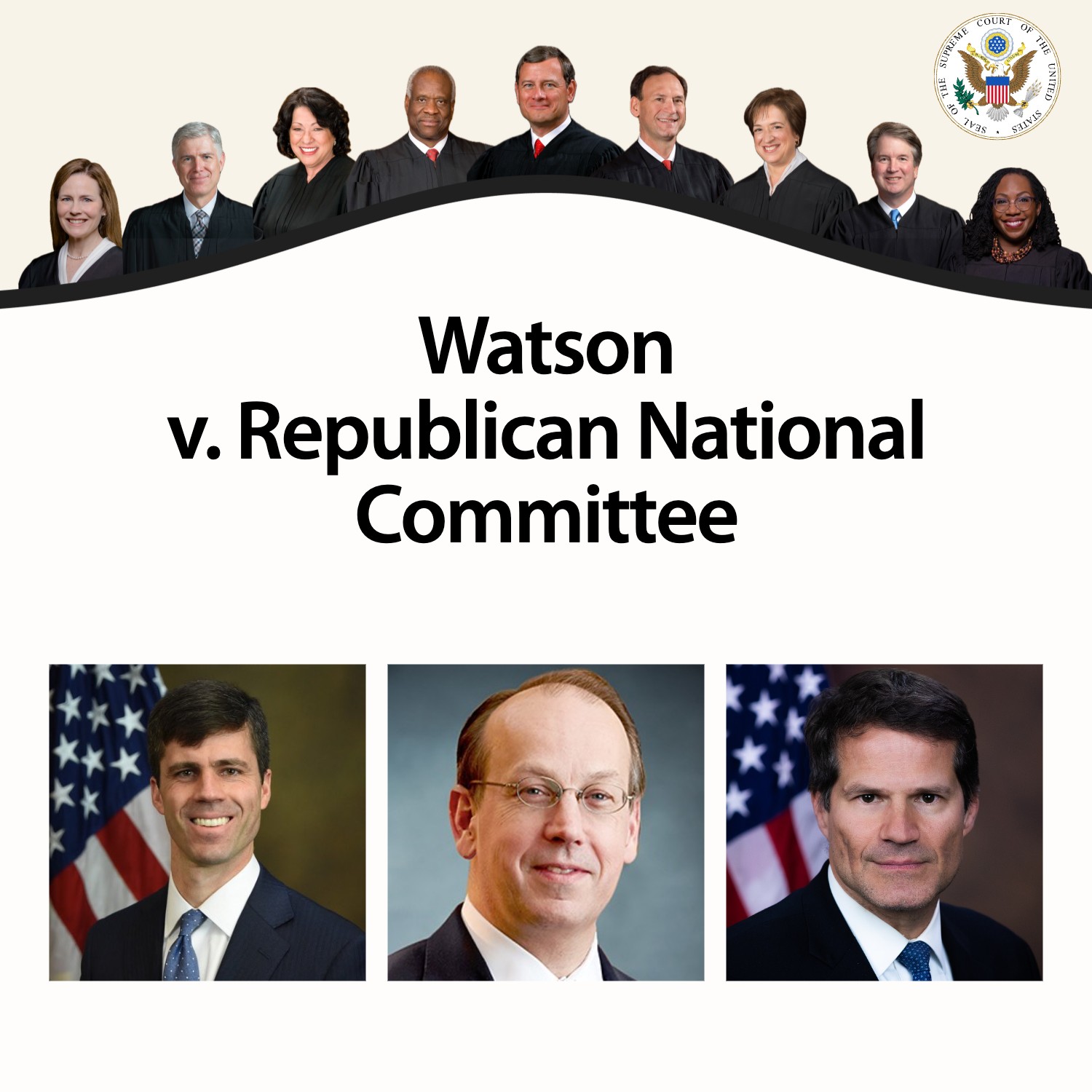
[24-1260] Watson v. Republican National Committee

Watson v. Republican National Committee Justia · Docket · oyez.org Argued on Mar 23, 2026. Petitioner: Michael Watson, Mississippi Secretary of State. Respondent: Republican National Committee, et al. Advocates: Scott G. Stewart (for the Petitioner) Paul D. Clement (for the Respondents) D. John Sauer (for the United States, as amicus curiae, supporting the Respondents) Facts of the case (from oyez.org) Federal statutes designate the Tuesday after the first Monday in November as the uniform day for electing members of Congress and appointing presidential electors. While Mississippi requires voters to cast absentee ballots by this federal deadline, the state legislature amended its election code in 2020 to permit the counting of mail-in ballots received up to five business days after Election Day, provided they are postmarked by that Tuesday. This “postmark rule” allows validly cast votes delayed by mail service to be included in the final tally, a practice currently utilized by approximately thirty states. In 2024, the Republican National Committee, the Mississippi Republican Party, the Libertarian Party of Mississippi, and individual voters filed suit against Mississippi Secretary of State Michael Watson and county election officials. The plaintiffs argued that the federal statutes establishing a singular “election” day preempt Mississippi’s five-day receipt window, contending that an election is not legally concluded until officials actually receive the ballots. They sought to invalidate the state statute and enjoin officials from counting any absentee ballots received after federal Election Day. The district court granted summary judgment in favor of the state officials, ruling that the state law did not conflict with federal statutes. The U.S. Court of Appeals for the Fifth Circuit reversed, holding that federal law preempts the Mississippi statute because ballots must be both cast and received by Election Day. Question Do the federal election-day statutes preempt a state law that allows ballots that are cast by federal election day to be received by election officials after that day?

2 h 08 min

Wed21Jan
Supreme Court Oral Arguments

Supreme Court Oral Arguments

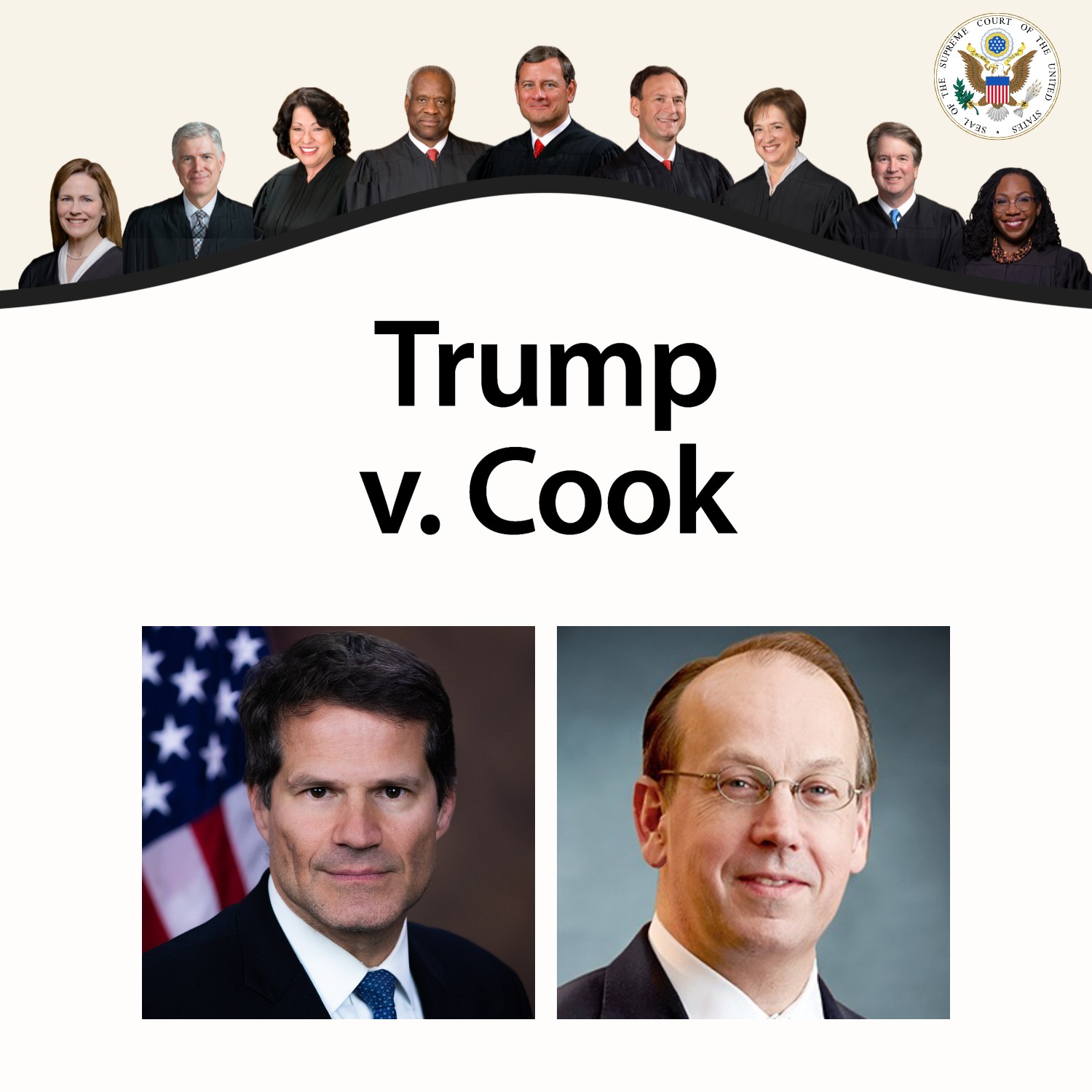
[25A312] Trump v. Cook

Trump v. Cook Justia · Docket · oyez.org · YouTube Argued on Jan 21, 2026. Petitioner: Donald J. Trump, President of the United States, et al. Respondent: Lisa D. Cook, Member of the Board of Governors of the Federal Reserve System. Advocates: D. John Sauer (for the Applicants) Paul D. Clement (for the Respondent) Facts of the case (from oyez.org) None Question None

1 h 58 min