Stanford Online: University Courses & Lectures
Stanford CS329A Self-Improving AI Agents | Part 1 | Course Overview
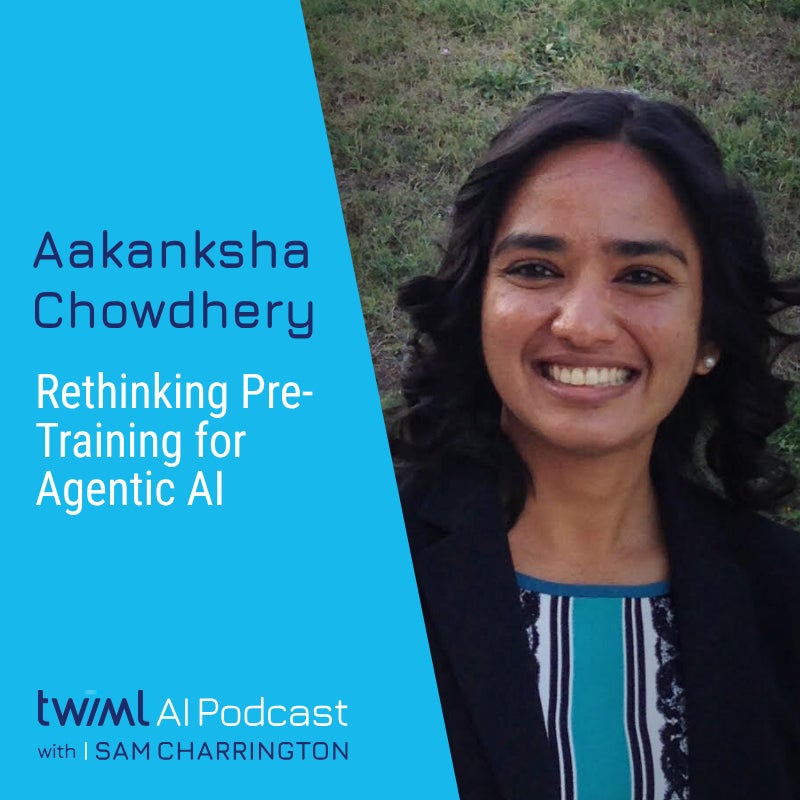
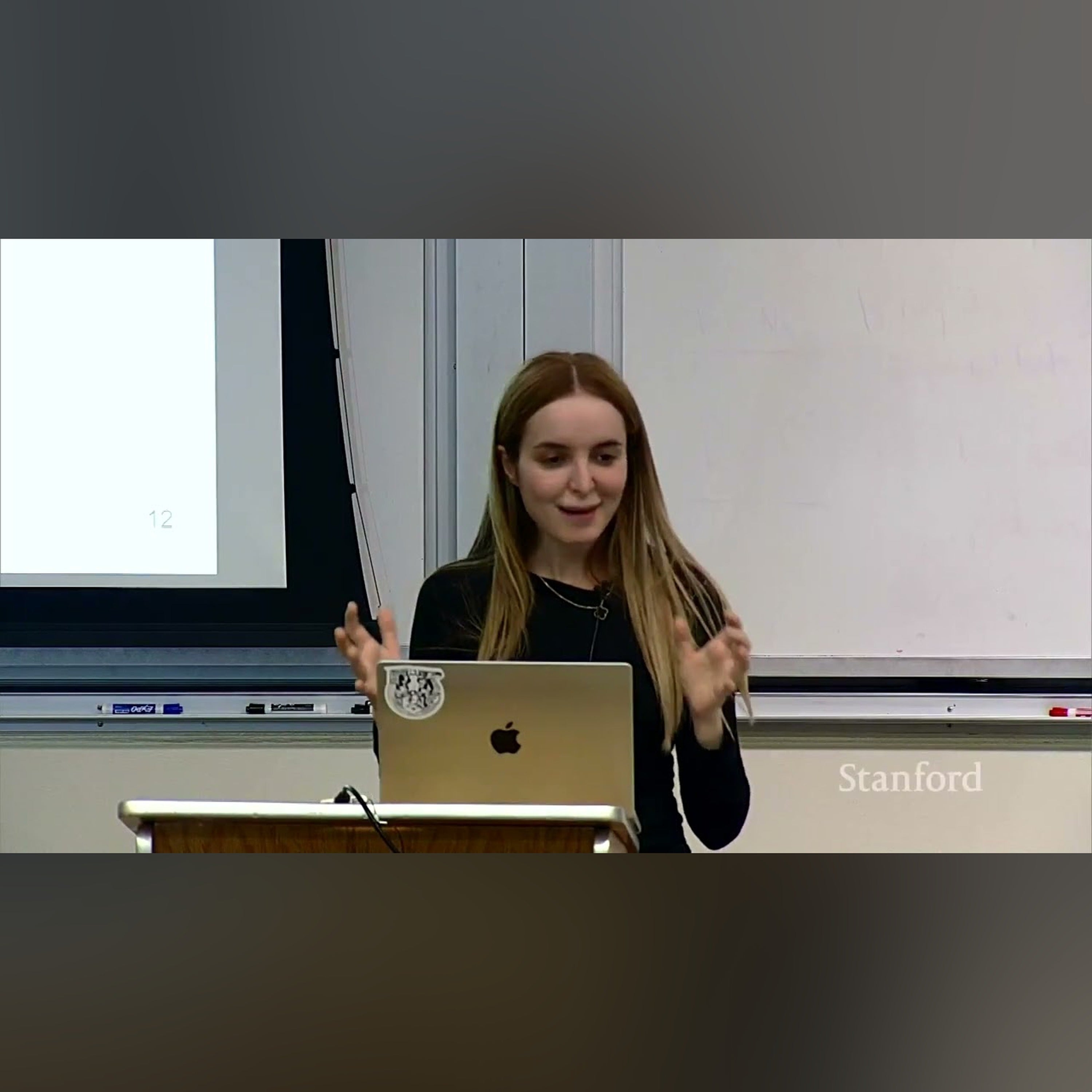
Want to dive deeper? This curriculum is covered in the following online courses: - Agentic AI professional education course: https://stanford.io/4zOyjPN - XCS329 graduate course: https://online.stanford.edu/courses/cs329a-self-improving-ai-agents Uploaded 03-08-26 A similar curriculum is covered in XCS329z https://online.stanford.edu/courses/cs329z-engineering-ai-agents Follow along with the course schedule and syllabus: https://cs329a.stanford.edu/ View the course playlist: https://www.youtube.com/playlist?list=PLangBM27OtEA Video Summary: This first lecture videoof Stanford's CS329A, Self-Improving AI Agents, taught by Aakanksha Chowdhery and Azalia Mirhoseini on September 22, 2025, opens with an overview of scaling laws that link model parameters, training compute, and dataset size to lower test loss in large language models from GPT-2 through GPT-4. It covers few-shot and zero-shot learning, the emergence of chain-of-thought reasoning in larger models, and the role of instruction tuning and reinforcement learning from human feedback in the development of ChatGPT. The lecture introduces inference-time scaling through the Large Language Monkeys project, which repeatedly samples a model's outputs and selects correct answers with a verifier to improve performance without retraining. It then traces the shift from single-turn chatbots to agent workflows such as prompt chaining, routing, parallelization, and orchestrator-worker patterns, using Claude Code and deep research tools as examples. The session closes with logistics for the course. Speaker Bios: Aakanksha Chowdhery Adjunct Professor of Computer Science, Stanford University Dr. Aakanksha Chowdhery is pushing the frontier of agentic LLMs, focusing on recursive self-improvement and long-horizon agents that learn and deploy in the real world. She is one of the few researchers globally who has led frontier model training end-to-end, across both dense and mixture-of-experts (MoE) architectures. At Google, she led the 540B PaLM model, the largest densely trained language model in the world at the time. She subsequently drove pre-training and scaling of Gemini's MoE models across multiple generations, and contributed key components to PaLM-E, Med-PaLM, and the Pathways infrastructure underpinning Google's large-model efforts. She went on to build and lead pretraining teams for open intelligence efforts at Reflection and Meta. Earlier, she held research roles at Microsoft Research and Princeton. At Stanford, where she earned her PhD, she teaches CS329A (Self-Improving AI Agents) and serves as Program Chair for MLSys 2026. Azalia Mirhoseini Assistant Professor of Computer Science, Stanford University Azalia Mirhoseini is a co-founder of Ricursive Intelligence, a frontier lab dedicated to recursive self-improvement through AI that designs the chips that fuel it. She is also an Assistant Professor of Computer Science at Stanford University where she directs Scaling Intelligence, a lab focused on developing scalable and self-improving AI systems and methodologies toward the goal of artificial general intelligence. Previously, she spent several years in industry AI labs, including Google Brain, Anthropic, and Google DeepMind, working on the development of Claude and Gemini. Her past work includes Mixture-of-Experts (MoE) neural architectures, now predominantly used in leading generative AI models; AlphaChip, a pioneering work on deep reinforcement learning for layout optimization used in the design of advanced chips like Google AI accelerators (TPUs) and data center CPUs; as well as pioneering research on LLM Test-Time Scaling. Her work has been recognized through the Okawa Research Grant, the Google ML and Systems Junior Faculty Award, MIT Technology Review's 35 Under 35 Award, the Best ECE Thesis Award at Rice University, publications in flagship venues such as Nature, and co Learn more about your ad choices. Visit megaphone.fm/adchoices