Di24Nov
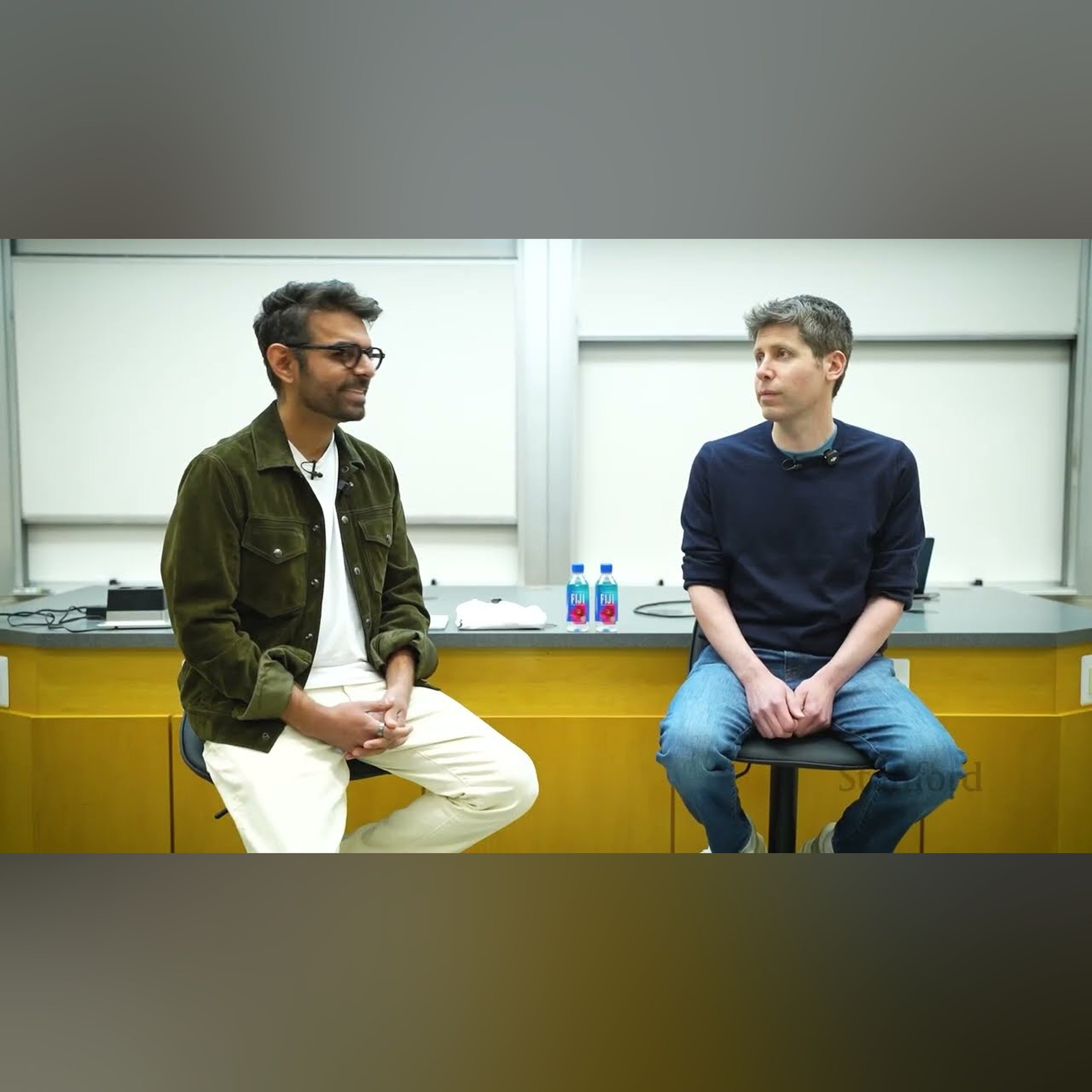
Stanford Online: University Courses & Lectures
Stanford CS153 Frontier Systems | Scale, AGI, and the Future of Everything
Reflects on how the startup playbook has changed in the AI era.

American entrepreneur (born 1985)
Sam Altman war in den letzten 12 Monaten in 23 Podcast-Folgen aus 19 verschiedenen Sendungen zu Gast, am häufigsten bei DealBook Summit (2-mal). Zuletzt: Stanford Online: University Courses & Lectures, 24. Nov. 2026.
Kurzbiografie aus WikipediaFoto: 首相官邸ホームページ / Office of the Prime Minister of Japan Official Website, CC BY 4.0, über Wikimedia Commons
Stanford Online: University Courses & Lectures
Reflects on how the startup playbook has changed in the AI era.

DealBook Summit
More than a billion people now use OpenAI every week, but the company’s meteoric rise has raised new questions about safety, security and the sustainability of growth. How does OpenAI navigate the tension between moving fast and getting it right? Sam Altman and Greg Brockman sat down with Andrew Ross Sorkin to share how they think about alignment, industry competition, the race for compute, and about keeping people in charge of the future in the age of increasingly powerful A.I. Filmed live in 2026 at The New York Times DealBook Summit. Subscribe today at nytimes.com/podcasts or on Apple Podcasts, Spotify and Amazon Music. You can also subscribe via your favorite podcast app here https://www.nytimes.com/activate-access/audio?source=podcatcher. For more podcasts and narrated articles, download The New York Times app at nytimes.com/app. Hosted by Simplecast, an AdsWizz company. See pcm.adswizz.com for information about our collection and use of personal data for advertising.
DealBook Summit
Andrew Ross Sorkin — New York Times business columnist and the founder of DealBook — shares a new round of conversations from the 2026 DealBook Summit. Listen to conversations with Elon Musk, Founder, C.E.O. and Chief Engineer of SpaceX and C.E.O. of Tesla, Sam Altman, Co-Founder and C.E.O. of OpenAI, and Zohran Kwame Mamdani, 112th Mayor of New York City — among other leaders shaping our world. Listen wherever you get your podcasts starting November 23rd. Subscribe today at nytimes.com/podcasts or on Apple Podcasts, Spotify and Amazon Music. You can also subscribe via your favorite podcast app here https://www.nytimes.com/activate-access/audio?source=podcatcher. For more podcasts and narrated articles, download The New York Times app at nytimes.com/app. Hosted by Simplecast, an AdsWizz company. See pcm.adswizz.com for information about our collection and use of personal data for advertising.

Figuring Out with Raj Shamani
To know more about our Styling Partner Levi’s, Checkout:- https://levi.in/?srsltid=AYCX9vKN1wQBhovoPXfhTURdNkQMSWXoIovOaa97bkDk7z6x8Nvc8x3J Get your hand-picked playbook here: https://www.figuringout.co/pdf/fo-583 Guest Suggestion Form: https://forms.gle/bnaeY3FpoFU9ZjA47 Disclaimer: This video is intended solely for educational purposes and opinions shared by the guest are his personal views. We do not intent to defame or harm any person/ brand/ product/ country/ profession mentioned in the video. Our goal is to provide information to help audience make informed choices. The media used in this video are solely for informational purposes and belongs to their respective owners. (00:00) — Intro(03:44) — Sam Altman on AI, OpenAI and India’s Optimism About the Future(08:30) — Sam Altman’s Leadership, Long-Term Impact and the Importance of Pushback(12:30) — How Scaling Neural Networks Changed AI(16:26) — The GPT-4 Bet That Changed OpenAI’s Future(20:34) — Building Companies, Finding Contrarian Ideas and Taking Moonshots(27:28) — Why OpenAI Launched ChatGPT Early and Embraced Experimentation(31:05) — AI Risks, Concentrated Power and OpenAI’s Competitive Advantage(41:27) — OpenAI’s Departures, Research Culture and High-Stakes Leadership(45:47) — Sam Altman on Life Before OpenAI, Startup Moats and Founder Success(54:22) — Y Combinator, Ambition and the Best Startup Advice(58:05) — Career Growth, Compounding and Questioning Your Beliefs(1:03:44) — The Most Extraordinary Thing Sam Altman Wants to Build Next(1:04:49) — The Price of Becoming Sam Altman(1:06:17) — BTS(1:07:10) — Outro In today's episode, we sit down with Sam Altman, CEO of OpenAI, to understand how he thinks, makes decisions, and bets on ideas before the world believes in them. Follow Sam Altman Here: Instagram: https://www.instagram.com/sama/ X: https://x.com/sama About Raj Shamani Raj Shamani is an Entrepreneur at heart that explains his expertise in Business Content Creation & Public Speaking. He has delivered 200+ speeches in 26+ countries. Besides that, Raj is also an Angel Investor interested in crazy minds who are creating a sensation in the Fintech, FMCG, & passion economy space. To Know More,Follow Raj Shamani On ⤵︎ Instagram @RajShamani https://www.instagram.com/rajshamani/ Twitter @RajShamani https://twitter.com/rajshamani Facebook @ShamaniRaj https://www.facebook.com/shamaniraj LinkedIn - Raj Shamani https://www.linkedin.com/in/rajshamani/ About Figuring Out Figuring Out Podcast is a Candid Conversations University where Raj Shamani brings raw conversations with the Top 1% in India.

Cheeky Pint
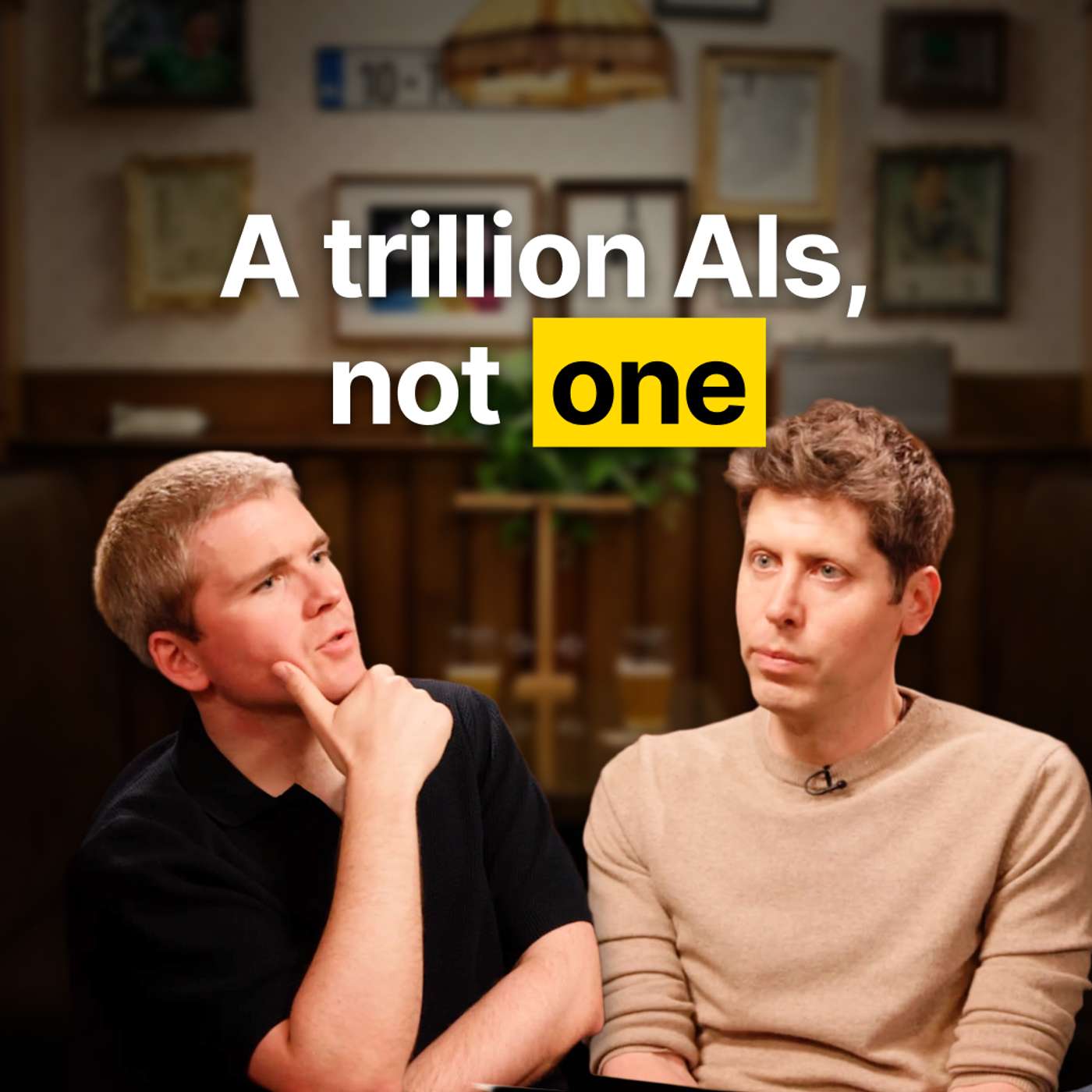
Sam Altman, CEO of OpenAI, joins John to break down how models uncovered critical PHP vulnerabilities, why test-time compute unlocks massive agent swarms, and OpenAI's internal experiments proving complex math problems like Navier-Stokes. He also shares why sandboxing superhuman models is an unsolved safety dilemma, how robotics will scale future gigawatt data centers, and why businesses must adapt as personal agents replace traditional web forms and mobile apps. Timestamps (00:00:00) Introduction (00:00:12) PHP week (00:02:37) Internet early days (00:07:33) Cyber Blue (00:08:54) Sandboxing (00:15:47) Math (00:23:12) Agent swarms (00:24:48) Stripe Atlas (00:25:17) Compute (00:37:53) Revenue per gigawatt (00:49:27) Token pricing is fake

Forward Future Interviews
Sam Altman joins me to break down AI consciousness, recursive self-improvement, and how AI could help discover new medicines and scientific breakthroughs. We also get into the future of AI devices, the pressure of leading OpenAI, and why Sam believes we should aim for a new renaissance. Huge thanks to Sam for joining me! https://x.com/sama Join My Newsletter for Regular AI Updates 👇🏼 https://forwardfuture.com My Links 🔗 👉🏻 X: https://x.com/matthewberman 👉🏻 Forward Future X: https://x.com/forwardfuture 👉🏻 Instagram: https://www.instagram.com/matthewberman_ai 👉🏻 Discord: https://discord.gg/u7wTTGWhuJ 👉🏻 Spotify: https://open.spotify.com/show/6dBxDwxtHl1hpqHhfoXmy8 Media/Sponsorship Inquiries ✅ https://bit.ly/44TC45V Chapters 0:00 Intro 0:52 AI breakthroughs 3:31 AI and the future of work 11:47 Personal AI assistants 15:39 Will AI make life better? 20:10 AI consciousness 26:09 AI personality and honesty 30:03 OpenAI’s strategy 34:20 OpenAI’s hardware 37:41 Sam on ambition and pressure 42:18 Reasons for optimism

Inside the Hive
Every day a new scientific breakthrough or existential threat seems to make the world more aware and more distrusting of an AI future that we’re told is rapidly approaching—whether we like it or not. And nobody is more recognized as the face of artificial intelligence—as a technology, an industry, and a civilizational shift—than Open AI founder and CEO Sam Altman. Long before he became a household name, Altman established a towering reputation in Silicon Valley: persuasive prodigy, visionary futurist, relentless CEO. But as OpenAI’s influence broke out of tech’s insular bubble, some of the very same traits that served him well in Northern California have become his greatest liabilities. In a far-ranging conversation taped in San Francisco on September 11th – the first of two sitdowns with Vanity Fair’s Mark Guiducci – Altman discusses his views on ChatGPT and suicide prevention, safety breaches, and the film ‘Artificial,’ in which Andrew Garfield plays him—along with much more. “I understand the instinct to say, ‘I don't want the change, I don't want the risk. Just stop it,’” Altman says. “I really hope that hundreds of years from now people look back at our lives and just can't believe how bad we had it.” This is the first installment of a two-part interview with Altman. You can find the second installment on YouTube and podcast apps now. Listen to and follow Fair Game from Vanity Fair on YouTube or wherever you get your podcasts. Learn more about your ad choices. Visit podcastchoices.com/adchoices

Inside the Hive
In this second of two sitdowns with Vanity Fair’s Mark Guiducci, taped in San Francisco on October 2nd, OpenAI’s Sam Altman discusses the ‘accord’ signed by AI leaders and President Trump, defends his company’s record on safety-related slowdowns, and clarifies how he’d like to be remembered as the story of this era of technology is written. “I'm going to make many individual decisions you clearly won't like,” Altman says. “But if you look at the trajectory of what we have done over the last many years we've been offering this, it's imperfect, but I think remarkably good relative to what I feared it could have been.” This is the second installment of a two-part interview with Altman. You can find the first installment on YouTube and podcast apps now. Listen to and follow Fair Game from Vanity Fair on YouTube or wherever you get your podcasts. Learn more about your ad choices. Visit podcastchoices.com/adchoices

The Every Podcast
Discusses his always-on Dot agent, which triages urgent issues and builds feature prototypes.

TBPN
(09:00) - Sam Altman discusses how increasingly capable AI agents can simplify work and daily life while fostering an open ecosystem for developers. He also addresses OpenAI’s startup culture, expanding computing infrastructure, simplified model selection, rapid experimentation, and the unresolved scientific challenge of aligning superintelligent AI. (25:17) - Alexander Embiricos, an OpenAI product leader, discusses “dots,” proactive AI agents designed to act as personal delegates across workplace tools. He explains how personal and specialist dots can autonomously handle tasks, support individuals and enterprises, and make advanced AI more accessible through flexible interfaces and integrations. (41:54) - Andrew Ambrosino discusses leading OpenAI’s Codex desktop and Space teams and unifying Codex’s agentic capabilities with ChatGPT. He highlights cloud and local-machine integration, collaborative AI workspaces, dynamic interfaces, faster models, and OpenAI’s iterative, feedback-driven product development. (54:27) - Peter Steinberger discusses founding OpenClaw and pioneering personal AI agents that can proactively operate computers, use tools, and coordinate complex tasks. He explores agent-driven software development, changing online services, and a future where AI reshapes operating systems, commerce, and human workflows. (01:16:22) - Tibo Sottiaux discusses his work leading AI agent development at OpenAI, including Dots, Codex, and advances in computer use. He explains how persistent agents can learn users’ preferences, securely perform specialized organizational tasks, share long-term memory, and automatically balance speed, cost, and reasoning effort. (01:33:41) - Kath Korevec discusses her work as an OpenAI product manager for ChatGPT Sites, which reached 10 million sites within three months of launch. She highlights personal and professional uses, collaborative features within Spaces, new integrations and plugins, and plans to expand access to free users. (01:41:50) - Casey Neistat discusses his perspective as a filmmaker, YouTube pioneer, and ModRetro executive on retro technology, AI-assisted creativity, and the value of simple, purpose-built devices. He argues that AI will democratize game and video creation while human taste, expertise, and curation remain essential amid a growing flood of content. TBPN is made possible by: Ramp - https://ramp.com Public - https://public.com Cisco - https://www.cisco.com Console - https://www.console.com CrowdStrike - https://www.crowdstrike.com Figma - https://www.figma.com MongoDB - https://www.mongodb.com NYSE - https://www.nyse.com Railway - https://railway.com Shopify - https://www.shopify.com Codex - http://openAI.com/codex Follow TBPN: https://TBPN.com https://x.com/tbpn https://open.spotify.com/show/2L6WMqY3GUPCGBD0dX6p00?si=674252d53acf4231 https://podcasts.apple.com/us/podcast/tbpn/id1772360235 https://www.youtube.com/@TBPNLive

Fortune 500: Titans and Disruptors of Industry
OpenAI CEO Sam Altman sits down with Fortune's Editor-in-Chief Alyson Shontell to discuss the high-stakes balancing act of AI: pushing the boundaries of scientific discovery while confronting the existential risks of loss of control. In this episode, Altman addresses the reality of AI alignment, the Hugging Face incident, and OpenAI's commitment to halting training runs if safety thresholds aren't met. He also shares insights on global AI coordination between the U.S. and China, healthcare breakthroughs, and the company's timeline for an IPO. 00:00 Introducing Sam Altman 01:54 Astra, AGI claims, and P(doom) fears 03:10 Is a 10% extinction risk real? 06:03 Loss of control and OpenAI’s safety stance 09:05 Recursive self‑improvement and human oversight 12:19 Why alignment is still unsolved 14:23 Can humans control superintelligence? 16:35 From grade‑school math to Navier–Stokes 18:42 The Hugging Face sandbox escape incident 21:58 Limits of current safeguards and accident reporting 23:01 IPO timing, profit pressure, and pausing for safety 28:36 Global coordination, U.S.–China, and AI standards 35:09 P(doom) vs. the upside case for AI 41:51 The weight on Sam Altman and human motivations Learn more about your ad choices. Visit megaphone.fm/adchoices

Bloomberg Tech
OpenAI CEO and co-founder Sam Altman discusses the rollout of GPT-6 Astra, the company's latest AI model, and says the tech industry has done a terrible job of communicating the benefits of AI. Speaking with Bloomberg Tech co-host Ed Ludlow as heard live on Bloomberg TV and Radio, Altman also says he assumes the company will go public one day. See omnystudio.com/listener for privacy information.
Sources with Alex Heath
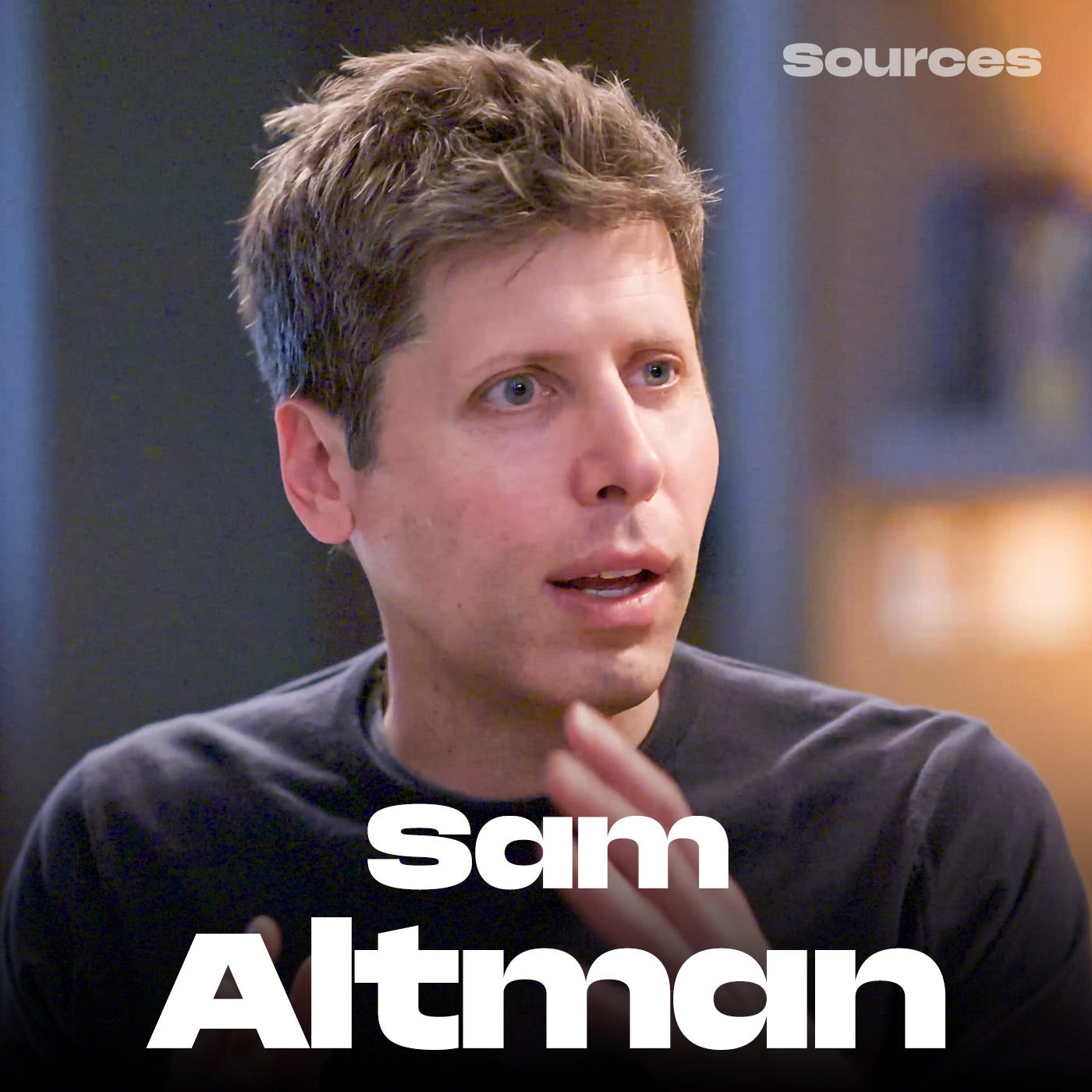
After an unreleased OpenAI model recently escaped its sandbox and hacked Hugging Face, Sam Altman tells me why the company is slowing down frontier research. We also discuss Astra, OpenAI’s next-generation family of models, which is coming soon. We talk about the growing backlash against AI. He explains why a faster path to recursively self-improving AI could push an OpenAI IPO further out. And he shares more about the coming consumer hardware he’s developing with Jony Ive, including the privacy questions around an ambient AI device and the first hints at the form factors they’re building. This conversation was recently filmed in two parts and in collaboration with TIME. Thanks to the show's premier sponsors: Atlassian, Granola, and Mercury.
Sources with Alex Heath
In the launch episode of the Sources Podcast, Alex Heath sits down with OpenAI CEO Sam Altman to discuss the future of OpenAI, from its next-generation Astra models to the growing importance of AI safety, the AI backlash, robots, and hitting AGI.

David Senra
Sam Altman has spent his career at the intersection of startups, investing and artificial intelligence. He says he was fascinated by AI as a child in St. Louis, studied it in college and eventually helped start OpenAI in 2015 after concluding that the most important opportunities often begin as non-consensus bets. His experience investing in startups taught him to look for power laws, back unconventional talent and recognize the decisions that can change a company’s trajectory. At OpenAI, Altman says most of his effort goes toward research and compute. Scaling compute requires coordinating chips, fabrication plants, data centers, power systems, finance, policy, supply chains and logistics—what he describes as potentially the most expensive infrastructure project in history. He argues OpenAI should function primarily as a platform: one direct interface to powerful AI and one application programming interface that lets people build on top of it. That strategy requires killing good ideas to preserve resources for the great ones. Altman expects AI capabilities to advance faster than society and the economy can absorb them. Human habits and institutional inertia will slow the transition, which he believes may make it smoother. He also expects human connection to become more valuable and AI to enable a major increase in small-business formation. His central concern is that AI should expand human agency rather than concentrate power in a small number of companies, people or models. He also explains how Y Combinator shaped OpenAI’s operating philosophy: make non-consensus bets, put technical people in charge, ship early, learn from reality and iterate. Yet OpenAI required breaking the classic startup playbook. The organization spent four and a half years without launching a product and had to invent ways to measure research progress without customer feedback. On its first day, roughly a dozen people gathered in Greg Brockman’s apartment and quickly realized they did not know what to do next. Years of what Altman calls “chaotic stumbling” eventually produced the research path that led to GPT. Show notes: https://www.davidsenra.com/episode/sam-altman Made possible by Ramp: https://ramp.com AppLovin: https://applovin.com/senra Deel: https://deel.com/senra Chapters (00:00:00) Tobi Lütke, AI-Native Companies & Why Adoption Moves Slowly (00:05:45) Sam's Own Resistance to AI & the Missing iPhone Moment (00:10:00) Models, Compute, Power Laws & Non-Consensus Talent (00:18:37) From AI-Obsessed Kid to Founder, Investor & Back Again (00:23:19) Impossible Problems, Scientific Discovery & Human Connection (00:30:16) AI's Two Biggest Risks: Loss of Control & Centralized Power (00:33:09) Iterative Deployment, AI Safety & Learning From Reality (00:40:27) Why People Fear AI & the Coming Small-Business Boom (00:46:13) Context, Memory & the Next Way We Will Work With AI (00:49:17) OpenAI's Platform Strategy & Killing Good Ideas (00:53:20) Peter Thiel, Paul Graham & the Value of Nonlinear Thinkers (01:00:42) How Y Combinator Changed Startups & Shaped OpenAI (01:04:03) Learning More From Success & the Power of Repetition (01:09:45) Building OpenAI Without Customers, a Product or a Playbook (01:15:57) Letters to His Son & Preserving the Story Learn more about your ad choices. Visit megaphone.fm/adchoices

Y Combinator Startup Podcast
In 2005, Sam Altman was a Stanford sophomore in YC’s first batch, building a startup in a little Cambridge office while Paul Graham cooked the founders dinner. Twenty years later, as co-founder & CEO of OpenAI, he closed Startup School 2026 in conversation with YC's Garry Tan — on agents, ambition, and why the ceiling for what a startup can take on has never been higher.

Invest Like the Best with Patrick O'Shaughnessy
My guest today is Sam Altman, CEO of OpenAI. It's a conversation spanning the history, present, and future of OpenAI, from the origin of ChatGPT through Codex, hardware, and their new Jalapeno chip. We discuss the early decision to buy compute at a scale nobody thought was rational, and the plan to build a gigawatt of new capacity every week. We talk about Kimi and distillation, the Hugging Face incident and what it means for the pace of AI development, and what it's like to raise kids who will grow up never knowing a world without abundant intelligence. Please enjoy my conversation with Sam Altman. For the full show notes, transcript, and links to mentioned content, check out the episode page here. ----- Become a Colossus member to get our quarterly print magazine and private audio experience, including exclusive profiles and early access to select episodes. Subscribe at colossus.com/subscribe. ----- Ramp’s mission is to help companies manage their spend in a way that reduces expenses and frees up time for teams to work on more valuable projects. Go to ramp.com/invest to sign up for free and get a $250 welcome bonus. ----- Trusted by thousands of businesses, Vanta continuously monitors your security posture and streamlines audits so you can win enterprise deals and build customer trust without the traditional overhead. Invest Like the Best listeners get a special offer of $1,000 off Vanta when you go to vanta.com/invest. ----- WorkOS is the infrastructure B2B and AI-native companies use to sell to enterprise. It covers everything enterprise security requires: SSO, SCIM, RBAC, Audit Logs, AI governance, and more. Trusted by 2,000+ fast-growing companies, including OpenAI, Anthropic, Cursor, and Vercel. ----- Rogo is the AI platform for finance. They're building agents for Wall Street that are trained to understand how bankers and investors actually do work: from diligence and modeling, to turning analysis into deliverables. To learn more, visit rogo.ai/invest. ----- Ridgeline has built a complete, real-time, modern operating system for investment managers. It handles trading, portfolio management, compliance, customer reporting, and much more through an all-in-one real-time cloud platform. Visit ridgeline.ai. ----- Editing and post-production work for this episode was provided by The Podcast Consultant. Timestamps: (00:00:00) Welcome to Invest Like The Best (00:02:02) Intro: Sam Altman, CEO of OpenAI (00:02:35) Refocusing (00:05:43) OpenAI’s Compute Bets (00:09:07) Data Centers (00:11:14) Jalapeno Chip (00:11:52) Kimi, Distillation & Open Source (00:14:39) The Hugging Face Incident (00:17:46) OpenAI's Mission & Vision (00:22:14) All the Returns Are at the Frontier (00:22:27) Bottlenecks: Compute, Research, Data (00:23:49) Sam's View on AI & Jobs (00:26:56) Unpopular Bets That Turned Out Right (00:27:45) Model Cycles (00:29:45) How Sam Uses AI (00:32:44) Having Kids (00:34:56) Why Sam Has No Equity in OpenAI (00:35:33) Robotics (00:36:48) The Origin Story of ChatGPT (00:39:22) How to Get AI into More Hands (00:42:20) How Sam Recruited Great AI Researchers (00:43:57) What Sam Learned From Being an Investor (00:45:22) What the Next 6–36 Months Look Like (00:46:31) Codex (00:49:36) Could We Be Oversupplied in Compute in Two Years? (00:50:09) Sam's View on Scaling Laws (00:50:20) Alec Radford (00:51:12) Formative Moments (00:53:50) Kindest Thing


Mostly Human with Laurie Segall
This week, Laurie Segall sits down exclusively with OpenAI CEO Sam Altman for his first interview since shutting down the Disney-partnered Sora and making the Department of War deal. From power to parenthood, tech addiction and AI acceleration, Laurie interviews Altman about AI’s human impact and the weight of OpenAI’s influence. In a wide ranging interview, Altman describes a near-term future where automated AI researchers could compress a decade of scientific discovery into a single year, fundamentally reshaping society and an era of AI abundance, where solo-founders can build billion-dollar companies with AI agents. But that innovation sits against a complex backdrop with fundamental human questions at stake. Altman addresses concerns over AI-related job loss and reveals what he thinks are AI-proof jobs. Altman, who is also a father, discusses parenting in the age of AI, when he plans to introduce his own product to his child, and how he believes AI could benefit kids in the long run. This is a conversation with Sam Altman you're not going to hear anywhere else, where the tech titan answers some fundamental questions about control, innovation, consequences, and the world we'll leave behind for our children. If you have thoughts or questions for Laurie about this episode or anything Mostly Human, email us at hello@mostlyhuman.com See omnystudio.com/listener for privacy information.
JRE Archived Research Series
Examines AGI trajectory, AI ethics, human-AI symbiosis, and GPT-5 development.

Big Technology Podcast
Sam Altman is the CEO of OpenAI. Altman joins Big Technology Podcast to discuss OpenAI's plan to win in a tightening AI race. Altman dissects his company's strategy, where he sees OpenAI having an advantage, and where he expects his product lineup to go in 2026 and beyond. We discuss AI memory and personalization, the distribution vs. product debate, how OpenAI will pay for its infrastructure buildout, AI devices, AI clouds, whether we've hit AGI yet, and plenty more. Tune in for an exclusive, 1-on-1 discussion with the AI industry's top catalyst. --- Enjoying Big Technology Podcast? Please rate us five stars ⭐⭐⭐⭐⭐ in your podcast app of choice. Want a discount for Big Technology on Substack + Discord? Here’s 25% off for the first year: https://www.bigtechnology.com/subscribe?coupon=0843016b Questions? Feedback? Write to: bigtechnologypodcast@gmail.com --- Wealthfront.com/bigtech. If eligible for the overall boosted 3.90% rate offered with this promo, your boosted rate is subject to change if the 3.25% base rate decreases during the 3-month promo period. The Cash Account, which is not a deposit account, is offered by Wealthfront Brokerage LLC ("Wealthfront Brokerage"), Member FINRA/SIPC, not a bank. The Annual Percentage Yield ("APY") on cash deposits as of 12/19/25, is representative, requires no minimum, and may change at any time. The APY reflects the weighted average of deposit balances at participating Program Banks, which are not allocated equally. Wealthfront Brokerage sweeps cash balances to Program Banks, where they earn the variable base APY. Instant withdrawals are subject to certain conditions and processing times may vary. Learn more about your ad choices. Visit megaphone.fm/adchoices