David Senra cover
Podcast

David Senra

von Scicomm Media

David Senra hatte in den letzten 12 Monaten 20 bestätigte Gäste in 20 Folgen. Zuletzt: Jacob Hirshman, 25. Nov. 2026.

Website der SendungApple PodcastsSo werden Gäste bestätigt

Conversations with the greatest living founders.

Gäste der Sendung

Mi25Nov
David SenraJH

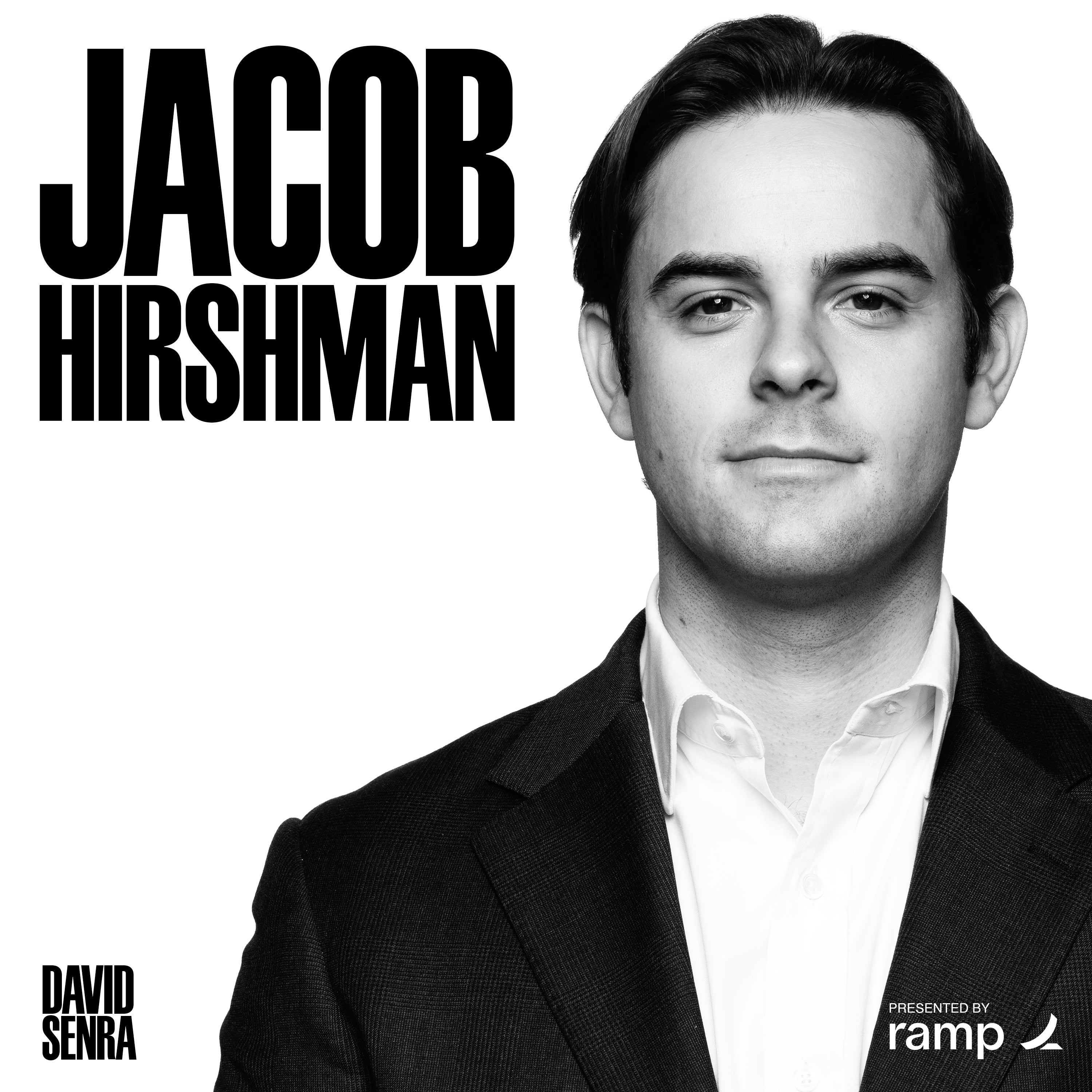
Jacob HirshmanGast

A Deep Dive Into Palmer Luckey’s Bank | Jacob Hirshman, Erebor

Jacob Hirshman is the co-founder of Erebor, a national bank he started with Palmer Luckey in May 2025. A lawyer who has spent his career in financial services regulation, Jacob saw that the new administration was likely to start approving new bank charters again after more than a decade with almost none. Erebor applied for its charter in June 2025 and opened in February 2026. Jacob explains how the collapse of Silicon Valley Bank shaped the idea, why Erebor holds itself to a 50% loan-to-deposit ratio when the average bank runs at 70%, and why it built its own bank core and underwriting software instead of buying them. He describes why he wants to build "the farmer's bank for tech," and why 40% of his employees are former founders. He also shares what Sam Zell's habit of paying lenders more than they asked taught him about relationships, why Jamie Dimon's decision to open 1,000 new branches may pay off in the age of AI fraud, and how Erebor gives people around the world access to US dollar deposits. He also tells the story of his chaotic trip into Venezuela, the Tolkien character he wanted to name the company after, and the law school friend who told him he would never build a billion-dollar company. Show notes: https://www.davidsenra.com/episode/jacob-hirshman Made possible by Ramp: https://router.com Deel: https://deel.com/senra AppLovin: https://applovin.com/senra WorkOS: https://workos.com Chapters (00:00:00) The fastest-growing bank in American history (00:00:39) Why almost no new banks opened after the financial crisis (00:01:52) How the collapse of SVB led to Erebor (00:10:40) The Pentagon's $205 billion credit book (00:11:45) Rebuilding America's AI supply chain (00:15:19) Building "the farmer's bank for tech" (00:17:59) Palmer Luckey wanted to call it The Real Bank (00:20:08) "Always think bigger" (00:22:49) Why Sam Zell paid 7.75% when he could pay 7.25% (00:29:20) Why 40% of the team are former founders (00:34:08) Joe Lonsdale's plan for a Gringotts headquarters (00:36:16) Why Jamie Dimon opened 1,000 new branches (00:39:33) Selling the dollar to the rest of the world (00:44:41) "You're not getting on this fucking plane" (00:48:11) "Welcome to Venezuela, sir" (00:50:26) Why it's named after the Lonely Mountain (00:53:02) What J.P. Morgan did for the industrialists (00:57:28) "You're never going to have a billion-dollar company" Learn more about your ad choices. Visit megaphone.fm/adchoices
1 h 01 minAbspielen in:

Mi18Nov
David SenraBrian Armstrong

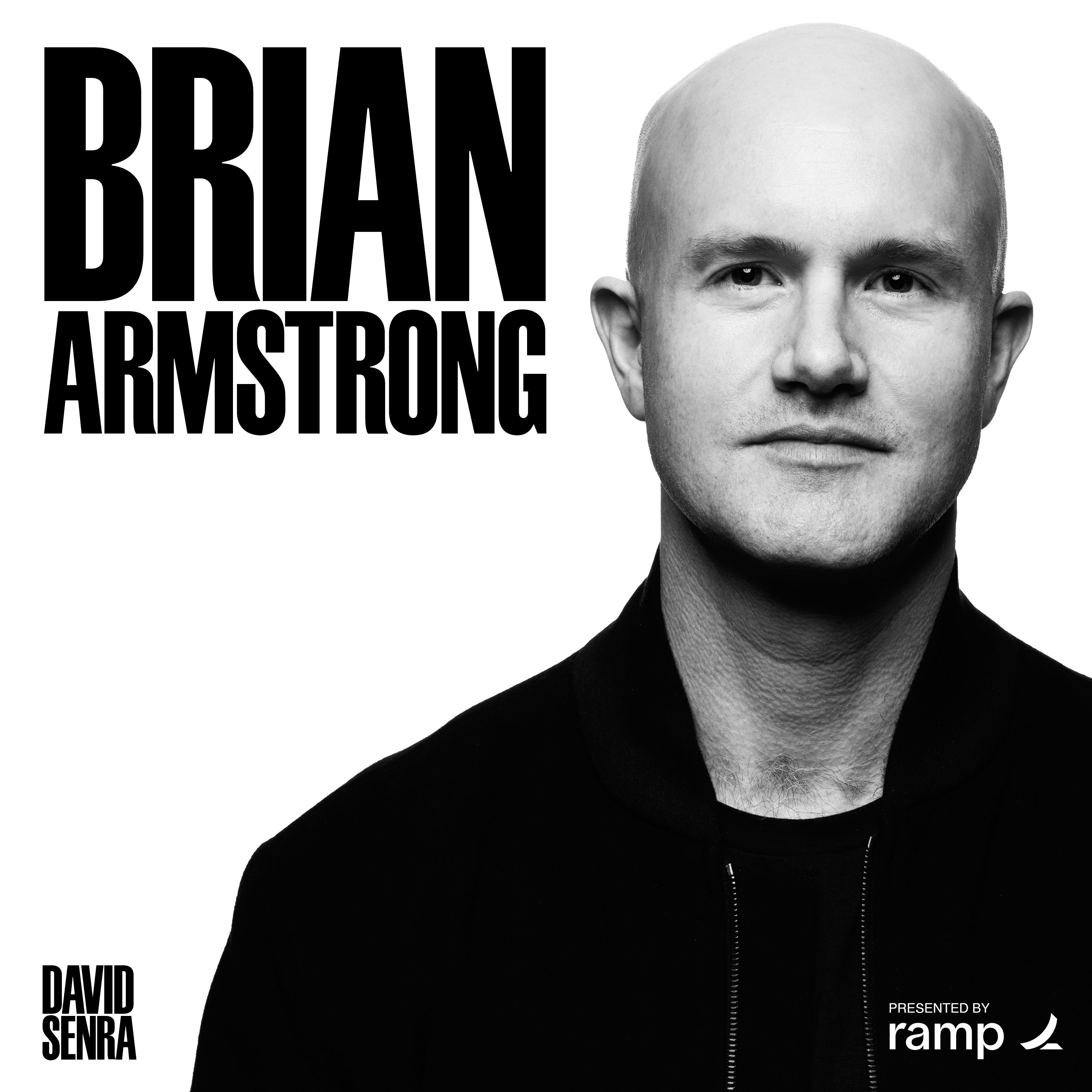
Brian ArmstrongGast

Why the Game of Life Should Be Difficult | Brian Armstrong, Coinbase

Brian Armstrong is the co-founder and CEO of Coinbase. He explains how he rewires his own habits by writing things down over and over: first a goal of starting a billion-dollar tech company, then "I love conflict" to get past his fear of hard conversations as CEO. He talks about divine discontent, why he aims for fulfillment instead of happiness, and what Civilization taught him about tech trees and strategy. Brian walks through how he works now. He has 7 or 8 lead agents, a chief of staff agent, a prioritized inbox he clears with voice dictation, and "Coinbase Brain," an internal system that builds a knowledge base for every employee, team, and code repository. He explains why Coinbase's fine-tuned open-weight models can beat frontier models on narrow tasks like compliance reports. He also explains why he thinks 99.999% of transactions will soon be between agents, and why AI needs to be decentralized the way crypto decentralized finance. He covers why Coinbase is cutting third-party vendors as cyberattacks double year over year, why big gains in productivity haven't shown up in revenue yet, and why the real opportunity is the 96% of financial services revenue that traditional finance still holds. He describes four levels of AI-assisted investing that end with "a private banker in your pocket." Finally, he explains why humanoid robots are the next step-change, and why his biotech company NewLimit won't bring them into the lab until they can work as baristas. Made possible by Ramp: https://router.com Deel: https://deel.com/senra WorkOS: https://workos.com Chapters (00:00:00) Writing down that he'd start a billion-dollar company (00:02:23) "I love conflict" (00:04:50) Pinging 30 or 40 people a day about the Coinbase app (00:07:51) Why he skips the celebration and asks what's next (00:09:25) The point of the game of life is not happiness (00:13:49) The Civilization tech tree hanging in his office (00:17:20) Giving agents a job instead of a prompt (00:19:52) An infinite team of L5-type employees (00:25:05) Seven or eight lead agents and a chief of staff (00:31:18) 99.999% of transactions will be agent-to-agent in 10 years (00:36:53) So excited he has to tell himself to go to sleep (00:38:46) Why evolution favored people who fear change (00:42:39) How the precautionary principle stopped new nuclear plants (00:46:14) 7 of the world's largest banks building on Coinbase (00:49:33) Why all of fintech is still only 4% of the market (00:53:43) A private banker in everyone's pocket (00:56:55) Waiting for robots that can make an espresso (00:58:35) An agent called Retail App Quality Learn more about your ad choices. Visit megaphone.fm/adchoices
1 h 00 minAbspielen in:

So15Nov
David SenraMichael Rubin

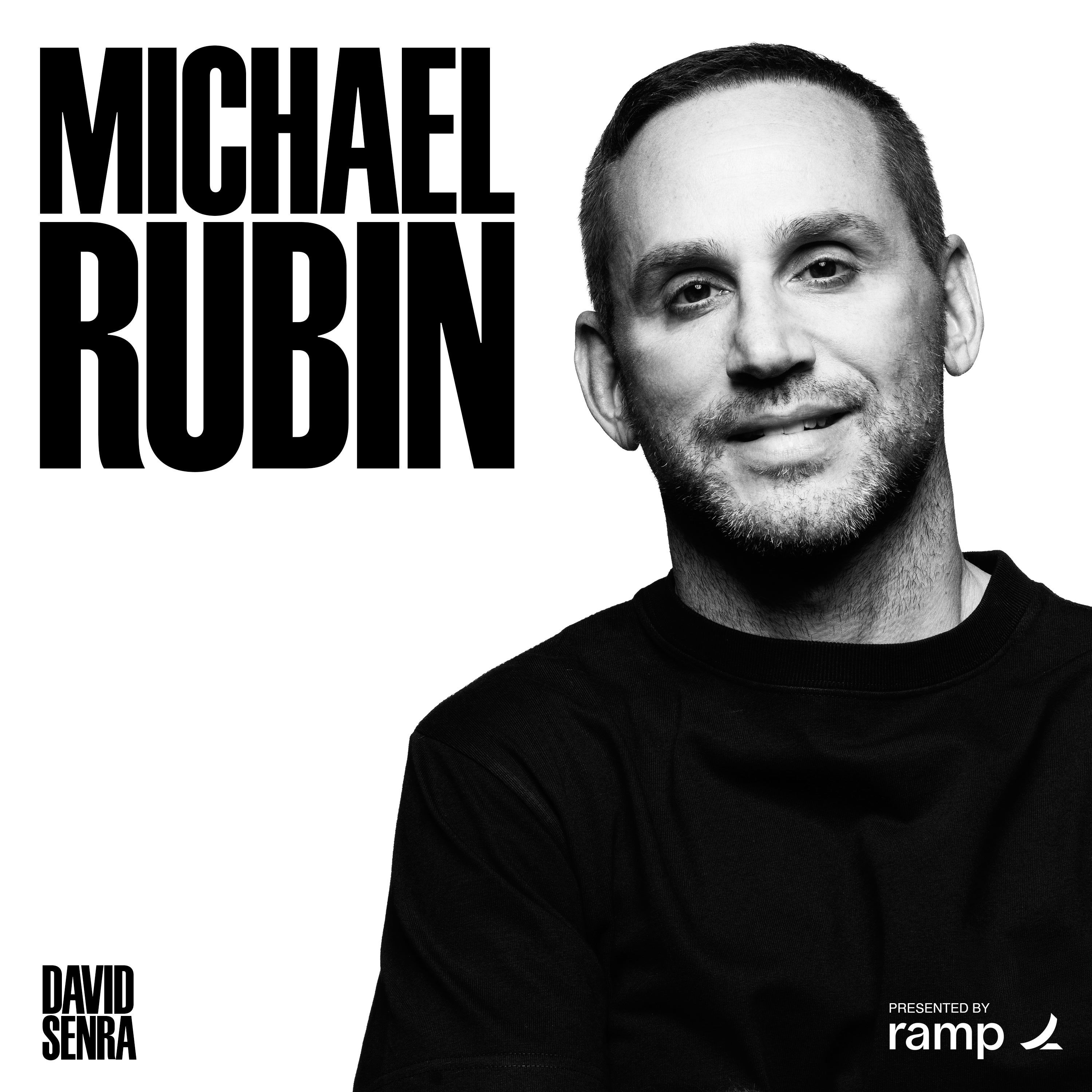
Michael RubinGast

What It Means to Be a “Real” Entrepreneur | Michael Rubin, Fanatics

Michael Rubin is the founder and CEO of Fanatics. He grew up outside Philadelphia, started tuning skis at 12, opened a ski shop in his parents' basement at 13, and had a storefront in a shopping center by 14. At 16, after a winter without snow, he was facing $200,000 in bills and thought he was going bankrupt, until he learned minors can't legally take on debt. He settled for $35,000, then bought a bankrupt store's $200,000 of inventory for $13,000. That deal got him into the closeout business, and by 21 he was doing $150 million a year. Michael tells the story of nearly being margined out of GSI Commerce during the 2009 financial crisis, with hours to spare, two years before eBay bought it for $2.4 billion. He explains how Fanatics grew from a fan gear business into a $14 billion digital sports platform with 140 million customers, why he guaranteed the leagues the high watermark of a cyclical trading card market, and how debut patches and George Condo–painted cards turned collectibles into "art for sports fans." He also shares the advice Robert Kraft gave him when a partner broke a deal, why he gave investors their money back on NFTs and Mitchell & Ness, why there's a "0.0 chance" he'd put his own money into prediction markets at today's valuations, and the call from Silver Lake's Greg Mondre that saved him from a multibillion-dollar mistake. Show notes: https://www.davidsenra.com/episode/michael-rubin Made possible by Ramp: ⁠https://router.com⁠ AppLovin: https://applovin.com/senra Deel: https://deel.com/senra Chapters (00:00:00) Why so many billionaires are boring (00:03:47) Robert Kraft told him to sleep on it (00:08:25) How he almost went bankrupt at 16 (00:11:44) Hours from being margined out in 2009 (00:15:20) What a real entrepreneur is (00:17:21) "I'll stop playing when my heart stops beating" (00:21:03) The litigation, and why he loves the fight (00:25:12) "It's a currency of sports" (00:29:37) Selling more products to the fans they already have (00:32:42) "Number three is irrelevant, number two sucks, number one is everything" (00:33:48) "0.0 chance" he'd invest in prediction markets (00:35:49) $5.5 billion in collectibles (00:39:57) The debut patch: a $50 million card (00:45:14) "There was never an easier conversation" (00:50:00) "This is stupid": raising over $100 million and giving it back (00:53:26) "It's art for sports fans" (00:59:37) Winning the partnership, not the deal (01:06:19) "You saved me from something really dumb" Learn more about your ad choices. Visit megaphone.fm/adchoices

1 h 08 minAbspielen in:

Mi11Nov
David SenraVlad Tenev

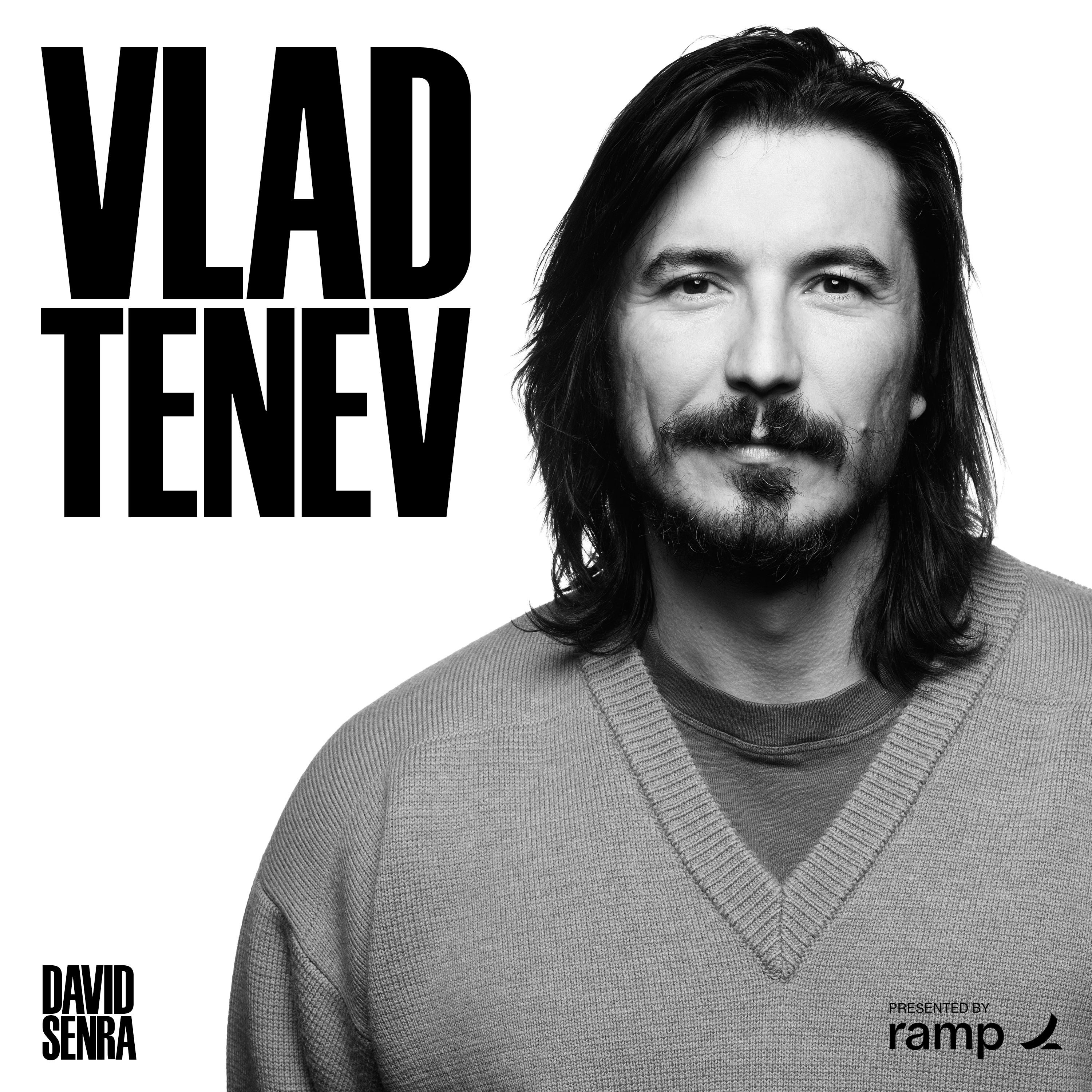
Vlad TenevGast

Building Robinhood, Surviving GameStop & A $500 Million Phone Call | Vlad Tenev

Vlad Tenev is the co-founder and CEO of Robinhood. He was born in Bulgaria in 1987 and moved to the US at age five, a few years before hyperinflation wiped out his grandparents' savings. His parents kept the family afloat on a grad student's budget, and Vlad grew up as a latchkey kid teaching himself computers and tracking stocks on Yahoo Finance. When he scored 1,370 on the SAT at 12, his dad gave him that many dollars to invest. He went on to Stanford and then a math PhD at UCLA under Terence Tao, before his friend Baiju Bhatt convinced him to start a company during the 2008 financial crisis. Vlad tells the story of the near-collapse of Robinhood during the GameStop frenzy in January 2021: how a deposit requirement jumped from under $100 million to $3 billion overnight, why he called Micky Malka of Ribbit Capital first, and how a term sheet they had drafted after the outage in March 2020 made the rescue possible. He also explains why Micky passed on Robinhood's seed round but later became the only investor promoted to its public board, what his first startup taught him, and the legacy test that led him from selling trading software to hedge funds to building Robinhood. Made possible by Ramp: https://router.com AppLovin: https://applovin.com/senra WorkOS: https://workos.com Deel: https://deel.com/senra Chapters (00:00:00) Why Ribbit passed on Robinhood's seed round (00:02:19) "You're going to want me on your board" (00:05:35) The day-long trading outage of March 2020 (00:09:22) A term sheet for a crisis that hadn't happened yet (00:15:00) Crypto goes from zero to a top revenue stream (00:16:27) The $3 billion deposit requirement (00:18:35) "Vlad, you have to call work right away" (00:21:34) The first call: Micky Malka (00:24:31) "Time kills all deals" (00:25:33) Number one app in the App Store, ahead of Instagram and TikTok (00:27:01) $10 billion of demand (00:29:33) Hyperinflation and copper cookware in Bulgaria (00:35:34) "Manhattan just seemed like science fiction" (00:47:15) His SAT score in dollars to invest (00:50:53) Studying under Terence Tao (01:00:22) "You want to be businessman, huh?" (01:03:48) The best parts of math without the bullshit (01:05:56) Would I be proud of this in 50 years? Learn more about your ad choices. Visit megaphone.fm/adchoices
1 h 11 minAbspielen in:

So8Nov
David SenraNikesh Arora

Nikesh AroraGast

How to Win Deals & Grow a $250B Business | Nikesh Arora, Palo Alto Networks

Nikesh Arora is the chairman and CEO of Palo Alto Networks, one of the world's largest cybersecurity companies. He spent 10 years at Google, where he ran Google Europe and later became chief business officer, as the company grew from about 2,000 to 60,000 employees and from $2 billion to $62 billion in revenue. After two years as president of SoftBank, he joined Palo Alto Networks in 2018, when it was an $18 billion firewall company. Since then it has made about 35 acquisitions and expanded to more than 70 products. Nikesh explains the enterprise economics behind that strategy, why he only buys the number one or number two company in a category, and why he negotiates directly with founders and requires a joint product roadmap before signing a deal. He also tells the story of how he and Egon Durban nearly invested in Oculus before it sold to Facebook, how Egon talked him through a 29-round auction for the London Spirit cricket team, and what it was like selling Google ads when he couldn't tell customers the price or the volume. He also shares the Hindu fatalism that keeps him from worrying about what he can't control, how he approaches parenting, why AI makes cybersecurity more valuable, and why he started posting on X. Show notes: https://www.davidsenra.com/episode/nikesh-arora Made possible by Ramp: https://ramp.com Deel: https://deel.com/senra WorkOS: https://workos.com AppLovin: https://applovin.com/senra Chapters (00:00:00) The Oculus deal he almost did with Egon Durban (00:08:45) "I thought cybersecurity was two words" (00:11:44) Why he buys instead of builds (00:14:33) Why the acquired founder becomes the boss (00:16:21) Why he only buys number one or number two (00:19:30) The 30-day test before every acquisition (00:33:38) Egon Durban and the 29-round cricket auction (00:42:32) Why nothing at work stresses him out (00:44:28) Selling Google ads without knowing the price (00:49:42) Coming to America with $200 (00:51:58) Raising kids who didn't grow up poor (00:54:46) Why AI hacking has been good for Palo Alto Learn more about your ad choices. Visit megaphone.fm/adchoices

1 h 02 minAbspielen in:

Mi4Nov
David SenraScott Kupor

Scott KuporGast

a16z's First Employee on the History of a16z, Venture Capital & Fixing the Government | Scott Kupor

Scott Kupor is the director of the U.S. Office of Personnel Management (OPM), which serves as the HR and talent agency for the federal government's roughly two million civilian employees. He worked with Marc Andreessen and Ben Horowitz at Loudcloud and Opsware, which sold to Hewlett-Packard in 2007. In 2009 he became the first employee of Andreessen Horowitz, where he spent 16 and a half years as managing partner, building the firm's operations and later investing in later-stage healthcare companies. Scott explains how a16z adapted Michael Ovitz's CAA model to venture capital, how the Skype deal and a willingness to market in an industry that considered it taboo accelerated the firm, and why he had to set his ego aside as the firm grew. He also shares why he left for government, why its incentive structure is "completely screwed up," how OPM is changing performance ratings and promotion rules, and how programs like Tech Force aim to bring young talent into government. He also tells the story of the underground mine in Boyers, Pennsylvania, where federal retirement paperwork was processed by hand for decades. Show notes: https://www.davidsenra.com/episode/scott-kupor Made possible by Ramp: https://ramp.com Deel: https://deel.com/senra AppLovin: https://applovin.com/senra Chapters (00:00:00) Quitting HP mid-financial crisis to join a16z (00:01:37) His first day (00:04:00) How a16z copied Michael Ovitz's CAA playbook (00:10:18) After-hours bourbon in Marc Andreessen's office (00:13:31) The Skype deal that returned half the first fund (00:18:37) Why VCs thought marketing was beneath them (00:21:48) Swallowing his ego as a16z grew (00:27:12) Why he left a16z to run the government's HR (00:30:37) Why government is afraid to take any risk (00:33:24) Why 99.7% of federal employees get a passing grade (00:36:13) Recruiting 1,000 engineers into government (00:38:37) Only 7% of the federal workforce is under 30 (00:40:31) Why "a job for life" is the wrong pitch (00:43:09) Why the government would never have hired Big Balls (00:46:39) Why DOGE had to be a big bang (00:48:56) The underground mine with 400 million pages of paper (00:55:28) Why government has to accept some failure (00:57:14) How young people can join Learn more about your ad choices. Visit megaphone.fm/adchoices
58 minAbspielen in:

Mi28Okt
David SenraKR

Kenn RicciGast

From a $27,500 Charter Company to a $4 Billion Private Jet Giant | Kenn Ricci, Flexjet

Kenn Ricci is the chairman and largest shareholder of Flexjet, a fractional private jet company that operates more than 360 aircraft and is the largest Gulfstream operator in the world. A former Air Force-trained pilot, Kenn bought a small Cleveland charter company in his twenties so he could keep flying, built it into Flight Options, lost control of it to Raytheon in 2002, and bought it back during the 2008 financial crisis before acquiring Flexjet from Bombardier in 2014. He explains how Warren Buffett’s purchase of NetJets unlocked his financing, why he avoids mergers, why he has kept Flexjet private, and why he gave his children their wealth early through a family limited partnership. He also shares the advice from Notre Dame’s Father Ted Hesburgh that shaped his idea of a life of significance, and why every Flexjet employee can fix a customer’s problem without approval. Show notes: https://www.davidsenra.com/episode/kenn-ricci Made possible by Ramp: https://ramp.com Deel: https://deel.com/senra AppLovin: https://applovin.com/senra Chapters (00:00:00) Kenn's son had never flown commercial (00:02:34) Giving your kids their wealth while you're alive (00:07:03) Charlie Munger: "You give them the money" (00:15:57) The rule his kids made to avoid jealousy (00:25:36) Buying a failed charter company for $27,500 (00:35:05) Turned down by every bank until Buffett bought NetJets (00:39:33) $100 million in sales in 3 months (00:41:36) Why he hates mergers (00:42:58) Losing his company: the worst day of his life (00:52:15) Buying his company back in the financial crisis (00:56:08) The $600 million problem that led to Gulfstream (01:03:01) Father Hesburgh's 3 rules for a life of significance (01:05:47) Why he gave away everything he owned (01:09:57) Why any employee can comp a $300,000 trip Learn more about your ad choices. Visit megaphone.fm/adchoices

1 h 11 minAbspielen in:

So25Okt
David SenraNik Storonsky

Nik StoronskyGast

Competition, Intensity & Building a $115 Billion Global Bank | Nik Storonsky, Revolut

Nik Storonsky is the co-founder and CEO of Revolut, a digital bank valued at $115 billion that is available in 38 countries. A former trader, he started Revolut with a card for spending abroad without bank fees and expanded it into a full-service bank with the goal of becoming number one in 100 countries. Nik explains why founders have an edge over professional CEOs, how he runs Revolut like a machine, and why he funds product bets algorithmically, doubling down on winners and cutting losers. He discusses hiring self-guided people over experienced executives, what Europe's regulatory constraints taught him, why he keeps VCs off his board, starting the Quantum Light fund, buying ads across Europe's airports, and how AI is changing the way Revolut is organized. Show notes: https://www.davidsenra.com/episode/nik-storonsky Made possible by Ramp: https://ramp.com Deel: https://deel.com/senra AppLovin: https://applovin.com/senra Chapters (00:00:00) Coming for Jamie Dimon's dinner (00:02:04) Building the #1 bank in 100 countries (00:06:12) Why founders beat professional CEOs (00:08:45) Revolut's biggest mistake (00:12:47) Why legacy banks can't innovate (00:17:20) Running a company like a machine (00:20:28) Funding winners and cutting losers like a trader (00:23:31) How AI is changing Revolut's team structure (00:25:23) 50 direct reports and spreading innovation fast (00:29:59) Hiring self-guided missiles (00:33:31) Too much money makes founders weaker (00:37:38) What Europe's constraints taught Revolut (00:41:08) Why VCs are like football cheerleaders (00:49:28) Starting a fund to compete with VCs (00:54:28) From zero marketing to buying Europe's airports (01:00:21) Funding moonshots like a global tech company (01:03:58) Building an unstoppable machine Learn more about your ad choices. Visit megaphone.fm/adchoices
1 h 07 minAbspielen in:

So18Okt
David SenraKM

Kurt MacAlpineGast

Managing $525 Billion by Rethinking Wealth Management | Kurt MacAlpine, Corient

Kurt MacAlpine is a partner and the CEO of Corient, which manages approximately $525 billion in client assets. He became a first-time CEO at 39, believes wealth management was built on a flawed incentive structure, and applied a professional services partnership model to the industry. Kurt explains why Corient has one compensation plan and one P&L, how sharing the benefits of scale helps clients and partners, and why he kept building while the stock market questioned his strategy. He discusses buying back shares, taking CI Financial private with Mubadala Capital, integrating acquisitions, and building a business designed to last for generations. Show notes: https://www.davidsenra.com/episode/kurt-macalpine Made possible by Ramp: https://ramp.com AppLovin: https://applovin.com/senra Deel: https://deel.com/senra Chapters (00:00:00) Building Corient and managing $525 billion (00:05:32) Why wealth management’s incentives are broken (00:11:42) Bringing the partnership model to wealth management (00:22:15) Sharing the benefits of scale with clients (00:24:25) One compensation plan, one P&L, no exceptions (00:27:58) Why independent wealth managers join Corient (00:39:21) Staying the course when the stock market disagrees (00:48:25) Betting on the business through share buybacks (00:51:52) Taking CI Financial private with Mubadala Capital (00:59:08) Acquiring great partners and building one company (01:04:43) Giving employees a voice in building the brand (01:12:39) Building a business that lasts for generations Learn more about your ad choices. Visit megaphone.fm/adchoices

1 h 20 minAbspielen in:

Mi14Okt
David SenraBW

Ben WilsonGast

Lessons from Napoleon, Steve Jobs, Joan of Arc & Other Leaders | Ben Wilson

Ben Wilson is the host of “How To Take Over The World,” which is one of my favorite podcasts. How To Take Over The World examines history’s greatest leaders and conquerors, and has benefited millions of people. In this episode, we talk about the common traits among the individuals he has studied such as Napoleon, Leonardo da Vinci, Joan of Arc, Thomas Edison, Steve Jobs, Arnold Schwarzenegger, and more. We also discuss the fact that Ben is battling advanced cancer. He’s a good guy, a close friend, and one of my favorite podcasters. He has four young children. Please watch this episode and see if you can help with medicine, introductions, or donations. GoFundMe: https://www.gofundme.com/f/help-ben-fight-cancer-support-his-treatment Ben's email: ben@takeoverpod.com (00:00:00) What Ben has learned from making How to Take Over the World and studying history’s greatest leaders. (00:55:51) Living like you're dying. Ben on facing cancer. Learn more about your ad choices. Visit megaphone.fm/adchoices
1 h 11 minAbspielen in:

So11Okt
David SenraAlexandr Wang

Alexandr WangGast

Creating Muse: The Fastest-Growing AI Product Since ChatGPT | Alexandr Wang, Meta

Alexandr Wang is the chief AI officer of Meta and co-founder of Scale AI. We talk about the seven-month effort to build Muse, why Meta focused on personal AI agents instead of coding, and how Mark Zuckerberg and Nat Friedman helped shape the product. Alexandr shares how Zuckerberg recruited him after Meta's Llama 4 setback, why he left Scale after nine years, and how he's rebuilding Meta's AI lab around small teams, exceptional talent, and minimal bureaucracy. We also discuss using memes to make a product go viral, the importance of having a single point of view, and why Alexandr believes AI could give everyone the ability to pursue bigger ambitions. Show notes: https://www.davidsenra.com/episode/alexandr-wang Made possible by Ramp: https://ramp.com Deel: https://deel.com/senra AppLovin: https://applovin.com/senra Chapters (00:00:00) The vision behind Muse (00:01:32) Discovering the potential of personal AI agents (00:03:34) Three years of therapy in one AI session (00:05:46) Building Muse in 7 months (00:09:16) Why Meta bet on personal AI (00:16:51) Mark Zuckerberg's obsession with improving products (00:20:15) How Meta knew Muse was ready to launch (00:23:32) Why great products need a single point of view (00:25:56) Making Meta cool again with memes (00:34:38) Building trust with AI agents (00:38:43) The future of human ambition (00:45:22) The call from Mark Zuckerberg that changed everything (00:52:13) Leaving Scale AI for Meta (00:55:19) Rebuilding Meta's AI lab from scratch (00:58:13) From founder to coach (01:05:55) The future billionaires at Alexandr's 19th birthday party (01:08:04) Diamond mining vs. building skyscrapers (01:09:21) Why Alexandr has more than 200 direct reports Learn more about your ad choices. Visit megaphone.fm/adchoices
1 h 12 minAbspielen in:

So4Okt
David SenraJS

Jeremy SternGast

How Mark Zuckerberg, Palmer Luckey, Josh Kushner & Scott Wu Think | Jeremy Stern

Jeremy Stern is the editor-in-chief of Colossus, where he writes long-form profiles of leading entrepreneurs and investors. He goes behind the scenes of his reporting on Mark Zuckerberg, explaining how months of interviews revealed Zuckerberg’s fascination with Augustus, relentless competitive drive and commitment to building Meta for decades. Jeremy discusses why Meta’s distribution and infrastructure could give it an advantage in AI and why some founders seem incapable of walking away. He explains how a question about defense technology became his first profile, on Palmer Luckey, and why he brings the craft of fiction and poetry to writing about business. Jeremy also describes Scott Wu’s combination of mathematical genius, natural leadership and authenticity, and how Josh Kushner’s family history shaped his exploration of Thrive Capital and the American dream. The conversation closes with the story of Jeremy’s Russian professor, whose belief that people have an obligation to their gifts changed his life and helped shape how he sees the people he writes about. Show notes: https://www.davidsenra.com/episode/jeremy-stern Made possible by Ramp: https://ramp.com Deel: https://deel.com/senra AppLovin: https://applovin.com/senra Learn more about your ad choices. Visit megaphone.fm/adchoices

1 h 08 minAbspielen in:

Mi30Sep
David SenraAT

Alexander TaubmanGast

Bringing AI to the Real Economy | Alexander Taubman

Alexander Taubman is the co-founder and CEO of Long Lake, a company that buys established service businesses and uses AI to improve how they operate. He explains Long Lake’s $6.3 billion deal for American Express Global Business Travel, why deploying AI in the real economy is difficult and why he sees productivity gains creating more jobs as businesses grow. Alex describes how Nexus, Long Lake’s AI platform, connects models to business data and workflows, why its engineers work alongside employees in the field and why he wants to own businesses rather than sell software. He shares how his grandfather’s idea of “threshold resistance” applies to AI adoption, what he learned at Goldman Sachs and Oaktree and how investing in founder-owned businesses through Taubman Capital prepared him to build Long Lake. Alex also discusses the influence of Danaher, Henry Singleton and John Malone, why he values partners who make him more ambitious and why Long Lake plans to hold its businesses for decades. Including Amex GBT, he expects more than $4 billion in combined revenue the following year and explains why he believes long-term compounding could eventually build a trillion-dollar company. Show notes: https://www.davidsenra.com/episode/alexander-taubman Made possible by Ramp: https://ramp.com AppLovin: https://applovin.com/senra Deel: https://deel.com/senra Chapters (00:00:00) The $6.3 billion Amex GBT deal (00:01:21) Bringing AI to the real economy (00:06:17) Why greater productivity can mean more jobs (00:11:29) A prepared mind and a tight acquisition filter (00:16:01) Nexus and the AI platform behind Long Lake (00:17:32) Put the engineers where the work happens (00:20:36) Why own the businesses instead of selling software? (00:22:28) Build tools people want to use (00:25:24) A high bar for talent, acquisitions and technology (00:28:03) What his grandfather taught him about removing friction (00:36:40) Learning capital allocation at Goldman Sachs and Oaktree (00:41:01) Buying founder-owned businesses with permanent capital (00:44:35) How the Long Lake team came together (00:47:26) The best partners make you more ambitious (00:49:28) More than $4 billion in projected revenue (00:53:32) Why going public could expand Long Lake’s ambition (00:54:23) Henry Singleton and staying flexible (00:55:57) John Malone and the businesses that will endure (00:57:57) Why Long Lake doesn’t plan to sell (01:00:13) Could Long Lake become a trillion-dollar company? Learn more about your ad choices. Visit megaphone.fm/adchoices
1 h 02 minAbspielen in:

So20Sep
David SenraPR

Peter RahalGast

Building One of the Fastest Growing CPG Companies in History | Peter Rahal of David Protein, Medici Brands & RXBAR

Peter Rahal is the co-founder of RXBAR, David Protein, and Medici Brands. After selling RXBAR for $600 million, he tried investing and quickly discovered he was miserable watching other people run companies. He explains why he returned to protein bars, why founders must deeply understand their products and how he plans to build the most important food company of the 21st century. Peter describes the intelligence, beauty and discipline behind David's brand, how growing up with dyslexia shaped his competitive drive and why he channels anger and resentment into company building. He also details his approach to hiring former founders, building a culture of truth seeking and humility and treating the organization itself as a product. Peter walks through the acquisition of his critical ingredient supplier, Epogee, the supply agreements that protected his business and what he would change about communicating the decision to other entrepreneurs. He shares why he chose Greenoaks as an investor, why speed matters more than maximizing a fundraising valuation and how he is building a decentralized organization where leaders master their products, confront problems and earn their autonomy. Made possible by Ramp: https://ramp.com AppLovin: https://applovin.com/senra Deel: https://deel.com/senra Chapters (00:00:00) Life after selling RXBAR for $600 million (00:07:29) Going all in and burning the boats (00:11:48) Building the most important food company of the 21st century (00:13:49) How a brand is like a human being (00:21:07) Why Peter always chooses the hard path (00:28:17) From zero to $300 million in two years (00:29:59) Why Peter started selling frozen cod (00:32:51) The organization is the product (00:36:56) Why he recruits former founders (00:41:15) Buying his supplier and victimizing his competitors (00:51:56) How Neil Mehta and Greenoaks earned a spot on the cap table (00:55:47) How Peter fundraises (01:00:31) Running a business is like a river (01:04:16) Why the company is named Medici (01:06:28) Bureaucracy is not inevitable (01:11:48) Why Peter has 25 direct reports (01:16:06) Peter's principle of reactionary leadership support (01:17:45) On divine discontent and loving the fight Learn more about your ad choices. Visit megaphone.fm/adchoices
1 h 21 minAbspielen in:

So13Sep
David SenraLF

Luca FerrariGast

Luca Ferrari on Building Bending Spoons: Extreme Ownership, Talent Science & Relentless Simplification

Luca Ferrari is a co-founder of Bending Spoons, the technology company he built with his partners by rethinking how software businesses should hire, operate and allocate capital. He explains why Bending Spoons aspires to build “the best company there ever was,” why it favors raw talent and drive over experience and how a centralized talent team uses testing and more than 100 signals to identify exceptional people early. Luca describes the company’s culture of extreme ownership and relentless simplification, including why employees are given more work than they can possibly complete, why teams rotate across businesses and why Bending Spoons eliminated traditional job titles. He also details the proprietary operating system and AI tools that allow small teams to run acquired products such as Evernote, why Bending Spoons buys businesses to hold and transform rather than sell and how operational excellence gives it an advantage in acquisitions. Luca closes by discussing going public, his approach to negotiation and capital allocation and why he believes logic and rationality are more reliable than blindly following data. Show notes: https://davidsenra.com/episode/luca-ferrari Made possible by Ramp: https://ramp.com Deel: https://deel.com/senra AppLovin: https://applovin.com/senra Chapters (00:00:00) Fanatical founders building enduring companies (00:01:23) Luca on building the best company there ever was (00:04:22) The origins of Bending Spoons (00:05:47) Talent and why experience is overrated (00:15:05) Turning hiring into a science (00:23:30) Why Bending Spoons doesn't use bonuses (00:29:26) Why everyone in the company has the same job (00:42:41) On finding great potential and saturating their capacity (00:49:50) Insisting on a culture of extreme ownership (00:59:28) Luca's principle of relentless simplification (01:05:15) Why Bending Spoons doesn't use job titles (01:10:27) The proprietary operating system behind Bending Spoons (01:17:07) Why Bending Spoons isn't private equity (01:19:32) How Bending Spoons acquired & transformed Evernote (01:28:01) How Bending Spoons uses AI (01:40:42) How Bending Spoons thinks about capital allocation (01:43:50) Why procrastination without laziness is good (01:46:46) Operational excellence is not optional (01:49:07) How Bending Spoons negotiates acquisitions (01:54:47) Logic over numbers Learn more about your ad choices. Visit megaphone.fm/adchoices
2 h 01 minAbspielen in:

Mi9Sep
David SenraMati Staniszewski

Mati StaniszewskiGast

Mati Staniszewski on ElevenLabs, Voice AI & Building the Communication Layer for AI

Mati Staniszewski is the co-founder of ElevenLabs, an AI audio company he started in 2022 with his longtime friend Piotr Dąbkowski. He explains how a frustration with poorly dubbed content in Poland led them to build frontier speech technology, why ElevenLabs combines audio research with product deployment and how its focus on voice shapes where the company chooses to compete. Mati also describes the Palantir-inspired operating model behind ElevenLabs: small autonomous teams, a flat organization and forward deployed engineers who work directly with customers and feed what they learn back into the product. He discusses using AI to amplify human potential, helping people who have lost their voices speak again, why imperfections can make AI voices feel more human and his belief that voice will become one of the primary ways people interact with AI. After turning down multiple acquisition offers, Mati says he and Piotr are committed to building ElevenLabs independently and pursuing what they see as a rare opportunity to reshape how humans communicate with technology. Show notes: https://www.davidenra.com/mati-staniszewski Made possible by Ramp: https://ramp.com Deel: https://deel.com/senra AppLovin: https://applovin.com/senra Chapters (00:00:00) Building an AI-Native Company Before ChatGPT (00:02:59) Why ElevenLabs Started With Audio & Dubbing (00:12:37) Research + Product Deployment: How ElevenLabs Is Built (00:16:15) Focus as a Competitive Advantage (00:18:47) Building an Ecosystem Around Voice (00:22:25) The Communication Platform & Deutsche Telekom (00:28:29) Forward Deployed Engineers & Lessons From Palantir (00:33:41) Flat Organizations, Transparency & AI-Native Management (00:37:19) Small Teams & Putting Engineers Everywhere (00:43:00) Where ElevenLabs Is Growing Fastest (00:44:38) Taste, Art & Science in AI (00:48:23) Using AI to Amplify Human Potential (00:55:19) Becoming an Entrepreneur & Building With Piotr (00:56:49) Why Mati Won't Sell ElevenLabs (01:04:01) Voice as the Interface for AI (01:06:49) Turning Conferences Into a Business Tool Learn more about your ad choices. Visit megaphone.fm/adchoices

1 h 11 minAbspielen in:

So23Aug
David SenraSam Altman

Sam AltmanGast

Sam Altman on Building OpenAI & Betting on the Impossible

Sam Altman has spent his career at the intersection of startups, investing and artificial intelligence. He says he was fascinated by AI as a child in St. Louis, studied it in college and eventually helped start OpenAI in 2015 after concluding that the most important opportunities often begin as non-consensus bets. His experience investing in startups taught him to look for power laws, back unconventional talent and recognize the decisions that can change a company’s trajectory. At OpenAI, Altman says most of his effort goes toward research and compute. Scaling compute requires coordinating chips, fabrication plants, data centers, power systems, finance, policy, supply chains and logistics—what he describes as potentially the most expensive infrastructure project in history. He argues OpenAI should function primarily as a platform: one direct interface to powerful AI and one application programming interface that lets people build on top of it. That strategy requires killing good ideas to preserve resources for the great ones. Altman expects AI capabilities to advance faster than society and the economy can absorb them. Human habits and institutional inertia will slow the transition, which he believes may make it smoother. He also expects human connection to become more valuable and AI to enable a major increase in small-business formation. His central concern is that AI should expand human agency rather than concentrate power in a small number of companies, people or models. He also explains how Y Combinator shaped OpenAI’s operating philosophy: make non-consensus bets, put technical people in charge, ship early, learn from reality and iterate. Yet OpenAI required breaking the classic startup playbook. The organization spent four and a half years without launching a product and had to invent ways to measure research progress without customer feedback. On its first day, roughly a dozen people gathered in Greg Brockman’s apartment and quickly realized they did not know what to do next. Years of what Altman calls “chaotic stumbling” eventually produced the research path that led to GPT. Show notes: https://www.davidsenra.com/episode/sam-altman Made possible by Ramp: https://ramp.com AppLovin: https://applovin.com/senra Deel: https://deel.com/senra Chapters (00:00:00) Tobi Lütke, AI-Native Companies & Why Adoption Moves Slowly (00:05:45) Sam's Own Resistance to AI & the Missing iPhone Moment (00:10:00) Models, Compute, Power Laws & Non-Consensus Talent (00:18:37) From AI-Obsessed Kid to Founder, Investor & Back Again (00:23:19) Impossible Problems, Scientific Discovery & Human Connection (00:30:16) AI's Two Biggest Risks: Loss of Control & Centralized Power (00:33:09) Iterative Deployment, AI Safety & Learning From Reality (00:40:27) Why People Fear AI & the Coming Small-Business Boom (00:46:13) Context, Memory & the Next Way We Will Work With AI (00:49:17) OpenAI's Platform Strategy & Killing Good Ideas (00:53:20) Peter Thiel, Paul Graham & the Value of Nonlinear Thinkers (01:00:42) How Y Combinator Changed Startups & Shaped OpenAI (01:04:03) Learning More From Success & the Power of Repetition (01:09:45) Building OpenAI Without Customers, a Product or a Playbook (01:15:57) Letters to His Son & Preserving the Story Learn more about your ad choices. Visit megaphone.fm/adchoices
1 h 18 minAbspielen in:

Mi12Aug
David SenraLC

Lulu Cheng MeserveyGast

Lulu Cheng Meservey, Founder of Rostra

Lulu Cheng Meservey is the founder of Rostra and one of the world's most trusted communication strategists, supporting companies such as Anduril, Shopify, Cognition, and Coinbase. In 2016, she co-founded TrailRunner International with Jim Wilkinson, who had just run corporate affairs for Alibaba's record IPO. She had never done comms in her life. One of her first clients was Anduril, in the company's first year, when Palmer Luckey had just been pushed out of Facebook, and no reporter would give him a fair hearing. So they stopped asking. They went to Quantico, to Camp Pendleton, to the CIA, and showed people the technology directly. She left to run communications at Substack, then joined the board of Activision Blizzard—and in October 2022 stepped off the board and into the company as chief communications officer. Microsoft's $69 billion acquisition was under attack from the FTC. She fought back in public, under her own name, which almost no executive in a deal that size is willing to do. It closed in October 2023. In March 2024, she started her own firm, Rostra, and published Go Direct: The Manifesto. The first project out the door was Cognition's launch of Devin, the first AI software engineer. Shopify put her on its board that June. In December 2025, she raised a $40 million fund to back founders she believes in. She takes about a dozen clients at a time and has a waiting list of hundreds. She named the firm after the Rostra, the speaker's platform in Rome, where a man could climb up while the city believed one thing and step down after it believed another. Show notes: https://www.davidsenra.com/episode/lulu-cheng-meservey Made possible by Ramp: https://ramp.com Deel: https://deel.com/senra AppLovin: https://applovin.com/senra Chapters (00:00:00) From China to America (00:02:08) Learning to Read the Room (00:06:18) Building a Movement (00:07:30) Learning Comms by Doing (00:10:50) Anduril as an Insurgent (00:15:07) The Power of a Manifesto (00:18:47) Go Direct (00:26:45) Conviction Over Charisma (00:31:30) Why Rostra Exists (00:33:23) How AI Leaders Lose Trust (00:40:40) Tell a Better Story (00:47:55) Do Things That Can't Be Faked (00:50:55) The Return to Beauty (00:57:11) Originality Over Templates (01:04:02) Do What Only You Can Do (01:07:14) The Jetsons Rule (01:10:41) Trust Yourself (01:12:29) Why Humans Crave Stories Learn more about your ad choices. Visit megaphone.fm/adchoices
1 h 18 minAbspielen in:

So2Aug
David SenraMM

Micky MalkaGast

Lessons From Backing The Best Founders In Fintech | Micky Malka

Micky Malka is the founder of Ribbit Capital and helped create Node, which he describes as the first digital art studio designed for digital artists. He calls himself “an entrepreneur at heart and an investor by design”—a deliberately broad description that allows him to resist labels, which is precisely the point. The one label he wants on his tombstone: “He was a rebel.” In his mid-20s, Malka and his partners put all the proceeds from their first dot-com exit into starting Lemon Bank in Brazil. He says they nearly lost everything when the economy failed to take off. At its peak Lemon Bank operated roughly 7,000 locations and served 50 million customers while targeting Brazil’s large unbanked population. He later sold it to Brazil’s largest bank. Years later, after meeting Walmart CEO Doug McMillon in 2019, Malka proposed that Walmart and Ribbit build a better financial-services business together. That effort became OnePay, which now provides payments, debit, credit and lending products across Walmart’s ecosystem. At Ribbit, decisions are made as a group, no single partner is assigned to a company, and the team shares calendars, inboxes and emails. Malka confirms that Ribbit is his sixth company and says he intends to keep building it indefinitely. As he puts it, “The best entrepreneurs never have to sell their company.” Show notes: https://www.davidsenra.com/episode/micky-malka Made possible by Ramp: https://ramp.com Deel: https://deel.com/senra AppLovin: https://applovin.com/senra Chapters (00:00:00) Why Micky Malka Refuses to Be Labeled (00:03:00) Writing Your Way to Conviction (00:05:41) Buying Berkshire at 13 and Learning Buffett's Operating System (00:11:48) Token Factories, AI Bankers, and the Future of Money (00:18:38) The Infinite Game: Why It's Better to Be Behind (00:22:09) Gen Z Founders and the Chaordic Company (00:29:00) Why Young Founders Want to Build Atoms, Not Just Bits (00:34:29) Bringing Beauty and Taste Back to Technology (00:36:56) Revolut, Founder DNA, and Earning Deep Trust (00:45:54) Building OnePay With Walmart (00:50:53) From Lemon Bank to OnePay: A 20-Year Idea (00:56:00) Compounding Trust and Protecting Your Reputation (01:00:30) Node and the Rebel Case for Digital Art (01:07:34) What It Means to Live as a Rebel (01:10:50) Why Ribbit Is Built Like a Startup (01:14:41) Charlie Munger and the Power of Time Learn more about your ad choices. Visit megaphone.fm/adchoices
1 h 16 minAbspielen in:

Di24Mär
David SenraEJ

Eric JorgensonGast

The Book of Elon with Eric Jorgenson

Eric Jorgenson is an investor, author, and the CEO of Scribe Media — best known for his mission to distill the ideas of the world's most consequential thinkers into books anyone can read. Obsessed with the idea that the best way to understand a great mind was to read everything they'd ever said, Jorgenson spent years compiling Naval Ravikant's writing, podcasts, and interviews into a single coherent volume. The result — The Almanack of Naval Ravikant — was released for free, spread virally, and has been read by millions of people around the world. He never charged a dollar for it. That project established a model. Rather than waiting for great thinkers to write their own books, Jorgenson would do it for them — hunting down every interview, essay, and conversation, finding the signal in the noise, and shaping it into something permanent. The Book of Elon followed. Drawing on decades of interviews, Jorgenson assembled the most complete portrait of Musk's thinking ever put in one place — how he reasons, how he recruits, how he sets goals that seem insane until they aren't. His work sits at a rare intersection: rigorous enough for serious students of business, accessible enough to hand to anyone. In an era of content overload, Jorgenson's instinct runs the opposite direction — that the most valuable thing you can do is take a lifetime of wisdom and make it impossible to ignore. Show notes: https://www.davidsenra.com/episode/eric-jorgenson The Book of Elon giveaway: https://elonbookgiveaway.com Made possible by Ramp: ⁠https://ramp.com⁠ Deel: https://deel.com Axon by AppLovin: https://axon.ai HubSpot: https://hubspot.com Chapters (00:00:00) Book Reveal (00:00:39) Build Useful Things (00:02:19) Engineering Talent Edge (00:04:26) Wired for War (00:06:47) Tip of the Spear (00:08:47) Burn the Boats (00:13:13) Facing Fear (00:15:16) Origin Story Myths (00:18:19) Know Business A to Z (00:22:17) Simplify and Fail Fast (00:25:35) Reality and Physics (00:28:18) The Algorithm Begins (00:30:34) Delete and Simplify (00:34:25) Starlink War Room (00:36:52) Repetition as OS (00:38:18) Step Three Simplify Optimize (00:38:43) Question Every Requirement (00:39:13) Tesla Battery Pack Delete (00:40:43) Repetition Installs Ideas (00:42:02) Step Four Accelerate (00:43:26) Design Org for Speed (00:46:06) Step Five Automate (00:46:29) Control and Clean Sheet (00:48:54) Vertical Integration and Costs (00:50:47) SpaceX Incentives and Mars (00:57:11) Frontier Unlocks Starlink (01:00:26) Time as True Currency (01:03:58) Speed Triage and Bottlenecks (01:10:11) Internalized Responsibility (01:12:56) Avoid Serialized Dependencies (01:14:31) Aligning the Team (01:15:07) Time Is the Constraint (01:16:00) One Metric Focus (01:18:03) Directional Predictions (01:19:06) We Must Make Stuff (01:25:39) Manufacturing as Moat (01:26:23) Speed and Direct to Customer (01:28:41) SpaceX Feasibility Study (01:33:07) Edge of Sanity Leadership (01:37:10) Bottlenecks and Integration (01:40:01) Design and Simplify (01:45:15) Catch the Rocket (01:48:14) Capitalism and Closing Learn more about your ad choices. Visit megaphone.fm/adchoices
1 h 50 minAbspielen in:

Gäste, die länger als 12 Monate zurückliegen, gibt es mit Pro. Pläne ansehen