Bekomm eine E-Mail, wenn Willa in einem Podcast zu Gast istPodAppear prüft neue Folgen, sobald sie erscheinen, und lässt die weg, in denen Willa nur erwähnt wird. Bis zu 15 Personen kostenlos, ohne Kreditkarte.Bis zu 15 Personen kostenlos, ohne Kreditkarte.
One of the many perks of subscribing to Decoder Ring Plus is access to every episode of Decoder Rings Back, our member-exclusive series where host Willa Paskin calls up a listener to answer their question about a cultural mystery directly.
This week we’re offering a taste of the latest Decoder Rings Back, where Willa tries to clear up our listener Samantha’s culinary confusion: Why, of all spices in the world, is black pepper always on the dinner table, right there next to salt?
It’s a delectable story that involves ancient Rome, Louis XIV, and Salem, Massachusetts. But to hear the whole thing, you’ll have to join Decoder Ring Plus. Now through October 16, you can get 50% off a year’s membership when you visit slate.com/decoderplus and enter the promo code DECODER50 at checkout.
If you have any cultural mysteries you want us to decode, email us at DecoderRing@slate.com or leave a message on our hotline at (347) 460-7281.
Need to set up your Slate Plus feed? If you subscribed through Slate.com, check out our FAQ at slate.com/podcastfaqs for easy instructions. Members subscribed via Apple Podcasts get automatic access—no setup required.
Hosted on Acast. See acast.com/privacy for more information.
We return to The Dress and the psychological lessons offered by one of the most viral moments in the history of the internet via an episode of Decoder Ring in which David McRaney shares some insights from his book, How Minds Change, with Willa Paskin, the host of Decoder Ring.
Decoder Ring
Decoder Ring's The Dress Page
Willa Paskin's Twitter
CBC Interview with Willa Paskin
Is It Game Over?
How Minds Change
David McRaney’s Twitter
YANSS Twitter
Show Notes
Newsletter
Patreon
Hosted by Simplecast, an AdsWizz company. See pcm.adswizz.com for information about our collection and use of personal data for advertising.
It seems like the only time you hear about new statues these days is when something goes horribly wrong. Unfortunate bronze renditions of Lucille Ball, Cristiano Ronaldo, Dwayne Wade, and many others are always going viral, becoming a fixture of late-night shows and mocking comment sections. Is the internet too harsh a critic? Or is American statuary a total bust?
In this episode of Decoder Ring, host Willa Paskin talks to artist Atalanta Arden-Miller about what’s happened to one of the oldest artistic traditions in the world—why so many contemporary statues turn out off-center, off-kilter, and off-putting. The answer takes us from ancient Greece to Nazi Germany to North Korea.
This episode was written by Willa Paskin. It was produced by Max Freedman. It was edited by Josh Levin and Evan Chung, our supervising producer. Merritt Jacob is Senior Technical Director. Our intern is Phoebe Mulder.
Special thanks to the Works in Progress Podcast, where we first heard Atalanta talk about the dismal state of statuary today.
If you have any cultural mysteries you want us to decode, email us at DecoderRing@slate.com or leave a message on our hotline at (347) 460-7281.
Get more of Decoder Ring with Slate Plus! Join for exclusive bonus episodes of Decoder Ring and ad-free listening on all your favorite Slate podcasts. Subscribe from the Decoder Ring show page on Apple Podcasts or Spotify. Or, visit slate.com/decoderplus for access wherever you listen.
Need to set up your Slate Plus feed? If you subscribed through Slate.com, check out our FAQ at slate.com/podcastfaqs for easy instructions. Members subscribed via Apple Podcasts get automatic access—no setup required.
Hosted on Acast. See acast.com/privacy for more information.
We are really lucky to get lots of listener suggestions for the show, more good questions than we can possibly answer in a mailbag episode once or twice a year. So we’re starting a new segment we call… Decoder Rings Back! Every month, host Willa Paskin will personally call up a listener to answer their question.
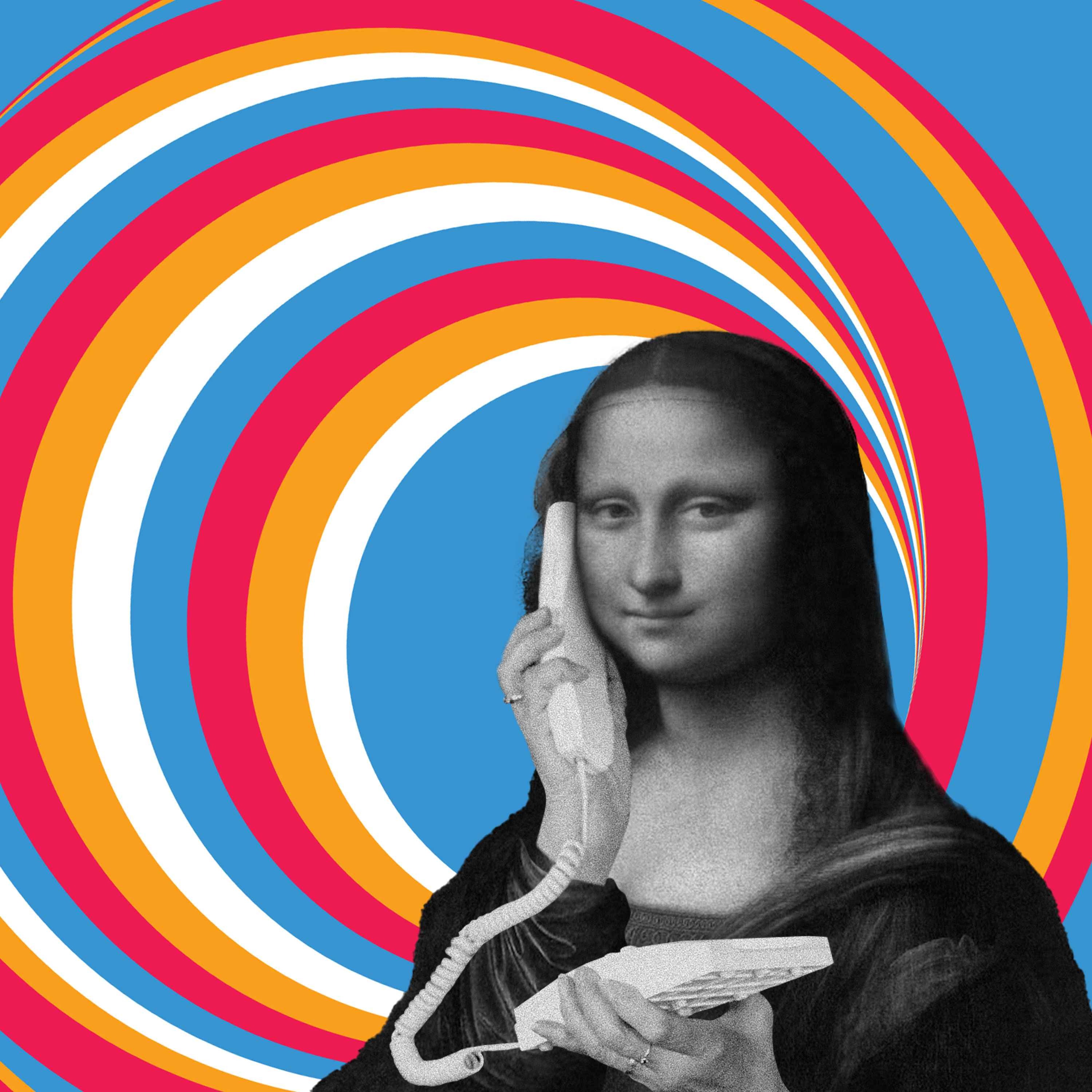
In this inaugural installment of Decoder Rings Back, Willa calls up listener Dustin Malek about his cultural mystery: Why did the Mona Lisa, of all paintings,
become the most famous in the world, bar none? Willa shares the story of daring heist that turned Leonardo da Vinci’s enigmatic smiling subject into a celebrity.
Future episodes of Decoder Rings Back will only be available to Slate Plus subscribers. So if you want to be sure not to miss them, sign up for Slate Plus! You’ll get exclusive episodes and ad-free listening not just on our show, but all your favorite Slate podcasts. Subscribe from the Decoder Ring show page on Apple Podcasts or Spotify, or visit slate.com/decoderplus for access wherever you listen.
This episode was produced by Max Freedman. Decoder Ring is also produced by Katie Shepherd and Evan Chung, our supervising producer. Merritt Jacob is Senior Technical Director.
If you have any cultural mysteries you want us to decode, email us at DecoderRing@slate.com or leave a message on our hotline at (347) 460-7281.
Sources for This Episode
Cumming, Laura. “The man who stole the Mona Lisa,” The Guardian, August 5, 2011.
Hoobler, Dorothy, and Thomas Hoobler. “Stealing Mona Lisa,” Vanity Fair, April 16, 2009.
Hoobler, Dorothy, and Thomas Hoobler. The Crimes of Paris: A True Story of Murder, Theft, and Detection, Bison Books, 2010.
Isaacson, Walter. Leonardo da Vinci, Simon & Schuster, 2018.
Roberts, Sam. “Happy Birthday to the Man Who Stole the Mona Lisa and Took It to Italy,” The New York Times, October 7, 2022.
Sassoon, Donald. “Mona Lisa: The Best-Known Girl in the Whole Wide World,” History Workshop Journal, Spring 2001.
Sassoon, Donald. Mona Lisa: The History of the World’s Most Famous Painting, HarperCollins, 2016.
“The Theft That Made The 'Mona Lisa' A Masterpiece,” NPR, July 30, 2011.
Zug, James. “Stolen: How the Mona Lisa Became the World’s Most Famous Painting,” Smithsonian Magazine, June 15, 2011.
Need to set up your Slate Plus feed? If you subscribed through Slate.com, check out our FAQ at slate.com/podcastfaqs for easy instructions. Members subscribed via Apple Podcasts get automatic access—no setup required.
Hosted on Acast. See acast.com/privacy for more information.
We are really lucky to get lots of listener suggestions for the show, more good questions than we can possibly answer in a mailbag episode once or twice a year. So we’re starting a new segment we call… Decoder Rings Back! Every month, host Willa Paskin will personally call up a listener to answer their question.
In this inaugural installment of Decoder Rings Back, Willa calls up listener Dustin Malek about his cultural mystery: Why did the Mona Lisa, of all paintings, become the most famous in the world, bar none? Willa shares the story of daring heist that turned Leonardo da Vinci’s enigmatic smiling subject into a celebrity.
Future episodes of Decoder Rings Back will only be available to Slate Plus subscribers. So if you want to be sure not to miss them, sign up for Slate Plus! You’ll get exclusive episodes and ad-free listening not just on our show, but all your favorite Slate podcasts. Subscribe from the Decoder Ring show page on Apple Podcasts or Spotify, or visit slate.com/decoderplus for access wherever you listen.
This episode was produced by Max Freedman. Decoder Ring is also produced by Katie Shepherd and Evan Chung, our supervising producer. Merritt Jacob is Senior Technical Director.
If you have any cultural mysteries you want us to decode, email us at DecoderRing@slate.com or leave a message on our hotline at (347) 460-7281.
Sources for This Episode
Cumming, Laura. “The man who stole the Mona Lisa,” The Guardian, August 5, 2011.
Hoobler, Dorothy, and Thomas Hoobler. “Stealing Mona Lisa,” Vanity Fair, April 16, 2009.
Hoobler, Dorothy, and Thomas Hoobler. The Crimes of Paris: A True Story of Murder, Theft, and Detection, Bison Books, 2010.
Isaacson, Walter. Leonardo da Vinci, Simon & Schuster, 2018.
Roberts, Sam. “Happy Birthday to the Man Who Stole the Mona Lisa and Took It to Italy,” The New York Times, October 7, 2022.
Sassoon, Donald. “Mona Lisa: The Best-Known Girl in the Whole Wide World,” History Workshop Journal, Spring 2001.
Sassoon, Donald. Mona Lisa: The History of the World’s Most Famous Painting, HarperCollins, 2016.
“The Theft That Made The 'Mona Lisa' A Masterpiece,” NPR, July 30, 2011.
Zug, James. “Stolen: How the Mona Lisa Became the World’s Most Famous Painting,” Smithsonian Magazine, June 15, 2011.
Need to set up your Slate Plus feed? If you subscribed through Slate.com, check out our FAQ at slate.com/podcastfaqs for easy instructions. Members subscribed via Apple Podcasts get automatic access—no setup required.
Hosted on Acast. See acast.com/privacy for more information.
25 minAbspielen in:
Warum PodAppear
Folge Menschen, nicht Podcasts.
Du hast Willa in einer Sendung gehört. PodAppear findet für dich die nächste, und genauso für alle anderen, die du hören willst.
Eine Meldung, wenn die Person zu Gast istPer E-Mail: sofort oder gebündelt als Tages- oder Wochenübersicht. Dann nur noch auf Play drücken.
Gäste statt bloßer ErwähnungenFolgen, in denen ein Name nur fällt, landen getrennt. Eine Meldung heißt: Die Person ist wirklich in der Sendung.
Alle in einem FeedGründerinnen, Autoren, Sportler, Forscherinnen. Folge allen mit Namen, quer durch jede Sendung, in der sie auftreten.