Bekomm eine E-Mail, wenn Tariq in einem Podcast zu Gast istPodAppear prüft neue Folgen, sobald sie erscheinen, und lässt die weg, in denen Tariq nur erwähnt wird. Bis zu 15 Personen kostenlos, ohne Kreditkarte.Bis zu 15 Personen kostenlos, ohne Kreditkarte.
In our ongoing quest to develop a moon base, could we possibly utilize the area beneath the surface of the moon in order to make the moon habitable? In this episode of This Week in Space, Tariq Malik and guest host Mike Wall of Space.com talk with Than Putzig of the Planetary Science Institute about a NASA-backed payload bound for the Marius Hills Pit, a roughly 50-meter-wide opening that may lead into a lunar lava tube to gather more data about these formations on the Moon and the possibility of these lunar caves becoming the Moon's first living habitats for humans. Putzig explains how geophysical instruments on a rover could detect hidden voids beneath the surface and measure the size of these lava tubes. We also ask Than how these lava tubes form, what a follow-up robotic explorer could reveal, and how this research fits alongside NASA's Artemis plans for a south polar moon base. Join us!
Headlines:
Clear Images Emerge of China's Secretive Shenzhou Space Plane
Virgin Galactic Unveils New Delta Class Spaceplane for Tourism
Remembering Star Trek Legends Walter Koenig and Sir Patrick Stewart
Main Topic: Exploring Lunar Caves and the Gimli Mission
Introduction to Lunar Caves, Pits, and the Quest for Lava Tubes
NASA's Gimli Mission and Selection to Explore Marius Hills Pit
Science Goals: Detecting and Mapping Lunar Lava Tubes for Potential Habitats
Details on Geophysical Instruments and Survey Techniques
Potential Benefits of Lava Tubes for Lunar Habitat Planning
Technical and Logistical Challenges for Accessing and Using Lunar Lava Tubes
Parallels with Lava Tubes on Mars and Planetary Science Collaboration
Building Teams and Proposals at the Planetary Science Institute
Future Steps for the Gimli Mission and Outreach Efforts
Host: Tariq Malik
Co-Host: Mike Wall
Guest: Than Putzig
Download or subscribe to This Week in Space at https://twit.tv/shows/this-week-in-space.
Join Club TWiT for Ad-Free Podcasts!
Support what you love and get ad-free audio and video feeds, a members-only Discord, and exclusive content. Join today: https://twit.tv/clubtwit
Newspace is hiring! With the major powers heading to the moon, low-Earth orbit becoming busier than ever, and countless new companies entering the space marketplace, the hiring pipeline is more critical than ever. We spoke with Dr. Amanda Smith-Hackler, the Director of Education for the Universities Space Research Association and Principal Investigator for the Air Force Research Laboratory (AFRL) Scholars and STEM Workforce Development Programs, about the new and exciting opportunities available to young people seeking to enter the space workforce.
Host: Tariq Malik
Co-Host: Fredrick (Rick) Jenet
Guest: Dr. Amanda Smith-Hackler
Download or subscribe to This Week in Space at https://twit.tv/shows/this-week-in-space.
Join Club TWiT for Ad-Free Podcasts!
Support what you love and get ad-free audio and video feeds, a members-only Discord, and exclusive content. Join today: https://twit.tv/clubtwit
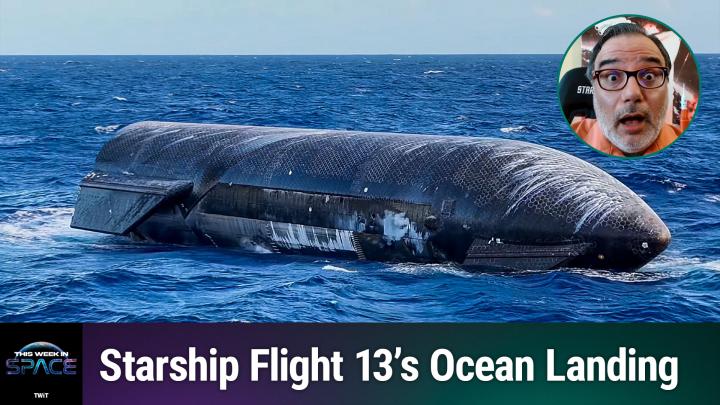
Rod Pyle is out this week, so Rick Jenet of the National Space Society joins Tariq Malik this week to talk about SpaceX's Starship Flight 13, which deployed new Starlink V3 satellites and stunned viewers when the ship survived reentry intact enough to float in the ocean for days afterward. They also discuss NASA's Roman Space Telescope, now just a month from launch, and an in-progress emergency effort to save the ailing Swift Space Observatory using a servicing spacecraft that is itself now experiencing technical trouble. Finally, they look into Boeing's continued Starliner delays and India's first successful private orbital launch via Skyroot Aerospace's Vikram-1 rocket. Tune in!
Headlines:
SpaceX Starship Flight 13 Splashdown and Recovery Efforts
Starlink V3 Satellite Deployment Updates
SpaceX Wins $1.6 Billion Space Force Contract
NASA's Roman Space Telescope Countdown and Origin Story
Urgent Swift Space Observatory Rescue Mission Faces Technical Setbacks
Boeing Starliner Faces More Delays and Uncertainty
India's First Commercial Rocket Launch Enters Global Market
Artemis II Astronaut Questions South Pole as Lunar Landing Target
Astronomers Detect Possible First-Ever Exomoon
Upcoming SpaceX Falcon 9 Impact Experiment on the Moon
Preview: August Almost Total Solar Eclipse and Night Sky Events
Host: Tariq Malik
Co-Host: Fredrick (Rick) Jenet
Download or subscribe to This Week in Space at https://twit.tv/shows/this-week-in-space.
Join Club TWiT for Ad-Free Podcasts!
Support what you love and get ad-free audio and video feeds, a members-only Discord, and exclusive content. Join today: https://twit.tv/clubtwit
57 minAbspielen in:
Warum PodAppear
Folge Menschen, nicht Podcasts.
Du hast Tariq in einer Sendung gehört. PodAppear findet für dich die nächste, und genauso für alle anderen, die du hören willst.
Eine Meldung, wenn die Person zu Gast istPer E-Mail: sofort oder gebündelt als Tages- oder Wochenübersicht. Dann nur noch auf Play drücken.
Gäste statt bloßer ErwähnungenFolgen, in denen ein Name nur fällt, landen getrennt. Eine Meldung heißt: Die Person ist wirklich in der Sendung.
Alle in einem FeedGründerinnen, Autoren, Sportler, Forscherinnen. Folge allen mit Namen, quer durch jede Sendung, in der sie auftreten.