The new space age is upon us, and This Week in Space leaves no topic untouched. Every Friday, join Editor-in-Chief of Ad Astra magazine, Rod Pyle and Managing Editor of Space.com, Tariq Malik as they explore everything related to the cosmos. Although the show is no longer in production, you can enjoy episodes from…
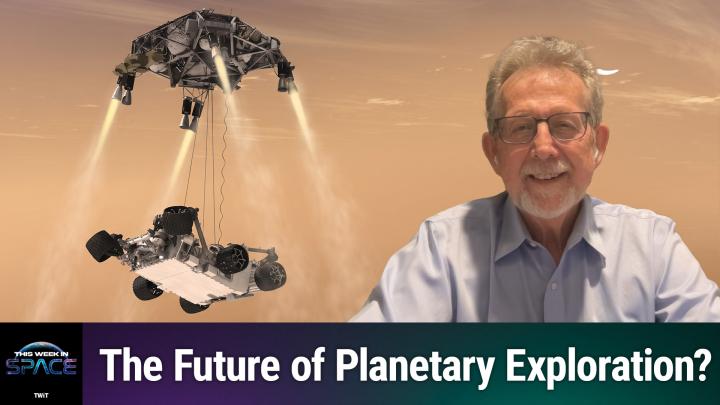
Robots have, and always will, be the first to go to the dark and scary places in space. For many years, Dr. Jim Green oversaw these missions for NASA as their Chief Scientist. He joins us to talk about the past, present, and future of planetary exploration. Jim has always been passionate about NASA's science programs and believes we're quite likely to find life off-Earth in the near future. Join us!
Headlines:
NASA Unveils New X-70 Fractal X-Plane with Reconfigurable Tech
Earth Gains Temporary "Mini Moon" Asteroid 2026 QQ8
NASA Hosts First-Ever Max Power Air Show Highlighting Space Innovation
Deep Space Nine's Iconic "Trials and Tribble-ations" Episode Turns 30
Main Topic: Planetary Exploration, Science Funding, and Planetary Defense With Dr. Jim Green
Top Unexplored Targets: Sending a Submarine to Europa's Ocean
How Political Changes Affect NASA's Budget and Science Programs
Mars Sample Return: Obstacles, Funding Challenges, and Possible Human Exploration Synergy
Science Communication: Relating New Discoveries to Everyday Life and Public Engagement
JPL's "7 Minutes of Terror" and Changing Outreach Strategies
Building Support for Planetary Defense and the DART Mission
Black Swan Events: How Earth is Threatened by Rare, High-Speed Oort Cloud Comets
Innovative Approaches to Science Education through the Metaverse and Outreach
Hosts: Rod Pyle and Tariq Malik
Guest: Dr. Jim Green
Download or subscribe to This Week in Space at https://twit.tv/shows/this-week-in-space.
Join Club TWiT for Ad-Free Podcasts!
Support what you love and get ad-free audio and video feeds, a members-only Discord, and exclusive content. Join today: https://twit.tv/clubtwit
Sponsors:
helixsleep.com/space
threatlocker.com/twit
In our ongoing quest to develop a moon base, could we possibly utilize the area beneath the surface of the moon in order to make the moon habitable? In this episode of This Week in Space, Tariq Malik and guest host Mike Wall of Space.com talk with Than Putzig of the Planetary Science Institute about a NASA-backed payload bound for the Marius Hills Pit, a roughly 50-meter-wide opening that may lead into a lunar lava tube to gather more data about these formations on the Moon and the possibility of these lunar caves becoming the Moon's first living habitats for humans. Putzig explains how geophysical instruments on a rover could detect hidden voids beneath the surface and measure the size of these lava tubes. We also ask Than how these lava tubes form, what a follow-up robotic explorer could reveal, and how this research fits alongside NASA's Artemis plans for a south polar moon base. Join us!
Headlines:
Clear Images Emerge of China's Secretive Shenzhou Space Plane
Virgin Galactic Unveils New Delta Class Spaceplane for Tourism
Remembering Star Trek Legends Walter Koenig and Sir Patrick Stewart
Main Topic: Exploring Lunar Caves and the Gimli Mission
Introduction to Lunar Caves, Pits, and the Quest for Lava Tubes
NASA's Gimli Mission and Selection to Explore Marius Hills Pit
Science Goals: Detecting and Mapping Lunar Lava Tubes for Potential Habitats
Details on Geophysical Instruments and Survey Techniques
Potential Benefits of Lava Tubes for Lunar Habitat Planning
Technical and Logistical Challenges for Accessing and Using Lunar Lava Tubes
Parallels with Lava Tubes on Mars and Planetary Science Collaboration
Building Teams and Proposals at the Planetary Science Institute
Future Steps for the Gimli Mission and Outreach Efforts
Host: Tariq Malik
Co-Host: Mike Wall
Guest: Than Putzig
Download or subscribe to This Week in Space at https://twit.tv/shows/this-week-in-space.
Join Club TWiT for Ad-Free Podcasts!
Support what you love and get ad-free audio and video feeds, a members-only Discord, and exclusive content. Join today: https://twit.tv/clubtwit
Newspace is hiring! With the major powers heading to the moon, low-Earth orbit becoming busier than ever, and countless new companies entering the space marketplace, the hiring pipeline is more critical than ever. We spoke with Dr. Amanda Smith-Hackler, the Director of Education for the Universities Space Research Association and Principal Investigator for the Air Force Research Laboratory (AFRL) Scholars and STEM Workforce Development Programs, about the new and exciting opportunities available to young people seeking to enter the space workforce.
Host: Tariq Malik
Co-Host: Fredrick (Rick) Jenet
Guest: Dr. Amanda Smith-Hackler
Download or subscribe to This Week in Space at https://twit.tv/shows/this-week-in-space.
Join Club TWiT for Ad-Free Podcasts!
Support what you love and get ad-free audio and video feeds, a members-only Discord, and exclusive content. Join today: https://twit.tv/clubtwit
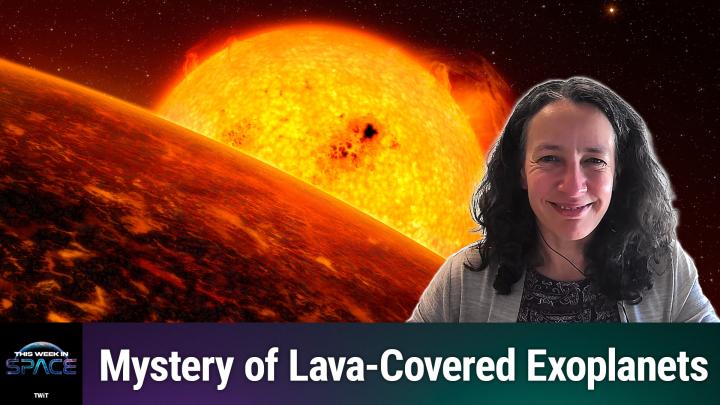
Think you're having a hot summer? Try living on 55 Cancri-e, a super-Earth with daytime temperatures above 4000 degrees Fahrenheit. Most of these super-Earths orbit frighteningly close to their host stars and have long since had their atmospheres scraped away, leaving them baked, parched rocks. But some, like 55 Cancri, still have dense envelopes of air. How is that possible, when the planet is 20 times closer to its star than our own planet Mercury? Dr. Laura Schaefer explains how molten lava worlds defy the odds. Plus: Starship update, the first orbital data centers, and a new year on Mars.
Headlines:
SpaceX's Starship Achieves First Full Orbital Flight With Satellite Deployments
Google and Planet Labs Launch AI Data Center Satellite
Multiple SpaceX Launches Within Hours Mark a New Operational Standard
Cowboy Space Debuts Power-Beaming AI Data Center in Orbit
Mars Celebrates a New Year on Its Extended Journey Around the Sun
NASA Anniversary and Notable Space Birthdays Noted
Main Topic: Living on Lava Worlds—Atmospheres, Extreme Planets, and the Search for Life
Early Exoplanet Detection Methods and Evolution of Exoplanet Surveys
Cosmic Shoreline Concept: How Gravity and Stellar Radiation Shape Planetary Atmospheres
Airless Valleys, Sandbars, and Other New Categories for Rocky Exoplanets
Permanent Magma Oceans: Why Some Lava-covered Worlds Retain Atmospheres
Volatiles, Atmosphere Loss, and The Soda-Bottle Effect on Hot Exoplanets
Sandbar Regime: Superheated Planets Keep Atmospheres Longer Than Expected
Case Study: 55 Cancri e and the Myth of the Diamond Planet
K2-18b: Possibilities of a Water World or Another Magma-Lava Hybrid
Redefining Goldilocks Zones With Atmospheric Survival Factors
Tidal Heating, Volcanism, and Dynamics Shaping Exoplanet Atmospheres
Future Directions: Webb Telescope, Habitable Worlds Observatory, and Prospects for Imaging True "Earths"
Hosts: Rod Pyle and Tariq Malik
Guest: Dr. Laura Schaefer
Download or subscribe to This Week in Space at https://twit.tv/shows/this-week-in-space.
Join Club TWiT for Ad-Free Podcasts!
Support what you love and get ad-free audio and video feeds, a members-only Discord, and exclusive content. Join today: https://twit.tv/clubtwit
Sponsors:
helixsleep.com/space
coveron.com/thisweekinspace and use code thisweekinspace
Hold onto your phasers, but it's been 60 years since Star Trek's debut, and the franchise is still going strong. For 40 of those years, Mike Okuda, working with a gifted team that included his wife Denise, has been central to the look, feel, and substance of the Star Trek universe. From the LCARS computer graphical system to alien languages to the designs and color schemes, and even the digital effects remastering of the original series, Mike has been the Cardinal of Canon when it comes to all things Trek. He has also been involved with many more space-related shows, books, and NASA projects. Join us for this very special episode.
Headlines:
China Announces 2028 Mars Sample Return Mission
U.S. Space Command Conducts First Orbital Dogfighting Test
Reflections on the 25th Anniversary of 9/11 from Space
Main Topic: Star Trek at 60—Legacy, Design, and Influence with Mike Okuda
Mike Okuda's Entry into Star Trek and Early Influences
Defining Star Trek's Visual Identity Across Series
Designing Control Panels and the Origin of LCARS
Maintaining Continuity and Hidden Easter Eggs in Star Trek Sets
Expanding the Design Language for Alien Cultures
Collaboration on For All Mankind and Space/NASA Projects
Challenges and Philosophy Behind Remastering The Original Series
Favorite Episodes, Iconic Sets, and Preserving Star Trek Props
The Enduring Core Message and Legacy of the Star Trek Franchise
Hosts: Rod Pyle and Tariq Malik
Guest: Michael Okuda
Download or subscribe to This Week in Space at https://twit.tv/shows/this-week-in-space.
Join Club TWiT for Ad-Free Podcasts!
Support what you love and get ad-free audio and video feeds, a members-only Discord, and exclusive content. Join today: https://twit.tv/clubtwit
Capitalism—and a strong profit motivation—has driven enterprise for centuries. Two notable examples are the East India Company and the US transcontinental railroad, and the various tycoons who built it. In neither case, by today's standards, were the operations fair or ethical on a number of fronts. Can we do better in space? Dr. Rainer Zitelmann joins us to discuss capitalism and the importance of extraterrestrial land ownership as an enabler of human expansion off-Earth. He's got a lot to say, and not all of it is what you might expect. Join us for this fascinating and informative look at one business case for newspace.
Headlines:
• NASA's Roman Space Telescope Launches to Explore Cosmic Mysteries
• SpaceX Falcon Heavy Returns to Action for Major NASA Mission
• Blue Origin Selected to Build Mars Communications Relay for NASA
• Japan and Europe's BepiColombo Mission Arrives at Mercury
Main Topic: Who Owns the Moon? — Capitalism in Space With Dr. Rainer Zitelmann
• Dr. Zitelmann Explains Market Forces Transforming the Space Industry
• Historical Parallels Between Economic Reforms and the Privatization of Space
• The Outer Space Treaty and Legal Uncertainty Around Private Ownership Off-Earth
• Potential for Stock Markets and REITs for Off-World Real Estate and Resources
• China's Rapid Advancement in Private Space and Market-Driven Innovation
• Safety Zones, Artemis Accords, and the Limits of Current Legal Frameworks
• First-Mover Advantage: How Initial Claims Might Play Out on the Moon and Mars
• Equity, Envy, and Ethical Debates Over Colonization and Space Ownership
• The Role of Commercial Incentive Versus Public Benefit in Expanding Humanity's Reach
Get "New Space Capitalism" (Amazon Affiliate Link): https://amzn.to/4xEeGID
Hosts: Rod Pyle and Tariq Malik
Guest: Dr. Rainer Zitelmann
Download or subscribe to This Week in Space at https://twit.tv/shows/this-week-in-space.
Join Club TWiT for Ad-Free Podcasts!
Support what you love and get ad-free audio and video feeds, a members-only Discord, and exclusive content. Join today: https://twit.tv/clubtwit
Sponsors:
outsystems.com/twit
helixsleep.com/space
It has been said that the Moon is a harsh mistress, and nowhere is this more apparent than at the lunar south pole. That is, however, where the Artemis program is headed, and we need to figure out how to best explore the region. Dr. David Kring of the Universities Space Research Association's Lunar and Planetary Institute joins us to explore the where, whys, and hows of the Artemis Program's lunar exploration plans, and the answers--and risks--that await us.
Headlines:
Starship Flight 12 Survives Indian Ocean Landing nd Long Sea Journey
China's Chang'e 7 Lunar Hopper Mission Targets Permanently Shadowed Terrain
US National Space Transportation Policy Aims for 1,000 Launches Per Year by 2030
Main Topic: The Science and Planning of the Artemis Lunar Program
Criteria and Studies for Selecting Artemis Landing Sites
South Pole Resource Advantages: Continuous Solar Power and Potential Volatiles
Scientific Promise of the Schrödinger Impact Basin vs. South Pole Mandate
The Value of Lunar Sample Return for Transformational Science
Unique Terrain and Operational Challenges of the Lunar South Polar Region
Training, Mobility, and the Role of Human Exploration versus Robotics
Impact Cratering's Role in Life's Origins and Earth's Early History
Considerations for Lunar Base Location and Hazards
Training Programs for Scientists and Astronauts Preparing for Artemis
Host: Rod Pyle
Co-Host: Fredrick (Rick) Jenet
Guest: Dr. David Kring
Download or subscribe to This Week in Space at https://twit.tv/shows/this-week-in-space.
Join Club TWiT for Ad-Free Podcasts!
Support what you love and get ad-free audio and video feeds, a members-only Discord, and exclusive content. Join today: https://twit.tv/clubtwit
We've all seen the movies... the aliens come to Earth, the aliens overcome the inferior humans, and the aliens fall prey to something dumb they overlooked, like microbes, Windows 95, or most absurdly, water. From the 1950s through yesterday, some of the best movies we've seen were about the invasion of our planet. They can be clever, scary, or even downright dumb, but they are all fun. Veteran space writer Rich Edwards joins us to give advice on how to repel the invaders!
Headlines:
Department of Defense drops new batch of UFO/UAP files
Blue Origin traces New Glenn rocket explosion to faulty oxygen valve
SpaceX's first public earnings call reveals key financials and hints at Starship's future
Total solar eclipse set to cross Europe; safety tips and gear recommendations
Main Topic: How to Invade Earth in Sci-Fi—22 Dos and Don'ts with Rich Edwards
The enduring appeal and adaptability of War of the Worlds
Why alien invaders always go for major landmarks (and why it's all for show)
Critique of aliens with impractical invasion strategies—water allergies and cocky attitudes
Pop culture's obsession with alien disguises, conspiracy plots, and gradual infiltration
Deep dive into Invasion of the Body Snatchers, Day of the Triffids, and the power of slow, stealthy takeovers
Starting small: Alien invasions in isolated towns and subtle conquests
The strategic use of time travel in alien invasion movies, with Star Trek: First Contact
Why James Cameron's Aliens remains a sci-fi invasion classic decades later
What makes a satisfying alien invasion ending—and the pitfalls of lazy resolutions
Hosts: Rod Pyle and Tariq Malik
Guest: Richard Edwards
Download or subscribe to This Week in Space at https://twit.tv/shows/this-week-in-space.
Join Club TWiT for Ad-Free Podcasts!
Support what you love and get ad-free audio and video feeds, a members-only Discord, and exclusive content. Join today: https://twit.tv/clubtwit
Sponsor:
helixsleep.com/space
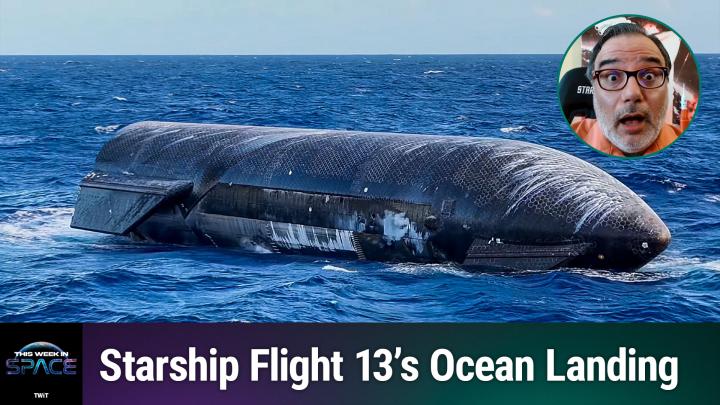
Rod Pyle is out this week, so Rick Jenet of the National Space Society joins Tariq Malik this week to talk about SpaceX's Starship Flight 13, which deployed new Starlink V3 satellites and stunned viewers when the ship survived reentry intact enough to float in the ocean for days afterward. They also discuss NASA's Roman Space Telescope, now just a month from launch, and an in-progress emergency effort to save the ailing Swift Space Observatory using a servicing spacecraft that is itself now experiencing technical trouble. Finally, they look into Boeing's continued Starliner delays and India's first successful private orbital launch via Skyroot Aerospace's Vikram-1 rocket. Tune in!
Headlines:
SpaceX Starship Flight 13 Splashdown and Recovery Efforts
Starlink V3 Satellite Deployment Updates
SpaceX Wins $1.6 Billion Space Force Contract
NASA's Roman Space Telescope Countdown and Origin Story
Urgent Swift Space Observatory Rescue Mission Faces Technical Setbacks
Boeing Starliner Faces More Delays and Uncertainty
India's First Commercial Rocket Launch Enters Global Market
Artemis II Astronaut Questions South Pole as Lunar Landing Target
Astronomers Detect Possible First-Ever Exomoon
Upcoming SpaceX Falcon 9 Impact Experiment on the Moon
Preview: August Almost Total Solar Eclipse and Night Sky Events
Host: Tariq Malik
Co-Host: Fredrick (Rick) Jenet
Download or subscribe to This Week in Space at https://twit.tv/shows/this-week-in-space.
Join Club TWiT for Ad-Free Podcasts!
Support what you love and get ad-free audio and video feeds, a members-only Discord, and exclusive content. Join today: https://twit.tv/clubtwit
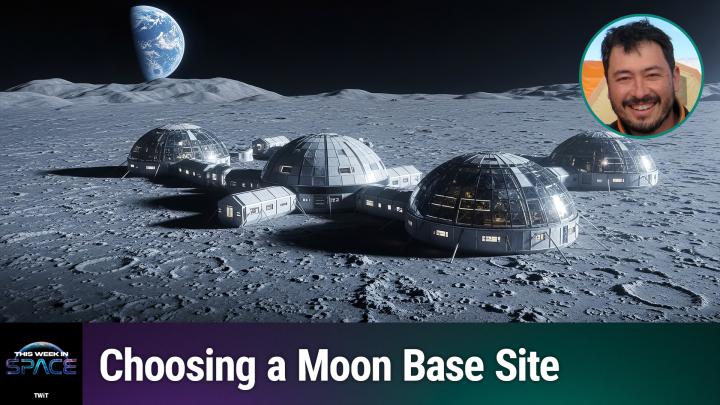
We've been hearing a lot about NASA's new moonbase plans, and they are ambitious. Starting with Artemis V (so far), the US plans to begin preparations for a permanent base situated in the south polar regions of the moon. Details are somewhat fluid, but one thing stands out: the poles are likely to be the most challenging places to set up shop in an already hostile environment. Planetary scientist Dr. Pascal Lee joins us to discuss moonbase siting options and why the poles may not be the best choice at first.
Headlines:
China Demonstrates Impressive Rocket Landing and Catch Mechanism
New Horizons Probe Awakens to Transmit Deep Space Data
Wally Funk, Last of the "Mercury 13," Passes Away
West Coast Rocket Launch Alert: SpaceX Falcon 9 Visual Spectacle
Main Topic: Moon Base Strategy and Location Debate
History and Evolution of U.S. Moon Base Plans
NASA's New Multi-Phase Moon Base Timeline and Missions
Strategic and Logistical Challenges of South Pole Moon Bases
Arguments for a Centralized, Benign Location for Moon Infrastructure
Commercial and International Partnership Models for Lunar Operations
Role of Robotics and AI in Moon Exploration and Prospecting
Lessons from Antarctic Base Logistics Applied to the Moon
Potential for Tourism and Commercial Development on the Lunar Surface
Hosts: Rod Pyle and Tariq Malik
Guest: Pascal Lee
Download or subscribe to This Week in Space at https://twit.tv/shows/this-week-in-space.
Join Club TWiT for Ad-Free Podcasts!
Support what you love and get ad-free audio and video feeds, a members-only Discord, and exclusive content. Join today: https://twit.tv/clubtwit
Sponsors:
blackhat.com/us-26 and use code TWIT
rippling.ai/twis
threatlocker.com/twit
When one ponders the diet of Mars-bound astonauts, oysters don't often come to mind... but they should. As it turns out, the plucky bivalves have much to offer space voyagers, including water filtration and a ready source of protein. Jacob Scoccimerra, formerly of Nanoracks and now with Monolith Space, initiated a research project with students from the Harrisburg University of Science and Technology, to design, build, and operate a closed-circuit, automated support environment for oysters in a simulated space analog. It's a fascinating discussion that may leave you hungry.
Headlines:
SpaceX IPO Filing Reveals Company Finances
NASA Opens JPL Operations to New Bidders, Eyes Management Shakeup
Viral Cardboard Star Wars Fan Film Gets a Nod
SpaceX Announces Crypto Billionaire's Planned Mars Flyby on Starship
Main Topic: Oysters in Space – Bioregenerative Life Support and Student Research
Jacob Discusses Monolith Space and Roots in Chemical Engineering
Origins and Environmental Role of Oysters in Water Filtration
Applying Aquatic Organisms to Space-Based Life Support Systems
Harrisburg University Student Collaboration and Prototype Development
Technical and Biological Challenges of Running Aquatic Habitats in Space
Educational Outcomes and Cross-Disciplinary Engineering Experience
Potential Earth Applications and Insights for Aquaculture Industry
Broader Prospects for Bioregenerative Systems in Space (e.g., other aquatic species, food sustainability)
Hosts: Rod Pyle and Tariq Malik
Guest: Jacob Scoccimerra
Download or subscribe to This Week in Space at https://twit.tv/shows/this-week-in-space.
Join Club TWiT for Ad-Free Podcasts!
Support what you love and get ad-free audio and video feeds, a members-only Discord, and exclusive content. Join today: https://twit.tv/clubtwit
Sponsor:
outsystems.com/twit
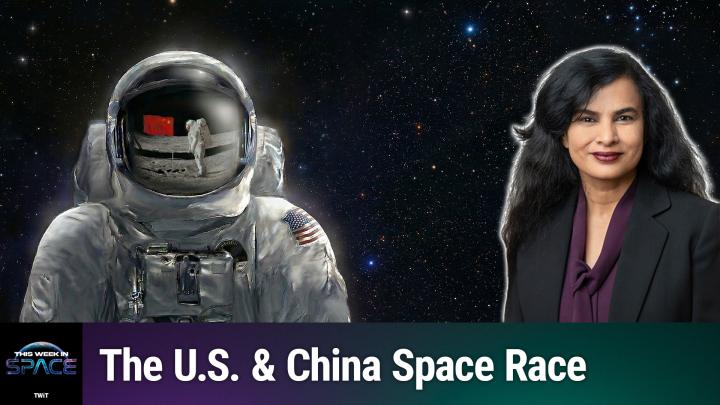
Many suggest there is a new space race afoot, this time between the US and China. We've also seen that America seems to be at its best in innovation and achievement when challenged by some external force. Will the Chinese human lunar program light the fuse of American innovation and accomplishment when it comes to our lagging lunar program and other spaceflight initiatives? Dr. Namrata Goswami of Johns Hopkins University joins us to examine the intricacies of potential threats to American leadership in space and the possible outcomes. Who will be first to land astronauts on the moon? Does it really matter? Who controls what regions of the moon? Will cislunar space be contested between major space powers? This and much more in this episode of This Week in Space.
Headlines:
Artemis 2 Mission Nears Launch, Astronauts Arrive at Kennedy Space Center
Stunning New Images of Saturn Released from Webb and Hubble Telescopes
"For All Mankind" Renewed for Sixth and Final Season
Nancy Grace Roman Space Telescope Clears Vibration Test, Launch Date Set
Main Topic: U.S.-China Competition and Global Ambitions in Space
Dr. Namrata Goswami Explains the Evolution of the New Space Race
China's Strategic, Economic, and Cultural Goals for Lunar Exploration
Comparison of U.S. and Chinese Approaches to Public Messaging and Program Identity
The Role of the Artemis Accords vs. China's International Lunar Research Station Partnerships
The Legal and Political Implications of Lunar Safety and Exclusion Zones
Space Force's Emerging Role in Cislunar Security and Commerce
Increasing Global Participation: India, Japan, and Developing Nations Expand Space Competition
Impact of Lunar "Real Estate" and Resource Maps on International Strategies
Hosts: Rod Pyle and Tariq Malik
Guest: Dr. Namrata Goswami
Download or subscribe to This Week in Space at https://twit.tv/shows/this-week-in-space.
Join Club TWiT for Ad-Free Podcasts!
Support what you love and get ad-free audio and video feeds, a members-only Discord, and exclusive content. Join today: https://twit.tv/clubtwit
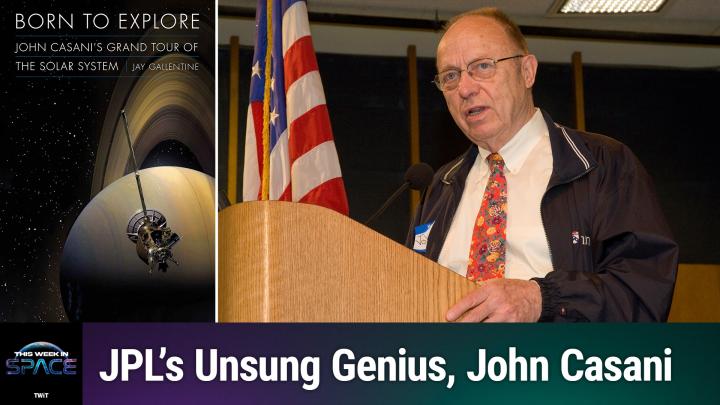
When most people think about deep space exploration, management acumen is generally not the first thing they settle on—but without it, no robotic mission would ever succeed. This week we are joined by Jay Gallentine, author of multiple books on the robotic exploration of space. Each of these tomes is a somewhat of a masterpiece; a deep dive into a topic that few explore in such detail. His newest book, "Born to Explore," started off as a book about robots exploring Mars, but his interviews with former JPL manager John Casani was so compelling that he transformed it into a biography. John Casani is a legend at JPL and NASA, and his story reads like a combination of a spaceflight adventure, personal memoir, and a pirate's tale. You'll love the book, and you'll love hearing about it from Jay. Join us!
Headlines:
Artemis II Sets April 1st Launch Date Amid Technical Fixes
NASA Discusses Risks and Media Reactions Around Artemis II Mission Breifing
OIG Report Reveals Delays and Issues with Artemis Moon Landers
NASA's Human Landing System Development Faces Setbacks
Blue Origin and SpaceX Landers Compared for Progress and Outlook
Starship's Next Launch and Orbital Refueling Plans Delayed Again
Main Topic: Jay Gallantine on His Book, Born to Explore, and John Casani's NASA Legacy
Jay Gallantine Shares Origins of His Space Research and Writing Career
Unpacking John Casani's Crucial Role at JPL and Mission Leadership
Casani's Unique Team-Building Tactics and the Legendary Goat Story
Galileo Mission's Hurdles, Constant Redesigns, and Casani's Problem-Solving
Budget Cuts and Hard Choices on Casini Mission Management
How Casani's Leadership and Philosophy Shaped NASA Spacecraft Teams
Sneak Peek: Gallantine's Upcoming Book on the Evolution of Mars Rovers
Hosts: Rod Pyle and Tariq Malik
Guest: Jay Gallentine
Download or subscribe to This Week in Space at https://twit.tv/shows/this-week-in-space.
Join Club TWiT for Ad-Free Podcasts!
Support what you love and get ad-free audio and video feeds, a members-only Discord, and exclusive content. Join today: https://twit.tv/clubtwit
Sponsors:
threatlocker.com/twit
Melissa.com/twit
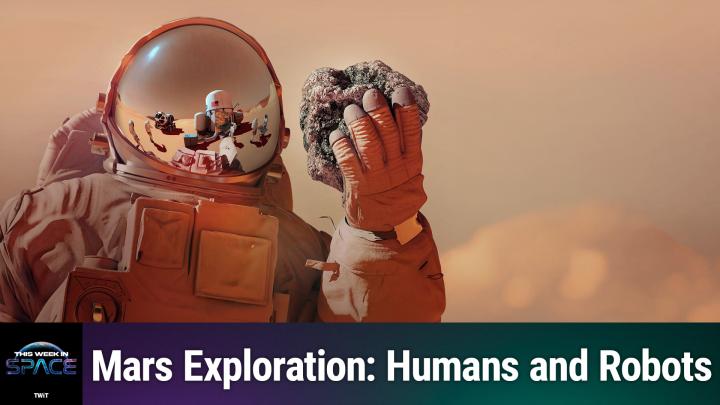
In this age of rapidly advancing AI and robotic technology, do we still need to send humans into space? The argument has long been that people can do things better and faster off-Earth, but the changing face of robotic tech has some feeling otherwise. This week's guest is a returning friend of the show, Dr. Pascal Lee, who has thoughts on how and when robots may perform better--and more safely--than humans in space, and then, of course, Tariq and I worry about how our mechanical masters might take our place in the cosmos. Pascal also reports on his recent experience with the National Academies' report on the human exploration of Mars. Join us!
Headlines:
NASA Unveils Major Overhaul to Artemis Lunar Program, With Arrtemis II & III Facing Delays and a Shift in the Lunar Landing Timeline.
Mike Fincke Revealed as Astronaut Medically Evacuated from ISS
Main Topic: First Steps for the Human Exploration of Mars
National Academies Report Identifies Top Mars Science Priorities for Astronauts, With the Search for Life on Mars Ranked as the Highest Scientific Priority
Strategies Debated: Shorter Missions vs. Building Lasting Mars Infrastructure
Call for Focused Mars Surface Lab to Maximize Science Returns
Discussion of Sample Return, Planetary Protection, and Evolving AI/Robotics/Human Partnerships
Debate Over Long-Term Human Settlement on Mars Versus Robotic and Cyborg Exploration
Implications of Rapid Progress in Humanoid Robotics and AI for the Future of Space Exploration
Also, Rod and Tariq are celebrating their 200th episode of This Week in Space and are hosting an Ask Us Anything (AUA) episode! Get your questions ready and send them to twis@twit.tv for Rod and Tariq to answer them!
Hosts: Rod Pyle and Tariq Malik
Guest: Pascal Lee
Download or subscribe to This Week in Space at https://twit.tv/shows/this-week-in-space.
Join Club TWiT for Ad-Free Podcasts!
Support what you love and get ad-free audio and video feeds, a members-only Discord, and exclusive content. Join today: https://twit.tv/clubtwit
1 h 01 minPlay in:
Guests from more than 12 months ago are part of Pro. See plans

 JG