Bekomm eine E-Mail, wenn Sarah in einem Podcast zu Gast istPodAppear prüft neue Folgen, sobald sie erscheinen, und lässt die weg, in denen Sarah nur erwähnt wird. Bis zu 15 Personen kostenlos, ohne Kreditkarte.Bis zu 15 Personen kostenlos, ohne Kreditkarte.
Sarah O'Connor war in den letzten 12 Monaten in 6 Podcast-Folgen aus 5 verschiedenen Sendungen zu Gast, am häufigsten bei The Economics Show with Soumaya Keynes (2-mal). Zuletzt: The Economics Show with Soumaya Keynes, 26. Nov. 2026.
When Jason Furman was a junior employee at the Council of Economic Advisers, he would pore over spreadsheets and statistical packages, summarise economic papers and fetch a new tie when his boss spilled something on his old one. Furman — now a Harvard professor and senior fellow at the Peterson Institute — says today AI can do everything he used to do, except collect a new tie. So: will AI make economists obsolete? And what can their potential plight tell us about the impact of the technology in other fields? Soumaya speaks to John Burn-Murdoch and Sarah O’Connor, authors of the FT’s AI Shift Newsletter, to find out.
Subscribe to Soumaya's show on Apple, Spotify, Pocket Casts or wherever you listen.
To subscribe to The AI Shift newsletter, click here.
Presented by Soumaya Keynes. Produced by Katya Kumkova, Mischa Frankl-Duval and Edwin Lane. Original music by Breen Turner. The show is mixed by Breen Turner. Manuela Saragosa is the executive producer. Flo Phillips is the FT’s head of audio.
Read a transcript of this episode on FT.com
Hosted on Acast. See acast.com/privacy for more information.
We Are Not Machines: Sarah O’Connor on AI and the Future of Work
We chat to author and Financial Times journalist Sarah O’Connor about her book We are Not Machines: The Fight For the Future of Work
For our 100th episode, we’re marking the milestone with a Future of Work special. We chat to Sarah O’Connor, columnist, reporter and associate editor at the Financial Times, and author of We Are Not Machines: The Fight for the Future of Work. We also discuss current stories about AI at work, from Anthropic’s report on AI agents to professional services pricing and charity workforce planning. Our first ever guest, Simon Blake, now CEO of Stonewall, also joins us with a voice note about work, relationships and the future of the charity sector.
What happens to the quality of work when AI and automation arrive? Sarah O’Connor has spent years reporting on the people experiencing these changes first-hand. In her book, she speaks to workers whose jobs are not simply disappearing, but are becoming more intense, more monotonous or less human.
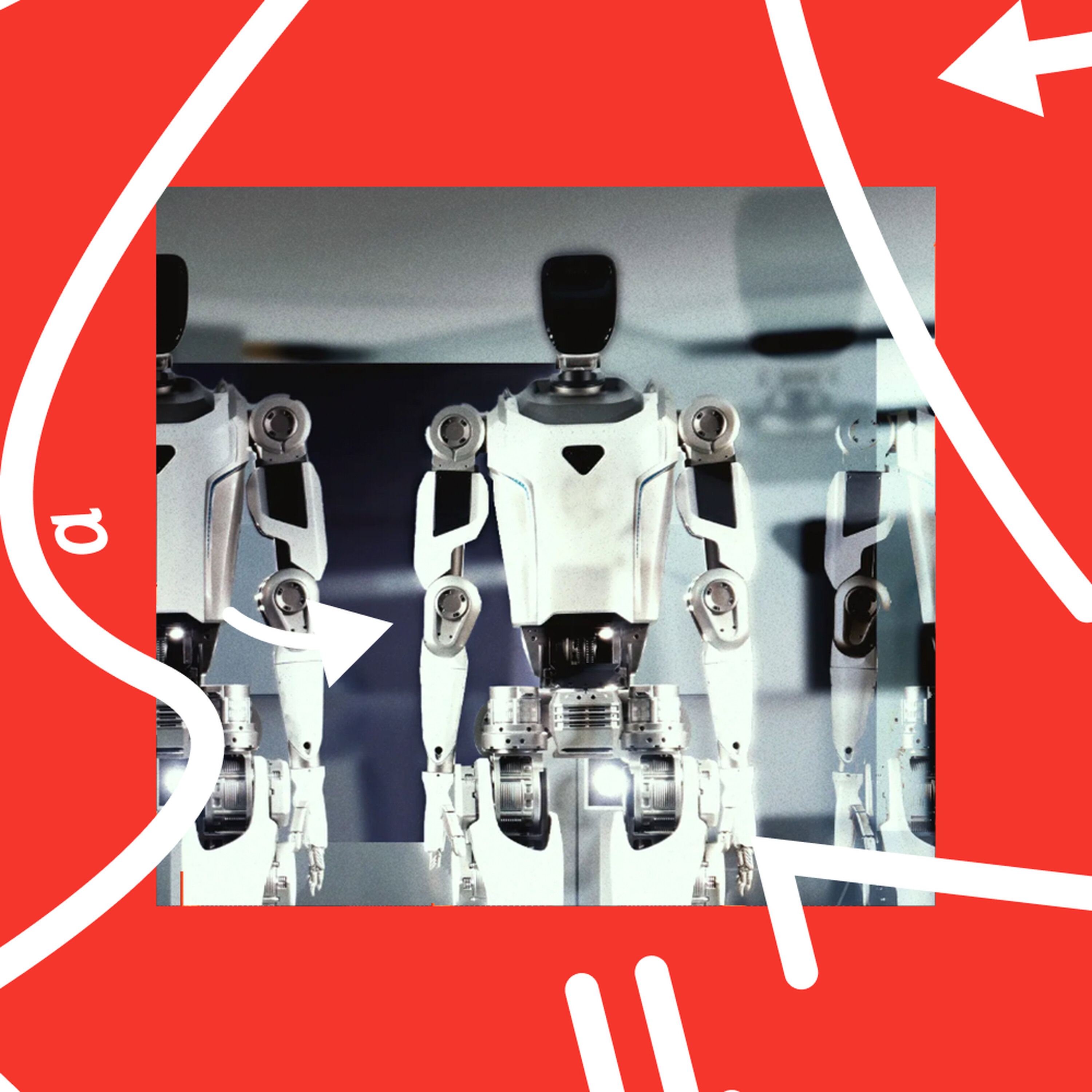
Sarah tells us why we need to look beyond predictions about how many jobs AI might replace and pay attention to what is already happening to the work itself. Warehouse workers now work alongside robots, while translators are asked to edit machine-generated subtitles at greater speed and for less pay. The technology can bring real benefits, but the way it is introduced shapes whether people gain more control or lose the parts of work they value.
We discuss:
Why the quality of work matters as much as the number of jobs
How AI can affect the way we read, think, learn and relate to one another
Why young people may be especially affected as entry-level work and recruitment change
How leaders can involve workers in decisions about technology and protect the human parts of work
Why the future of work is still open to influence, and what gives Sarah hope
This is a thoughtful, grounded conversation about the choices leaders can make as work changes, and why technology’s impact on people is not inevitable.
Show notes
We Are Not Machines: The Fight for the Future of Work by Sarah O’Connor
What does the future of the charity workforce look like in the age of AI?, a white paper from Zoe Amar Digital, Corndel and Microsoft
How employment is changing at Anthropic, the report discussed by Zoe and Paul
Episode 50: Toxic masculinity in the workplace, with Soma Sara
About Sarah O’Connor
Sarah O’Connor is a columnist, reporter and associate editor at the Financial Times. She writes a weekly column focused on the world of work, alongside longer features and investigations. Her journalism has received awards including the Orwell Prize for Exposing Britain’s Social Evils and the Wincott Award for financial journalism.
Please leave us a review if you enjoy what you hear!
Editing and production - Paul Thomas
Music by Joseph McDade - https://josephmcdade.com/music
Full transcript of this episode (srt file)
Full transcript of this episode (.txt file)
Transcripts are also available through your podcast app.
Murad Ahmed speaks to FT journalist Sarah O’Connor about her new book ‘We Are Not Machines’, which explores the impact AI is already having on workplaces. They discuss how Swedish miners dealt with the introduction of AI-powered vehicles, and how Czech translators found AI stealing the most creative part of their job. Recorded live at the FT Weekend Festival.
Tech Tonic is produced by Edwin Lane, the executive producer is Topher Forhecz. Sound design by Breen Turner and Sam Giovinco. Flo Phillips is the FT’s head of audio.
Read a transcript of this episode on FT.com
Hosted on Acast. See acast.com/privacy for more information.
When the Luddites smashed factory frames in a bid to defend their craft and livelihoods, the machines came out on top. Today, AI and automation threaten to wipe out skilled jobs and flood us with inferior products at a fraction of the price: is history going to repeat itself? FT journalist and author of We Are Not Machines Sarah O'Connor joins Tim to discuss her findings from the front lines about the future of work. Which professions are most at risk, and is there anything workers can do about it?
See the show notes at TimHarford.com
Sarah's book, "We Are Not Machines: The Fight for the Future of Work", is available here (UK) and for pre-order here (US).
See omnystudio.com/listener for privacy information.
Artificial intelligence is often discussed in terms of how many jobs it will eliminate, but Sarah O’Connor argues the biggest concern may be not what it does to the quantity of jobs, but the quality. Speaking on Bloomberg’s Trumponomics podcast about her new book, We Are Not Machines: The Fight for the Future of Work, the Financial Times columnist said AI and automation are increasingly reshaping jobs around the strengths and limitations of machines, leaving workers to perform narrower, less-rewarding tasks.
See omnystudio.com/listener for privacy information.
Banks, consultancies and LinkedIn posts alike are trumpeting the transformative effects of AI, promising an imminent uptick in productivity. Some of these claims are no doubt exaggerated. But there are unmistakable signs that AI is boosting productivity. How is that showing up in economic data? And what does that information tell us about the future of the economy? Soumaya is joined by John Burn-Murdoch and Sarah O’Connor, authors of the FT’s ‘AI Shift’ newsletter, to discuss.
You can sign up to the AI shift newsletter here.
Related Links
Where is AI showing up in the productivity data?
The AI productivity take-off is finally visible
Presented by Soumaya Keynes. Produced by Mischa Frankl-Duval. Manuela Saragosa is the executive producer. Sound design by Sean McGarrity. Original music by Breen Turner. The FT head of audio is Cheryl Brumley.
Read a transcript of this episode on FT.com
Hosted on Acast. See acast.com/privacy for more information.
27 minAbspielen in:
Warum PodAppear
Folge Menschen, nicht Podcasts.
Du hast Sarah in einer Sendung gehört. PodAppear findet für dich die nächste, und genauso für alle anderen, die du hören willst.
Eine Meldung, wenn die Person zu Gast istPer E-Mail: sofort oder gebündelt als Tages- oder Wochenübersicht. Dann nur noch auf Play drücken.
Gäste statt bloßer ErwähnungenFolgen, in denen ein Name nur fällt, landen getrennt. Eine Meldung heißt: Die Person ist wirklich in der Sendung.
Alle in einem FeedGründerinnen, Autoren, Sportler, Forscherinnen. Folge allen mit Namen, quer durch jede Sendung, in der sie auftreten.