Bekomm eine E-Mail, wenn Santiago in einem Podcast zu Gast istPodAppear prüft neue Folgen, sobald sie erscheinen, und lässt die weg, in denen Santiago nur erwähnt wird. Bis zu 15 Personen kostenlos, ohne Kreditkarte.Bis zu 15 Personen kostenlos, ohne Kreditkarte.
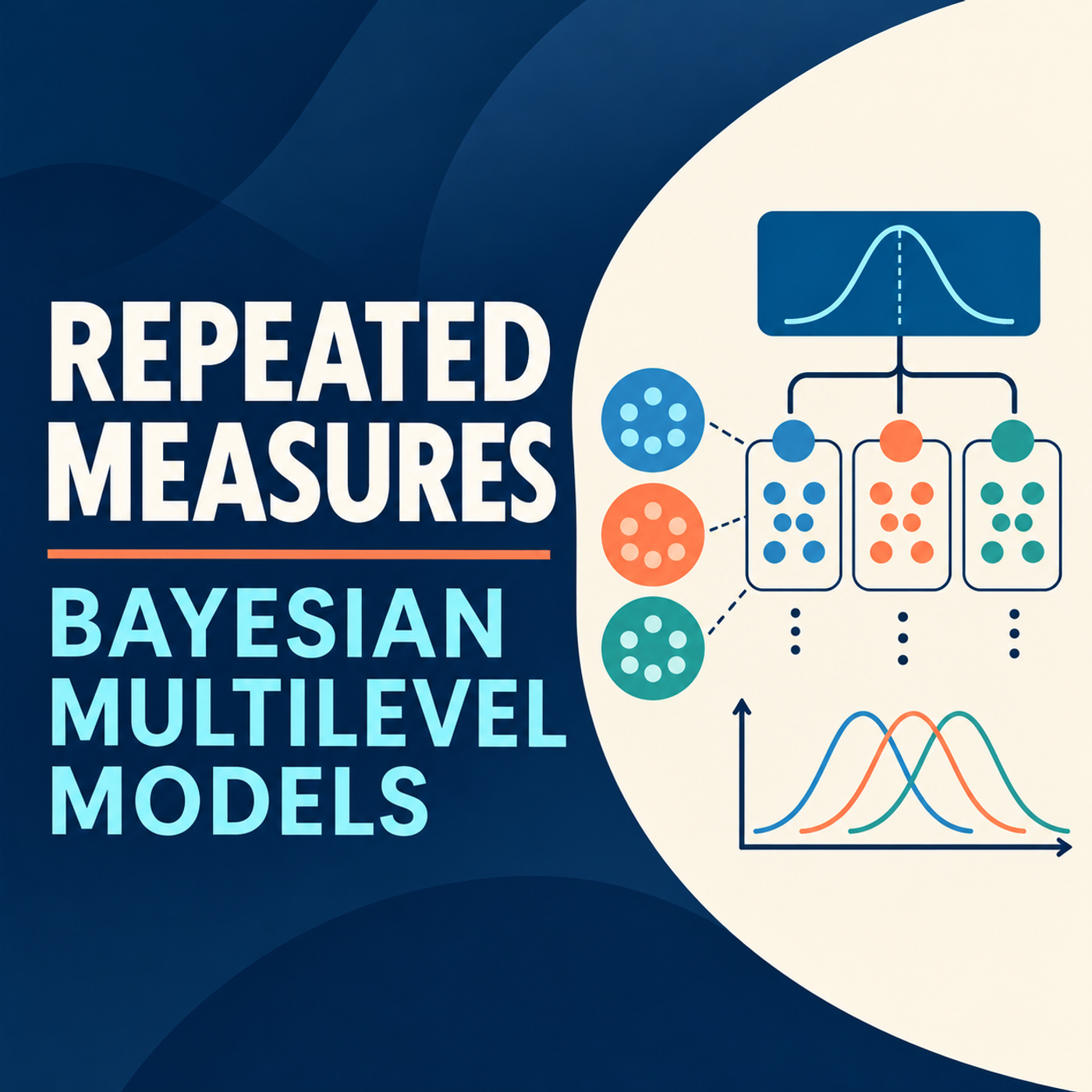
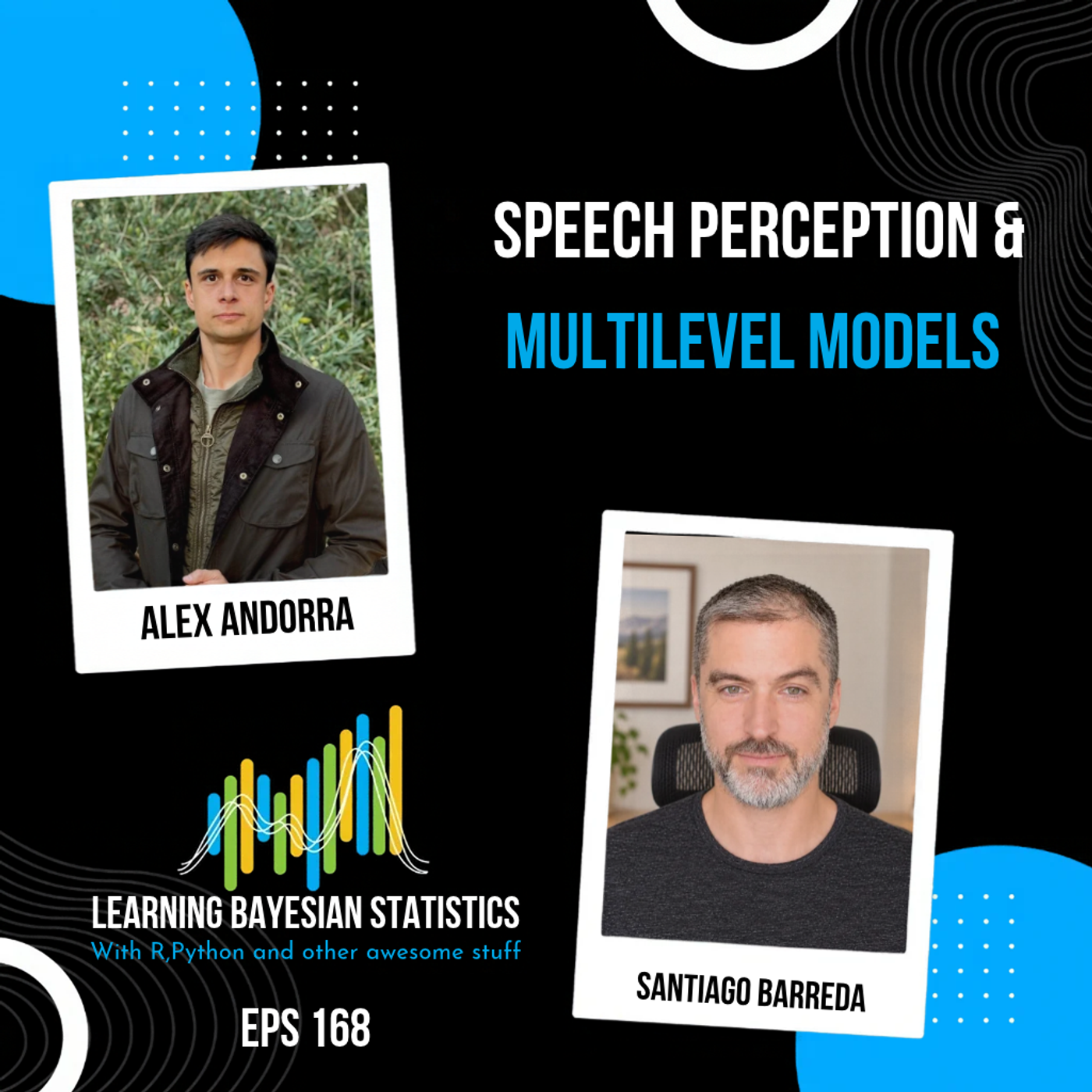
Today's clip is from Episode 168 of Learning Bayesian Statistics, featuring Santiago Barreda, who joins host Alex Andorra to discuss Bayesian multilevel models and why they are particularly useful for researchers working with repeated measures data.
Santiago explains why he believes students in linguistics and related fields should spend less time learning traditional statistical models like t-tests and ANOVAs, and start directly with the multilevel models they will actually use in their research. In fields like linguistics, researchers often collect hundreds of observations from each listener, making repeated measures data the norm rather than the exception.
He also discusses the motivation behind his book, *Bayesian Multilevel Models for Repeated Measures Data*, which aims to make these methods more accessible through fully worked examples. The book walks readers through research questions, model structure, interpretation, visualisation and reporting results, with comparisons to equivalent frequentist analyses.
Full discussion here
Support & Resources
→ Support the show on Patreon
→ Bayesian Modeling Course (first 2 lessons free):
Our theme music is « Good Bayesian », by Baba Brinkman (feat MC Lars and Mega Ran). Check out his awesome work!
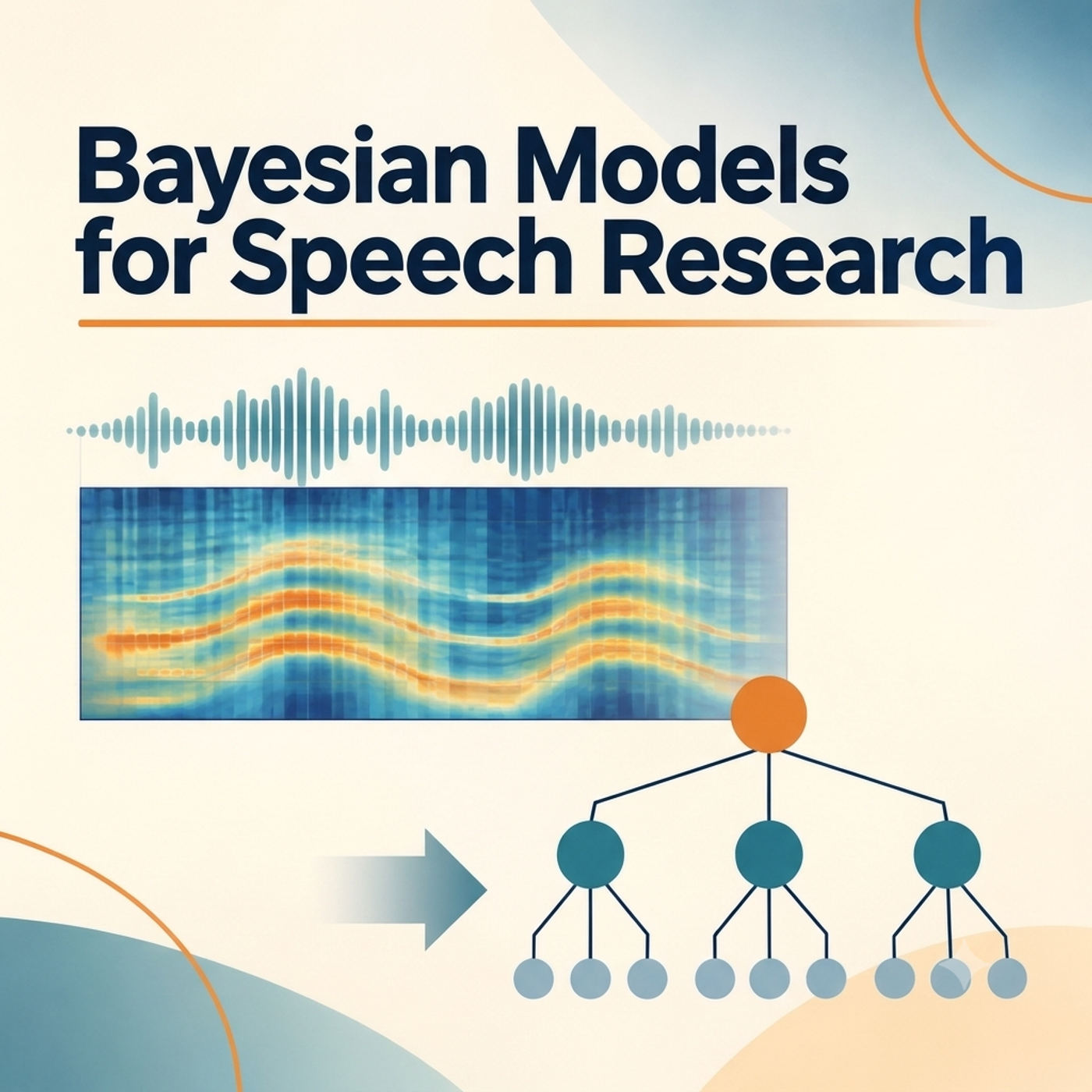
Today's clip is from Episode 168 of Learning Bayesian Statistics, featuring Santiago Barreda, who joins host Alex Andorra to discuss Bayesian multilevel models and their applications in speech perception and linguistics.
Santiago explains how tools like BRMS have made Bayesian modelling much more accessible, lowering the barrier to entry for researchers working in linguistics and speech perception. He also addresses some common concerns around Bayesian methods, particularly the choice of priors, arguing that these concerns are often overstated and that their influence can be examined directly.
He highlights the value of multilevel models in understanding listener variation within speech communities, as well as their flexibility in handling outliers, heteroscedasticity, ordinal data and multinomial data. Alex adds to the discussion by sharing a practical example of fitting mixed-effects models using PyMC, including how different prior choices can affect the results.
Full discussion here
Support & Resources
→ Support the show on Patreon
→ Bayesian Modeling Course (first 2 lessons free):
Our theme music is « Good Bayesian », by Baba Brinkman (feat MC Lars and Mega Ran). Check out his awesome work!
Support & Resources
→ Support the show on Patreon
→ Bayesian Modeling Course (first 2 lessons free)
Our theme music is « Good Bayesian », by Baba Brinkman (feat MC Lars and Mega Ran). Check out his awesome work!
Takeaways:
Q: Why would a linguist switch from lme4 to Bayesian multilevel models?
A: For Santiago, it was purely practical. Mixed-effects models fit with lme4 kept failing to converge, and they couldn't handle the complex repeated-measures structures his experiments needed. His friend Noah Silbert got him into Bayesian modeling around 2015, and only afterwards did he realize he agreed with the philosophy too. His analogy: the frequentist toolbox is a furniture store, and if it doesn't sell the bed you need, you settle for the nearest one; Bayesian modeling teaches you carpentry, so the model can match what you believe is going on in your data instead of squeezing the data into a standard structure.
Q: Why teach Bayesian multilevel models before t-tests and ANOVA?
A: Because in linguistics essentially all data are repeated measures: listeners judge hundreds of trials, and speakers produce many tokens. Yet students traditionally spend a year or more on one-sample t-tests, paired t-tests and ANOVAs they will never use in their own research. Santiago's book jumps straight to the multilevel version of the simplest case, a one-group model with many observations per listener, which he finds no harder to grasp than a t-test since there are no reference distributions or degrees of freedom to explain.
Q: Do Bayesian and frequentist analyses give different results on typical phonetics data?
A: With analogous models, largely no, at least with the amount of data phonetics experiments usually have. That's why the early chapters of Santiago's book end with a comparison to the equivalent frequentist analysis, to reassure readers. His rule of thumb: if you get dramatically different results, something has probably gone wrong. The gain from going Bayesian is not different point estimates, but models that actually converge, flexible error distributions and model structures, and much richer information about the so-called random effects, which in speech research describe how listeners vary within a speech community.
Full takeaways here!
Chapters:
09:09 Why did Santiago switch from lme4 to Bayesian multilevel models?
11:50 Why is Bayesian modeling like learning carpentry instead of shopping at IKEA?
18:10 How does Santiago's book differ from classic Bayesian textbooks?
21:11 Why do so many students wrongly decide they're bad at math?
24:01 Why is learning statistics more like learning the piano than memorizing facts?
29:53 What do listeners infer about a speaker from their voice, and why are they wrong in predictable ways?
43:59 How is vowel normalization like judging an object's size at a distance?
49:19 How do animals use their calls to signal body size?
56:15 Can we predict how accents and languages will change?
01:00:15 Why did Latin die, and what counts as a separate language?
01:07:28 What is Santiago working on next?
Thank you to my Patrons for making this episode possible! Full links from the show here.
1 h 26 minAbspielen in:
Warum PodAppear
Folge Menschen, nicht Podcasts.
Du hast Santiago in einer Sendung gehört. PodAppear findet für dich die nächste, und genauso für alle anderen, die du hören willst.
Eine Meldung, wenn die Person zu Gast istPer E-Mail: sofort oder gebündelt als Tages- oder Wochenübersicht. Dann nur noch auf Play drücken.
Gäste statt bloßer ErwähnungenFolgen, in denen ein Name nur fällt, landen getrennt. Eine Meldung heißt: Die Person ist wirklich in der Sendung.
Alle in einem FeedGründerinnen, Autoren, Sportler, Forscherinnen. Folge allen mit Namen, quer durch jede Sendung, in der sie auftreten.