Bekomm eine E-Mail, wenn Owen in einem Podcast zu Gast istPodAppear prüft neue Folgen, sobald sie erscheinen, und lässt die weg, in denen Owen nur erwähnt wird. Bis zu 15 Personen kostenlos, ohne Kreditkarte.Bis zu 15 Personen kostenlos, ohne Kreditkarte.
Owen Zidar war in den letzten 12 Monaten in 6 Podcast-Folgen aus 5 verschiedenen Sendungen zu Gast, am häufigsten bei Masters in Business (2-mal). Zuletzt: Masters in Business, 25. Nov. 2026.
We know America is a rich nation, but do you know exactly how rich? And who holds all of that wealth?
On this special, fan favorite episode of ‘At The Money’, Barry speaks with Owen Zidar, a professor of Economics and Public Affairs at Princeton and Eric Zwick, a professor of Economic and Finance at the University of Chicago Booth School of Business about their latest book, “The Everywhere Millionaire: Who Is Really Rich in America and How They Got There.”
Each week, “At the Money” discusses an important topic in money management. From portfolio construction to taxes and cutting down on fees, join Barry Ritholtz to learn the best ways to put your money to work.
This episode was originally published on September 23rd, 2026.
See omnystudio.com/listener for privacy information.
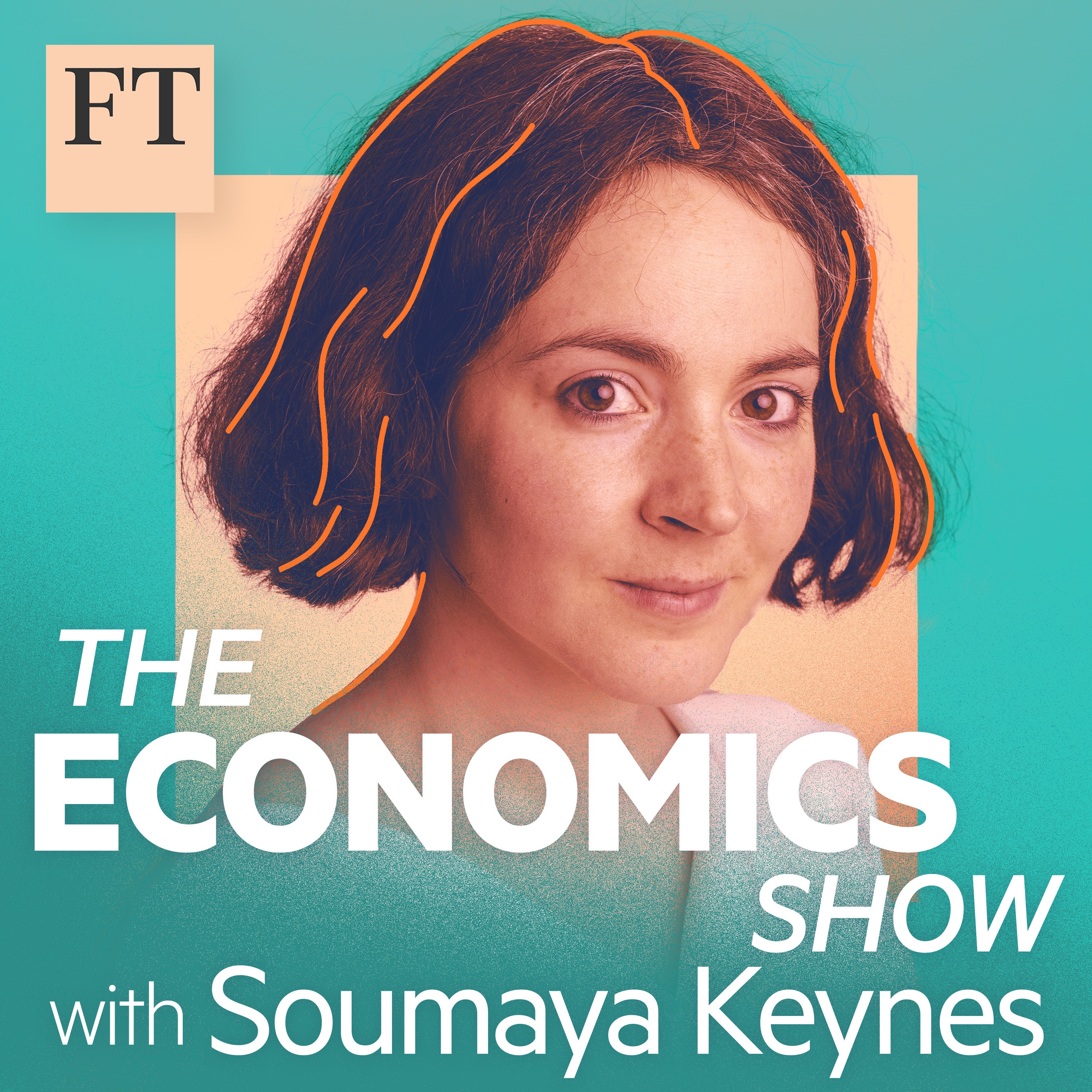
What does it really take to get rich in America? Straight As at an elite university or entrepreneurial parents? And as America holds midterm elections and California votes on whether to tax billionaires on their wealth, what does it mean for the rich to be paying their fair share? Host Soumaya Keynes speaks to economist Owen Zidar, co-author of Everywhere Millionaire, Who Is Really Rich in America and How They Got There, about a fairer approach to taxing the wealthy. Can the US tax the rich more without discouraging the entrepreneurs who drive economic growth?
Subscribe to Soumaya's show on Apple, Spotify, Pocket Casts or wherever you listen.
Presented by Soumaya Keynes. Produced by Katya Kumkova. Original music and sound design by Breen Turner. Manuela Saragosa is the executive producer. Flo Phillips is the FT’s head of audio. Thanks to John Cappuccino for his help recording this episode in the Princeton Broadcast Centre.
Read a transcript of this episode on FT.com
Hosted on Acast. See acast.com/privacy for more information.
#761: Roughly 3 million Americans who own private businesses — car dealerships, beer distributors, dental practices — are collectively worth more than ten times the entire Forbes 400. Most of them didn't start rich, and you've probably never heard of a single one.
Economists Owen Zidar (Princeton) and Eric Zwick (University of Chicago Booth School of Business) spent more than a decade linking anonymized tax records to the people who own America's private businesses. They share what they found in their new book, The Everywhere Millionaire.
In this episode, we discuss:
Why owning all of a small business can rival owning a sliver of a startup
Which unglamorous industries quietly produce the most wealth
How to decide whether to buy an existing business or start your own
How retiring owners and seller financing (paying the owner back over time) open doors for buyers
How to run cheap experiments so no single failure wipes you out
When to double down on one business versus diversify
What the data says about whether you need to be born rich
If you're weighing a steady paycheck against owning something yourself, this conversation shows who actually takes that path, what it demands, and how often it pays off.
⏱️ TIMESTAMPS
Note: Timestamps may vary slightly depending on dynamic ad placements.
(02:20) Why 3 million business owners outweigh the Forbes 400
(06:13) The overlooked businesses behind America's quiet fortunes
(11:22) Why retiring owners could be your buying opportunity
(17:31) Own all of something small, not 2% of a unicorn
(21:36) Buy a business or start one?
(29:24) How to fail small without getting wiped out
(34:35) What yacht and private jet data revealed
(44:20) Most successful founders didn't grow up rich
(01:06:31) Double down or diversify once it works?
(01:18:51) Should you leave a high-paying job for this?
🔗 RESOURCES MENTIONED
👉 Buy a retiring owner's business or build your own? Find the ownership path that fits your money and risk: https://affordanything.com/fiire
👉 The Everywhere Millionaire (book): https://link.amazon/B04y1xfaU
👉 The Everywhere Millionaire on Substack: https://everywheremillionaire.substack.com
👉 The Millionaire Next Door, by Thomas J. Stanley and William D. Danko: https://link.amazon/B01HtGgHg
See Privacy Policy at https://art19.com/privacy and California Privacy Notice at https://art19.com/privacy#do-not-sell-my-info.
The American Dream can feel farther away than ever. Housing is expensive, good jobs seem harder to find and the people getting rich seem to be concentrated in a handful of big cities. But some of America’s biggest fortunes are being built far from the spotlight: by auto dealers, contractors, beverage distributors and the owners of the unglamorous businesses that keep everyday life running. So who are these overlooked millionaires — and what do they tell us about opportunity in America?
Host Megan McArdle is joined by Owen Zidar, a professor at Princeton University and co-author of “The Everywhere Millionaire.” They discuss the hidden world of private-business wealth, why early work experience matters and how retiring boomers may create new opportunities for the next generation to buy and run America’s small businesses.
Subscribe to The Washington Post here.
In this episode of 'At the Money,' Barry speaks with Owen Zidar and Eric Zwick about the data behind America's wealthiest people.
Owen Zidar is professor of Economics and Public Affairs at Princeton, and Eric Zwick is professor of Economics and Finance at the University of Chicago Booth School of Business. They are the authors of a new book The Everywhere Millionaire: Who Is Really Rich in America and How They Got There.”
Each week, “At the Money” discusses an important topic in money management. From portfolio construction to taxes and cutting down on fees, join Barry Ritholtz to learn the best ways to put your money to work.
See omnystudio.com/listener for privacy information.
What happens when a small group of exceptionally wealthy people holds a growing share of a country's income and wealth? And what can economics tell us about the forces behind that concentration?
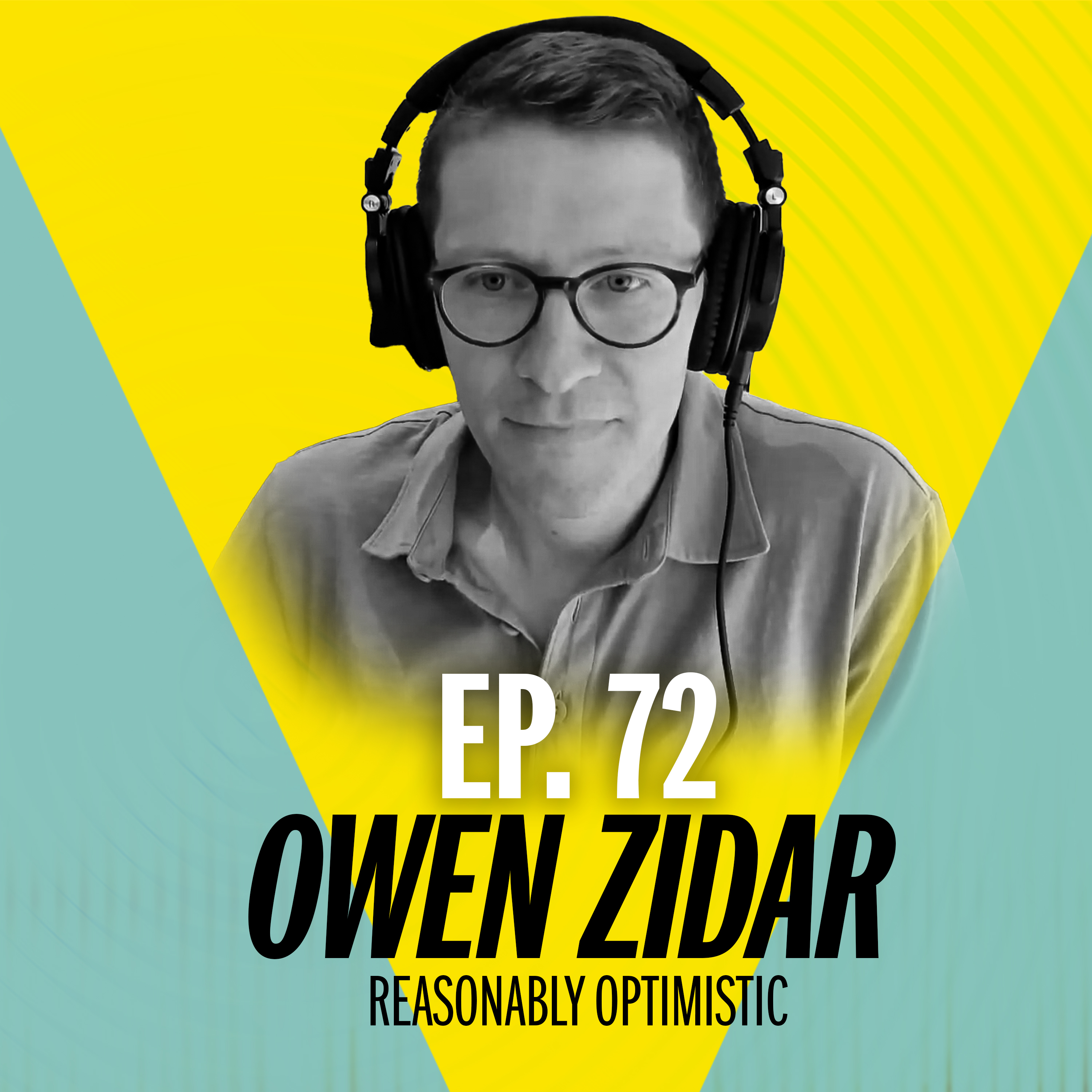
In this episode, we are joined by Owen Zidar, professor of economics and public affairs at Princeton University and coauthor of the forthcoming book The Everywhere Millionaire. We explore the rise of the millionaire class, how tax policy shapes inequality, and why the geography of wealth matters when trying to understand the economic landscape.
We also discuss the role of entrepreneurship, industry-specific knowledge, and concentrated ownership in building wealth. Owen shares insights from extensive Treasury data, interviews with business owners, and research into the paths taken by millions of entrepreneurs. The conversation examines why access to capital may be less important than practical experience, how private equity can help or hurt business owners, and how local business consolidation can affect both consumers and workers.
Finally, we explore the influence of "everywhere millionaires" on public policy, the impact of interest rates on wealth valuations, and possible ways to expand access to entrepreneurial opportunities without undermining economic growth.
Sources From Today's Episode — https://zbib.org/75a6ae2e79a34ba8b5fb632f54816447 Books From Today's Episode — The Everywhere Millionaire: Who Is Really Rich in America and How They Got There by Owen Zidar
Key Points From This Episode:
(0:01:15) Why the typical wealthy American is more likely to be a business owner than a celebrity or Wall Street executive.
(0:02:12) How "everywhere millionaires" can provide a roadmap for building wealth and understanding inequality.
(0:03:33) The rise of entrepreneurial income among the top 0.1% over the past several decades.
(0:04:48) Why the inequality debate often overlooks wealth generated by private businesses.
(0:05:48) Why the typical millionaire is more likely to be found on Main Street than Wall Street.
(0:06:32) The ordinary—and sometimes unusual—industries that produce substantial wealth.
(0:08:01) Why building wealth through business ownership often takes decades.
(0:08:54) The role of concentrated ownership and the risks involved in becoming wealthy through entrepreneurship.
(0:09:51) How failed businesses can still provide valuable human capital and career opportunities.
(0:10:46) Which early-career paths may put people on track to become business owners.
(0:12:14) Why domain expertise and industry experience can matter more than access to capital.
(0:15:25) The Treasury data, tax records, research papers, interviews, and other sources behind The Everywhere Millionaire.
(0:16:54) How lower interest rates, tax cuts, deregulation, and globalization contributed to wealth accumulation.
(0:18:18) What the data suggests about academic performance, risk-taking, and entrepreneurial success.
(0:19:52) Why attending an elite university is not necessarily a prerequisite for becoming wealthy through business ownership.
(0:20:57) The importance of early labor-market experience and practical knowledge in entrepreneurship.
(0:22:17) The factors that help certain places foster upward mobility.
(0:30:14) How family businesses, inheritance, and succession can shape the distribution of wealth.
(0:38:06 How business owners can successfully exit their companies, including the role of seller financing.
(0:39:09) The potential benefits and drawbacks of private equity for business owners.
(0:41:33) How "stealth consolidation" can allow businesses to gain local market power without attracting regulatory scrutiny.
(0:42:55) The possible relationship between product-market power and labor-market power.
(0:44:33) Whether the United States is experiencing a new Gilded Age—and how today's wealthy differ from those of the past.
(0:46:07) Why local business owners can have significant economic and political influence in their communities.
(0:48:47) How interest rates affect the value of private businesses and other assets.
(0:49:49) How apprenticeships and alternative career paths could expand access to financial success.
(0:50:41) What aspiring entrepreneurs can do to reduce risk and improve their chances of success.
(0:51:45) Potential approaches to reducing inequality while preserving incentives for business growth and investment.
(0:53:48) Owen's reflections on family, personal fulfillment, and how he defines success.
Links From Today's Episode: Meet with PWL Capital: https://pwlcapital.com/ PWL Team — https://pwlcapital.com/our-team/
Rational Reminder on iTunes — https://itunes.apple.com/ca/podcast/the-rational-reminder-podcast/id1426530582. Rational Reminder on Instagram — https://www.instagram.com/rationalreminder/
Rational Reminder on YouTube — https://www.youtube.com/channel/
Rational Reminder on Spotify —https://open.spotify.com/show/6RHWTH9iW7hdnA7eAg7ukO?si=fe7f60349b584026 Benjamin Felix — https://pwlcapital.com/our-team/
Benjamin on X — https://x.com/benjaminwfelix
Benjamin on LinkedIn — https://www.linkedin.com/in/benjaminwfelix/
Owen's website - https://www.everywheremillionaire.com/
Owen's LinkedIn - https://www.linkedin.com/in/owenzidar/
Editing and post-production work for this episode was provided by The Podcast Consultant (https://thepodcastconsultant.com)
1 h 05 minAbspielen in:
Warum PodAppear
Folge Menschen, nicht Podcasts.
Du hast Owen in einer Sendung gehört. PodAppear findet für dich die nächste, und genauso für alle anderen, die du hören willst.
Eine Meldung, wenn die Person zu Gast istPer E-Mail: sofort oder gebündelt als Tages- oder Wochenübersicht. Dann nur noch auf Play drücken.
Gäste statt bloßer ErwähnungenFolgen, in denen ein Name nur fällt, landen getrennt. Eine Meldung heißt: Die Person ist wirklich in der Sendung.
Alle in einem FeedGründerinnen, Autoren, Sportler, Forscherinnen. Folge allen mit Namen, quer durch jede Sendung, in der sie auftreten.