Bekomm eine E-Mail, wenn Marco in einem Podcast zu Gast istPodAppear prüft neue Folgen, sobald sie erscheinen, und lässt die weg, in denen Marco nur erwähnt wird. Bis zu 15 Personen kostenlos, ohne Kreditkarte.Bis zu 15 Personen kostenlos, ohne Kreditkarte.
Marco kostenlos folgen
MP

Marco Pavone

Zwei Jahre auf Sendung

GastHostErwähnt

Selbst moderierte Folgen

Fr27Nov
Stanford Online: University Courses & Lectures

Stanford Online: University Courses & LecturesHost

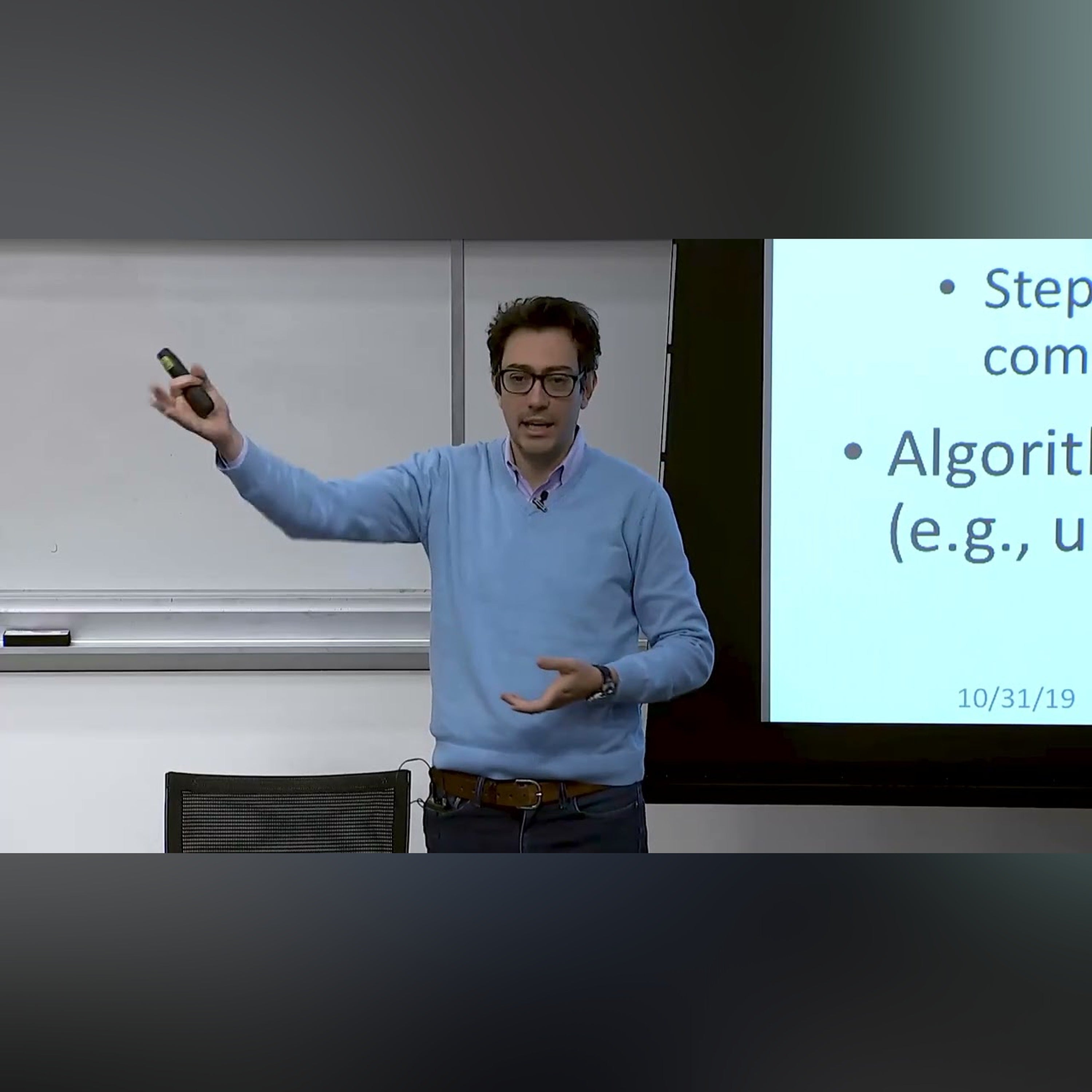
Stanford AA274A Principles of Robotic Autonomy | Autumn 2019 | Trajectory Optimization

For more information about Stanford’s graduate programs, visit: https://online.stanford.edu/graduate-education Lecture 3 — Trajectory Optimization: Open-Loop Motion Control and Differential Flatness Note: This lecture was recorded as part of the 2019 edition of the course. Course content, structure, assignments, and other materials may have changed since this recording. The course links below point to the most recent edition and may therefore differ from what is presented in the video. Uploaded 09-10-26 Read the companion textbook, Principles of Robot Autonomy, free online: https://porabook.com Follow along with the latest course schedule and syllabus: https://stanfordasl.github.io/PoRA-I Speaker: Prof. Marco Pavone Dr. Marco Pavone is an Associate Professor of Aeronautics and Astronautics at Stanford University and a Senior Director of Autonomous Vehicle Research at NVIDIA. Prior to joining Stanford, he was a Research Technologist in the Robotics Section at NASA’s Jet Propulsion Laboratory. Dr. Pavone received his Ph.D. in Aeronautics and Astronautics from the Massachusetts Institute of Technology in 2010. His research focuses on the analysis, design, and control of autonomous systems, with particular emphasis on self-driving cars, autonomous aerospace vehicles, and future mobility systems. He has been recognized with numerous awards, including the Presidential Early Career Award for Scientists and Engineers from President Barack Obama, the Office of Naval Research Young Investigator Award, the NSF CAREER Award, the NASA Early Career Faculty Award, the IEEE Kiyo Tomiyasu Award, the CSS Award for Technical Excellence in Aerospace Control, and the Early-Career Spotlight Award from the Robotics Science and Systems Foundation. Full playlist: https://www.youtube.com/playlist?list=PLR9iNyexfIkk #StanfordOnline #RobotAutonomy #Robotics #PhysicalAI Learn more about your ad choices. Visit megaphone.fm/adchoices
1 h 21 minAbspielen in:

Fr27Nov
Stanford Online: University Courses & Lectures

Stanford Online: University Courses & LecturesHost

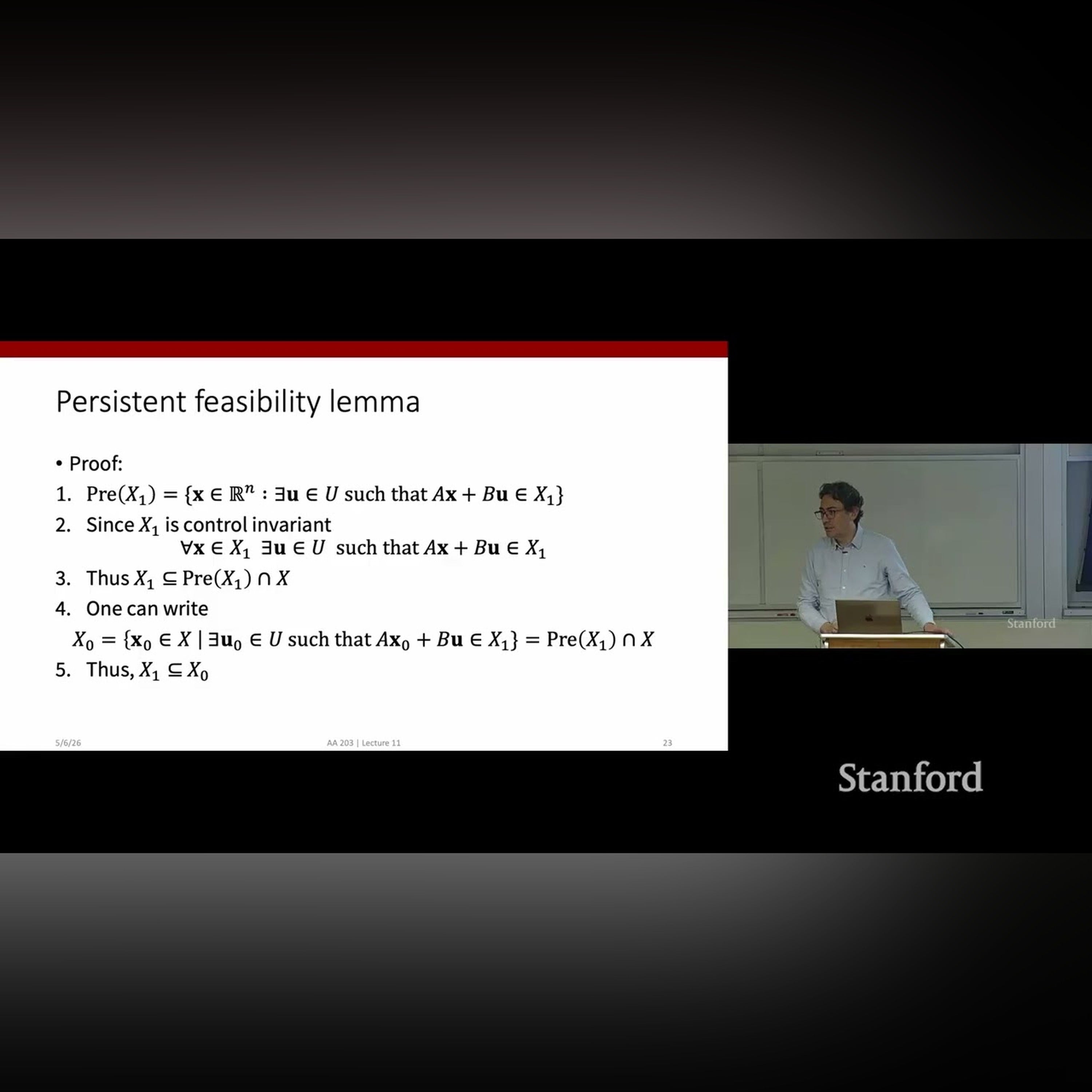
Stanford AA203 Optimal and Learning-Based Control | Spring 2026 | Lecture 12: Feasibility of MPC

Lecture 12 — Persistent Feasibility of MPC, Stability, and Explicit MPC Read the companion textbook, Principles of Robot Autonomy, free online: https://porabook.com To learn more about enrolling in AA203 Optimal and Learning-Based Control, visit: https://online.stanford.edu/courses/aa203-optimal-and-learning-based-control Follow along with the course schedule and syllabus: https://stanfordasl.github.io/aa203/sp2526/ Lecture slides: https://stanfordasl.github.io/aa203/sp2526/pdfs/lecture/lecture_1.pdf Speaker: Prof. Marco Pavone Bio: Dr. Marco Pavone is an Associate Professor of Aeronautics and Astronautics at Stanford University and a Senior Director of Autonomous Vehicle Research at NVIDIA. Prior to joining Stanford, he was a Research Technologist in the Robotics Section at NASA’s Jet Propulsion Laboratory. Dr. Pavone received his Ph.D. in Aeronautics and Astronautics from the Massachusetts Institute of Technology in 2010. His research focuses on the analysis, design, and control of autonomous systems, with particular emphasis on self-driving cars, autonomous aerospace vehicles, and future mobility systems. He has been recognized with numerous awards, including the Presidential Early Career Award for Scientists and Engineers from President Barack Obama, the Office of Naval Research Young Investigator Award, the NSF CAREER Award, the NASA Early Career Faculty Award, the IEEE Kiyo Tomiyasu Award, the CSS Award for Technical Excellence in Aerospace Control, and the Early-Career Spotlight Award from the Robotics Science and Systems Foundation. Uploaded 13-08-26 Instructors: Prof. Marco Pavone, Associate Professor of Aeronautics and Astronautics, Director of Autonomous Vehicle Research at NVIDIA Dr. Daniele Gammelli, Research Director at the Italian Institute of Artificial Intelligence (AI4I), Researcher at the Department of Aeronautics and Astronautics, Stanford University Full playlist: https://www.youtube.com/playlist?list=PLa9dmHsLK9dg #StanfordOnline #OptimalControl #Robotics #PhysicalAI Learn more about your ad choices. Visit megaphone.fm/adchoices

1 h 22 minAbspielen in:

Do26Nov
Stanford Online: University Courses & Lectures

Stanford Online: University Courses & LecturesHost

Stanford AA203 Optimal and Learning-Based Control | Spring 2026 | Lecture 10: Reachibility Analysis

Lecture 10 — Hamilton-Jacobi-Bellman, Hamilton-Jacobi-Isaacs, and Reachibility Analysis Read the companion textbook, Principles of Robot Autonomy, free online: https://porabook.com To learn more about enrolling in AA203 Optimal and Learning-Based Control, visit: https://online.stanford.edu/courses/aa203-optimal-and-learning-based-control Follow along with the course schedule and syllabus: https://stanfordasl.github.io/aa203/sp2526/ Lecture slides: https://stanfordasl.github.io/aa203/sp2526/pdfs/lecture/lecture_10.pdf Speaker: Prof. Marco Pavone Bio: Dr. Marco Pavone is an Associate Professor of Aeronautics and Astronautics at Stanford University and a Senior Director of Autonomous Vehicle Research at NVIDIA. Prior to joining Stanford, he was a Research Technologist in the Robotics Section at NASA’s Jet Propulsion Laboratory. Dr. Pavone received his Ph.D. in Aeronautics and Astronautics from the Massachusetts Institute of Technology in 2010. His research focuses on the analysis, design, and control of autonomous systems, with particular emphasis on self-driving cars, autonomous aerospace vehicles, and future mobility systems. He has been recognized with numerous awards, including the Presidential Early Career Award for Scientists and Engineers from President Barack Obama, the Office of Naval Research Young Investigator Award, the NSF CAREER Award, the NASA Early Career Faculty Award, the IEEE Kiyo Tomiyasu Award, the CSS Award for Technical Excellence in Aerospace Control, and the Early-Career Spotlight Award from the Robotics Science and Systems Foundation. Uploaded 12-08-26 Instructors: Prof. Marco Pavone, Associate Professor of Aeronautics and Astronautics, Director of Autonomous Vehicle Research at NVIDIA Dr. Daniele Gammelli, Research Director at the Italian Institute of Artificial Intelligence (AI4I), Researcher at the Department of Aeronautics and Astronautics, Stanford University Full playlist: https://www.youtube.com/playlist?list=PLa9dmHsLK9dg #StanfordOnline #OptimalControl #Robotics #PhysicalAI Learn more about your ad choices. Visit megaphone.fm/adchoices

1 h 24 minAbspielen in:

Do26Nov
Stanford Online: University Courses & Lectures

Stanford Online: University Courses & LecturesHost

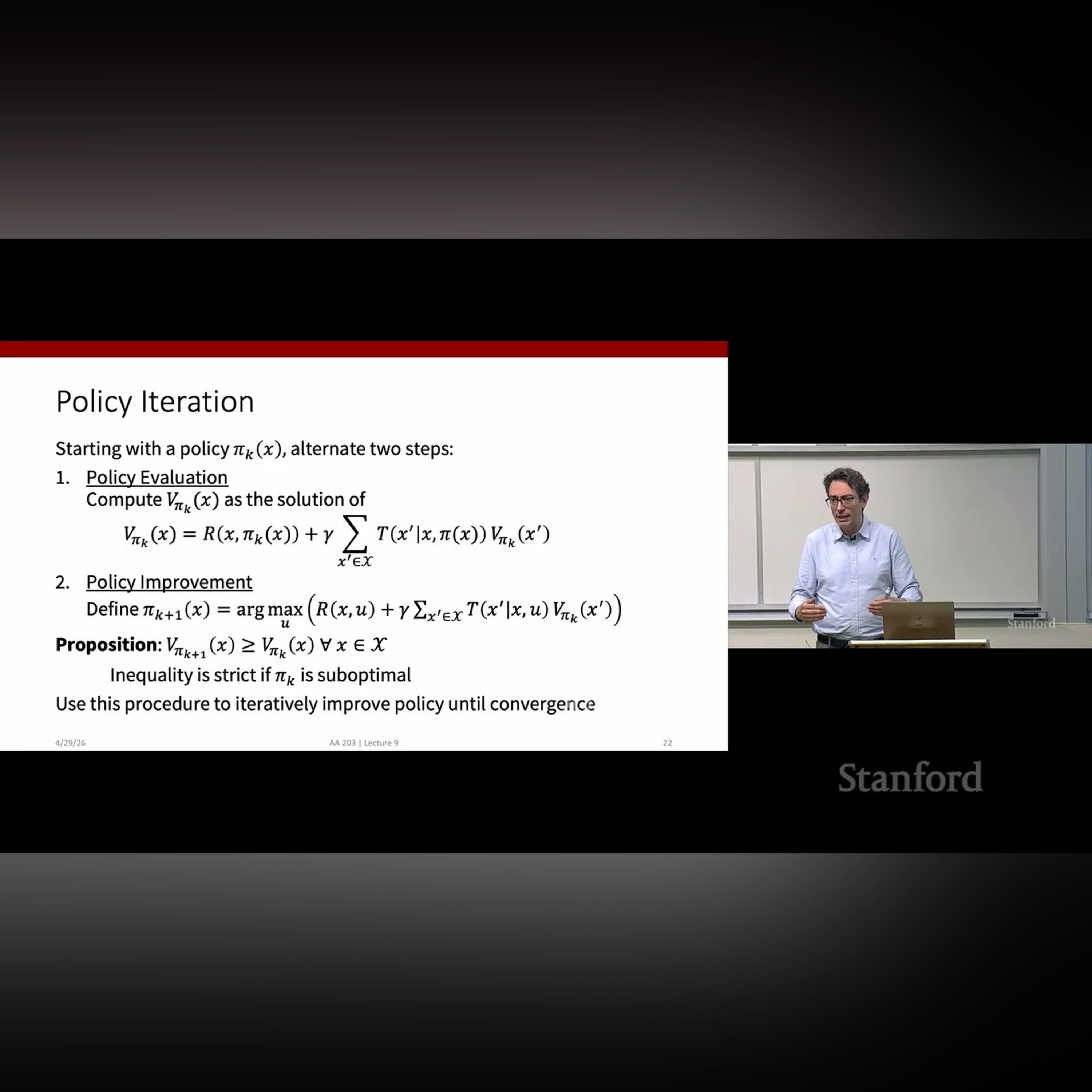
AStanford AA203 Optimal and Learning-Based Control | Spring 2026 | Lecture 8: LQR-Style Algorithms

Lecture 8 — Nonlinearity: Tracking LQR, Iterative LQR, Differential Dynamic Programming Read the companion textbook, Principles of Robot Autonomy, free online: https://porabook.com To learn more about enrolling in AA203 Optimal and Learning-Based Control, visit: https://online.stanford.edu/courses/aa203-optimal-and-learning-based-control Follow along with the course schedule and syllabus: https://stanfordasl.github.io/aa203/sp2526/ Lecture slides: https://stanfordasl.github.io/aa203/sp2526/pdfs/lecture/lecture_8.pdf Speaker: Prof. Marco Pavone Bio: Dr. Marco Pavone is an Associate Professor of Aeronautics and Astronautics at Stanford University and a Senior Director of Autonomous Vehicle Research at NVIDIA. Prior to joining Stanford, he was a Research Technologist in the Robotics Section at NASA’s Jet Propulsion Laboratory. Dr. Pavone received his Ph.D. in Aeronautics and Astronautics from the Massachusetts Institute of Technology in 2010. His research focuses on the analysis, design, and control of autonomous systems, with particular emphasis on self-driving cars, autonomous aerospace vehicles, and future mobility systems. He has been recognized with numerous awards, including the Presidential Early Career Award for Scientists and Engineers from President Barack Obama, the Office of Naval Research Young Investigator Award, the NSF CAREER Award, the NASA Early Career Faculty Award, the IEEE Kiyo Tomiyasu Award, the CSS Award for Technical Excellence in Aerospace Control, and the Early-Career Spotlight Award from the Robotics Science and Systems Foundation. Uploaded 12-08-26 Instructors: Prof. Marco Pavone, Associate Professor of Aeronautics and Astronautics, Director of Autonomous Vehicle Research at NVIDIA Dr. Daniele Gammelli, Research Director at the Italian Institute of Artificial Intelligence (AI4I), Researcher at the Department of Aeronautics and Astronautics, Stanford University Full playlist: https://www.youtube.com/playlist?list=PLa9dmHsLK9dg #StanfordOnline #OptimalControl #Robotics #PhysicalAI Learn more about your ad choices. Visit megaphone.fm/adchoices

1 h 21 minAbspielen in:

Mi25Nov
Stanford Online: University Courses & Lectures

Stanford Online: University Courses & LecturesHost

Stanford AA274A Principles of Robotic Autonomy | Autumn 2019 | Parametric Filtering

For more information about Stanford’s graduate programs, visit: https://online.stanford.edu/graduate-education Lecture 15 — Parametric Filtering (KF, EKF, UKF) Note: This lecture was recorded as part of the 2019 edition of the course. Course content, structure, assignments, and other materials may have changed since this recording. The course links below point to the most recent edition and may therefore differ from what is presented in the video. Uploaded 20-10-26 Read the companion textbook, Principles of Robot Autonomy, free online: https://porabook.com Follow along with the latest course schedule and syllabus: https://stanfordasl.github.io/PoRA-I Speaker: Prof. Marco Pavone Dr. Marco Pavone is an Associate Professor of Aeronautics and Astronautics at Stanford University and a Senior Director of Autonomous Vehicle Research at NVIDIA. Prior to joining Stanford, he was a Research Technologist in the Robotics Section at NASA’s Jet Propulsion Laboratory. Dr. Pavone received his Ph.D. in Aeronautics and Astronautics from the Massachusetts Institute of Technology in 2010. His research focuses on the analysis, design, and control of autonomous systems, with particular emphasis on self-driving cars, autonomous aerospace vehicles, and future mobility systems. He has been recognized with numerous awards, including the Presidential Early Career Award for Scientists and Engineers from President Barack Obama, the Office of Naval Research Young Investigator Award, the NSF CAREER Award, the NASA Early Career Faculty Award, the IEEE Kiyo Tomiyasu Award, the CSS Award for Technical Excellence in Aerospace Control, and the Early-Career Spotlight Award from the Robotics Science and Systems Foundation. Full playlist: https://www.youtube.com/playlist?list=PLR9iNyexfIkk #StanfordOnline #RobotAutonomy #Robotics #PhysicalAI Learn more about your ad choices. Visit megaphone.fm/adchoices
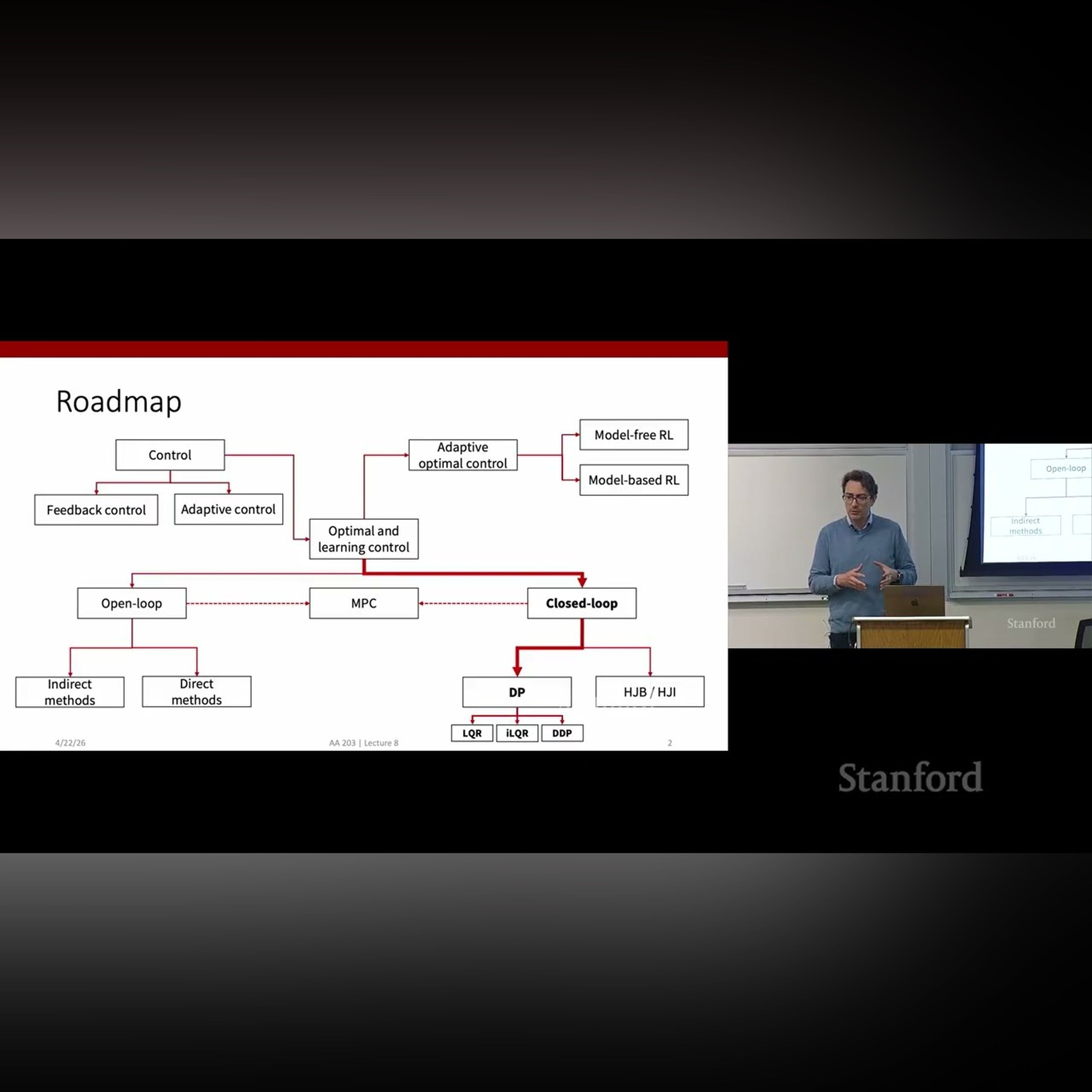
1 h 24 minAbspielen in:

Warum PodAppear

Folge Menschen, nicht Podcasts.

Du hast Marco in einer Sendung gehört. PodAppear findet für dich die nächste, und genauso für alle anderen, die du hören willst.

  • Eine Meldung, wenn die Person zu Gast istPer E-Mail: sofort oder gebündelt als Tages- oder Wochenübersicht. Dann nur noch auf Play drücken.
  • Gäste statt bloßer ErwähnungenFolgen, in denen ein Name nur fällt, landen getrennt. Eine Meldung heißt: Die Person ist wirklich in der Sendung.
  • Alle in einem FeedGründerinnen, Autoren, Sportler, Forscherinnen. Folge allen mit Namen, quer durch jede Sendung, in der sie auftreten.

Bis zu 15 Personen kostenlos, ohne Kreditkarte.