Bekomm eine E-Mail, wenn John in einem Podcast zu Gast istPodAppear prüft neue Folgen, sobald sie erscheinen, und lässt die weg, in denen John nur erwähnt wird. Bis zu 15 Personen kostenlos, ohne Kreditkarte.Bis zu 15 Personen kostenlos, ohne Kreditkarte.
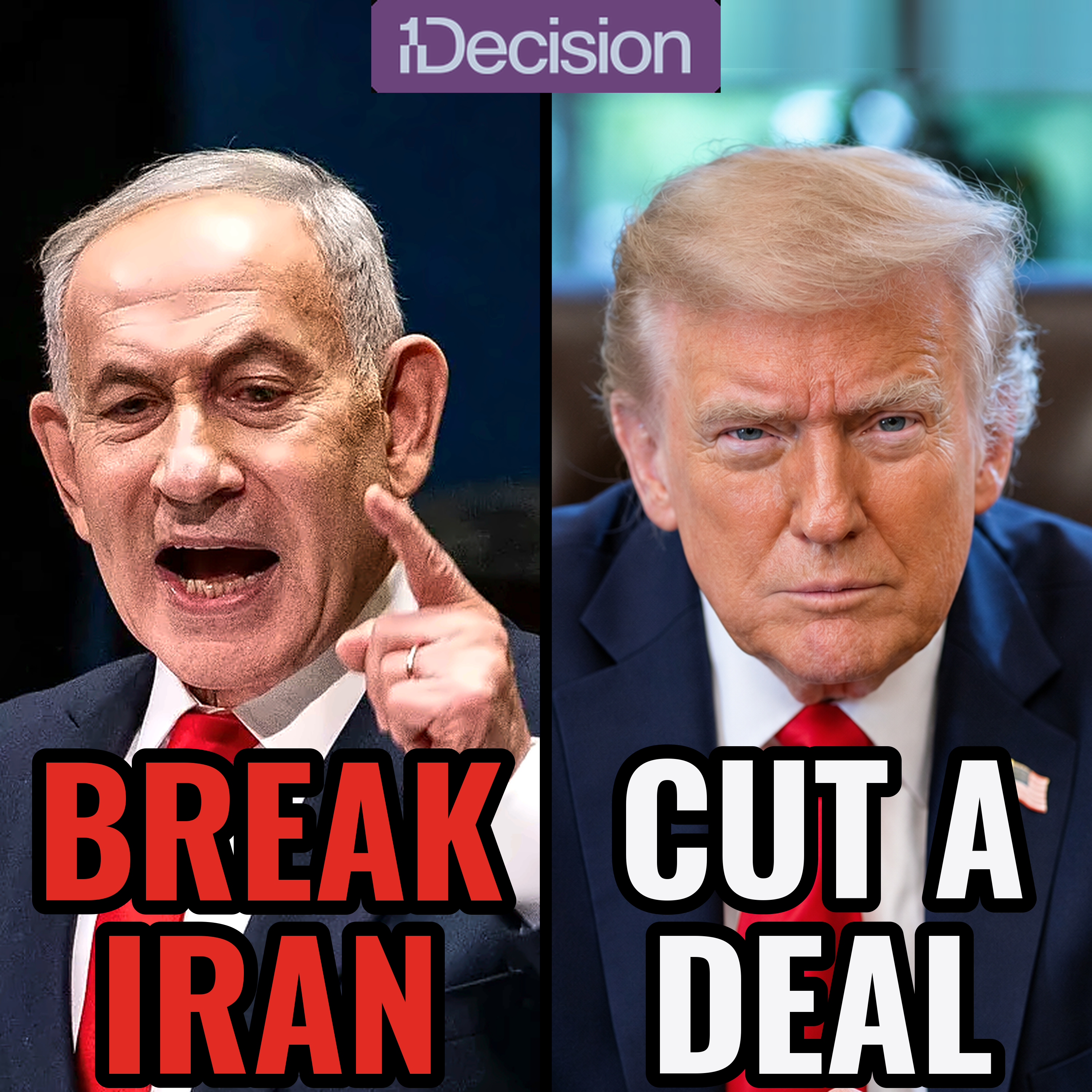
Israel is preparing for another war with Iran, and the decision rests with Donald Trump. Major General Tamir Hayman, former head of Israeli military intelligence, says Israel is swinging between an interim deal and a renewed strike on an hourly basis. Netanyahu wants regime change in Tehran, while Trump wants a deal.
Hayman, a 34-year veteran of the IDF and Executive Director of the Institute for National Security Studies in Tel Aviv, joins Sir Richard Dearlove and John Raine to explain why Israel concluded that regime change in Iran was within reach, the three questions any joint US-Israeli operation must answer before it starts, and what Netanyahu’s legacy means for Israeli security. They also discuss the intelligence failures before October 7, the state of Hamas and Hezbollah, the stalled reconstruction of Gaza, how the Gulf states’ stance on the Iran war has shifted, and what Gadi Eisenkot would do differently. Prime Minister Benjamin Netanyahu led the bloc that received the most votes in last week’s Israeli elections.
In this episode:
(00:00) Israel Bracing for Renewed Iran War
(00:48) Hosts Introduction Show Welcome
(01:06) Netanyahu Elections After October 7th
(02:45) October 7th Intelligence Security Failures
(06:07) Hamas Deprioritized as Intelligence Target
(15:55) Gaza Reconstruction and Security Redesign
(19:55) Hamas and Hezbollah Military Capabilities
(24:09) Gaza Reconstruction Stalled Political Options
(33:58) Netanyahu Iran Regime Change Strategy
(40:07) Israel Proactive Military Strategy Risks
(45:49) Gulf States Iran War Position
(49:22) Eisenkot's Alternative Security Vision for Israel
(54:06) Trump Iran Strike or Deal
Show Notes:A Second Wave of Popular Anger Is Building in Iran | Wall Street Journal: https://www.wsj.com/world/middle-east/a-second-wave-of-popular-anger-is-building-in-iran-ac51969c?reflink=desktopwebshare_permalink
Hosted by Sir Richard Dearlove (former MI6 Chief) and guest co-host John Raine (International Institute for Strategic Studies).
Photo credit: Western Wall in Jerusalem, October 2006, Hynek Moravec, Creative Commons Attribution 2.5 Generic license.
Learn more about your ad choices. Visit megaphone.fm/adchoices
War with Iran, record diesel prices, and a global bond sell-off: how much more can the world economy take?
Mohamed El-Erian (Wharton, Allianz, former CEO of PIMCO) joins Sir Richard Dearlove (former head of MI6) and John Raine to explain what's driving the bond market sell-off, why the US is exporting instability to the UK, France, and Japan, and why AI is "80% asset, 20% liability." Plus: how PIMCO really navigated Lehman's collapse, and the one decision he's watching.
In this episode:
(00:00) Intro
(03:07) Why this crisis is different
(04:04) Permacrisis and "minilateralism"
(05:46) What's driving the global bond sell-off
(07:32) The hit to US households: mortgages, car loans, the K-shaped economy
(10:10) "Our yields, your problem": UK, France and Japan
(13:05) France, Mélenchon and Europe's leadership vacuum
(17:59) AI: 80% asset, 20% liability
(20:35) US-China AI Race
(31:30) Did PIMCO predict Lehman Brothers collapse?
(35:58) Who wins in today’s economy?
(44:51) Can finance ministers fix what politicians can't?
(46:32) How important are AI companies to the economy?
Hosted by Sir Richard Dearlove (former MI6 Chief) and John Raine (International Institute for Strategic Studies).
Learn more about your ad choices. Visit megaphone.fm/adchoices
In 1997, Peter Bergen found himself in the mountains of Afghanistan, face-to-face with al-Qaeda founder Osama bin Laden. During the ensuing landmark interview, bin Laden foreshadowed the terrorist attacks of September 11.
In Part One of our two-part series commemorating the 25th anniversary of 9/11, journalist and author Peter Bergen sits down with former head of MI6 Sir Richard Dearlove and co-host John Raine to discuss the legacy of the 9/11 attacks, including the wars in Afghanistan and Iraq. Bergen talks about why negotiating with Osama bin Laden would have been a nonstarter and why the attacks bin Laden orchestrated generated shock, not surprise, within government intelligence agencies. Bergen and the hosts also discuss decisions after the attacks that Dearlove witnessesed firsthand, the proper relationship between intelligence and policy, how the war on terror reshaped the US view of coalitions and allies, and how the conflict in Ukraine points to the future of warfare.
In this episode:
(00:00) Lessons of Afghanistan and Iraq Wars
(03:23) Would Negotiating with Osama bin Laden Have Worked?
(06:21) Feeling in US Immediately Post-9/11
(11:29) Origins of Iraq War
(15:55) Policy and Intelligence
(17:08) Imperial Power of the Presidency
(21:16) Why Were There No Major Attacks After 9/11?
(25:13) Role of Coalitions and Allies
(34:31) Legacy of Fighting Global War on Terror
(41:10) Importance of Tribalism
(46:54) Scale of Troop Presence and Outcome
(50:41) Ukraine as Laboratory for Modern Warfare
(54:38) One Decision: Why Trump Should Declare Victory in Iran
(56:41) Takeaways and Wrap Up
Hosted by Sir Richard Dearlove (former MI6 Chief) and guest co-host John Raine (International Institute for Strategic Studies)
Learn more about your ad choices. Visit megaphone.fm/adchoices
1 h 07 minAbspielen in:
Warum PodAppear
Folge Menschen, nicht Podcasts.
Du hast John in einer Sendung gehört. PodAppear findet für dich die nächste, und genauso für alle anderen, die du hören willst.
Eine Meldung, wenn die Person zu Gast istPer E-Mail: sofort oder gebündelt als Tages- oder Wochenübersicht. Dann nur noch auf Play drücken.
Gäste statt bloßer ErwähnungenFolgen, in denen ein Name nur fällt, landen getrennt. Eine Meldung heißt: Die Person ist wirklich in der Sendung.
Alle in einem FeedGründerinnen, Autoren, Sportler, Forscherinnen. Folge allen mit Namen, quer durch jede Sendung, in der sie auftreten.