Bekomm eine E-Mail, wenn Elad in einem Podcast zu Gast istPodAppear prüft neue Folgen, sobald sie erscheinen, und lässt die weg, in denen Elad nur erwähnt wird. Bis zu 15 Personen kostenlos, ohne Kreditkarte.Bis zu 15 Personen kostenlos, ohne Kreditkarte.
Drug discovery and development has long relied on expensive, time-consuming empirical trial and error. By shifting the discovery process onto computers, Isomorphic Labs wants to fundamentally change medicine from a process of discovery to one of precision engineering. Elad Gil sits down with Isomorphic’s president Max Jaderberg to discuss his vision for using predictive AI models to achieve experimental accuracy. Max details how the success of AlphaFold provided the first proof of concept that a deep learning model could generalize in the field of biology, and how an AI model’s compounding of learnings allows it to achieve generalizability with scale, thus greatly increasing the probability of success as well as speed in real world clinical trials. He also talks about evolving past the need for animal testing through in-silico models, Isomorphic’s focus on developing drug design engines that are agnostic of disease area, target class, and modality, why accurate molecule engineering unlocks the potential for multidrug cocktails that span complex biological pathways, and how he believes AI molecule optimization will improve both human lifespan and healthspan.
Sign up for new podcasts every week. Email feedback to show@no-priors.com
Follow us on Twitter: @NoPriorsPod | @Saranormous | @EladGil | @MaxJaderberg | @IsomorphicLabs
Chapters:
00:00 – Trailer
00:45 – Max Jaderberg Introduction
01:24 – Isomorphic Origins
05:23 – Drug Discovery Stagnation
11:49 – Hiring at Isomorphic
14:35 – Bringing Drug Discovery Onto Computers
19:31 – Isomorphic’s Datasets
20:30 – Rethinking Endpoints
22:50 – External vs. Internal Dependences
23:57 – Automating Biologic Labs
26:22 – Internal Development vs. Partnerships
27:19 – Areas of Human Health Focus
29:21 – Multidrug Approaches
32:17 – Risk Appetite Variation
34:26 – Disease Treatment Outlook
35:42 – Human Longevity and Drug Development
39:16 – Conclusion
39 minAbspielen in:
Do29Okt
No Priors: Artificial Intelligence | Technology | StartupsHost
What happens when you put code-generation agents in the hands of enterprise IT teams? With Serval, you get a system where it's easy for everyone to be a builder. Sarah Guo and Elad Gil sit down with Serval co-founder and CEO Jake Stauch to analyze his company’s direct challenge to ServiceNow as the enterprise automation and service management system of record. Jake explains that by building an AI platform for enterprise IT departments with Serval, users can safely build while still safeguarding permissions by strict deterministic approvals and an audit trail. He also talks about ProServal, the company’s team that embeds automation engineers directly with customers in order to provide ongoing support and service. Jake also discusses how AI was the big unlock to taking on ServiceNow, why he’s betting on coding agents getting even better, why consumer is a window into what will happen next in enterprise and why the SaaS-pocalypse might look more like a consolidation, why background agents are still a moonshot in enterprise software, and the importance of hiring product-oriented engineers.
Sign up for new podcasts every week. Email feedback to show@no-priors.com
Follow us on Twitter: @NoPriorsPod | @Saranormous | @EladGil | @jakeserval | @getserval
Chapters:
00:47 – Jake Stauch Introduction and Serval’s Background
03:00 – Expanding Coding Agents Beyond Engineers
04:40 – Limitations with Personal Agents in Enterprise
06:29 – Deploying Serval Effectively in Large Orgs
07:55 – Day 1 Ambition and Attacking Enterprise Systems of Record
09:51 – Taking on ServiceNow with Workflow Automation Platform
11:01 – Betting on the Evolution of Coding Agents and Building Guardrails in Enterprise
13:48 – Big Risks, Big Rewards, and Big Predictions for Serval and Coding Agents
16:40 – Adopting Different Sets of Building Principles at an Enterprise Level
20:49 – Token Maxing, Long-Term Budget Impacts, and ROI
22:39 – The SaaS-pocalypse and SaaS vs. AI
24:39 – The Mental Model for Delivering Platform-Level Power to the IT User at Enterprise
26:43 – Building Automations with Catalyst and Raising Technical Competence
28:55 – The Next Wave: Background Agents and Autonomy in Enterprise
32:23 – Hiring Velocity and Unlimited Ambition at Serval
34:17 – Keeping Pace with Customers and Fundamental Shifts in Product Function
37:05 – Conclusion
38 minAbspielen in:
Do15Okt
No Priors: Artificial Intelligence | Technology | StartupsHost
Technology has always been the fundamental driver of improvement for human quality of life. And with the recent rollout of advanced frontier models, like OpenAI’s GPT-6, humanity can now massively accelerate scientific discovery for its benefit. Sarah Guo and Elad Gil are joined by OpenAI President and co-founder Greg Brockman to discuss the company’s rapid progress across frontier models, cybersecurity, and scientific discovery. Greg shares how nearly 400 century-old math problems have been solved using its AI agents, and how the technology has the potential to transform other fields like biology in the realm of drug discovery. He also talks about how proactive, always-on AI agents like Dots impact modern productivity, why he believes the best UI is no UI at all, how cybersecurity is in a critical window of time to use peak intelligence to find and fix vulnerabilities in systems, and why OpenAI remains committed to keeping humans in the driver’s seat even as models surpass us in capability.
Sign up for new podcasts every week. Email feedback to show@no-priors.com
Follow us on Twitter: @NoPriorsPod | @Saranormous | @EladGil | @gdb | @OpenAI
Chapters:
00:42 – Trailer
00:59 – Greg Brockman Introduction
01:11 – AI and Advancements in Mathematics
05:55 – AI Communication and Oversight
07:45 – AI for Overcoming Biology Data Bottlenecks
11:28 – Revolutionizing Drug Discovery
14:18 – Changing Regulations to Accelerate Progress
16:51 – Dots the Proactive Agent
19:19 – Unifying Work and Consumer Agents
22:02 – How UI Will Evolve
26:08 – Cybersecurity in the AI Age
32:55 – Shift in Security Investment
35:49 – OpenAI’s Human-Centric Ethos
38:28 – Conclusion
39 minAbspielen in:
Fr9Okt
No Priors: Artificial Intelligence | Technology | StartupsHost
Is the future of frontier AI open or closed? ReflectionAI co-founder and CEO Misha Laskin joins Sarah Guo and Elad Gil to discuss the launch of Beam, the company’s 500 billion parameter open-weight reasoning model. Misha breaks down the pre-training and reinforcement learning required to produce Beam’s reasoning efficiency, the shift in enterprise compute from renting to owning intelligence, and how he believes that open models will capture the majority of global token demand. He also talks about the open model ecosystem in China and why competition with China’s models is a good thing, safety considerations around open models, and how frontier-level open models may accelerate the pace of scientific discovery.
Sign up for new podcasts every week. Email feedback to show@no-priors.com
Follow us on Twitter: @NoPriorsPod | @Saranormous | @EladGil | @MishaLaskin | @reflection_ai
Chapters:
00:42 – Misha Laskin Introduction
00:59 – Latest with ReflectionAI
02:07 – Challenges Building an Open Model
03:56 – ReflectionAI’s Agentic Shift
07:37 – Resources for Model Training
10:09 – Scaling Efficiency
12:18 – Training Beam
16:51 – Where Model Value Comes From
19:55 – Beam’s Reasoning Efficiency
22:35 – Monetizing Open Weight Models
25:03 – Future of Open Versus Closed Tokens
31:29 – Competition with Open Models
34:38 – Chinese Open Source Model Ecosystem
38:40 – Will Chinese Models Remain Open
44:44 – Safety and Open Models
53:02 – Debating Access to Powerful Tools
57:16 – AI and Scientific Progress
01:00:36 – Data Centers and Jobs
01:02:07 – Beam and Scientific Research
01:05:37 – Research Head Count to Compute Ratio
01:10:29 – Conclusion
1 h 10 minAbspielen in:
Do10Sep
No Priors: Artificial Intelligence | Technology | StartupsHost
From the tokenization of real-world assets to funding research on anti-aging therapeutics, Coinbase co-founder and CEO Brian Armstrong is focused on solving meta-problems for the benefit of society. Brian joins Elad Gil this episode to discuss the intersections of artificial intelligence, crypto rails, and biotechnology. He details Coinbase’s vision for agentic finance, as well as how Coinbase is becoming the ‘Everything Exchange’, which includes tokenized real-world stocks, stablecoin payment adoption, and prediction markets. Brian also introduces his new venture, New Limit, a company founded to tackle longevity through epigenetic reprogramming, and outlines initial therapeutic programs and the roadmap toward clinical trials.
Sign up for new podcasts every week. Email feedback to show@no-priors.com
Follow us on Twitter: @NoPriorsPod | @Saranormous | @EladGil | @brian_armstrong | @Coinbase
Chapters:
00:00 – Cold Open Trailer
00:45 – Brian Armstrong Introduction
01:13 – Coinbase and the Everything Exchange
05:52 – Agentic Commerce
10:00 – AI and Crypto
10:49 – AI Inside Coinbase
15:39 – Productivity and Company Size
17:26 – The Everything Exchange and Tokenization
20:53 – Prediction Markets
23:15 – Introducing New Limit
34:17 – Looking Forward Five Years
40:24 – Special Economic Zones
44:26 – Conclusion
45 minAbspielen in:
Warum PodAppear
Folge Menschen, nicht Podcasts.
Du hast Elad in einer Sendung gehört. PodAppear findet für dich die nächste, und genauso für alle anderen, die du hören willst.
Eine Meldung, wenn die Person zu Gast istPer E-Mail: sofort oder gebündelt als Tages- oder Wochenübersicht. Dann nur noch auf Play drücken.
Gäste statt bloßer ErwähnungenFolgen, in denen ein Name nur fällt, landen getrennt. Eine Meldung heißt: Die Person ist wirklich in der Sendung.
Alle in einem FeedGründerinnen, Autoren, Sportler, Forscherinnen. Folge allen mit Namen, quer durch jede Sendung, in der sie auftreten.
From data center orchestrators to AGI and robotics, CPUs remain the heart of modern computing. Arm CEO Rene Haas joins Elad Gil and Sarah Guo to explore how Arm is positioned at the epicenter of AI-driven demands for compute. Rene explains Arm’s position in the chip supply chain, and how Arm transitioned from an IP licensing model to producing physical chips like the Arm AGI CPU for Meta. He also discusses bottlenecks in hardware supply chains, SoftBank’s ecosystem and capital strategy, why US semiconductor manufacturing independence is critical, the future of robotics, and why CPUs remain crucial for executing AI workloads.
Sign up for new podcasts every week. Email feedback to show@no-priors.com
Follow us on Twitter: @NoPriorsPod | @Saranormous | @EladGil | @renehaas237 | @Arm
Chapters:
00:00 – Cold Open Trailer
00:49 – Rene Haas Introduction
01:14 – Arm and Chip Supply Chain
02:37 – Shift from IP to Manufacturing CPUs
04:23 – CPU IP and Customers
06:55 – AI Adoption at Arm
10:15 – Changes in Chip Time to Market
13:27 – Data Center Buildout Bottleneck
15:13 – Softbank Leverage and Capital Strategy
17:43 – Softbank Portfolio Overview
20:13 – Robotics Opportunities for Arm
24:49 – US Manufacturing Protectionism
28:59 – Data Center Backlash
32:30 – Arm Outlook
33:31 – CPU Opportunity
37:06 – Conclusion
37 minAbspielen in:
Do27Aug
No Priors: Artificial Intelligence | Technology | StartupsHost
Google’s purchase of Spirit Airlines’ data out of bankruptcy signaled a shift in how the tech world values real-world datasets. Although compute and models get much of the attention, in this landscape, it’s data that is a company’s protective moat. Eon CEO / Co-Founder Ofir Ehrlich and President / Co-Founder Gonen Stein join Elad Gil to talk about how Eon is redefining cloud backup into a secure data foundation designed to power and protect enterprise AI. Ofir and Gonen discuss why historical enterprise data is in demand by AI labs, and how Eon facilitates access to scattered and locked data across business units through providing the mapping, classification, and access controls needed to connect it into AI workflows. They also explore how traditional ransomware defenses must now protect against rogue AI agents with legitimate system permissions, concerns around the influx of autonomous agents and non-human identities, and the implications for the breakneck speed of AI adoption compared to the slowness of the cloud era.
Sign up for new podcasts every week. Email feedback to show@no-priors.com
Follow us on Twitter: @NoPriorsPod | @Saranormous | @EladGil | @Eon_io_ | @OfirEhrlich
Chapters:
00:00 – Cold Open Trailer
00:59 – Ofir Ehrlich and Gonen Stein Introduction
01:27 – What Eon Does
02:41 – Data as Moat
06:43 – Training Agents with Good Data
09:39 – Data is the New Oil
15:00 – Autonomous Security Threats
18:15 – How Agents Change the Enterprise Stack
22:11 – Re-imagining Data Infrastructure
27:52 – Cloud vs. AI Era Shift
30:26 – How AI is Changing Companies
34:31 – Conclusion
35 minAbspielen in:
Fr31Jul
No Priors: Artificial Intelligence | Technology | StartupsHost
When your AC fails in a heatwave, you don’t want a busy signal; you need a solution. Netic founder and CEO Melisa Tokmak joins host Elad Gil to explain how Netic’s autonomous AI platform acts as an intermediary between companies and customers, deploying agents to instantly handle essential services, from emergency home repairs to hospitality to pet care. Melisa describes the complexity of these real-world workloads, which have traditionally relied on large human support teams, and how over 70% of Netic’s customers interact first with AI. She also talks about the reasoning behind building a scalable product company rather than an AI roll-up, why she believes robotics will not catch up in these industries in the near future, why she doesn’t view large frontier labs as competitive threats, and how private equity’s playbook has shifted toward measurable ROI in the AI-era. Plus, why Melisa is optimistic about the impact AI will have on education.
Sign up for new podcasts every week. Email feedback to show@no-priors.com
Follow us on Twitter: @NoPriorsPod | @Saranormous | @EladGil | @netic_AI | @melisatokmak
Chapters:
00:00 – Melisa Tokmak Introduction
00:32 – What Netic Builds
03:53 – Automating Workflows for Essential Services
06:26 – Building a Service vs. AI Roll-Up
10:38 – AI for the Real World Timeline
12:56 – Can Big Labs Compete?
15:35 – Modern Founder Mindset
19:09 – Screening for Agency
22:25 – Five Year Vision
23:53 – Selling to Slow Industries
27:23 – How Private Equity Approached AI
31:14 – What Excites Melisa About the Future of AI
34:27 – Conclusion
34 minAbspielen in:
Do9Jul
No Priors: Artificial Intelligence | Technology | StartupsHost
When Glenn Fogel joined Priceline in 2000, the business was worth a few hundred million dollars. One week later, the Nasdaq peaked, eventually sending its stock down to a dollar a share. But over 25 years later, Booking Holdings has scaled over 1000x into an over $100 billion dollar global travel behemoth. Elad Gil is joined by Booking Holdings CEO Glenn Fogel to discuss his career, from law school and Wall Street to working at Priceline through the dot-com crash, and to helping grow the business into a multifaceted, dynamic travel marketplace in the AI era. Glenn explains how leveraging AI and agents such as Priceline’s ‘Penny’ makes travel planning and customer service better, while emphasizing the importance of preserving some human support for some users. He also talks about Booking’s strategy of reinvesting over $700 million into AI and other technologies while still offering stock buybacks and dividends, the durability of their scale and complexities of dealing with a large portfolio physical properties across the world, and why upskilling is so important for employees amid concerns about AI-driven job displacement.
Sign up for new podcasts every week. Email feedback to show@no-priors.com
Follow us on Twitter: @NoPriorsPod | @Saranormous | @EladGil | @bookingcom | @priceline
Chapters:
00:00 – Cold Open
00:05 – Glenn Fogel Introduction
00:41 – Glenn’s Early Career
06:49 – Lessons from the Early Internet
09:24 – Deciding Factors for Exiting
10:56 – Travel Through the Lens of AI
13:30 – Agentic Travel Planning
18:59 – Agents, Token Economics, and ROI
22:46 – Booking’s Capital Investment Philosophy
25:23 – Scale as Durable Asset
29:40 – Purpose and Choosing Wisely
33:18 – AI’s Impact on Jobs
36:38 – Upskilling in the AI Era
38:36 – Public Perception of AI
40:24 – Conclusion
41 minAbspielen in:
Do18Jun
No Priors: Artificial Intelligence | Technology | StartupsHost
At 66 years old, instead of heading towards retirement, former Cadence CEO and legendary investor Lip-Bu Tan decided to take on the hardest job in tech: turning Intel around. Elad Gil and Sarah Guo sit down with Intel CEO Lip-Bu Tan to talk about why he took the job and what “saving” Intel actually looks like. Tan explains how his experience in startup culture informed his decisions to drive Intel’s culture towards faster decisions, focus on customer satisfaction, and engineer accountability. He also discusses his strategy to strengthen Intel’s balance sheet by welcoming investments from Jensen Huang’s Nvidia, Softbank, and the US government. Tan also shares his product roadmap that centers the CPU for agentic AI and inference, the collaboration with Elon Musk on Terafab, his investing framework for semiconductors, and his views on how AI is reshaping design and operations at, as he puts it, a ‘legacy spreadsheet’ tech company.
Sign up for new podcasts every week. Email feedback to show@no-priors.com
Follow us on Twitter: @NoPriorsPod | @Saranormous | @EladGil | @LipBuTan1 | @intel
Chapters:
00:00 – Cold Open
01:01 – Lip-Bu Tan Introduction
01:24 – Why Lip-Bu Took the Reins at Intel
03:00 – Fixing Culture
04:08 – Intel’s 10-Year Vision
07:57 – Working with Elon Musk on Terafab
09:59 – Shifting Supply Chain for Semiconductors
15:34 – Limits to Scaling and Packaging
18:30 – Physical Limits to Engineering and Design
20:33 – Challenges in Semiconductor Investing
26:29 – Lessons from Cadence
28:02 – Scaling and Investment Decisions
32:03 – Rethinking Teams in AI Era
34:31 – Industrial Policy and Funding
37:25 – What Investors Misunderstand About Intel
41:10 – Where Compute Will Live
44:59 – Conclusion
45 minAbspielen in:
Mi10Jun
No Priors: Artificial Intelligence | Technology | StartupsHost
Biohub started with an ambitious goal of curing, preventing, and managing all disease by the end of the century. A decade later, thanks to the convergence of frontier AI and biological data, that goal may have been too conservative. In this episode, Elad Gil and Sarah Guo sit down with Biohub co-founders Mark Zuckerberg and Priscilla Chan, alongside Biohub Head of Science Alex Rives. Together, they discuss Biohub’s $500 million virtual biology initiative, which integrates frontier AI with wet-lab work to build predictive world models of cells, proteins, and systems. They also talk about their newly announced open-source engine for digital protein and antibody design, ESMFold2; why Biohub is a nonprofit rather than a venture-backed startup; and how hierarchical simulations will soon allow doctors to treat patients at an individual, mechanistic level.
Sign up for new podcasts every week. Email feedback to show@no-priors.com
Follow us on Twitter: @NoPriorsPod | @Saranormous | @EladGil | @Biohub | @finkd | @alexrives | @ChanZuckerberg
Chapters:
00:00 – Cold Open
01:02 - Mark Zuckerberg, Priscilla Chan, and Alex Rives Introduction
01:26 – Why Biohub and Their Mission
08:27 – Integrating Frontier AI and Frontier Biology
09:45 – Micro to Macro Biological Modeling
14:22 – Mechanistic Interpretiability
16:58 – Why Biohub is a Non-Profit
21:41 – Understanding How Biology Works
24:23 – Timeline for Curing All Diseases
26:25 – Translating Research to Patient Impact
28:04 – Launch of ESMFold2
32:13 – Tackling Off-Target Effects and Edge Cases
38:39 – Putting the Tech in Individual Hands
41:06 – Talent at Biohub
44:25 – What’s Next After ESMFold2
46:10 – Connecting ESMFold2 to Agentic Systems
46:51 – The Virtual Cell
49:33 – Defining Success for Biohub
51:52 – Biohub Strategy Update
56:20 – Conclusion
56 minAbspielen in:
Do4Jun
No Priors: Artificial Intelligence | Technology | StartupsHost
What does it mean for a business to truly operate at the AI frontier? In a special crossover episode at Microsoft Build, Sarah Guo and Elad Gil team up with Latent Space host “swyx” to talk with Microsoft Chairman and CEO Satya Nadella about the future of AI platforms, software development, and the tech ecosystem. Satya reflects on the latest breakthroughs from Microsoft Build, the strategic shift toward multi-model harnesses, and why private evaluations (evals) are now a company’s most important intellectual property. They also discuss how autonomous AI agents are reshaping the role of software engineers, the durability of SaaS business models, and why showing communities the ROI on data centers is so critical. Plus, Satya shares his thoughts on the economic and societal impacts of the token economy, as well as the future of AI-driven education startups.
Sign up for new podcasts every week. Email feedback to show@no-priors.com
Follow us on Twitter: @NoPriorsPod | @Saranormous | @EladGil | @satyanadella | @Microsoft | @latentspacepod | @swyx
Chapters:
00:00 – Satya Nadella Introduction
01:48 – Reflections from Microsoft Build
03:12 – Microsoft’s AI Training Strategy
05:48 – Complexity of Real-World Deployment of AI
07:33 – Augmenting Human Capital
09:37 – Harnesses for Enterprise
11:49 – Developer Value
15:09 – Can Everybody Operate at the Frontier with Their Frontier Intelligence?
15:51 – Modern Definition of IP
17:38 – Future of Vendor vs. Enterprise Agents
21:48 – Near-Term Predictions on Model Pricing
24:02 – Durability of SaaS
25:58 – What Satya’s Building
28:18 – Future of Engineering Roles
30:54 – How Microsoft Can Be More Ambitious
34:36 – Data Centers and Community Impact
38:01 – AI’s Impact on Society
39:52 - AI and Education
42:28 – Conclusion
42 minAbspielen in:
Do14Mai
No Priors: Artificial Intelligence | Technology | StartupsHost
Securing AI dominance requires more than just semiconductors; it demands a complete overhaul of how the West manages everything that goes into them, from rare earth minerals to actuators. Enter: Pax Silica. Sarah Guo and Elad Gil sit down with US Under Secretary of State for Economic Affairs Jacob Helberg to discuss the launch and expansion of Pax Silica, a 14-country economic security coalition designed to secure the entire AI supply chain. Jacob talks about the creation of a forward-deployed industrial base in the Philippines, where 4,000 acres will be developed into an “economic security zone.” He also compares and contrasts Pax Silica with China’s Belt and Road initiative, explains how the US plans to reindustrialize through automation and robotics, and explores how the Trump administration envisions making these policies durable across future presidencies. Plus, we hear why Jacob believes America to be a “global underdog.”
Sign up for new podcasts every week. Email feedback to show@no-priors.com
Follow us on Twitter: @NoPriorsPod | @Saranormous | @EladGil | @jacobhelberg | @UnderSecE
Chapters:
00:00 – Cold Open
00:41 – Jacob Helberg Introduction
01:02 – Pax Silica’s Mission
03:51 – Investing in AI Chip Supply Chains
05:43 – Comparing Pax Silica to China’s Belt and Road Initiative
12:38 – Pax Silica’s Value Proposition
14:38 – US vs. Partnered Manufacturing
19:10 – Rare Earth Mineral Pricing
22:16 – Role of Venture Capital in Pax Silica
24:50 – Near vs. Long-Term Priorities
27:09 – Making AI Policy Durable
28:09 – How Policies Impact Entrepreneurs
31:00 – Trump’s Entrepreneurial Administration
33:00 – Why America is a Global Underdog
38:00 – Conclusion
38 minAbspielen in:
Mo11Mai
No Priors: Artificial Intelligence | Technology | StartupsHost
The world’s first AI-take-private just proved that AI can revolutionize the real economy. Long Lake Management co-founder and CEO Alexander Taubman joins Elad Gil to discuss his firm’s agreement to acquire the legacy platform American Express Global Business Travel (Amex GBT) in a deal valued at $6.3 billion. Alexander explains the mechanics of AI-driven roll-ups, and why Long Lake chooses to acquire and transform businesses rather than simply selling them software. He also talks about how Long Lake’s horizontal AI platform, Nexus, automates workflows across diverse verticals, and how automation through AI not only powers growth for their portfolio companies, but results in both satisfied customers and employees. Plus, they explore Alexander’s vision of Amex GBT as a multi-decade compounding machine.
Sign up for new podcasts every week. Email feedback to show@no-priors.com
Follow us on Twitter: @NoPriorsPod | @Saranormous | @EladGil | @alextaubman | @amexgbt
Chapters:
00:00 – Alexander Taubman Introduction
00:30 – Long Lake’s Nexus Platform
03:35 – Retention and Talent Flywheel
05:01 – Acquisition vs. Offering Software
06:57 – Building Long Lake’s Founding Team
10:37 – Taking American Express Global Business Travel Private
13:36 – Taking Berkshire Hathaway’s Approach to Management
16:37 – How AI Strategy Makes Long Lake Stand Out
19:32 – AI Makes Services Scale
22:00 – Conclusion
22 minAbspielen in:
Fr1Mai
No Priors: Artificial Intelligence | Technology | StartupsHost
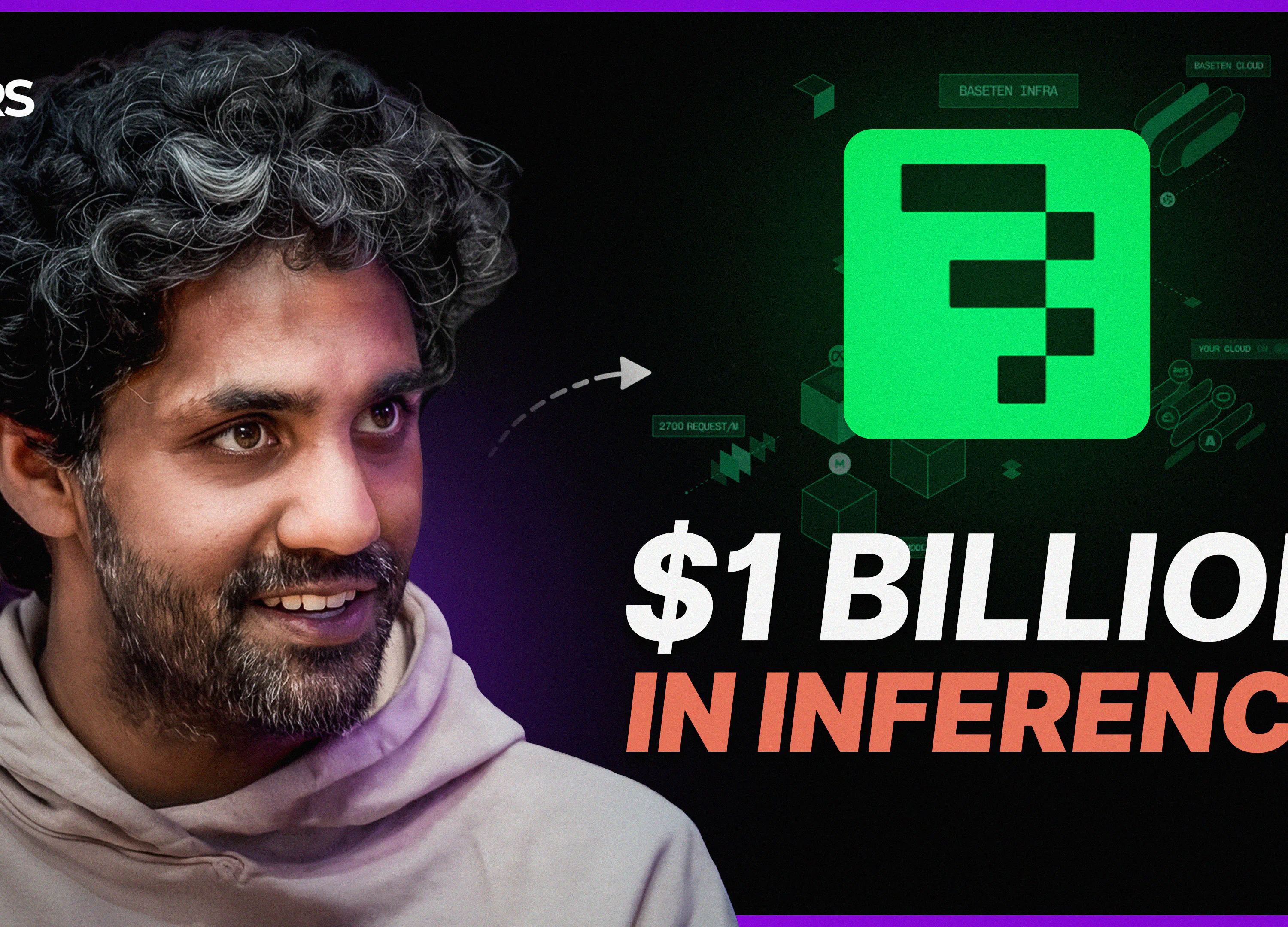
Baseten CEO and co-founder Tuhin Srivastava sits down with Sarah Guo and Elad Gil to discuss the rapid growth of AI inference demand, Baseten’s 30x growth, and why inference is becoming the strategic “last market.” Tuhin Srivastava argues the application layer will persist because companies with unique user signals can encode value into workflows and post-train specialized models, citing examples like Abridge and support workflows. The conversation covers GPU capacity constraints, Baseten’s multi-cloud fabric across 18 clouds and 90 clusters, long-term contracting dynamics, the importance of the software layer for stickiness, evolving workloads, multichip possibilities, and operational lessons at scale.
Sign up for new podcasts every week. Email feedback to show@no-priors.com
Follow us on Twitter: @NoPriorsPod | @Saranormous | @EladGil | @Tuhinone
Chapters:
00:31 Baseten growth
01:55 Why the app layer wins
05:57 Serving frontier customers
07:55 Open source model mix
09:21 Chinese models and geopolitics
13:07 Custom inference dominates
14:22 Post training acquisition
17:10 When to invest in custom models
18:35 Supply crunch and data centerse
22:25 Longer GPU Contracts
24:09 What Makes a Winner
26:07 Multi Chip Future
28:19 Runtime Roadmap
31:08 Scaling Edge Cases
33:48 Hiring and Leadership
36:44 Operations Pager Culture
38:19 Efficiency Drives Demand
40:41 Concierge Everything Future
42:34 Conclusion
43 minAbspielen in:
Do9Apr
No Priors: Artificial Intelligence | Technology | StartupsHost
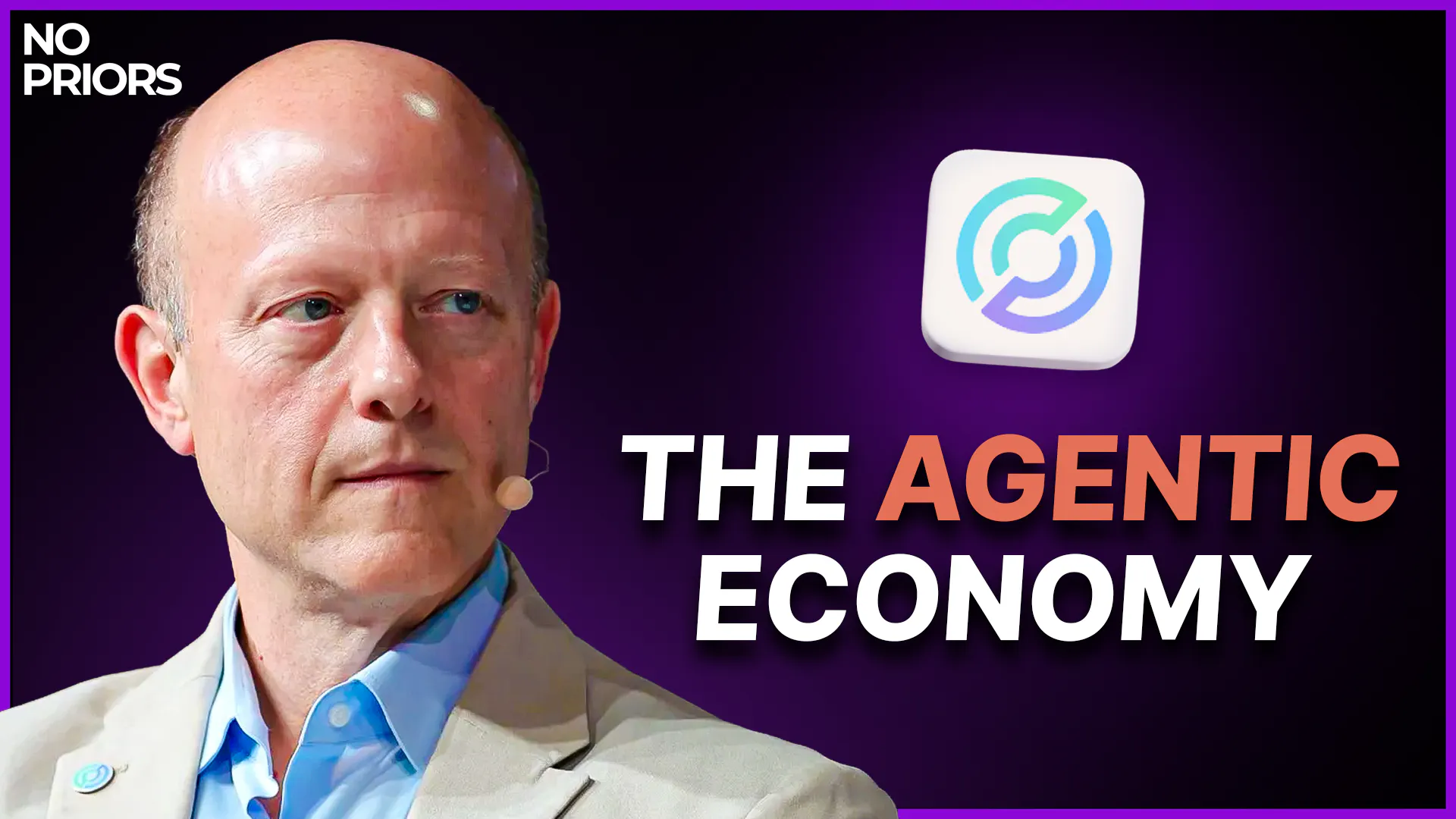
AI agents can already collaborate, but they lack a trustworthy medium in which to store value and execute contracts. Enter Circle’s Arc Blockchain, an economic “operating system” designed for a world where machines drive the real economy. Circle co-founder and CEO Jeremy Allaire joins Elad Gil to dive into the future of programmable money and the agentic economy. Jeremy explains why traditional banking fails to support the needs of AI agents, and how stablecoins like USDC facilitate an internet-native economy. They also discuss the tokenization of real-world assets, the move toward full-reserve banking, and Jeremy’s predictions for double-digit GDP growth as AI and blockchain reach their “broadband moment.”
Sign up for new podcasts every week. Email feedback to show@no-priors.com
Follow us on Twitter: @NoPriorsPod | @Saranormous | @EladGil | @jerallaire | @circle
Chapters:
00:00 – Cold Open
00:05 – Jeremy Allaire Introduction
00:21 – Origin Story of Circle
02:11 – Rethinking the Financial System
05:26 – The Role of Stablecoins
09:52 – Use Cases for USDC
11:30 – Programmable Money
12:25 – Blockchain as Operating System
14:37 – The Agentic Economy
17:45 – Arc Blockchain Use Cases
27:00 – Scaling Models and Privacy Tech
30:45 – Securitization of Other Assets Under the Blockchain
34:16 – Prediction Markets
35:09 – Incremental Revenue Through GPU Usage
37:19 – Jeremy’s 10 Year Future Vision
41:12 – AI and GDP
44:00 – Conclusion
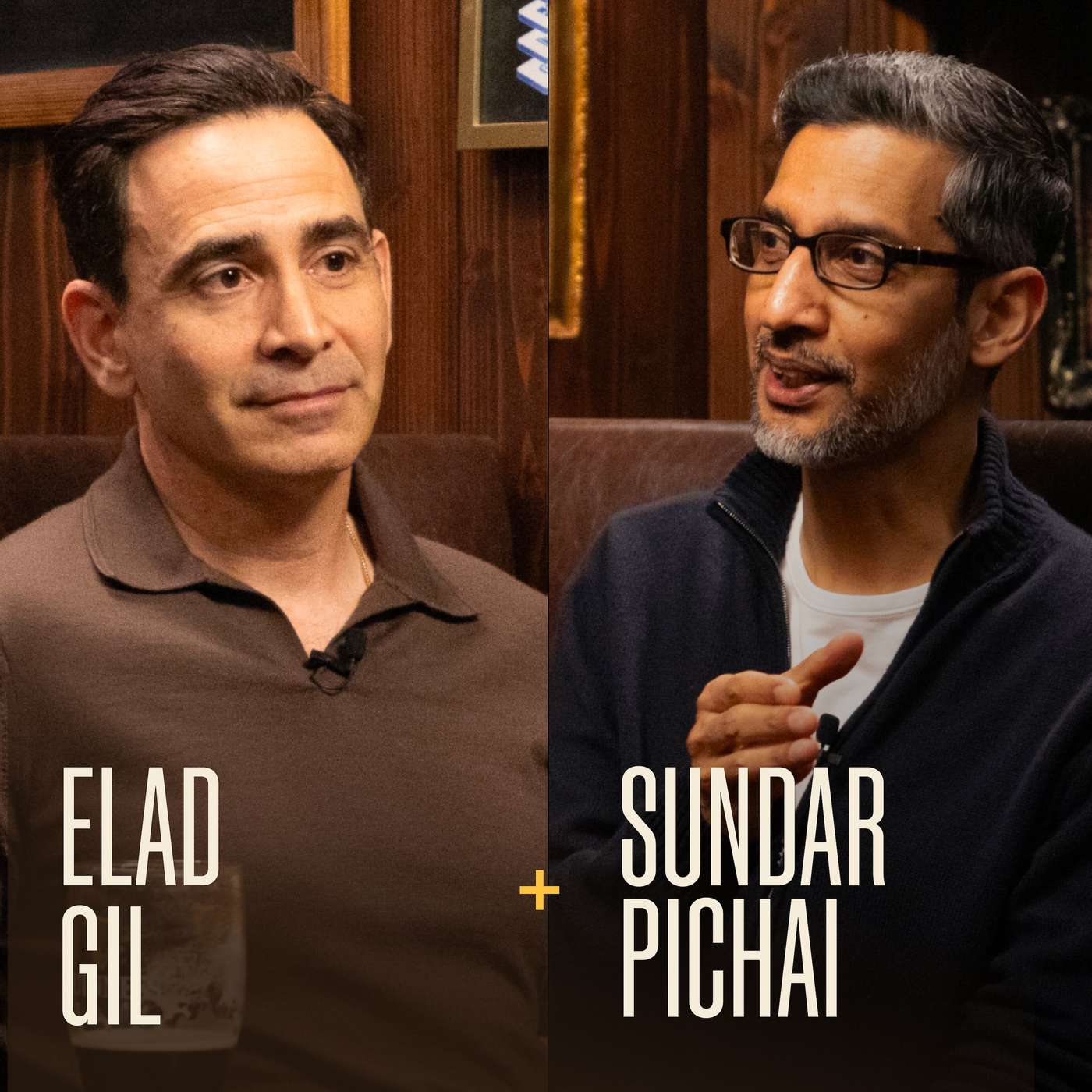
Sundar Pichai is the CEO of Google and Alphabet. He sits down with John and Elad Gil to discuss Google’s resurgence in the AI race, managing a massive $180 billion CapEx budget, and why 2026 is the year of the supply crunch. They cover the constraints of memory and power, why he believes the US economy will grow significantly due to AI, and the internal cultural shift back to "Googley" optimism. Sundar also shares details on long-term bets like data centers in space, why he wishes he had funded Waymo even faster, and the small thing inside Google that still ignites his passion for building.
Timestamps
(00:00:18) The history of Google and AI
(00:05:17) Speed and Search
(00:12:12) Google’s AI comeback
(00:27:03) Stripe network intelligence
(00:27:53) Bottlenecks
(00:41:25) Capital allocation
(01:00:44) How Google works
1 h 09 minAbspielen in:
Fr3Apr
No Priors: Artificial Intelligence | Technology | StartupsHost
What happens when you apply the scaling laws of large language models to the physical work of atoms? Elad Gil sits down with Liam Fedus, co-founder at Periodic Labs, which is pioneering an AI foundation lab for atoms. Liam discusses how he pivoted from dark matter physics research to the front lines of artificial intelligence, including stints at Google Brain and working on ChatGPT at OpenAI. He talks about how Periodic is connecting massive language models to the physical world to overcome data bottlenecks in material science. Liam also shares how they use language models as an orchestration layer operating alongside specialized neural nets to run closed-loop physical experiments. They also explore the future of AGI and ASI, as well as the role of robotics in lab automation.
Sign up for new podcasts every week. Email feedback to show@no-priors.com
Follow us on Twitter: @NoPriorsPod | @Saranormous | @EladGil | @LiamFedus | @periodiclabs
Chapters:
00:00 – Cold Open
00:05 – Liam Fedus Introduction
00:39 – Liam’s Background at Google Brain, OpenAI
05:14 – From ChatGPT to Materials and Atoms
06:34 – Training Data in the Physical World
09:52 – Generalization Across Domains
11:31 – Models as an Orchestration Layer
12:48 – Commercialization and Business Model
16:10 – How Periodic’s Success May Shape the Future
17:45 – Multidisciplinary Scaling
19:41 – Capital and Compute
21:12 – Hiring at Periodic
21:44 – Thoughts on AGI and ASI
23:30 – Timeline for Machine-Directed Self-Improvement
25:39 – Automation and Data Generation
27:59 – Why Liam is Excited About the Future of Robotics
29:25 – Conclusion
29 minAbspielen in:
Do5Feb
No Priors: Artificial Intelligence | Technology | StartupsHost
From “virtual doppelgängers” to “real-time dreaming,” online gaming platform Roblox is using AI technology to build the “Holodeck” envisioned in science fiction decades ago. Sarah Guo and Elad Gil sit down with Roblox CEO Dave Baszucki at Roblox headquarters to explore the intersection of AI, physics simulation, and the future of human connection. Dave discusses the evolution of the 4D creation tool in Roblox, a high-fidelity simulation that enables thousands of people to interact in real-time with photo-realistic graphics and acoustic physics. Dave reveals how Roblox is leveraging 13 billion hours of monthly user data to train native AI models that go beyond simple LLMs, enabling NPCs that can navigate and play games with human-like intuition. He also talks about how immersive communication will change video conferencing, how Roblox searches for unlikely talent outside of traditional elite universities, and how he balances rapid weekly iterations with keeping a “long view” on Roblox’s vision.
Sign up for new podcasts every week. Email feedback to show@no-priors.com
Follow us on Twitter: @NoPriorsPod | @Saranormous | @EladGil | @DavidBaszucki | @Roblox
Chapters:
00:00 – Cold Open
00:36 – Dave Baszucki Introduction
01:16 – Realizing Robolox’s 20-Year Vision
05:29 – Using 4D Immersive Simulations in Virtual Interactions
08:22 – Physics Engine vs. Photorealism
11:50 – Storing Roblox History as Vector Data
14:00 – Training NPCs - Moving Beyond LLMs
18:05 – The Future of the Game Designer
19:54 – Video Latent World Models
23:53 – Social Simulation - AI Companions and Virtual Relationships
27:26 – Why Asset Costs Haven’t Changed the Gaming Industry
29:52 – AI Coding in Roblox Studio
31:36 – The Roblox Creator Economy
33:57 – Long-Term Conviction vs. Weekly Iteration
37:50 – Dave’s Hiring Philosophy for Roblox
43:44 – Conclusion