CM
Doing the rounds: 3 shows in 6 months

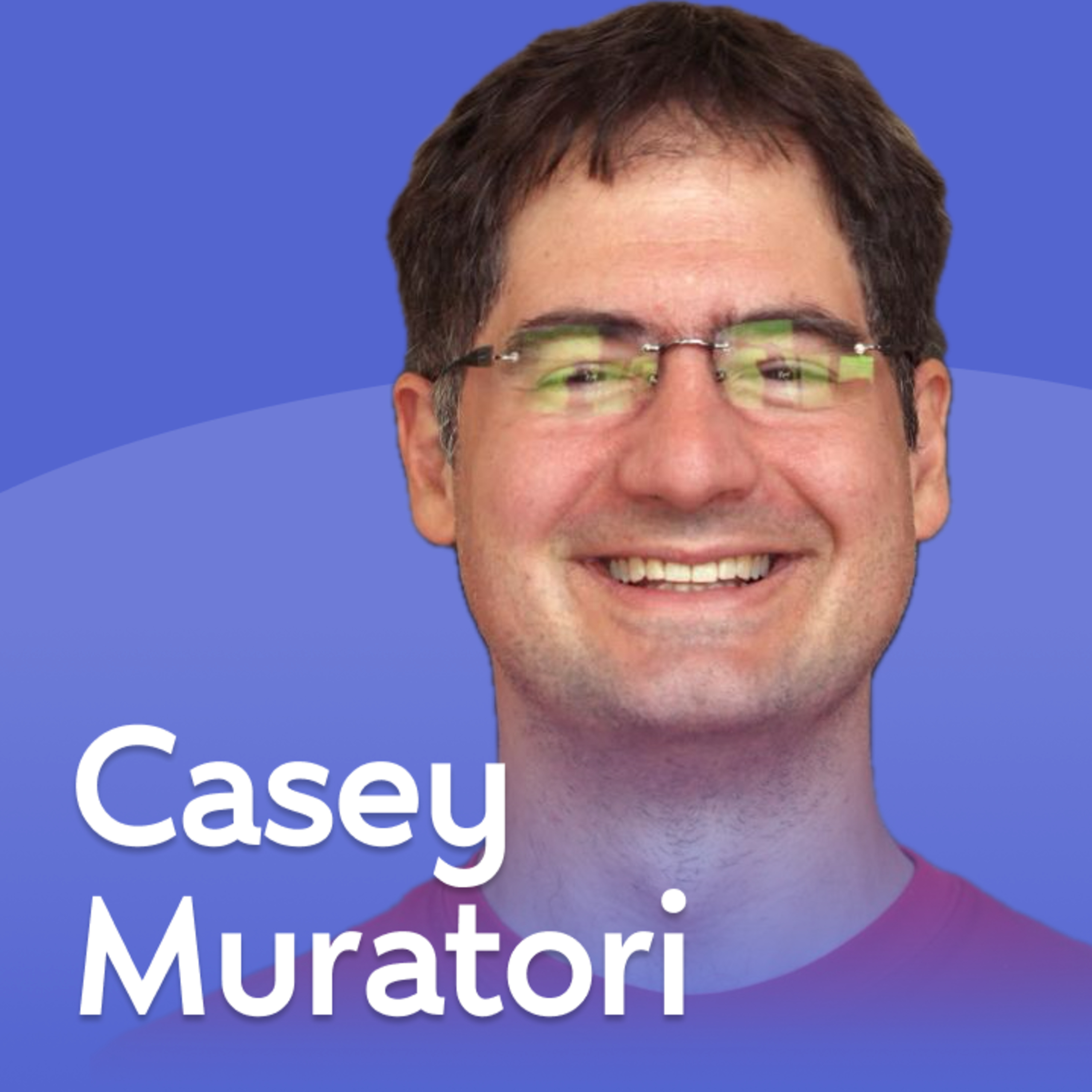
Casey Muratori

American computer programmer and game developer

Casey Muratori has been a guest on 4 podcast episodes across 3 shows in the last 12 months, most often on The Standup with ThePrimeagen (2 times). Latest: The Standup with ThePrimeagen, Oct 12, 2026.

Bio from Wikipedia

Two years on the air

GuestHostMentioned

Guest appearances

Mon12Oct
The Standup with ThePrimeagen

The Standup with ThePrimeagen

Living like Trash | Parking Lot

Casey Muratori attempts to experience life as Trash by ordering his favorite Taco Bell meal. Unfortunately, everything goes wrong. From a canceled podcast to a suspiciously unfried Chalupa, the crew investigates what happened and debates the proper way to experience Taco Bell.

14 min

Mon14Sep
The Peterman Pod

The Peterman Pod

Casey Muratori: Surprises In Computer History And Where Bad Code Comes From

Casey Muratori is a video game developer and programming creator also known for his talks about the history of software and computing. We talked about surprising parts he found while digging through computer history, where bad code comes from, and his career story. • My ergonomic keyboard project I mentioned, you can follow along here: https://read.compose.llc/ • The Kickstarter page for it: https://www.kickstarter.com/projects/ryanlpeterman/compose-simple-ergonomics-beautifully-done Podcast links: • YouTube: https://youtu.be/jHLbL1Eg4gM • Apple: https://podcasts.apple.com/us/podcast/the-peterman-pod/id1777363835 • Transcript: https://www.developing.dev/p/casey-muratori-surprises-in-computer Thank you to this episode's sponsors for supporting my work: • Jira by Atlassian: Get more work done with your favorite agents and models all in one place, check them out at https://jira.dev/ • WorkOS: makes your app Enterprise Ready with easy to use APIs to add SSO, SCIM, RBAC, and more in just a few lines of code, check them out at https://workos.com/ Timestamps: (00:00) Intro (01:08) Digging into computer science history (04:08) What shocked him (16:23) Dijkstra was depressed (26:17) The personal side of goto considered harmful (35:09) The anatomy of a 35 year mistake (50:12) Clean code horrible performance (58:33) How to write high performance code (01:01:18) Where bad code comes from (01:06:37) Why design docs before code is a bad idea (01:09:20) The only unbreakable law in software engineering (01:15:57) How he got into programming (01:21:16) Why he didnt work in big tech (01:30:44) Should you work at a startup early on (01:34:52) What video game engineering is like (01:39:57) Why preventing recursion is reasonable (01:43:24) Is vibe coding bad for the industry (01:50:17) Technical reading recommendation (01:54:27) Advice for his younger self (01:56:54) Outro Where to find Casey: • Website: https://caseymuratori.com/ • Newsletter: https://www.computerenhance.com/ • X/Twitter: https://x.com/cmuratori • GitHub: https://github.com/cmuratori • YouTube: https://www.youtube.com/@MollyRocket • Bluesky: https://bsky.app/profile/cmuratori.bsky.social • Twitch: https://www.twitch.tv/molly_rocket • Handmade Network: https://handmade.network/m/cmuratori • Wikipedia: https://en.wikipedia.org/wiki/Casey_Muratori Where to find Ryan: • Newsletter: https://www.developing.dev/ • X/Twitter: https://x.com/ryanlpeterman • LinkedIn: https://www.linkedin.com/in/ryanlpeterman/ • Threads: https://www.threads.com/@ryanlpeterman • Instagram: https://www.instagram.com/ryanlpeterman • TikTok: https://www.tiktok.com/@ryanlpeterman Referenced in this episode: • The Root of the Root of All Evil: https://computerenhance.com/theroot • The Big OOPS: Anatomy of a 35-Year Mistake: https://www.youtube.com/watch?v=wo84LFzx5nI • Edsger Dijkstra's "Notes on Structured Programming": https://www.cs.utexas.edu/~EWD/transcriptions/EWD02xx/EWD249/EWD249.html • Donald Knuth's "Structured Programming with go to Statements": https://doi.org/10.1145/356635.356640 • Edsger Dijkstra's "Go To Statement Considered Harmful": https://www.cs.utexas.edu/~EWD/transcriptions/EWD02xx/EWD215.html • Ivan Sutherland's Sketchpad thesis: https://www.cl.cam.ac.uk/techreports/UCAM-CL-TR-574.html • Clean Code, Horrible Performance: https://www.computerenhance.com/p/clean-code-horrible-performance • Where Does Bad Code Come From?: https://www.youtube.com/watch?v=7YpFGkG-u1w • The Only Unbreakable Law: https://www.youtube.com/watch?v=5IUj1EZwpJY • Dijkstra letter's reference: https://medium.com/@acidflask/this-guys-arrogance-takes-your-breath-away-5b903624ca5f#.1rdj838x6

1 h 58 min

Fri28Aug
The Standup with ThePrimeagen

The Standup with ThePrimeagen

1968 Predicted Every Modern Tech Problem

[Sponsor] Linear helps teams track issues, manage projects, collaborate on docs, and ship products - and the crazy thing is their software is actually fast and a joy to use. Learn more: https://trm.sh/linear [Description] In this episode of The Standup, Casey Muratori joins us to look at the fascinating parallels between 1968 tech and today. We examine the original context of "premature optimization is the root of all evil" and flip through the pages of Datamation from over 50 years ago. It’s a wild trip through early ray tracing, the birth of firmware, and the first mentions of virtual machines. [Sources] Dax Fraud Tweet: https://x.com/thdxr/status/2092238606987370884 Stripes Fraud Pricing Update: https://support.stripe.com/questions/updates-to-radar-pricing-(january-2027) Caseys BSC 2025 Talk: https://www.youtube.com/watch?v=wo84LFzx5nI Caseys BSC 2026 Talk: http://computerenhance.com/theroot (lots more sources here too) Programmer of the Month (Edsger Dijkstra) https://www.youtube.com/watch?v=lnMnXsmxoHc

1 h 12 min

Wed26Aug
The Pragmatic Engineer

The Pragmatic Engineer

Why performant code matters (but gets widely ignored), with Casey Muratori

Brought to You By: • Antithesis – verify your system’s correctness without human review or traditional integration tests – and avoid bugs or outages. • Sentry – application monitoring software considered “not bad” by millions of developers. • turbopuffer – a vector and full-text search engine built on object storage. It’s fast, cheap, and extremely scalable. — There can be few people around who care about software performance more than today’s pod guest, Casey Muratori. He’s a programmer and videogame developer, founder of Molly Rocket, and creator of  Handmade Hero – a long-running series about building a game from scratch. He also evangelizes about performance on his Substack, Computer, Enhance. We got to know each other about three years ago, first via messages, including this one from Casey: “Why does the industry zeitgeist place so little emphasis on software performance when there seems to be overwhelming evidence that performance is critical to their bottom line? Like you, I run a Substack for professional programmers, but I focus exclusively on software performance. Although we are quite large by Substack standards, so a certain subset of programmers must believe performance is important, I nonetheless hear lots of dismissive excuses when I post on social media. This happens so frequently, I devoted an entire article to cataloging the extensive pro-performance evidence we already have from the world's leading software companies: Performance Excuses Debunked. Strangely, nobody has a rebuttal to why performance is important. When I point people to this, they actually tend to agree. But the prevailing attitude nonetheless stays the same.” I’m delighted we finally have Casey on the podcast because it’s overdue! In this episode, we discuss why software performance matters, why it’s overlooked, and how developers can get better at writing performant code. We explore why performance should be considered during design, the value of learning to read assembly & understanding how CPUs work, Casey’s critique of ‘clean code’, and why he believes testing shouldn't drive software design. We touch on how videogame development has changed, and influential game engines. Casey also tells us why he prefers to write code by hand, not with AI, and more. — Timestamps 00:00 Intro 05:17 Games at Microsoft 12:52 Building games 16:00 Why performance matters 27:12 Why you should learn to read assembly 30:36 Designing for optimization 42:51 How to get better at writing performant software 49:04 Understanding how the CPU works 55:53 Building games then and now 1:05:56 How game engines changed building games 1:10:48 Why new games compete with old games 1:13:25 GTA 6: why is it taking so long? 1:16:59 Casey’s critique of clean code 1:21:48 Casey’s take on TDD 1:24:30 What is good code? 1:27:32 What makes a good software engineer? 1:33:56 Why Casey doesn’t code with AI 1:39:01 AI’s impact on the game industry 1:44:43 AI and burnout 1:50:21 Why you should read papers — The Pragmatic Engineer deepdives relevant for this episode: •Pushing software engineering limits with “napkin math” with Simon Eskildsen  •How Games Typically Get Built: prototyping, game engines, and a different type of QA •Game Development Basics: deepdive on how game studios differ from standard software teams •Inside Linear's Engineering Culture: building a performant product with a tiny team •Building a best-selling game with a tiny team – with Jonas Tyroller. A two-person team built a game that sold 1M+ copies More on premature optimization: read or watch Casey’s extended take on “premature optimization is the root of all evil”: https://www.computerenhance.com/p/theroot — Production and marketing by ⁠⁠⁠⁠⁠⁠⁠⁠https://penname.co/⁠⁠⁠⁠⁠⁠⁠⁠. For inquiries about sponsoring the podcast, email podcast@pragmaticengineer.com. Get full access to The Pragmatic Engineer at newsletter.pragmaticengineer.com/subscribe

1 h 53 min