Get an email when Caroline is a guest on a podcastPodAppear checks new episodes as they come out and leaves out the ones that only mention Caroline. Free for up to 15 people, no card needed.Free for up to 15 people, no card needed.
Caroline Webb: Leadership Intelligence
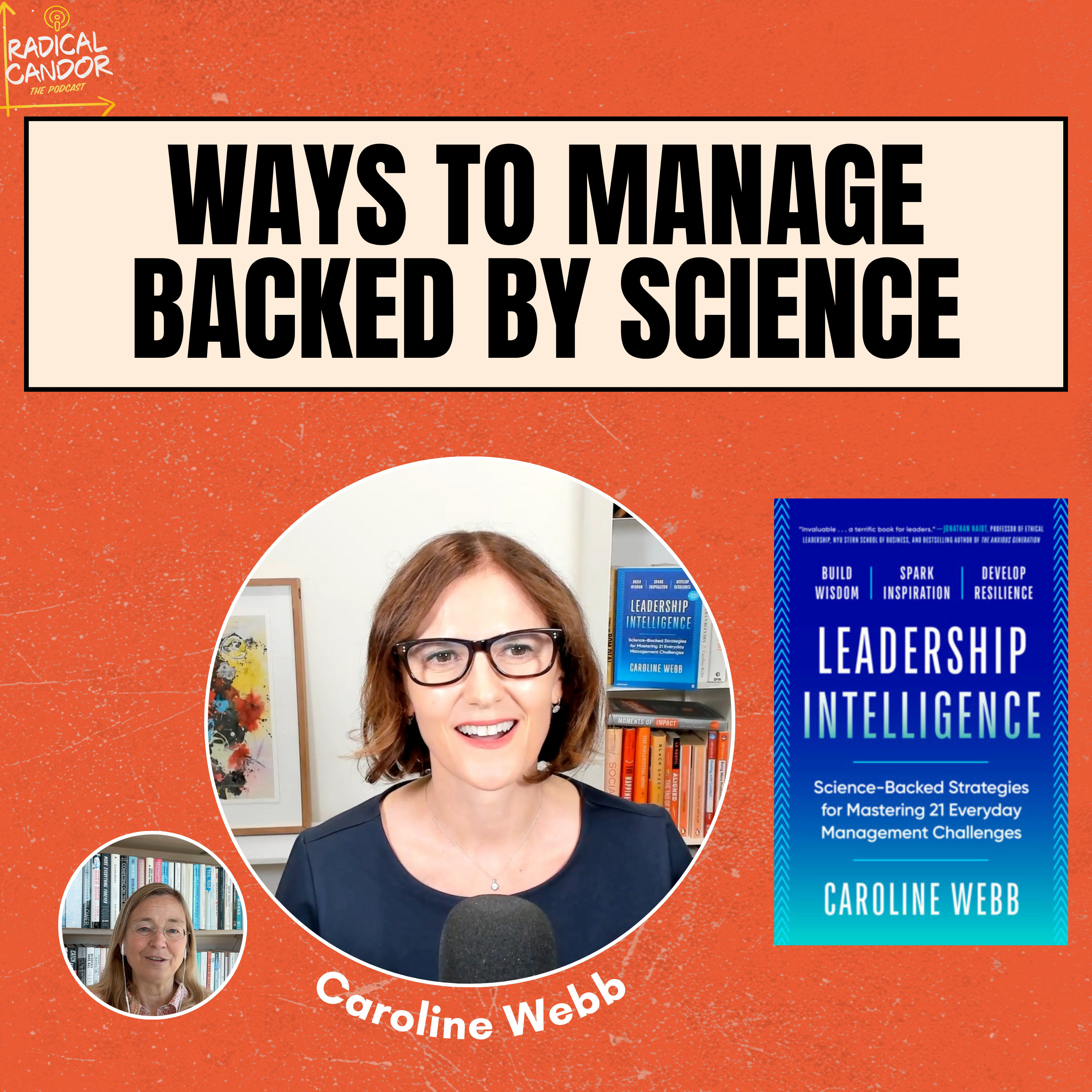
Caroline Webb is a leadership coach, economist, and author of How to Have a Good Day, which has been published in over sixty countries. She has been named one of the top 50 executive coaches in the world by Thinkers50 and is Senior Advisor on leadership to McKinsey & Company, where she was previously a Partner. She is the author of Leadership Intelligence: Science-Backed Strategies for Mastering 21 Everyday Management Challenges (Amazon, Bookshop)*.
Leaders are often called on to repair relationships for the benefit of everybody. When that relationship is a key stakeholder, it’s especially important to approach that process intentionally. In this conversation, Caroline and I detail the most important steps to help that repair go better.
Key Points
Many of us have power, even if it doesn’t feel like it. People with power find it hard to imagine others seeing things differently.
Perspective-taking helps us open up the doors of possibility to collaborate better, even when our assumptions are wrong.
A suspension bridge is a powerful analogy for a stakeholder relationship. Both sides must be strong and connected intentionally for the relationship to work.
The first tower of the suspension bridge is the other party. What could be going on for them that would make their behavior make sense, without assuming bad intent?
The second tower is you. Label what you’re feeling and get as specific as possible with your emotions.
Strengthen the connection with cables through appreciation, involvement, and elevation.
To meet in the middle (the deck), these five steps will help in an interaction:
Intention: share your goal for the relationship.
Observation: describe what you factually observed without assumption of judgement.
Implication: explain why you care and what’s concerning you.
Invitation: ask their side of the story without making assumptions.
Collaboration: mutually problem-solve how to improve the situation.
Resources Mentioned
Leadership Intelligence: Science-Backed Strategies for Mastering 21 Everyday Management Challenges by Caroline Webb (Amazon, Bookshop)*
Interview Notes
Download my interview notes in PDF format (free membership required).
Related Episodes
How to Involve Stakeholders in Decisions, with Eric Pliner (episode 586)
The Way to Get Noticed by Key Stakeholders, with Daphne E. Jones (episode 614)
How to Start Better With Peers, with Michael Bungay Stanier (episode 635)
Discover More
Activate your free membership for full access to the entire library of interviews since 2011, searchable by topic. Go beyond the podcast to find the right ideas and apply them with confidence inside Coaching for Leaders Plus.
While the podcast team is taking a Radical Sabbatical, Kim is interviewing authors whose books have had a big impact on her over the past two years.
In this episode, Kim Scott speaks with Caroline Webb about her latest book, Leadership Intelligence. They explore the principles of effective leadership: the importance of widening perspectives; the role of cognitive load in decision-making; and the significance of intrinsic motivation through competence and connection. The conversation also delves into the dynamics of disagreement, the necessity of feedback, and practical strategies for fostering a collaborative team environment. They review effective feedback techniques and the significance of public praise. Caroline also emphasizes the role of gratitude and giving praise in building strong workplace relationships, the importance of understanding stress and resilience in leadership, and how leaders can foster team resilience through structured conversations and practices. The discussion culminates in the introduction of the five C's of team resilience, emphasizing the need for communication, clarity, calm, connection, and capacity in creating a supportive work environment.
Guest Background: Caroline Webb is a leadership coach, economist, and speaker known for being one of the world's leading experts in using insights from behavioral science to improve professional life. She is the author of Leadership Intelligence and of How To Have A Good Day, a global bestseller published in 20 editions and over 60 countries. She is also a Senior Advisor to McKinsey, where she was previously a Partner. She has been rated one of the top 50 leadership and management thinkers by Inc. magazine, and one of Thinkers50's top 50 executive coaches in the world.
CHAPTERS
(00:38) Introduction to Leadership Intelligence
(03:24) Deliberate Wisdom: Widening Perspectives
(06:29) Causal Maps and Driver Trees
(09:27) Navigating Disagreements in Leadership
(12:30) The Importance of Turn-Taking in Discussions
(15:22) Lightening Cognitive Load for Better Leadership
(19:19) Intrinsic Inspiration: Competence and Connection
(22:21) The Power of Feedback in Engagement
(30:29) Effective Feedback and Praise Techniques
(32:57) The Importance of Public Praise
(37:01) Cultivating Gratitude and Appreciation
(37:32) Understanding Stress and Resilience
(44:45) Building Team Resilience with the Five C's
Connect with the Radical Candor team:
Website
LinkedIn
YouTube
Learn more about your ad choices. Visit megaphone.fm/adchoices
53 minPlay in:
Why PodAppear
Follow people, not podcasts.
You heard Caroline on one show. PodAppear finds the next one for you, and every other person you want to hear.
An alert when they are a guestBy email as it happens, or as a daily or weekly digest. Then press play.
Guests, not name-dropsEpisodes that only mention a name are kept apart, so an alert means they are really on the show.
Everyone in one feedFounders, authors, athletes, scientists. Follow anyone by name, across every show they visit.