The Chase Jarvis LIVE Show
Hey friends, Chase here
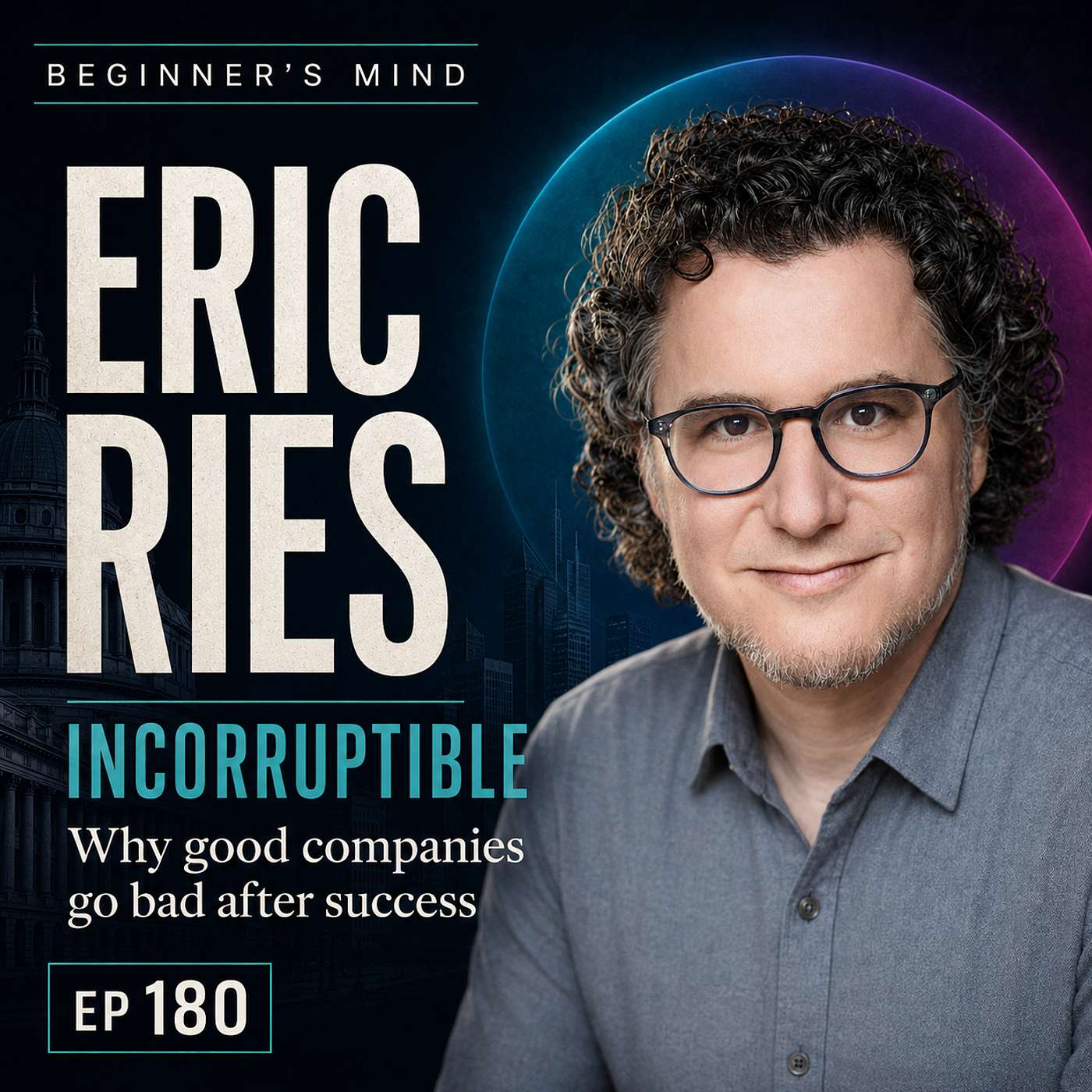
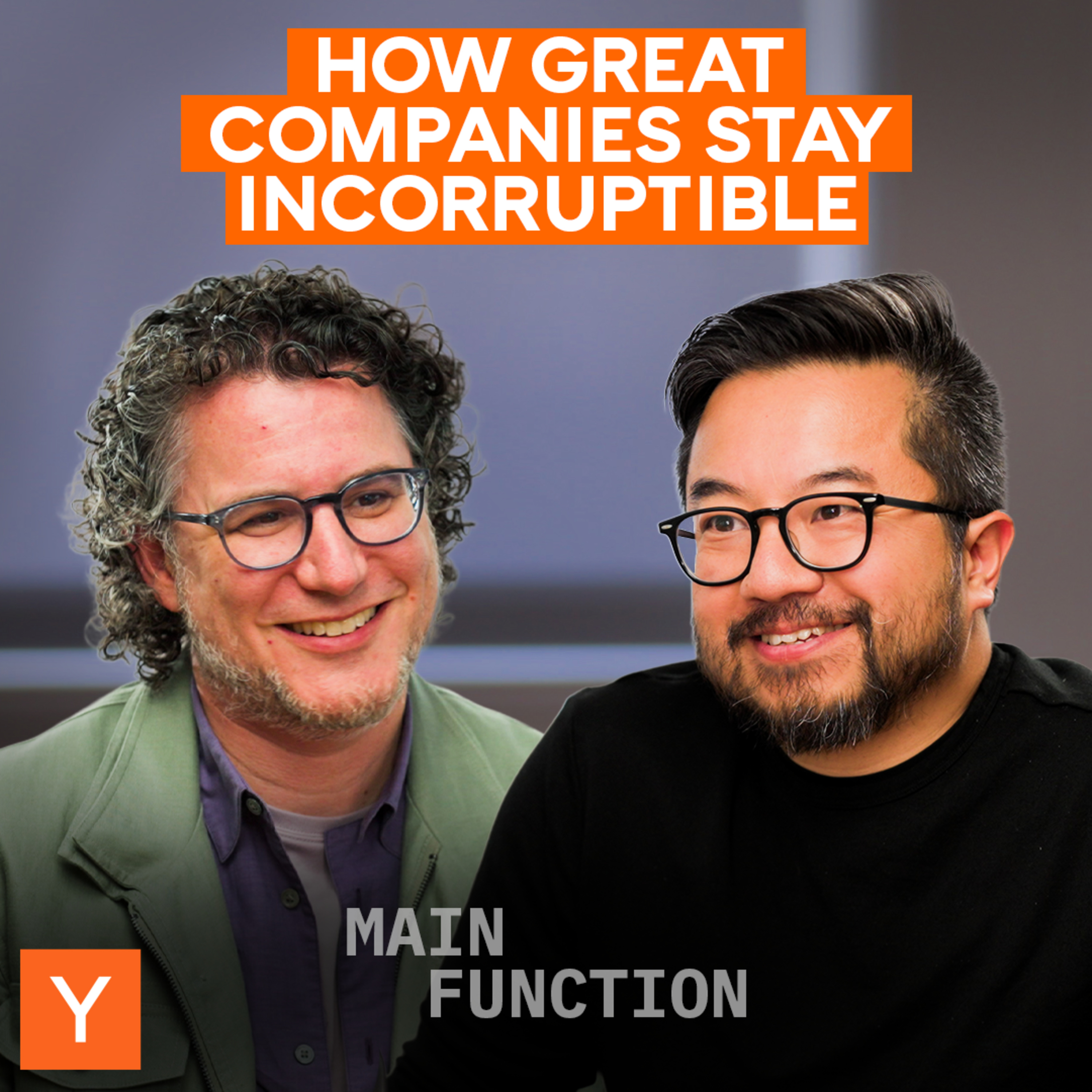
Eric Ries is back on the show, and this conversation goes far beyond startups, venture capital, or the mechanics of building a company.
You probably know Eric as the author of The Lean Startup, the book that changed how founders, creators, entrepreneurs, and teams think about building something new. His work helped popularize ideas like continuous innovation, validated learning, experimentation, and staying close to the customer instead of getting lost in theory, ego, or endless planning.
But this episode is not just about how to start something. It's about how to protect the thing you've built once it starts working.
Eric's new book, Incorruptible: Why Good Companies Go Bad…and How Great Companies Stay Great, asks a question that feels especially urgent for creators, entrepreneurs, founders, and leaders right now:
How do you build something that can grow without being captured, corrupted, or hollowed out?
That question matters whether you're running a company, building a personal brand, growing a creative practice, launching a product, choosing clients, working with sponsors, or trying to do work that actually reflects your values. Because success is not neutral. Success brings attention, opportunity, money, investors, partners, platforms, algorithms, expectations, incentives, shortcuts, and people who may not share the reason you started in the first place.
One of Eric's most powerful lines in this conversation is this:
"Success is not a source of strength. It is a liability, because success attracts predators."
That idea is the center of this episode. If you've ever built something that started to work, you know exactly what he means. The thing that made your work powerful can become the thing other people want to capture. The trust you built can become something others want to monetize. The values that made your community believe in you can suddenly feel inconvenient when there's more money on the table.
This conversation is about how to stay awake in the middle of that pressure. We talk about defining what you stand for, making decisions before the pressure arrives, treating trust as an asset, saying no to misaligned opportunities, and building something that can grow without losing its soul.
Why This Conversation Matters Right Now
We are living in a strange moment for creators and entrepreneurs. On one hand, there has never been more opportunity. An individual with a laptop, a camera, a newsletter, a product, an idea, or a point of view can reach people directly. You can build an audience, launch a business, compete with massive companies, and create a brand around your name, your work, your taste, your values, and your trust.
That is extraordinary, but it also comes with a real cost. The forces shaping our work have never been more intense. Platforms reward outrage. Algorithms reward simplification. Investors reward speed. Markets reward extraction. The pressure to be louder, faster, more polarizing, more optimized, and more "growth-minded" is everywhere.
Eric describes this pressure as a kind of gravity. It is the gravity of platforms, incentives, success, and other people's definitions of winning. If we are not conscious of those forces, they shape us without our permission.
That is one of the biggest themes in this episode: you are always being shaped by the systems you participate in. The question is whether you are awake enough to notice, honest enough to name it, and disciplined enough to choose a different path when the incentives start pulling you away from who you actually want to be.
What We Explore in This Episode
Why success can become a liability when it attracts people, money, platforms, and incentives that want to capture what you've built.
How creators get shaped by platforms and why the algorithm can quietly tune your voice, values, and identity toward whatever gets the most engagement.
Why trust may be the most valuable asset in business and why it is so easy to destroy with one short-term decision.
How to define an ethos before outside pressure, money, growth, or status starts making decisions for you.
Why "harder is easier" when your principles are clear enough to remove debate from the moments that matter.
How companies, creators, and brands slowly trade away their soul through small compromises that seem harmless in the moment.
Why alignment matters more than scale when choosing clients, customers, sponsors, platforms, partners, and investors.
How to build something durable without losing the trust, purpose, and values that made it worth building in the first place.
The Core Idea: Growth Without Betrayal
The real test of success is whether you can grow without betraying what made you worth trusting.
It is easy to talk about values when nothing is on the line. It is easy to say you care about quality, access, creativity, service, truth, community, or long-term thinking when the stakes are low. But values only become real when they cost you something.
That might happen when there is a big check on the table from a misaligned sponsor. It might happen when an investor wants a different path than the one you set out to build. It might happen when the algorithm rewards a version of you that is more inflammatory, less nuanced, and less honest. It might happen when you can quietly take the shortcut, ship something you don't believe in, or make a decision that no one will notice in the short term.
Those are the moments that reveal the truth. Not the words on the wall, not the mission statement, not the brand deck, and not the beautifully written values page. The decision is the proof.
Eric's argument is that if you want to build something incorruptible, you have to know what you stand for before those moments arrive. Once the pressure is here, it becomes much harder to think clearly.
Success Attracts Predators
One of the most powerful parts of this conversation is Eric's warning about success. Most of us are trained to think of success as pure upside: more customers, more revenue, more attention, more leverage, more opportunity, and more proof that the thing is working.
Eric flips that idea on its head. Success is not only a source of strength. It is also a liability, because the more valuable your work becomes, the more attractive it becomes to people and systems that want to use it for their own ends.
That can look like:
Investors who want growth at any cost.
Platforms that reward you for becoming a more extreme version of yourself.
Partners who want access to your audience but do not share your values.
A company acquiring a beloved brand and slowly stripping away what people trusted about it.
Your own internal pressure to keep the numbers moving up and to the right, even when the work starts to feel misaligned.
This is where corruption often begins. Not with one giant evil decision, but with tiny tradeoffs. A small compromise here, a slightly misaligned deal there, a decision that seems harmless because "no one will notice," or a shortcut taken because the quarter is tight.
Over time, the thing that made you trusted starts to erode. The work still looks successful from the outside, but inside the machine, something essential has been traded away.
The Gravity of Platforms
Eric and I also talk about the pressure creators face from platforms. This part is especially relevant if you make anything for the internet.
The promise of platforms is access. You can reach people, publish instantly, build a community, and grow a business without asking for permission from traditional gatekeepers. That is powerful, and I don't want to minimize how much opportunity that has created.
But platforms also have values. Not values in the human sense, but values in the incentive sense. They reward certain behaviors and punish others. They reward what keeps people clicking, watching, reacting, arguing, and coming back.
Over time, creators start to adapt. You post something thoughtful and nuanced, and almost nobody sees it. You post something sharper, more polarizing, more emotionally charged, and suddenly the platform lights up.
That teaches you something, whether you want it to or not.
The danger is that you start to confuse what the algorithm rewards with what people actually need. You begin making tiny adjustments: a stronger hook, a more controversial angle, less complexity, more certainty, more outrage, less truth. Eventually, you may not even notice that your voice has changed.
That is the gravity Eric is talking about. It is not a force that announces itself. It is a force that quietly pulls until one day you realize you have been shaped by something you never consciously chose.
Trust Is a Bank Account
One of my favorite ideas from Eric's book is what he calls the culture bank. The idea is simple: trust is an asset.
Every time you make a sacrifice for the sake of a principle, you make a deposit. Every time you betray a principle for short-term gain, you make a withdrawal.
Eric's rule is almost painfully simple:
Only make deposits. Never make withdrawals.
Of course, we are human. We make mistakes. Sometimes we think we are doing the right thing and we get it wrong. Sometimes something breaks, a customer gets disappointed, or a decision does not land the way we intended. That is not the point.
The point is not perfection. The point is to avoid intentional withdrawals.
Don't knowingly trade trust for a quick hit. Don't knowingly betray the values that made people believe in you. Don't knowingly cash out your reputation for something that will not matter a year from now.
Because trust takes a long time to build and almost no time to destroy. When you are a creator, founder, or entrepreneur, trust is not a soft idea. It is the business, the brand, the relationship, and the reason people come back.
Harder Is Easier
Another principle Eric shares is this: harder is easier. At first, that sounds backwards, but the more you sit with it, the more it makes sense.
When your principles are unclear, every decision becomes a debate:
Should we take this client?
Should we work with this sponsor?
Should we ship something that is not good enough?
Should we raise prices in a way that violates what we promised?
Should we optimize for short-term revenue even if it damages long-term trust?
If you don't know what you stand for, every one of those moments requires a new meeting, a new justification, a new argument, and a new rationalization.
When your principles are clear, many decisions become simpler. Not always easier in the short term, but simpler. You already know what the answer is. You may still have to do the hard work, find another way, absorb some pain, or get more creative, but you don't have to wonder who you are.
For a creator, this might mean knowing the kind of clients you will not take. For a founder, it might mean knowing the kind of investors you will not accept. For a leader, it might mean knowing the kind of culture you will not tolerate. For a brand, it might mean knowing which promises are sacred.
Values Are Not Decoration
We also talk about the difference between values as corporate decoration and values as operating instructions. Most of us have seen the empty version: company values on a wall, mission statements nobody remembers, and nice words that disappear the second the business is under pressure.
Real values are different because real values shape decisions. They influence who you hire, who you fire, who you serve, what you build, what you refuse, how you respond when something goes wrong, and what you do when nobody is watching.
At CreativeLive, one of our core values was access. That value shaped the business model. It shaped the decision to make live classes available for free while we were creating them. It shaped the way people encountered the brand and the way the community experienced the work.
Yes, there were plenty of moments where people looked at that and asked why we were giving so much away. But that was the point. Access wasn't a slogan. It was a decision, and the decision is what made the value real.
Alignment Beats Anyone With a Dollar
Toward the end of the conversation, we talk about one of the most important lessons for creators: not every customer is your customer.
Early on, this can be hard to hear. When you're trying to make a living with your camera, your writing, your design work, your product, your ideas, or your creative practice, the temptation is to say yes to anyone with a dollar and a heartbeat. I get it. I've been there.
Over time, though, the goal is not to work with everyone. The goal is to find the right people.
The right clients.
The right customers.
The right sponsors.
The right collaborators.
The right platforms.
The right partners.
The right community.
When I was making millions of dollars a year as a photographer, I didn't need millions of customers. I needed a small number of deeply aligned clients. That is true for a lot of creative businesses. Scale is seductive, but alignment is durable.
When you know your values, it becomes easier to choose who you want to work with and just as importantly, who you don't.
About Eric Ries
Eric Ries is an entrepreneur, author, and long-term thinker whose ideas have shaped how companies are built and managed over the last two decades.
He is the creator of the Lean Startup method and the author of the New York Times bestseller The Lean Startup, as well as The Leader's Guide and The Startup Way.
As a founder, Eric has put his ideas into practice through The Long-Term Stock Exchange, Answer.AI, the Lean Startup Co, Virgil, and IMVU, where the ideas that became the Lean Startup method were forged.
His new book, Incorruptible: Why Good Companies Go Bad…and How Great Companies Stay Great, explores why organizations lose their way and how leaders can build companies that endure without losing their soul.
Follow Eric Ries
LinkedIn
X
Instagram
TikTok
Newsletter
Incorruptible
The Eric Ries Show
YouTube
Timecodes
04:20 – Why this is an unusually powerful time to be a creator
06:31 – Why Eric says all of his books come from pain
07:29 – How platforms shape creators through algorithmic gravity
10:58 – Eric describes the war for the soul of the economy
13:40 – Chase shares what happened after raising venture capital for CreativeLive
17:17 – Why corruption often looks more like corrosion than scandal
19:52 – Why success attracts predators
21:35 – What Steve Jobs understood about defending principles
23:09 – Why companies need integrity and the ability to keep a promise
25:44 – How real values shape hiring, decisions, and culture
31:35 – Eric explains the "culture bank" and why trust is an asset
33:55 – Why the rule is simple: only make deposits, never withdrawals
36:05 – Chase shares the CreativeLive value of access
38:19 – How to recover when you make a mistake
44:16 – Why creators should choose alignment over anyone with a dollar
46:15 – Why the right audience matters more than the biggest audience
48:41 – Eric's new book, Incorruptible
Questions to Ask Yourself
If you want to turn this episode into action, take a few minutes with these questions:
What do I actually stand for in my work?
Where am I letting outside incentives shape my decisions without realizing it?
What kind of success would I not want if it required betraying my values?
Where have I confused growth with alignment?
Which clients, customers, platforms, sponsors, or partners are pulling me away from the work I want to be known for?
What is one trust deposit I could make this week?
What is one trust withdrawal I need to stop making?
What promise do I want my work to make and keep?
A Simple Practice for Staying Incorruptible
Here's something practical you can do this week. Write down three lists and be brutally honest with yourself:
What I stand for: the values that should guide your work, offers, partnerships, clients, platforms, and decisions.
What I will not trade: the principles you are unwilling to sacrifice for money, growth, attention, status, convenience, or approval.
What I need to change: the places where your current behavior is not aligned with what you say you believe.
This is not a branding exercise, and it is not about coming up with impressive words. It is about making decisions easier before the pressure arrives.
Because when the opportunity shows up, when the money is on the table, when the algorithm rewards the wrong thing, when the shortcut looks harmless, you want to already know who you are.
Final Thought
The longer I build things, the more I believe that trust is everything. Trust is what makes people come back. Trust is what makes a brand durable. Trust is what makes a creative career sustainable. Trust is what allows a company, a community, a body of work, or a reputation to compound over time.
But trust is also fragile. It can be spent, traded, and quietly eroded by decisions that seem small in the moment. That is why this conversation with Eric matters.
The goal is not just to build something successful. The goal is to build something worthy of the success it earns: something aligned, durable, and trustworthy enough that people can believe in it over the long term.
Until next time: know what you stand for, protect the trust you've built, and build something that can grow without being captured.
53 min