Bekomm eine E-Mail, wenn Bree in einem Podcast zu Gast istPodAppear prüft neue Folgen, sobald sie erscheinen, und lässt die weg, in denen Bree nur erwähnt wird. Bis zu 15 Personen kostenlos, ohne Kreditkarte.Bis zu 15 Personen kostenlos, ohne Kreditkarte.
Bree kostenlos folgen
BF

Bree Fram

Zwei Jahre auf Sendung

GastHostErwähnt

Selbst moderierte Folgen

Di10Nov
The Steady State Sentinel

The Steady State SentinelHost

Defending Democracy: Lessons from Ukraine to America

What does authoritarianism actually look like before a democracy falls? In this episode of The Steady State Sentinel, retired Space Force Colonel Bree Fram sits down with Uriel Epshtein, CEO of the Renew Democracy Initiative, to examine the warning signs of democratic erosion in the United States and the lessons Americans can learn from those who have lived under authoritarian rule. Drawing on his family's experience in the Soviet Union and his recent visit to war-torn Ukraine, Epshtein describes the extraordinary resilience of Ukrainians living under Russian bombardment, the creeping normalization of political intimidation, and the dangers of replacing the rule of law with the selective application of justice. Together, they explore how authoritarian leaders consolidate power, exploit political divisions, and undermine the freedoms Americans have long taken for granted. But recognizing the danger is only half the battle. Fram and Epshtein examine the global relationships between authoritarian leaders, what it would take for Ukraine to secure a lasting victory, and how American citizens, veterans, and national security professionals can defend democratic institutions at home. Epshtein argues that the pro-democracy movement must move beyond simply warning people about authoritarianism and offer a compelling vision of what freedom can deliver for ordinary Americans. From the courage of Soviet dissidents to the resilience of Ukraine, this conversation makes the case that democracy's survival depends not only on confronting the forces threatening it, but on giving people something worth fighting for. Uriel Epshtein is the Chief Executive Officer of the Renew Democracy Initiative (RDI), a nonprofit organization chaired by Russian democracy advocate and former world chess champion Garry Kasparov. Since joining RDI in 2017, Epshtein has led efforts to counter authoritarianism, support pro-democracy dissidents around the world, expand civic education, and mobilize humanitarian assistance for Ukraine. A graduate of Yale University, he founded the Peace & Dialogue Leadership Initiative, a program dedicated to bridging the civilian-military divide and encouraging informed discussion of American foreign policy. Before joining RDI, he worked at the Boston Consulting Group and held strategy roles at Uber and DoorDash. The son of parents raised in the Soviet Union, Epshtein speaks Russian and French and frequently comments on democracy, international affairs, and the global struggle against authoritarianism.

44 minAbspielen in:

Di27Okt
The Steady State Sentinel

The Steady State SentinelHost

Trump, Corruption, and a Weaponized DOJ: Can a New Congress Fight Back?

Congressman James Walkinshaw (VA-11) joins host Bree Fram on The Steady State Sentinel to examine the growing challenges to American democracy and Congress's constitutional responsibility to check executive power. Serving on both the House Oversight and Homeland Security Committees, Rep. Walkinshaw discusses the Trump administration's weakening of independent watchdogs, allegations of government corruption, and the challenges of holding federal agencies accountable. From unannounced inspections of ICE detention facilities to congressional subpoenas and investigations, he outlines how lawmakers can confront executive overreach and defend the rule of law. With Election Day just around the corner, Rep. Walkinshaw warns of efforts to undermine confidence in the electoral process and the possibility of challenges to the November results. He and Fram also explore the politicization of the Department of Justice, threats to the independence of the federal workforce, and the importance of preserving a professional, nonpartisan civil service. Despite these challenges, Rep. Walkinshaw makes the case for optimism, arguing that civic engagement, constitutional accountability, and meaningful institutional reform can help America emerge from this period with a stronger democracy. The Steady State has endorsed Rep. Walkinshaw. Congressman James Walkinshaw represents Virginia's 11th Congressional District, a community home to a significant population of federal employees, military families, and national security professionals. He serves on the House Committee on Oversight and Government Reform and the House Committee on Homeland Security, where his work focuses on government accountability, constitutional oversight, and the protection of civil rights. Walkinshaw is the founder and co-chair of the Federal Workforce Caucus, advocating for the independence and professionalism of the federal civil service. Before entering Congress, he served on the Fairfax County Board of Supervisors and as chief of staff to Congressman Gerry Connolly. He is endorsed by The Steady State.

32 minAbspielen in:

Di20Okt
The Steady State Sentinel

The Steady State SentinelHost

Frank Kendall Sounds the Alarm: America’s Military Is Being Politicized From the Top Down

From autonomous weapons to political interference, a former Air Force Secretary confronts the threats to America's military future. In this episode of The Steady State Sentinel, retired Space Force Colonel Bree Fram sits down with former Secretary of the Air Force Frank Kendall to examine the future of warfare and the mounting challenges facing America's military leadership. Drawing on Fram's recent firsthand observations in Ukraine and Kendall's book on the future of warfare, they explore how artificial intelligence, autonomous weapons, and uncrewed systems are fundamentally transforming modern combat. Kendall explains why America's military must move beyond traditional platforms, what Ukraine's battlefield innovations reveal about the next generation of warfare, and why careful strategic planning is essential to maintaining America's military advantage. The conversation turns to the growing politicization of the Pentagon and the consequences for military professionalism, national security, and democratic accountability. Kendall delivers a sharp assessment of current Defense Department leadership and the rise of authoritarianism. He discusses the revocation of his security clearance, and warns about the dangers of silencing dissent within the armed forces. From the feasibility of the administration's Golden Dome missile defense initiative to the importance of America's alliances, Fram and Kendall examine the difficult decisions facing the nation's military leaders. At the heart of their discussion is a fundamental question: When political pressure conflicts with professional judgment and constitutional obligations, will America's military leaders have the courage to speak up? Frank Kendall served as the 26th Secretary of the Air Force from 2021 to 2025, overseeing the U.S. Air Force and Space Force, and previously served as Under Secretary of Defense for Acquisition, Technology, and Logistics from 2012 to 2017. With more than five decades of experience in national security, military modernization, engineering, and defense acquisition, Kendall has held senior positions across government and the private sector, including Vice President of Engineering at Raytheon and a seat on the Board of Directors of Leidos. A graduate of the United States Military Academy at West Point, he holds advanced degrees from the California Institute of Technology, Long Island University, and Georgetown University Law Center. He has also worked as a pro bono human rights attorney and is the author of Lethal Autonomy: The Future of Warfare Whether We Like It or Not, published in July 2026.

40 minAbspielen in:

Di13Okt
The Steady State Sentinel

The Steady State SentinelHost

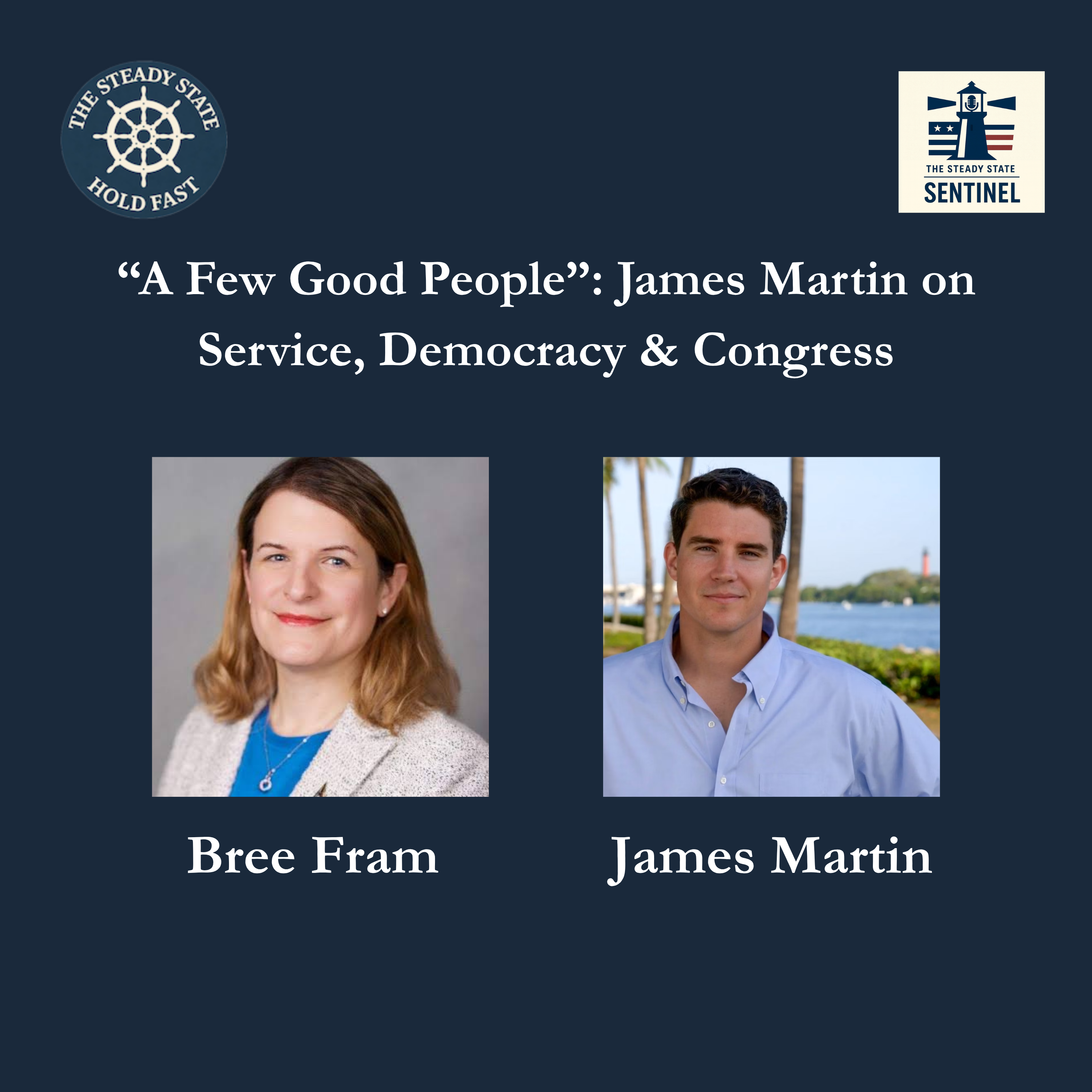
“A Few Good People”: James Martin on Service, Democracy & Congress

The Florida congressional candidate on military service, democratic institutions, national security, and why Congress needs to reclaim its constitutional role. Episode Summary: In this candidate edition of The Steady State Sentinel, host Bree Fram sits down with James Martin, Democratic nominee for Congress in Florida’s 21st District and a Coast Guard officer whose career has taken him from commanding cutters to working at the highest levels of the federal government. The Steady State has endorsed James Martin in his congressional race. Martin discusses his closely contested primary, why he believed every vote needed to be counted before declaring victory, and what serving through a presidential transition taught him about the responsibilities national security professionals carry regardless of who occupies the White House. Martin also draws on his experience conducting and overseeing counternarcotics operations to discuss how maritime interdictions work, the intelligence gathered from detained suspects, and the consequences of abandoning established law-enforcement processes. The conversation expands to congressional war powers, the relationship between Congress and the executive branch, and the importance of rebuilding the government's national-security workforce. Martin closes by reflecting on what running for office has taught him and the idea that motivates his campaign: that the country may be only “a few good people” away from changing its direction. Guest bio: James Martin is a fourth-generation Floridian from Hobe Sound and the Democratic nominee for Congress in Florida’s 21st District. A graduate of the U.S. Coast Guard Academy, where he studied Naval Architecture and Marine Engineering, Martin served nearly a decade on active duty, including a deployment to the Arabian Gulf and command of two Coast Guard cutters based in Fort Pierce. From 2022 to 2025, he served as Chief of Staff for National Security Affairs and Executive Secretary in the Office of the Vice President, serving through the presidential transition. He continues to serve as a lieutenant commander in the U.S. Coast Guard Reserve. James Martin is endorsed by The Steady State.

37 minAbspielen in:

Di11Aug
The Steady State Sentinel

The Steady State SentinelHost

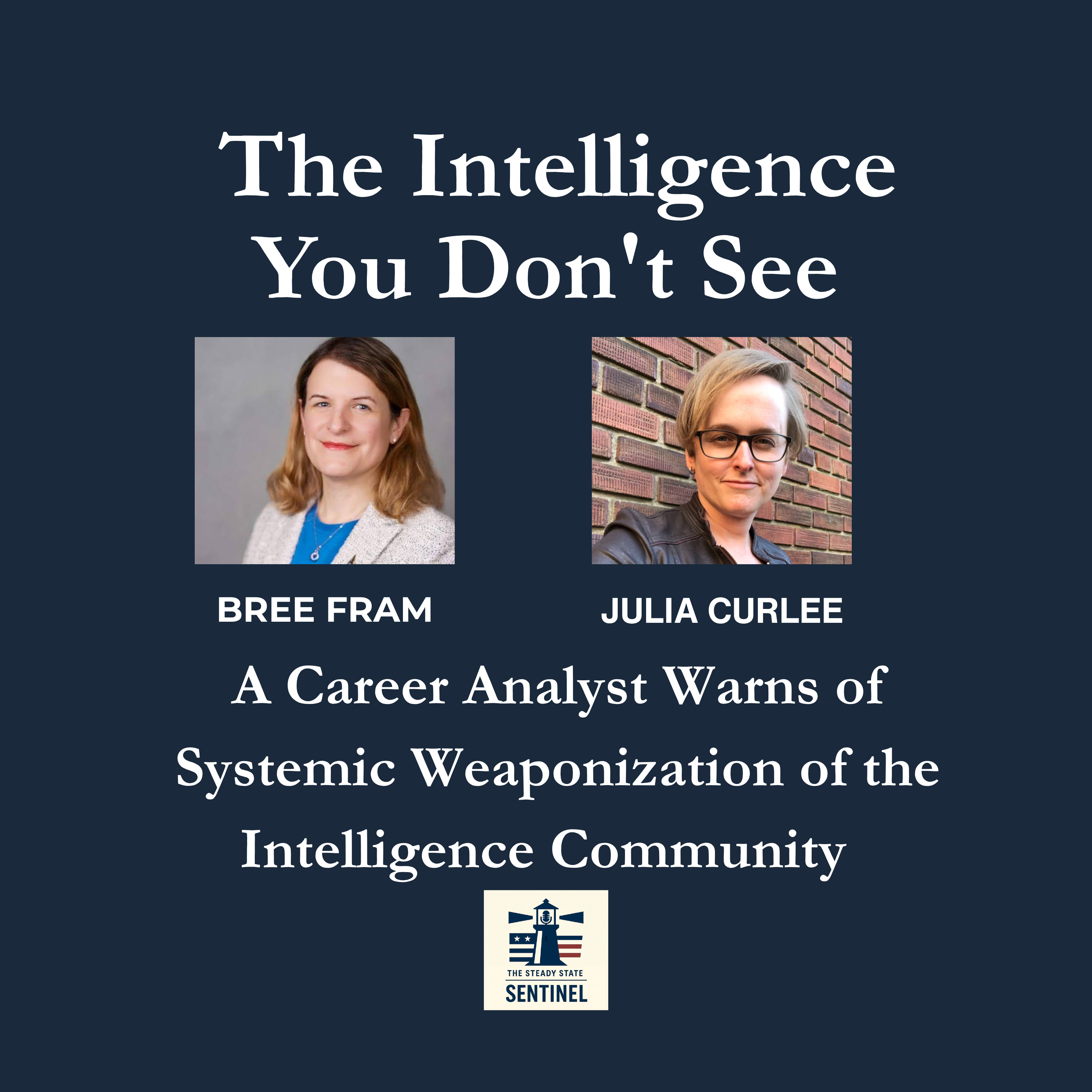
The Intelligence You Don't See: A Career Analyst Warns about Systemic Weaponization of the Intelligence Community

A former CIA analyst and NSC director on the weaponization of the DNI, the decapitation of the NSC, and why dissent is no longer tolerated. Host Bree Fram, a retired Space Force colonel, sits down with Julia Curlee, a former CIA analyst with 25 years of experience who served as an National Security Council (NSC) director in the Biden and second Trump White Houses and as a presidential daily intelligence briefer to Vice President Pence. Curlee explains how intelligence was designed to work — raw reports transformed into context-rich analysis to help policymakers make informed decisions — and how that system has been systematically dismantled. She describes the Office of the Director of National Intelligence (ODNI) as a "loaded gun waiting on the table" that has been weaponized under Tulsi Gabbard and Bill Pulte, and warns that the NSC's coordination function has been "decapitated," leading to catastrophic planning failures in the run-up to the Iran war. She reveals how the head of the National Intelligence CounciL (NIC) was fired for delivering an assessment that didn't align with Stephen Miller's desired narrative, and how this has taught analysts that "any form of dissent" will be held against them. She closes with a sobering assessment: the Iran war is a strategic blunder that rivals Iraq, the U.S. has no good way out, and it will take decades to rebuild the trust that has been destroyed with allies and partners. Guest info: Julia Curlee is a former CIA analyst with 25 years of experience in national security. She served as an NSC Director in the Biden and second Trump White Houses and as a presidential daily intelligence briefer to the Vice President. She completed multiple tours in the Middle East and South Asia and served in the CIA's China Mission Center. She holds master's degrees from the National War College and American University and is currently a public service fellow at Lawfare. Episode Transcript

46 minAbspielen in:

Di21Jul
The Steady State Sentinel

The Steady State SentinelHost

Breaking the Cockpit Barrier: One Pilot's Fight to Engineer Inclusion into the Military

A retired Air Force lieutenant colonel on height requirements that excluded 44% of women, the first maternity flight suit, and why "truth isn't afraid of transparency." In her debut as a co-host of the Steady State Sentinel, retired Space Force Colonel Bree Fram joins Lauren Anderson to interview retired Lieutenant Colonel Jessica Ruttenber, a senior pilot with over 3,000 flight hours. Their conversation explores the effects on combat readiness of hidden barriers, the importance of data over anecdotes, the chilling effect of censorship and erasure of military history (including the Tuskegee Airmen and The Women Airforce Service Pilots (WASPs) and why veterans have a duty to speak out. Lt. Col. Ruttenber shares her journey from being told she was "too short" to fly to becoming a driving force behind the Department of Defense's first maternity flight suit and the Equality for Military Mothers Amendment. She reveals how an outdated 1960s anthropometric study based on the "average male" excluded 44% of women from aviation — and 74% of Black women. She explains how changing a single policy gave the Air Force "30 instant pilots" worth of man-hours. She closes with a powerful message: sometimes "surviving is the ultimate rebellion" when the system wasn't designed for you. Episode Transcript

49 minAbspielen in:

Warum PodAppear

Folge Menschen, nicht Podcasts.

Du hast Bree in einer Sendung gehört. PodAppear findet für dich die nächste, und genauso für alle anderen, die du hören willst.

  • Eine Meldung, wenn die Person zu Gast istPer E-Mail: sofort oder gebündelt als Tages- oder Wochenübersicht. Dann nur noch auf Play drücken.
  • Gäste statt bloßer ErwähnungenFolgen, in denen ein Name nur fällt, landen getrennt. Eine Meldung heißt: Die Person ist wirklich in der Sendung.
  • Alle in einem FeedGründerinnen, Autoren, Sportler, Forscherinnen. Folge allen mit Namen, quer durch jede Sendung, in der sie auftreten.

Bis zu 15 Personen kostenlos, ohne Kreditkarte.