Bekomm eine E-Mail, wenn Andrew in einem Podcast zu Gast istPodAppear prüft neue Folgen, sobald sie erscheinen, und lässt die weg, in denen Andrew nur erwähnt wird. Bis zu 15 Personen kostenlos, ohne Kreditkarte.Bis zu 15 Personen kostenlos, ohne Kreditkarte.
Are we any closer to Strong AI and the Singularity than we were in 2019? Don't bet on it. On this classic episode of ID the Future from the archive, Andrew McDiarmid catches up with philosopher Jay Richards at the 2019 COSM conference in Seattle. The two discuss the history of George Gilder’s Telecosm conferences and how the first one gave birth to a book Richards edited and contributed to 18 years ago, Are We Spiritual Machines? Ray Kurzweil vs. the Critics of Strong A.I.
Source
Did Charles Darwin settle the question of biological design once and for all? That's certainly the impression given by some of his modern defenders, including Richard Dawkins. But the actual history of Darwin's theory tells a different story about the dominant theory of biological origins and why it fails to explain the complexity and specificity and purpose of life.
On this ID The Future, host Andrew McDiarmid continues his conversation with author and scholar Neil Thomas. In his books Taking Leave of Darwin and False Messiah, Thomas examines the intellectual influences behind Darwin's theory, the objections raised by his contemporaries, and the larger philosophical assumptions that have shaped modern evolutionary thinking.
Source
Is the natural world full of flawed, makeshift designs, as some critics of intelligent design have argued? Or are living things far more ingeniously engineered than we've been led to believe? On this episode of ID the Future, host Andrew McDiarmid is pleased to bring you a conversation with award-winning British engineer and designer Dr. Stuart Burgess, a senior fellow with Discovery Institute's Center for Science and Culture and author of the book Ultimate Engineering.
Dr. Burgess has spent decades studying engineering design, both in human technology and in humans themselves. And his work has led him to challenge the popular claim that biology is full of poor design. In this conversation, originally recorded for the Truthful Hope podcast, host Jacob Vasquez talks with Burgess about the so called bad design argument and what engineering principles can tell us about the evidence for intelligent design in nature.
Source
Purpose has been a fundamental part of our understanding of nature for millennia. But the rise of scientific materialism and Darwinism saw purpose get left out of the scientific pursuit. In recent years, materialists have found it necessary to bring purpose back into the equation, and they’re looking for a way to explain it without recourse to intelligent design. On this ID The Future, host Andrew McDiarmid concludes his conversation with Dr. Stephen Iacoboni, an award-winning cancer researcher and practitioner of medical oncology for forty years.
20th-century materialism treated living organisms as reducible machines governed strictly by Newtonian physics and simple genetic mechanics. But modern research shows organisms are not passive objects: "Organisms don't act like inert objects responding to external forces impinged on them," says Dr. Iacoboni. They are "active agents that figure out what's going on in their conditions of existence and they figure out what to do about it in real time."
This is Part 2 of a two-part conversation.
Source
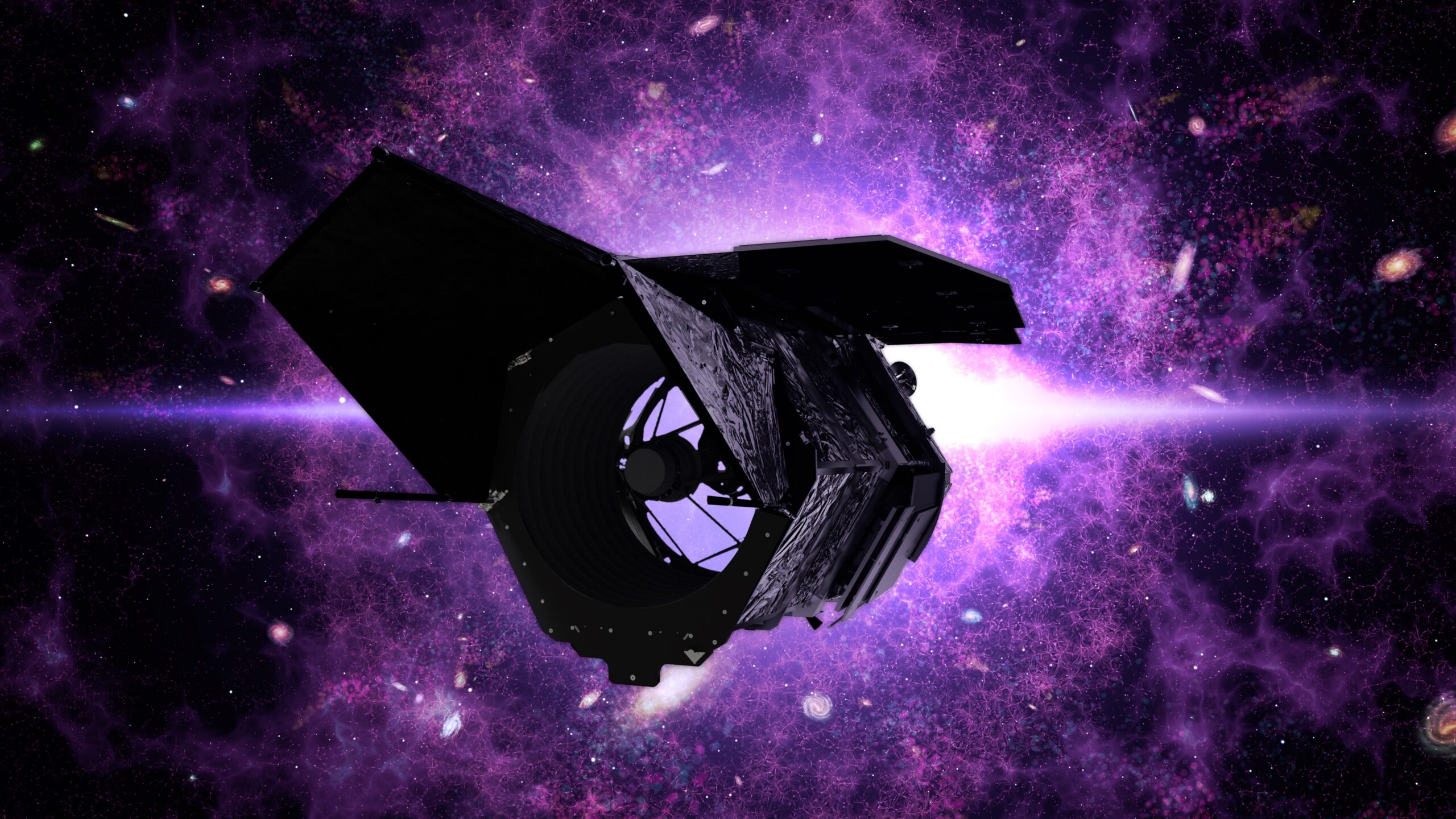
How rare is Planet Earth in the vastness of the cosmos? Will we find other planets in space that could possibly harbor life? A new space telescope has just been launched that may help us with answers to those questions. On today's episode of ID The Future, host Andrew McDiarmid concludes a two-part conversation with physicist Dr. Bijan Nemati about his work on the Nancy Roman Space Telescope. In this segment, we dive deeper into what constitutes a habitable planet, how Roman will team up with the James Webb space telescope to discover hidden worlds, and how intelligent design can inform our expectations and interpretations of data sent back from Roman.
Source
25 minAbspielen in:
Warum PodAppear
Folge Menschen, nicht Podcasts.
Du hast Andrew in einer Sendung gehört. PodAppear findet für dich die nächste, und genauso für alle anderen, die du hören willst.
Eine Meldung, wenn die Person zu Gast istPer E-Mail: sofort oder gebündelt als Tages- oder Wochenübersicht. Dann nur noch auf Play drücken.
Gäste statt bloßer ErwähnungenFolgen, in denen ein Name nur fällt, landen getrennt. Eine Meldung heißt: Die Person ist wirklich in der Sendung.
Alle in einem FeedGründerinnen, Autoren, Sportler, Forscherinnen. Folge allen mit Namen, quer durch jede Sendung, in der sie auftreten.
In his book Darwin’s Black Box, biochemist Michael Behe writes that in order to understand the barriers to evolution, we have to “bite the bullet of complexity.” On this classic episode of ID The Future out of the vault, Dr. Jonathan McLatchie is back to help us do just that! In the latest installment of an ongoing series, Dr. McLatchie talks with host Andrew McDiarmid about the remarkable properties of carbon and other non-metal atoms.
Source
By now, you’re likely familiar with the multiverse hypothesis, which is actually just one of dozens of cosmological models proposed to explain away the significance of a beginning to the universe and the evidence for fine-tuning. But you may not know there’s a rigorous method to evaluate these models, which can prove helpful in understanding the flaws of each. On today's ID The Future, host Andrew McDiarmid continues his conversation about evaluating cosmological models with philosopher of physics Bruce Gordon and physicist Brian Miller. This is Part 2 of a two-part conversation.
Source
You’re likely familiar with the evidence for the fine-tuning of the universe, and you may be aware that there are several cosmological models attempting to explain away that fine-tuning, including the popular multiverse hypothesis. But did you know an ID scientist has developed a scientifically rigorous method for scoring those models? On this ID The Future, host Andrew McDiarmid begins a two-part conversation with philosopher of physics Bruce Gordon and physicist Brian Miller about Gordon's scoring system and how it evaluates the many models on offer that might explain the origin and development of the universe. This is Part 1 of 2.
Source
Is intelligent design dying out or just warming up? On this ID The Future, host Andrew McDiarmid welcomes Dr. Casey Luskin to a new and improved podcast studio for a sit-down, in-person conversation! Today, Dr. Luskin discusses a recent book called Designer Science that portrays the ID movement as a short-lived political, cultural, and religious phenomenon. Luskin reveals some egregious errors in this purported comprehensive history of ID. First, a made-up quote from Michael Behe used to support one of the book's major premises. Second, some glaring omissions, including a number of scientific breakthroughs and developments from ID scientists in the last two decades.
This is Part 1 of a two-part conversation. Look for Part 2 next! Also available in video format on our YouTube channel!
Source