The ID The Future (IDTF) podcast carries on Discovery Institute's mission of exploring the issues central to evolution and intelligent design. IDTF is a short podcast providing you with the most current news and views on evolution and ID. IDTF delivers brief interviews with key scientists and scholars developing the…
Today’s episode of ID The Future comes from our sister podcast Mind Matters News, a production of Discovery Institute’s Walter Bradley Center for Natural and Artificial Intelligence. Mind Matters regularly explores the nature of intelligence, the origin of information, and the things that make us uniquely human, all concepts that are central to the theory of intelligent design. Enjoy today’s offering of Mind Matters News!
On today’s episode of Mind Matters News, guest host Pat Flynn welcomes Dr. Eric Holloway and Professor Robert J. Marks to the podcast to discuss the fundamental differences between human and machine intelligence. Today’s conversation is based on a chapter in the book Minding the Brain authored by Dr. Holloway and Marks. Essentially, they are addressing the following question: Can the marvels of human creativity, like novels, speeches, and ideas, really be explained by random processes and brain chemistry alone? As Holloway and Marks explain, even allowing for the computational capacity of the entire universe (and a hypothetical multiverse!), the probability of randomly generating a short, meaningful phrase is astronomically low. This suggests that human creativity cannot be fully explained by natural, random processes, and may require a non-material or external source of information and guidance.
Source
Are we any closer to Strong AI and the Singularity than we were in 2019? Don't bet on it. On this classic episode of ID the Future from the archive, Andrew McDiarmid catches up with philosopher Jay Richards at the 2019 COSM conference in Seattle. The two discuss the history of George Gilder’s Telecosm conferences and how the first one gave birth to a book Richards edited and contributed to 18 years ago, Are We Spiritual Machines? Ray Kurzweil vs. the Critics of Strong A.I.
Source
Did Charles Darwin settle the question of biological design once and for all? That's certainly the impression given by some of his modern defenders, including Richard Dawkins. But the actual history of Darwin's theory tells a different story about the dominant theory of biological origins and why it fails to explain the complexity and specificity and purpose of life.
On this ID The Future, host Andrew McDiarmid continues his conversation with author and scholar Neil Thomas. In his books Taking Leave of Darwin and False Messiah, Thomas examines the intellectual influences behind Darwin's theory, the objections raised by his contemporaries, and the larger philosophical assumptions that have shaped modern evolutionary thinking.
Source
Is the natural world full of flawed, makeshift designs, as some critics of intelligent design have argued? Or are living things far more ingeniously engineered than we've been led to believe? On this episode of ID the Future, host Andrew McDiarmid is pleased to bring you a conversation with award-winning British engineer and designer Dr. Stuart Burgess, a senior fellow with Discovery Institute's Center for Science and Culture and author of the book Ultimate Engineering.
Dr. Burgess has spent decades studying engineering design, both in human technology and in humans themselves. And his work has led him to challenge the popular claim that biology is full of poor design. In this conversation, originally recorded for the Truthful Hope podcast, host Jacob Vasquez talks with Burgess about the so called bad design argument and what engineering principles can tell us about the evidence for intelligent design in nature.
Source
Purpose has been a fundamental part of our understanding of nature for millennia. But the rise of scientific materialism and Darwinism saw purpose get left out of the scientific pursuit. In recent years, materialists have found it necessary to bring purpose back into the equation, and they’re looking for a way to explain it without recourse to intelligent design. On this ID The Future, host Andrew McDiarmid concludes his conversation with Dr. Stephen Iacoboni, an award-winning cancer researcher and practitioner of medical oncology for forty years.
20th-century materialism treated living organisms as reducible machines governed strictly by Newtonian physics and simple genetic mechanics. But modern research shows organisms are not passive objects: "Organisms don't act like inert objects responding to external forces impinged on them," says Dr. Iacoboni. They are "active agents that figure out what's going on in their conditions of existence and they figure out what to do about it in real time."
This is Part 2 of a two-part conversation.
Source
On this classic ID the Future out of the vault, guest host Robert J. Marks interviews Roger Olsen, co-author of the groundbreaking book The Mystery of Life’s Origin. In the work’s epilogue the authors suggested that a designing intelligence stands as the best explanation for the origin of life. And with a revised and greatly expanded new edition of the book available, Olsen says that more than thirty-five years of additional research from the origin-of-life community have left their conclusions stronger than ever.
Source
Like many, you may be storing important files and photos in the cloud. But just where is this magical cloud? How is it powered? Is it safe? To answer these questions and more, Mind Matters News host Robert J. Marks is joined by Walter Myers III, a principal engineering manager for Microsoft’s Azure Cloud and a Senior Fellow at Discovery Institute. Their conversation provides an overview of cloud computing infrastructure, including an explanation of where the cloud is physically located, the different service models (infrastructure, platform, and software as a service), and the technical details of how data is stored and protected in the cloud. Then, the conversation pivots to the philosophy of identity, exploring the philosophical concept known as the Ship of Theseus. This episode comes from our sister podcast Mind Matters News, a production of Discovery Institute's Bradley Center for Natural and Artificial Intelligence.
Source
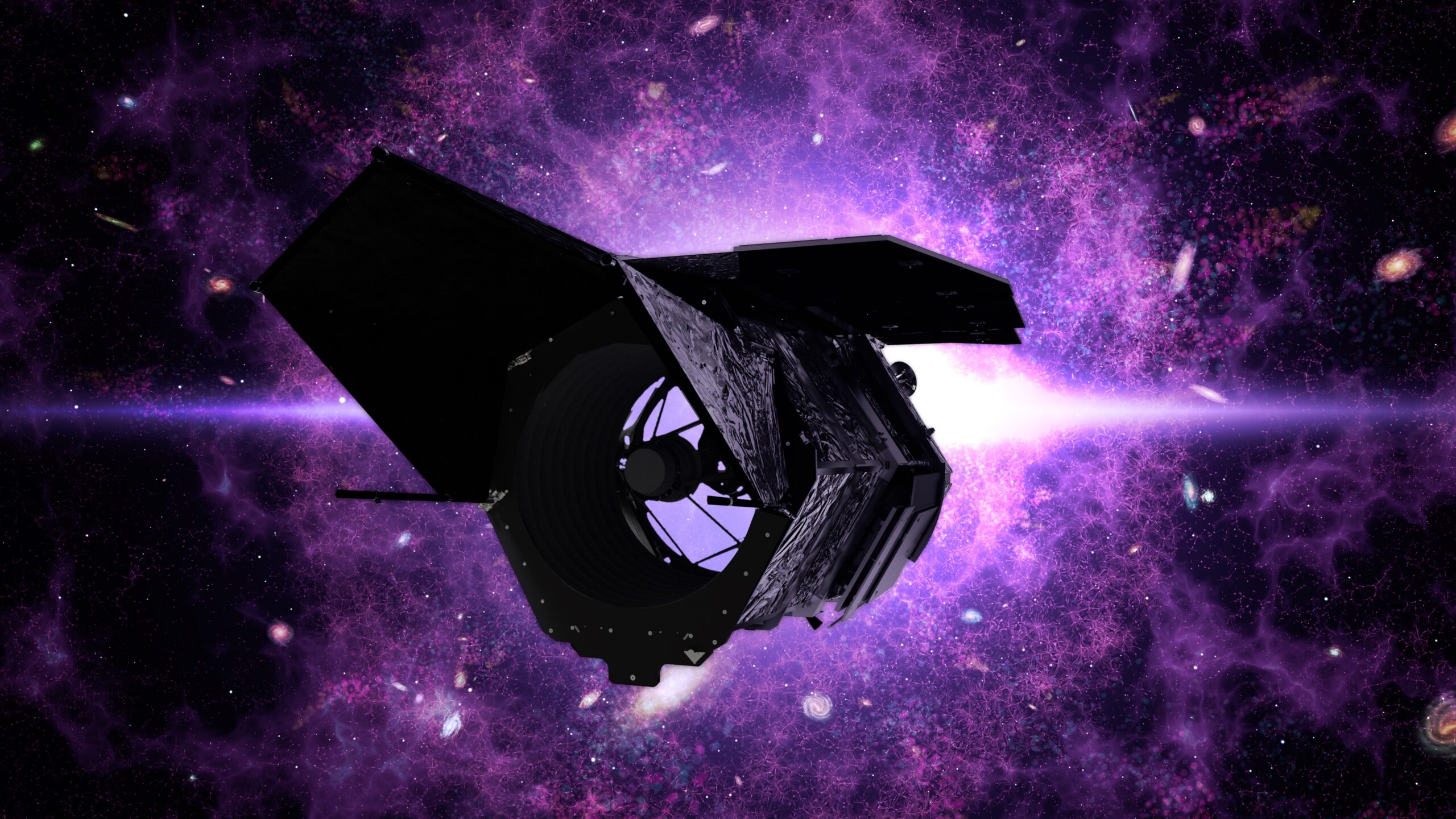
How rare is Planet Earth in the vastness of the cosmos? Will we find other planets in space that could possibly harbor life? A new space telescope has just been launched that may help us with answers to those questions. On today's episode of ID The Future, host Andrew McDiarmid concludes a two-part conversation with physicist Dr. Bijan Nemati about his work on the Nancy Roman Space Telescope. In this segment, we dive deeper into what constitutes a habitable planet, how Roman will team up with the James Webb space telescope to discover hidden worlds, and how intelligent design can inform our expectations and interpretations of data sent back from Roman.
Source
On this ID the Future our of the archive, guest host Robert J. Marks interviews chemist Charles Thaxton about a seminal 1984 book he co-authored, The Mystery of Life’s Origin, foundational to the intelligent design movement. The main body of Mystery was generally praised, Thaxton explains. It was the epilogue that proved controversial. There, the three authors reviewed five proposed explanations for life’s origins and suggested that the best explanation was that the first life originated through an act of creative intelligence. Thaxton also tells a little about the recently revised and expanded edition of the book, with new contributions from Stephen Meyer, Brian Miller, James Tour, and others.
Source
Today’s episode of ID The Future comes from our sister podcast Mind Matters News, a production of Discovery Institute’s Walter Bradley Center for Natural and Artificial Intelligence. Mind Matters regularly explores the nature of intelligence, the origin of information, and the things that make us uniquely human, all concepts that are central to the theory of intelligent design. Enjoy today’s offering of Mind Matters News!
In this episode of Mind Matters News, host Robert J. Marks speaks with Baylor University spectrum experts Dr. Charles Baylis, Dr. Austin Egbert, and PhD candidate Jonathan Swindell about the nation’s pressing electromagnetic spectrum crisis.
Have you ever thought about all of the electromagnetic waves in the room you’re in right now? You have invisible microwave cell phone signals in the air, plus all of the signals for broadcast television and AM and FM radio. Radiation from a GPS signal is there waiting for you to tap in. The range of frequencies in electromagnetic waves is known as the electromagnetic spectrum. And that spectrum is in great demand, with the rapid proliferation of personal wireless devices, radar network, and satellite weather sensors all competing for a spot. Managing the electromagnetic spectrum is our topic today.
Source
In his book Darwin’s Black Box, biochemist Michael Behe writes that in order to understand the barriers to evolution, we have to “bite the bullet of complexity.” On this classic episode of ID The Future out of the vault, Dr. Jonathan McLatchie is back to help us do just that! In the latest installment of an ongoing series, Dr. McLatchie talks with host Andrew McDiarmid about the remarkable properties of carbon and other non-metal atoms.
Source
By now, you’re likely familiar with the multiverse hypothesis, which is actually just one of dozens of cosmological models proposed to explain away the significance of a beginning to the universe and the evidence for fine-tuning. But you may not know there’s a rigorous method to evaluate these models, which can prove helpful in understanding the flaws of each. On today's ID The Future, host Andrew McDiarmid continues his conversation about evaluating cosmological models with philosopher of physics Bruce Gordon and physicist Brian Miller. This is Part 2 of a two-part conversation.
Source
You’re likely familiar with the evidence for the fine-tuning of the universe, and you may be aware that there are several cosmological models attempting to explain away that fine-tuning, including the popular multiverse hypothesis. But did you know an ID scientist has developed a scientifically rigorous method for scoring those models? On this ID The Future, host Andrew McDiarmid begins a two-part conversation with philosopher of physics Bruce Gordon and physicist Brian Miller about Gordon's scoring system and how it evaluates the many models on offer that might explain the origin and development of the universe. This is Part 1 of 2.
Source
Is intelligent design dying out or just warming up? On this ID The Future, host Andrew McDiarmid welcomes Dr. Casey Luskin to a new and improved podcast studio for a sit-down, in-person conversation! Today, Dr. Luskin discusses a recent book called Designer Science that portrays the ID movement as a short-lived political, cultural, and religious phenomenon. Luskin reveals some egregious errors in this purported comprehensive history of ID. First, a made-up quote from Michael Behe used to support one of the book's major premises. Second, some glaring omissions, including a number of scientific breakthroughs and developments from ID scientists in the last two decades.
This is Part 1 of a two-part conversation. Look for Part 2 next! Also available in video format on our YouTube channel!
Source
Today’s episode of ID The Future comes from our sister podcast Mind Matters News, a production of Discovery Institute’s Walter Bradley Center for Natural and Artificial Intelligence.
In this episode of Mind Matters News, hosts Dr. Robert J. Marks and Pat Flynn welcome returning guest Dr. Angus Menuge, professor of philosophy at Concordia University Wisconsin, to discuss his paper “Powers of the Soul Beyond AI.”
Dr. Menuge breaks down the philosophical and logical limits of artificial intelligence, targeting the concept of anthropic mechanism to explain why material machines cannot replicate the immaterial aspects of human agency. Through the lens of five distinct powers—including insight, meta-insight, and free will—Menuge explores why large language models and advanced computing systems fall short of genuine understanding and human consciousness.
Source
If we believe there is no qualitative distinction between animals and humans, are we more likely to protect human life or devalue it? On this episode of ID The Future out of the vault, guest host Eric Anderson talks to historian Dr. Richard Weikart about his latest book, Unnatural Death: Medicine's Descent From Healing to Killing, now available from Discovery Institute Press. The book is a wide-ranging history of euthanasia and assisted suicide from Ancient Greece to today. How did we get to the point we are at today, and how do we turn the tide to promote the sanctity of human life? Tune in to find out.
Source
Most people know about the two atomic bombs dropped on Japan in 1945. But Robert Oppenheimer’s Manhattan Project had on hand another nuclear core. After claiming the lives of two scientists in separate accidents, it was dubbed the Demon Core and melted down. Some demons, however, are not so easily destroyed. Today, guest host Jonathan Witt concludes his conversation with medical doctor, disaster prep expert, and novelist Geoffrey Simmons about his new thriller novel Oppenheimer's Demon, now available from Discovery Institute Press. This is Part 2 of a two-part conversation.
Source
25 minAbspielen in:
Gäste, die länger als 12 Monate zurückliegen, gibt es mit Pro. Pläne ansehen
 EH