Conversations with Tyler cover
Podcast

Conversations with Tyler

von Mercatus Center at George Mason University

Conversations with Tyler hatte in den letzten 12 Monaten 6 bestätigte Gäste in 6 Folgen. Zuletzt: Luis Garicano, 30. Sept. 2026.

Website der SendungApple PodcastsSo werden Gäste bestätigt

Tyler Cowen engages today's deepest thinkers in wide-ranging explorations of their work, the world, and everything in between. New conversations every other Wednesday. Subscribe wherever you get your podcasts.

Gäste der Sendung

Mi30Sep
Conversations with TylerLG

Luis GaricanoGast

Luis Garicano on Spain, Europe, and the Future of Work

Luis Garicano has one of the more unusual résumés in economics: trained at the University of Chicago Booth School under Gary Becker, Kevin Murphy, and Sherwin Rosen, he left academia for a stint as a member of the European Parliament before returning to research, now at the London School of Economics for a second time. His new book, Messy Jobs, co-authored with Jin Li and Yanhui Wu, argues that AI won't cause mass unemployment for a surprising reason: it will make jobs messier, not simpler, and messiness is precisely what AI struggles with. Tyler and Luis start their conversation with Spain — housing, NIMBYism, and the productivity crisis; Spanish literature and why the Civil War still looms so large; and what Chicago taught Luis about party discipline in European politics. Then to the EU's unanimity problem, capital markets, and Denmark's flexicurity model; a round of overrated-versus-underrated on Rosalía, Penélope Cruz, and Sgt. Pepper's; and finally into Messy Jobs — why retraining programs fail, whether AI's leisure dividend has arrived, and whether Spain could ever achieve AI sovereignty. Read a transcript enhanced with helpful links, or watch the full video on YouTube. Recorded July 28th, 2026. Other ways to connect Follow us on X and Instagram Follow Tyler on X Follow Luis on X Sign up for our newsletter Join our Discord Email us: cowenconvos@mercatus.gmu.edu Learn more about Conversations with Tyler and other Mercatus Center podcasts here. Timestamps: 00:00:00 - Intro 00:01:05 - On Spain's housing and political paralysis 00:11:08 - On Spanish literature and the Civil War 00:16:52 - On Basque and Catalan public finance 00:18:59 - On party discipline and political selection 00:22:03 - On the EU's unanimity problem 00:28:47 - On flexicurity and European labor rigidity 00:30:24 - Overrated vs. underrated 00:33:12 - On the future of Spanish language 00:35:01 - On why AI won't cause mass unemployment 00:48:38 - On what's next 00:50:11 - Outro

51 minAbspielen in:

Mi12Aug
Conversations with TylerDaron Acemoglu

Daron AcemogluGast

Daron Acemoglu on Liberalism, Automation, and the Educated Elite

Daron Acemoglu returns for his second appearance with a new book, What Happened to Liberal Democracy?, which Tyler reads as an attempt to redefine and revitalize liberalism for our times. Where Daron's first visit was about how states and societies contend for the narrow corridor in which liberty survives, this one asks what liberals themselves got wrong, and the answer implicates the educated elite—that is to say, you. Tyler and Daron discuss what's wrong with social contract theories and Rousseau's general will, whether Acemoglu is more objectivist than Rorty, why he blames left liberalism's own establishment power for its collapse, what standard is left once you refuse to have a book of higher values, nondomination versus noninterference, who counts as working class, why automation alone will not lead to widespread prosperity, how he can call himself a free speech absolutist while wanting to regulate social media, why he worries we've given up on educating Americans, whether teachers' unions need to be reconstituted, what the life expectancy for an educated twenty year old is today, whether open-source models undercut the centralization worry, what pro-worker AI actually means, why the fertility crisis leaves him strangely close to a real business cycle position, whether AI will raise his own already prodigious paper output, why Armenia has disappointed economically, what he wants to learn next, and more. Read a transcript enhanced with helpful links, or watch the full video on YouTube. Recorded July 15th, 2026. Other ways to connect Follow us on X and Instagram Follow Tyler on X Follow Daron on X Sign up for our newsletter Join our Discord Email us: cowenconvos@mercatus.gmu.edu Learn more about Conversations with Tyler and other Mercatus Center podcasts here. Timestamps: 00:00:00 - Intro 00:08:57 - On the working class vs. the elite 00:13:16 - On automation 00:22:33 - On free speech 00:27:22 - On immigration 00:31:08 - On artificial intelligence 00:50:36 - On Armenia 00:53:22 - On what comes next 00:54:51 - Outro Image credit: Bryce Vickmark

56 minAbspielen in:

Mi13Mai
Conversations with TylerBS

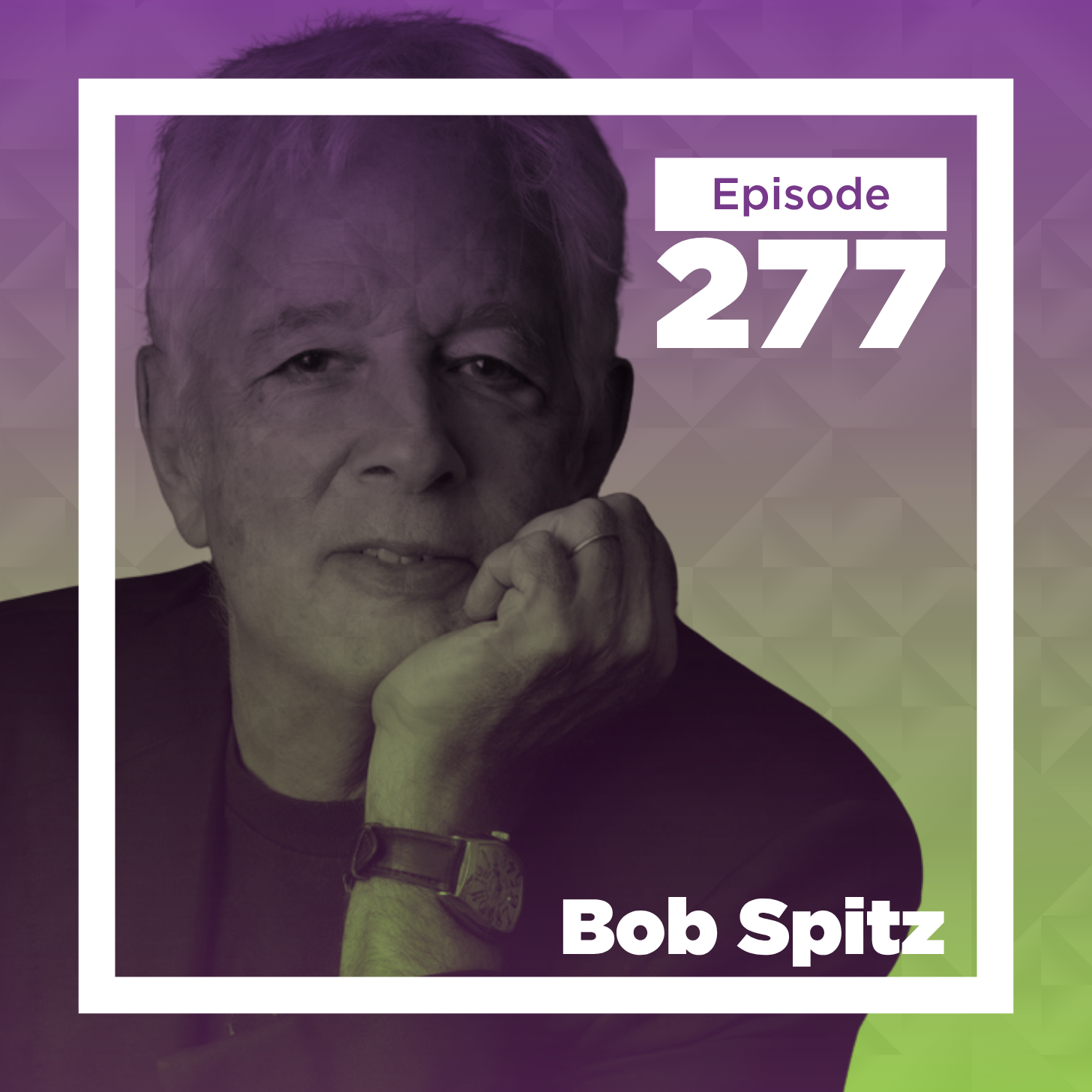
Bob SpitzGast

Bob Spitz on the Rolling Stones, Bruce Springsteen, and the Art of Biography

Bob Spitz has written major biographies of the Beatles, Led Zeppelin, Bob Dylan, and now the Rolling Stones — but also, somehow, Ronald Reagan and Julia Child. In rock, his credentials were hard won: he started out hustling gigs for an unknown Bruce Springsteen for six years, moved on to handling Elton John's American business, and spent long enough in the world to find himself jamming with Paul McCartney and chatting with Bob Dylan on a stoop in the Village. The Reagan and Julia Child books are harder to explain, and perhaps that's the point—Spitz seems to do his best work when he has no business writing the book at all. Tyler and Bob discuss how the Stones became so great so quickly, what they added to the blues, how their melodies stack up against the Beatles', whether Exile on Main Street deserves its canonical status, which songs are most underrated, what Charlie Watts actually got out of playing in a rock band, the rise and fall of Brian Jones, how the Stones outlasted nearly everyone, the influence of Mick's London School of Economics training, why popular music has lost its cultural influence, what we should still be asking Paul McCartney and Ringo Starr, whether the Beatles' breakup was good for the world, how senile Reagan really was in his second term and whether he was ever truly a communist, how good a cook Julia Child actually was, his next book on Lennon's second act, and much more. Read a full transcript enhanced with helpful links, or watch the full video on the new dedicated Conversations with Tyler channel. Recorded April 28th, 2026. Other ways to connect Follow us on X and Instagram Follow Tyler on X Follow Bob on X Sign up for our newsletter Join our Discord Email us: cowenconvos@mercatus.gmu.edu Learn more about Conversations with Tyler and other Mercatus Center podcasts here. Timestamps: 00:00:00 - Intro 00:02:44 - The Sound of the Rolling Stones 00:05:25 - Underrated Rolling Stones Songs and Albums 00:09:06 - Charlie Watts and Brian Jones 00:11:18 - Art Colleges and Rock 'n' Roll 00:13:06 - The Stones' Stability 00:16:32 - Mick Jagger: Closet Economist? 00:17:53 - Pop Music's Lack of Relevance 00:20:10 - The Beatles 00:28:14 - Led Zeppelin 00:31:30 - Bruce Springsteen 00:36:20 - Bob Dylan 00:39:40 - Julia Child 00:42:29 - The Knicks 00:45:21 - Ronald Reagan 00:49:01 - Robert Caro 00:52:03 - Writing 00:55:00 - Outro

56 minAbspielen in:

Mi25Mär
Conversations with TylerPG

Paul GillinghamGast

Paul Gillingham on Why Mexico Stays Together

Buy tickets for the live Conversations with Tyler recording with Craig Newmark at 92NY! Tyler calls Paul Gillingham's new book, Mexico: A 500-Year History, the single best introduction to the country's past—and one of the best nonfiction books of 2026. Paul brings both an outsider's eye and ground-level knowledge to Mexican history, having grown up in Cork — a place he'd argue gave him an instinctive feel for fierce local autonomy and land hunger —earning his doctorate on the Mexican Revolution under Alan Knight at Oxford, and doing his fieldwork in the pueblos of Guerrero. He and Tyler range across five centuries of Mexican history, from why Mexico held together after independence when every other post-colonial superstate collapsed, to why Yucatán is now one of the safest places on earth, what two leaders from Oaxaca tell us about Mexican politics, how Mexico avoided the military coups that plagued the rest of Latin America, what Cárdenas's land reform actually achieved versus what it promised, whether the ejido system held Mexico back, why Mexico worried too much about land and not enough about human capital, how Mexico's fertility rate fell below America's, why Guerrero has been violent for two centuries, why the new judicial reforms are a disaster, where to find the best food in Mexico and Manhattan, what a cache of illicit Mexican silver sitting on a ship in the English Channel has to do with his next book, and more. Read a full transcript enhanced with helpful links, or watch the full video on the new dedicated Conversations with Tyler channel. Recorded February 27th, 2026. Other ways to connect Follow us on X and Instagram Follow Tyler on X Sign up for our newsletter Join our Discord Email us: cowenconvos@mercatus.gmu.edu Learn more about Conversations with Tyler and other Mercatus Center podcasts here. Timestamps: 00:00:00 - Intro 00:01:30 - Post-Independence Mexico 00:05:18 - Peace in Yucatán 00:6:54 - Quintana Roo 00:08:24 - Mexican Infrastructure 00:10:26 - Oaxaca 00:13:54 - Great Food Outside Cities 00:16:39 - Leaders from Coahuila 00:17:50 - Military Rule and Civil War in Mexico 00:21:47 - The Cárdenas Regime 00:24:03 - The Ejido System 00:25:49 - Human Capital 00:40:59 - Doing Mexican History as a Brit 00:42:43 - Guerrero 00:48:37 - Michoacán Violence 00:50:44 - Monterrey 00:52:40 - Judicial Reforms 00:54:44 - The Best Mexican Film, Music, and Novel 00:59:42 - The Best Trip Around Mexico 01:04:05 - Outro

1 h 05 minAbspielen in:

Mi18Mär
Conversations with TylerHM

Harvey MansfieldGast

Harvey Mansfield on Machiavelli, Straussianism, and the Character of Liberal Democracy

Buy tickets for the live Conversations with Tyler recording with Craig Newmark at 92NY! Few living scholars can claim to have shaped how we read Machiavelli as decisively as Harvey Mansfield. His new book, The Rise and Fall of Rational Control, argues that Machiavelli didn't just write about politics—he invented the intellectual machinery of the modern world, starting with the concept of "effectual truth," which Mansfield credits as the seed of modern empiricism. At 93, after 61 years of teaching at Harvard, Mansfield remains cheerfully unimpressed by most of contemporary philosophy, convinced that the great books are self-sustaining, and that irony is what separates serious philosophy from the rest. Tyler and Harvey discuss how Machiavelli's concept of fact was brand new, why his longest chapter is a how-to guide for conspiracy, whether America's 20th-century wars refute the conspiratorial worldview, Trump as a Shakespearean vulgarian who is in some ways more democratic than the rest of us, why Bronze Age Pervert should not be taken as a model for Straussianism, the time he tried to introduce Nietzsche to Quine, why Rawls needed more Locke, what it was like to hear Churchill speak at Margate in 1953, whether great books are still being written, how his students have and haven't changed over 61 years of teaching, the eclipse rather than decline of manliness, and what Aristotle got right about old age and much more. Read a full transcript enhanced with helpful links, or watch the full video on the new dedicated Conversations with Tyler channel. Recorded January 22nd, 2026. This episode was made possible through the support of the John Templeton Foundation. Other ways to connect Follow us on X and Instagram Follow Tyler on X Sign up for our newsletter Join our Discord Email us: cowenconvos@mercatus.gmu.edu Learn more about Conversations with Tyler and other Mercatus Center podcasts here. Timestamps: 00:00:00 - Bumper 00:00:36 - Intro 00:01:20 - Machiavelli's "Effectual Truth" 00:05:56 - Conspiracy Theories 00:12:39 - The Vulgarity of Democracy 00:16:35 - The Future of Straussianism 00:34:30 - Why the Supply of Great Books has Dried Up 00:37:56 - Rational Control vs. Spontaneous Order 00:40:25 - Winston Churchill 00:43:30 - Students at Harvard 00:46:05 - Manliness 00:47:34 - Death and Politics 00:48:56 - Outro Image Credit: Erin Clark via Getty Images

49 minAbspielen in:

Mi18Feb
Conversations with TylerJS

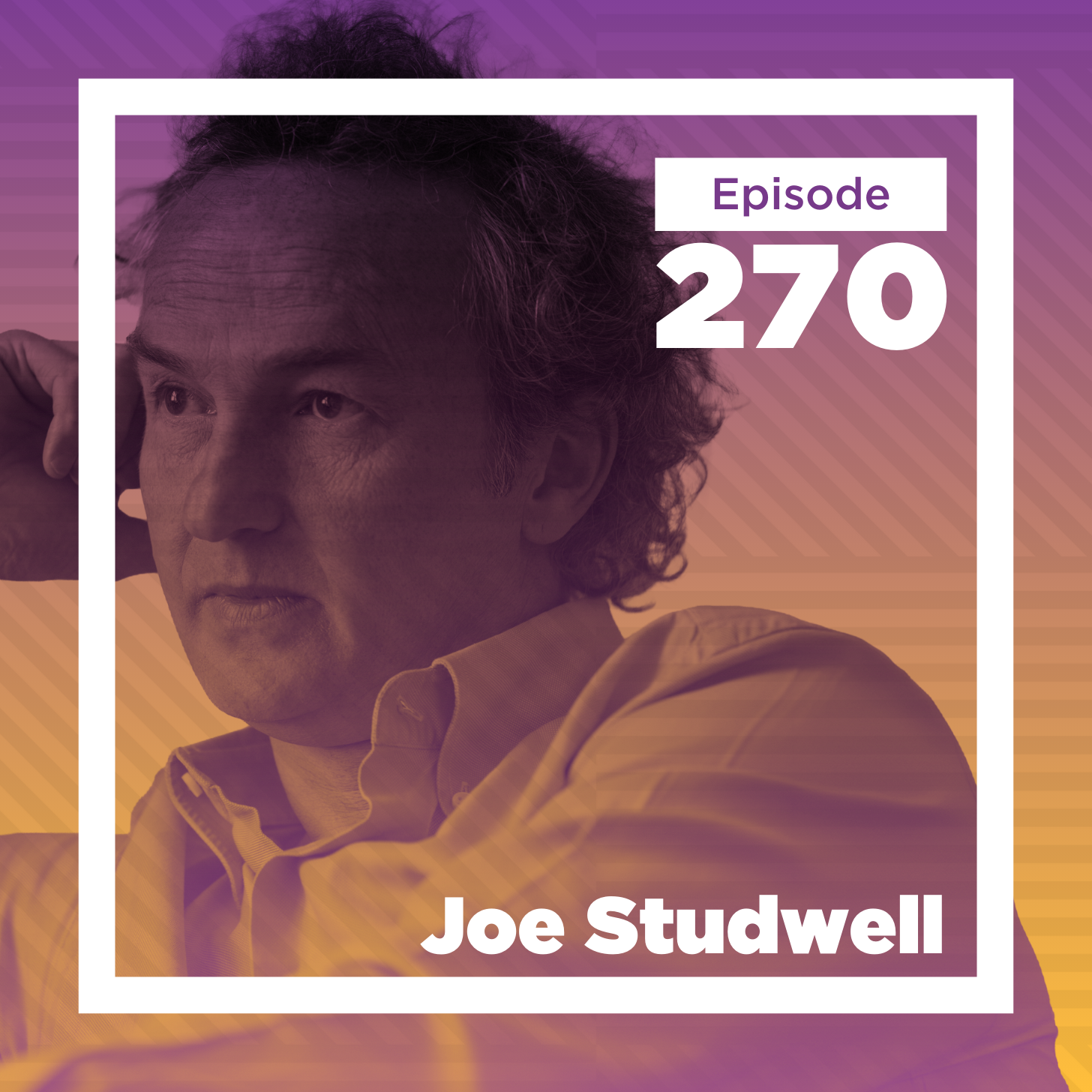
Joe StudwellGast

Joe Studwell on Africa, Asia, and What Development Actually Requires

When Tyler called Joe Studwell's How Asia Works "perhaps my favorite economics book of the year" back in 2013, he wasn't alone: it became one of the most influential treatments of industrial policy ever written. Now Studwell has turned his attention to Africa with How Africa Works. Tyler calls it excellent, extremely well-researched, and essential reading, but does Studwell's optimism about the continent hold up under scrutiny? Tyler and Joe explore whether population density actually solves development, which African countries are likely to achieve stable growth, whether Africa has a manufacturing future, why state infrastructure projects decay while farmer-led irrigation thrives, what progress looks like in education and public health, whether charter cities or special economic zones can work, and how permanent Africa's colonial borders really are. After testing Joe's optimism about Africa, Tyler shifts back to Asia: what Japan and South Korea will do about depopulation, why industrial policy worked in East Asia but failed in India and Brazil, what went wrong in Thailand, and what Joe will tackle next. Read a full transcript enhanced with helpful links, or watch the full video on the new dedicated Conversations with Tyler channel. Recorded January 23rd, 2026. Other ways to connect Follow us on X and Instagram Follow Tyler on X Sign up for our newsletter Join our Discord Email us: cowenconvos@mercatus.gmu.edu Learn more about Conversations with Tyler and other Mercatus Center podcasts here. Image Credit: Nick J.B. Moore

53 minAbspielen in:

Gäste, die länger als 12 Monate zurückliegen, gibt es mit Pro. Pläne ansehen