Daron Acemoglu
Doing the rounds: 9 shows in 6 months

Daron Acemoglu

Turkish-American economist (born 1967)

Daron Acemoglu has been a guest on 9 podcast episodes across 9 shows in the last 12 months. Latest: The Most Interesting Thing in AI, Nov 4, 2026.

Bio from WikipediaPhoto: MeJudice, CC BY 3.0, via Wikimedia Commons

Two years on the air

GuestHostMentioned

Guest appearances

Wed4Nov
The Most Interesting Thing in AI

The Most Interesting Thing in AI

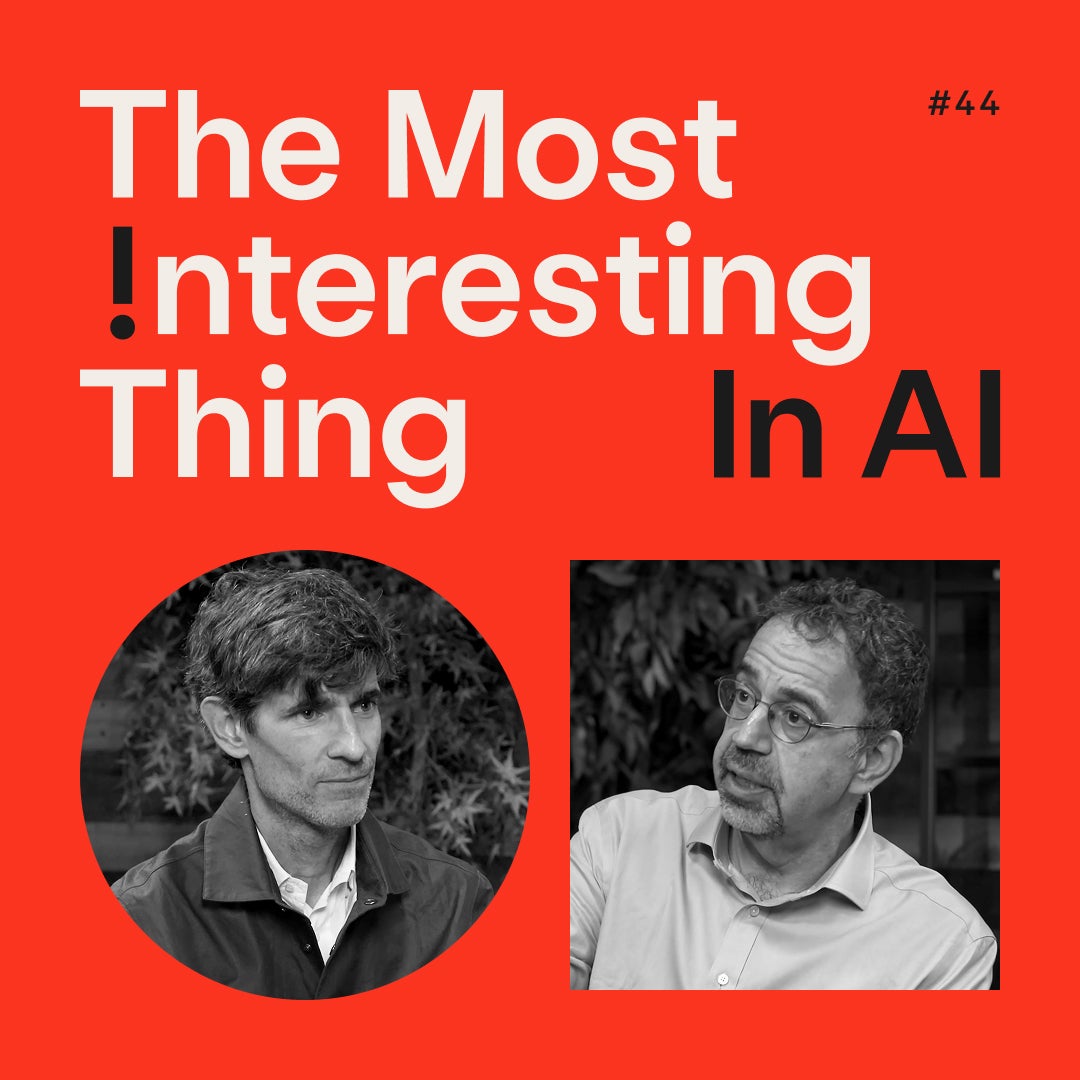
Will AI Help Democracy—or Dictators? - Nobel laureate Daron Acemoglu with Nicholas Thompson

The internet was supposed to be a boon for democracy. With broad access to information and opportunity, the thinking went, marginalized and disenfranchised populations could overcome barriers, close wealth gaps, and uproot dictators. But things didn’t work out that way. Now, as we enter the AI era, the question of whether technological progress is compatible with democratic ideals is more pressing than ever. Will AI deliver where the internet fell short—or make inequality worse? To help answer that question, MIT economist and Nobel laureate Daron Acemoglu joins Nicholas Thompson, CEO of The Atlantic, for a conversation about the mistakes the West made with the last technological revolution and how we can avoid them with this new one. He makes the case for “pro-worker” AI and explains why the pursuit of AGI is blinding Silicon Valley to the tech’s true potential. Produced independently of The Atlantic’s editorial staff. (00:00) Introduction (02:59) Why liberal democracy needs a new governing philosophy (06:11) How digital technology and automation fueled wealth inequality (14:10) Who will capture the value of AI? (21:40) Which jobs are most AI-proof (24:03) How responsible is technology for the crisis facing democracy? (33:48) Why institutions lost public trust (43:28) Where we went wrong with social media (47:04) How AI has increased authoritarian control in China (50:13) Why "social engineering" via AI must avoid imposing values and preserve debate (54:23) The risks of treating AI purely as an automation technology (56:35) What "pro-worker AI" looks like (01:02:10) Has the media failed to properly cover AI? (01:05:20) What Daron would do if he had an unlimited budget to invest in AI Learn more about your ad choices. Visit podcastchoices.com/adchoices


1 h 07 min

Sun18Oct
The Indicator from Planet Money

The Indicator from Planet Money

Will AI take my job? Ask an economist!

Is AI coming for our jobs? Anthropic CEO Dario Amodei believes AI could wipe out many white-collar jobs in the next few years. While Nvidia CEO Jensen Huang argues AI will reshape existing roles and create even more jobs than we have now. So which future are we really facing: a job-pocalypse or a jobs transformation? For answers, join The Indicator's Adrian Ma for "Ask An Economist.” This is a virtual event and live Q&A featuring two economists who've studied this issue: Daron Acemoglu, a Nobel Prize-winning professor at MIT, and Erik Brynjolfsson, a professor at Stanford and director of the Stanford Digital Economy Lab. We’ll also invite you to ask questions and share your thoughts! It's Wednesday, October 28th, at 3:00pm ET, noon PT. This is a Zoom event exclusively for NPR+ and other qualifying supporters. For registration and event details, you can listen to this audio message or check out npr.org/askaneconomist.  Support public media with NPR+ and enjoy perks for over 25 podcasts like this one. This show’s perks include sponsor-free listening. Learn more at plus.npr.org. See pcm.adswizz.com for information about our collection and use of personal data for sponsorship and to manage your podcast sponsorship preferences. NPR Privacy Policy

2 min

Fri9Oct
Silicon Valley Girl: AI, Tech and Career Growth

Silicon Valley Girl: AI, Tech and Career Growth

Nobel Economist: Where He Sees The Real Money in AI | Daron Acemoglu

Daron Acemoglu is an MIT economist and a 2024 Nobel laureate in Economic Sciences. He believes some of AI’s biggest business opportunities are being overlooked—but where does he see the real money, and what should you learn to stay valuable? In this episode, I ask Daron where founders should look for opportunities beyond the AI hype. We talk about why helping workers become more productive can be better for business than replacing them, why existing models are already powerful enough to build useful applications, and where high-quality data creates an advantage. Daron also shares what he would study now and why builders need to spend more time talking to workers. Links: 📌 Subscribe to my free newsletter where I go deeper on AI tools, career strategies, and building with AI: https://siliconvalleygirl.beehiiv.com/p/7-skills-that-make-you-irreplaceable-adc6?utm_source=spotify&utm_medium=description&utm_campaign=futureproof-sub&utm_content=7-skills&utm_term=daron-acemoglu ⁠⁠⁠⁠⁠⁠⁠⁠⁠⁠⁠𝕏 : ⁠⁠⁠⁠⁠⁠https://x.com/siliconvalleymm⁠⁠⁠⁠⁠⁠ 🔗 Instagram: ⁠⁠⁠⁠⁠⁠⁠https://www.instagram.com/siliconvalleygirl/⁠⁠⁠⁠⁠⁠ 💼 LinkedIn: ⁠⁠⁠⁠⁠⁠https://www.linkedin.com/in/marinamogilko⁠⁠⁠⁠⁠⁠ 📌 Work with me: ⁠⁠⁠https://marinamogilko.co/partnerships/⁠⁠

43 min

Mon5Oct
Into the Impossible With Brian Keating

Into the Impossible With Brian Keating

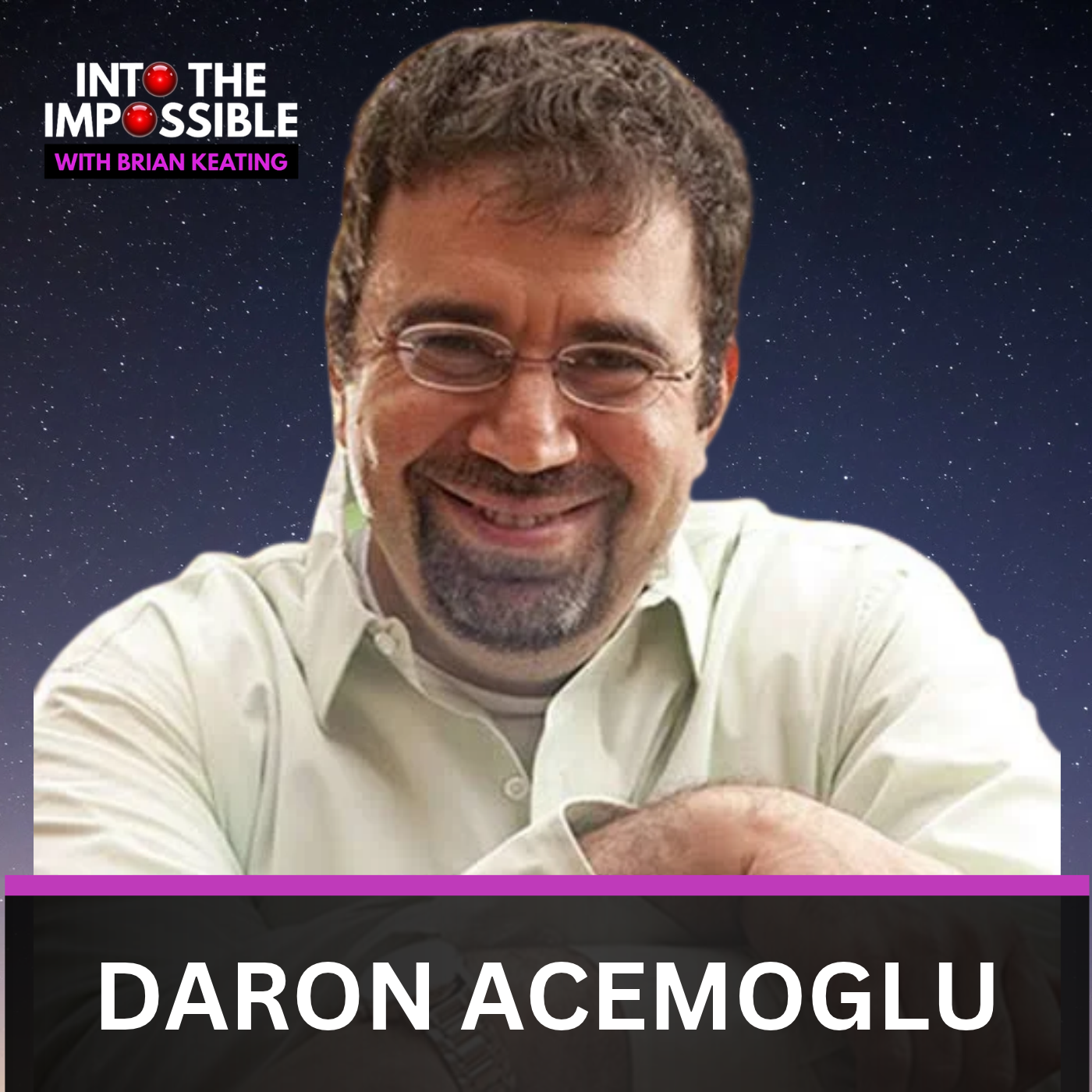
Nobel Economist Daron Acemoglu WARNING: AI's Payoff Is NOT What You Think

Nobel laureate Daron Acemoglu says AI's real productivity gain is an order of magnitude smaller than the industry claims. The bigger danger is not the machine. It is that a handful of people are deciding how it gets built. Daron Acemoglu is an MIT economist who shared the 2024 Nobel Prize in Economic Sciences. We cover: why a Nobel chemist left Berkeley for China, the optimal amount of heresy science should tolerate, the one rule that would end algorithmic outrage without censoring anyone, the accounting trick behind billionaire wealth, and why AI's path is a design decision, not destiny. We are still a democracy. Perhaps not for long. Chapters: 0:00 Can science survive without democracy?t 2:08 Why a Nobel laureate left Berkeley for Chinat 3:58 What Galileo knew that Kepler didn'tt 5:12 Is peer review undemocratic?t 7:41 The optimal amount of scientific heresyt 10:06 Science isn't slowing. So what broke?t 12:06 The design choice behind echo chamberst 14:49 One rule that would fix social mediat 19:26 Should Elon Musk have this much wealth?t 23:49 AI is a design choice, not destinyt ——— 📬 Get the transcript, fascinating bonus content, and my Monday M.A.G.I.C. Message: https://briankeating.com/yt 🌠 Have a .edu email and live in the USA 🇺🇸? You automatically win a meteorite: https://BrianKeating.com/edu 🔔 Subscribe: https://www.youtube.com/DrBrianKeating 🎯 Support Into the Impossible on Patreon — get my weekly M.A.G.I.C. Message, unfiltered bonus content, and live monthly Office Hours with me: / drbriankeating ⭐ Join this channel for perks, monthly Office Hours, and your name in the Member Roster at the end of every episode: / @drbriankeating 📚 My books: Losing the Nobel Prize (memoir): http://amzn.to/2sa5UpAt Think Like a Nobel Prize Winner: https://a.co/d/03ezQFut Focus Like a Nobel Prize Winner: https://a.co/d/hi50U9Ut Galileo's Dialogue (first-ever audiobook): https://a.co/d/iZPi9Unt 🌐 More: 🏄‍♂️ Twitter: / briankeating 📚 Substack https://briankeating.substack.com/ss ✍️ Blog: https://briankeating.com/blog 🎙️ Audio-only: https://briankeating.com/podcast #intotheimpossible #briankeating #science #physics #astronomy #cosmology #podcast #universe Learn more about your ad choices. Visit megaphone.fm/adchoices

35 min

Sun20Sep
Robinson's Podcast

Robinson's Podcast

291 - Daron Acemoglu: AI Is Destroying American Democracy

Daron Acemoglu is an Institute Professor of Economics at MIT and a recipient of the 2024 Nobel Memorial Prize in Economic Sciences, which he shared with Simon Johnson and James Robinson for research on how institutions shape prosperity. He is also the bestselling co-author of Why Nations Fail, The Narrow Corridor, and Power and Progress. In this episode, Robinson and Daron discuss the future of liberal democracy in an age of artificial intelligence. More particularly, they talk about how AI could undermine democratic institutions, whether tech billionaires have accumulated too much power, and why Daron believes current approaches to AI could produce an increasingly unequal, two-tier American society. They also discuss the importance of the 2026 elections, Zohran Mamdani, disagreements between the center and far left, and Daron’s proposal for a renewed “working-class liberalism.” Daron’s latest book is What Happened to Liberal Democracy?: Remaking a Politics of Shared Prosperity (Dutton, 2026). Daron’s Website: https://www.daronacemoglu.com What Happened to Liberal Democracy?: https://a.co/d/0f0qGMxt OUTLINE 00:00 What Is Liberal Democracy? 09:30 How Does AI Undermine Democracy? 18:30 Are the Tech Billionaires Out of Control? 24:50 AI Is an Existential Threat 27:18 How AI Will Turn the USA into a Two-Tier Dystopia 35:17 Other Views on AI 38:19 Why the 2026 Elections Are So Important for the Left 42:30 What Makes Mamdani a Great Politician? 45:58 The Far Left vs the Center Left: Who Should Win? 52:00 Working Class Liberalism

1 h 00 min

Tue1Sep
The Interview

The Interview

Daron Acemoglu, Economist: Liberal democracy is in crisis

BBC Newsnight presenter Paddy O’Connell speaks to Nobel Prize-winning economist Daron Acemoglu about why he thinks liberal democracy is in crisis, and how artificial intelligence could make it worse. Daron argues that liberal democracy worked because people were given a say in how they were governed and then benefited from their country’s economy as it prospered. But western governments have made major decisions on issues like immigration without first building public agreement, something which was once important. In an interview with BBC Newsnight, he says that together, these changes have left many working people feeling that politicians no longer listen to them and have helped to fuel a rise in populism. Now Daron warns that the way artificial intelligence is developed and used, so far without consensus, could make it worse, by widening inequality and putting people out of work. “AI is going to transform every aspect of our lives, and we're not being asked. We have no say in how AI is going to shape our society. I mean people in the UK, people in the US. Even worse for 6 billion people who are outside of the US, UK, China. Their lives are going to be completely reshaped by AI and they have zero say whatsoever,” he says. The Interview brings you conversations with people shaping our world, from all over the world. The best interviews from the BBC, including episodes with Indian activist Sonam Wangchuk, South African minister Gayton McKenzie and New York Times White House correspondent Maggie Haberman. You can listen on the BBC World Service on Mondays, Wednesdays and Fridays at 0800 GMT. Or you can listen to The Interview as a podcast, out three times a week on BBC Sounds or wherever you get your podcasts. Presenter: Paddy O’Connell Producer: Osman Iqbal Editor: Damon Rose (Image: Daron Acemoglu. Credit: Europa Press News via Getty Images)

23 min

Thu13Aug
Capitalisn't

Capitalisn't

Can Liberalism Survive This Kind of Capitalism? - ft. Daron Acemoglu

For most of the last century liberal democracies offered a simple deal: the economy grows and, if you work hard, you get a fair shot at the rewards. According to 2024 Nobel Prize-winning economist Daron Acemoglu, that deal is broken. Acemoglu joins Bethany McLean and Luigi Zingales to discuss his new book, What Happened to Liberal Democracy?, and why the system that delivered unprecedented freedom and prosperity abandoned the working class in favor of the college-educated elite.  Acemoglu makes the case that things will only get worse as AI is being designed to replace human labor, driving wage stagnation and economic anxiety. But he thinks we can still turn things around, and he brought his solutions to our podcast. Connect with us: 📺 Subscribe to our YouTube Channel 📱 Follow Capitalisn’t on Instagram & TikTok ✉️ Email your questions and comments to capitalisntpod@gmail.com Hosted by Simplecast, an AdsWizz company. See pcm.adswizz.com for information about our collection and use of personal data for advertising.

54 min

Wed12Aug
Conversations with Tyler

Conversations with Tyler

Daron Acemoglu on Liberalism, Automation, and the Educated Elite

Daron Acemoglu returns for his second appearance with a new book, What Happened to Liberal Democracy?, which Tyler reads as an attempt to redefine and revitalize liberalism for our times. Where Daron's first visit was about how states and societies contend for the narrow corridor in which liberty survives, this one asks what liberals themselves got wrong, and the answer implicates the educated elite—that is to say, you. Tyler and Daron discuss what's wrong with social contract theories and Rousseau's general will, whether Acemoglu is more objectivist than Rorty, why he blames left liberalism's own establishment power for its collapse, what standard is left once you refuse to have a book of higher values, nondomination versus noninterference, who counts as working class, why automation alone will not lead to widespread prosperity, how he can call himself a free speech absolutist while wanting to regulate social media, why he worries we've given up on educating Americans, whether teachers' unions need to be reconstituted, what the life expectancy for an educated twenty year old is today, whether open-source models undercut the centralization worry, what pro-worker AI actually means, why the fertility crisis leaves him strangely close to a real business cycle position, whether AI will raise his own already prodigious paper output, why Armenia has disappointed economically, what he wants to learn next, and more. Read a transcript enhanced with helpful links, or watch the full video on YouTube. Recorded July 15th, 2026. Other ways to connect Follow us on X and Instagram Follow Tyler on X Follow Daron on X Sign up for our newsletter Join our Discord Email us: cowenconvos@mercatus.gmu.edu Learn more about Conversations with Tyler and other Mercatus Center podcasts here. Timestamps: 00:00:00 - Intro 00:08:57 - On the working class vs. the elite 00:13:16 - On automation 00:22:33 - On free speech 00:27:22 - On immigration 00:31:08 - On artificial intelligence 00:50:36 - On Armenia 00:53:22 - On what comes next 00:54:51 - Outro Image credit: Bryce Vickmark

56 min

Thu2Jul
Exchanges

Exchanges

How Will AI Affect Jobs?

Rapid improvements in AI capabilities and growing corporate adoption have led to predictions that the technology could spark large-scale job losses before the end of the decade. Do these concerns have merit? MIT’s Daron Acemoglu and Neil Thompson, and Goldman Sachs Research economist Joseph Briggs discuss with host Allison Nathan. This episode explores the latest Top of Mind report. The opinions and views expressed herein are as of the date of publication, subject to change without notice, and may not necessarily reflect the institutional views of Goldman Sachs or its affiliates. The material provided is intended for informational purposes only, and does not constitute investment advice, a recommendation from any Goldman Sachs entity to take any particular action, or an offer or solicitation to purchase or sell any securities or financial products. This material may contain forward-looking statements. Past performance is not indicative of future results. Neither Goldman Sachs nor any of its affiliates make any representations or warranties, express or implied, as to the accuracy or completeness of the statements or information contained herein and disclaim any liability whatsoever for reliance on such information for any purpose. Each name of a third-party organization mentioned is the property of the company to which it relates, is used here strictly for informational and identification purposes only and is not used to imply any ownership or license rights between any such company and Goldman Sachs. A transcript is provided for convenience and may differ from the original video or audio content. Goldman Sachs is not responsible for any errors in the transcript. This material should not be copied, distributed, published, or reproduced in whole or in part or disclosed by any recipient to any other person without the express written consent of Goldman Sachs. Disclosures applicable to research with respect to issuers, if any, mentioned herein are available through your Goldman Sachs representative or at ⁠http://www.gs.com/research/hedge.html⁠ Goldman Sachs does not endorse any candidate or any political party. Copyright 2026. All rights reserved. Learn more about your ad choices. Visit megaphone.fm/adchoices

29 min