Beginner's Mind cover
Podcast

Beginner's Mind

by Christian Soschner

Beginner's Mind has had 10 confirmed guests across 11 episodes in the last 12 months. Latest: Ivy Nguyen, Oct 18, 2026.

Apple PodcastsHow guests are confirmed

Blueprints for Builders and Investors Hosted by Christian Soschner From pre-seed to post-IPO, every company—especially in deep tech, biotech, AI, and climate tech—lives or dies by the frameworks it follows. On Beginner’s Mind, Christian Soschner uncovers the leadership principles behind the world’s most impactful…

Guests on the show

Sun18Oct
Beginner's Mind

Ivy NguyenGuest

EP 185: Ivy Nguyen | IQ, EQ and the Execution Quotient Investors Fund

The trait a Silicon Valley AI investor rewards most in a management team has a name almost nobody uses: XQ. IQ brings the idea and EQ reads the people across the table. The execution quotient shows in something as small as how fast a team follows up after a meeting, and in her experience the people who score high on it have no patience for those who do not. Meanwhile the money in AI moves in waves, from models to tools to packaged products, and only some of those waves leave room for an early-stage fund. Ivy Nguyen is a Partner at GFT Ventures in Palo Alto, the early-stage firm founded by former NVIDIA and Samsung executives to invest in AI and frontier technology. She has looked at more than ten thousand AI pitches. In part two she explains her place on a board when investors and customers are angry at the same time, why market pull is a strong but incomplete signal, how she tells a feature from a platform, how a no from her firm is framed, how AI booms move from models to picks and shovels, why AI takes over tasks long before it replaces a role, and why care coordination is worth more in healthcare than AI note-taking. Part one is EP 184: [EP 184 LINK] WHAT YOU WILL LEARN What a good investor does when a company’s investors and customers are angry at the same time How IQ, EQ and XQ, the execution quotient, show up in a management team How to tell a feature with a short life from a platform that lasts Why AI booms move from models to picks and shovels to vertical applications Why AI removes tasks long before it replaces whole roles BEST QUOTES (00:04:30) “The CEO is very much the captain. I am merely a passenger, a very annoying backseat driver.” (00:09:25) “XQ is execution quotient. How quickly do they follow up after meetings?” (00:22:57) “I want to be wrong. Then come back and show me, and I will continue the conversation.” (00:33:29) “People who struck gold figuratively were the people who were selling picks and shovels.” (00:46:24) “You can’t automate, and you can’t replace, what you don’t understand.” TIMESTAMPS THE INVESTOR’S SEAT (00:00:00) Intro to part two (00:01:39) When investors and customers are both angry (00:02:31) Captain and backseat driver, the investor’s place HOW SHE JUDGES A COMPANY (00:07:42) Market pull and the execution quotient (00:12:28) Christian Soschner tests market pull against NVIDIA and Amazon (00:16:33) Feature or platform, the follow-up question she always asks (00:20:52) Direct and kind, how a no from GFT is framed THE AI MARKET TODAY (00:25:56) Inside GFT Ventures, a contrarian AI fund (00:30:37) How AI booms move from models to picks and shovels (00:36:06) Vertical AI and the data a competitor cannot buy (00:40:15) Why AI takes over tasks long before whole roles (00:49:54) Care coordination beats AI note-taking in healthcare WHAT COMES NEXT (00:55:44) Her ten-year prediction, the future arrives faster (00:59:45) How to get a busy investor to answer your email (01:01:00) Closing thoughts Ivy Nguyen at GFT Ventures: https://www.gft.vc/ivy-nguyen Ivy Nguyen on LinkedIn: https://www.linkedin.com/in/ivyknguyen/ Newsletter: https://lsg2g.substack.com/ Follow Beginner’s Mind for long-form conversations on leadership, capital, technology, and the people building what comes next. Ranked in the global top 10% of all podcasts, named #1 Deep Tech Podcast in 2025, and #8 Deep Tech Podcast in 2026 Send us Fan Mail Support the show Join the Podcast Newsletter: Link Your Next Move: Link

1 h 04 minPlay in:

Thu15Oct
Beginner's Mind

Ivy NguyenGuest

EP 184: Ivy Nguyen | 10,000 AI Pitches and the One Test That Matters

In 2017 another investor told Ivy Nguyen that artificial intelligence was too small a niche to dedicate a fund to. More than ten thousand AI pitches later, every pitch deck says AI. Single funding rounds have grown larger than entire venture funds, and from the outside the companies that will matter look exactly like the ones a fast follower overtakes within three years. Ivy Nguyen is a Partner at GFT Ventures in Palo Alto, the early-stage firm founded by former NVIDIA and Samsung executives to invest in AI and frontier technology. Before GFT she held investment roles at Zetta Venture Partners, Point72 Ventures and Autotech Ventures. She studied chemical engineering at Stanford and was named to Forbes 30 Under 30. In part one she explains why Silicon Valley money backs the vision before the plan, how a first company that ran out of cash led her into venture capital, why she passed on Coinbase twice, the test every AI company has to pass at her firm, and why the early AI businesses that passed it still ran on 30 to 40 percent margins. Part two continues in EP 185. WHAT YOU WILL LEARN Why Silicon Valley investors fund the size of the vision before the plan to reach it Why a strong business from another market can lose a Silicon Valley pitch in the first thirty minutes How passing on Coinbase twice led her to specialise in AI The billion-dollar test, and why proprietary data is the one advantage money cannot buy Why AI products that work in the lab lose accuracy and margin in the field BEST QUOTES (00:08:35) “The number one most common cause of death for every startup is cash flow.” (00:23:03) “In a two to three ton piece of metal on the highway, I don’t want it figured out along the way.” (00:33:56) “I actually passed on Coinbase two times, because I didn’t know what I was looking at.” (00:39:53) “Niche implies that it’s small. I’d like to use the word obscure.” (00:44:54) “Even $100 billion would not allow a copycat to brute force that level of performance.” TIMESTAMPS HOW AN AI INVESTOR IS MADE (00:00:00) Opening, the investor who called AI too small a niche (00:03:35) Chemical engineering, a first company and no plan B (00:08:35) The number one cause of death for every startup SILICON VALLEY AND EVERYWHERE ELSE (00:09:48) Why Stanford money backs the vision before the plan (00:15:54) Gold, defence research and the roots of Silicon Valley (00:22:35) Why a car at highway speed needs more proof than a grocery app (00:25:35) Seven years per car model, one weekend per software release (00:28:35) Growing up in Vietnam, where failure is shared BUILDING CONVICTION IN AI (00:33:41) Why Ivy Nguyen passed on Coinbase twice (00:35:43) A crypto fund or an AI fund, the 2017 coin flip (00:38:33) Ten thousand AI pitches and the empress of obscure THE INVESTMENT TEST (00:43:20) The billion dollar test and the proprietary data flywheel (00:46:32) Why ten years is the real deadline in venture capital (00:51:25) Why AI companies once ran on 30 percent margins Ivy Nguyen at GFT Ventures: https://www.gft.vc/ivy-nguyen Ivy Nguyen on LinkedIn: https://www.linkedin.com/in/ivyknguyen/ Newsletter: https://lsg2g.substack.com/ Follow Beginner’s Mind for long-form conversations on leadership, capital, technology, and the people building what comes next. Ranked in the global top 10% of all podcasts, named #1 Deep Tech Podcast in 2025, and #8 Deep Tech Podcast in 2026 Send us Fan Mail Support the show Join the Podcast Newsletter: Link Your Next Move: Link
59 minPlay in:

Sun27Sep
Beginner's Mind

Marie SchroederGuest

EP 183: Marie Schroeder | Send the Rough Deck, Not the Perfect One

A seed investor at Novo Holdings would rather read your rough idea than your finished pitch deck. Most founders spend a year building the deck, forming the team and waiting until the story holds together. By the time it is ready the science has moved, the money has gone somewhere else, and nobody told them the fund they were preparing for creates companies out of raw material. Marie Schroeder is a Principal on the Seed Investments team at Novo Holdings, the investment company owned by the Novo Nordisk Foundation. Before that she spent five years at Novo Nordisk in cardiovascular drug development. Before that, a doctorate at Oxford and research work in Toronto. Beginning with what a seed investor watches at the start of a year, the conversation becomes a practical guide to building and funding early biotech: the question her chief scientific officer put to every project until it hurt, what to do in the first hour after a negative readout, why the founder who discovered the science is often the wrong person to run the company, and how her team tracked one Swedish heart failure company for three years before a single risk cleared and the money moved. WHAT LISTENERS CAN EXPECT TO LEARN Why defining what good looks like before the experiment runs decides whether a failed program gets funded twice How to break a plan into killer experiments so each tranche of money buys one specific answer What a board wants to hear on the day something fails, and how early it wants to hear it Why team quality beats science quality in early biotech, argued on commercial grounds What a seed fund actually wants in a cold approach, and why a rejection is usually about timing BEST QUOTES (00:14:09) "Defining what good looks like before you start the experiment is absolutely paramount." (00:22:42) "The target failing is one of maybe five things that could have gone wrong." (00:52:36) "He only has time to give the negative feedback. Every other paragraph was good." (01:15:58) "You can have great science, and if you don't have the right team, it will fail." (01:35:47) "I would rather somebody send a rough concept than spend half their life making a pitch deck." TIMESTAMPS THE YEAR AHEAD (00:00:00) Intro (00:02:35) What is on top of a seed investor's mind this year (00:05:43) The muscle loss problem inside the obesity story RESILIENCE AND FAILURE (00:10:45) What resilience means to a biotech investor (00:14:09) What does good look like, the question behind every project (00:18:42) Killer experiments and what has to be true next (00:22:03) The first hour after a negative readout (00:27:19) Learning resilience without joining Special Forces FEEDBACK, BOUNDARIES AND BAD NEWS (00:45:52) Compromise, burnout and anger out of proportion (00:51:18) The Oxford professor who wrote nonsense on the draft (00:57:25) Jensen Huang, no firings and torture them to greatness FROM OXFORD TO NOVO HOLDINGS (01:02:15) Academics are the true scientists, the belief she dropped (01:07:51) Novo Nordisk, Novo Holdings and the foundation explained (01:12:26) Two lessons from five years inside Novo Nordisk WHO BUILDS THE COMPANY (01:15:49) Why diverse teams are non-negotiable in biotech (01:21:31) Why the scientific founder should not be CEO GETTING FUNDED (01:33:54) The minimum a cold pitch deck needs (01:39:55) The company they watched for three years (01:50:46) Venture capital as a self-fulfilling prophecy WHAT COMES NEXT (01:55:13) Two directions pharma has to run at once (02:01:28) Closing thoughts Marie Schroeder at Novo Holdings: https://novoholdings.dk/people/marie-schroeder Newsletter: https://lsg2g.substack.com/ Follow Beginner's Mind for long-form conversations on leadership, capital, technology, and the people shaping what comes next. Ranked in the global top 10% of all podcasts, named #1 Deep Tech Podcast in 2025, and #8 Deep Tech Podcast in 2026 Send us Fan Mail Support the show Join the Podcast Newsletter: Link Your Next Move: Link

2 h 05 minPlay in:

Mon3Aug
Beginner's Mind

Eric RiesGuest

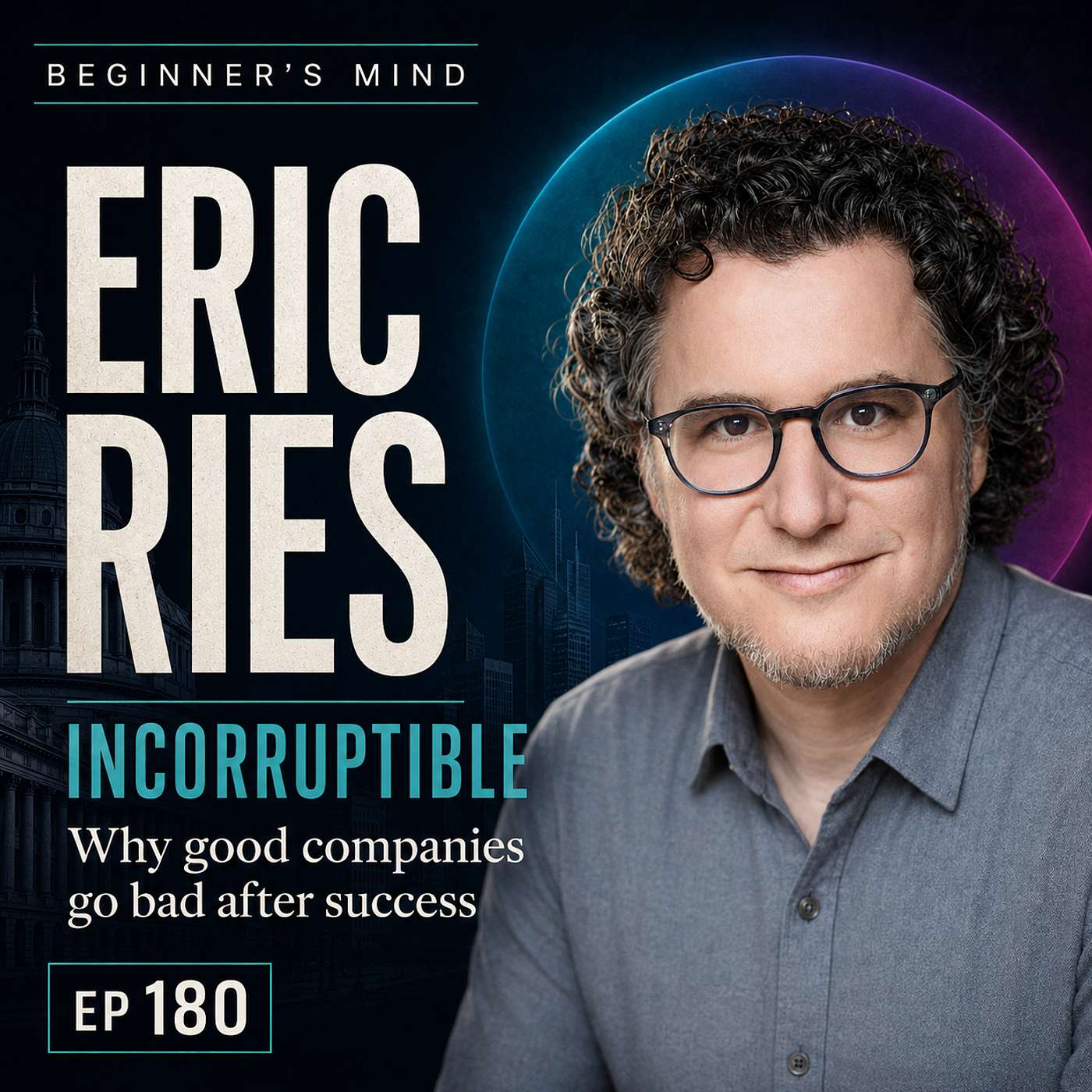
EP 180: Eric Ries | Why Good Companies Go Bad After Success

What happens when the moment a company finally succeeds is the moment it becomes most likely to be destroyed? Most founders assume the market rewards the better product and protects what they built. The legal reality runs the other way. The dominant theory of the corporation treats a company as a financial instrument designed to enrich its shareholders, and treats everything else as optional. That theory has a name, shareholder primacy, and nobody voted for it. It hardened in courtrooms and boardrooms about forty years ago. Founders sign it into their own charter on day one without reading the line, and by the time the gap between the mission statement and the legal purpose becomes visible, the exit has been engineered. Eric Ries, founder of the Long-Term Stock Exchange and author of The Lean Startup, explains how corporate purpose disappeared out of the legal documents and what can be put back in its place. He shows why protection alone makes an extractive company worse, why independent directors are not neutral, and why a mission guardian belongs above the board rather than inside it. Beginning with the pattern he watched destroy company after company, the conversation becomes a practical guide to governance: the three-legged stool of 19th century corporate law, what actually killed Sears, why Novo Nordisk, Patagonia, IKEA and Grundfos outlive their competitors, and how the Public Benefit Corporation restores something far older than it looks. It ends on the question neither of us could fully answer. If a guardian protects the mission, who guards the guardian? WHAT LISTENERS CAN EXPECT TO LEARN Why shareholder primacy is a recent legal theory rather than a permanent feature of capitalism How the phrase "any lawful act or activity" removed purpose from corporate charters, and what quietly replaced it Why structure protects an ethos but cannot create one, and what has to be real before the protection is added How industrial foundations, purpose trusts and public benefit corporations keep a mission alive across generations Why independent directors have incentives of their own, and what to look for in a board instead BEST QUOTES (00:04:10) "A company is just a financial instrument, designed to enrich itself and its shareholders." — Eric Ries (00:14:12) "If you go to your local park, you'll find trees older than shareholder primacy." — Eric Ries (00:25:28) "Somebody took over Sears and managed to extract for himself $1.5 billion, at a time when the company lost $11 billion." — Eric Ries (00:40:09) "Who would you rather die than betray?" — Eric Ries (00:48:12) "Being a leader is much more like being a mother than a slave owner. We birth these things. We do not own them." — Eric Ries TIMESTAMPS  (00:00:00) Why Good Companies Go Bad After Success  (00:02:43) What Made Eric Ries Write Incorruptible  (00:04:10) A Company Is Just a Financial Instrument  (00:07:03) The Pill You Swallow and the Shareholder Calculation  (00:15:48) The Three-Legged Stool of Corporate Law  (00:19:31) How "Any Lawful Act or Activity" Erased Purpose  (00:25:28) What Actually Happened to Sears  (00:30:38) Stainless Steel for Organizations That Last  (00:34:39) Why Foundation-Owned Companies Outlive the Rest  (00:37:59) The Public Benefit Corporation Explained  (00:44:40) Why Every Company Needs a Mission Guardian (00:50:22) Why Independent Directors Are Not Neutral  (00:53:11) Who Guards the Mission Guardian  (00:56:18) What AI Changes for Governance  (00:59:58) Closing Thoughts Eric's book, Incorruptible: https://amzn.to/3S4n4BN If you'd like to keep talking about these topics, you're welcome to join Eric's free Incorruptible community here: https://community.incorruptible.co/ Follow Beginner's Mind for long-form conversations on leadership, capital, technology, and the people shaping what comes next. Ranked in the global top 10% of all podcasts, named #1 Deep Tech Podcast in 2025, and #8 Deep Tech Podcast in 2026 Send us Fan Mail Support the show Join the Podcast Newsletter: Link Your Next Move: Link

1 h 03 minPlay in:

Sat25Jul
Beginner's Mind

Joško BobanovićGuest

EP 179: Joško Bobanović | Why Venture Capital Fights Human Instinct

What happens when the instinct to help a struggling company is exactly what prevents the strongest companies from succeeding? Venture capital forces investors to make decisions that can feel deeply uncomfortable: stop rescuing the weakest, concentrate scarce capital behind the most promising, and accept that most investments will fail. Deep tech intensifies this conflict. Investors must commit capital while the technology remains unproven, customers are still uncertain and the eventual exit may be more than a decade away. The wrong team, an inflated valuation or a fund timeline that does not fit the technology can destroy an otherwise promising company. Joško Bobanović, Partner at Sofinnova, explains how experienced investors make these decisions without ever receiving complete information. He reveals why people matter more than patents, why founders must start selling before they have a product and why investors should support management from the back seat—without trying to drive the company themselves. Beginning with a destructive storm Joško predicted but could not prevent, the conversation develops into a practical guide to risk, patience and capital allocation. It also confronts Europe’s central deep-tech challenge: the continent produces exceptional science, but without sufficient scale-up capital, specialist investors and corporate buyers, much of the value will be created elsewhere. WHAT LISTENERS CAN EXPECT TO LEARN Why successful venture investing requires resisting the instinct to rescue struggling portfolio companies How investors make consequential decisions with partial information—and recognize when it is time to stop researching Why the team, storytelling and customer conversations can matter more than exceptional technology alone How inflated valuations, ten-year fund structures and limited exit opportunities affect deep-tech companies What Europe must change to scale its best companies instead of watching them industrialize elsewhere BEST QUOTES (00:20:04) “The nature of venture capital decisions is very counter to human instincts.” — Joško Bobanović (00:41:05) “Investment in a startup is like a marriage that is predetermined with a divorce at some point in time in the future.” — Joško Bobanović (00:54:25) “Nothing validates what you’re doing better than cash.” — Joško Bobanović (00:57:35) “A B team will probably destroy exceptional technology, but an A team will make a success even of average technology.” — Joško Bobanović (01:56:22) “Otherwise we become a museum. And I don’t think we want to be a museum.” — Joško Bobanović TIMESTAMPS (00:00:00) Why Venture Capital Fights Human Instinct (00:03:08) The Storm Joško Predicted but Could Not Stop (00:09:11) How the Early Internet Changed Access to Opportunity (00:16:49) If You Do Not Play, You Cannot Win (00:20:04) Why Investors Must Resist the Rescue Instinct (00:29:33) Scientists Must Learn to Decide with Partial Information (00:35:58) Can Founders Make Themselves Replaceable? (00:41:05) A Marriage with a Predetermined Divorce (00:47:45) Why Storytelling Is a Critical Deep-Tech Skill (00:52:03) Start Selling from Day One (00:57:03) Why Venture Capital Is a People Business (01:00:11) Investors Belong in the Back Seat (01:10:50) Better Decisions Require Broader Comparisons (01:18:00) When a Higher Valuation Becomes Dangerous (01:27:15) Why Every Venture Investment Needs 10× Potential (01:37:29) Deep Tech’s Missing Exit Opportunities (01:45:05) Why VCs See IPOs as a Necessary Evil (01:52:49) Europe’s Scientific Strength and Scale-Up Weakness (02:05:01) What Europe Gets Wrong About Failure (02:13:13) Get Involved Instead of Complaining from the Sidelines Follow Beginner's Mind for long-form conversations on leadership, capital, technology, and the people shaping what comes next.  Ranked in the global top 10% of all podcasts, named #1 Deep Tech Podcast in 2025, and #8 Deep Tech Podcast in 2026 Send us Fan Mail Support the show Join the Podcast Newsletter: Link Your Next Move: Link

2 h 18 minPlay in:

Mon22Jun
Beginner's Mind

Alberto ChalonGuest

EP 177: Alberto Chalon | Liquidity Before the IPO Window Opens

Private companies are staying private longer, and that changes who gets liquidity, when, and why. Founders, employees, and early investors can wait a decade or more for an IPO or acquisition. Meanwhile, venture funds face growing pressure to return capital, and many of Europe's best companies struggle to access the growth capital needed to scale. In this conversation, Christian Soschner speaks with Alberto Chalon, Co-Founder of Giano Capital, about the rise of single-asset secondary investments and why they have become an important part of the European innovation ecosystem. Topics include: • What secondary transactions are and why they matter • Why many companies now stay private far longer than before • How founders, employees, and early investors can access liquidity before an exit • The differences between venture capital, private equity, and late-stage secondary investing • Europe's challenge with risk capital, fragmentation, and scaling companies • Lessons from investments such as Revolut, GetYourGuide, and Deliveroo • The role of resilience, sport, and long-term thinking in business and investing Alberto also shares his personal journey from entrepreneurship and building businesses with his brother to launching Giano Capital and creating a new asset class focused on late-stage technology investments. 5 OUTSTANDING QUOTES / LESSONS 1. "Failure in America is part of the learning process. In Europe, failure is a disaster." Lesson: Europe's challenge may be cultural as much as financial. 2. "The due diligence is the beginning of the journey, not the end." Lesson: Great investors keep working after the deal closes. 3. "Everything has to be already tested before we invest." Lesson: Giano seeks to eliminate execution risk before investing. 4. "The loneliness of the entrepreneur is real. I lived that." Lesson: The best investors bring empathy, not only capital. 5. "You need to reach the top, and then you have the descent." Lesson: Investing and endurance sports both reward patience and resilience. TIMESTAMPS (00:00:00) Intro (00:03:00) Why secondaries suddenly matter (00:07:19) Why IPOs are no longer enough (00:12:44) Where Giano fits between VC and PE (00:17:06) Why private information changes returns (00:21:41) How Giano helps founders beyond capital (00:26:19) Not pre IPO but three years earlier (00:31:23) Europe must think beyond countries (00:37:56) Alberto Chalon on loss and entrepreneurship (00:42:12) From search engines to professional investing (00:46:21) How fashion arbitrage shaped his investing (00:53:47) Building a privacy search engine in Europe (01:00:51) Ruthless focus without forcing others (01:07:38) What late-stage governance requires (01:11:50) Why Giano chose late-stage secondaries (01:15:32) Inside Giano Capital's deal funnel (01:19:07) Why community matters in secondaries (01:24:29) GetYourGuide and Revolut as examples (01:27:29) How long a secondary deal takes (01:29:11) Cycling as leadership training (01:36:23) Giano Capital's ten-year ambition Send us Fan Mail Support the show Join the Podcast Newsletter: Link Your Next Move: Link

1 h 43 minPlay in:

Sat25Apr
Beginner's Mind

Stefanie SchubertGuest

EP 175: Stefanie Schubert | Why Smart People Lose Negotiations Before They Start

Most leaders think negotiation begins when both sides sit down to talk numbers.  By then, trust, incentives, timing, internal alignment, and first impressions have already shaped the outcome.  That is why smart founders, executives, investors, and board members can have the right facts and still walk away with the wrong result. In this episode of Beginner’s Mind, Stefanie Schubert explains why negotiation is not a last-minute performance at the table. It is a leadership capability that starts much earlier, in the way people prepare, build trust, frame value, listen, manage emotions, and understand what the other side truly needs. Stefanie is a Professor of Economics at SRH University Heidelberg, a Negotiation Advisor, Keynote Speaker, and ICF-certified Executive Coach. Her work combines behavioral economics, game theory, negotiation, executive coaching, and real-world business practice, with experience in complex business environments, alliance management, and biopharma.  This conversation moves from the practical to the profound: why intelligent people still make weak decisions, why preparation often matters more than persuasion, why pushing people creates resistance, how ballroom dancing explains negotiation better than many textbooks, and why investors, scientists, founders, and corporate leaders often speak past each other without realizing it. We also explore John Nash, A Beautiful Mind, first offers, anchoring, emotional decision-making, AI-driven profiling, trust in virtual environments, and why rejection in fundraising is not necessarily the end of the negotiation. As Stefanie puts it: (01:50:33) “You bring in something. It’s not that you beg for money with the investor.” That may be the core lesson of the episode. Good negotiation is not domination. It is not theatre. It is not a bag of tricks. It is the discipline of understanding value, shaping the game, and entering the room with enough clarity to build something useful with another person. Selected moments (00:00:00) Why smart people lose negotiations early (00:04:24) Negotiation starts before the table (00:07:57) Why smart people still decide poorly (00:13:25) Influence creates value not manipulation (00:18:21) Human shortcuts quietly kill opportunities (00:25:08) Ballroom dancing reveals negotiation resistance (00:28:44) Active listening creates leadership leverage (00:34:06) Authenticity beats dominance in leadership (00:37:05) How to de-escalate emotional negotiations (00:45:05) Game theory without mathematical intimidation (00:52:57) A Beautiful Mind and collaboration traps (01:00:47) First offers and anchoring pressure (01:06:37) Internal alignment before external negotiation (01:12:25) Why emotions can be rational (01:17:20) Fast thinking versus sustainable judgment (01:32:25) AI profiling can poison first impressions (01:40:59) Trust building before formal deals (01:45:04) Why investor rejection is not final (01:47:24) Designing negotiations from first contact (01:48:11) Create value before dividing value (01:50:28) Confidence before asking for capital Follow Beginner’s Mind for long-form conversations on leadership, capital, technology, negotiation, and the people shaping what comes next. Send us Fan Mail Support the show Join the Podcast Newsletter: Link Your Next Move: Link

1 h 56 minPlay in:

Sat11Apr
Beginner's Mind

Wanwipa SiriwatwechakulGuest

EP 174: Wanwipa Siriwatwechakul | Funding the Next Industrial Era

Most people still treat climate solutions as a cost. Wanwipa Siriwatwechakul argues that this is exactly why so many leaders miss the real opportunity. The next industrial era will not be built by patching old systems, but by redesigning them from the ground up. In this episode of Beginner’s Mind, Wanwipa explains why industrial decarbonization is not mainly about sacrifice, compliance, or adding expensive fixes to yesterday’s infrastructure. It is about building better systems, stronger companies, and entirely new categories of value creation. A chemical engineer trained at MIT and Princeton, former professor, and Partner at Vectors Capital, Wanwipa works at the intersection of climate tech, synthetic biology, industrial innovation, and early-stage venture capital. Her perspective is grounded in both science and scale: what matters is not only whether a breakthrough works in the lab, but whether it can survive the journey from one gram to one ton, from prototype to product, from curiosity to adoption. We talk about why the strongest climate companies redesign industries instead of decorating old ones, why synthetic biology is emerging as a new industrial toolkit, how startups like Huue Bio, Ingrediome, and Solidec reveal very different scale-up strategies, and why the best founders treat breakthroughs as hypotheses to test rather than theories to defend. As Wanwipa puts it: (01:57:02) “See climate solutions not as cost, but as funding the next industrial era.”  What you’ll hear in this episode Why decarbonization becomes far more powerful when industries are redesigned, not merely optimized  How synthetic biology can replace toxic, waste-heavy industrial chemistry with cleaner production models  Why great science is only the starting point, and why scale is where most companies really live or die  What founders can learn about resilience, coachability, timing, and relentless customer discovery  How climate tech can create competitive advantage, new revenue streams, and distributed industrial resilience  Why Southeast Asia may become a powerful region for the next wave of climate and bioindustrial growth  Selected moments (00:00:56) From Professor to Climate Tech Venture Capital (00:09:27) Why Climate Change Became Personal in Thailand (00:14:11) From Pure Discovery to Real Market Impact (00:23:00) Decarbonization by Redesigning Industry (00:30:06) The Climate Tech Mistake Costing Investors Money (00:34:17) Solidec and the Future of Distributed Manufacturing (00:38:50) Why Big Companies Resist Industrial Reinvention (00:46:21) How Great Founders Turn Pivots Into New Markets (00:50:50) Customer Discovery in Deep Tech and Climate Startups (00:53:08) Great Science Must Become Products People Use (01:00:39) Synthetic Biology as the New Industrial Toolkit (01:10:15) How Climate Startups Find Early Adopters (01:13:19) Founder Resilience and the Stomach of Steel (01:21:15) Venture Capital and the Crucial Why Now (01:57:02) Climate Solutions as Funding the Next Industrial Era  Follow the show for more long-form conversations on technology, capital, leadership, and the people shaping what comes next. Send us Fan Mail Support the show Join the Podcast Newsletter: Link Your Next Move: Link
2 h 04 minPlay in:

Sat28Mar
Beginner's Mind

Bret KugelmassGuest

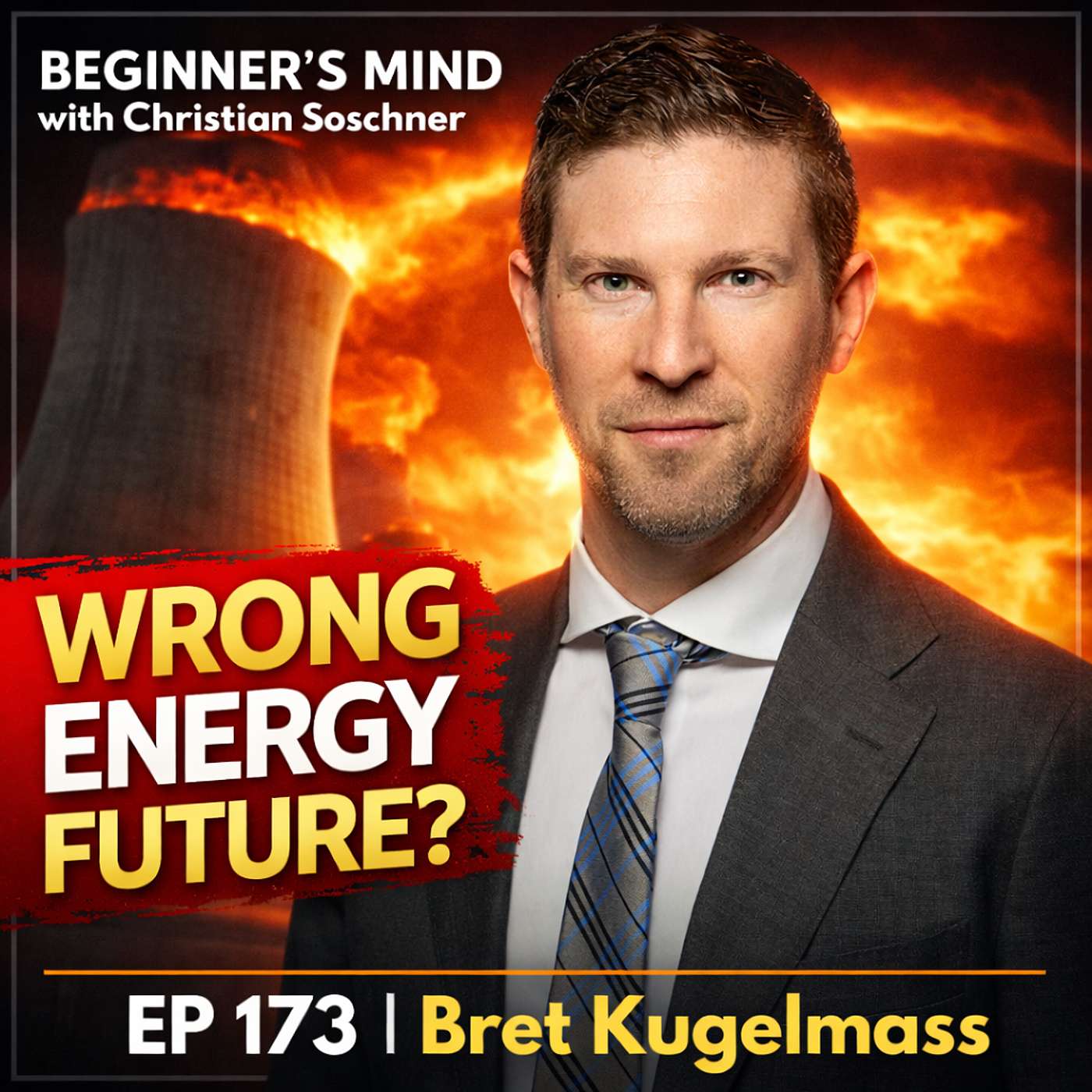
EP 173: Bret Kugelmass | The West Bet on the Wrong Energy Future

Power demand is rising faster than the systems meant to support it. AI, electrification, and industry all need stable energy, but the dominant story sold to the public was far simpler than reality.  In this episode, Bret Kugelmass explains why the real bottleneck was never just climate ambition, but how the West misunderstood energy itself. For years, nuclear was framed as too dangerous, too slow, too expensive, and politically untouchable. Meanwhile, electricity demand kept rising, industrial resilience became strategic again, and the gap between energy ambition and physical reality widened. This conversation gets underneath the narrative. (Recorded November 2023) Bret Kugelmass, Founder and CEO of Last Energy, argues that the nuclear debate was never only about science or safety. It was also about incentives, regulation, public perception, delivery models, and the failure to distinguish what is inherent to the technology from what is imposed by the system around it. Drawing on his path from Silicon Valley entrepreneurship into deep energy infrastructure, Bret explains why he believes the West solved for the wrong variables, why wind and solar alone cannot carry modern industrial societies in many regions, and why the real breakthrough in nuclear may not come from reinventing the reactor, but from reinventing how power plants are built, sold, and deployed. As he puts it:  (00:33:11) “Solve the wrong problem brilliantly and you’ll be the only one who cares.” This episode is not just about nuclear energy.  It is about first-principles thinking, product-market fit in deep tech, and the kind of contrarian founder logic required to build where politics, infrastructure, and capital collide. What You’ll Learn in This Episode 1️⃣ Why Bret says the West misunderstood the real energy bottleneck 2️⃣ Why net zero may be the wrong framing for climate ambition 3️⃣ What most people still get wrong about nuclear waste, safety, and Fukushima 4️⃣ Why nuclear’s real challenge is cost and construction, not physics 5️⃣ How Last Energy reframed the business by selling electricity, not reactors 6️⃣ What founders can learn from solving the right problem before scaling Selected Timestamps (00:04:29) Introduction (00:04:29) Defining climate goals beyond net zero (00:13:46) Bret discovers nuclear mission and truth (00:19:44) Chernobyl versus Fukushima what truly matters (00:21:39) Nuclear's unmatched physics for abundant energy (00:30:08) Ideal world nuclear plants in 18 months (00:36:02) Solving the right problem before building (00:42:58) First principles simplicity as Last Energy’s edge (00:51:16) Securing 30 billion through true product market fit (00:54:05) Last Energy vision for tens of thousands of gigawatts (00:56:12) Taking ultimate responsibility to drive massive global progress 🎙️ Beginner’s Mind Top 10% globally. Conversations for founders, investors, executives, and policymakers shaping biotech, deep tech, energy, and industrial transformation. Follow the show for more long-form conversations on technology, capital, and the people building what the future will actually run on. Send us Fan Mail Support the show Join the Podcast Newsletter: Link Your Next Move: Link
1 h 03 minPlay in:

Tue3Feb
Beginner's Mind

Björn CochloviusGuest

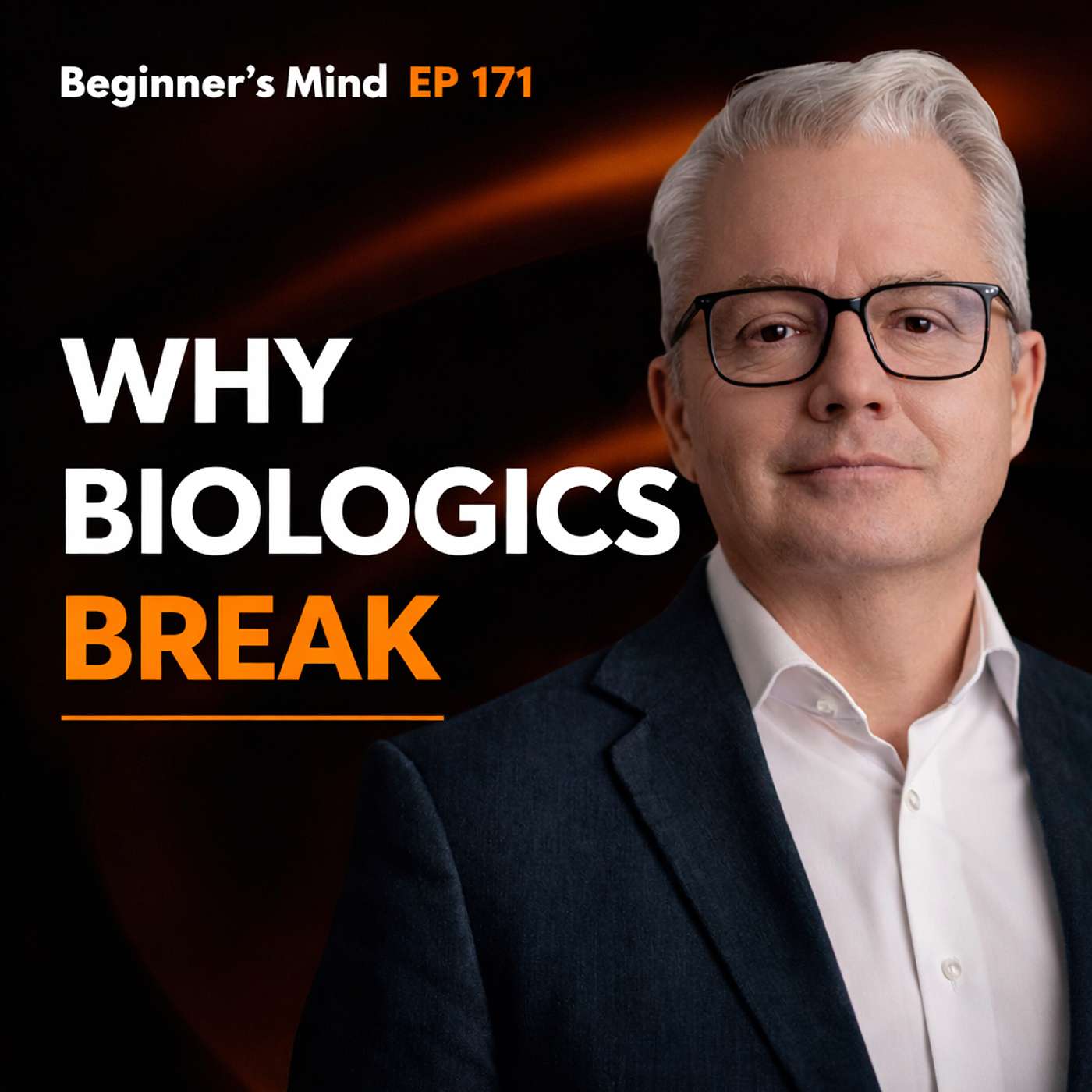
EP 171 - Björn Cochlovius: Why Brilliant Biotech Breaks at Manufacturing

Most biotech breakthroughs don’t fail in the lab. They fail when science meets manufacturing reality. And by the time this bottleneck appears, tens of millions are already sunk. This episode examines the most under-discussed failure point in modern biotech: the gap between scientific discovery and scalable, usable healthcare solutions. While science has never been stronger—and big pharma excels at market access—companies that can translate breakthrough biology into industrialized medicines remain rare. Manufacturing, regulation, clinical design, usability for patients and physicians, and global scalability still form a narrow bottleneck where most value is lost. In this conversation, Björn Cochlovius, CEO of Eleva, explains why so many promising biologics fail late—and how Eleva deliberately built a platform designed not to replace existing systems, but to rescue projects that would otherwise be abandoned. Drawing on decades across immunology, biotech leadership, and translational medicine, Björn offers a grounded, operator-level view on what it actually takes to move from elegant science to real-world impact. As he puts it: (00:28:59) “In biotech, courageous decisions often look wrong—until years later.” This discussion goes beyond manufacturing alone. It explores why turning scientific concepts into ready-to-deploy healthcare solutions—complete with clinical data, regulatory pathways, scalable production, and high usability—remains one of the hardest industrial challenges of our time. What You’ll Learn in This Episode 1️⃣ Why biologics often fail late—after science already worked 2️⃣ Why manufacturing is only one part of a deeper industrial bottleneck 3️⃣ How Eleva approaches risk when others walk away 4️⃣ Why courage, not optimization, drives breakthrough biotech decisions 5️⃣ How AI supports discovery—without replacing human judgment 6️⃣ What Europe gets right—and still gets wrong—about scaling biotech 🧭 Selected Timestamps (00:03:00) Why biotech breakthroughs fail at manufacturing (00:07:18) Three takeaways for founders and investors short on time (00:08:36) Why biologics production breaks at scale (00:11:41) Salvaging proteins that standard systems cannot produce (00:15:27) The hidden opportunity in “failed” proteins (00:17:21) Why late-stage manufacturing failure destroys value (00:19:35) Why Eleva builds its own pipeline, not just a platform (00:22:46) Glycosylation as a source of better efficacy (00:27:03) Courageous decisions when everyone else has failed (00:30:04) Risk management through parallel scientific bets (00:32:08) Why similar proteins behave differently in patients (00:37:08) AI as a tool, not a replacement for human judgment (00:41:02) Why humans must remain accountable in drug discovery (00:44:25) The tension between basic research and development (00:46:01) Managing the handover between scientific universes (00:50:38) The CEO’s real job: building teams smarter than yourself (00:53:11) Leadership humility and protecting the team (00:56:11) How leaders recharge under long-term pressure (00:59:13) Europe’s biotech bottleneck and why there is still hope (01:02:20) Final reflection: turning science into systems that scale 🎙️ Beginner’s Mind Top 10% globally. Conversations for founders, investors, executives, and policymakers shaping the future of biotech, deep tech, and healthcare. Follow the show for more episodes where science meets strategy—and leadership determines what actually scales. Send us Fan Mail Support the show Join the Podcast Newsletter: Link Your Next Move: Link

1 h 06 minPlay in:

Sun25Jan
Beginner's Mind

Jim PulcranoGuest

EP 170 - Jim Pulcrano: Why Most Venture Capital Fails And What Europe Still Gets Wrong

Nine out of ten startups fail, yet Europe keeps funding them the same way. Governments replace judgment with bureaucracy, capital replaces experience, and failure is misunderstood instead of learned from. This conversation exposes why venture capital is a profession, not a policy tool — and why getting this wrong quietly kills innovation. In this episode, Jim Pulcrano, Adjunct Professor at IMD and longtime venture investor, explains why most venture capital systems fail before capital is even deployed. Drawing on four decades across Silicon Valley, Europe, and academia, Jim dismantles the myth that VC success comes from spreadsheets, credentials, or government programs. Instead, he shows why pattern recognition, lived experience, and exposure to failure are the real differentiators. As Jim puts it: (01:13:27) “Silicon Valley is the world’s capital of failure — and also the capital of learning.” That mindset difference explains why Europe struggles to scale founders, why governments unintentionally create zombie companies, and why operators consistently outperform theorists when backing the next generation of companies. This is not a motivational episode.  It’s a structural diagnosis of how innovation ecosystems actually work — and where Europe still gets in its own way. 💡 What You’ll Learn in This Episode 1️⃣ Why most venture capital fails long before money is invested 2️⃣ Why governments cannot replace judgment, experience, or risk-taking 3️⃣ Why operators outperform bankers as investors 4️⃣ Why failure is data — not stigma — in high-performing ecosystems 5️⃣ What Europe must change to unlock its next innovation cycle 👤 About Jim Pulcrano Jim Pulcrano is an Adjunct Professor at IMD with over four decades of experience across venture capital, entrepreneurship, and executive education. He has worked extensively in Silicon Valley and Europe, advising founders, investors, and institutions on scaling companies, leadership development, and venture capital as a professional discipline. 💬 Quotes  (01:13:27) “Silicon Valley is the world’s capital of failure — and also the capital of learning.” (01:33:58) “You have to be there at midnight when you’re trying to make a decision on Sunday night.” (01:40:14) “I’ve never met a successful entrepreneur who hasn’t been weeks from running out of money.” (01:23:21) “A government purchase order is worth more than the same amount in cash.” 🧭 Timestamps (00:04:25) Why most startups fail — and why that’s not the real problem (00:09:55) Why Europe still misunderstands venture risk (00:16:42) Why founders matter more than ideas (00:24:13) Why governments create zombie startups (00:32:34) Why operator VCs outperform financial engineers (00:40:14) Failure as data, not disgrace (00:48:26) Why venture capital cannot be taught without simulation (01:04:48) What LPs should really look for in fund managers (01:19:46) Government as customer vs government as controller (01:30:10) Why young people should not rush into VC (01:32:38) Why empathy separates great investors from average ones (01:45:13) Leadership shifts from startup to scale-up (01:50:06) Three changes Europe must make now 🎙️ Beginner’s Mind Top 10% globally. The leading podcast for founders, investors, and policymakers shaping the future of biotech, deep tech, and innovation. Follow the show to explore more conversations like this one — where science meets strategy and leadership builds the future. Send us Fan Mail Support the show Join the Podcast Newsletter: Link Your Next Move: Link

1 h 55 minPlay in:

Guests from more than 12 months ago are part of Pro. See plans