Deep Transformation cover
Podcast

Deep Transformation

von Roger Walsh and John Dupuy

Deep Transformation hatte in den letzten 12 Monaten 10 bestätigte Gäste in 16 Folgen. Zuletzt: Alexander Love, 3. Sept. 2026.

Website der SendungApple PodcastsSo werden Gäste bestätigt

Deep Transformation offers dialogues with cutting-edge thinkers, artists, contemplatives, and activists who combine big-picture, integrative perspectives with profound, contemplative depths. With these remarkable people, we explore the great questions of our time, such as how best to live, and how best to heal…

Gäste der Sendung

Do3Sep
Deep TransformationAL

Alexander LoveGast

Transmuting Life’s Tragedies: Embracing a Post-Tragic Perspective

Ep. 241 | A deeply engaging conversation in which Alexander Love, adult development expert and coach, and author of the soon-to-be-published trilogy Evolutionary Gestures, introduces us to the post-tragic perspective, with all of its potential to nourish, ground, and open us to a world of possibilities. Alexander explains that post-tragic is not a developmental stage per se, but a dimension available to anyone willing to do the work. It’s part of a triad—pre-tragic innocence, tragic disillusionment, and post-tragic possibilities—encountered in every wisdom tradition, the hero’s journey, and every good story. Post-tragic is not about leaving the tragedy (trauma, pain, loss) behind, but about turning toward it and dropping into a dimension of being that can interface with it in a new way, from a place that isn’t divided or broken. It’s also about asking, what happens next, after the tragedy? How does the story proceed? Shattering our certainty, a tragic event in our lives makes our world more diaphanous, Alexander continues, opening the way for us to lean further into the mystery. Here we encounter the vastness of possibility, the mystery being the first imagined wholeness, the seed of all potentiality, and we begin to see the sacred and the beauty in everything. Though the healing notion of facing our trauma and working through it is not new, the pre-tragic, tragic, post-tragic framework shared by Alexander is compelling. With it, he has painted in the entire landscape around the core tragedy or trauma, giving us the full picture, the before and after, and connected us with a dimension of compassion and forgiveness that is liberating and full of promise. A wise, gentle, intense, warm, humble conversation. Recorded April 23, 2026. “It’s not forgive and forget… It’s remember deeply. Become so intimate with what happened, feel every aspect of it, and let it be transformed by love.” Topics & Time Stamps Introducing Alexander Love, adult development expert, coach, acupuncturist & founder of eos, an organization focused on deep transformation (00:52) What brought Alexander to the field of adult development? (02:03) The sacred gap: the space between knower and known (03:46) The alternative to uncertainty and chaos is leaning into the mystery (05:53) Turning away from our traumas deepens our sense of separation (06:59) Meeting with his father’s murderer: an infinite degree of forgiveness is available (09:32) What is forgiveness? (13:00) How do we get closer to our pain? (16:52) Pre-tragic, tragic & post-tragic: innocence, disillusionment, possibility (19:38) Protecting children so they can internalize a sense of fundamental goodness (24:20) With tragic disillusionment our meaning becomes shattered (26:01) Both pre-tragic innocence & tragic disillusionment are within us (33:06) Orienting towards tragedy from an unbroken dimension of being; transmuting our pain by developing relationship (34:15) The arc of transformation requires going beyond awareness of our patterns to embracing them (39:13) The first 3 phases of transformation: fusion, differentiation, relationship (42:20) The post-tragic architecture includes finding sacred beauty in the world (44:20) Primordial purity: even with all the suffering, there is perfection (50:17) The tragic fracturing of meaning makes the world more diaphanous (52:05) Post-tragic possibility is a depth dimension, it’s not just “growing up” (54:04) Compassion is embracing another’s suffering with a quality of loving presence that transmutes the suffering (58:49) The Mystery is the first imagined wholeness, the seed of potentiality (1:04:47) An invitation to be curious, to ask how we are using our capacity to witness (1:07:15) Alexander’s book-in-progress, The Evolutionary Gestures Trilogy (1:13:20) We need a new chapter in history to address the complexity and the horrors of this time (1:17:10) Resources & References Alexander Love, facilitator, developmental coach, acupuncturist, senior faculty at the Newfield Network & founder of eōs wellness center Alexander Love’s The Evolutionary Gestures Trilogy is expected to be published in the fall of 2026 “The Room: A Story from the Evolutionary Gestures Trilogy” read by Alexander (YouTube video) Ken Wilber’s Integral Theory: What is the Integral Approach? (Integral Life website) Oscar Mandel, A Definition of Tragedy Judy Schavrien, “Shakespeare’s Cymbeline and the Mystical Particular: Redemption, Then and Now, for a Disassembled World” Frederick Perls, Gestalt Therapy Verbatim Joseph Goldstein, Living on the Spiritual Edge (Deep Transformation podcast) --- Alexander Love, MCC, NCC, M.Ac. is an acupuncturist, developmental coach, and facilitator. He serves as Director of Curriculum Development and Senior Facilitator at the Newfield Network, an international coach training, personal transformation, and leadership development organization, where he facilitates trainings in the United States and leads advanced trainings in Chile. He also teaches with Stages International and is a certified STAGES scorer. Alexander’s forthcoming book, The Evolutionary Gestures Trilogy, is a mythopoetic exploration of the sacred gap — the space between self and world where insight awakens alongside the deep pain of separation. The work is grounded in the story of his father’s murder and the restorative justice dialogue he later held with the man who took his father’s life — an experience that profoundly shaped his understanding of healing, accountability, and reconciliation, and continues to inform his work today. Through magic realist memoir, evocative artwork, and a novel articulation of human becoming, this volume opens toward post-tragic possibility while introducing a distinctive developmental vision. You can learn more about Alexander at alexanderlove.org and newfieldnetwork.com. --- Podcast produced by Vanessa Santos and Show Notes by Heidi Mitchell
1 h 19 minAbspielen in:

Do25Jun
Deep TransformationSM

Stephan MartinGast

The Call of the Cosmos: Aligning with Cosmic Evolution & Its Creative Impulse

Ep. 236 | In The Call of the Cosmos, cosmologist and astronomer Stephan Martin brings a new and revelatory perspective into play on Deep Transformation, sharing his profound knowledge of the evolving cosmos and its relationship with consciousness. To cover the immensity of the mystery we are involved in, Steve explains, we need to look at both the inner dimension—consciousness—and the outer mystery, the cosmos. Steve does a remarkable job of explaining the psychological, spiritual, and ethical implications of living in an evolving universe, and draws fascinating parallels between cosmic evolution and human evolution, and the manifestation of being and cosmos. Steve teaches that we can expand the concept of self from separate, small self to ecological self to planetary self, and beyond—to cosmic self. Steve says the fundamental essence of the universe is creativity, and invites us to heed the call of the cosmos and align ourselves with cosmic creativity by expressing the whole through our individual modes of being. “What is the causal cosmic chain that leads to our allurement to do a certain thing?” he asks, adding, “13.8 billion years of cosmic evolution have led to this moment.” The universe is participatory, Steve has discovered, and we live in a relational reality. Put on your paradigm shifting hat for this lively, wise, and impassioned conversation. Your relationship with the cosmos will be illuminated for sure, and quite possibly entirely transformed. Steve is also a gifted author; you can explore more in his books Cosmic Conversations, This Playful Universe, Becoming the Change, and soon, Traveling in the Shadow of the Moon. Recorded August 21, 2025. “If you look at the universe through telescopes, you see stars and galaxies… However, if you engage in a relationship with the universe through, say, devotional or contemplative practices, you discover other qualities.” Topics & Time Stamps Introducing astronomer & cosmologist Stephan Martin, author of Cosmic Conversations and This Playful Universe (00:46) The relationship between cosmos and consciousness (03:34) What does it mean to be part of an evolving, dynamic universe? (05:09) Einstein’s “greatest blunder” (08:18) The emergence of complexity theory & the idea of the self-determining universe (09:48) Thomas Berry’s 1st universal dynamic: differentiation; every being is a unique mode of the universe (14:29) Is consciousness an emergent part of the universe? Thomas Berry’s 2nd dynamic: subjectivity (18:07) The universe is participatory (22:06) What quantum theory brings crashing down is the idea of a static universe; reality is relational (26:39) Cosmic leadership: the intuitive callings we feel… do they come from the universe? (30:10) The earth is what’s in charge here and, by extension, the cosmos is what’s in charge (31:54) What is the causal cosmic chain that leads to a creative impulse? (33:15) Expanding the concept of self to a cosmic dimension (34:43) The fundamental essence of the universe is creativity; the cosmic imperative is aligning with that (38:32) Are ethics a mind-made construction, or are they tied with something deeper? Thomas Berry’s third dynamic: the principle of communion (42:46) The concept of ego is Newtonian static cosmology internalized (51:10) The manifestation of being parallels the manifestation of the cosmos (53:12) Are we living in a multiverse? (57:34) What does the universe desire? (01:01:32) Are we living in an AI simulation? Is our universe a hologram? (01:05:07) Is there life on other planets? What types of “life” haven’t we considered yet? (01:11:34) Looking for other humans to talk to: the era of cosmic loneliness (01:15:52) What is the current edge for cosmologists? (01:20:16) Stephan’s new books: Becoming the Change with Carol Kilby & Traveling in the Shadow of the Moon (available for pre-order) (01:26:32) Resources & References Stephan Martin, director of the Deeptime Leadership Program Stephan Martin, Cosmic Conversations: Dialogues on the Nature of the Universe and the Search for Reality and This Playful Universe (audiobook narrated by Michael Toms) Stephen Martin & Carol Kilby, Becoming the Change: Evolutionary Rituals and Practices for Everyday Emergence Stephan Martin, Traveling in the Shadow of the Moon: A Deep Cosmology Journey in Baja (available for pre-order) Edwin Hubbell and the discovery of the Andromeda Galaxy Georges Lemaître, first physicist to argue the recession of galaxies is evidence of an expanding universe, who also made the first formulation of the Big Bang theory Erich Jantsch, The Self-Organizing Universe, The Evolutionary Vision Thomas Berry, theologian and evolutionary thinker, The Great Work: Our Way into the Future Panpsychism A. H. Almaas Wisdom Series (Deep Transformation podcast series) Ken Wilber introduced Integral Methodological Pluralism in his book Integral Spirituality Carlo Rovelli, Helgoland: Making Sense of the Quantum Revolution The Copenhagen interpretation Brian Swimme, co-founder of the Center for the Story of the Universe Matthew Fox, Creativity: Where the Divine and Human Meet A. H. Almaas’ Diamond Approach Cosmological constant David Chalmers, Reality+: Virtual Worlds and the Problems of Philosophy Enrico Fermi’s paradox --- Stephan Martin is an astronomer, author, educator, and cosmic guide who has spent more than thirty-five years exploring how scientific discovery, spiritual inquiry, and human experience can deepen our relationship with the evolving universe. Through his work with the Deeptime Network, along with workshops, retreats, lectures, and contemplative stargazing experiences, he helps people bring the wisdom of the cosmos into everyday life. He is the author of Cosmic Conversations and Living a Cosmic Life, co-author of Becoming the Change (with Carol Kilby), and author of the forthcoming Traveling in the Shadow of the Moon (January 2027). His work invites people to align their lives with the creative unfolding of the cosmos and participate more consciously in our shared evolutionary journey. www.cosmicconversations.org and dtnetwork.org. --- Podcast produced by Vanessa Santos and Show Notes by Heidi Mitchell

1 h 30 minAbspielen in:

Do23Apr
Deep TransformationHA

Hameed AliA. H. AlmaasGast

At Our Essence, We Are Love: Becoming Intimate with Everything

Ep. 231 (Part 2 of 2) | In Part 2 of Deep Transformation’s third dialogue in the Path of Love Series with A. H. Almaas, Hameed Ali relates what happens on the path of return, after we have experienced dissolving into the radiance of the absolute. In following the path of heart (as opposed to the path of mind), we discover that in addition to pure emptiness, the absolute has (in its beingness aspect) a quality of consciousness that is pure intimacy. “The beloved is intimate with all things in the universe: intimate with people, with the rocks, with the stars… because its nature pervades everything.” Upon returning to the world, we find the universe has become the radiance of the beloved and ordinary life becomes full of love. That said, we may experience a great fear of losing our awakened realization, Hameed adds, which can further stir up old woundings which still need to be faced. Back in the world, as the embodied beloved, do you feel compassion for other people’s suffering? co-host John Dupuy wonders. The extent of the compassion is almost unimaginable, Hameed answers. There is vast empathy for all the suffering in the world, and especially for the deep suffering underlying it all that is caused by people not knowing their inner truth. It is by giving the beloved the opportunity to appear and know itself as we live our lives that we love and serve the inner beloved, Hameed continues. He explains that awareness is the beloved witnessing its creation, and that the emptiness aspect of the beloved, emphasized in Buddhism and on the path of mind, brings a searing clarity to our experience. A beautiful conversation, in which co-host Roger Walsh remarks that the presence of the inner beloved seems to be increasingly reflected in these dialogues as they unfold. Perhaps you will feel it too. Recorded January 29, 2026. “Regardless of what we think and feel, at our essence we are love.” ​Topics & Time Stamps – Part 2 The path of return: the fear of losing the beloved (00:34) Old wounds come up bringing more fear; you have to welcome all the wounding (01:24) Upon return, ordinary life becomes full of love—can this be translated into a scientific or mathematical theory? (02:26) Service is giving the inner beloved the opportunity to appear & know itself (04:47) The depth of compassion felt for the suffering of the world is almost unimaginable (06:50) If you don’t work things out, you can’t live in this world as the deity (10:47) The beloved is intimate with all things in the universe because its nature pervades everything (11:49) The primal cavity: the deep wish to go into dark, black emptiness (15:39) What is the relation between love and compassion? (19:36) The heart is just there for the beloved—the throne of the beloved (22:15) The more hatred and aggression, the more the disconnection (25:05) Witnessing: awareness is the beloved witnessing its creation (26:48) Realizing the emptiness: the radiance of the darkness is the essence of awareness (28:07) The feeling tone of these dialogues increasingly reflects the presence of the inner beloved (29:50) There is a lot more in the book The Inner Beloved, including conversations with Hameed’s students & exercises, that hasn’t been discussed (31:07) At our essence we are love: moving towards heart is the inherent potential of humanity (32:23) Resources & References – Part 2 A. H. Almaas, The Inner Beloved: The Heart’s Journey to Divine Unity Previous Deep Transformation Path of Love dialogues: Entering the Path of Heart, Emptying the Heart of All that Obscures the Inner Beloved & Dissolving into Bliss Ramakrishna, Hindu mystic “I was a hidden treasure and wanted to be known” is the beginning of probably the most famous hadith qudsi or extra-Qur’anic Word of God Longchenpa: A Guide For Readers (Shambhala) Deep Transformation’s Path of Love Series with A. H. Almaas Deep Transformation’s Path of Love Series with A. H. Almaas begins with an overview of Hameed Ali’s Love Trilogy — Love Unveiled, Nondual Love, and The Inner Beloved — to orient us on the spiritual path of love unique to Hameed Ali and the Diamond Approach, then delves into the profound and deeply touching topics Hameed addresses in his most recent book, The Inner Beloved, published in February 2026. Listeners may want to get a copy of this book, to study and follow along on this extraordinary path of awakening. Also, if you are interested in taking a course on The Inner Beloved in the fall of 2026, you can register your interest here: https://da.pages.ontraport.net/inner-beloved-interest. Special Diamond Approach Course Discount for Deep Transformation Listeners If you are interested in taking a course offered by Diamond Approach Online, Hameed’s team at the Ridhwan School have offered a special 20% discount for Deep Transformation listeners. You can access the Course Catalog here: https://online.diamondapproach.org/catalog/. And enter the code DTP20 to receive your discount when you sign up. --- Hameed Ali (A. H. Almaas) was born in Kuwait in 1944. At the age of eighteen, he moved to the U.S. to study at the University of California in Berkeley. Hameed was working on his Ph.D. in physics when he reached a turning point in his life and destiny that led him to inquire into the psychological and spiritual aspects of human nature rather than the physical nature of the universe. He left the academic world to pursue an in-depth journey of inner discovery, applying his scientific precision and discipline to personal, experiential research. This included study with different teachers in different modalities, extensive reading, and continuous study of his own consciousness in an effort to understand the essential nature of human experience and reality in general. Hameed’s process of exploration led to the creation of the Ridhwan School and, with his colleague Karen Johnson, resulted in the founding and unfoldment of the Diamond Approach. He is the author of 20 books, including Nondual Love: Awakening to the Loving Nature of Reality, Love Unveiled: Discovering the Essence of the Awakened Heart, Keys to the Enneagram: How to Unlock the Highest Potential of Every Personality Type, The Unfolding Now: Realizing Your True Nature through the Practice of Presence, and more. --- Podcast produced by Vanessa Santos and Show Notes by Heidi Mitchell
39 minAbspielen in:

Do16Apr
Deep TransformationAH

A. H. AlmaasGast

Dissolving into Bliss: The Ecstasy of Ego Death

Ep. 230 (Part 1 of 2) | The third dialogue in the Path of Love Series with A. H. Almaas opens with co-host Roger Walsh commenting that in reading Hameed’s most recent book, The Inner Beloved, he is struck by how different the Diamond Approach’s path of love is from those in other traditions. Hameed explains that, indeed, his path is different in that it addresses the sequence of events on the path of love systematically, using contemporary psychological language to describe the difficulties and barriers that arise, and further, that he includes not only obstacles that come up in the mind (concepts and beliefs), but emotional pain and woundings, abandonments and betrayals, which is something other traditions don’t often talk about. Why are our hearts not open? Because opening to such painful emotions is scary; our fear blocks us from opening to the vastness of divine love. The secret to moving forward on the path of love, Hameed says, is to love more intensely, more deeply. Love itself is the fuel that gets us through the obstacles to union with the inner beloved. Hameed speaks of the “death wish” that happens along the path, referring to our desire to dissolve completely into the beloved. “The deep heart loves the prospect of melting away and being nothing, being annihilated, completely absorbed into the beloved,” he explains. The death wish is a common reference in other paths of love, too—the Buddha calls this annihilation of self “emptiness”—and interestingly, Freud recognized it as a universal human characteristic, calling it the nirvana principle. “A deep intuition resides in every human heart,” Hameed continues, “a need for unification with what we love.” This can be small things—chocolate ice cream, our cell phone—which are legitimate objects of love, but in the end, only the inner beloved calls. Once again, Hameed gifts us with an illuminating teaching about the path of love, our desire for nonbeing, the hidden essence of love, and the integration of all we have let go of that happens after we awaken—all coming directly from his own lived experience. Recorded January 29, 2026. “It is inherent to the human being… the movement to dissolve into bliss, into the beloved.” Topics & Time Stamps – Part 1 Introducing the 3rd dialogue in the Path of Love Series with A. H. Almaas, where we continue to explore Hameed’s latest book, The Inner Beloved (00:41) How Hameed’s path of love differs from other traditions (02:03) One difference is Hameed addresses the sequence of events on the path of love systematically, using psychological language to describe the difficulties & barriers that arise (05:27) On this path, obstacles are not just in the mind but include woundings that occur in relationships (08:09) After union with the beloved comes integration; here is where the nondual connection between the beloved and the world comes in (09:52) The state of desirelessness (10:36) The death wish: the yearning to be completely absorbed into the beloved (11:58) Freud called this deep, universal death wish in humans the nirvana principle (13:53) Buddha called this annihilation of self “emptiness” (18:28) The secret to moving the process along is to intensify our love (20:26) A deep intuition resides in every human heart: a need for unification with what you love (22:46) There is a kind of love where the yearning and wanting is just as ecstatic as loving itself—this is the hidden essence of love (26:45) Why are some called to the path of love yet others keep grasping for more substitute gratification? (28:50) There are 4 paths of yoga but the end is the same; the 4 suits of the tarot tell the stages of each yoga path (30:27) Coming out of the divine “coma,” the whole world is ablaze with love (33:02) The descent is not a loss of the realization, it is a further integration of what we have let go of (35:10) Resources & References – Part 1 A. H. Almaas, The Inner Beloved: The Heart’s Journey to Divine Unity Previous Deep Transformation Path of Love dialogues: Entering the Path of Heart & Emptying the Heart of All that Obscures the Inner Beloved Plato’s Symposium Freud’s nirvana principle was introduced in Beyond the Pleasure Principle His Holiness the Dalai Lama & Thubten Chodron speak about the absence of inherent existence in Searching for the Self Ken Wilber’s core text on substitute gratification is in The Atman Project: A Transpersonal View of Human Development The 4 paths of yoga: Karma, Bhakti, Raja and Jnana (Yoga Easy) Mystical Origins of the Tarot by Paul Huson St. John of the Cross writes about ascent in Ascent of Mount Carmel and descent in The Dark Night of the Soul --- Deep Transformation’s Path of Love Series with A. H. Almaas Deep Transformation’s Path of Love Series with A. H. Almaas begins with an overview of Hameed Ali’s Love Trilogy — Love Unveiled, Nondual Love, and The Inner Beloved — to orient us on the spiritual path of love unique to Hameed Ali and the Diamond Approach, then delves into the profound and deeply touching topics Hameed addresses in his most recent book, The Inner Beloved, published in February 2026. Listeners may want to get a copy of this book, to study and follow along on this extraordinary path of awakening. Also, if you are interested in taking a course on The Inner Beloved in the fall of 2026, you can register your interest here: https://da.pages.ontraport.net/inner-beloved-interest. --- Special Diamond Approach Course Discount for Deep Transformation Listeners If you are interested in taking a course offered by Diamond Approach Online, Hameed’s team at the Ridhwan School have offered a special 20% discount for Deep Transformation listeners. You can access the Course Catalog here: https://online.diamondapproach.org/catalog/. And enter the code DTP20 to receive your discount when you sign up. --- Hameed Ali (A. H. Almaas) was born in Kuwait in 1944. At the age of eighteen, he moved to the U.S. to study at the University of California in Berkeley. Hameed was working on his Ph.D. in physics when he reached a turning point in his life and destiny that led him to inquire into the psychological and spiritual aspects of human nature rather than the physical nature of the universe. He left the academic world to pursue an in-depth journey of inner discovery, applying his scientific precision and discipline to personal, experiential research. This included study with different teachers in different modalities, extensive reading, and continuous study of his own consciousness in an effort to understand the essential nature of human experience and reality in general. Hameed’s process of exploration led to the creation of the Ridhwan School and, with his colleague Karen Johnson, resulted in the founding and unfoldment of the Diamond Approach. He is the author of 20 books, including Nondual Love: Awakening to the Loving Nature of Reality, Love Unveiled: Discovering the Essence of the Awakened Heart, Keys to the Enneagram: How to Unlock the Highest Potential of Every Personality Type, The Unfolding Now: Realizing Your True Nature through the Practice of Presence, and more. --- Podcast produced by Vanessa Santos and Show Notes by Heidi Mitchell
41 minAbspielen in:

Do9Apr
Deep TransformationMC

Margaret CullenGast

The Practice of Equanimity: Cultivating a Heart Big Enough to Hold Everything

Ep. 229 (Part 2 of 2) | In part 2 of our What is Real Greatness Series podcast with Margaret Cullen, author of Quiet Strength, Margaret continues to enlighten us about equanimity: its power, its wisdom, and its practice. She relates some of the history of equanimity—first considered a supreme virtue in Stoicism, then passed on to Sufism and Judaism—and explains that throughout time, equanimity (and humility) have always been an integral part of people who have made a true difference in the world. Margaret talks about how humor can break the spell of our trance (“when we lose equanimity, we get caught in a trance, believing in something that has us prisoner—humor breaks the spell”), and, in the spirit of “The Serenity Prayer” (“Grant me the serenity to accept the things I cannot change, courage to change the things I can, and wisdom to know the difference”), she encourages us to make peace with what we can realistically do and let the rest go. While Part 1 of this dialogue focuses on the power of equanimity in relation to the big picture and what is going on now politically, in Part 2 Margaret looks at practicing equanimity in personal relationships and in our individual lives. She marvels at Thoreau’s equanimous approach to his own death, and shares that she has found forgiveness to be the most important equanimity tool in relationships. “We reclaim our wisdom when we say ‘I’m sorry,’” Margaret explains. Margaret’s deep and nuanced understanding of the power and practice of equanimity is inspiring and illuminating, and bringing this virtue to our attention as a pragmatic tool we can use is also incredibly timely, leaving us with a sense of hope and empowerment. Recorded January 14, 2026. “What aids in my equanimity more than anything else is self-forgiveness.” Topics & Time Stamps – Part 2 Welcome teacher, what am I supposed to be learning? (00:59) How humor can break the spell that holds us prisoner (03:03) The relationship between equanimity and peace (05:17) The praise and blame algorithm has exponentially increased our reactivity (08:14) Equanimity was a supreme virtue in Stoicism; the Stoics passed it on to the Sufis, who passed it on to Judaism (11:11) Thoreau’s equanimous approach to death (12:24) Nature’s effect on one’s equanimity (13:29) Equanimity is an integral part of true change makers, also humility (14:27) What practice would Margaret most recommend to cultivate equanimity? (17:19) Making peace with what you can do and letting the rest go (21:03) Practicing equanimity in relationships (22:13) Using self-forgiveness as an equanimity tool (23:44) In relationships, softening where we’re most triggered helps more than imposing ideals of how we should be (26:25) One key flavor of equanimity is non-defensiveness (28:51) Resources & References – Part 2 Margaret Cullen, Quiet Strength: Find Peace, Feel Alive, and Love Boundlessly Through the Power of Equanimity Swami Beyondanda on the Deep Transformation podcast: Laugh Yourself Sane, Enlighten Up & Awaken to Cosmic Comic Consciousness Maimonides introduced the concept of equanimity to Judaism Stoicism, a philosophical movement & practical guide to living originating in ancient Greece When asked about facing death, Thoreau said, “One world at a time.” Henrietta Christian Wright, American Men of Letters Sri Aurobindo, The Synthesis of Yoga Sufi teacher Habīb Boerger, “Rather than making the ego your boss, make it your personal assistant” The Serenity Prayer (Reinhold Niebuhr’s original version) Richard Davidson & Daniel Goleman, Altered Traits: Science Reveals How Meditation Changes Your Mind, Brain, and Body Paul & Eve Ekman’s Cultivating Emotional Balance training “We could not help contrasting the equanimity of Nature with the bustle and impatience of man. His words and actions presume always a crisis near at hand, but she is forever silent and unpretending.” – Henry David Thoreau --- Margaret Cullen, a Licensed Psychotherapist (MFT), has been at the cutting edge of translating contemplative trainings into universal and accessible formats in mainstream settings ranging from elite military to maximum security prisons. She was one of the first certified Teachers of Mindfulness-Based Stress Reduction (MBSR); is the founder of Mindfulness-Based Emotional Balance; and is co-developer of Compassion Cultivation Training at the Stanford School of Medicine (with Thupten Jinpa). Margaret also co-developed Mindfulness Based Attention Training for military spouses with neuroscientist Amishi Jha at the University of Miami, and is the founder of Compassion Corps, offering free compassion and mindfulness programs to under-resourced communities around the world. Margaret is a Fellow of the Mind & Life Institute. --- Podcast produced by Vanessa Santos and Show Notes by Heidi Mitchell

37 minAbspielen in:

Do19Mär
Deep TransformationAH

A. H. AlmaasGast

Emptying the Heart of All that Obscures the Inner Beloved

Ep. 226 (Part 1 of 2) | In Part 1 of Deep Transformation’s second Path of Love Series dialogue with A. H. Almaas, we learn what a spiritual journey on the path of love entails: particularly, emptying our heart so it can discover the deepest inner truth, the inner beloved. “Most of the path of love has to do with emptying the heart with love and yearning combined to burn through all the idols which stand for the inner beloved,” Hameed says. “The heart knows it loves something deeper than itself… and it pains it that it is separate from it.” There are other paths of awakening, for example, the Buddhist way is largely the path of mind, but for Hameed it was the path of heart that took center stage and revealed its secrets. The path of love is not methodical or intentional—it just happens, Hameed continues. The beloved works on the heart, works on the soul, and throws itself nearer—and it’s in this nearness that you encounter all the obstacles that keep you from uniting with the beloved. Longtime practitioner, co-host Roger Walsh mentions that the exercises included in Hameed’s latest book, The Inner Beloved, intended to help us remove our blocks to perceiving the inner beloved, have worked a treat for him, opening him up in a new way to where his practice feels more flowing and easeful than before. “Love is sorely needed these days on earth,” Hameed concludes, “as our hearts are full of garbage—wounding, hatred, envy. But there is an organ in the soul—the heart—which has its own dynamic: yearning, love, intensity, and passion that penetrate the barriers and dissolve them.” Another deeply moving and illuminating conversation with co-founder of the Diamond Approach, Hameed Ali. Recorded January 8, 2026. “Love is a much bigger force for a human being than any other thing.” Topics & Time Stamps – Part 1 Introducing the 2nd dialogue in the Path of Love Series, focusing on A. H. Almaas’ latest book: The Inner Beloved (00:40) Most of this path towards discovering our inner nature has to do with emptying the heart (02:48) There are other paths of awakening, but for Hameed the path of love took center stage (06:53) Getting a taste of the inner beloved early on can become the seed of our inner longing (08:41) Can we have a second person relationship with the inner beloved? (09:55) The path of love has to do with yearning and with feeling “nearer”—some traditions even have words for different degrees of nearness (11:16) Even after realizing absolute truth, the heart continues to need emptying; we haven’t yet recognized the inner beloved (14:47) The path of love isn’t for everybody; for Buddhists, it’s the path of the mind (18:04) In Hameed’s book, there are powerful exercises to remove blocks to perceiving the inner beloved—these worked a treat for Roger (19:07) The heart is a subtle organ of the soul with its own dynamic: yearning, love, intensity & passion that penetrate the barriers and dissolve them (22:34) The suffering people go through is inevitable without pursuing the spiritual path to its final stages (25:21) Great fears come up: of losing our love for our loved ones & our love for the world (29:26) We encounter our deep woundings on the path of love; it’s not an easy path (33:00) The path of love is not methodical or intentional—it just happens (33:46) The beloved throws itself nearer, and in that nearness you encounter all your obstacles (34:41) Our hearts are full of garbage… love is sorely needed these days on earth (35:10) For fans of the A. H. Almaas Wisdom Series, the Wisdom Series, based on Hameed’s book The Inner Journey Home, will be continued later in the spring. Resources & References – Part 1 A. H. Almaas, The Inner Beloved: The Heart’s Journey to Divine Unity A. H. Almaas, Love Unveiled: Discovering the Essence of the Awakened Heart A. H. Almaas, Nondual Love: Awakening to the Loving Nature of Reality Rumi, The Book of Love: Poems of Ecstasy and Longing Abraham Maslow wrote about meta-motives and meta-pathologies in Toward a Psychology of Being and The Farther Reaches of Human Nature Poet Longchenpa only rarely talks about love and beauty, Finding Rest in the Nature of the Mind Ramakrishna, Hindu mystic devoted to Kali --- Deep Transformation’s Path of Love Series with A. H. Almaas Deep Transformation’s Path of Love Series with A. H. Almaas begins with an overview of Hameed Ali’s Love Trilogy — Love Unveiled, Nondual Love, and The Inner Beloved — to orient us on the spiritual path of love unique to Hameed Ali and the Diamond Approach, then delves into the profound and deeply touching topics Hameed addresses in his most recent book, The Inner Beloved, published in February 2026. Listeners may want to get a copy of this book, to study and follow along on this extraordinary path of awakening. Also, if you are interested in taking a course on The Inner Beloved in the fall of 2026, you can register your interest here: https://da.pages.ontraport.net/inner-beloved-interest. --- Special Diamond Approach Course Discount for Deep Transformation Listeners If you are interested in taking a course offered by Diamond Approach Online, Hameed’s team at the Ridhwan School have offered a special 20% discount for Deep Transformation listeners. You can access the Course Catalog here: https://online.diamondapproach.org/catalog/. And enter the code DTP20 to receive your discount when you sign up. --- Hameed Ali (A. H. Almaas) was born in Kuwait in 1944. At the age of eighteen, he moved to the U.S. to study at the University of California in Berkeley. Hameed was working on his Ph.D. in physics when he reached a turning point in his life and destiny that led him to inquire into the psychological and spiritual aspects of human nature rather than the physical nature of the universe. He left the academic world to pursue an in-depth journey of inner discovery, applying his scientific precision and discipline to personal, experiential research. This included study with different teachers in different modalities, extensive reading, and continuous study of his own consciousness in an effort to understand the essential nature of human experience and reality in general. Hameed’s process of exploration led to the creation of the Ridhwan School and, with his colleague Karen Johnson, resulted in the founding and unfoldment of the Diamond Approach. He is the author of 20 books, including Nondual Love: Awakening to the Loving Nature of Reality, Love Unveiled: Discovering the Essence of the Awakened Heart, Keys to the Enneagram: How to Unlock the Highest Potential of Every Personality Type, The Unfolding Now: Realizing Your True Nature through the Practice of Presence, and more. --- Podcast produced by Vanessa Santos and Show Notes by Heidi Mitchell

39 minAbspielen in:

Do12Mär
Deep TransformationJohn Fugelsang

John FugelsangGast

Christianity is About Love. Christian Nationalism is Not. Calling Out the Hypocrites with John Fugelsang

Ep. 225 (Part 2 of 2) | In Part 2 of our eloquent, passionate, and humorous, dialogue with comedian John Fugelsang, author of the important and irreverent book, Separation of Church and Hate: A Sane Person’s Guide to Taking Back the Bible from Fundamentalists, Fascists, and Flock-Fleecing Frauds, we come to understand what fundamentalism is, and what it signifies for our culture, our politics, and our future. John outlines five common features that characterize fundamentalism across religious traditions, pointing out that fundamentalist Christians have more in common with fundamentalist Muslims than they do with moderate and liberal Christians. “I go after fundamentalists of all religions,” John says, “because it’s turning people off to faith—ruining Christianity, ruining Islam, ruining Judaism.” This is the tragedy for John and what fuels his passion for calling out the hypocrites who do hateful things in the name of religion. John also enlightens us as to what Christian nationalism is all about, starting way back: “In the U.S., our history of Christianity is inseparable from our history of white supremacy.” Christian nationalism’s religion is power—a gospel of domination over love. Authoritarian leaders and their followers all worship power, he continues, and fills us in on how Christian nationalism is playing out in Russia now. John’s own message is not hateful; his intention is to make it clear that Jesus always taught love and kindness; to suggest that if the Church wants to survive, it needs to go back to the teachings of Jesus; and to help us come together in a common understanding of fundamental values. “It’s hard to love the bigot in your family,” John says. But we can “…hold to the deepest values, the most love, and do what needs to be done with love. We can’t hate the haters back, but we have to beat them without hating them—that’s the challenge.” Recorded December 18, 2025. “The greatest tragedy to me is when people think that something is religion and don’t realize it’s just fundamentalism.” Topics & Time Stamps – Part 2 Fundamentalist Christians have more in common with fundamentalist Muslims than they do with moderate & liberal Christians (00:39) 5 common features of fundamentalism across traditions: women are inferior, violence is okay, punishment over healing & a victimhood complex (00:51) MLK was deeply unpopular at the time of his death—just like Jesus (03:43) Every generation there’s a new word to smear the virtues of love, empathy & caring for others (05:01) Christian nationalism: a gospel of domination over love (07:59) Prosperity gospel: God will reward you if you give to our Church (09:50) Christian nationalism in Russia (13:47) Authoritarian leaders & followers all worship power (15:34) If the Church wants to survive, they need to go back to the teachings of Jesus (17:28) Recreating Jesus as a white guy led to centuries of racism and cruelty (19:55) Using the Bible as camouflage: most people haven’t read it & figure others haven’t either (21:06) What weirdness in the Bible stands out most for John? (26:02) Growing up, it seemed normal that Christianity was about love & helping people who don’t look like you (29:45) It’s hard to love the bigot in your family (30:58) We can’t hate the haters back, but we have to beat them without hating them—that’s the challenge (33:04) Abortion has redefined Christianity, but the Bible never mentions anything against it (34:35) Resources & References – Part 2 John Fugelsang, Separation of Church and Hate: A Sane Person’s Guide to Taking Back the Bible from Fundamentalists, Fascists, and Flock-Fleecing Frauds John Fugelsang’s SiriusXM show: Tell Me Everything John Fugelsang’s podcast: The Sanity-Cast King in the Wilderness, documentary about Martin Luther King focused on the final two years of his life Jerry Falwell, televangelist & conservative activist Freedom From Religion 2026 Convention Prosperity theology Matthew 25 Sharon Salzberg, renowned meditation teacher --- John Fugelsang is the author of the New York Times bestseller SEPARATION OF CHURCH AND HATE: A Sane Person’s Guide To Taking Back the Bible from Fundamentalists, Fascists, and Flock-Fleecing Frauds. He has been murdered on CSI and picketed by the Westboro Baptist Church. John is a Drama League–nominated actor, comedian, and broadcaster, who’s hosted many TV shows and podcasts, including the acclaimed Tell Me Everything series on SiriusXM Progress. He got George Harrison to give his final performance on VH1, debated Jerry Falwell and David Duke, and made many appearances on MSNBC, FOX News, and CNN. His epic PBS road trip film on the American Dream, Dream On, directed by Roger Weisberg, was named Best Documentary at the New York Independent Film Festival. Fugelsang lives in New York City with his family. --- Podcast produced by Vanessa Santos and Show Notes by Heidi Mitchell
41 minAbspielen in:

Do5Mär
Deep TransformationJohn Fugelsang

John FugelsangGast

Taking Back the Bible from Fundamentalists & Frauds (You Seriously Believe Jesus Said What?) with John Fugelsang

Ep. 224 (Part 1 of 2) | John Fugelsang, author of the brilliant, irreverent book, Separation of Church and Hate: A Sane Person’s Guide to Taking Back the Bible from Fundamentalists, Fascists, and Flock-Fleecing Frauds, talks eloquently about the difference between true Christianity as taught by Jesus and the hateful teachings of Christian nationalists and televangelists who are in it for the power and the money. John grew up with a clear notion of what Christianity should look like; his parents lived their faith grounded in peace, love, empathy, and service, dedicating their lives to helping people in need, no matter their color or differences. So John set out to take the Bible back from “small-minded, right-wing, nationalist racists,” because he finds it tragic that vast numbers of people are being alienated from faith altogether, and he wanted to give his readers arguments they could use to face off with right-wing Christians about what the Bible really says. Christians and atheists have told him his book validates all of their beliefs, and he has inspired crowds of atheists to cheer loudly for Jesus. John is an actor, comedian, and talk show host, and his quick wit and well-informed, well-intentioned intellect make for a fast-paced, enjoyable, and educational foray into subjects such as how right-wing nationalists have made Christianity out to be a religion of condemnation and domination; how they quote Saint Paul, with all of his sex hangups and homophobia, rather than Jesus; and how it’s always been the Christ followers pushing back against authoritarian Christianity—adding that Jesus’ teachings are as threatening to authoritarian power today as they were 2,000 years ago. This is a timely, very important conversation about a subject that involves all of us: reclaiming the foundational values of love, humility, open-mindedness, and service. Recorded December 18, 2025. “Jesus is not about condemnation or domination; his whole movement is about transformation.” Topics & Time Stamps – Part 1 Introducing John Fugelsang, award-winning actor & comedian, author of Separation of Church and Hate (00:40) Feeling your religion of peace and love has been hijacked by small-minded, right-wing, nationalist racists (02:59) What was John’s experience writing Separation of Church and Hate? (05:15) How could a religion of love be the same as the fundamentalist stuff we hear on televangelical TV? (08:58) Religion didn’t invent hate, but hate has always found a home in religion (11:25) It’s always been the Christ followers who push back against authoritarian Christianity (14:26) It was Saint Paul—not Jesus—who was anti-woman, anti-gay, and a persecutor of Christians (16:51) Hypocrisy is what outraged Jesus (21:51) Right-wing Christianity does not care about the teachings of Christ, only about conservative Christian power (23:47) The media never covers all the ways people of different religions get along just fine (26:29) Showing our right-wing Christian relatives that Jesus is not an immigrant-hating homophobe in the Bible does more good than calling them out for being immigrant-hating homophobes (29:34) Using scripture & nonviolence to shame frauds out of the Christian nationalism racket (31:50) In the Bible, you can find anything you want to justify your actions (33:29) How has John’s book been received? (35:46) Fundamentalism in any religion means you know that God thinks you’re better than other people (38:19) Fundamentalism is rooted in a particular stage of development where absolute beliefs—black & white, right & wrong—are what’s most important (40:13) Resources & References – Part 1 John Fugelsang, Separation of Church and Hate: A Sane Person’s Guide to Taking Back the Bible from Fundamentalists, Fascists, and Flock-Fleecing Frauds John Fugelsang’s SiriusXM show: Tell Me Everything John Fugelsang’s podcast: The Sanity-Cast Dietrich Bonhoeffer, pastor who gave his life resisting Nazi Germany’s Christian nationalism Paul the Apostle was born Saul of Tarsus Bishop John Shelby Spong of Newark Matthew 25 Senator Raphael Warlock uses scripture & nonviolence to shame frauds out of the racket of Christian nationalism --- John Fugelsang is the author of the New York Times bestseller SEPARATION OF CHURCH AND HATE: A Sane Person’s Guide To Taking Back the Bible from Fundamentalists, Fascists, and Flock-Fleecing Frauds. He has been murdered on CSI and picketed by the Westboro Baptist Church. John is a Drama League–nominated actor, comedian, and broadcaster, who’s hosted many TV shows and podcasts, including the acclaimed Tell Me Everything series on SiriusXM Progress. He got George Harrison to give his final performance on VH1, debated Jerry Falwell and David Duke, and made many appearances on MSNBC, FOX News, and CNN. His epic PBS road trip film on the American Dream, Dream On, directed by Roger Weisberg, was named Best Documentary at the New York Independent Film Festival. Fugelsang lives in New York City with his family. --- Podcast produced by Vanessa Santos and Show Notes by Heidi Mitchell

45 minAbspielen in:

Do19Feb
Deep TransformationAH

A. H. AlmaasGast

Passion, Ecstasy & Challenges on the Path of Love with A. H. Almaas

Ep. 222 (Part 2 of 2) | A. H. Almaas’ teachings on spiritual love and the inner beloved are based on his own experience, he explains in Part 2 of the first dialogue in the Path of Love Series. “In this path, experience is almost everything,” he says. Spiritual experience created the Diamond Approach—it isn’t a philosophy. What makes Hameed’s path of love unique and different from other paths of love, like the Sufi and the bhakti paths? First off, it is the methodology: the practice of inquiry. Inquiry combines both mind and heart, Hameed explains. It adds a means of discernment that helps to keep the force of love from going astray on its own; it brings understanding to our experience, and shows us our obstacles. “[This path] has in it the sensibilities of modern mind and modern life and how to live it from the perspective of the heart.” Another unique feature of A. H. Almaas’ path of love is how we experience drawing closer and closer to the inner beloved. Hameed describes the experience of approaching the inner beloved as a heartrending mixture of “sweetness, passion, ecstasy, drunkenness… many stages of melting, surrender, effulgence, fullness, radiance… all intertwined with yearning and pain and the feeling of being separate” from one’s heart’s true desire. With his customary concise eloquence, Hameed also answers several of the co-hosts’ questions: How does Hameed see contemporary society in the light of this vision of love? Does he think humanity will wake up? What is a fulfilled life? Hameed concludes by telling us that the question this path of love is designed to answer is, how do you live your life while also engaging in the way of the heart? Recorded December 11, 2025. “The mind asks the questions, the heart finds the answers. The mind gets clear, the heart melts.“ Topics & Time Stamps – Part 2 The difference between Hameed’s approach and other paths of love is the methodology: inquiry (00:32) Truth is a quality of the heart, not the mind; the heart knows truth, the mind doesn’t (05:43) Spiritual experience created Hameed’s teaching—it isn’t a philosophy (09:08) The union between inquiry and the force of love (11:19) The heart is patterned by our history, especially our history of love (15:39) Two common misunderstandings: attributing love to an external source, and believing there is only one manifestation of spirit (17:51) Nearing the inner beloved, there are many stages of melting, surrender, passion, ecstasy, all intertwined with yearning and pain, the feeling of separation (18:49) How does Hameed see contemporary society and its many discontents in the light of this vision of love? (20:53) Is humanity going to wake up? (23:03) What is a fulfilled life? (27:29) On the path, the ego self becomes not just secondary—it’s gone (31:11) The death wish: to dissolve into the inner beloved (32:07) A possible future series by Hameed: What happens after you’re enlightened? (34:21) How do you live your life and follow the way of the heart? (35:57) Resources & References – Part 2 A. H. Almaas, The Inner Beloved: The Heart’s Journey to Divine Unity A. H. Almaas, Love Unveiled: Discovering the Essence of the Awakened Heart A. H. Almaas, Nondual Love: Awakening to the Loving Nature of Reality Bhakti, a concept common in Indian religions, may refer to loving devotion for a personal God, a formless ultimate reality, or an enlightened being Seven Levels of Being, Sufi Path of Love Ken Wilber, The Spectrum of Consciousness Exploring Gurdjieff’s Insight: Man as a Machine (Gurdjieff Central) Sri Ramana Maharshi, Who Am I? --- Deep Transformation’s Path of Love Series with A. H. Almaas Deep Transformation’s Path of Love Series begins with an overview of Hameed Ali’s Love Trilogy — Love Unveiled, Nondual Love, and The Inner Beloved — to orient us on the spiritual path of love unique to Hameed Ali and the Diamond Approach, then delves into the profound and deeply touching topics Hameed addresses in his most recent book, The Inner Beloved, published in February 2026. Listeners may want to get a copy of this book, to study and follow along on this extraordinary path of awakening. --- Hameed Ali (A. H. Almaas) was born in Kuwait in 1944. At the age of eighteen, he moved to the U.S. to study at the University of California in Berkeley. Hameed was working on his Ph.D. in physics when he reached a turning point in his life and destiny that led him to inquire into the psychological and spiritual aspects of human nature rather than the physical nature of the universe. He left the academic world to pursue an in-depth journey of inner discovery, applying his scientific precision and discipline to personal, experiential research. This included study with different teachers in different modalities, extensive reading, and continuous study of his own consciousness in an effort to understand the essential nature of human experience and reality in general. Hameed’s process of exploration led to the creation of the Ridhwan School and, with his colleague Karen Johnson, resulted in the founding and unfoldment of the Diamond Approach. He is the author of 20 books, including Nondual Love: Awakening to the Loving Nature of Reality, Love Unveiled: Discovering the Essence of the Awakened Heart, Keys to the Enneagram: How to Unlock the Highest Potential of Every Personality Type, The Unfolding Now: Realizing Your True Nature through the Practice of Presence, and more. --- Podcast produced by Vanessa Santos and Show Notes by Heidi Mitchell
39 minAbspielen in:

Do12Feb
Deep TransformationHA

Hameed AliA. H. AlmaasGast

Entering the Path of Heart: Love and the Jealous Beloved

Ep. 221 (Part 1 of 2) | Deep Transformation is excited to release the first episode in our new Path of Love Series with A. H. Almaas, in honor and celebration of Hameed Ali’s latest book, The Inner Beloved. The series begins with Hameed sharing his motivation for writing all three of the books in his Love Trilogy (Love Unveiled, Nondual Love, The Inner Beloved), namely, when he realized his prior books had omitted to teach specifically about the role of love on the spiritual path. Love is the energy, the driving force toward union with our inner nature, Hameed explains, and it is love that dissolves the obstacles that remain towards the end of the path. It is the path of heart that gets you all the way. Hameed orients us with an overview of the Diamond Approach’s experiential path of love, gifting us with some tremendous teachings on love as a prelude to delving deeply into his newest book, The Inner Beloved. When asked, What is the inner beloved? he responds, The beloved is not just love. Love serves the beloved, love is the way to the beloved. The inner beloved is what our deepest heart longs for. The path of the heart is painful at times, he continues, because we feel separate from what we yearn to become one with. At the end of the dialogue, Hameed shares that with his path of love teachings, he wants us to know there is a way to address our longing, our yearning. There is a way for it to complete itself, he assures us. Recorded December 11, 2025. “The beloved is the deepest nondual truth you can experience.” Topics & Time Stamps – Part 1 Introducing A. H. Almaas and his trilogy of books on love: Love Unveiled, Nondual Love, and The Inner Beloved (00:48) Hameed’s motivation to write about love came when he realized his prior books had omitted teaching about the role of love on the spiritual path (04:27) The first book in the trilogy, Love Unveiled, talks about 3 kinds of love important in human life and in spiritual practice (07:01) The second book, Nondual Love, talks about the boundless dimension of universal love (09:05) The third book, The Inner Beloved, is about the path of love—the movement toward our fundamental nature through the heart (10:59) Roger points out that Hameed’s teachings on love go far beyond other spiritual teachings (12:20) The beloved is not just love: love serves the beloved, love is the way to the beloved (13:35) We all have 3 centers of operation: head, heart & belly—each one is a spiritual brain of its own (16:24) Love is the most explicit motivator for the spiritual journey (18:08) The Diamond Approach is not about being liberated or free from suffering, it’s about loving to know the truth (20:40) The path of the heart is painful because we feel separate from what we yearn to become one with (24:13) Emptying the heart of all other loves (26:01) The inner beloved is the most jealous of beloveds (30:21) Was there a certain point of surrender for Hameed? (33:04) Love’s function is to move us towards the inner beloved (35:55) (For fans of the A. H. Almaas Wisdom Series, the Wisdom Series, based on Hameed’s book The Inner Journey Home, will be continued later in the spring.) Resources & References – Part 1 A. H. Almaas Wisdom Series on Deep Transformation, based on Hameed’s book The Inner Journey Home A. H. Almaas, The Inner Beloved: The Heart's Journey to Divine Unity A. H. Almaas, Love Unveiled: Discovering the Essence of the Awakened Heart A. H. Almaas, Nondual Love: Awakening to the Loving Nature of Reality A. H. Almaas, The Point of Existence: Transformations of Narcissism in Self-Realization A. H. Almaas, The Pearl Beyond Price: Integration of Personality into Being: An Object Relations Approach A. H. Almaas, The Void: Inner Spaciousness and Ego Structure Ram Dass, renowned spiritual teacher, psychologist, and author Bhakti, a concept common in Indian religions, may refer to loving devotion for a personal God, a formless ultimate reality, or an enlightened being Sri Ramana Maharshi, Who Am I? Kabir, Indian mystic and poet --- Hameed Ali (A. H. Almaas) was born in Kuwait in 1944. At the age of eighteen, he moved to the U.S. to study at the University of California in Berkeley. Hameed was working on his Ph.D. in physics when he reached a turning point in his life and destiny that led him to inquire into the psychological and spiritual aspects of human nature rather than the physical nature of the universe. He left the academic world to pursue an in-depth journey of inner discovery, applying his scientific precision and discipline to personal, experiential research. This included study with different teachers in different modalities, extensive reading, and continuous study of his own consciousness in an effort to understand the essential nature of human experience and reality in general. Hameed’s process of exploration led to the creation of the Ridhwan School and, with his colleague Karen Johnson, resulted in the founding and unfoldment of the Diamond Approach. He is the author of 20 books, including Nondual Love: Awakening to the Loving Nature of Reality, Love Unveiled: Discovering the Essence of the Awakened Heart, Keys to the Enneagram: How to Unlock the Highest Potential of Every Personality Type, The Unfolding Now: Realizing Your True Nature through the Practice of Presence, and more. --- Podcast produced by Vanessa Santos and Show Notes by Heidi Mitchell
38 minAbspielen in:

Do29Jan
Deep TransformationMF

Mark FischlerGast

Sliding Towards Authoritarianism: Our Failing Democracy & What We Can Do About It

Ep. 219 (Part 1 of 2) | Constitutional Law expert and Ethics professor Mark Fischler joins Deep Transformation again, to help us make sense of the slide towards authoritarianism happening in the United States today. Mark’s vast knowledge of the law, the Constitution, and the Supreme Court, his deep comprehension of ethics and morality, his Integral understanding, and his profound contemplative awareness all make for an extraordinary exploration of what is going on in this country at levels we don’t often consider. Beginning with examples of events in 2025 that are representative of various facets of authoritarianism, Mark goes on to discuss how the very crassness of the current Administration is undermining democracy: “We need to demand civil, fact-based discussion from our leaders, but we’re all accepting it’s okay to act like toddlers and dehumanize each other.” Mark cites some stunning figures illustrating the widespread ignorance of democratic processes and institutions among the populace in this country, and describes why a lack of civic understanding makes us susceptible to authoritarians coming in and taking over. He also acknowledges that progressives are at fault for marginalizing conservatives, and calls on us to recognize the honor and dignity of all people, regardless of their politics—this is part of the solution, he explains. Mark’s passionate caring, wanting the best for all people and all beings, is a current that flows throughout, grounding the discussion in a beautiful way, while also making for a heartbreaking contrast relative to the chilling events happening in the political arena now. Recorded December 4, 2025. “An ignorant people can never remain a free people.” – Thomas Jefferson Topics & Time Stamps – Part 1 Introducing a frequent guest on Deep Transformation: Ethics, Law & Criminal Justice professor Mark Fischler, to help us make sense of our deteriorating democracy (00:43) The trajectory of Trump’s presidency: the devolution of democracy towards authoritarian government (01:51) John presents defining characteristics of fascism according to A. I. (04:01) How does Mark define authoritarianism? (07:24) Mark offers examples of 12 hallmarks of authoritarian government that happened in 2025, beginning with the stifling of dissent and speech (08:12) Statistics on how U.S. citizens feel our democracy is performing (16:51) What surprises Mark the most? The crassness & crudeness of the Trump Administration (18:15) The deterioration in the greater culture at large: who and what is responsible? (21:19) Deflecting our attention using whataboutism breeds cynicism & corrodes our democracy (24:45) We need to demand civil, fact-based discussion from our leaders, but we’re all accepting it’s okay to act like toddlers and dehumanize each other (30:00) Recognizing the humanity & inner dignity of everyone is part of the solution (31:16) Progressives on their side are at fault for marginalizing conservatives (33:38) The red meme mentality (Spiral Dynamics) that is taking place (39:24) Why pervasive civic ignorance in the U.S. is a very significant problem (41:57) Resources & References – Part 1 Professor Mark Fischler, Plymouth State University The Integral Justice Warrior series, co-hosted by Mark Fischler and Corey deVos (Integral Life website) NY Times Editorial Board, Are We Losing Our Democracy? (Oct 2025) Judge Michael Luttig, President for Life (The Atlantic, Dec 2025) Tom Nichols, A Confederacy of Toddlers (The Atlantic, Nov 2025) Supreme Court Justice David Souter Ken Wilber’s prime directive: protect and promote the well-being of the whole developmental spiral of consciousness, rather than privileging just one level or worldview, A Theory of Everything Mona Charon, Whataboutism Is Rotting Our Brains, Our Consciences, and Our Politics (The Bulwark, June 2025) David Brooks, What if We’re the Bad Guys Here? (NY Times Opinion, Aug 2023) Don Beck & Christopher Cowan, Spiral Dynamics, Mastering Values, Leadership and Change Ken Wilber, Boomeritis Justice David Souter’s speech at UNH’s Franklin Pierce School of Law: Constitutionally Speaking: How Does The Constitution Keep Up With The Times --- Mark Fischler is a professor of Ethics, Constitutional Law, and Criminal Procedure at Plymouth State University. Prior to joining the Plymouth State faculty, he practiced law, representing poor criminal defendants for the New Hampshire Public Defender’s Office. Mark left the law after being guided by the Universe to focus on his Spiritual Awareness for almost two years. Upon his return, he was called to become a teacher and accepted a job at Plymouth State in 2003. Since then, Mark has worked extensively with alternative theoretical models in law, constitutional law, and higher education, and has published on integral applications to teaching, being a lawyer, and legal theory. In his time at the university, he’s been a chair, Dean, and Interim VP. His focus in the classroom is ethics and criminal procedure and constitutional law. He is well respected for a teaching philosophy that emphasizes recognizing the humanity and dignity of each student. Professor Fischler was awarded the outstanding teaching award at his university in 2014. He currently offers a weekly Spiritual Inquiry class for college students and also for faculty and staff. --- Podcast produced by Vanessa Santos and Show Notes by Heidi Mitchell
46 minAbspielen in:

Do8Jan
Deep TransformationJK

Jack KornfieldGast

Embodying Compassion: The Practice of Loving Everyone with Jack Kornfield

Ep. 216 (Part 2 of 2) | In Part 2 of Deep Transformation’s first episode in the What is Real Greatness Series, longtime spiritual teacher Jack Kornfield declares that in his experience real greatness is a greatness of heart. In Buddhism, greatness of heart is embodied in the ideal of the bodhisattva—one whose life is dedicated to the well-being of all. Embodying compassion is not a grim proposition, Jack explains, but a joy! The whole point of it being human happiness and inner freedom. Because of his deep understanding of compassion, Jack was invited to the Oslo Freedom Forum to counsel global activists on how to prevent burnout, and when talking to them about their outrage, he told them, “You do this because you care—that is not a loss of power, it’s actually the deep power. Tune into the care.” Greatness of heart is the great power. Jack relates that the experience of awakening can be felt in different ways: it might feel like everything is love, perfection, emptiness, or freedom. For me, the channel is love and my practice is to love everyone, he explains. We have to love both the lion and the gazelle, he continues, and shares a poignant story of how very loving Ram Dass became towards the end of his life, loving everything, even his pain. When the conversation turns towards the potential demise of humanity, Jack wonders, will we be able to do something beneficial with our consciousness now that we’re aware that we are all connected? What is the spirit you want to lead with? he asks. What is the dance you want to do? A thoroughly thought provoking, nourishing, inspiring conversation. Recorded October 2, 2025. “You think you’re separate – you think you exist. But you’re not who you think you are. You are consciousness in drag.” Topics & Time Stamps – Part 2 You think you’re separate, but you’re not who you think you are (00:27) The bodhisattva vow as aspiration, never off-duty (04:23) What real greatness is changes with each turning of Buddhism (08:26) The experience of awakening can be felt in different ways: love, perfection, emptiness, or freedom (12:19) Jack’s channel & inspiration is love; and a story of how very loving Ram Dass became (19:00) Teaching activists to remember to hold themselves in their own circle of compassion at the Oslo Freedom Forum (23:52) Jack’s upcoming workshop: Inner Technology for Outer Technologists (29:18) How do you embody the bodhisattva? Spiritual practice isn’t a grim duty—it’s actually joyful (31:08) As Andre Gidé said, joy is our moral obligation (32:49) What stands out to Jack about all the amazing people he’s encountered? (34:09) When there’s a greatness of heart…that is the great power (35:04) The hospice now is for humanity, not for Earth, which knows how to take care of itself (37:42) What is the spirit you want to lead with? What is the dance you want to do? (40:18) The end questions: Did I love well? Did I live fully? Did I learn to let go? (41:13) Your purpose here is to deliver your cargo, your gifts (41:47) Resources & References – Part 2 Jack Kornfield, founding teacher of Spirit Rock Meditation Center and the Insight Meditation Society, author of A Path with Heart and many more Stanislav Grof, LSD: Doorway to the Numinous Ram Dass & Rameshwar Das, Be Love Now: The Path of the Heart The Oslo Freedom Forum, bringing together the world’s most engaging human rights advocates, journalists, artists, tech entrepreneurs & world leaders to brainstorm ways to unleash human potential around the globe The Dalai Lama & Desmond Tutu, The Book of Joy: Lasting Happiness in a Changing World Nobel prize winner André Gide Malidoma Patrice Somé, shaman, writer & workshop leader, primarily in the field of spirituality Zen Master Seungsahn, The Compass of Zen --- Jack Kornfield trained as a Buddhist monk in Thailand, India, and Burma. He holds a Ph.D. in clinical psychology and is a founding teacher of the Insight Meditation Society in Massachusetts and Spirit Rock Meditation Center in California. He is one of the key teachers to introduce mindfulness practice to the West, has taught internationally since 1974, and is the author of 17 books which have sold 2 million copies. --- Podcast produced by Vanessa Santos and Show Notes by Heidi Mitchell

48 minAbspielen in:

Do1Jan
Deep TransformationJK

Jack KornfieldGast

Setting the Compass of Your Heart: What Really Matters with Jack Kornfield

Ep. 215 (Part 1 of 2) | The first of Deep Transformation’s What is Real Greatness Series, this conversation with world-renowned meditation teacher Jack Kornfield is filled with beautiful teachings touching into the sacred at the heart of our lives and the point of our whole spiritual journey: to remember and embody our innate capacity to awaken and experience the reality of our own innate dignity and nobility. Respecting ourselves at the deepest level is what transforms us and transforms society too, Jack explains. “Do you hold yourself with nobility and respect?” he asks. “Can you remember your own beauty and dignity? Can you see it in others?” The topic of greatness—real greatness—is woven throughout the dialogue, as Jack recounts the seed events of his own spiritual journey and ruminates on Roger’s question, what is the sacred question at the center of your life? This is a question Jack often asks his own students, and we are inspired to ponder it for ourselves, along with, if you were to write your own bodhisattva vow, what would it be? Jack is a master at inspiring us to live our ideals, to broaden the possibilities of our lives, and to remember the miracle of our existence. A warmly personal, deeply profound discussion. Recorded October 2, 2025. “The beautiful thing about the bodhisattva ideal is that it becomes your intention… it becomes the setting of the compass of your heart.” Topics & Time Stamps – Part 1 Introducing the first of Deep Transformation’s What is Real Greatness? series (00:38) Introducing renowned meditation teacher, prolific author, and clinical psychologist Jack Kornfield (03:09) In discussing real greatness, Jack advises not to throw out money & power as being unworthy (04:47) The story of Emperor Ashoka, who shifted from seeking outer greatness to seeking inner greatness: peace of mind and heart (07:49) How the Buddha turned the Hindu caste system on its head, honoring young monks for their innate nobility (13:17) Can you remember your own beauty & dignity? Can you see it in others? (16:19) Each of us has a sacred question at the center of our lives, what’s been Jack’s? (17:30) Jack’s first draw to Buddhism: suffering and the relief from suffering (21:08) The seeds of our sacred journeys: the path doesn’t go from here to there but from there to here (24:15) It’s completely weird that we exist! (25:40) King Ashoka & other historical figures, good candidates for the What is Real Greatness Series (27:13) Do we ask ourselves, “How do I live?” (28:28) The beautiful thing about the bodhisattva ideal is that it becomes the setting of the compass of your heart (31:32) The prayer with which the Dalai Lama begins his day (36:37) Ideals illuminate the possibilities of how we might live (38:39) If you were to write your own bodhisattva vow… what would it be? (40:47) Sometimes it’s suffering and sometimes it’s an awakening experience that draws us to spirituality (44:28) Jane Goodall, interspecies bodhisattva, and the story of Joanna Macy’s wake (47:37) Resources & References – Part 1 Jack Kornfield, founding teacher of Spirit Rock Meditation Center and the Insight Meditation Society Mind & Life Institute, bringing science & contemplative wisdom together to better understand the mind and create positive change in the world Jack Kornfield, A Path with Heart: A Guide Through the Perils and Promises of Spiritual Life Jack Kornfield, The Wise Heart: A Guide to the Universal Teachings of Buddhist Psychology Jack Kornfield, No Time Like the Present: Finding Freedom, Love, and Joy Right Where You Are Emperor Ashoka the Great is credited with an important role in spreading Buddhism across ancient Asia Dr. Wing-tsit Chan, Chinese scholar and professor T. S. Eliot, “…the end of all our exploring will be to arrive where we started and know the place for the first time, ” from Eliot’s 1942 poem “Little Gidding” Meditations of Marcus Aurelius Shantideva, 8th-century CE Indian philosopher, Buddhist monk, poet & scholar Diane Ackerman’s poem “School Prayer,” “In the name of daybreak… I offer myself humbly as a guardian of nature…” The Sufi tradition of Sohbet Trudy Goodman, founding teacher of InsightLA and co-founder of the Institute for Meditation and Psychotherapy Remembering Jane Goodall Joanna Macy, beloved environmental activist, author & scholar of Buddhism, general systems theory, and deep ecology --- Jack Kornfield trained as a Buddhist monk in Thailand, India, and Burma. He holds a Ph.D. in clinical psychology and is a founding teacher of the Insight Meditation Society in Massachusetts and Spirit Rock Meditation Center in California. He is one of the key teachers to introduce mindfulness practice to the West, has taught internationally since 1974, and is the author of 17 books which have sold 2 million copies. --- Podcast produced by Vanessa Santos and Show Notes by Heidi Mitchell
55 minAbspielen in:

Do25Dez 25
Deep TransformationAH

A. H. AlmaasGast

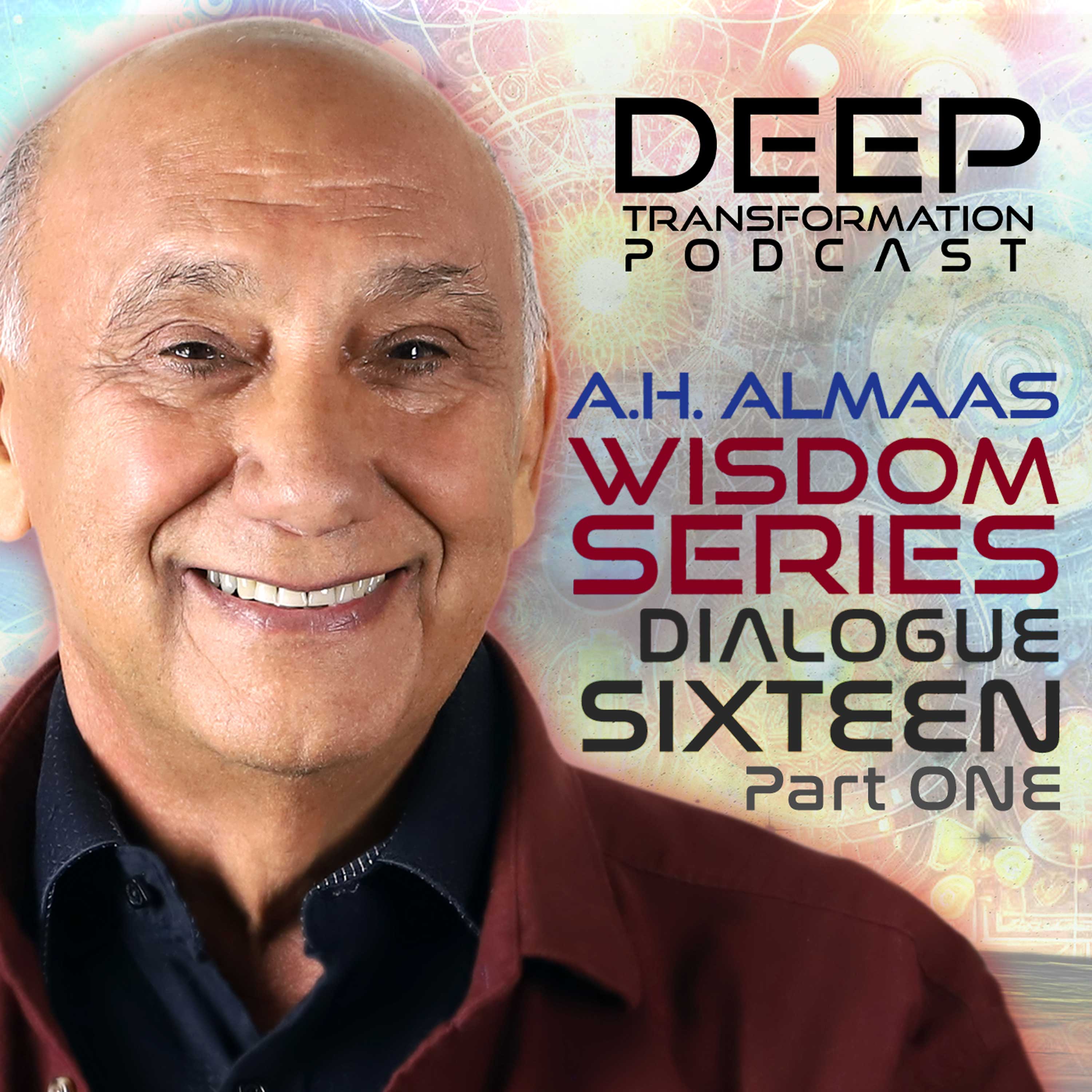
Finding Our True Home in the Absolute: Experiencing Intimacy with Everything, with A. H. Almaas

Ep. 214 (Part 2 of 2) | Part 2 of the 16th dialogue of the A. H. Almaas Wisdom Series takes us on a sweet journey farther into our exploration of the nature of the absolute. Hameed Ali discusses the paradox of the absolute, being both source and cessation of all things, the nonduality of emptiness and beingness, these being two sides of the same coin, and explains why many nondual teachings do not touch upon the absolute. He makes sense of the difficult-to-fathom concept of pure emptiness, explaining that the absolute’s nature is absence—in contrast with presence—and relates that Mystery is the essence of the absolute, the fundamental essence of the nature of reality. “We are never going to know where it’s at, what’s happening, what life is about,” he laughs. Our knowledge is but “small islands in the vast ocean of mystery we live in;” mystery cannot be eliminated. In the absolute, the soul finds its final resting place, Hameed tells us. The absolute is our true home—the essence of the meaning of home. All humans are searching for their true home, Hameed says, and they search in many places. But here the search is over. Reflections of the absolute bring us closer to love, like when we are in love, Hameed continues. Being in love with an outer beloved brings us closer to the inner beloved and we see deeper. “The absolute is total intimacy, Hameed finishes. “In the absolute we are intimate with everything.” How do we express this in the world, in our ordinary lives? “It becomes very simple,” Hameed says. “The absolute is the essence of simplicity—so simple, even though there is a profundity…” Recorded October 9, 2025. “You don’t have to experience the absolute to know nonduality.” ​ Topics & Time Stamps – Part 2 Emptiness is nondual with consciousness, two sides of the same thing (01:03) Many nondual teachings don’t talk about the absolute (02:50) You don’t have to experience the absolute to know nonduality (03:32) There’s no sense of individual self, but some teachings take the absolute as the ultimate Self (04:52) Making sense of pure emptiness: the absolute’s nature is absence—in contrast with presence (09:47) The absolute is the essence of mystery (12:59) Experiencing all phenomena as projections of the absolute (13:57) The absolute reveals that true nature itself is unmanifest (17:58) Mystery is the nature of the absolute; the absolute IS mystery (19:08) The absolute is the extreme limit of purity; the heart empty of everything except the love of God (23:13) We live in an ocean of mystery; what we know are little islands (25:07) The search ends in the absolute; the soul is home (27:32) Reflections of the absolute bring us closer to love, like when we are in love (32:28) The absolute can pour itself into a manifest being expressing itself in the world: beyond realization to actualization (33:46) The absolute is the essence of simplicity, even though there is a profundity… (35:23) The absolute is total intimacy; we are intimate with everything (38:28) Resources & References – Part 2 A. H. Almaas (Hameed Ali), founder of The Ridhwan School, home of The Diamond Approach A. H. Almaas, The Inner Journey Home: Soul’s Realization of the Unity of Reality Stanislav Grof writes about the plenum void in Beyond the Brain: Birth, Death, and Transcendence in Psychotherapy Sri Nisargadatta Maharaj, I Am That Kashmir Shaivism Longchenpa: A Guide For Readers (Shambhala) Samaneri Jayasāra’s YouTube readings: The Wisdom of the Masters Samaneri Jayasāra on the Deep Transformation podcast: Creating Priceless Gifts of Wisdom Huston Smith’s autobiography, Tales of Wonder: Adventures Chasing the Divine The Ten Ox Herding Pictures from the Zen tradition Isaac Newton, “… to myself I seem to have been only like a boy playing on the sea-shore…” The A. H. Almaas Wisdom Series will generally follow the sequence of Hameed’s magnum opus, The Inner Journey Home (which John describes as psychoactive and spiritually, psychologically, and intellectually transformative), so listeners may want to get a copy of this book, to study and follow along on this exhilarating path of awakening. --- Hameed Ali (A. H. Almaas) was born in Kuwait in 1944. At the age of eighteen, he moved to the U.S. to study at the University of California in Berkeley. Hameed was working on his Ph.D. in physics when he reached a turning point in his life and destiny that led him to inquire into the psychological and spiritual aspects of human nature rather than the physical nature of the universe. He left the academic world to pursue an in-depth journey of inner discovery, applying his scientific precision and discipline to personal, experiential research. This included study with different teachers in different modalities, extensive reading, and continuous study of his own consciousness in an effort to understand the essential nature of human experience and reality in general. Hameed’s process of exploration led to the creation of the Ridhwan School and, with his colleague Karen Johnson, resulted in the founding and unfoldment of the Diamond Approach. He is the author of 20 books, including Nondual Love: Awakening to the Loving Nature of Reality, Love Unveiled: Discovering the Essence of the Awakened Heart, Keys to the Enneagram: How to Unlock the Highest Potential of Every Personality Type, The Unfolding Now: Realizing Your True Nature through the Practice of Presence, and more. --- Podcast produced by Vanessa Santos and Show Notes by Heidi Mitchell

40 minAbspielen in:

Do18Dez 25
Deep TransformationAH

A. H. AlmaasGast

Into the Absolute: At One with the Radiant Source of All, with A. H. Almaas (Part 1)

Ep. 213 (Part 1 of 2) | The 16th dialogue of the A. H. Almaas Wisdom Series is about the absolute, the source dimension of all manifestation, deeper than any other dimension, the vastness beyond vastness. In Part 1, Hameed gives a wonderful description of the majesty and the blackness of the absolute, and tells the story of when he first experienced being one with the absolute himself. When Roger Walsh asks him, what are the doorways to the absolute, Hameed talks about mystical poverty and also the way of the heart. “When the true beloved shines through the heart, it’s an amazing ecstasy… a mindblowing kind of beauty,” he says. He discusses the fear people often feel as they approach cessation of all perception, and the need for the basic trust we were born with (which often gets clobbered as we grow up) to proceed. What changes after an experience of the absolute? John Dupuy asks. If one abides in this realization, it cleanses the soul of all impurities, and our action embodies the virtues, Hameed answers. In Part 2, which will be released December 25th, Hameed delves into the paradox of the absolute (the absolute is the elimination, the annihilation, the cessation of all things—and the source of all things), the nonduality of emptiness and awareness, and explains that mystery is the essence of the absolute: the absolute IS mystery, he says. There is laughter all around when Hameed says you can never completely “get” it, because there’s nothing there to get! Your mind disappears as you’re trying to get it. Towards the end, the conversation relaxes so deeply into the subject of the absolute, you can just about feel its presence. We become intimate with everything in the absolute, Hameed says. It is the soul’s final resting place, our true home, where the search ends. Recorded October 9, 2025. “The absolute itself is majesty, and the universe that emerges is beauty.” Topics & Time Stamps – Part 1 Introducing dialogue #16 in the A.H. Almaas Wisdom Series, focusing on the source dimension, the apex of Hameed’s book The Inner Journey Home (00:41) “By simply witnessing the process of manifestation… the soul experiences itself as a vast silent witness… discovering a dimension deeper than any other, the absolute” (02:18) Being the absolute, one experiences an emptiness so empty there is no sensation (05:29) Cessation of perception, as the Buddha called it, was exactly Hameed’s experience (09:57) Neglected teachings of Nisargadatta: awareness that is not aware of itself can be experienced as “rock-like” (11:26) The story of Hameed’s first experience of the absolute (15:19) Is the absolute the destination? What is cessation? Is it the same as the absolute? (16:47) What changes after an experience of the absolute? (21:00) The absolute is majesty, the universe that emerges is beauty (23:18) The flowering of virtues follows true realization (24:24) The spiritual path has two sides: knowing who you are and living it (26:03) Moving towards cessation, people feel terror (26:53) Trust is essential; the more we are loved as an infant, the more we trust (28:25) What are the doorways into the realization of the absolute? (32:02) Mystical poverty is one doorway; the recognition that the soul has nothing of its own—it all comes from the Source (35:29) There is also the way of the heart, finding the true beloved within (38:03) Resources & References – Part 1 A. H. Almaas (Hameed Ali), founder of The Ridhwan School, home of The Diamond Approach A. H. Almaas, The Inner Journey Home: Soul’s Realization of the Unity of Reality A. H. Almaas, The Inner Beloved: The Heart’s Journey to Divine Unity Ramana Maharshi, Hindu sage and liberated being Dzogchen’s dharmakāya The black light in Sufism (see Henry Corbin’s The Man of Light in Iranian Sufism and others) Sri Nisargadatta Maharaj, I Am That, “I am rock-like; awareness that is not aware of itself” Advaita Vedanta St. John of the Cross talks about black light in The Dark Night of the Soul Erik Erikson, Childhood and Society : The Landmark Work on the Social Significance of Childhood Ibn Arabi, Sufi mystic, poet, philosopher, “… look for me in the heart of my lovers” The A. H. Almaas Wisdom Series will generally follow the sequence of Hameed’s magnum opus, The Inner Journey Home (which John describes as psychoactive and spiritually, psychologically, and intellectually transformative), so listeners may want to get a copy of this book, to study and follow along on this exhilarating path of awakening. --- Hameed Ali (A. H. Almaas) was born in Kuwait in 1944. At the age of eighteen, he moved to the U.S. to study at the University of California in Berkeley. Hameed was working on his Ph.D. in physics when he reached a turning point in his life and destiny that led him to inquire into the psychological and spiritual aspects of human nature rather than the physical nature of the universe. He left the academic world to pursue an in-depth journey of inner discovery, applying his scientific precision and discipline to personal, experiential research. This included study with different teachers in different modalities, extensive reading, and continuous study of his own consciousness in an effort to understand the essential nature of human experience and reality in general. Hameed’s process of exploration led to the creation of the Ridhwan School and, with his colleague Karen Johnson, resulted in the founding and unfoldment of the Diamond Approach. He is the author of 20 books, including Nondual Love: Awakening to the Loving Nature of Reality, Love Unveiled: Discovering the Essence of the Awakened Heart, Keys to the Enneagram: How to Unlock the Highest Potential of Every Personality Type, The Unfolding Now: Realizing Your True Nature through the Practice of Presence, and more. --- Podcast produced by Vanessa Santos and Show Notes by Heidi Mitchell
43 minAbspielen in:

Do11Dez 25
Deep TransformationMB

Maurizio BenazzoZaya BenazzoGast

Exposing Injustice & Suffering in Palestine & Around the World with Filmmakers Zaya & Maurizio Benazzo

Ep. 212 (Part 2 of 2) | In Part 2 of the compelling conversation with SAND founders Zaya and Maurizio Benazzo, the discussion turns to the making of their 2021 documentary film about the tragic injustices inflicted upon Palestinians in the West Bank. Where Olive Trees Weep is a very beautiful, heartbreaking, and eye opening film we highly recommend to our listeners. “How do we stop the violence?” asks co-host John Dupuy. No one knows the answer, but “each of us can find a way to alleviate the suffering in Palestine now as we grapple with the question of how to stop the wounds that continue to bleed,” Zaya and Maurizio contend. “We can stand for justice, food, and human rights, recognize the dignity of Palestinians and fight for their freedom.” Spiritual communities are mostly quiet on this issue, Zaya mentions. But “it’s not a political issue,” she says, “it’s a human issue—we are losing our humanity. If we believe in oneness, we need to face our discomfort and turn towards the pain, towards the suffering. Discomfort is the very essence of the issue on a psychological and archetypal level,” Zaya adds. Zaya and Maurizio are also working on a remarkable series of films called The Eternal Song, an ongoing project to bring forth teachings from Indigenous communities around the world. To date, they have released The Eternal Song, Mauri: The Vital Essence of All Beings, and most recently If an Owl Calls Your Name. Thank you, Zaya and Maurizio, for contributing your gifts in these stunning films, so poignant and important in these disconnected, turbulent times, and for sharing your extraordinary wisdom with our Deep Transformation listeners. Recorded October 16, 2025. “Opening to the darkness and the pain is the gift of this time. We are all one; we cannot continue to separate ourselves into our comfortable silos.” Topics & Time Stamps – Part 2 Making the 2021 film Where Olive Trees Weep, about the tragic mistreatment of Palestinians in the West Bank (00:58) Making films about the effects of colonization all over the world (04:36) The more hateful the emails Zaya & Mauriozio received, the more they answered & engaged (06:01) There are 80 years of history behind the conflict in Palestine; everywhere you look there’s injustice (06:57) Apartheid in Palestine is maybe more extreme than in South Africa (10:26) What can we do about Gaza now? Stand for justice, food & human rights, recognize the dignity of Palestinians & fight for their freedom (12:37) Netanyahu is not the problem, the system is rotten to the core (15:20) How do we stop the violence? (18:49) Acknowledging the beauty & power of Zaya & Maurizio’s Where Olive Trees Weep (20:37) The silence about Gaza in most spiritual communities: if we believe in oneness, we need to turn towards the suffering (25:38) Thanking Zaya & Maurizio for the film, and tales of the transformative effects of engaging with senders of hate mail (29:26) Zaya & Maurizio’s movie The Eternal Song came out in June 2025, but they are making many more films in Indigenous communities, like If an Owl Calls Your Name (link below) (34:10) Opening to the darkness and the pain is the gift of this time—we are all one, and we cannot continue to separate ourselves into our comfortable silos (37:57) Resources & References – Part 2 Zaya & Maurizio Benazzo, founders of the Science & Nonduality Conference The Wisdom of Trauma featuring Gabor Maté, produced by Zaya & Maurizio Benazzo Where Olive Trees Weep, produced by Zaya & Maurizio Benazzo Rabbi Lynn Gottlieb Meital Yaniv, Bloodlines Tara Brach, courageous spiritual teacher John Dupuy’s song, Ukraine! on YouTube The Eternal Song, produced by Zaya & Maurizio Benazzo Mauri: The Vital Essence of All Beings, produced by Zaya & Maurizio Benazzo If an Owl Calls Your Name, produced by Zaya & Maurizio Benazzo --- Maurizio and Zaya Benazzo merged their lifelong passions for science and mysticism when they met in 2007, and their first project together was filming the documentary Rays of the Absolute on the life and teachings of Sri Nisargadatta Maharaj. This project sparked their next level of creation and collaboration: SAND, a global community inspired by the timeless wisdom traditions, informed by modern science, and grounded in direct experience. Together they have produced and directed several award-winning documentaries including The Wisdom of Trauma, The Art of Life, Rays of the Absolute, Where Olive Trees Weep, Mauri, and If an Owl Calls Your Name. Zaya and Maurizio live, work, and play on the unceded ancestral lands of the Coast Miwok and Southern Pomo people, in Sebastopol, California. --- Podcast produced by Vanessa Santos and Show Notes by Heidi Mitchell

42 minAbspielen in:

Gäste, die länger als 12 Monate zurückliegen, gibt es mit Pro. Pläne ansehen