Giant Ideas invites leading minds from tech, business, politics, and beyond to explore the giant ideas changing our world. Giant Ventures, founded by Cameron McLain and Tommy Stadlen, backs purpose-driven founders shaping civilisation.
Is spying anything like what you seen on James Bond? Today, we're back with Sir John Sawers, the former chief of MI6 to talk about his life lessons.
John ran MI6 from 2009, brought back from the Foreign Office to rebuild trust in the service after Iraq. Tommy Stadlen and Cameron McLain talk to John about why James Bond wouldn't get through MI6 recruitment today and why he thinks the best spies tend to be quiet introverts. He takes them inside the Yemen operation where MI6 let a terrorist bomb plot run longer to gather intelligence, and explains how to make the most critical decisions in a short time.
He speaks about:
Why MI6 chiefs sign "C" in green ink (and wear the cufflinks to match)
Why Bond would fail the application today
Patience, low ego and the case for introverts in spycraft
Being a so-so intelligence officer and a much better C
Letting a bomb plot run (and how David Petraeus won over the Obama White House)
The law that lets MI6 do things that would otherwise be illegal
The best moment to recruit a spy
Three photographs, and why he isn't in two of them
Building a purpose driven company? Read more about Giant Ventures at www.Giant.vc.
Music credits: Bubble King written and produced by Cameron McLain and Stevan Cablayan aka Vector_XING.
Please note: The content of this podcast is for informational and entertainment purposes only. It should not be considered financial, legal, or investment advice. Always consult a licensed professional before making any investment decisions.
Blackouts, prepping, and honey traps - what is going on?
Sir John joins us today, having run the Secret Intelligence Service for five years during Barack Obama's presidency. In part one, Tommy Stadlen and Cameron McLain talk to him about the Nvidia spy allegations, why he was glad to see his wife heeded the Government's warnings to prep for an emergency, and why he believes America's old security guarantee won't come back, whoever wins the White House in 2028.
He speaks about:
Why the Russians use honey traps and MI6 doesn't
His thoughts on the Jensen Huang allegations
Russia's "warlike acts" across Europe, from an armed drone at Leipzig airport to a plot against Rheinmetall's CEO
What Finland can teach Britain about national resilience
Why he was glad his wife bought a wind-up radio
Why AI helps the defence more than the offence, and how you keep an agent hidden from facial recognition
The 80/20 intelligence partnership with the US (and British intelligence turning up in Obama's daily brief)
Xi, Putin, Trump and the return of spheres of influence
Building a purpose driven company? Read more about Giant Ventures at www.Giant.vc.
Music credits: Bubble King written and produced by Cameron McLain and Stevan Cablayan aka Vector_XING.
Please note: The content of this podcast is for informational and entertainment purposes only. It should not be considered financial, legal, or investment advice. Always consult a licensed professional before making any investment decisions.
How will you be remembered? Does it matter? Last week Roman made the case for long-term thinking across society. This time he shares what it looks like in your own life. Today, we’re back with Roman Krznaric, the public philosopher and author of The Good Ancestor, to talk about his life lessons.
Roman leads a short visualisation exercise you can try at home, explains why he thinks the legacy worth leaving has nothing to do with being remembered, and argues that caring about future generations makes you happier now.
He shares:
A live visualisation picturing a young person you love at their 90th birthday
Leaving something for strangers in the future, not a stadium with your name on it
Letting his 11-year-old twins take his vote
The empty chair now set out in council meetings across Quebec
Bill McKibben’s advice for individuals: be less of one
Regret analysis, and how carpe diem and long-term thinking fit together
Fearing death more with age, and what a Buddhist retreat taught him about the whirlpool of human existence...
Building a purpose driven company? Read more about Giant Ventures at www.Giant.vc.
Music credits: Bubble King written and produced by Cameron McLain and Stevan Cablayan aka Vector_XING.
Please note: The content of this podcast is for informational and entertainment purposes only. It should not be considered financial, legal, or investment advice. Always consult a licensed professional before making any investment decisions.
How can you be a better ancestor?
Today, we're joined by Roman Krznaric, the public philosopher and author of The Good Ancestor: How to Think Long Term in a Short-Term World.
Roman is a former Oxford political scientist-turned-gardener-turned-writer, whose ideas have been cited by Pakistan's Supreme Court and used to frame the EU's Green Deal. Tommy Stadlen talks to Roman about why he thinks we're doing terribly as ancestors, why he argues we've colonised the future, but why he believes the capacity for long-term thinking is already wired into our heads.
He speaks about:
The 7 trillion people who could be born over the next 50,000 years (and why that number should change how you think)
The daily fight between your marshmallow brain and your acorn brain
Victorian "sewer thinking" (London's sewers were built twice as big as needed, and they still work)
How the mechanical clock sliced up time and made us short-termist
Leaving academia to plant trees for £6.31 an hour
Japan's orange kimonos, where residents imagine they live in 2060
Why long-term thinking isn't good on its own
Companies giving future generations a legal seat on the board
Building a purpose driven company? Read more about Giant Ventures at www.Giant.vc.
Music credits: Bubble King written and produced by Cameron McLain and Stevan Cablayan aka Vector_XING.
Please note: The content of this podcast is for informational and entertainment purposes only. It should not be considered financial, legal, or investment advice. Always consult a licensed professional before making any investment decisions.
Today, we're back with Max Jaderberg, president of Isomorphic Labs, to talk about his life lessons.
After years at DeepMind working on deep learning, generative models and reinforcement learning, Max helped launch Isomorphic in 2021 to turn the promise of AlphaFold into new medicine. Cameron McLain and Tommy Stadlen talk to Max about why he rejected a consultancy contract to do a PhD at Oxford, and why he later left core AI research after writing a pro/con list on a whiteboard in his loft. He also explains how Isomorphic keeps a startup's hunger (even with Alphabet's backing), and what nearly 15 years of working with Demis Hassabis has taught him.
He speaks about:
Deciding what "superpower" his research could create
Whether DeepMind could ever have done it alone, without selling, and how Alphabet backs its investments
Keeping a startup culture, with a giant's backing
Why Isomorphic wanted a global investor base in its latest round
Trusting Demis Hassabis's vision (including an early Nobel Prize prediction he didn't believe)
Rejecting a job contract to do a PhD
Working 24/7 in his head, but making time for Counter-Strike - and needing plenty of sleep...
Building a purpose driven company? Read more about Giant Ventures at www.Giant.vc.
Music credits: Bubble King written and produced by Cameron McLain and Stevan Cablayan aka Vector_XING.
Please note: The content of this podcast is for informational and entertainment purposes only. It should not be considered financial, legal, or investment advice. Always consult a licensed professional before making any investment decisions.
Today, we're joined by Max Jaderberg, President of Isomorphic Labs.
Isomorphic Labs, the Alphabet-backed company spun out of DeepMind, is using AI to design new medicines, with the mission of solving all disease.
Tommy Stadlen and Cameron McLain talk to Max about why he believes no future exists where medicines aren't designed with AI, and why he'd be "severely disappointed" if disease doesn't mean something completely different 30 years from now.
He speaks about:
What "solve all disease" means in practice
How a medicine actually gets made today, and why it's "very, very fancy trial and error"
Why earlier AI drug discovery overpromised, and what AlphaFold changed
Why you can't download the data this field needs off the internet
The 90% clinical failure rate
Bio-resilience, bad actors, and why Isomorphic keeps its models in-house
Building a purpose driven company? Read more about Giant Ventures at www.Giant.vc.
Music credits: Bubble King written and produced by Cameron McLain and Stevan Cablayan aka Vector_XING.
Please note: The content of this podcast is for informational and entertainment purposes only. It should not be considered financial, legal, or investment advice. Always consult a licensed professional before making any investment decisions.
Today, we're joined by Steve Case, the co-founder of AOL, to talk about what the first internet boom can tell us about this one.
Steve started AOL in 1985, when 3% of people were online. He took it public in 1992 as the first internet company to list, and now runs Revolution, the firm behind Rise of the Rest and more than 200 investments across 100 American cities.
Cameron McLain talks to Steve about why AOL raised just $10 million over seven years (while today's AI companies are seeded with a billion), why he still thinks the Time Warner merger was the right call, and why he thinks AI needs to be very carefully deployed to avoid a revolution.
He speaks about:
The nine years it took AOL to reach a million users (ChatGPT took three months)
Arguing with IBM and Apple about whether to build modems into computers
Being 26 and taking on AT&T, GE and Microsoft with just $10 million
Whether he'd do the Time Warner merger again
The industries AI can't disrupt
Building a purpose driven company? Read more about Giant Ventures at www.Giant.vc.
Music credits: Bubble King written and produced by Cameron McLain and Stevan Cablayan aka Vector_XING.
Please note: The content of this podcast is for informational and entertainment purposes only. It should not be considered financial, legal, or investment advice. Always consult a licensed professional before making any investment decisions.
Today, we're joined by Eric Ries, the author of The Lean Startup and the founder of the Long-Term Stock Exchange.
Eric wrote the book that taught a generation of founders how to build under uncertainty, and he has spent the years since trying to fix what happens to those companies once they grow.
His new book, Incorruptible, is about a double mystery: why successful companies so often get ruined, and why a handful avoid that fate.
Tommy Stadlen and Cameron McLain talk to Eric about why he thinks the best practices of modern corporate governance destroy value, why he believes a strong founder is not enough to protect a company, and what he'd change about The Lean Startup if he could go back.
Building a purpose driven company? Read more about Giant Ventures at www.Giant.vc.
Music credits: Bubble King written and produced by Cameron McLain and Stevan Cablayan aka Vector_XING.
Please note: The content of this podcast is for informational and entertainment purposes only. It should not be considered financial, legal, or investment advice. Always consult a licensed professional before making any investment decisions.
Today, we're back with Michael Moritz, the Sequoia investor who backed Google, Yahoo and PayPal, to talk about his family and his latest book.
Moritz has written a memoir, Ausländer, out in the US this month. It began with papers found when they cleared out their mother's house in Wales, and grew into an account of how his grandparents were murdered and how his father got out during the Nazi Regime.
We talk to him about what he found in the archives, why he thinks a stable society is a much more fragile thing than most people assume, his experience of anti-semitism, and if he thinks Silicon Valley is befriending Trump (and what he thinks of the US president).
Building a purpose driven company? Read more about Giant Ventures at www.Giant.vc.
Music credits: Bubble King written and produced by Cameron McLain and Stevan Cablayan aka Vector_XING.
Please note: The content of this podcast is for informational and entertainment purposes only. It should not be considered financial, legal, or investment advice. Always consult a licensed professional before making any investment decisions.
Today, we're joined by Michael Moritz, the former chairman of Sequoia Capital, one of the most successful venture capitalists of all time.
Michael Moritz is a venture capitalist and philanthropist renowned for backing early tech giants like Google, PayPal, and YouTube during his 38-year career, first as Partner then Chairman of the firm.
Cameron McLain and Tommy Stadlen talk to Michael about why he thinks the first 16 years of a founder's life tell you more than you can find anywhere is, why he still wears the cap of the company that lost Sequoia more money than any other, and why he shivered every time anyone called Sequoia an institution.
He speaks about:
the phone call that brought Sequoia to Google
why he asks founders about their first 15 or 16 years
meeting the Collison brothers at 20 and 18, and what was obvious within minutes
why founding pairs make each other better
why Bill Gates took the radio taken out of his Mercedes
the $44m Webvan loss, and going back to the same idea 20 years later as Instacart
and lots more...
Building a purpose driven company? Read more about Giant Ventures at www.Giant.vc.
Music credits: Bubble King written and produced by Cameron McLain and Stevan Cablayan aka Vector_XING.
Please note: The content of this podcast is for informational and entertainment purposes only. It should not be considered financial, legal, or investment advice. Always consult a licensed professional before making any investment decisions.
Today, we're back for our FINAL episode before a 3 week summer break! We're back the first week of September.
Today we're joined by Qasar Younis, co-founder and CEO of Applied Intuition and former COO of Y Combinator, to talk about his life lessons & career advice.
He speaks about:
The rule he got from a Harvard professor: a mediocre person in a high-growth industry beats the best person in a mediocre one
The most useful advice of his career
Optimising for the people you'll learn from over title and pay (at any cost)
The four life-burners problem, and which one he switched off
Working seven days a week since he was 14, and what his routine is on the weekend
Why you can't become Nirvana by copying Kurt Cobain
The three eras of Y Combinator, and why the old YC wouldn't work today
"We Make Mistakes" — the only post he wrote as COO, and why it matters
Building a purpose driven company? Read more about Giant Ventures at www.Giant.vc.
Music credits: Bubble King written and produced by Cameron McLain and Stevan Cablayan aka Vector_XING.
Please note: The content of this podcast is for informational and entertainment purposes only. It should not be considered financial, legal, or investment advice. Always consult a licensed professional before making any investment decisions.
Today, we're joined by Qasar Younis, co-founder and CEO of Applied Intuition, a physical AI company valued at $15 billion that builds the models and simulation tools behind autonomous vehicles, defence systems, and industrial machines (before this, he was COO of Y Combinator).
Tommy Stadlen talks to Qasar about why he thinks physical AI will define the next 25 years, and why Applied's ability to run the same models across cars, drones, and construction equipment is its biggest edge. They also get into how he thinks about fundraising and cap tables, and why he says not all money is equally useful.
He speaks about:
Why Applied Intuition has never spent a dollar of the ~$1 billion raised
Corporate VCs, multi-stage funds, and why the partner matters more than the firm name
Why 85% of the global economy is physical (and why that's the real AI opportunity)
Neural simulation, and how Applied trains one model to work in a car, a drone, and a tank
Why timing is the hardest thing for founders to get right
Why he's not worried about self-driving safety
The billion-machine vision (and why he still drives a 1987 manual Land Cruiser)
Enjoy!
Building a purpose driven company? Read more about Giant Ventures at www.Giant.vc. Music credits: Bubble King written and produced by Cameron McLain and Stevan Cablayan aka Vector_XING.
Please note: The content of this podcast is for informational and entertainment purposes only. It should not be considered financial, legal, or investment advice. Always consult a licensed professional before making any investment decisions.
Building a purpose driven company? Read more about Giant Ventures at www.Giant.vc.
Music credits: Bubble King written and produced by Cameron McLain and Stevan Cablayan aka Vector_XING.
Please note: The content of this podcast is for informational and entertainment purposes only. It should not be considered financial, legal, or investment advice. Always consult a licensed professional before making any investment decisions.
Today, we're back with Fareed Zakaria, the host of CNN's Fareed Zakaria GPS, to talk about his lessons about how to do a great interview.
Fareed Zakaria has interviewed people from presidents, dictators, and the Dalai Lama over three decades, live on air. Tommy Stadlen and Cameron McLain talk to Zakaria about the craft behind those conversations: why he treats an interview as seduction rather than confrontation, why Lee Kuan Yew is the most impressive guest he's ever had, and why the Dalai Lama was a tough interview.
He speaks about:
Why he avoids confrontation and treats interviews as seduction instead
The Omar Bartov interview, and why he thinks a soft question made the conversation deeper than an accusation would have
Why he rarely books politicians in power anymore (and regrets it most times he has)
Lee Kuan Yew turning a "polyglot population" into a nation with no race riots
Why the Dalai Lama was his hardest interview
What AI leaves for humans once it becomes the better "analytic machine"
Why he doubts there will be another CNN
Building a purpose driven company? Read more about Giant Ventures at www.Giant.vc.
Music credits: Bubble King written and produced by Cameron McLain and Stevan Cablayan aka Vector_XING.
Please note: The content of this podcast is for informational and entertainment purposes only. It should not be considered financial, legal, or investment advice. Always consult a licensed professional before making any investment decisions.
Today, we're joined by Fareed Zakaria, host of CNN's flagship foreign affairs show and author of The Post-American World.
Cameron McLain and Tommy Stadlen talk to Fareed about what the world could look like in 2040: why he believes the American-led order built in 1945 is dissolving, why he argues liberal democracy's issues are cultural rather than economic, and why he still thinks a coalition of the US, Europe, Japan, Korea, Singapore and India could keep a rules-based order alive.
Building a purpose driven company? Read more about Giant Ventures at www.Giant.vc.
Music credits: Bubble King written and produced by Cameron McLain and Stevan Cablayan aka Vector_XING.
Please note: The content of this podcast is for informational and entertainment purposes only. It should not be considered financial, legal, or investment advice. Always consult a licensed professional before making any investment decisions.
Today, we're back with Alex Bouaziz, co-founder and CEO of Deel, to talk about his life lessons.
Alex Bouaziz is the co-founder and CEO of Deel, the global payroll and HR platform he's grown from zero to a $17 billion business in just a few years. Tommy Stadlen talks to Alex about the mindset behind building Deel, from why he calls himself a "wartime CEO" to how a chance encounter on Reddit led to his first hire. Alex opens up about running the business alongside his father, why he thinks his generation's gaming habits made remote-first culture feel normal rather than crazy, and the moment of seeing Deel's logo on Arsenal shirts around London.
Building a purpose driven company? Read more about Giant Ventures at www.Giant.vc.
Music credits: Bubble King written and produced by Cameron McLain and Stevan Cablayan aka Vector_XING.
Please note: The content of this podcast is for informational and entertainment purposes only. It should not be considered financial, legal, or investment advice. Always consult a licensed professional before making any investment decisions.
Today, we're joined by Alex Bouaziz, co-founder and CEO of Deel, the global HR and payroll platform now serving companies across 150+ countries with more than $1 billion in annual revenue.
Tommy Stadlen talks to Alex about how Deel became the fastest startup to reach $100M in recurring revenue: and why that record came down to one thing: following customers. Alex explains why Deel launched with contractors when everyone else went after employees, how they carried the intensity of Y Combinator all the way to a billion-dollar business, and why their M&A strategy (13 acquisitions in six years) has been one of their most underrated growth levers.
He speaks about:
The YC "time chamber" mindset they still run the company on
Why speed of execution matters - and why comfort in any department is a warning sign
Why hiring A players is less about finding them, and more about NOT lowering the bar when you're desperate to hire
What most people miss about the Deel M&A strategy (and how they keep founders motivated years after acquisition)
The case for brand marketing at the enterprise stage, and what Arsenal taught him about community
Why being a remote company selling to remote companies is an unfair advantage
And lots more!
Building a purpose driven company? Read more about Giant Ventures at www.Giant.vc.
Music credits: Bubble King written and produced by Cameron McLain and Stevan Cablayan aka Vector_XING.
Please note: The content of this podcast is for informational and entertainment purposes only. It should not be considered financial, legal, or investment advice. Always consult a licensed professional before making any investment decisions.
Today, we're joined by Toyin Ajayi, co-founder and CEO of Cityblock Health and a former doctor who trained in the NHS before taking on the US healthcare.
Toyin built Cityblock to serve people on Medicaid. The company is now around $1.5bn in annual revenue, with 150,000 members across 11 states. Tommy Stadlen talks to her about her giant idea, value-based care: why she thinks paying doctors for procedures instead of real outcomes is the root of America's healthcare crisis, why the patients who need care most are the least likely to walk into a clinic, and why she believes AI poured onto the wrong business model will do real damage.
She speaks about:
Why "value-based care" is the worst brand for one of the biggest ideas in healthcare
The first Cityblock patient, an elderly, partially blind man living in a Brooklyn basement
Why fee-for-service ends up paying more for the amputation than for keeping someone safe at home
The ~140 million Americans on Medicaid and Medicare, and the market everyone missed
How AI is pushing the marginal cost of a patient interaction close to zero
Why most healthcare AI dollars are making the system more expensive, not better
Growing up in Nairobi during the AIDS epidemic, and the UN moment that outraged her and still drives her
NHS vs US healthcare - and the one-line answer to which she'd choose...
Building a purpose driven company? Read more about Giant Ventures at www.Giant.vc.
Music credits: Bubble King written and produced by Cameron McLain and Stevan Cablayan aka Vector_XING.
Please note: The content of this podcast is for informational and entertainment purposes only. It should not be considered financial, legal, or investment advice. Always consult a licensed professional before making any investment decisions.
Today, we're joined by Tony Fadell, the inventor of the iPod and co-inventor of the iPhone. Tony is the founder of Nest (the smart thermostat acquired by Google) and the New York Times best-selling author of Build: An Unorthodox Guide to Making Things Worth Making.
In this second episode, Tommy Stadlen talks to Tony about his years working alongside Steve Jobs and what he's learned about building a career, why he thinks saying "no" is the most underrated skill in product, and why giving credit away is the thing most leaders get wrong.
He speaks about:
what Steve Jobs was truly great at, and the one thing he was bad at
the two types of assholes, and how to tell ego from mission
why giving credit to your team is the most joyful part of leading
hustling his way into General Magic with seven months of letters and cold calls
chasing heroes instead of brands early in your career
why the best mentors (like Bill Campbell) know people, not tech
the General Magic crash at 25 that taught him to stay grounded
Building a purpose driven company? Read more about Giant Ventures at www.Giant.vc.
Music credits: Bubble King written and produced by Cameron McLain and Stevan Cablayan aka Vector_XING.
Please note: The content of this podcast is for informational and entertainment purposes only. It should not be considered financial, legal, or investment advice. Always consult a licensed professional before making any investment decisions.
Today, we're joined by Tony Fadell, inventor of the iPod, co-inventor of the iPhone, and founder of Nest, acquired by Google. He's also the New York Times bestselling author of Build: An Unorthodox Guide to Making Things Worth Making, and has invested in over 100 companies working across AI, surgery, textiles, and drug discovery.
Tommy Stadlen talks to Tony about why Apple was so close to collapse when it bet on the iPod, why no single AI device will replace the smartphone, and the two-year internal standoff with Steve Jobs that a Wall Street Journal reviewer ended without knowing...
He also speaks about:
Why Apple had less than 1% market share and $500M in debt when they gambled on the iPod
"Stay beginner": why great product teams design as if they've never seen the product before
"Virus of doubt": the Nest approach to making people notice what they'd stopped seeing
Why the iPhone was really three devices you already owned, merged into one
General Magic: building the iPhone concept 15 years too early (and what that tells you about timing)
Why companies (and people) only change when they're close to dying
Why no single AI device will replace your phone...
Building a purpose driven company? Read more about Giant Ventures at www.Giant.vc.
Music credits: Bubble King written and produced by Cameron McLain and Stevan Cablayan aka Vector_XING.
Please note: The content of this podcast is for informational and entertainment purposes only. It should not be considered financial, legal, or investment advice. Always consult a licensed professional before making any investment decisions.
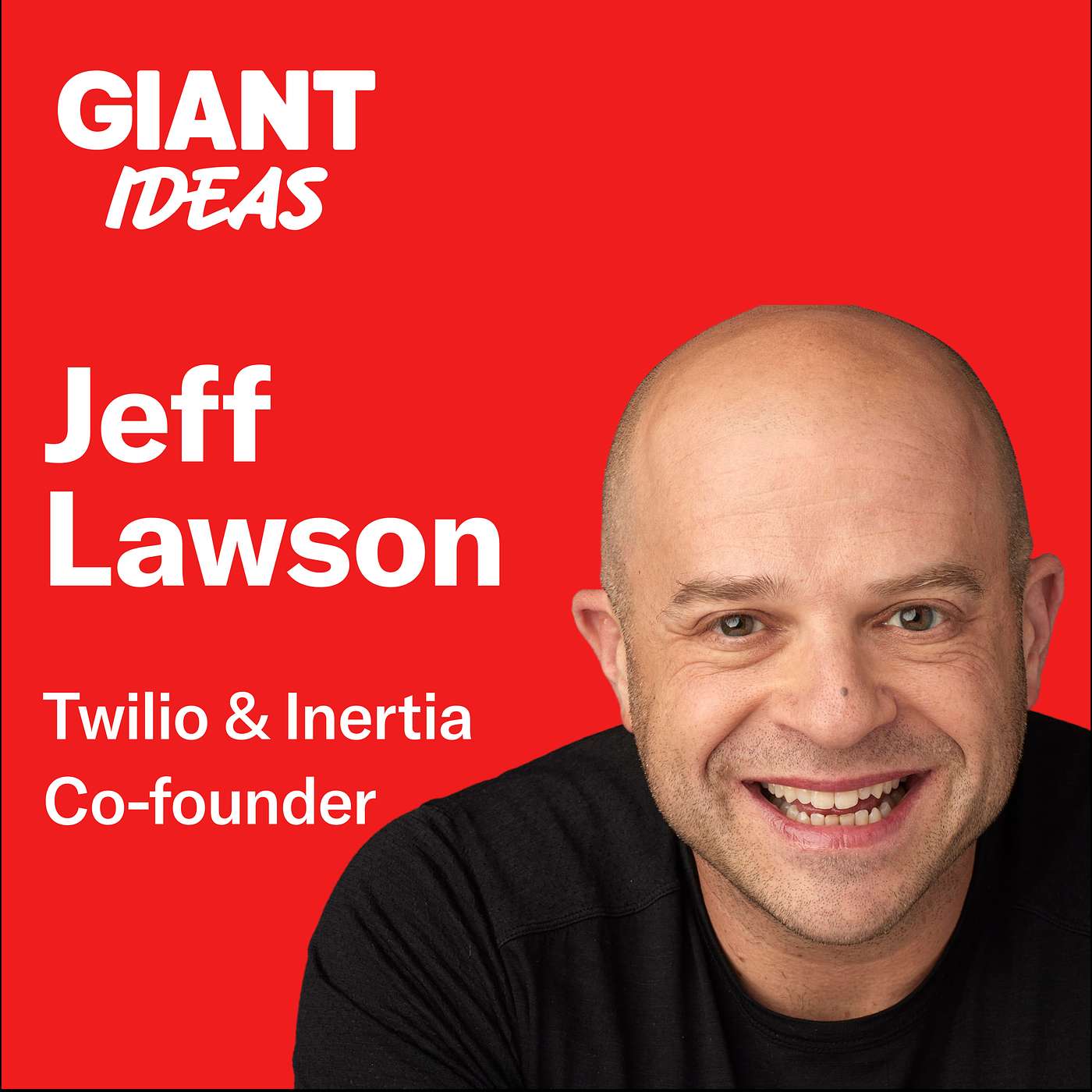
Today, we're joined by Jeff Lawson - co-founder of Twilio and now founder of Inertia, a fusion energy company commercialising the Lawrence Livermore fusion breakthrough (the first experiment to produce more energy from fusion than it consumed.)
Cameron McLain talks to Jeff about why he thinks the barriers to fusion are manufacturing problems, not physics problems, what a 10-15 year timeline to grid energy actually looks like, and why he thinks SaaS is heading for a structural reckoning.
He speaks about:
Why the Lawrence Livermore breakthrough proved the physics works.
Why the two commercial barriers are cost problems, not technical problems.
For almost 100 years, fusion was '3 decades away' because nobody knew if it could work. But now it can work, the question is commercialisation.
Why fusion and solar will win together. In 50 years, Jeff expects the grid to run on two sources: solar-plus-battery and fusion.
How to make Agile work in hardware (and why the Gantt chart is a lie!)
Why SaaS has an innovator's dilemma in the AI age.
Why infrastructure companies win when the world is building.
Why storytelling runs through everything: fundraising, hiring, selling.
Building a purpose driven company? Read more about Giant Ventures at www.Giant.vc.
Music credits: Bubble King written and produced by Cameron McLain and Stevan Cablayan aka Vector_XING.
Please note: The content of this podcast is for informational and entertainment purposes only. It should not be considered financial, legal, or investment advice. Always consult a licensed professional before making any investment decisions.
Please note: The content of this podcast is for informational and entertainment purposes only. It should not be considered financial, legal, or investment advice. Always consult a licensed professional before making any investment decisions.
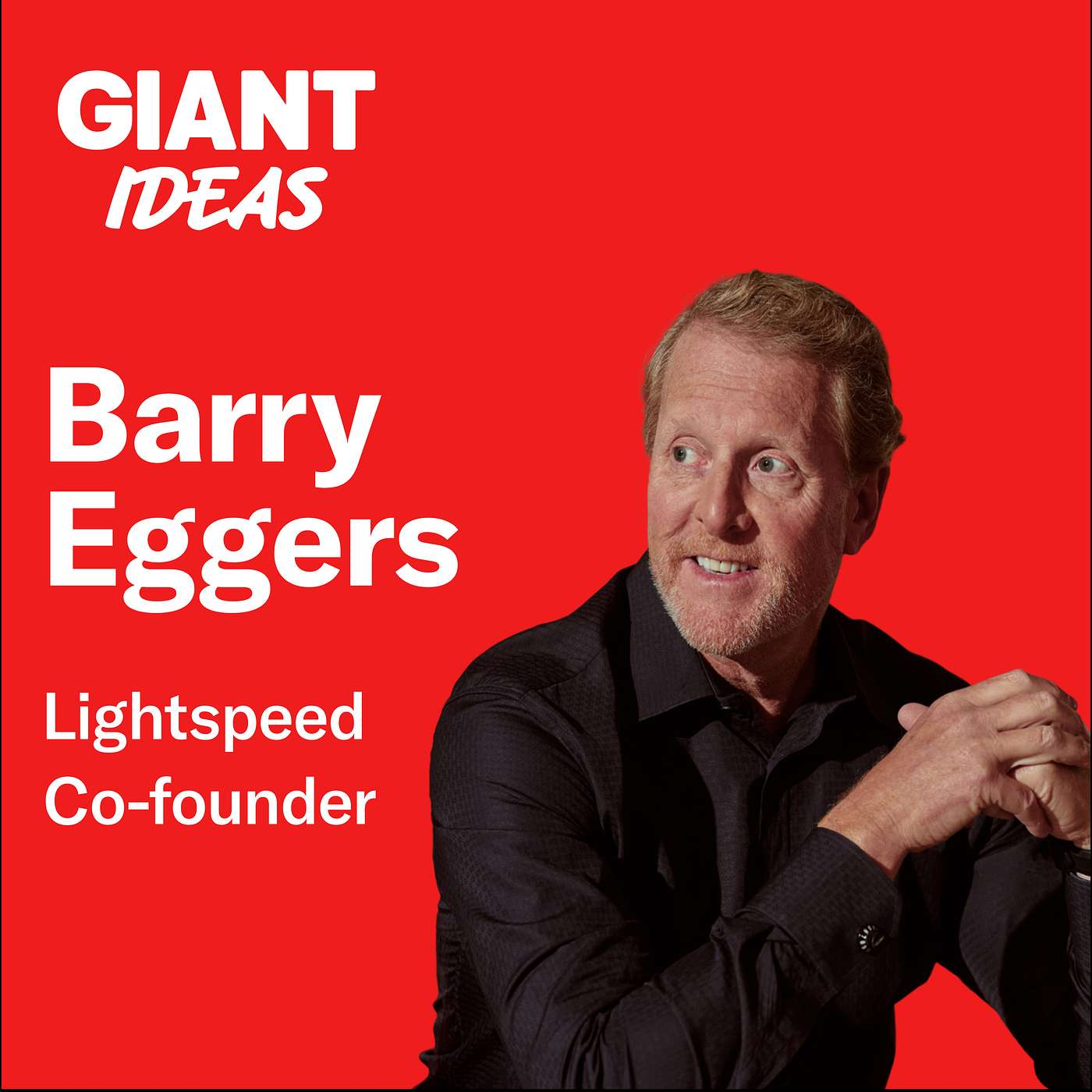
In this episode, Cameron McLain sits down with Barry Eggers, co‑founder of Lightspeed Venture Partners (≈$40B AUM), to decode what’s really happening in today’s venture market. From trillion‑dollar IPOs and billion‑dollar seed rounds to AI, robotics, and space, Barry explains why he thinks this moment isn’t just another bubble...
Barry shares how Lightspeed grew from a $475M first fund to a global platform, why the real edge in venture is being early and decisive, and why he believes intelligence is becoming commoditised while EQ and judgment become the ultimate differentiators, and why family matters most.
Key Insights:
Venture has split in two: a small slice of traditional early‑stage builders and a massive pool of quasi‑public investors.
Billion‑dollar seed rounds can make sense when you’re backing teams going after markets that can compound to the trillion‑dollar scale.
AI is making intelligence abundant, shifting value to founders and investors with superior EQ, judgment, and speed of decision‑making.
The real error in venture is missing generational companies because of price.
Lightspeed's secrets to success, and why family and life experiences matter most.
Building a purpose driven company? Read more about Giant Ventures at www.Giant.vc.
Music credits: Bubble King written and produced by Cameron McLain and Stevan Cablayan aka Vector_XING.
Please note: The content of this podcast is for informational and entertainment purposes only. It should not be considered financial, legal, or investment advice. Always consult a licensed professional before making any investment decisions.
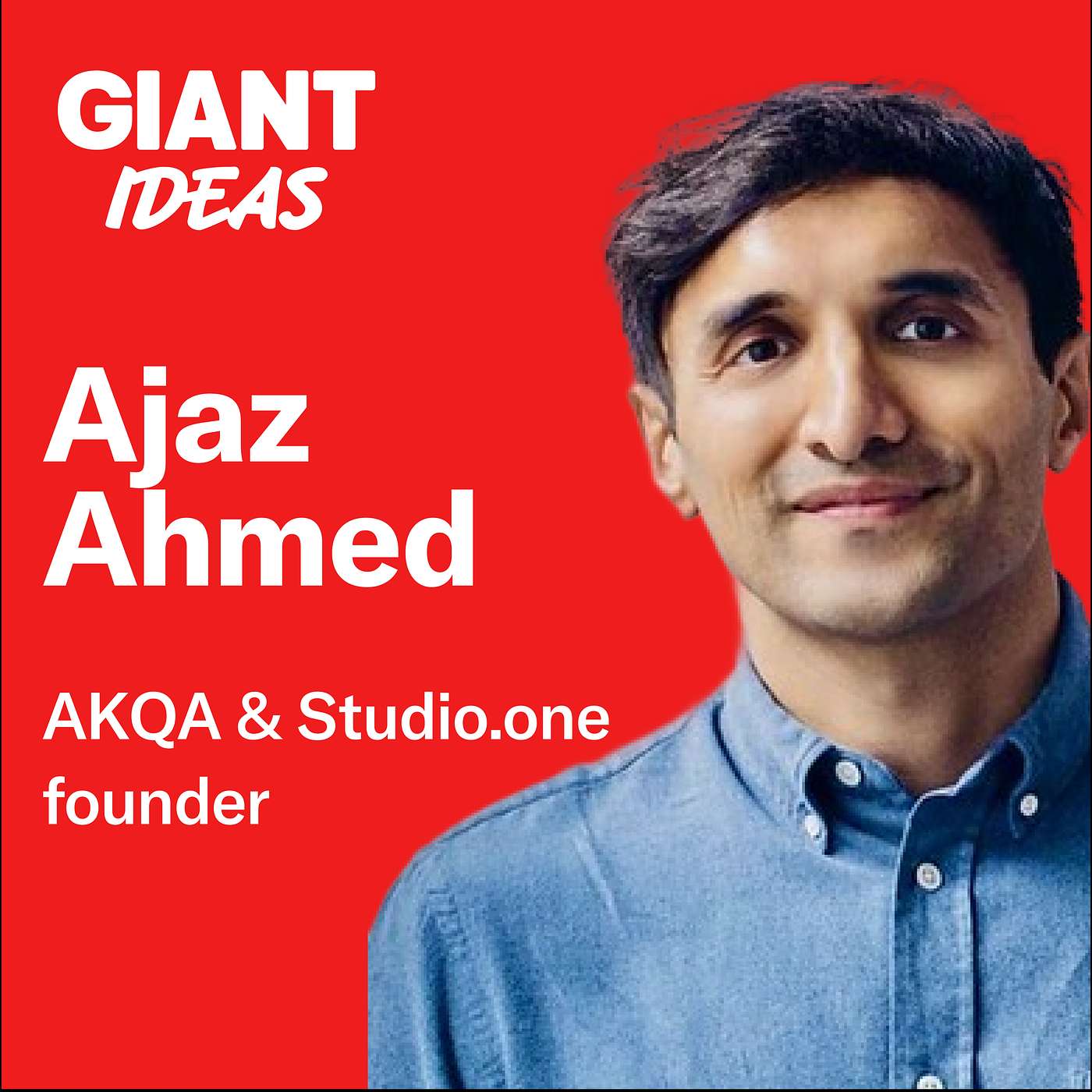
On this episode of Giant Ideas, Tommy sits down with Ajaz Ahmed, founder of AKQA and now Studio.One, to decode what truly iconic brands have in common — from Nike, Apple and Disney to Gymshark, and how founders can learn from them.
Ajaz argues that “great brands are great storytellers” with a clear desire to right a wrong in the world. He shares lessons from two decades with Nike, why authenticity and category focus still win, and how founders racing from zero to billions can build brands that feel both familiar and radically new.
Plus, more on his new project Studio.One: an antidote to “multi‑mediocrity” with ownership for everyone, and work that earns its place in culture.
Building a purpose driven company? Read more about Giant Ventures at www.Giant.vc.
Music credits: Bubble King written and produced by Cameron McLain and Stevan Cablayan aka Vector_XING.
Please note: The content of this podcast is for informational and entertainment purposes only. It should not be considered financial, legal, or investment advice. Always consult a licensed professional before making any investment decisions.
Why did Wikipedia stay donation-funded and ad-free while OpenAI raced toward billions in GPU spend and a hybrid for‑profit model? In this episode, Jimmy Wales joins Tommy and Cameron to unpack how business models factor in truth, trust, and the future of knowledge online.
Jimmy explains why he has no regrets about keeping Wikipedia a nonprofit, what he’s learned from two decades of volunteer-driven knowledge creation, and how AI changes the way we’ll all consume information.
Key points:
Nonprofit vs OpenAI’s model – Why Wikipedia could bootstrap on donations while frontier AI can’t be built as a pure charity.
Incentives and integrity – How avoiding ads and clickbait helps Wikipedia stay mission-driven and globally focused.
Human motivation – Why Muppet Wiki and gaming wikis prove passion and recognition beat “$1 per article” content farms every time.
Neutrality and bias – How Wikipedians work towards a neutral point of view, and why he doesn't believe it's “Woke‑ipedia”
Trust and hallucinations in AI – Jimmy’s “Kate Garvey test” for new models
Wikipedia in the AI era – From being core training data (next to Reddit) to losing “quick answer” traffic as AI summaries take over.
Building a purpose driven company? Read more about Giant Ventures at www.Giant.vc.
Music credits: Bubble King written and produced by Cameron McLain and Stevan Cablayan aka Vector_XING.
Please note: The content of this podcast is for informational and entertainment purposes only. It should not be considered financial, legal, or investment advice. Always consult a licensed professional before making any investment decisions.
Baiju Bhatt, the co-founder & CEO of Robinhood, has a vision that the Earth will one day be like Saturn - with rings in outer space.
Baiju's latest company is Aetherflux: building solar panels in space, with energy harvested continuously from the sun, and transmitting it back to Earth or directly to AI infrastructure in orbit, via laser.
The economics of space-based energy are becoming interesting, and the target metric is straightforward: get cost per GPU hour competitive with Earth. Baiju thinks there's a real path there within five to seven years.
In this episode:
- Why AI made space energy suddenly viable
- The case for and against space-based data centres
- What the commercial space economy looks like right now
- How a physics student ended up building one of the most ambitious infrastructure companies on the planet
- His love for building cars
- Why Steve Jobs had a huge impact on his career
And lots more! Part II coming next week on his lessons from Robinhood.
Building a purpose driven company? Read more about Giant Ventures at www.Giant.vc.
Music credits: Bubble King written and produced by Cameron McLain and Stevan Cablayan aka Vector_XING.
Please note: The content of this podcast is for informational and entertainment purposes only. It should not be considered financial, legal, or investment advice. Always consult a licensed professional before making any investment decisions.
In episode two with former US Surgeon General Vivek Murthy, he reflects on the hidden epidemic of loneliness through the story of his own life.
Moving from a tight‑knit immigrant family, to the healing power of nature, to the weight of taking the oath as Surgeon General, he shares how meaning and resilience are rooted in relationships rather than status or achievement.
Vivek shares how forming a Moai (a small, committed circle of friends) transformed his life, why success in any career is ultimately relational, and how we can build connection (without relying on alcohol as a social crutch)...
Vivek Murthy has just released a new Substack! Check it out here: https://vivekmurthy.substack.com/
Building a purpose driven company? Read more about Giant Ventures at www.Giant.vc.
Music credits: Bubble King written and produced by Cameron McLain and Stevan Cablayan aka Vector_XING.
Please note: The content of this podcast is for informational and entertainment purposes only. It should not be considered financial, legal, or investment advice. Always consult a licensed professional before making any investment decisions.
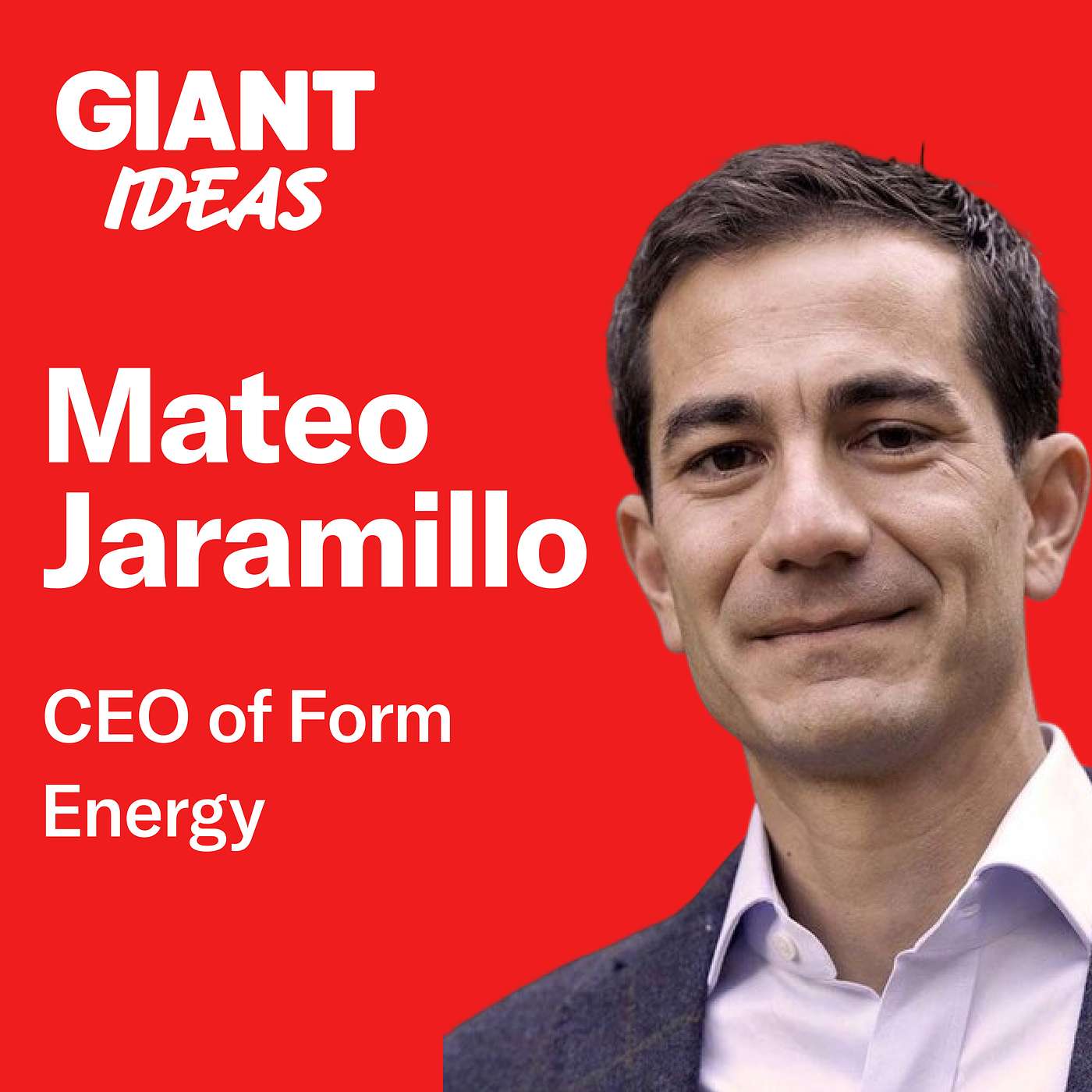
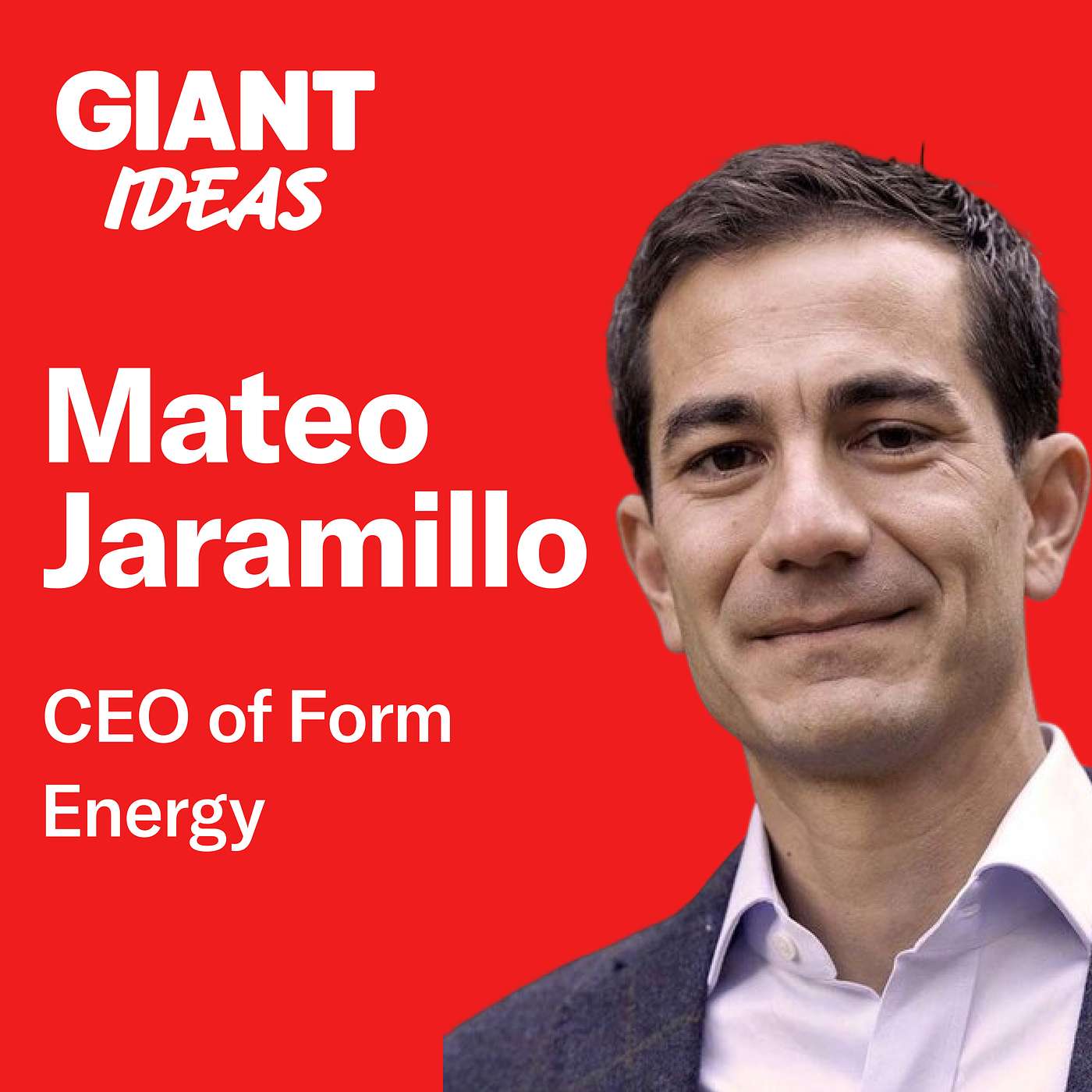
Cameron sits down with Mateo Jaramillo, the former Tesla exec building one of the most ambitious climate companies in the world: Form Energy. In this bonus episode, they dive into WHY he started the company, why one challenge coin in West Virginia changed everything, the three photographs that defined his life so far...
Building a purpose driven company? Read more about Giant Ventures at www.Giant.vc.
Music credits: Bubble King written and produced by Cameron McLain and Stevan Cablayan aka Vector_XING.
Please note: The content of this podcast is for informational and entertainment purposes only. It should not be considered financial, legal, or investment advice. Always consult a licensed professional before making any investment decisions.
Cameron sits down with Matteo Jaramillo, the former Tesla exec building one of the most ambitious climate companies in the world: Form Energy. They dive into long-duration energy storage, the AI-driven demand boom, and what it takes to scale hard tech from idea to gigawatt-hours.
- Why Matteo left a path toward the priesthood after Yale Divinity School
- Simple breakdown of iron-air batteries
- Why 100-hour duration matters for grid reliability and extreme weather
- How iron-air can be ~10x cheaper than lithium-ion for long-duration storage
- Form’s first deployments and the path from R&D to commercialization
- The Google Energy Deal
- Scaling Hard Tech (and Avoiding the “Trap Doors”)
- Lessons from the boom-and-bust of battery startups
- Balancing commercial progress and technical readiness so neither outruns the other
- Why manufacturing is the hardest and final “trap door” in battery startups
- How Form produced 100,000+ electrodes (60 miles of material)
- Why big tech isn’t just buying power, but funding new energy technologies
- The role of Form’s data set (tens of millions of operating hours) in using AI to accelerate materials and electrochemistry innovation
- Lessons from Tesla & Elon Musk
- Matteo’s take on Elon’s aggressive deadlines—and why he runs Form differently
And lots more!
Building a purpose driven company? Read more about Giant Ventures at www.Giant.vc.
Music credits: Bubble King written and produced by Cameron McLain and Stevan Cablayan aka Vector_XING.
Please note: The content of this podcast is for informational and entertainment purposes only. It should not be considered financial, legal, or investment advice. Always consult a licensed professional before making any investment decisions.
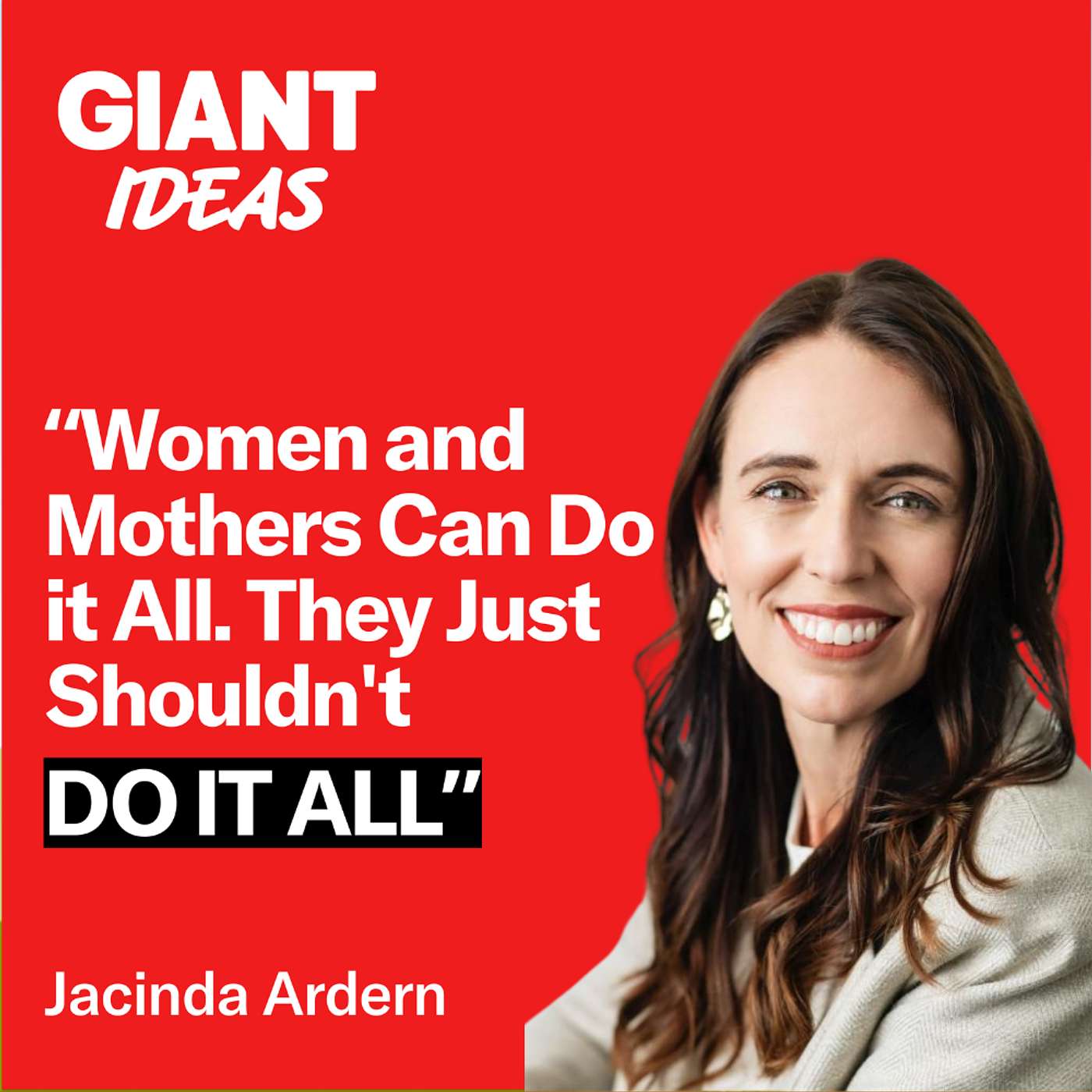
In this episode of Giant Ideas, former New Zealand Prime Minister Jacinda Ardern returns to explore the person behind the public role. Invited to choose three photographs that define her life, Jacinda reflects on a childhood shaped by New Zealand, parents who modelled service and fairness, and the early experiences that forged her lifelong commitment to tackling inequality and child poverty.
She shares a candid glimpse into the emotional weight of leadership, including the lasting impact of March 15, and why stepping down wasn’t about burnout, knowing when to pass the baton. Jacinda also talks about becoming a mother while in office, learning to let go of control, accepting help, and challenging the myth that women must “do it all” alone. She also describes how she’s crafting her next chapter and why her family makes her so happy.
In this conversation:
The three “photographs” that define Jacinda’s life and values
How she was a a reluctant leader
The emotional legacy of crisis leadership
Motherhood, power, and the myth of “doing it all”
Pushing back on misogyny
Life after high office and why she has “no regrets”
Building a purpose driven company? Read more about Giant Ventures at www.Giant.vc.
Music credits: Bubble King written and produced by Cameron McLain and Stevan Cablayan aka Vector_XING.
Please note: The content of this podcast is for informational and entertainment purposes only. It should not be considered financial, legal, or investment advice. Always consult a licensed professional before making any investment decisions.
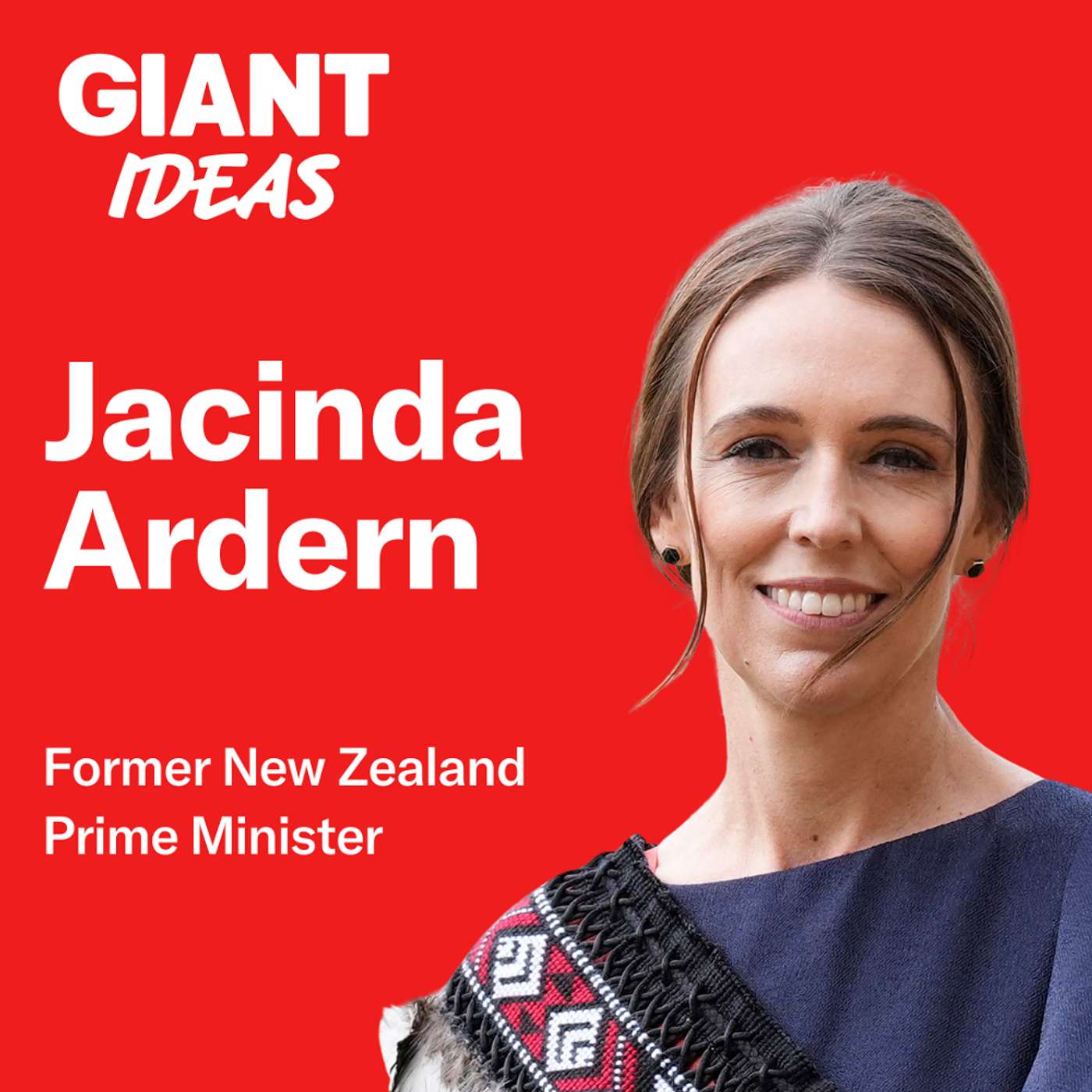
Today on the podcast we are joined by Jacinda Ardern - former Prime Minister of New Zealand, and the world's youngest female head of government. This is a conversation for anyone who wants to lead with kindness, and learn how to deal with high pressure situations.
As PM, Jacinda became famous worldwide for her unique leadership style: leading with compassion and empathy. A 'different kind of power’ as she puts it.
Her time in office was marked by her handling of major crises. She rushed through gun control laws within weeks of the Christchurch mosque attack. When Covid hit, Jacinda moved decisively to a rapid lockdown, something that would later prove divisive. In the midst of all that, Ardern was the second ever elected leader to give birth while in office.
Building a purpose driven company? Read more about Giant Ventures at www.Giant.vc.
Music credits: Bubble King written and produced by Cameron McLain and Stevan Cablayan aka Vector_XING.
Please note: The content of this podcast is for informational and entertainment purposes only. It should not be considered financial, legal, or investment advice. Always consult a licensed professional before making any investment decisions.
Former UK Deputy Prime Minister and ex‑President of Global Affairs at Meta Nick Clegg returns for a deeply personal conversation.
Nick reflects on the three “photographs” that define his life: a chaotic, international childhood; the unexpected joy of being locked down with his wife Miriam and their three sons on a remote ranch in Montana; and the searing public failures of losing power and his parliamentary seat.
Along the way, he shares what it takes to sustain a high‑pressure dual‑career marriage, why physical resilience is underrated for ambitious parents, how he rebuilt after political defeat to reach the top of Silicon Valley, why he believes political leadership is tougher than being a CEO, and how to make Europe great.
Building a purpose driven company? Read more about Giant Ventures at www.Giant.vc.
Music credits: Bubble King written and produced by Cameron McLain and Stevan Cablayan aka Vector_XING.
Please note: The content of this podcast is for informational and entertainment purposes only. It should not be considered financial, legal, or investment advice. Always consult a licensed professional before making any investment decisions.
Andrew Yang joins the Giant Ideas podcast again, this time offering a deeper dive behind the person behind his giant ideas.
Andrew ran for president in 2020, and is the founder of a nonprofit called Humanity Forward, and the Forward Party, a new political party in America aiming to bridge partisan divides. Today his focus is on his new company - launched in late 2025. With Noble Mobile, aiming to cut out the middle man and make mobile data cheaper for Americans.
In this episode we talk about:
- Why EVERYONE should run for president (and why your fear of public humiliation is holding you back in life)
- Nobile Mobile and why he believes Americans are being ripped off for their phone contracts.
- The 3 photographs that define his life
- The art of reinvention and his 'tours of duty'
Building a purpose driven company? Read more about Giant Ventures at www.Giant.vc.
Music credits: Bubble King written and produced by Cameron McLain and Stevan Cablayan aka Vector_XING.
Please note: The content of this podcast is for informational and entertainment purposes only. It should not be considered financial, legal, or investment advice. Always consult a licensed professional before making any investment decisions.
Today on the Giant Ideas podcast we are joined by Andrew Yang.
When Andrew Yang, a political outsider, ran for US President in 2020 his campaign hinged on a warning: he predicted that a huge number of jobs would be lost by automation. His solution was a monthly universal basic income (UBI) of $1,000, designed to offset the job losses.
Now, six years later, it appears Yang might have been onto something.
Dario Amodei, CEO of AI Giant Anthropic, has predicted that half of entry level white collar jobs will be eliminated in the next 3-5 years - spiking US unemployment to over 10%.
So, is UBI still the answer? Would UBI create a dystopian world of state-supported benefits, and loss of meaning? Or could UBI lead to more purpose, hope and a sense of buy-in to the American economy?
Listen to find out more about UBI, why 'elite oversupply' causes social unrest, why people are severely underestimating how disruptive AI will be compared to past industrial revolutions, and why he thinks we should redesign the economy around human flourishing, not just GDP...
Andrew is also the founder of a nonprofit called Humanity Forward, and he co-founded the Forward Party, a new political party in America aiming to bridge partisan divides. Today his focus is on his new company - launched in late 2025. With Noble Mobile, aiming to cut out the middle man and make mobile data cheaper for Americans.
Building a purpose driven company? Read more about Giant Ventures at www.Giant.vc.
Music credits: Bubble King written and produced by Cameron McLain and Stevan Cablayan aka Vector_XING.
Please note: The content of this podcast is for informational and entertainment purposes only. It should not be considered financial, legal, or investment advice. Always consult a licensed professional before making any investment decisions.
33 minAbspielen in:
Gäste, die länger als 12 Monate zurückliegen, gibt es mit Pro. Pläne ansehen

 JS