Wonder Cabinet cover
Podcast

Wonder Cabinet

von Wonder Cabinet Productions

Wonder Cabinet hatte in den letzten 12 Monaten 26 bestätigte Gäste in 24 Folgen. Zuletzt: Marcelo Gleiser, 21. Nov. 2026.

Website der SendungApple PodcastsSo werden Gäste bestätigt

Wonder Cabinet is an independent podcast from Anne Strainchamps and Steve Paulson, Peabody Award-winning creators of public radio's To The Best Of Our Knowledge. For 35 years, that show brought long-form conversations to 200+ stations nationwide; its interviews are now archived in the Library of Congress. Episodes…

Gäste der Sendung

Sa21Nov
Wonder CabinetAF

Adam FrankMarcelo GleiserGast

Can Science Be Sacred?

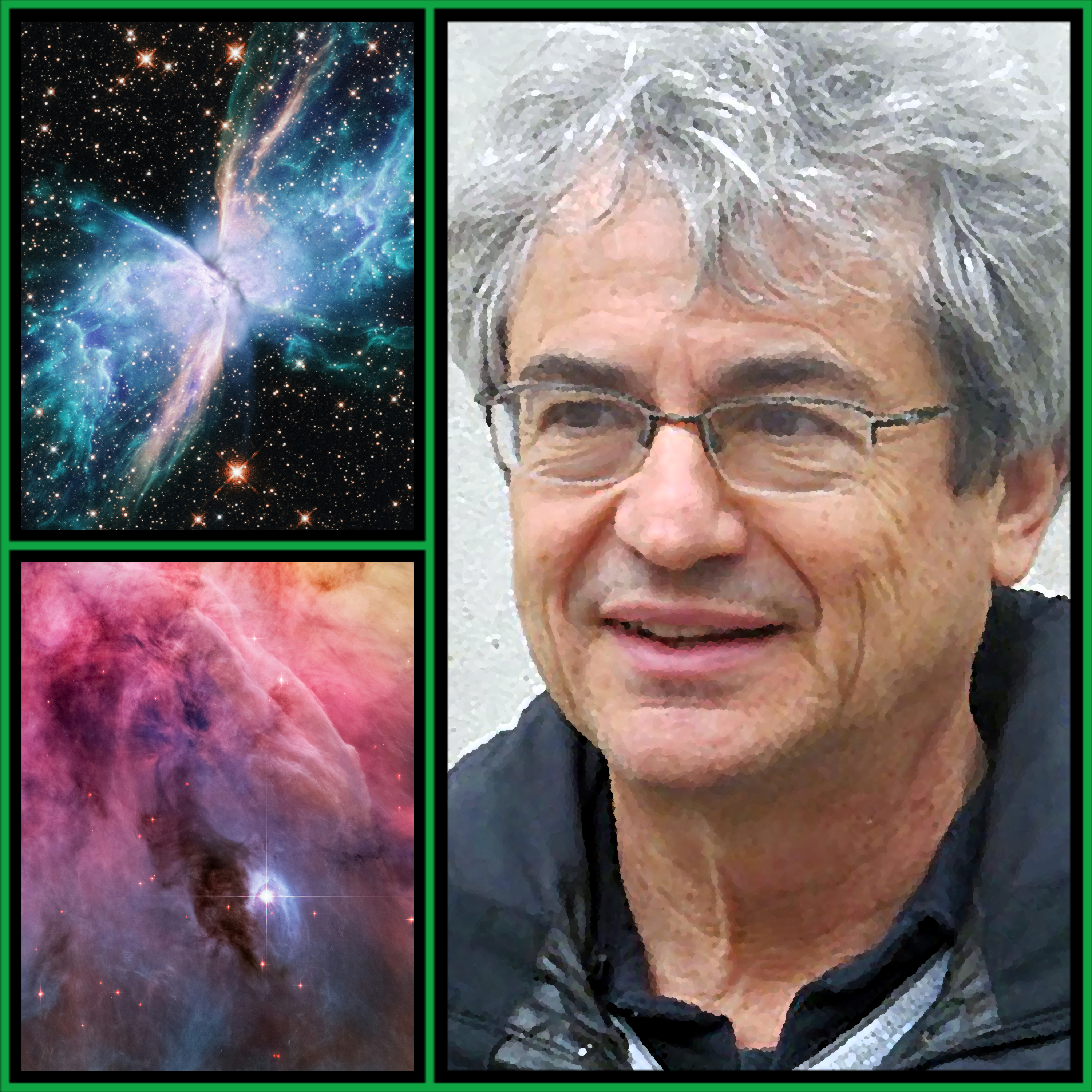
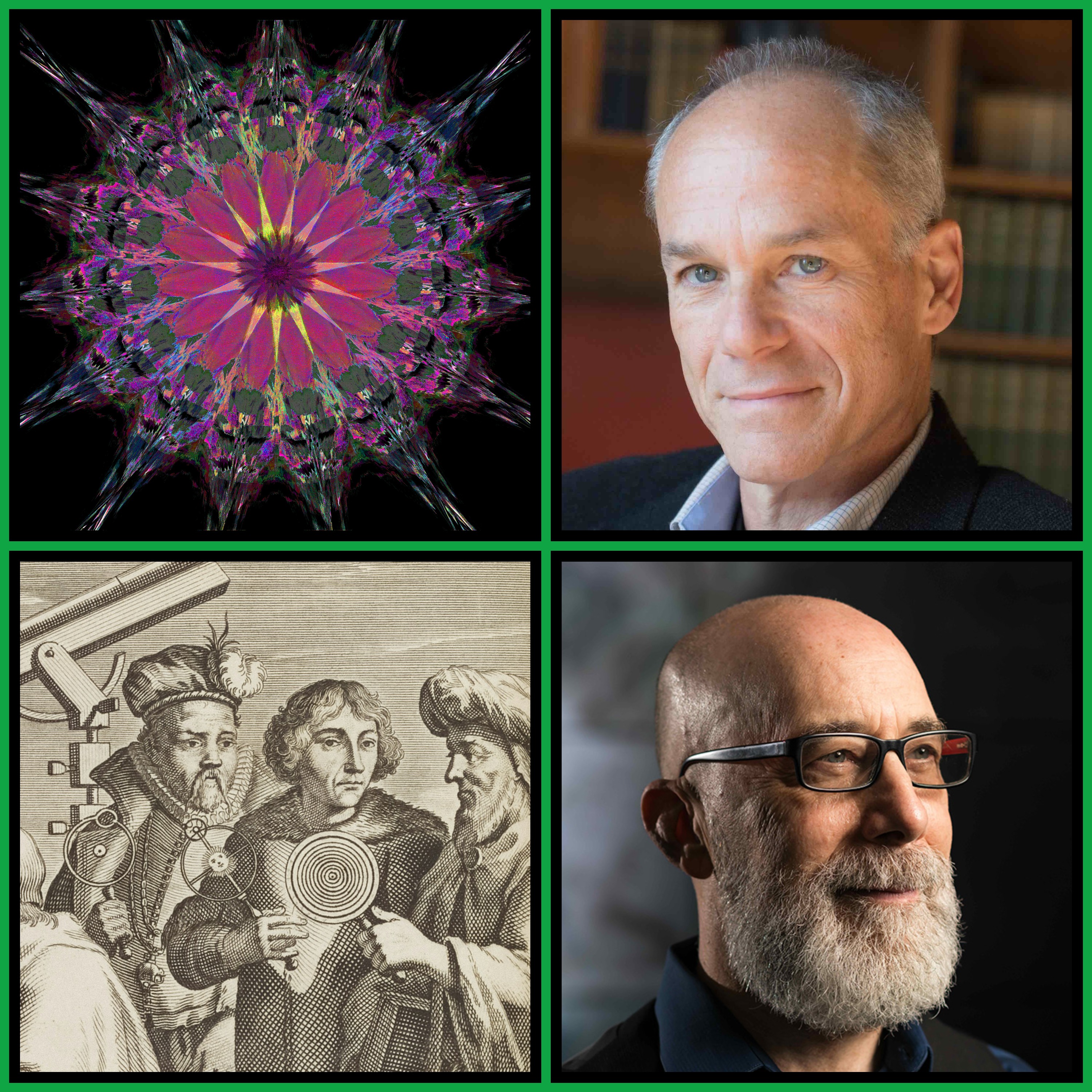
In the hills near Siena, at a small think tank called the Island of Knowledge, Anne Strainchamps sits down with two physicists who believe modern science needs to remember its roots. Marcelo Gleiser, theoretical physicist at Dartmouth and winner of the 2019 Templeton Prize, and Adam Frank, astrophysicist at the University of Rochester, argue that Kepler, Newton and Einstein saw their equations as something close to prayer. Somewhere along the way, science came to treat nature as dead matter to be poked, extracted and burned. Marcelo and Adam call the remedy “resacralizing” the world. Their conversation moves from Galileo’s beautifully crafted instruments to Frankenstein and transhumanism, from the mystic physicists who invented quantum mechanics to the postwar American push to “just calculate.” They talk about hierophany, the moment when the sacred breaks into ordinary life, and how it can arrive in the middle of a calculation. Marcelo recalls the thrill of discovering the oscillon, a bubble of energy that doesn’t want to die. Adam describes Zen kensho and the poetry hiding inside mathematics. They also speak about the losses they carried from childhood, and how the stars and the big questions of physics offered direction and perspective. Finally, they look beyond the Western canon, to Brazil’s indigenous traditions and to philosophers like Nagarjuna, for the ideas that could help build a new kind of science. – More from the "Island of Knowledge" series Book: "The Blind Spot: Why Science Cannot Ignore Human Experience" Book: "Frankenstein" Book: "The Constant Fire: Beyond the Science and Religion Debate" Book: "The Dancing Universe: From Creation Myths to the Big Bang" The Island of Knowledge – 00:00:00 Introduction 00:03:05 Galileo and the Dead Universe 00:16:48 Awe at the Blackboard 00:29:05 Grief and Other Ways of Knowing Wonder Cabinet is hosted by Anne Strainchamps and Steve Paulson. Find out more about the show at https://wondercabinetproductions.com, where you can subscribe to the podcast and our newsletter.

40 minAbspielen in:

Sa31Okt
Wonder CabinetJH

Joan HalifaxGast

Finding Wonder in Dying with Roshi Joan Halifax

Joan Halifax loves Wordsworth’s summons to “see into the life of things.” For the Buddhist abbot of Upaya Zen Center, this kind of deep seeing has been a lifelong pursuit, and it has led to her care for the dying. Now in her 80s, Halifax has had a remarkable life, from medical anthropology to psychedelic research to Zen practice. For more than fifty years, she has sat with dying people and trained the hospice workers, nurses, and doctors who care for them. Upaya is known for its socially engaged Buddhism, with decades of experience in end-of-life care, along with its work in prisons and with the homeless. In this conversation, Halifax talks about the freedom and deepening that can arise in old age, and her own experience of nearly dying. She describes sitting with a dying person as an experience of wonder, perhaps even an encounter with the ultimate mystery of our lives. — 00:00:00 Introduction 00:03:00 Wonder at the Deathbed 00:14:35 Open-Heart Surgery and Luminosity 00:22:35 Calm, Joy, and Growing Old — Personal site Upaya Zen Center Book: "Standing at the Edge" Book: "Being with Dying" Video: "Talk at Google: Standing at the Edge"  — Wonder Cabinet is hosted by Anne Strainchamps and Steve Paulson. Find out more about the show at https://wondercabinetproductions.com, where you can subscribe to the podcast and our newsletter.
30 minAbspielen in:

Sa10Okt
Wonder CabinetDM

Daniel MasonGast

Writing an Enchanted Landscape with Daniel Mason

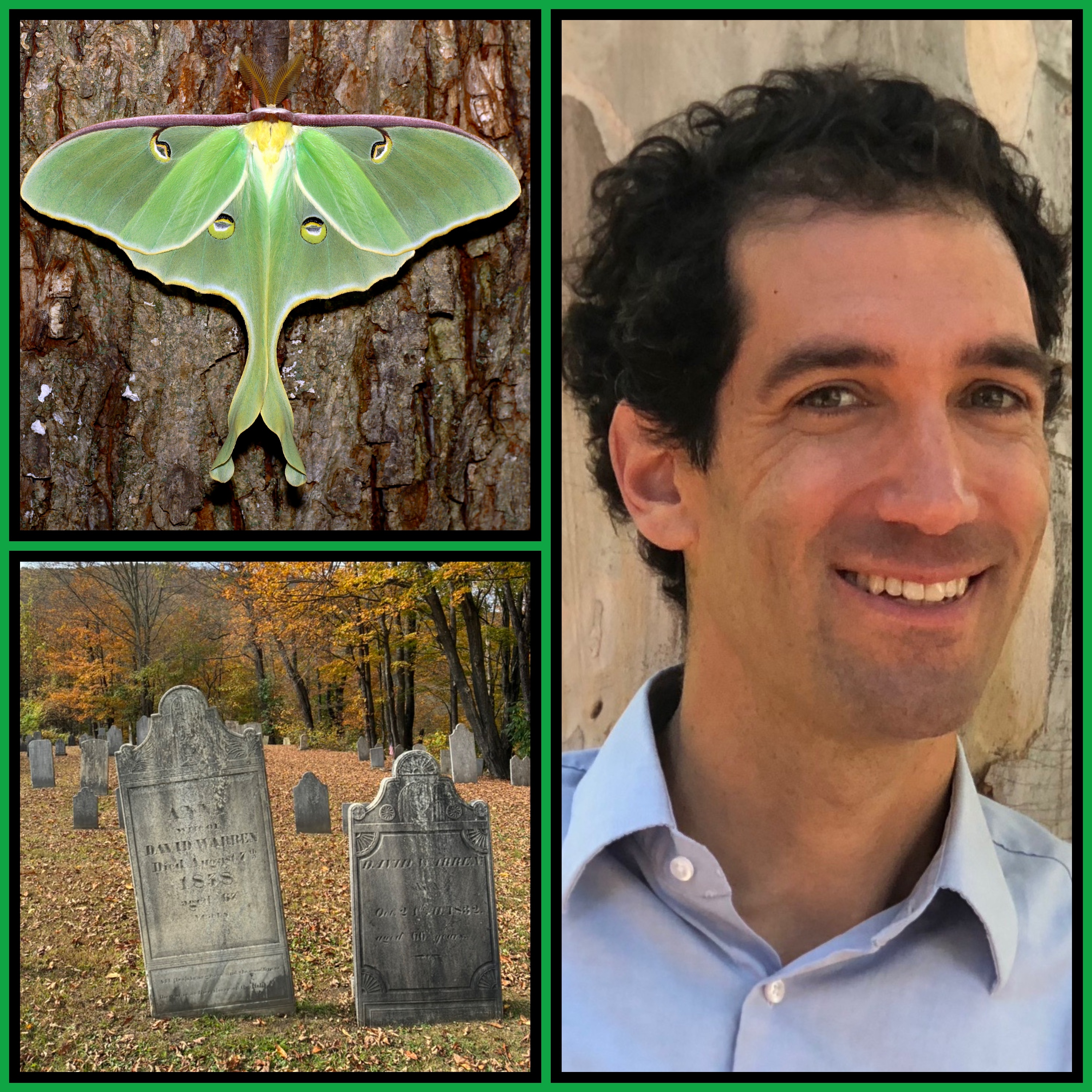
How does a landscape come alive and even feel enchanted? Bestselling author Daniel Mason explores this question in his novels “Country People” and “North Woods.” Both are steeped in the natural history of New England, from its geology to its native plants and animals. They capture the uncanny feeling of living in a landscape layered with human history — the stone walls, cellar holes, and other remnants of lives long past, hidden in the woods. In this conversation, Mason talks about the deep history of the land and the folklore of rural Vermont. One plot strand in “Country People” involves a secret society whose members believe the Earth is hollow, with a cave leading to a magical kingdom inside. Mason, who’s also a professor of psychiatry at Stanford, is fascinated by the thin line between imagination and delusion. He believes novelists exist in a state of wonder, and he’s drawn to visionary writers like Dante, Milton, and William Blake. One recurring theme in his fiction is the idea of a “paradise lost.” This episode begins with a bonus segment: Anne and Steve go metal detecting with their neighbor Sheila on their Vermont land, searching for lost artifacts. And what do they find? A colonial shoe buckle buried in their field! — 00:00:00 Metal Detecting a Colonial Shoe Buckle 00:04:55 Local Legends and Living History 00:11:25 Country People's Hollow Earth 00:20:50 Delusion, Vision and Enchantment 00:30:21 Ghosts, Dogs and Paradise Lost — Daniel Mason's Website Book: “Country People”  Book: “North Woods”  Tom Wessels:“Reading the Forested Landscape”  — Wonder Cabinet is hosted by Anne Strainchamps and Steve Paulson. Find out more about the show at https://wondercabinetproductions.com, where you can subscribe to the podcast and our newsletter.
47 minAbspielen in:

Sa3Okt
Wonder CabinetMC

Melanie ChallengerGast

Being Alive with Melanie Challenger

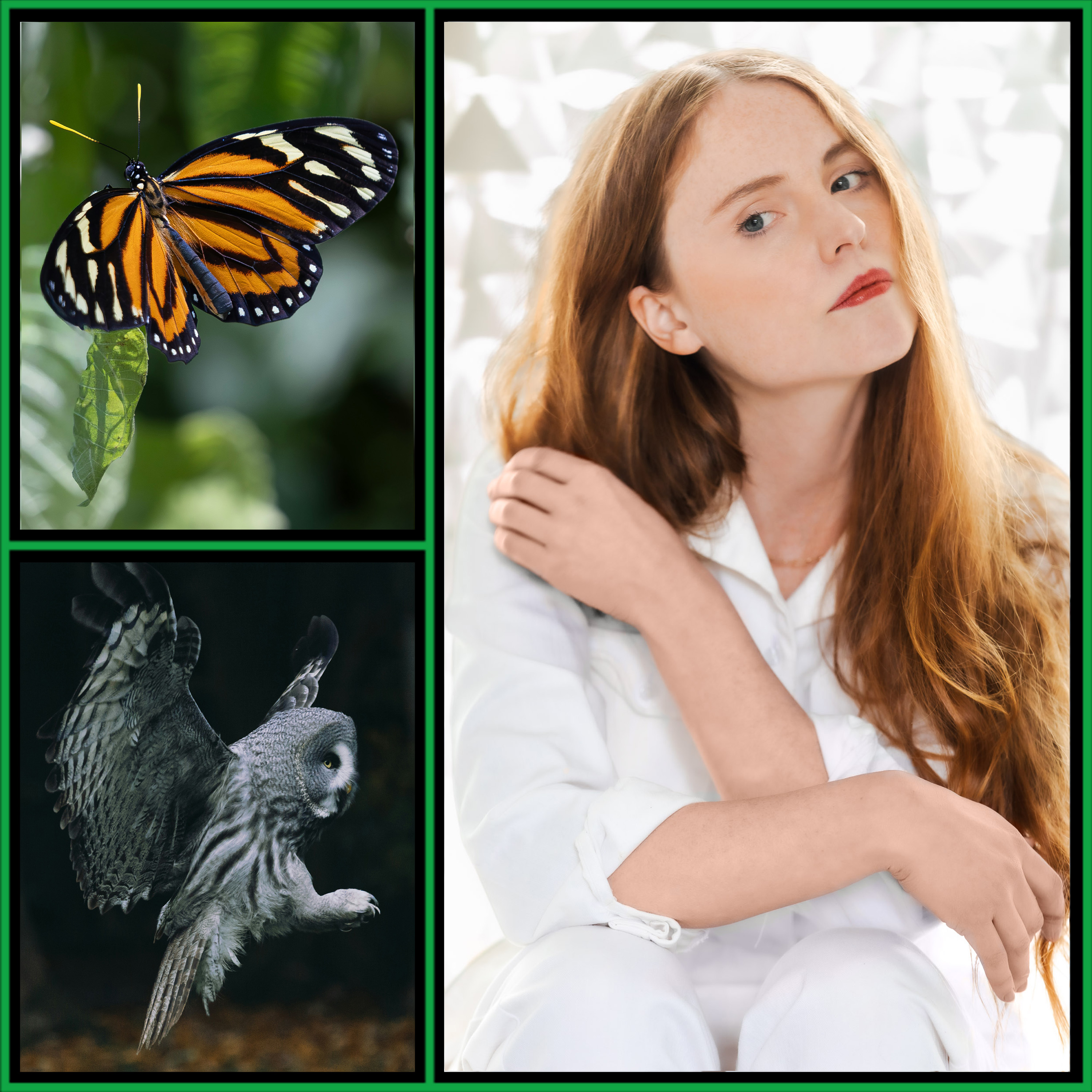
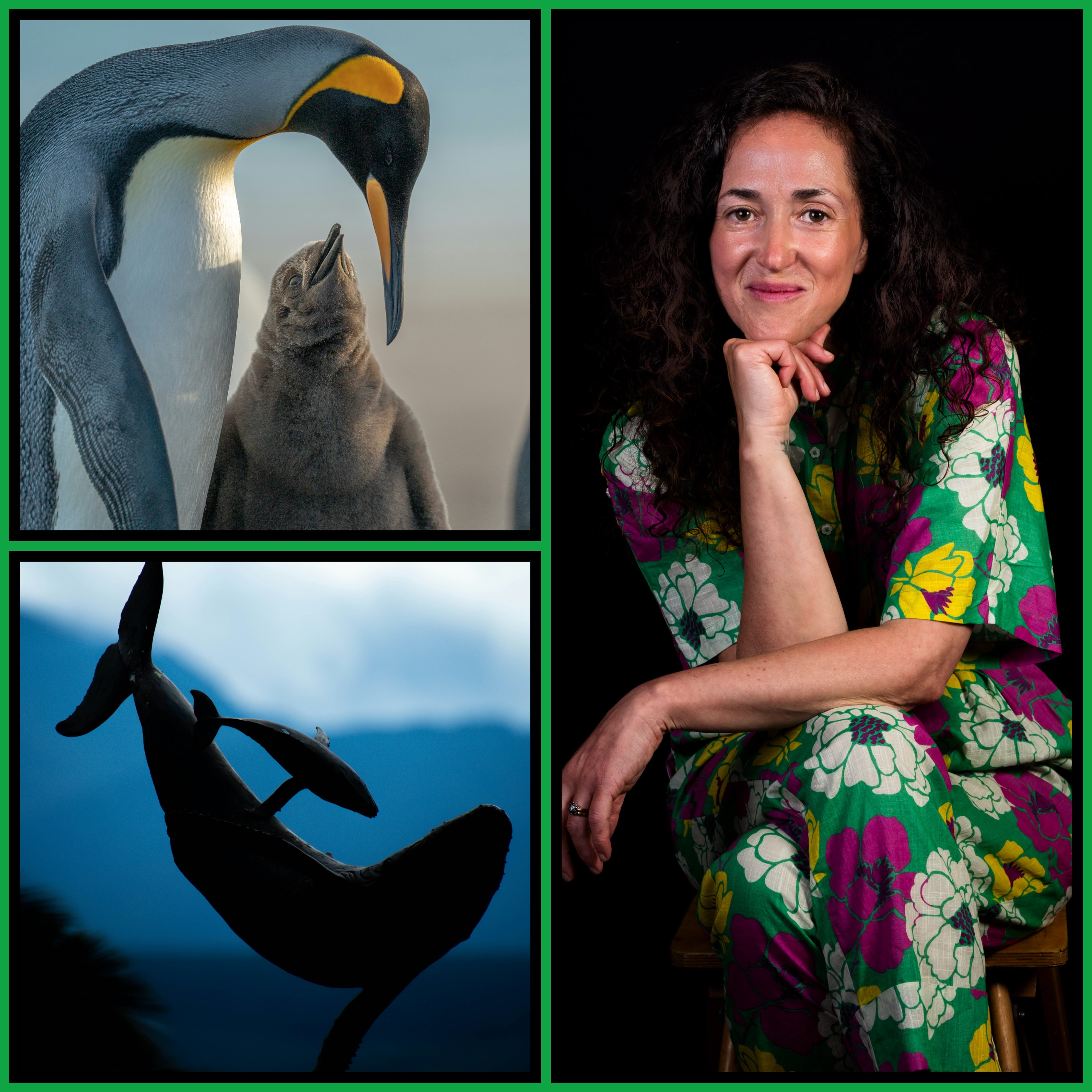
Our obsession with the dream of artificial, disembodied intelligence is deadening our experience of life itself. Melanie Challenger — a philosopher, naturalist and National Geographic Explorer —  says it’s time to let go of the centuries-old human history of pretending we’re not animals, of separating ourselves from the rest of the natural world. The essence of life, she says, is being a body — the source of the agency, purpose and intelligence that defines every living being, from the plant turning toward the sun to the hawk diving for its prey, to the child reaching for her mother.  In two poetic and rigorously argued books, “How To Be Animal," and “Alive: The Hidden Intelligence of the Natural World," Challenger makes the case for restoring meaning to organisms — a project that is both scientific, philosophical, and profoundly moral. It also offers a path toward re-enchantment: a way to think about how to revive a sense of the pulsating aliveness that surrounds us, and about what might follow if we did.   In this conversation, Challenger talks about her early work with survivors of genocide and war crimes, which led her to think deeply about the psychology of dehumanization. She recounts her first, lyrical trips as a naturalist and writer-in-residence in the Sub Antarctic and following blue whales off the coast of Costa Rica. And she talks about her re-discovery of Aristotle, the ancient philosopher whose concept of life as “en-soulment” showed her how to redefine what it means to be alive.   This interview was recorded at the Island of Knowledge think tank in Tuscany, a project supported by Dartmouth College and the John Templeton Foundation. — 00:00:00 Intro 00:05:00 War Witness to Naturalist 00:18:00 Beyond the Machine Body 00:27:00 Sequoia Seed and Aristotle — Website Book: “How To Be Animal” Book: “Alive: The Hidden Intelligence of the Natural World” Essay: "On Death and Love"  — Wonder Cabinet is hosted by Anne Strainchamps and Steve Paulson. Find out more about the show at https://wondercabinetproductions.com, where you can subscribe to the podcast and our newsletter.
36 minAbspielen in:

Sa26Sep
Wonder CabinetGM

Geoff MitelmanGast

The Power of Ritual with Rabbi Geoff Mitelman

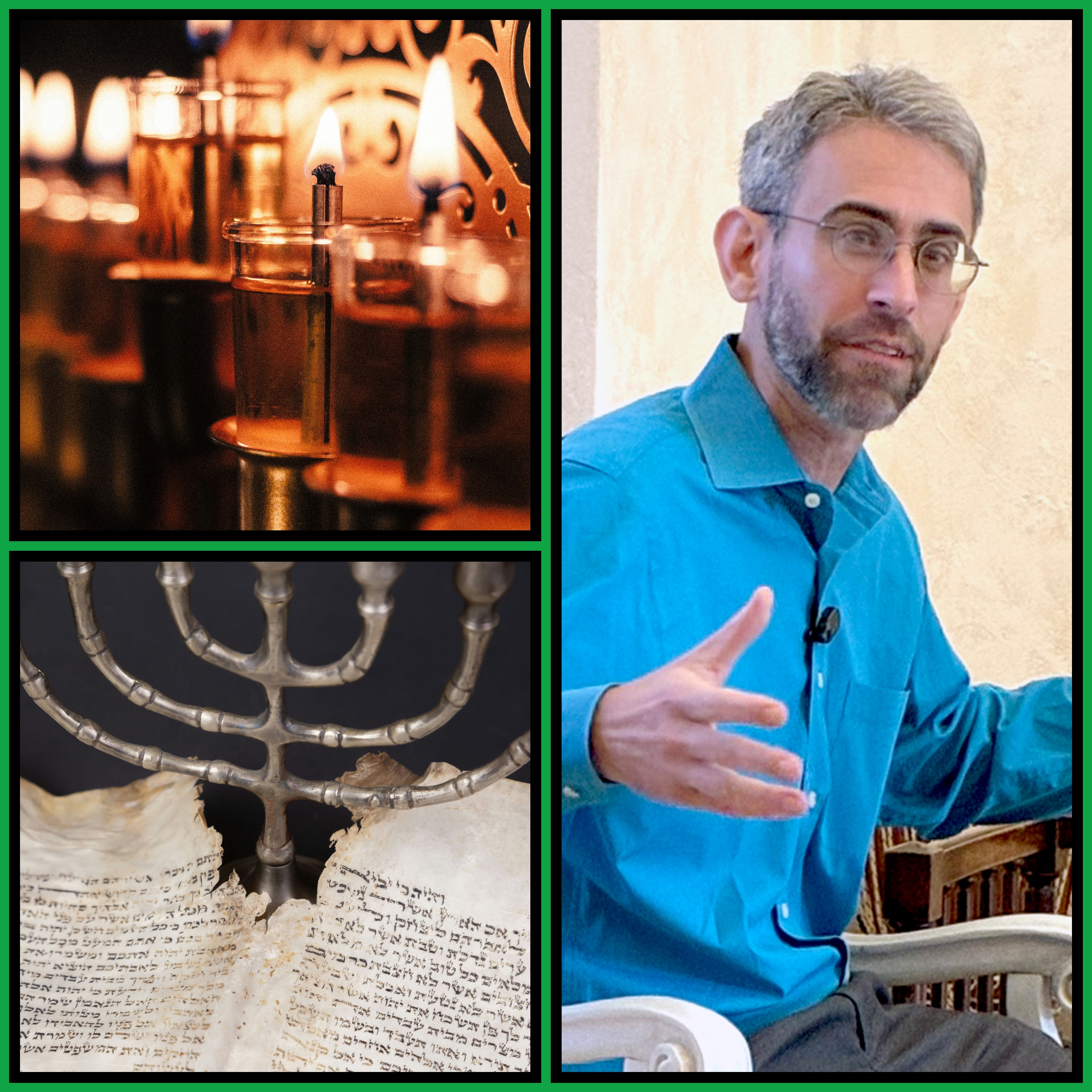
What kind of truth can a sacred text offer about the world? Rabbi Geoff Mitelman reads the Torah as poetry — open to multiple interpretations and evoking a sense of transcendence, even magic. Mitelman is a Reform rabbi and the founding director of Sinai and Synapses, an organization building bridges between science and religion, particularly Judaism. He reads the creation story in Genesis as a profoundly mysterious text — complementary to the scientific account of the Big Bang. Mitelman doesn’t dwell on big metaphysical questions such as the nature of God or ultimate reality. Instead, he turns toward age-old rituals — the songs, stories and ceremonies that have been practiced within Jewish communities for centuries. Why do we return to these rituals year after year? At a time when many people have abandoned organized religion, often describing themselves as “spiritual but not religious,” Mitelman says Judaism is more akin to being “religious but not spiritual.” In this conversation, we explore the power of ritual — and how shared practices can create meaning and build community. This interview was recorded at the Island of Knowledge think tank in Tuscany, a project supported by Dartmouth College and the John Templeton Foundation. — 00:00:00 A Shabbat Ritual in Tuscany 00:04:10 Torah as Poetry, Not Science 00:09:15 Genesis and the Big Bang 00:19:57 God, Ritual, and Community — Website Podcast: "Sinai and Synapses" Writing  Orbiter contributions — Wonder Cabinet is hosted by Anne Strainchamps and Steve Paulson. Find out more about the show at https://wondercabinetproductions.com, where you can subscribe to the podcast and our newsletter.
37 minAbspielen in:

Sa29Aug
Wonder CabinetRM

Robert MoorGast

Tree Thinking with Robert Moor

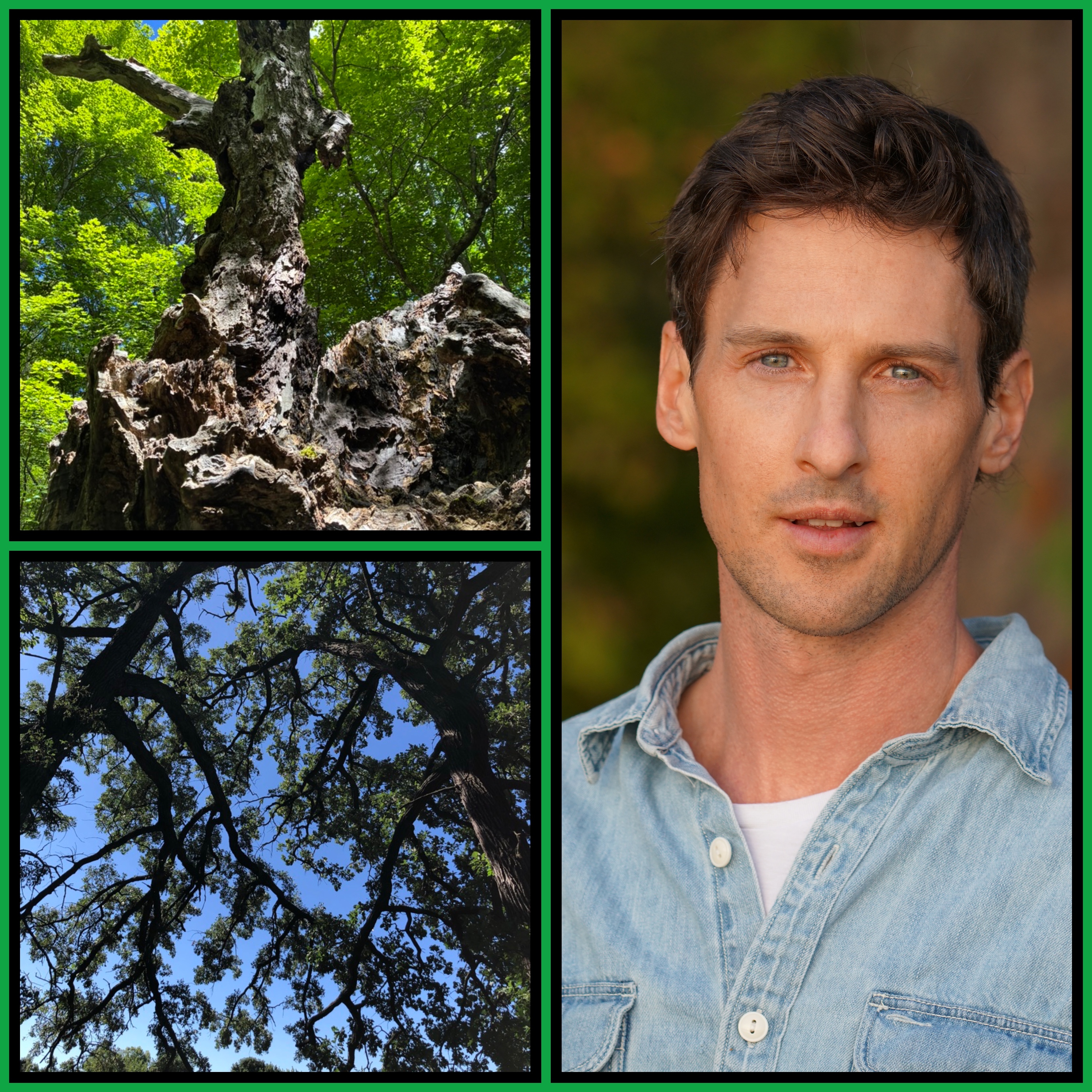
Can you imagine being a tree? Robert Moor has spent years trying—climbing into their canopies, studying their biology and learning to see trees in ways most of us don’t. He considers himself a “tree person.” Moor believes that when you spend a lot of time in trees, time slows down—and branching and pruning can become life lessons. He’s interested not just in how trees grow, but in what they might teach us about ourselves. In his book “In Trees,” he says his goal isn’t to anthropomorphize trees but to “arborize” humanity. Moor has taken his obsession with trees to unusual places: climbing to the tops of giant sequoias; traveling to Tokyo to meet master bonsai artists; becoming a “tree sitter” to protest an oil pipeline. He’s fascinated by “family trees” and Darwin’s Tree of Life, and by our own evolutionary history in the trees of Africa. He traveled to Ethiopia to see Lucy, the famous 3-million-year-old fossil skeleton, and to Tanzania to sleep in a chimpanzee nest. (It was a miserable experience.) He knows something about living among trees: 13 years ago, he and his husband moved from New York City to a cabin in the woods of British Columbia—and never left. — 00:00:00 Introduction 00:07:20 Climbers and Bonsai Masters 00:22:15 Environmentalism's Shadow History 00:28:45 Sleeping in a Chimpanzee Nest 00:37:20 Tree Sitters and Hope — Website Book: “In Trees” Italo Calvino’s The Baron in the Trees Bonsai artist Masahiko Kimura Julia Butterfly Hill Tree climber Tim Kovar — Wonder Cabinet is hosted by Anne Strainchamps and Steve Paulson. Find out more about the show at https://wondercabinetproductions.com, where you can subscribe to the podcast and our newsletter.
51 minAbspielen in:

Sa15Aug
Wonder CabinetCW

Christian WimanGast

Poetry Against Despair with Christian Wiman

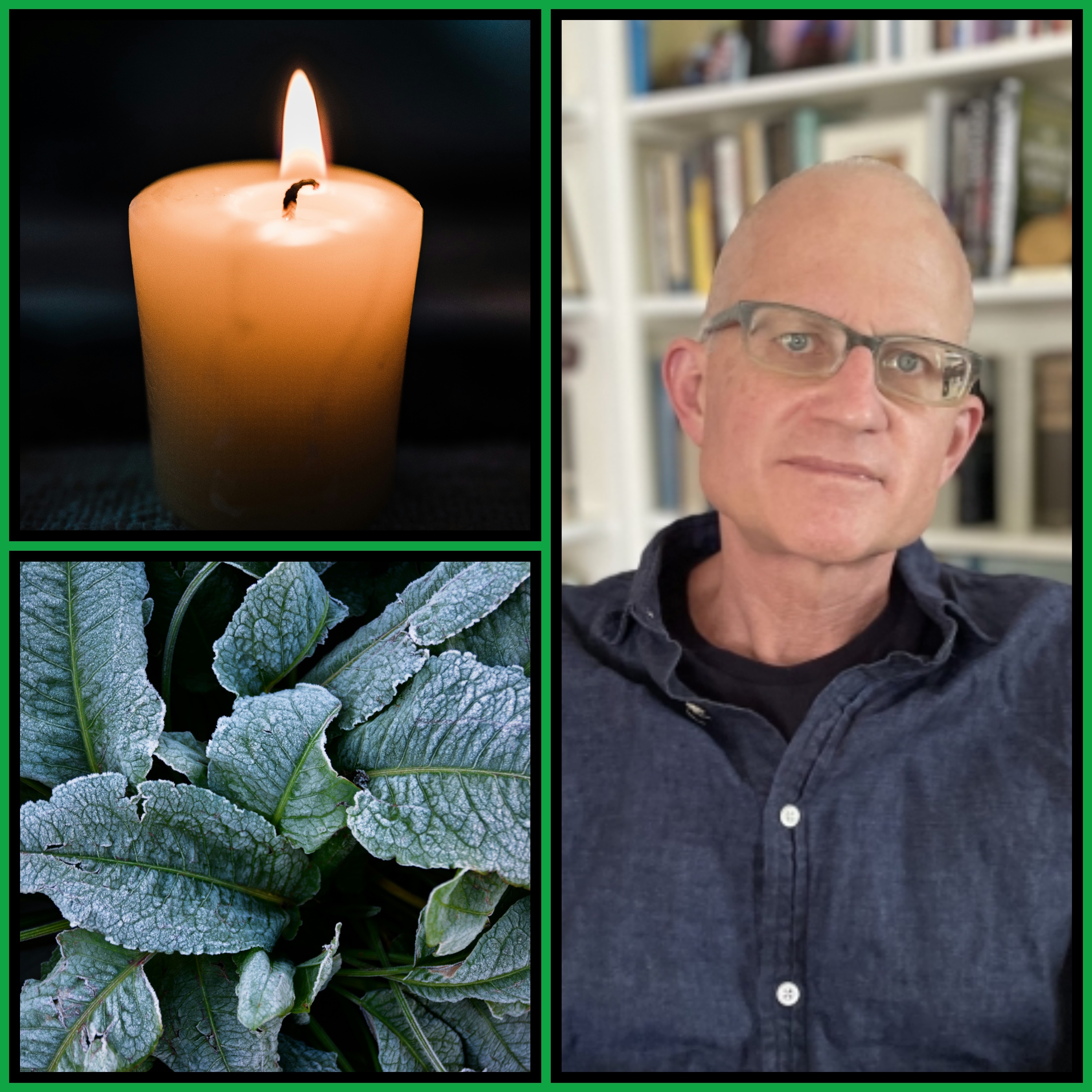
How do you find joy in suffering? That’s one of the questions Christian Wiman explores in his poetry and his life. The former editor of Poetry magazine, Wiman is the author of seven books of poetry, including his latest, “The Dance.” He also teaches at Yale Divinity School. He’s been called “the most important Christian writer in America,” though his relationship with God is marked by uncertainty as much as faith. That tension runs through his poetry, where mystical experience, doubt, suffering, and joy continually collide. His understanding of mortality is also shaped by a 20-year battle with cancer. Diagnosed with a rare form of lymphoma and initially given only a few years to live, Wiman has come close to death several times. Yet he speaks about suffering not simply as something to endure, but as a strange territory in which beauty and wonder can sometimes be found. Wiman craves direct experiences of the world, but he finds that writing poetry helps him fully appreciate these fleeting moments of awe and wonder. A frosted hosta, an old candlestick, the trills of a red-winged blackbird—small encounters like these can open onto deeper questions about meaning, eternity, and what Wordsworth called “seeing into the life of things.” — 00:00:00 Intro 00:02:40 Poetry, Awe and Wonder 00:15:10 Twenty Years Battling Cancer 00:21:55 Joy in Suffering 00:30:45 Seeing Into the Life of Things 00:39:40 A Last Poem and Farewell — Book: “The Dance” Book: “Glimmerings: Letters on Faith Between a Poet and a Theologian” Book: “Zero at the Bone: Fifty Entries Against Despair” Yale Divinity School website Profile of sculptor Lee Bontecou — Wonder Cabinet is hosted by Anne Strainchamps and Steve Paulson. Find out more about the show at https://wondercabinetproductions.com, where you can subscribe to the podcast and our newsletter.
45 minAbspielen in:

Sa8Aug
Wonder CabinetCF

Cal FlynGast

Chasing Wilderness with Cal Flyn (and Gary Snyder)

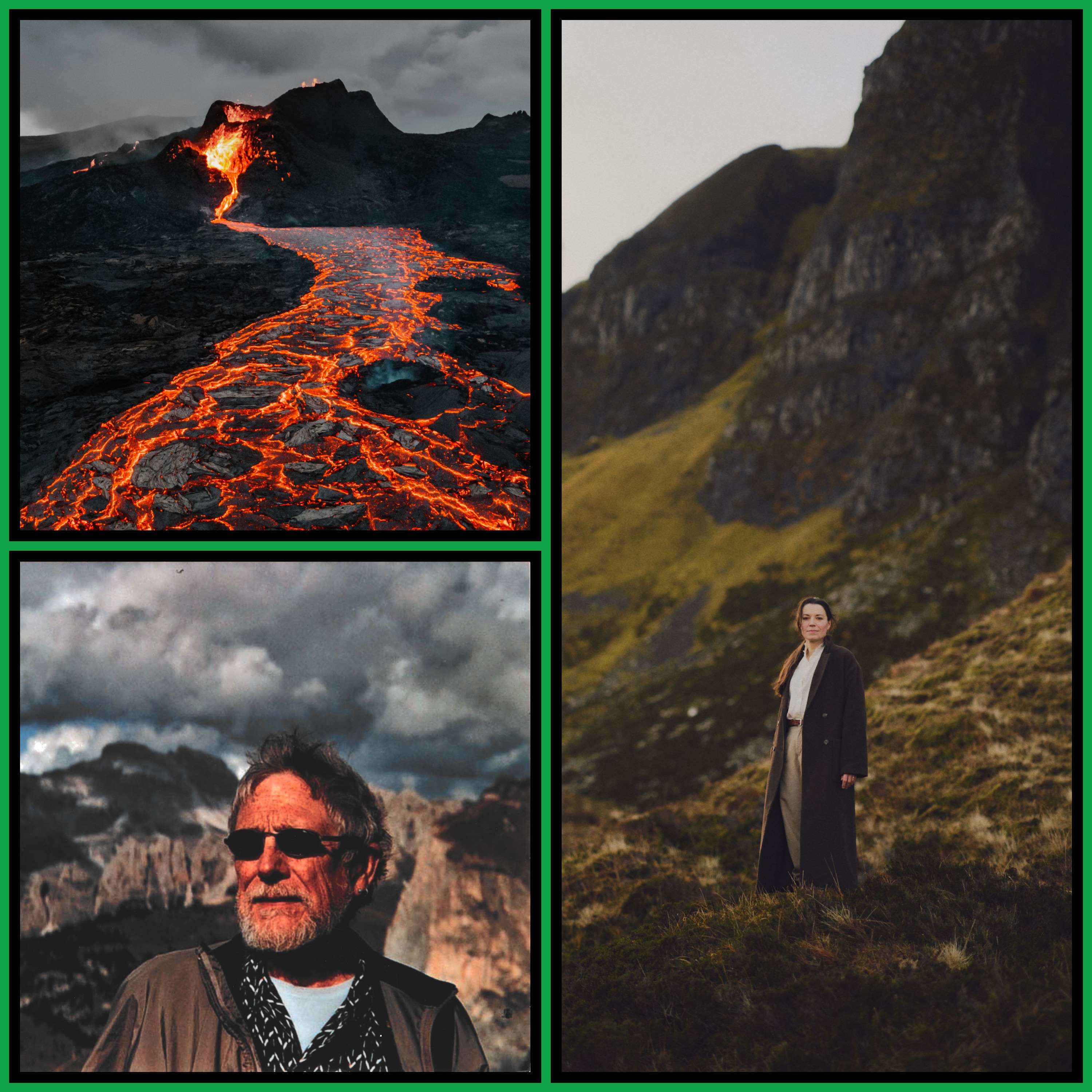
For thousands of years, people have dreamed of walking off the map — lighting out for the remote unknown, into landscapes untouched and untamed. The classic wilderness quest is as old as literature itself: you go into the wild, and you come out changed. It's woven into ancient spiritual texts, medieval myths, and European accounts of the so-called "New World." But wilderness is an idea as slippery as it is powerful — and wilderness preservation is a complicated and often costly ideal.  That's the territory Cal Flyn explores in her new book, “The Savage Landscape: How We Made the Wilderness.” An award-winning writer, Flyn has traveled — often alone — into some of the most remote and forbidding places on Earth: a desert monastery on Mount Sinai, deep into the Amazon rainforest, up a Tibetan mountain pass, and inside an erupting Icelandic volcano. She gets there by river skiff, deep-sea submersible, helicopter, and horseback, and along the way she finds moments of sheer wonder — and real danger. We talk with Flyn about the history of this ancient idea and why humans keep chasing it. With nearly 8 billion people on the planet, almost no place is truly untouched. So what IS wilderness? Why do we keep seeking it? And who pays the price?  Plus:  Steve talks with legendary poet and environmental writer Gary Snyder — now 96, once a friend of the Beats and a Zen apprentice in 1950s Japan — about his classic book “The Practice of the Wild.” Snyder also reads two poems. This is an excerpt from an archival conversation.   The original aired on Wisconsin Public Radio’s To The Best Of Our Knowledge. This Wonder Cabinet episode was not funded, endorsed or affiliated with Wisconsin Public Media or the University of Wisconsin-Madison. — 00:00:00 In Search of Wilderness 00:03:00 Cal Flyn on The Savage Landscape 00:32:40 The Sublime, Taboos and Sacred Groves 00:49:55 From the TTBOOK Archive: Gary Snyder 01:00:15 Credits and Farewell — Cal Flyn’s website  Cal Flyn on Insta Book: “The Savage Landscape: How We Made the Wilderness” Book: “Islands of Abandonment”  Read more about Gary Snyder at The Poetry Foundation Read “Piute Creek” by Gary Snyder Read “Ripples on the Surface” by Gary Snyder Uncut Gary Snyder interview from TTBOOK — Wonder Cabinet is hosted by Anne Strainchamps and Steve Paulson. Find out more about the show at https://wondercabinetproductions.com, where you can subscribe to the podcast and our newsletter.

1 h 01 minAbspielen in:

Sa1Aug
Wonder CabinetPhilip Goff

Philip GoffPhilip PullmanGast

The Conscious Universe: Panpsychism with Philip Goff

What if consciousness isn't something that emerges from the brain—but is embedded in the fabric of reality itself? That's the provocative idea behind panpsychism— that consciousness goes all the way down to the fundamental building blocks of the cosmos. Philosopher Philip Goff, one of panpsychism’s leading advocates, argues that it offers the best solution to one of science's deepest mysteries: how consciousness arises at all. We also hear  from novelist Philip Pullman, whose  fantasy series “His Dark Materials” was partly inspired by panpsychism.  Goff reflects on another surprising development in his own thinking: his recent turn toward the Eastern Orthodox Church and what he calls "heretical Christianity.” He also describes how a profound  psychedelic experience shook him to the core—and may have revealed a deeper reality.  The first interview with Goff was recorded at the Island of Knowledge think tank in Tuscany, a project supported by Dartmouth College and the John Templeton Foundation. The interview with Philip Pullman originally aired on Wisconsin Public Radio’s To The Best Of Our Knowledge. This Wonder Cabinet episode was not funded, endorsed or affiliated with Wisconsin Public Media or the University of Wisconsin-Madison. — 00:00:00 Introduction 00:04:00 What Is Panpsychism? 00:17:30 Heretical Christianity 00:29:40 A Psychedelic Awakening 00:38:25 The Conscious Universe, Confirmed — Philip Goff’s website.  Books Podcast: "Phillip Goff Philosophy" TTBOOK: "His Dark Materials' Author Philip Pullman On The Consciousness Of All Things" — Wonder Cabinet is hosted by Anne Strainchamps and Steve Paulson. Find out more about the show at https://wondercabinetproductions.com, where you can subscribe to the podcast and our newsletter.
43 minAbspielen in:

Sa20Jun
Wonder CabinetEV

Emmanuel Vaughan-LeeGast

The Spiritual Ecology of Emmanuel Vaughan-Lee

Emmanuel Vaughan-Lee grew up in London with a Russian Sufi mystic living downstairs, seekers showing up at all hours and meditation happening constantly.  Then his family moved to a  coastal redwood forest in Northern California, where he learned to surf and fell in love with wilderness.   Today, Emmanuel is the founder, executive editor and podcast host of Emergence Magazine – for nearly a decade, one of the most important venues for spiritually-infused ecological writing.  His new book, “Remembering Earth,” is both a meditation on the sacred nature of the living world and a practical guide to re-entering it.   In this conversation,  we explore Sufism's radical vision of the divine as intimate and immanent, rather than distant and transcendent. We also talk about jazz — Emmanuel dropped out of school at age 16 to play acoustic bass — and the liminal space of creative improvisation.  Other stops along the way:  the epigenetic memory of birdsong, how breath and walking can become a form of prayer; what dreams are and where they come from; and the boundlessness of Earth’s love.  Note:  Wonder Cabinet is taking a summer break.  We’ll be back in August with new episodes. — 00:00:00 The Magic We've Forgotten 00:02:15 Growing Up With a Guru 00:06:55 One River, Many Names 00:15:55 Spiritual Ecology and Practice 00:29:05 Nightingales, Jazz, and Dreams — Emergence Magazine Emmanuel’s new book, “Remembering Earth” "The Nightingale’s Song," a film by Emmanuel Vaughan-Lee and Adam Loften Anne’s conversation with Sam Lee — Wonder Cabinet is hosted by Anne Strainchamps and Steve Paulson. Find out more about the show at https://wondercabinetproductions.com, where you can subscribe to the podcast and our newsletter.
51 minAbspielen in:

Sa13Jun
Wonder CabinetAL

Alan LightmanGast

An Evening of Wonder with Alan Lightman

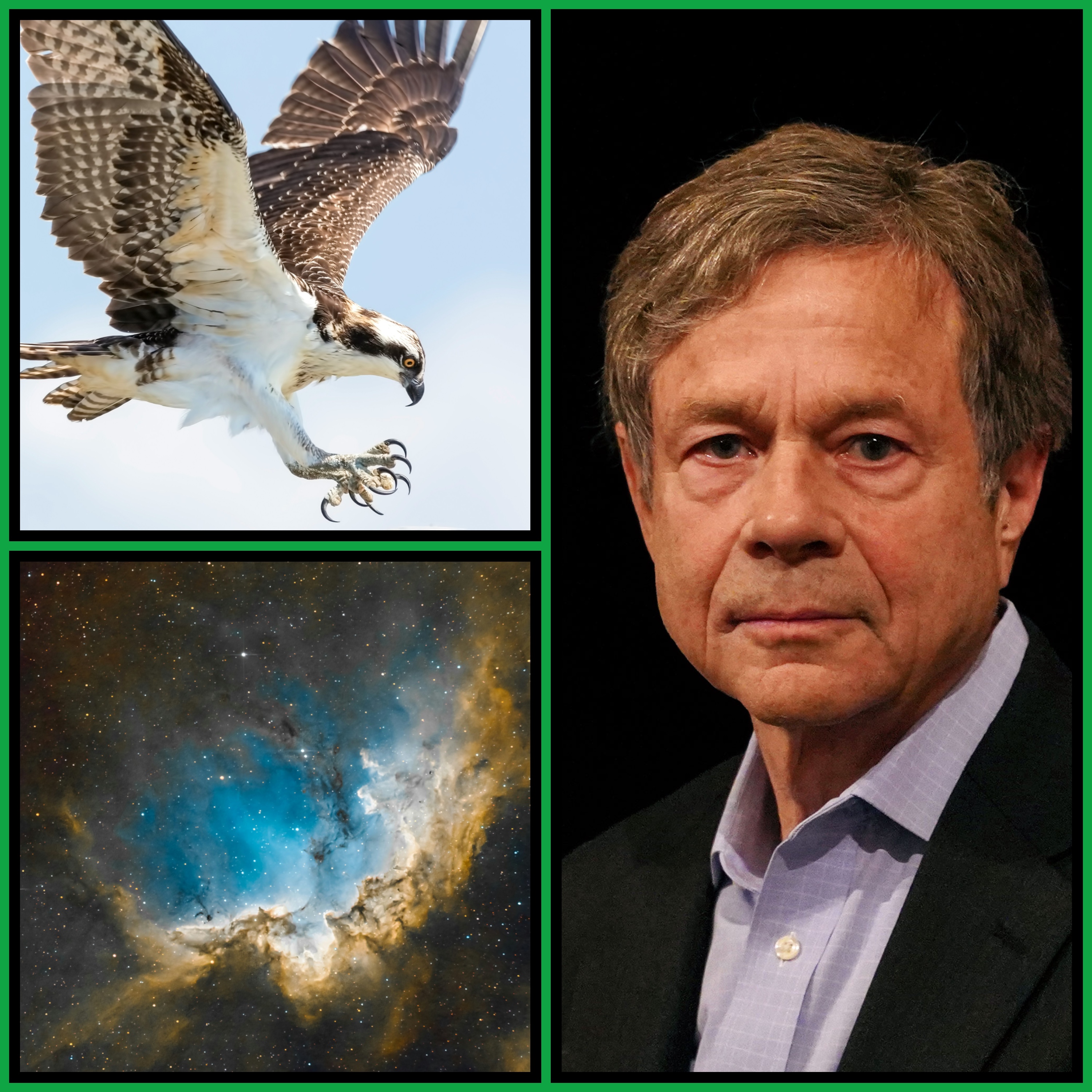
What happens when a physicist experiences a moment of transcendence that science cannot explain? Alan Lightman has spent much of his life exploring the mysteries of the universe—from black holes and the nature of time to the fundamental laws that govern reality. A physicist, novelist and longtime professor at MIT, he's fascinated by the transformative power of awe and wonder. In this live conversation recorded at New York's Morgan Library, Lightman reflects on extraordinary encounters in nature—from a startling moment with two ospreys to a solitary night beneath the stars—that shook him to the core and left him feeling as though he had somehow "fallen into infinity." Calling himself a "spiritual materialist," he seeks to bridge the divide between science and religion, between mathematics and art. Can a scientific worldview make room for awe, transcendence, and mystical experience? Lightman says these fleeting moments reveal something essential about being human: our longing to connect with something larger than ourselves. This event at the Morgan Library was co-sponsored by the Nour Foundation as part of our series “Spirituality in the Age of Science: Conversations on God, Transcendence and Mortality.” — 00:00:00 Introduction 00:02:40 The Osprey Encounter 00:09:40 Science And Religion 00:13:30 Scientist And Novelist 00:28:50 The Religious Impulse 00:36:50 Evolution And Consciousness — Video of Steve’s complete conversation with Alan Lightman at Morgan Library:  MIT website Books PBS series: "Searching: Our Quest For Meaning in the Age of Science"  — Wonder Cabinet is hosted by Anne Strainchamps and Steve Paulson. Find out more about the show at https://wondercabinetproductions.com, where you can subscribe to the podcast and our newsletter.
47 minAbspielen in:

Sa23Mai
Wonder CabinetDG

D. Graham BurnettGast

Rewilding Attention with D. Graham Burnett

We all know our attention is being competed for — but historian of science D. Graham Burnett calls it something more alarming: a "civilizational biohack." In this episode, we talk with Burnett, a Princeton historian of science and co-founder of "The Friends of Attention," about the movement to liberate our minds from the 17-trillion-dollar attention economy. He draws on surprising sources — the German Romantics, St. Augustine, Simone Weil, Henry James — to argue that we've lost touch with older, richer forms of attention. And he makes the case that reclaiming it will require more than screentime apps or digital detox – it’ll take collective resistance. Plus: why your Pilates class, your evening needlework, or your walk with the dog might already be forms of radical attention — and how reframing everyday activities can make ordinary life feel richer, more mysterious and more full of wonder. — 00:00:00 Introduction 00:03:00 Human Fracking 00:27:30 Attention as Generosity 00:30:55 Wonder and Disenchantment — “Attensity: A Manifesto of the Attention Liberation Movement” The Friends of Attention The Strother School of Radical Attention D. Graham Burnett website   — Wonder Cabinet is hosted by Anne Strainchamps and Steve Paulson. Find out more about the show at https://wondercabinetproductions.com, where you can subscribe to the podcast and our newsletter.
39 minAbspielen in:

Sa9Mai
Wonder CabinetSB

Sharon BlackieGast

Why We Need Fairy Tales Now — with Sharon Blackie

Sharon Blackie is one of our foremost fairy tale interpreters.  In her new book, “Ripening: Why Women Need Fairy Tales Now,” she reclaims the subversive fairy tale heroines of the past.  Not passive, well-behaved princesses — think Tatterhood instead of Cinderella, the Fox Wife instead of Sleeping Beauty — figures from centuries-old European folk tales that were whispered over hearths and spinning wheels, and handed down from one generation of women to the next, not as children’s entertainment but a blueprint for survival, maps for soul retrieval and cultural regeneration.  The brave, smart heroines and wise old women in these tales offer us an alternative, “post-heroic” model of psychological development, Blackie says. A code of ethics based on kinship with the more-than-human world of animals and plants, and a celebration of old-fashioned virtues like compassion, kindness and reciprocity. Fairy tale heroines, Blackie says, don’t slay dragons — they make them part of the team.  Fairy tales are part of our collective unconscious, a storehouse of archetypes and images that predate the modern world.  There's a bridge back to the enchanted landscapes and animist sensibilities of our ancestors — a gateway to wonder.  In this conversation, Blackie shows us how to unlock their power and find our way back the imaginal world.  — 00:00:00 Introduction 00:02:25 Why Fairy Tales Are Survival Stories 00:12:25 Beyond the Hero's Journey 00:27:05 Jung, Hillman, and the Imaginal World 00:41:45 Active Imagination and Closing Thanks — Website "The Art of Enchantment" Substack  "Ripening: Why Women Need Fairy Tales Now"  The Nostos Institute Sharon’s other books — Wonder Cabinet is hosted by Anne Strainchamps and Steve Paulson. Find out more about the show at https://wondercabinetproductions.com, where you can subscribe to the podcast and our newsletter.
45 minAbspielen in:

Sa2Mai
Wonder CabinetRH

Rebecca HendersonGast

Rebecca Henderson: Can Capitalism Save the World It’s Destroying?

Can capitalism save the world it's destroying? Rebecca Henderson thinks so. An economist at Harvard Business School and author of “Reimagining Capitalism in a World on Fire,” she has advised some of the world's biggest corporations and argues that capitalism itself — and what drives corporations — urgently needs to change. She's clear-eyed about capitalism's failures — the inequality, the exploitation, the environmental destruction — which is precisely what drives her passion for reforming it from within. And as a climate activist, she's haunted by the consequences if we fail to act. But this conversation goes deeper than economics. Henderson opens up about hitting a personal wall in her climate work — and the unexpected turn that brought wonder back into her life. — 00:00:00 Introduction 00:03:00 Capitalism Reimagined 00:08:30 The Norway Turnaround 00:16:50 Hitting the Wall 00:28:40 Reweaving Ourselves 00:43:00 Finding the Way Through — Website  Book: "Reimagining Capitalism in a World on Fire" More writing by Rebecca Henderson — Wonder Cabinet is hosted by Anne Strainchamps and Steve Paulson. Find out more about the show at https://wondercabinetproductions.com, where you can subscribe to the podcast and our newsletter.
50 minAbspielen in:

Sa25Apr
Wonder CabinetCW

Caroline WintererGast

Caroline Winterer: Dinosaurs, Deep Time and the American Soul

T-Rex. Brontosaurus. Diplodocus. Just the names conjure something enormous — a sense of scale that dwarfs human history. Standing before dinosaur tracks in the Utah desert, or gazing up at a towering skeleton in a natural history museum, you feel it: the vertigo of deep time. Millions of years of life and death, compressed into bone and stone. Two hundred years ago, Americans began unearthing mysterious fossils and giant bones they didn't even have names for yet. Almost overnight, something remarkable happened: the New World became old. The United States went from infant start-up nation to the blueprint for all of creation. Stanford historian Caroline Winterer traces this deep time revolution in her book “How the New World Became Old” — and she shows us how profoundly it shaped American identity. We still think of dinosaurs as fun, as children's toys and museum spectacles. Few of us realize how deeply they underwrote a national mythology — one that fueled American exceptionalism, manifest destiny, Christian nationalism and genocide. This is a story about wonder and awe. And it teaches us that those emotions are neither simple nor neutral. — 00:00:00 Introduction 00:03:20 Dinosaurs and the Deep Time Revolution 00:10:10 Darwin and Fundamentalism 00:16:10 The Shadow Side of Wonder 00:29:00 Deep Time Today — Caroline’s website   Caroline’s book "How the New World Became Old: The Deep Time Revolution in America"  — Wonder Cabinet is hosted by Anne Strainchamps and Steve Paulson. Find out more about the show at https://wondercabinetproductions.com, where you can subscribe to the podcast and our newsletter.
37 minAbspielen in:

Sa18Apr
Wonder CabinetMR

Mary-Jane RubensteinGast

Mary-Jane Rubenstein: Pantheism and the Godness of Nature

What if nature isn’t just alive—but divine? Pantheism, once branded heresy, is finding new adherents among those who don’t consider themselves religious but still sense something sacred and wondrous in the living world. Mary-Jane Rubenstein, a scholar of philosophy and religion, traces the long, contested history of wonder—from medieval mystics to modern seekers. She reflects on the Overview Effect, that disorienting moment when astronauts gaze back at Earth and feel both its fragility and its radiance. And she talks about the obsession that tech titans like Jeff Bezos and Elon Musk have for space exploration, which may be the new frontier of awe—even a new religion. But awe is never simple. It can be as unsettling as it is beautiful, as terrifying as it is astonishing. It breaks us open even as it draws us in—leaving us to reckon with a world that is stranger than we thought. — 00:00:00 Introduction 00:03:50 Pantheism: History and Ethics 00:11:15 Personal Spirituality 00:19:55 Awe, Wonder, and the Overview Effect 00:28:35 Space as Religion 00:35:50 The Wonder Cabinet — Faculty profile "Astrotopia: The Dangerous Religion of the Corporate Space Race" "Pantheologies" "Strange Blood" — Wonder Cabinet is hosted by Anne Strainchamps and Steve Paulson. Find out more about the show at https://wondercabinetproductions.com, where you can subscribe to the podcast and our newsletter.
42 minAbspielen in:

Sa4Apr
Wonder CabinetMS

Manvir SinghGast

Manvir Singh: Was Shamanism the First Religion?

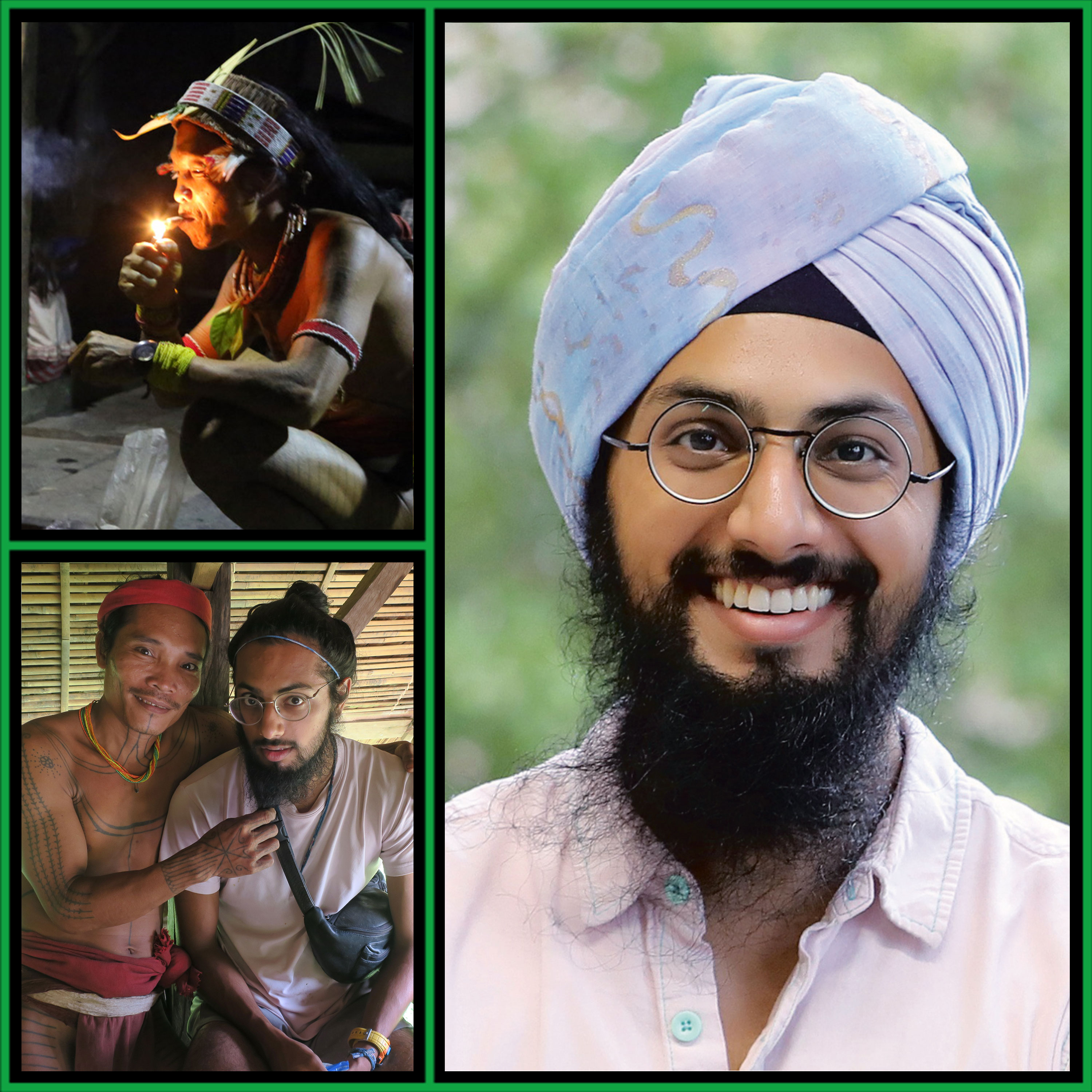
Shamanism may be humanity’s oldest religion – a tradition found across cultures, where healers slip into unseen realms, speak with spirits, and bring back knowledge from beyond the visible world. But in a modern, scientific age, these practices can seem like little more than superstition. But what if they reveal something deeper in human experience?  Anthropologist Manvir Singh set out in search of answers. On a remote island in Indonesia, he lived with the Mentawai people, watching as their shamans — the sikerie — drummed, danced and entered trance, their tattooed bodies painted in turmeric. In these altered states, they appeared to move between worlds.  How does an empirically-minded scientist make sense of such experiences? Singh combines immersive fieldwork with cross-cultural research into shamanic traditions, past and present. He calls shamanism a “timeless religion,” one that may go back to our earliest ancestors — and still lives on in the world’s major religions. Along the way, he asks a provocative question: Was Jesus a shaman? — 00:00:00 The Macumba Exorcism in Brazil 00:04:35 Meeting the Sikerei of Siberut 00:08:30 Inside a Shamanic Healing Ceremony 00:17:05 Psychedelics and Altered States 00:22:10 Shamanism as the First Religion 00:29:25 Was Jesus a Shaman? — Manvir’s book, “Shamanism” Manvir’s article in The Guardian on the debate over the history of psychedelics in indigenous cultures — Wonder Cabinet is hosted by Anne Strainchamps and Steve Paulson. Find out more about the show at https://wondercabinetproductions.com, where you can subscribe to the podcast and our newsletter.
34 minAbspielen in:

Sa28Mär
Wonder CabinetDG

David George HaskellGast

David George Haskell: Flowers and the Revolutionary Power of Beauty

For thousands of years, flowers have threaded themselves through human life—into our rituals, our art, our language, even our names. We decorate our homes and altars with them, distill their scents, celebrate them in poetry and song. But what if we’ve misunderstood them entirely? In “How Flowers Made Our World,” biologist and writer David George Haskell invites us to see flowers not as delicate embellishments, but as one of the most powerful forces in Earth’s history. When flowering plants emerged more than 200 million years ago, they didn’t just adapt to the world—they transformed it. Through strategies of beauty, attraction, and reciprocity, they turned rivals into partners, reshaping ecosystems and making possible the rich diversity of life we know today. In a lyrical, science-rich conversation, we explore: — Why Haskell calls flowers “nature’s revolutionaries” — How beauty, pleasure, and desire function as evolutionary strategies — The deep interdependence between flowers, animals, and humans — What flowers can teach us about resilience in a time of ecological crisis — How re-centering flowers might change the story we tell about life on Earth We live on a floral planet, Haskell says—and more than that, we are a floral species, utterly dependent on flowering plants for food, habitat, and survival. The lessons flowers offer—about creativity, cooperation, and transformation—may be exactly what we need to navigate a rapidly changing world. What would it mean to tell the story of life not through predators and conquest, but through seduction, partnership and bloom? — 00:00:00 Introduction 00:03:50 Flowers Remade the World 00:12:40 The Scent of Ancient Flowers 00:22:00 The Language of Perfume 00:30:30 Belonging to the Living World — David's book: “How Flowers Made Our World: The Story of Nature’s Revolutionaries”  To the Best of Our Knowledge (2020): David George Haskell on the forest unseen To the Best of Our Knowledge feature (2021): Listening to trees as fellow citizens — Wonder Cabinet is hosted by Anne Strainchamps and Steve Paulson. Find out more about the show at https://wondercabinetproductions.com, where you can subscribe to the podcast and our newsletter.
42 minAbspielen in:

Sa7Mär
Wonder CabinetRobert Macfarlane

Robert MacfarlaneGast

Robert Macfarlane: The Soul of Rivers and the Rights of Nature

What if a river is alive–but we’ve forgotten how to recognize it? This is the radical idea at the heart of the global “rights of nature” movement, which seeks to grant rivers, forests and ecosystems legal standing. Rooted in ancient traditions and emerging in modern law, it challenges the notion of nature as property and a resource to be exploited. In “Is a River Alive?”, acclaimed writer and explorer Robert Macfarlane travels to remote waterways in Ecuador, India and Canada, meeting mycologists, Indigenous river-keepers, and activists who see the natural world as animate and ensouled. Known for celebrated books like “Underland,” “The Old Ways,” and “Mountains of the Mind,” Macfarlane blends storytelling, natural history and philosophy in an invitation to reimagine our relationship with the living Earth. If rivers have rights—and perhaps even a kind of consciousness—how would that change the way we see the world? — 00:00:00 Introduction 00:03:00 Is a River Alive? 00:10:50 Ecuador's Cloud Forest 00:19:40 Chennai's Dying Rivers 00:24:15 Wild River in Quebec — To the Best of Our Knowledge – Macfarlane describes the allure and our fascination with the underground world of caves, mines, catacombs and glacial shafts beneath the earth's surface.  To the Best of Our Knowledge - Macfarlane offers a book recommendation: “The Living Mountain” by the Scottish poet and writer Nan Shepherd. University of Cambridge – Robert Macfarlane’s faculty page — Wonder Cabinet is hosted by Anne Strainchamps and Steve Paulson. Find out more about the show at https://wondercabinetproductions.com, where you can subscribe to the podcast and our newsletter.

38 minAbspielen in:

Sa28Feb
Wonder CabinetRB

Renee BerglandGast

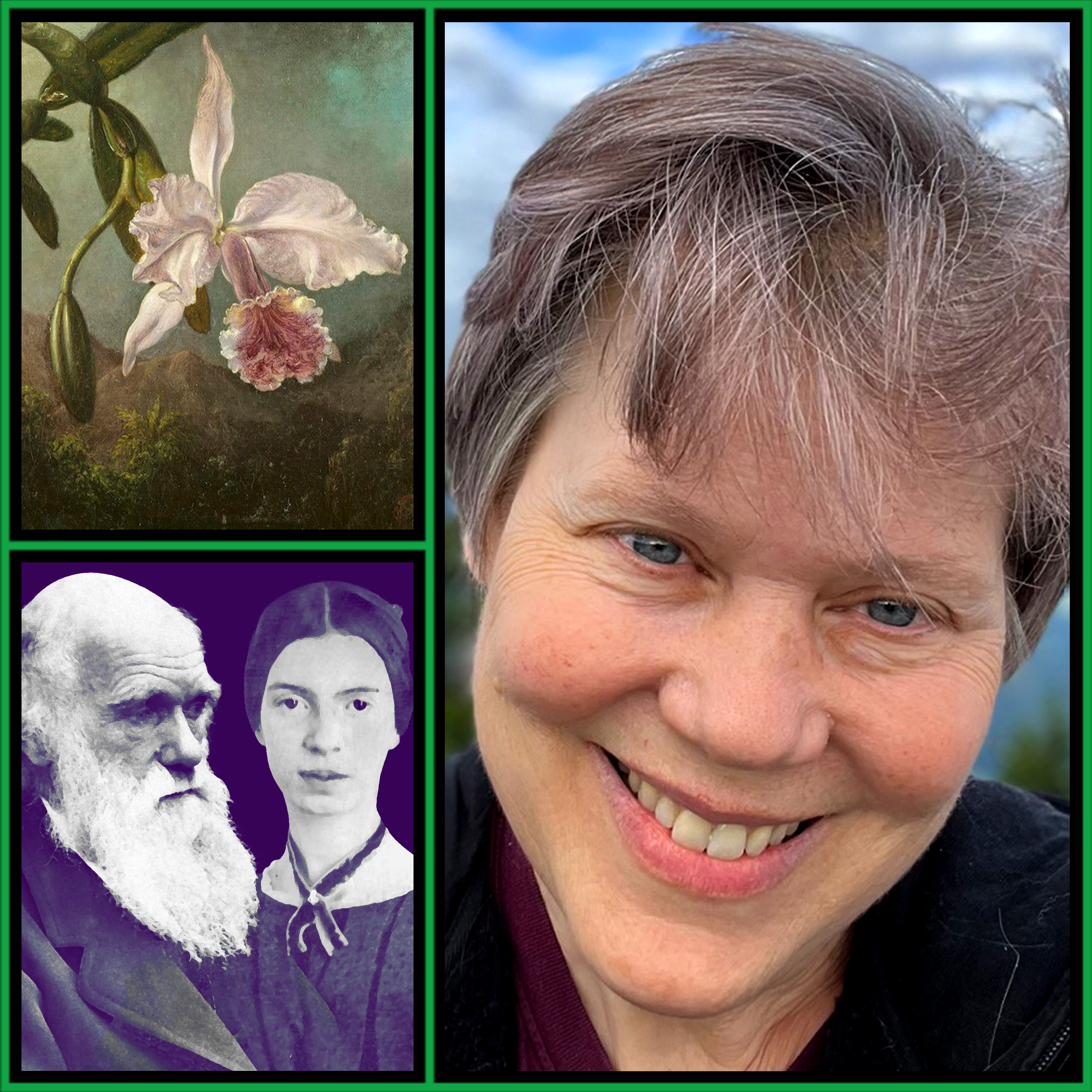
Renee Bergland: The Enchanted Science of Emily Dickinson and Charles Darwin

Emily Dickinson and Charles Darwin both saw nature as alive with mystery – and treated wonder as a way of knowing. Literary scholar and science historian Renee Bergland, author of "Natural Magic," is our guide to the forgotten kinship between the reclusive poet and the celebrated naturalist.  Dickinson and Darwin never met, but they had at least one close friend in common. Both were both fascinated by fossils. Both wandered the woods and swamps near their homes, studying insects and documenting rare plants. They shared a vision of the interconnectedness of all life. We know that Dickinson, with her background in botany, geology, astronomy and chemistry, was enthralled by Darwin’s evolutionary theory. And it certainly seems possible that Darwin, with his degree in theology and his lifelong love of poetry and literature, might have admired the American poet whose close observations and delicate perceptions echoed his own.  Bergland’s dual biography, just out in paper, is vivid, sparkling intellectual history – a window onto a time when scientific thinking still embraced emotion and wonder as modes of perception. Could the belief in “natural magic” that infused Dickinson’s and Darwin’s ideas restore our own faith in a universe alive with meaning? Our conversation about the poet who studied natural history and the naturalist who loved poetry suggests a way forward – by reclaiming their shared ecological wonder.  — 00:00:00 Meeting Renee Bergland 00:09:00 What Is Natural Magic? 00:20:00 Beauty, Truth, and Evolution 00:34:00 Hope and the Garden of Change — Now out in paperback: "Natural Magic: Emily Dickinson, Charles Darwin, and the Dawn of Modern Science" Previous books from Renee Bergland: "Maria Mitchell and the Sexing of Science: An Astronomer Among the American Romantics" and "The National Uncanny: Indian Ghosts and American Subjects"  — Wonder Cabinet is hosted by Anne Strainchamps and Steve Paulson. Find out more about the show at https://wondercabinetproductions.com, where you can subscribe to the podcast and our newsletter.
39 minAbspielen in:

Sa21Feb
Wonder CabinetGeorge Saunders

George SaundersGast

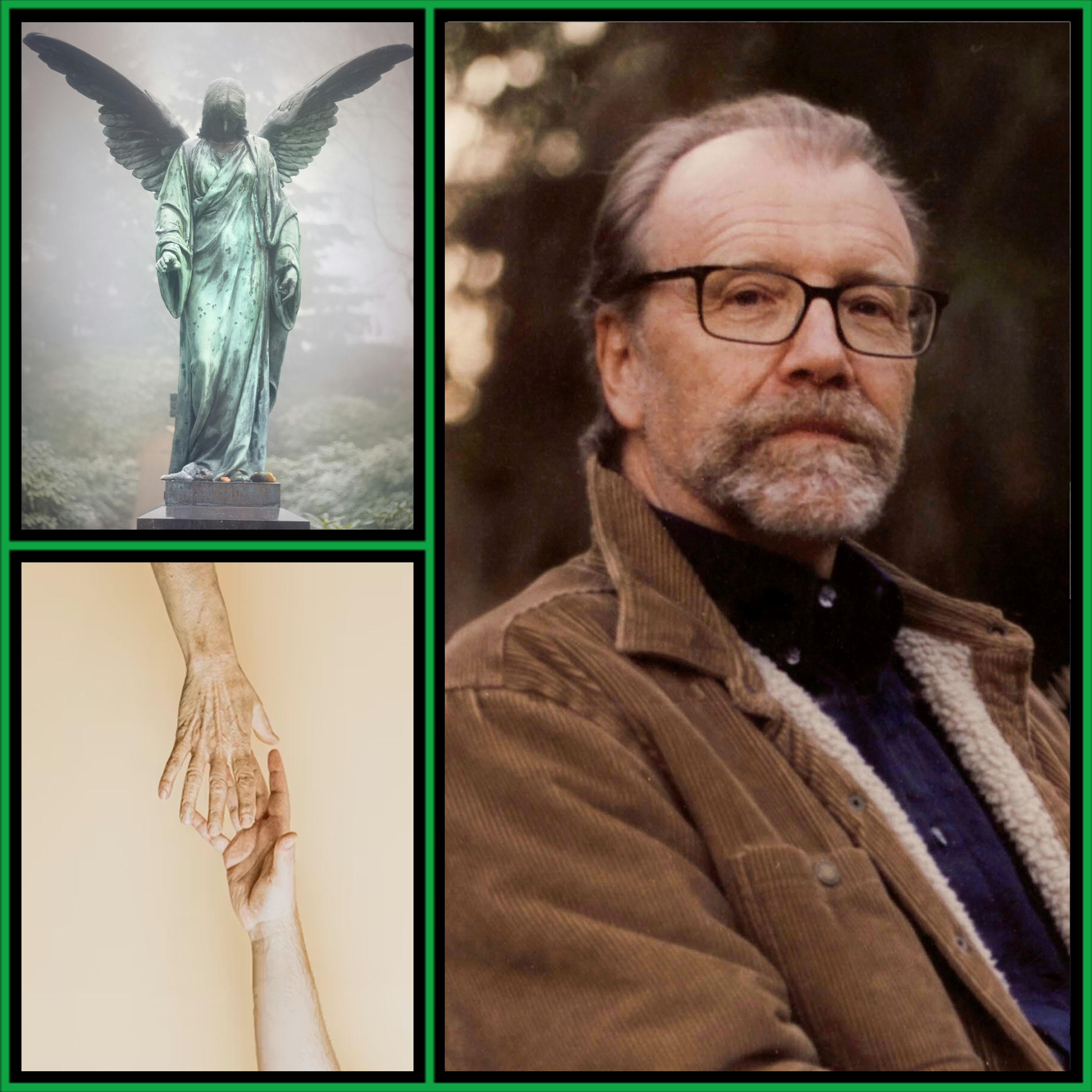
George Saunders: Angels, Ghosts and the Moral Imagination

What if dying is not an ending, but a moment of radical clarity? In his new novel "Vigil," George Saunders conjures a strange and often comic world of bickering angels visiting a dying, deeply flawed man—debating and waiting to see whether he can face the truth about himself before it’s too late. In this conversation, Steve Paulson talks with Saunders about the evolution of his ideas about death and the possibility of an afterlife. Dying, he says, may be “the ultimate experience of wonder,” and he believes ghost stories can open powerful imaginative spaces for novelists. Saunders reflects on his own Buddhist practice as he considers these life-and-death questions, and he tells us why he thinks fiction is uniquely suited to grappling with complex moral issues and why Tolstoy and Chekhov are his personal sources of inspiration. Saunders is the author of such celebrated books as “Tenth of December,” “Pastoralia,” and the Booker Prize-winning “Lincoln in the Bardo.”  His nonfiction book about the great Russian writers is “A Swim in a Pond in the Rain.” This interview was recorded at the Central Library in downtown Madison shortly before Saunders spoke at the Wisconsin Book Festival. — 00:00:00 Introduction and Reading from Vigil 00:07:50 The Plane Crash and Death Obsession 00:15:00 The Writing Process and Wonder 00:24:30 Moral Accountability in Fiction 00:32:20 Chekhov, Succession, and Accuracy 00:40:00 Kindness, Criticism, and Final Thoughts — To the Best of Our Knowledge — On his short story collection “Tenth of December.  To the Best of Our Knowledge: Reflecting on “Lincoln in the Bardo.” Substack Story Club with George Saunders — Wonder Cabinet is hosted by Anne Strainchamps and Steve Paulson. Find out more about the show at https://wondercabinetproductions.com, where you can subscribe to the podcast and our newsletter.
45 minAbspielen in:

Sa14Feb
Wonder CabinetRebecca Solnit

Rebecca SolnitGast

Rebecca Solnit: Hope After the End

How do you deal with the emotional toll of living in a time of dissolution? Social scientists use the term "polycrisis" to describe the kind of cascading, overlapping failures that can lead to systemic collapse, and it’s hard not to see the symptoms of a dying world order in events unfolding around us.  But maybe what we’re witnessing is actually grounds for hope. In a forthcoming book "The Beginning Comes After the End," writer and activist Rebecca Solnit makes the case that something is dying, all right — because something better is being born. A rising worldview that embraces antiracism, feminism, environmental thinking, Indigenous and non-Western ideas, and a vision of a more interconnected, compassionate world.   Solnit is an engaged writer and intellectual in the tradition of Barbara Ehrenreich, Susan Sontag and George Orwell. Her new book picks up where her earlier bestseller “Hope in the Dark”  left off — with an argument against despair and historical amnesia. In this conversation, we explore the extraordinary scale of progressive social, political, scientific and cultural change over the past century, the roots of Solnit’s stance of “pragmatic, embodied hope,” her thoughts on “moral wonder, “ and her years in San Francisco’s underground punk rock scene.  She also tells us what she’d put in our own wonder cabinet: an AIDS Memorial Quilt square sewn by Rosa Parks.  — 00:00:00 Introduction 00:04:00 A Land Back Ceremony 00:08:05 Progress in Disguise 00:18:35 Hope and Interconnection 00:29:45 Defiant Hope — To The Best Of Our Knowledge — Tending a wartime garden: what Orwell’s fascination with roses tells us about the human need for beauty  Rebecca Solnit’s newsletter  Pre-order “The Beginning Comes After the End," due out March 3, 2026.  — Wonder Cabinet is hosted by Anne Strainchamps and Steve Paulson. Find out more about the show at https://wondercabinetproductions.com, where you can subscribe to the podcast and our newsletter.

38 minAbspielen in:

Sa7Feb
Wonder CabinetCarlo Rovelli

Carlo RovelliGast

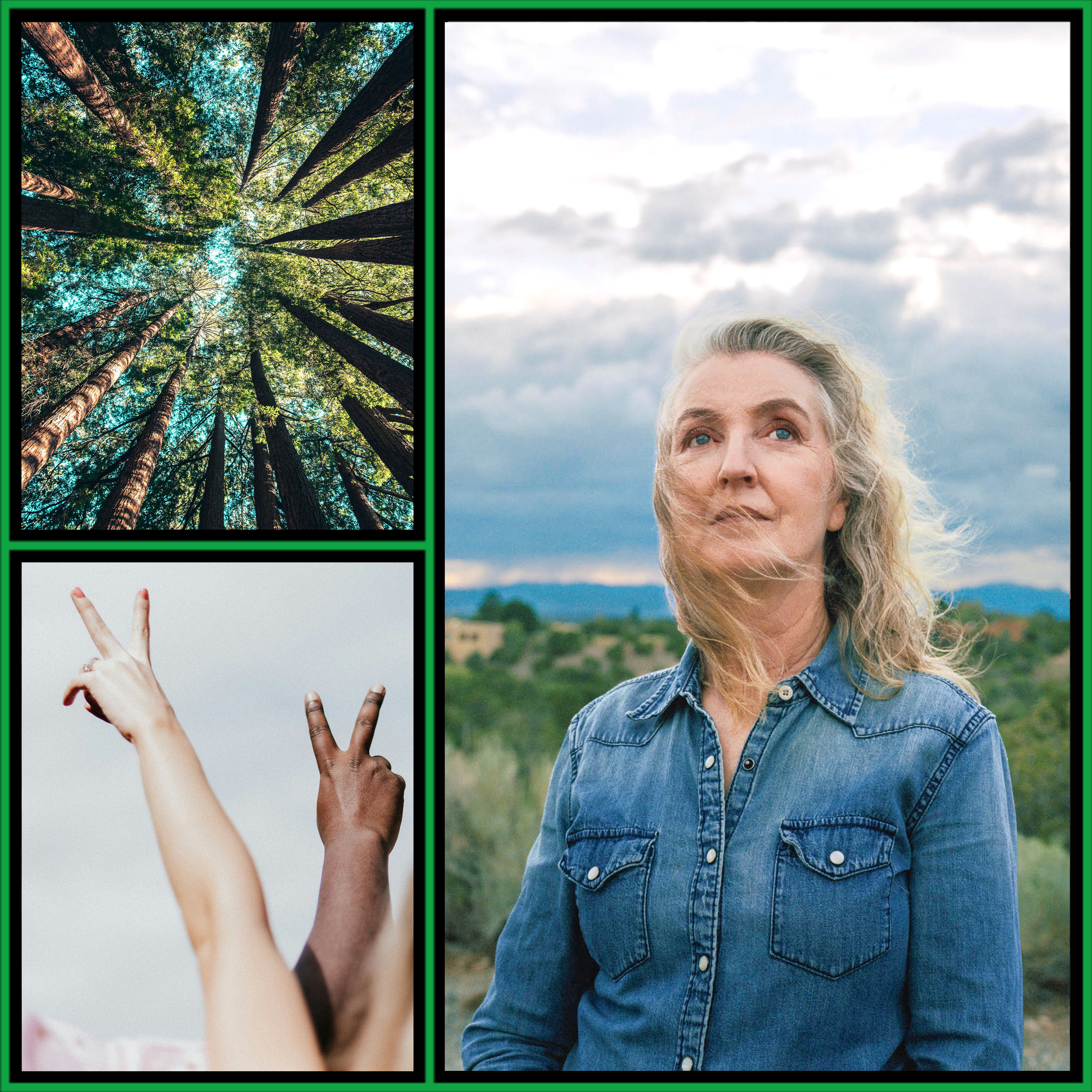
Carlo Rovelli: Cosmic Mysteries and the Politics of Wonder

Carlo Rovelli’s quest to understand the nature of reality began not in a physics lab, but in youthful experiments with consciousness, political protest and a restless hunger for meaning—years before he “fell madly in love with physics.” Today, Rovelli is famous for his bestselling books, including "Seven Brief Lessons on Physics" and "Reality Is Not What It Seems," and his pioneering work on some of the biggest mysteries in physics, including black holes and quantum gravity.  In a wide-ranging conversation, Steve Paulson talks with Rovelli about his early, profound experiences with LSD; his discovery of the "spectacular" beauty of general relativity and quantum mechanics; his lifelong search for purpose in both the cosmos and his own life; and why scientists need to be politically engaged. Carlo also tells us about the big idea that he’d put in our own wonder cabinet. This interview was recorded at the Island of Knowledge think tank in Tuscany, a project supported by Dartmouth College and the John Templeton Foundation. We also play a short excerpt from Anne Strainchamps’ earlier interview with Rovelli that originally aired on Wisconsin Public Radio’s To The Best Of Our Knowledge.  This Wonder Cabinet episode was not funded, endorsed or affiliated with Wisconsin Public Media or the University of Wisconsin - Madison. — 00:00:00 Introduction & The Chirp of Black Holes 00:04:10 Early Years in Verona 00:10:00 Falling in Love with Physics 00:17:30 Search for Truth 00:25:05 Politics of Wonder — TTBOOK Interview — Deep time: Carlo Rovelli's white holes, where time dissolves Carlo Rovelli's Website — Official research and publications — Wonder Cabinet is hosted by Anne Strainchamps and Steve Paulson. Find out more about the show at https://wondercabinetproductions.com, where you can subscribe to the podcast and our newsletter.
38 minAbspielen in:

Sa31Jan
Wonder CabinetSS

Sophie StrandGast

Sophie Strand: Ecological Storytelling and Mythic Imagination

Writer and ecologist Sophie Strand thinks at a scale that can feel dizzying—in the best way. In a single conversation, she can move from the chemical structure of cells to mushroom spores, from ancient weather gods to mycorrhizal fungi, from Bronze Age collapse to the slow intelligence of soil. In this episode of Wonder Cabinet, we talk with Strand about wonder that doesn’t float upward but roots downward—into bodies, ecosystems, decay, and deep time. We begin with her essay “Your Body Is an Ancestor,” published shortly before Halloween and the Day of the Dead, and follow her imagery into our shared prehistoric past.  The conversation also explores how Strand’s experience of chronic illness reshaped her understanding of nature, selfhood, and health. Rather than seeing the sick body as broken, she turns to ecological metaphors: spider webs, soil structures, caterpillars dissolving inside cocoons. What might it mean to understand ourselves not as machines that fail, but as landscapes that change? Along the way, we talk about fantasy and “romantasy,” Tolkien, Harry Potter, Dramione fan fiction and communal storytelling rituals.  This is a conversation about wonder with dirt under its fingernails: embodied, mythic, ecological, and deeply alive to the cycles of death and regeneration that bind us all. — 00:00:00 Meet Sophie Strand 00:04:34 Body as Ancestor 00:10:08 Roots of Sin 00:18:21 Spores and Consciousness 00:27:49 Stories We Can't Explain 00:35:39 Science as Wonder — Substack: "Your Body is an Ancestor" Sophie Strand’s website  Follow her work on Instagram and Substack Order her memoir — Wonder Cabinet is hosted by Anne Strainchamps and Steve Paulson. Find out more about the show at https://wondercabinetproductions.com, where you can subscribe to the podcast and our newsletter.

39 minAbspielen in:

Gäste, die länger als 12 Monate zurückliegen, gibt es mit Pro. Pläne ansehen