Can Science Be Sacred?
Who is on this episode
Adam FrankGuest
Why PodAppear says guest
“Marcelo Gleiser, theoretical physicist at Dartmouth and winner of the 2019 Templeton Prize, and Adam Frank, astrophysicist at the University of Rochester, argue that Kepler, Newton and Einstein saw their equations as something close to p…”Marcelo GleiserGuest
Why PodAppear says guest
“Marcelo Gleiser, theoretical physicist at Dartmouth and winner of the 2019 Templeton Prize, and Adam Frank, astrophysicist at the University of Rochester, argue that Kepler, Newton and Einstein saw their equations as something close to p…”Chapters
Time stamps from the show notes. Tap one to play from there. Ads that the host adds to each listen can move these times by a minute or two.
Episode notes
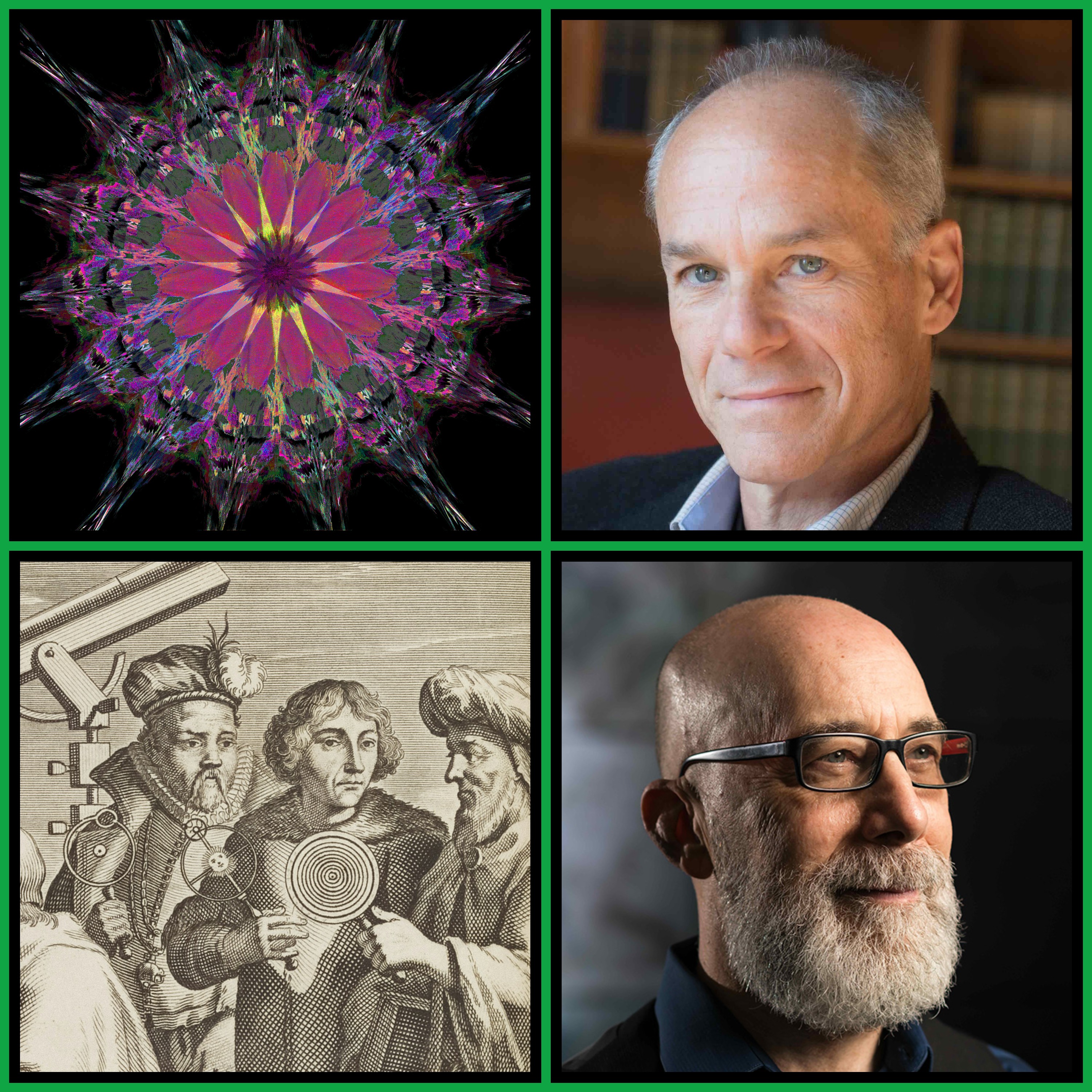
In the hills near Siena, at a small think tank called the Island of Knowledge, Anne Strainchamps sits down with two physicists who believe modern science needs to remember its roots. Marcelo Gleiser, theoretical physicist at Dartmouth and winner of the 2019 Templeton Prize, and Adam Frank, astrophysicist at the University of Rochester, argue that Kepler, Newton and Einstein saw their equations as something close to prayer. Somewhere along the way, science came to treat nature as dead matter to be poked, extracted and burned. Marcelo and Adam call the remedy “resacralizing” the world.
Show all notes
Their conversation moves from Galileo’s beautifully crafted instruments to Frankenstein and transhumanism, from the mystic physicists who invented quantum mechanics to the postwar American push to “just calculate.” They talk about hierophany, the moment when the sacred breaks into ordinary life, and how it can arrive in the middle of a calculation. Marcelo recalls the thrill of discovering the oscillon, a bubble of energy that doesn’t want to die. Adam describes Zen kensho and the poetry hiding inside mathematics.
They also speak about the losses they carried from childhood, and how the stars and the big questions of physics offered direction and perspective. Finally, they look beyond the Western canon, to Brazil’s indigenous traditions and to philosophers like Nagarjuna, for the ideas that could help build a new kind of science.
–
More from the "Island of Knowledge" series
Book: "The Blind Spot: Why Science Cannot Ignore Human Experience"
Book: "Frankenstein"
Book: "The Constant Fire: Beyond the Science and Religion Debate"
Book: "The Dancing Universe: From Creation Myths to the Big Bang"
The Island of Knowledge
–
00:00:00 Introduction
00:03:05 Galileo and the Dead Universe
00:16:48 Awe at the Blackboard
00:29:05 Grief and Other Ways of Knowing
Wonder Cabinet is hosted by Anne Strainchamps and Steve Paulson. Find out more about the show at https://wondercabinetproductions.com, where you can subscribe to the podcast and our newsletter.