Bekomm eine E-Mail, wenn Tomas in einem Podcast zu Gast istPodAppear prüft neue Folgen, sobald sie erscheinen, und lässt die weg, in denen Tomas nur erwähnt wird. Bis zu 15 Personen kostenlos, ohne Kreditkarte.Bis zu 15 Personen kostenlos, ohne Kreditkarte.
Tomas Chamorro-Premuzic war in den letzten 12 Monaten in 3 Podcast-Folgen aus 3 verschiedenen Sendungen zu Gast. Zuletzt: McKinsey Talks Talent, 25. März 2026.
Being yourself at work has become a corporate mantra—and it certainly started in a well-meaning way. But it can also have significant downsides, according to Tomas Chamorro-Premuzic, author of Don’t Be Yourself: Why Authenticity Is Overrated (and What to Do Instead). In this episode of McKinsey Talks Talent, Chamorro-Premuzic joins McKinsey leaders and talent experts Brooke Weddle and Bryan Hancock, as well as Global Editorial Director Lucia Rahilly, to explore what authenticity really means in the workplace, when it helps and hurts, and what may matter more for employees looking to accelerate their leadership trajectory in the age of AI.
See www.mckinsey.com/privacy-policy for privacy information
“Be yourself.” “Bring your whole self to work.” “Don’t worry what people think.”
These phrases sound empowering—but in real workplaces, they can create confusion, conflict, and even harm.
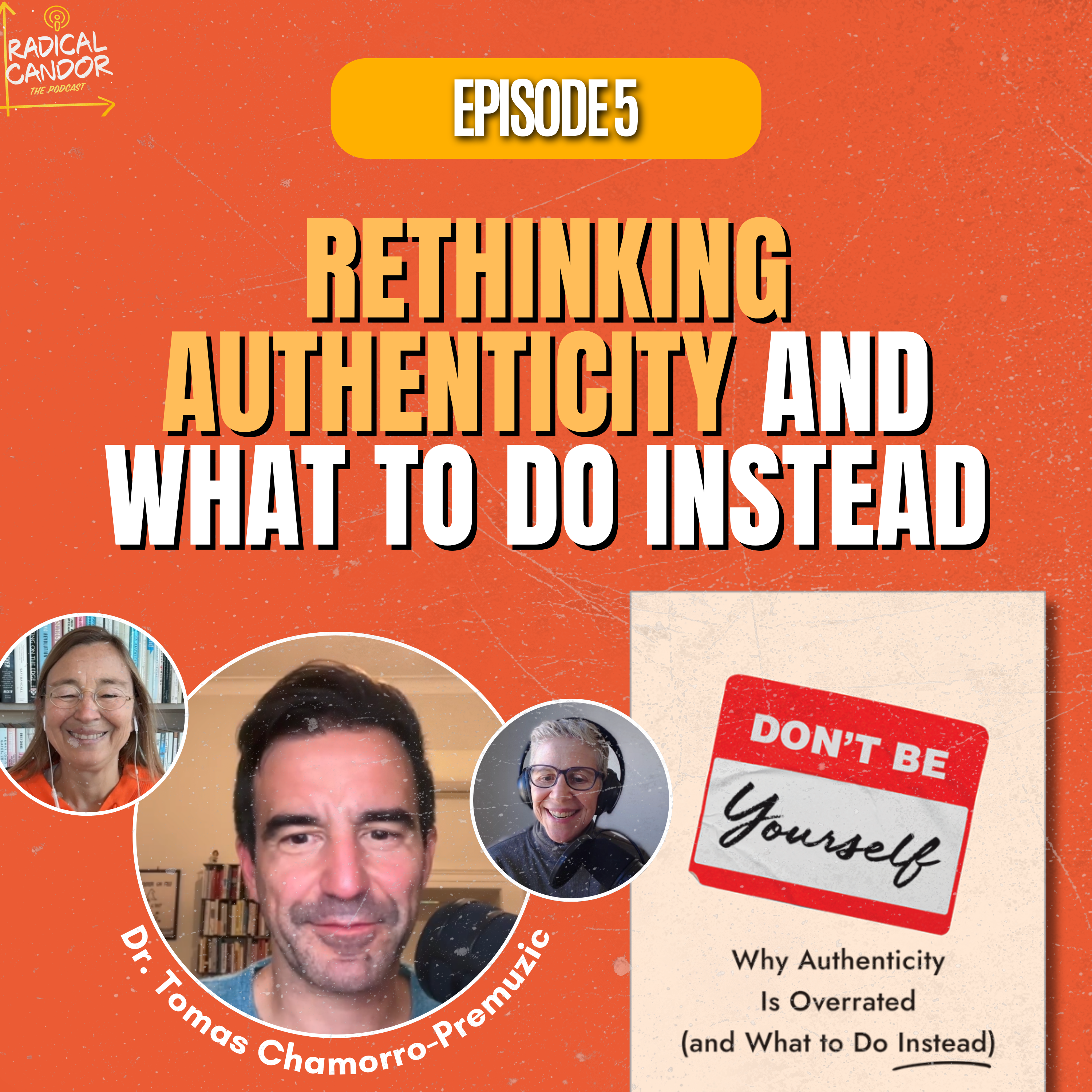
In this episode of The Radical Candor Podcast, Kim Scott and Amy Sandler sit down with organizational psychologist Tomas Chamorro-Premuzic—Chief Science Officer at Russell Reynolds Associates, professor of business psychology at University College London and Columbia University, and author of Don’t Be Yourself: Why Authenticity Is Overrated and What to Do Instead.
They start with a moment of actual Radical Candor: Kim reached out after Tomas and Amy Edmondson accidentally conflated Radical Candor with “brutal honesty.” Instead of stewing, she did the hard (and human) thing—she talked to him. That conversation sets the tone for a bigger question: What does it really mean to be “authentic” at work?
Tomas breaks down four “authenticity traps” that sound like wisdom but often backfire:
Always be honest with yourself and others
Don’t worry what people think of you
Always stay true to your values, no matter what
Bring your whole self to work
Together, they explore what replaces these traps: self-complexity, emotional intelligence, feedback you can absorb without defensiveness, and the discipline to regulate your impulses so you can build trust and safety—without turning the workplace into either chaos or conformity.
If you’ve ever felt stuck between being “real” and being effective, this episode offers a more useful frame: your right to be you should never override your obligation to others.
Website
Instagram
TikTok
LinkedIn
YouTube
Bluesky
Resources:
Fast Company: To create psychological safety, don't bring your whole self to work
TEDx Talk: Why Do So Many Incompetent Men Become Leaders?
Next Big Idea Club: The Surprising Science of Why Being Authentic Can Hold You Back
HBR Podcast: Why Are We Still Promoting Incompetent Men?
Why Do So Many Incompetent Men Become Leaders? (And How To Fix It) [book]
Don't Be Yourself: Why Authenticity Is Overrated and What to Do Instead [book]
I, Human: AI, Automation, and the Quest to Reclaim What Makes Us Unique [book]
Dr. Tomas Chamorro-Premuzic [website]
Mentioned on the podcast:
Infantilised: How Our Culture Killed Adulthood [book]
Seinfeld episode: Life Hack “Do the opposite” [YouTube short]
The Best Leaders are Great Followers HBR article by Tomas Chamorro-Premuzic and Amy C. Edmondson
Chapters:
(00:00) IntroductionKim and Amy welcome Tomas Chamorro-Premuzic and reflect on how this conversation began with Radical Candor.
(03:10) Radical Candor vs. “Brutal Honesty”How a misinterpretation sparked a real conversation about kindness, nuance, and impact.
(07:20) Why “Don’t Be Yourself”The meaning behind the provocative title and why authenticity advice often backfires at work.
(14:10) The Four Authenticity TrapsAlways be honest, don’t care what people think, never compromise your values, and bring your whole self to work.
(19:30) Confidence, Competence, and FeedbackWhy developing skill comes first—and how confidence is often about timing and delivery.
(27:30) Staying True to Values Without Becoming DogmaticWhy uncompromising values can divide teams and what leadership actually requires.
(30:10) Authenticity as PrivilegeWhy complete self-expression is often a luxury of the powerful, not a universal standard.
(36:15) Psychological Safety Isn’t ComfortWhy safety should enable productive discomfort, not chaos or bullying.
(41:55) Emotional Intelligence vs. Unfiltered AuthenticityWhy adapting to others is a strength, not a lack of integrity.
(49:10) Regulating Impulses as a LeaderHow filtering behavior builds trust without sacrificing humanity.
(01:03:50) Conclusion
Connect:Resources for show notes:
Learn more about your ad choices. Visit megaphone.fm/adchoices
Be yourself. That’s the advice we give graduates, job seekers, and leaders. But what if it’s wrong?
In this episode of Hello Monday, Jessi Hempel sits down with organizational psychologist and author Tomas Chamorro-Premuzic to interrogate one of the most popular ideas in modern career advice: authenticity at work.
Tomas is the Chief Talent Scientist at ManpowerGroup, a professor of business psychology, and the author of Don't Be Yourself. His research explores personality, leadership, workplace performance, and the science of success. In this conversation, he challenges the notion that “just be yourself” is the key to career growth—especially in a rapidly changing job market shaped by AI, shifting power dynamics, and rising inequality.
Together, Jessi and Tomas unpack how authenticity functions as both a personal value and a professional strategy—and why it can be a privilege reserved for those already in the “in-group.” They also examine what young professionals, underemployed graduates, and leaders navigating AI disruption need to understand about perception, communication skills, and the future of work.
Jessi and Tomas discuss:
• Why authenticity at work is often misunderstood—and how perception matters more than self-expression
• The hidden privilege behind “bring your whole self to work”
• In-group vs. out-group dynamics in workplace culture
• AI and the future of work: entry-level jobs, automation, and the changing career ladder
• Why curiosity—not authenticity—may be a critical skill for 2026
• Balancing personal values with organizational expectations
• The psychology of influence, impression management, and professional success
If you’ve ever felt frustrated by workplace politics, confused about how much of yourself to reveal at work, or anxious about how AI is reshaping career paths, this episode is for you.
We will be launching the Hello Monday book club soon. If you’re interested in joining, send us an email at hellomonday@linkedin.com and let us know!
Watch on YouTube: https://bit.ly/hellomonday-LI-video-youtube
Watch/Listen on Spotify: https://bit.ly/hellomonday-LI-video-spotify
Listen on Apple: https://bit.ly/hellomonday-LI-video-apple
28 minAbspielen in:
Warum PodAppear
Folge Menschen, nicht Podcasts.
Du hast Tomas in einer Sendung gehört. PodAppear findet für dich die nächste, und genauso für alle anderen, die du hören willst.
Eine Meldung, wenn die Person zu Gast istPer E-Mail: sofort oder gebündelt als Tages- oder Wochenübersicht. Dann nur noch auf Play drücken.
Gäste statt bloßer ErwähnungenFolgen, in denen ein Name nur fällt, landen getrennt. Eine Meldung heißt: Die Person ist wirklich in der Sendung.
Alle in einem FeedGründerinnen, Autoren, Sportler, Forscherinnen. Folge allen mit Namen, quer durch jede Sendung, in der sie auftreten.