Bekomm eine E-Mail, wenn Tim in einem Podcast zu Gast istPodAppear prüft neue Folgen, sobald sie erscheinen, und lässt die weg, in denen Tim nur erwähnt wird. Bis zu 15 Personen kostenlos, ohne Kreditkarte.Bis zu 15 Personen kostenlos, ohne Kreditkarte.
Tim kostenlos folgen
TS

Tim Scarfe

Zwei Jahre auf Sendung

GastHostErwähnt

Selbst moderierte Folgen

Do1Okt
Machine Learning Street Talk (MLST)

Machine Learning Street Talk (MLST)Host

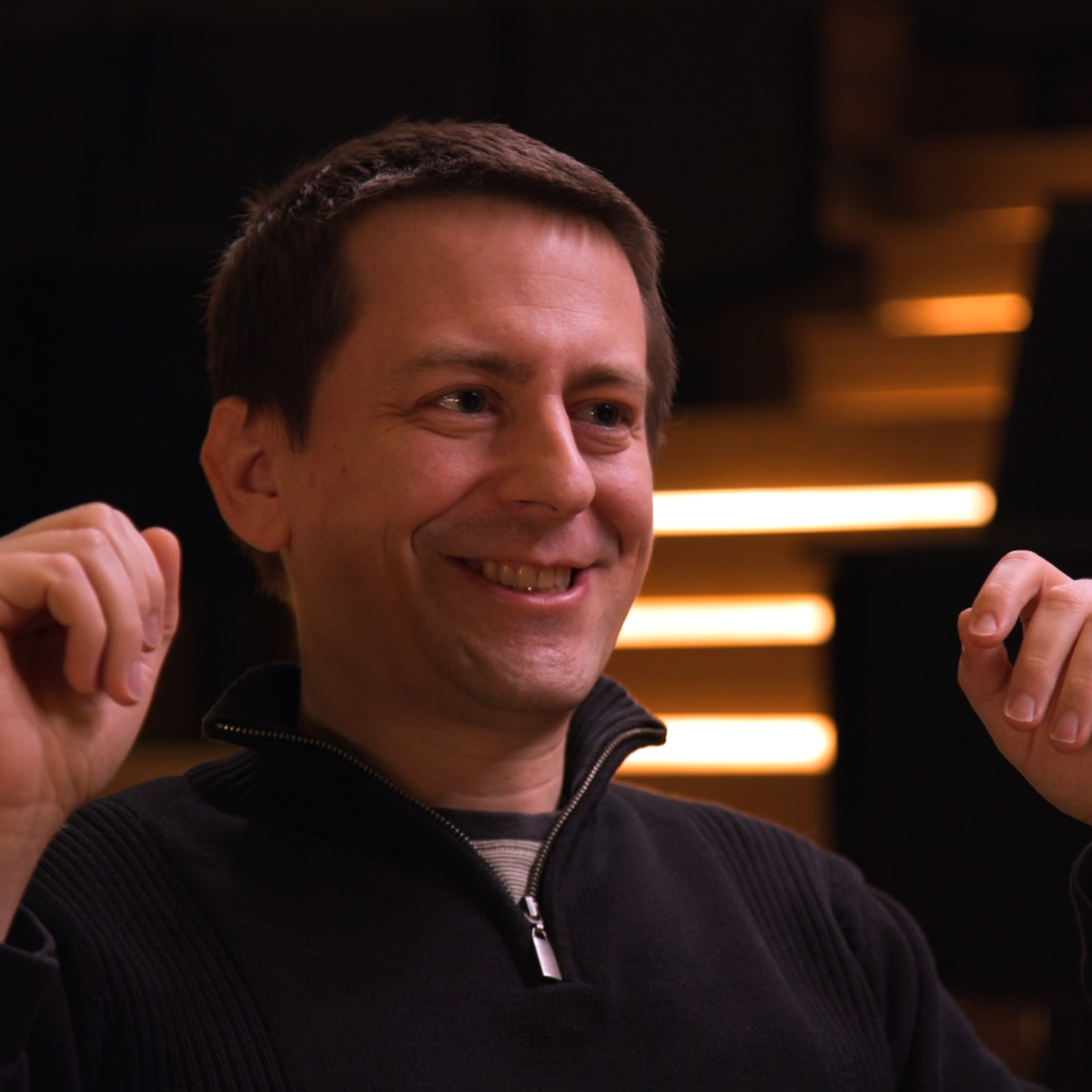
How a Voice Agent Learns the Rhythm of Conversation — Shawn Wen

Tsung-Hsien (Shawn) Wen, CTO of PolyAI, tells Tim Scarfe why voice agents are harder than text agents. Voice adds time, and a good conversation depends on adapting to the person on the line, not just on reasoning to the best answer. Shawn describes an audio-native model (Dialog-RSN-1) that first predicts a turn-taking signal, then replies in text with citations, and writes the transcript last so enterprises can audit it.Along the way: training on real, noisy calls with synthetic noise added, and why over-cleaned audio made the new model worse. Latency, and what a voice agent should do while it thinks. Why a voice with a hint of regional accent beats a generic one. Why public benchmarks fall short for voice, why enterprises want to own their agent harness, and whether behaviour belongs in the harness or in the weights.The last stretch is about working with agents: cognitive debt, the shift from producing content to checking it, Wispr Flow, building tools that agents can use, and whether slop is in the eye of the reader.This episode was produced in partnership with PolyAI.https://poly.ai CHAPTERS0:00 Why voice agents are harder than text4:27 What enterprises want, and why PolyAI built its own model9:04 How an audio-native voice model works15:21 Training data, spectrograms and synthetic noise20:36 The cocktail party problem and the future of turn-taking25:21 Latency, adaptive reasoning and keeping callers' trust31:33 Voices, personality and the uncanny valley36:32 How do you benchmark a voice agent?42:00 Harness engineering and owning the intelligence45:09 Well-specified problems and auditable agents49:46 Weight adaptation and cognitive debt56:31 Agents at work: Wispr Flow, voice and tool building1:02:50 The next decade of voice, and what counts as slopREFERENCESThe Bitter Lesson: http://www.incompleteideas.net/IncIdeas/BitterLesson.html [9:05]Retrieval-augmented generation: https://arxiv.org/abs/2005.11401 [13:23]Mel scale: https://en.wikipedia.org/wiki/Mel_scale [17:16]Victor Zue: https://en.wikipedia.org/wiki/Victor_Zue [17:45]Cocktail party effect: https://en.wikipedia.org/wiki/Cocktail_party_effect [20:39]Speaker diarisation: https://en.wikipedia.org/wiki/Speaker_diarisation [21:16]

1 h 10 minAbspielen in:

Sa26Sep
Machine Learning Street Talk (MLST)

Machine Learning Street Talk (MLST)Host

When AI Research Starts Moving Faster Than Human Research - Zhengyao Jiang

Weco let an AI coding agent rewrite the harness around another agent for eight days: its code, prompts and tools, while the underlying language model stayed fixed. Tim Scarfe asks Weco co-founder Zhengyao Jiang what the reported gains over two years of human engineering actually demonstrate.The discussion examines AIDE 85's generated code, held-out evaluation and the difficulty of separating useful discoveries from reward hacking. Jiang explains Weco's four levels of recursive self-improvement and compares the experiment with AlphaEvolve and the Darwin Gödel Machine.The limits matter as much as the gains. Jiang explains why the experiment did not establish that the system had become a better improver. The conversation closes with open-ended search, human-designed primitives and Parameter Golf: where does the next useful idea come from when the agent is searching inside a space that people designed?---TIMESTAMPS:00:00:00 Eight days of self-improvement: what counts?00:03:25 AIDE and the puzzle of useful spaghetti code00:08:38 Four levels of recursive self-improvement00:12:02 What AIDE 85 changed and how it was tested00:20:04 AlphaEvolve, Darwin Gödel Machine and the RSI claim00:26:21 Reward hacking and the limits of detection00:33:09 Open-ended search, harness tuning and creativity00:39:43 Parameter Golf and the limits of self-improvement---REFERENCES:organization:[00:00:30] Weco AIhttps://www.weco.ai/other:[00:00:33] AIDE²: The First Evidence of Recursive Self-Improvementhttps://www.weco.ai/blog/first-evidence-of-recursive-self-improvement[00:14:11] Faulty reward functions in the wildhttps://openai.com/index/faulty-reward-functions/[00:29:59] The Hugging Face incident and the road aheadhttps://openai.com/index/hugging-face-incident-and-the-road-ahead/tool:[00:03:29] AIDEhttps://github.com/WecoAI/aideml[00:04:29] MLE-benchhttps://github.com/openai/mle-bench[00:04:33] ALE-Benchhttps://github.com/SakanaAI/ALE-Bench[00:04:52] WeatherBench 2https://github.com/google-research/weatherbench2[00:08:18] ReActhttps://react-lm.github.io/[00:39:43] Parameter Golfhttps://github.com/openai/parameter-golfpaper:[00:20:08] AlphaEvolve: A coding agent for scientific and algorithmic discoveryhttps://arxiv.org/abs/2506.13131v1[00:21:35] Darwin Gödel Machine: Open-Ended Evolution of Self-Improving Agentshttps://arxiv.org/abs/2505.22954v3[00:23:45] Hyperagentshttps://arxiv.org/abs/2603.19461v1[00:27:01] SpecBench: Measuring Reward Hacking in Long-Horizon Coding Agentshttps://arxiv.org/abs/2605.21384book:[00:33:14] Why Greatness Cannot Be Planned: The Myth of the Objectivehttps://link.springer.com/book/10.1007/978-3-319-15524-1---LINKS:https://app.rescript.info/share/3a9dc6189cb539c6a05fcc4f75c101b3PDF:https://app.rescript.info/api/public/sessions/9eda60ede2b31c92/pdf

44 minAbspielen in:

Mo14Sep
Machine Learning Street Talk (MLST)

Machine Learning Street Talk (MLST)Host

Speech Recognition Is Not a Solved Problem — Pavan Kumar Reddy

Pavan Kumar Reddy leads audio research at Mistral AI. He joins Tim Scarfe for a deep technical tour of Voxtral — and explains why the frontier of deployed voice is still a cascade of specialised models rather than one end-to-end system. IN PARTNERSHIP WITH MISTRAL AI: --- This episode was produced in partnership with Mistral AI. Mistral AI: https://mistral.ai/ --- The conversation opens on architecture. Voxtral Chat feeds a 3B Ministral text trunk with continuous embeddings from an audio encoder, passed to the decoder as direct token input rather than through cross-attention as in Whisper, so the model can answer questions about emotion, timing and who spoke when without an intermediate transcript to lose them. The real-time model becomes a dual-stream decoder that consumes audio and emits text at once, at a target delay down to 160ms, with slower streams in parallel for anything that can wait for more context. On generation, Pavan explains why Voxtral TTS predicts continuous latents rather than discrete codec tokens, traces the lineage from SoundStream through EnCodec to Mimi's split of semantic and acoustic codebooks, and places FSQ and flow matching in it. Tim presses on the priors underneath: why a mel spectrogram instead of raw waveform, what noise augmentation buys, and when acoustic overfitting becomes somebody's fine-tuning problem. Then the failure modes. Diarisation is emitted autoregressively inside the transcript rather than by a separate head, which makes streaming diarisation fragile — less context, late speaker changes, invented extra speakers. And because the architecture commits to what it has already predicted, one out-of-distribution mistake compounds into looping or skipped segments, which is what DPO corrects: the negative supervision pre-training and SFT cannot give. The last third is the argument Tim keeps returning to. Customers running voice agents over millions of sessions describe scaffolding, not a solved problem, with a sharp drop outside the top few languages. Cascades survive because each component stays separately adaptable, observable and constrainable. And voice alone is cognitive debt: absorbing information and deciding in one serial stream is harder than glancing at a menu. Voice becomes ubiquitous beside a screen, not instead of one. --- TIMESTAMPS: 00:00:00 Cold open 00:00:46 Why Mistral moved into audio 00:09:27 Inside Voxtral: trunk, encoder, dual streams 00:20:22 Speech that works in real time 00:30:52 How a voice becomes tokens 00:39:59 Flow matching, FSQ and the new codec 00:52:51 When speech models lose the speaker 01:03:23 Correcting hallucinations with preferences 01:12:12 Controlling synthetic speech 01:20:06 Why cascades still win 01:29:25 Speech in the wild 01:33:46 Audio models as interfaces 01:37:54 Why voice still needs a screen --- REFERENCES: paper: [00:01:42] Mistral 7B https://arxiv.org/abs/2310.06825 [00:09:38] Voxtral https://arxiv.org/abs/2507.13264 [00:14:41] Whisper: Robust Speech Recognition https://arxiv.org/abs/2212.04356 [00:19:11] Voxtral Realtime https://arxiv.org/abs/2602.11298 [00:21:52] Delayed Streams Modeling (Kyutai) https://arxiv.org/abs/2509.08753 [00:30:52] Voxtral TTS https://arxiv.org/abs/2603.25551 [00:32:38] SoundStream neural audio codec https://arxiv.org/abs/2107.03312 [00:34:59] Flow Matching for Generative Modeling https://arxiv.org/abs/2210.02747 [00:37:03] EnCodec: High Fidelity Neural Audio Compression https://arxiv.org/abs/2210.13438 [00:37:42] Moshi and the Mimi codec https://arxiv.org/abs/2410.00037 [00:39:05] Finite Scalar Quantization (FSQ) https://arxiv.org/abs/2309.15505 [01:03:33] Direct Preference Optimization (DPO) https://arxiv.org/abs/2305.18290 dataset: [00:46:14] Mozilla Common Voice https://commonvoice.mozilla.org/en/datasets organization: [00:50:47] Hugging Face https://huggingface.co/

1 h 42 minAbspielen in:

Fr11Sep
Machine Learning Street Talk (MLST)

Machine Learning Street Talk (MLST)Host

How Replication Could Teach Machines What Good Science Looks Like — Edward Hughes

Can a machine learn the judgement that separates a plausible-looking result from a faithful experiment? Edward Hughes, Chief Scientist and co-founder of Inherent, joins Tim Scarfe to argue that creativity is not optimisation, and that the missing capability in AI is choosing which questions are worth asking. SPONSOR: --- Cyber Fund built the Monastery to help founders ship products that were impossible a year ago. Apply now: https://cyber.fund --- Edward makes the case that Move 37 was innovative rather than creative, and that the field, not the individual, decides what counts as a discovery. That reframing runs through Csikszentmihalyi, Deutsch and exaptation into open-endedness, where deceptive goals and imperfect world models turn out to be the point rather than the problem. The second half turns to the paper: Replica, a task space built by redacting figures from real papers, and Faraday, a 27-billion-parameter model trained to steer a frontier coding agent that then beats the frontier on held-out replications. --- TIMESTAMPS: 00:00:00 Cold open: Move 37, Faraday and collective intelligence 00:01:08 Sponsor: CyberFund 00:01:46 Inherent's $50M raise and the road from string theory 00:09:14 Three timescales of learning: weights, context, culture 00:13:47 Move 37 was innovative, not creative: the field decides 00:20:39 Creativity as satisficing: the urinal and evolution 00:25:06 Exaptation and the Tristan chord: creativity in context 00:30:56 Coherence for whom? Deutsch's hard-to-vary explanations 00:35:53 Why copying is creative: Deutsch and the constraint engineer 00:42:27 Societies of agents and the strong Moravec paradox 00:45:51 Evaluate in hindsight: from Lean proofs to climate change 00:51:56 Picbreeder, local goals and why discovery needs deception 00:57:21 Spaghetti proofs, translation layers and superhuman Go 01:00:37 Does nature compress? Naturalness and real patterns 01:07:36 Why replicate? Replica's redacted figures and Faraday 01:12:31 Faraday beats Codex, Claude and GLM 5.2 on held-out tasks 01:15:31 Replication to innovation: how the Transformer happened 01:18:26 Deep replication: what Faraday learns from Voyager and GNoME 01:23:37 Can the AI scientist cheat? Goodharting the judge 01:29:09 Inside Replica: scale-down, 8xB300 runs, per-task rubrics 01:34:11 The RL crisis: getting GRPO to work with per-turn credit 01:39:43 Weights vs harnesses: AlphaEvolve, DGM and EvoTune 01:45:45 The recursive company: agents cross a phase transition 01:50:35 Collective intelligence and the electric dynamo 01:55:46 What replaces OKRs? Incumbents and the burden of knowledge --- REFERENCES: MLST Creativity Article: https://archive.mlst.ai/read/why-creativity-cannot-be-interpolated organization: [00:01:47] Inherent https://inherentlabs.ai/ other: [00:20:51] Marcel Duchamp, Fountain https://www.tate.org.uk/art/artworks/duchamp-fountain-t07573 [00:05:19] Human-Timescale Adaptation in an Open-Ended Task Space (Adaptive Agent) https://arxiv.org/abs/2301.07608 [00:06:05] The AI Scientist https://arxiv.org/abs/2408.06292 [00:12:13] Training AI Scientists to Replicate Research (Replica and Faraday) https://arxiv.org/abs/2608.13331 [01:44:46] Evolutionary Principles in Self-Referential Learning https://people.idsia.ch/~juergen/diploma.html [01:59:33] Are Ideas Getting Harder to Find? https://www.nber.org/papers/w23782 book: [00:16:04] Creativity: Flow https://search.worldcat.org/title/254487436 [00:26:22] Why Greatness Cannot Be Planned https://link.springer.com/book/10.1007/978-3-319-15524-1 [00:33:03] The Beginning of Infinity https://www.penguinrandomhouse.com/books/293575/the-beginning-of-infinity-by-david-deutsch/ [01:55:47] Laws of Knowledge https://www.penguin.co.nz/books/the-infinite-alphabet-9780241655672 (Full list refs on YT/rescript) --- RESCRIPT: https://app.rescript.info/session/670296ba913761d0?share=6281911cac9bdbff637f10819d4d1e5c

2 h 02 minAbspielen in:

Di8Sep
Machine Learning Street Talk (MLST)

Machine Learning Street Talk (MLST)Host

AI 2040: Plan A report - Daniel Kokotajlo & Thomas Larsen

Could slowing AI development make superintelligence safer? Daniel Kokotajlo and Thomas Larsen of the AI Futures Project join Tim Scarfe to examine AI 2040: Plan A, a proposal to buy time before AI exceeds human control. SPONSOR: --- Cyber Fund built the Monastery to help founders ship products that were impossible a year ago. Apply now: https://cyber.fund --- After revisiting AI 2027 and the limits of forecasting, they ask what happens when AI can automate research and sustain an economy without human workers. Tim challenges the case for general models and asks whether intelligence alone explains power. Plan A proposes an initial pause to build safety infrastructure, then cautious development up to the strongest AI that can still be reliably controlled. The discussion tests the distinction between control and alignment, the case for public AI research, and whether the US and China could enforce a slowdown. It ends with the evidence that would change their forecasts. --- TIMESTAMPS: 00:00:00 AI 2040: a slower route to superintelligence 00:01:34 Sponsor: Cyber Fund 00:02:12 From OpenAI to AI 2027 00:06:58 Forecasts, war games and self-fulfilling prophecies 00:17:44 Why AI sceptics are changing their minds 00:23:04 When AI can replace its own researchers 00:28:45 Could an AI economy grow without human workers? 00:37:32 One general model or a society of specialists? 00:47:43 Brains, machines and collective intelligence 00:56:12 Plan A: buy time at the controllable frontier 01:00:02 Why control buys time but cannot replace alignment 01:06:36 Why AI research should be public 01:10:32 Can the US and China enforce an AI slowdown? 01:19:04 Why AI policy debates miss the technology 01:21:56 Is AI normal technology? The remaining disagreement Many thanks to James Wilken-Smith for helping with show research. --- REFERENCES: other: [00:00:01] AI 2040: Plan A https://ai-2040.com/ [00:03:27] AI 2027 https://ai-2027.com/ [00:13:47] Scenario Scrutiny for AI Policy https://blog.aifutures.org/p/scenario-scrutiny-for-ai-policy [00:33:11] The 2028 Global Intelligence Crisis https://www.citriniresearch.com/p/2028gic [01:00:40] Brief independent investigation of agents' behavior, reasoning and collaboration in the OpenAI / Hugging Face hacking incident https://www.redwoodresearch.org/research/hugging-face-incident [01:09:21] The Hugging Face incident and the road ahead https://openai.com/index/hugging-face-incident-and-the-road-ahead/ [01:22:01] AI as Normal Technology https://www.normaltech.ai/p/ai-as-normal-technology [01:22:51] Common Ground between AI 2027 & AI as Normal Technology https://asteriskmag.substack.com/p/common-ground-between-ai-2027-and person: [00:19:43] Geoffrey Hinton https://www.cs.toronto.edu/~hinton/ [00:20:07] Ryan Greenblatt https://www.lesswrong.com/users/ryan_greenblatt [00:26:06] Elon Musk https://www.tesla.com/elon-musk tool: [00:21:46] ARC-AGI-3 https://arcprize.org/arc-agi/3 [00:21:53] AlphaGo and Move 37 https://deepmind.google/research/alphago/ [00:39:41] Claude https://claude.com/product/overview [00:39:58] NVIDIA H100 GPU https://www.nvidia.com/en-us/data-center/h100/ paper: [00:24:42] Training AI Scientists to Replicate Research https://arxiv.org/abs/2608.13331v1 [01:27:19] Validity of the single processor approach to achieving large scale computing capabilities https://www.cs.cmu.edu/~18742/papers/Amdahl1967.pdf book: [00:28:52] Bullshit Jobs: A Theory https://www.simonandschuster.com/books/Bullshit-Jobs/David-Graeber/9781501143335 organization: [01:05:09] Redwood Research https://www.redwoodresearch.org/ --- RESCRIPT: https://app.rescript.info/public/share/33d1a58fa8f307ae7dfd504d4fdaa9d5

1 h 30 minAbspielen in:

Warum PodAppear

Folge Menschen, nicht Podcasts.

Du hast Tim in einer Sendung gehört. PodAppear findet für dich die nächste, und genauso für alle anderen, die du hören willst.

  • Eine Meldung, wenn die Person zu Gast istPer E-Mail: sofort oder gebündelt als Tages- oder Wochenübersicht. Dann nur noch auf Play drücken.
  • Gäste statt bloßer ErwähnungenFolgen, in denen ein Name nur fällt, landen getrennt. Eine Meldung heißt: Die Person ist wirklich in der Sendung.
  • Alle in einem FeedGründerinnen, Autoren, Sportler, Forscherinnen. Folge allen mit Namen, quer durch jede Sendung, in der sie auftreten.

Bis zu 15 Personen kostenlos, ohne Kreditkarte.

Sa22Aug
Machine Learning Street Talk (MLST)

Machine Learning Street Talk (MLST)Host

Stealing Reasoning Traces from Proprietary LLM APIs — Ilia Shumailov & Alexander Panfilov

Tim Scarfe speaks with Ilia Shumailov and Alexander Panfilov about their paper, Stealing Reasoning Traces from Proprietary LLM APIs.The core bug sounds deceptively simple: providers return encrypted reasoning state so conversations can be resumed or forked. But those blobs can be replayed across users and sibling models. A smaller model can ask the provider to decrypt the trace, then repeat the hidden reasoning in plain text. The discussion covers leaked private data, a broadly reusable jailbreak, poisoned agent traces, chain-of-thought monitoring, responsible disclosure, and possible defenses.Ilia Shumailov is an AI and security researcher, formerly at Google DeepMind, who completed his Cambridge PhD under Ross Anderson. Alexander Panfilov is a PhD researcher at the ELLIS Institute Tübingen and the Max Planck Institute for Intelligent Systems, working on AI safety, adversarial machine learning, and LLM red-teaming. They close by separating the demonstrated jailbreaking threat from ordinary benign distillation, and by arguing for controlled experiments over sweeping claims.---TIMESTAMPS:00:00:00 Intro montage00:01:33 Portable encrypted thought and decoded reasoning00:24:55 How the attack works and what it means00:39:04 Doom, defense, and scientific restraint---REFERENCES:paper:[00:00:00] Stealing Reasoning Traces from Proprietary LLM APIshttps://arxiv.org/abs/2608.09867[00:09:22] Chain of Thought Monitorability: A New and Fragile Opportunity for AI Safetyhttps://arxiv.org/abs/2507.11473[00:11:30] Reasoning Models Don’t Always Say What They Thinkhttps://www.anthropic.com/research/reasoning-models-dont-say-think[00:37:22] PostTrainBench: Can LLM Agents Automate LLM Post-Training?https://arxiv.org/abs/2603.08640[00:41:02] Large-scale online deanonymization with LLMshttps://arxiv.org/abs/2602.16800other:[00:09:28] OpenAI and Hugging Face partner to address security incident during model evaluationhttps://openai.com/index/hugging-face-model-evaluation-security-incident/[00:10:22] Claude, GPT, and Gemini All Struggle to Evade Monitorshttps://metr.org/notes/2025-08-22-claude-gpt-gemini-struggle-evade-monitors/tool:[00:42:08] Isabelle proof assistanthttps://isabelle.in.tum.de/---RESCRIPT: https://app.rescript.info/share/07fc38276e0823dc9b8986c32e202c7f

49 minAbspielen in:

Do20Aug
Machine Learning Street Talk (MLST)

Machine Learning Street Talk (MLST)Host

Every Exponential Ends — Silicon Valley Forgot — Adam Becker

Astrophysicist Adam Becker, author of "What Is Real?", joins Tim Scarfe to take apart the futures Silicon Valley keeps selling: the 2045 singularity, mind uploading, Mars colonies, and the AI apocalypse. His new book *More Everything Forever* argues these ideas are hugely influential, mostly evidence-free, and bankrolled by tech billionaires who need a story in which growth never ends.Becker does the physics the boosters skip. Kurzweil's "law of accelerating returns" rests on cherry-picked data, and every exponential ends. Grant Bezos his perpetual energy growth and humanity boils the oceans within a few centuries, then exhausts the observable universe in under 4,000 years. The stars are too far away, Mars dirt is poison, and the day the dinosaur-killing asteroid hit Earth was still nicer than any day on Mars. On AI, Becker calls LLMs pocket calculators for language: hallucination is the model doing exactly what it always does, and the intelligence explosion assumes intelligence is a single number you can buy with compute.The sting is that Becker thinks the doomers are sincere. Yudkowsky, Bostrom and the effective altruists are not grifters, he says, just wrong, and their warnings that AI could end the world feed the same growth story the money depends on. He closes with his own prescription: take social problems seriously, regulate the whole tech industry, and tax billionaires out of existence.---TIMESTAMPS:00:00:00 Cold open and the thesis of More Everything Forever00:04:24 Kurzweil's singularity and the physical limits of exponential growth00:14:02 High agency and the fantasy of imprinting humanity on the cosmos00:16:55 Mind uploading, functionalism, and embodied cognition00:24:24 AI psychosis and anthropomorphizing LLMs00:26:24 Calculators, hallucination, and the limits of scale00:32:20 Yudkowsky and the intelligence-explosion argument00:40:37 True believers, venture capital, and the sci-fi growth narrative00:47:21 From Extropians to EA: utilitarianism and longtermism00:53:50 Brain worms and Becker's prescription: take social science seriously00:56:49 Why the AI-ethics discourse is broken01:01:42 The eugenics and IQ argument against 'intelligence'01:06:07 Why space settlement fails: Mars, the moon, and orbital data centers01:10:42 Billionaire myths and the search for purpose01:13:38 Tax billionaires, regulate tech: closing prescriptions---REFERENCES:book:[00:00:07] More Everything Forever (Adam Becker, 2025)https://www.hachettebookgroup.com/titles/adam-becker/more-everything-forever/9781541619593/[00:00:15] What Is Real? (Adam Becker, 2018)https://en.wikipedia.org/wiki/What_Is_Real%3F[00:15:46] What We Owe the Future (Will MacAskill, 2022)https://www.hachettebookgroup.com/titles/william-macaskill/what-we-owe-the-future/9781541618626/other:[00:00:27] Dreaming Against the Machine (podcast)https://www.dreamingagainstthemachine.com[00:01:04] The Useful Idiots of AI Doomsaying (Adam Becker, The Atlantic, 2025)https://www.theatlantic.com/books/archive/2025/09/what-ais-doomers-and-utopians-have-in-common/684270/ RESCRIPT: https://app.rescript.info/share/d6e37f9866673d8f74a39076efa5926b

1 h 18 minAbspielen in:

Mo10Aug
Machine Learning Street Talk (MLST)

Machine Learning Street Talk (MLST)Host

AI Is Learning at the Wrong Level of Abstraction — Matthieu Wyart

This episode is sponsored by Notion. Learn more about Notion's Developer Platform today at https://notion.com/mlstWhy can deep networks discover abstractions that shallow models miss? Statistical physicist Matthieu Wyart joins Tim Scarfe to argue that the answer lies in the hidden hierarchy of data. Language and images are built from parts within parts; depth lets a network recover those coarse-grained variables and escape the curse of dimensionality.The conversation moves from jamming transitions and rough loss surfaces to Chomsky, context-free grammars and machine creativity. Wyart explains why next-token prediction can still recover compositional structure, where current systems fall short of genuine scientific invention, and why predicting latent representations rather than raw tokens could make learning far more sample-efficient.They also examine diffusion models, neural scaling laws and the limits of physics-inspired theory. The final question is on a personal note: if mistakes are the price of leaving the beaten path, how much scientific risk is worth taking?---TIMESTAMPS:00:00:00 Can machines learn abstractions from data?00:02:00 Notion agentic workspace00:02:49 From statistical physics to machine learning00:06:40 What physics can explain about learning00:16:37 From Carnot to Chomsky bulldozer00:21:21 How deep networks recover hidden hierarchies00:32:43 Where machine creativity still falls short00:40:48 How deep nets escape the curse of dimensionality00:52:19 Why predict latents instead of tokens01:02:49 The sample-efficiency case for latent prediction01:08:31 Diffusion, scaling laws and text entropy01:16:40 The scientists we learn from and the mistakes we make---REFERENCES:person:[00:00:43] Noam Chomskyhttps://linguistics.mit.edu/user/chomsky/tool:[00:02:08] Notion Developer Platformhttps://www.notion.com/en-gb/blog/introducing-developer-platformpaper:[00:04:43] Mastering the game of Go with deep neural networks and tree searchhttps://www.nature.com/articles/nature16961[00:05:52] Reconciling modern machine-learning practice and the bias-variance trade-offhttps://arxiv.org/abs/1812.11118[00:25:54] How Deep Neural Networks Learn Compositional Data: The Random Hierarchy Modelhttps://arxiv.org/abs/2307.02129[00:42:12] Efficient Estimation of Word Representations in Vector Spacehttps://arxiv.org/abs/1301.3781[00:52:46] Self-Supervised Learning from Images with a Joint-Embedding Predictive Architecturehttps://arxiv.org/abs/2301.08243[00:52:54] Learn from your own latents and not from tokens: A sample-complexity theoryhttps://arxiv.org/abs/2605.27734[01:08:31] A Phase Transition in Diffusion Models Reveals the Hierarchical Nature of Datahttps://arxiv.org/abs/2402.16991[01:11:39] Scaling Laws for Neural Language Modelshttps://arxiv.org/abs/2001.08361[01:12:17] Deriving Neural Scaling Laws from the statistics of natural languagehttps://arxiv.org/abs/2602.07488[01:13:34] Prediction and Entropy of Printed Englishhttps://ieeexplore.ieee.org/document/6773263---LINKS:Download PDF transcript: https://app.rescript.info/share/f7644cdaa86c5cc1e41e484e290f2bd4

1 h 19 minAbspielen in:

Fr31Jul
Machine Learning Street Talk (MLST)

Machine Learning Street Talk (MLST)Host

How Researchers Test AI for Hidden Goals — Apollo Research

Can an AI do the right thing for the wrong reason? Tim Scarfe speaks with Apollo Research’s Alexander Meinke, Axel Højmark and Jérémy Scheurer about Measuring Reward-Seeking via Contrastive Belief Updates, their new research with OpenAI. The panel asks how models infer what graders reward, why good behaviour can come from the wrong reason, and whether that difference can be measured. The conversation moves through promise-breaking, grader awareness, reward hacking, scheming, opaque reasoning and corrigibility, then turns to a detailed walkthrough of the contrastive-belief method and what its results do and do not show. The o3 results discussed here concern an intermediate checkpoint without safety training. This episode was made in partnership with Apollo Research. MLST retained full editorial control. Reference Apollo Research: https://www.apolloresearch.ai/ --- TIMESTAMPS: 00:00:00 Cold Open 00:02:12 Right Things, Wrong Reasons 00:12:47 Grader Awareness 00:26:22 Legibility 00:32:35 What To Call It 00:35:58 Intelligence, Agency, Anthropomorphism 00:45:16 Apollo’s Mission 00:48:54 The End of the Exponential 00:55:45 The Paper 01:16:34 Closing Reflection --- REFERENCES: tool: [00:00:08] Claude Fable https://www.anthropic.com/claude/fable [00:12:50] AlphaGo Zero https://deepmind.google/blog/alphago-zero-starting-from-scratch/ [00:44:30] AlphaFold 3 https://deepmind.google/science/alphafold/ paper: [00:01:02] Measuring Reward-Seeking via Contrastive Belief Updates https://arxiv.org/abs/2607.18966 [00:16:19] Natural Language Autoencoders Produce Unsupervised Explanations of LLM Activations https://transformer-circuits.pub/2026/nla/ [00:26:48] Stress Testing Deliberative Alignment for Anti-Scheming Training https://arxiv.org/abs/2509.15541 [00:35:33] Shortcut learning in deep neural networks https://arxiv.org/abs/2004.07780 [00:53:49] Measuring AI Ability to Complete Long Software Tasks https://arxiv.org/abs/2503.14499 [00:59:52] Modifying LLM Beliefs with Synthetic Document Finetuning https://alignment.anthropic.com/2025/modifying-beliefs-via-sdf/ [01:10:44] Alignment Faking in Large Language Models https://arxiv.org/abs/2412.14093 [01:13:55] Natural Emergent Misalignment from Reward Hacking https://www.anthropic.com/research/emergent-misalignment-reward-hacking other: [00:10:14] We Need a Science of Scheming https://www.apolloresearch.ai/science/science-of-scheming/ [00:32:56] CoastRunners reward hacking example https://deepmind.google/blog/specification-gaming-the-flip-side-of-ai-ingenuity/ organization: [01:06:07] Redwood Research https://www.redwoodresearch.org/ --- ReScript: https://app.rescript.info/share/718ab68e18cfa3b9b800da6b3290fd42

1 h 19 minAbspielen in:

Mo13Jul
Machine Learning Street Talk (MLST)

Machine Learning Street Talk (MLST)Host

Why a Nation Can't Outsource Its Frontier AI - Alistair Pullen (Cosine AI)

This episode is sponsored by Notion. Learn more about Notion's Developer Platform today at https://notion.com/mlst Britain's most capable coding model can't be exported, and that ban is the whole reason Cosine set out to build one from scratch. Alistair Pullen, CEO and co-founder of Cosine, sits down with Tim Scarfe to explain how a frontier system he calls Fable, locked behind US export controls, became the founding case for a UK sovereign model trained on the Isambard supercomputer in Bristol. The bet underneath it is economic. Pullen argues that an inference company, rather than a training-first lab, doesn't need billions to compete: millions, a national compute allocation, and a consortium feedback loop can be enough. From there it gets into the machinery, why open-weight models still trail the frontier on size, active parameters and data, the mixture-of-experts versus dense trade-off and why active params dominate how a model actually feels, and the edge that real coding trajectories confer. The back half is about making agents trustworthy. Pullen makes the case for beating "slop" by rewarding the process instead of the final answer, reframes code review as runtime proof (spin the bug up in a VM and force the agent to actually exploit it), and walks through Swarm, Cosine's system running hundreds of sub-agents in one shot. It ends on why memory is still an unsolved hack, how synthetic graders let you run RL on tasks with no built-in test, and why Pullen reads US export controls as an accidental gift, with a supply-chain sting in the tail. --- TIMESTAMPS: 00:00:00 The sovereign mandate and the Fable ban 00:04:02 Millions vs billions: the inference-company model 00:07:19 The consortium feedback loop 00:07:40 Why open models lag the frontier 00:14:59 MoE vs dense, and why active params matter 00:16:29 Trajectories: the process-data advantage 00:19:48 Beating slop: reward the process, not the answer 00:26:06 Reusable abstractions and the epistemic wall 00:29:56 Code review becomes runtime proof 00:37:32 Do agentic harnesses still matter? 00:40:35 Swarm: orchestrating hundreds of sub-agents 00:45:14 Why memory is still unsolved 00:48:25 Synthetic data and graders for RL 00:53:09 The US export gift and supply-chain risk --- REFERENCES: organization: [00:01:15] Cosine https://cosine.sh [00:04:14] Mistral AI https://mistral.ai [00:05:50] Anthropic https://www.anthropic.com [00:07:42] Cohere https://cohere.com [00:08:36] DeepSeek https://www.deepseek.com tool: [00:02:52] Isambard-AI https://isambard.ac.uk [00:05:56] Colossus (xAI) https://en.wikipedia.org/wiki/Colossus_(supercomputer) [00:07:52] GLM (Z.ai) https://z.ai [00:11:52] NVIDIA B300 https://www.nvidia.com/en-us/data-center/dgx-b300/ [00:15:37] gpt-oss-120b https://huggingface.co/openai/gpt-oss-120b [00:15:52] Devstral 2 https://mistral.ai/news/devstral [00:16:01] Llama 70b https://www.llama.com [00:17:05] Claude Code https://www.anthropic.com/claude-code [00:26:23] ARC-AGI (Francois Chollet) https://arcprize.org [00:40:38] Swarm (Cosine) https://cosine.sh [00:40:50] OpenAI Codex https://github.com/openai/codex [00:41:16] Lumen Outpost (Cosine) https://cosine.sh [00:41:18] Kimi K2 (Moonshot) https://huggingface.co/moonshotai/Kimi-K2-Instruct [00:49:55] SWE-bench https://www.swebench.com [00:52:40] SystemVerilog https://en.wikipedia.org/wiki/SystemVerilog person: [00:23:40] Andrej Karpathy https://karpathy.ai paper: [00:27:10] GRPO (DeepSeekMath) https://arxiv.org/abs/2402.03300 [00:27:13] GSPO https://arxiv.org/abs/2507.18071 Incompressible Knowledge Probes, Bojie Li https://arxiv.org/pdf/2604.24827 Estimating the Size of Claude Opus 4.5/4.6 https://unexcitedneurons.substack.com/p/estimating-the-size-of-claude-opus --- ReScript: https://app.rescript.info/session/5852d2b884c4ce4b?share=10b9799160845bb11779f8ac6cd3124f

56 minAbspielen in:

Mi1Jul
Machine Learning Street Talk (MLST)

Machine Learning Street Talk (MLST)Host

The Benchmark With No Instructions — ARC-AGI-3 (winning team!)

Tim Scarfe travels to Zurich to sit down with the Tufa Labs ARC-AGI-3 team — founder Benjamin Crouzier, with Jeroen Cottaar, Dries Smit, Stefano Viel and Michal Tesnar — to work out what their leaderboard-topping system does and what the benchmark is really testing.The cut opens on the games: a walkthrough of the Locksmith game, where you read the rules of an unfamiliar world straight from raw frames. ARC-AGI-3 makes ARC interactive and agentic, so the model has to *discover* the goal rather than transduce a static grid. It stays easy for humans and breaks LLMs, and it runs through everything that follows. Dries traces his StochasticGoose preview win — brute force that only searched actions which changed the frame — and why it collapsed once the organisers added action-efficiency scoring and unseen games.Induction and transduction run through the middle of the conversation — how much of an answer is really priors leaking back the moment a model recognises a maze. The abstraction mountain, and Tim's case that LLMs reach the right answer through fractured, entangled representations — performance, not competence. Whether transformers plan at all or just fake it well enough. Why the score really measures action efficiency, not games solved, and why agents lock onto the wrong goal and cannot climb back out.Crouzier closes on the Tufa Labs thesis — a small lab against the giants, the bitter lesson against hand-built harnesses, and safety — and Tim ties it back to Kenneth Stanley, deep constraints, and creativity as competence. Disclosure: Tufa Labs sponsors MLST. ---TIMESTAMPS:00:00:00 Meet the Tufa team and what makes ARC-AGI-3 hard00:02:11 Locksmith game: reading the rules from raw frames00:03:10 Why build an independent research lab00:04:11 StochasticGoose: a preview win, then the hardened games00:07:58 Induction, transduction, and priors inside LLMs00:10:31 Curiosity, world models, and exploring by frame change00:14:32 Understanding debt and losing sight of your own code00:15:53 Requirements-based agents and human-AI co-creativity00:19:22 Why auto-research misses the big picture00:21:54 The abstraction mountain and fractured representations00:27:36 Constraints and making LLMs act as if they understand00:34:51 Human difficulty calibration, esports priors, and emergence00:41:35 Agency, goal acquisition, and two kinds of planning00:47:31 Harnesses, the 36% number, and wrong-goal loops00:52:33 Rewards, goals, and why ARC-AGI-3 resists brute force01:00:46 Would solving ARC-AGI-3 prove AGI?01:07:53 Stripping language away, then priors leak back01:14:06 Representation and whether language is necessary01:18:04 The bitter lesson versus specialised harnesses01:22:20 Capability research, safety, and the software singularity---REFERENCES:organization:[00:02:11] ARC-AGI-3https://arcprize.org/arc-agi/3[00:03:10] Tufa Labshttps://tufalabs.ai/team/[00:04:20] ARC-AGI-3 Preview Agent Competitionhttps://arcprize.org/competitions/arc-agi-3-preview-agentstool:[00:04:55] StochasticGoose ARC-AGI-3 solutionhttps://github.com/DriesSmit/ARC3-solution[00:07:42] ArcGenticahttps://github.com/symbolica-ai/arcgentica[00:07:49] RGB-Agenthttps://github.com/alexisfox7/RGB-Agent[00:14:38] Claude Codehttps://www.anthropic.com/claude-code[01:03:42] Qwen 3.6 27Bhttps://huggingface.co/Qwen/Qwen3.6-27Bpaper:[00:13:03] On the Measure of Intelligencehttps://arxiv.org/abs/1911.01547[00:27:42] DreamCoderhttps://arxiv.org/abs/2006.08381[00:43:55] On the Biology of a Large Language Modelhttps://transformer-circuits.pub/2025/attribution-graphs/biology.html[01:18:46] ImageNet Classification with Deep CNNs (AlexNet)https://proceedings.neurips.cc/paper_files/paper/2012/file/c399862d3b9d6b76c8436e924a68c45b-Paper.pdfother:[01:18:16] The Bitter Lessonhttp://www.incompleteideas.net/IncIdeas/BitterLesson.html---https://app.rescript.info/share/463d7f031349b4b9db428553eed88230

1 h 25 minAbspielen in:

Mo22Jun
Machine Learning Street Talk (MLST)

Machine Learning Street Talk (MLST)Host

He won a Nobel here for AlphaFold. Then he left. - John Jumper

This episode is sponsored by Notion. Learn more about Notion's Developer Platform today at https://notion.com/mlstProtein folding stalled biology for fifty years. A sequence of amino acids dictates a three-dimensional shape, but reading that shape meant a year and roughly $100,000 of crystallography per structure. Then AlphaFold 2 won CASP14 so decisively the organizers called the problem essentially solved.In this documentary cut, John Jumper, who shared the 2024 Nobel Prize in Chemistry and has since left DeepMind for Anthropic, walks Tim Scarfe through what the system did and, more interestingly, what it did not. The architecture gets a proper dissection: MSAs, the Evoformer, invariant point attention, the FAPE loss, and Jumper's correction of the equivariance story, which ablations valued at roughly 2.5 of 30 GDT points rather than the whole win. He is blunt about the limits. AlphaFold predicts one experiment extraordinarily well; it is not a model of the cell, it does not capture dynamics, and on a given drug target it is "wrong nine times out of ten."From there: the AlphaFold Database of 200M+ predicted structures, AlphaFold 3 and ligands, Isomorphic Labs, and Jumper's quarrel with the bitter lesson, where finite data and human hypotheses still matter. Emmanuel Nji of BioStruct Africa closes the film on what changes when work that took years now takes months, and on training the next thousand structural biologists across Africa.---TIMESTAMPS:00:00:00 Cold open: predicting nature with a button press00:01:03 The protein folding bottleneck and CASP00:04:39 The Nobel, the database, and the move to Anthropic00:05:50 Sponsor (Notion) and framing: what AlphaFold does not claim00:07:39 Proteins as self-assembling nanomachines00:12:24 From structures to biology: drug discovery and Midnolin00:17:37 The humility of AlphaFold: a narrow predictor00:22:18 Inside the architecture: Evoformer, IPA and FAPE00:30:20 Ruthless empiricism: ablations and 100x in data00:35:20 Predict, control, understand00:40:00 Against the bitter lesson; AlphaFold 3 as diffusion00:45:07 Intelligence, representations and AGI00:49:23 Epilogue: AlphaFold in Africa00:52:16 Closing: the case for hybrid science models---REFERENCES:organization:[00:01:55] Critical Assessment of Structure Prediction (CASP)https://predictioncenter.org/[00:04:39] The Nobel Prize in Chemistry 2024https://www.nobelprize.org/prizes/chemistry/2024/summary/[00:05:18] BioStruct Africahttps://www.biostructafrica.org/[00:18:03] Isomorphic Labshttps://www.isomorphiclabs.com/paper:[00:03:09] AlphaFold Protein Structure Databasehttps://doi.org/10.1093/nar/gkab1061[00:17:25] Accurate structure prediction of biomolecular interactions with AlphaFold 3https://www.nature.com/articles/s41586-024-07487-w[00:22:18] Highly accurate protein structure prediction with AlphaFoldhttps://www.nature.com/articles/s41586-021-03819-2[00:23:10] Midnolin promotes degradation of substrates independent of ubiquitinationhttps://doi.org/10.1126/science.adh5021[00:27:00] Improved protein structure prediction using potentials from deep learninghttps://www.nature.com/articles/s41586-019-1923-7tool:[00:03:09] AlphaFold Protein Structure Database (EBI)https://alphafold.ebi.ac.uk/[00:45:55] AlphaEvolve: a coding agent for designing advanced algorithmshttps://deepmind.google/blog/alphaevolve-a-gemini-powered-coding-agent-for-designing-advanced-algorithms/other:[00:39:40] The Bitter Lessonhttp://www.incompleteideas.net/IncIdeas/BitterLesson.html---ReScript: https://app.rescript.info/share/d8cde5c221fb71e2c0f5aafe94f90dfaDisclaimer - not sponsored, editorial with us - we filmed it at GDM, London

53 minAbspielen in: