Bekomm eine E-Mail, wenn Taylor in einem Podcast zu Gast istPodAppear prüft neue Folgen, sobald sie erscheinen, und lässt die weg, in denen Taylor nur erwähnt wird. Bis zu 15 Personen kostenlos, ohne Kreditkarte.Bis zu 15 Personen kostenlos, ohne Kreditkarte.
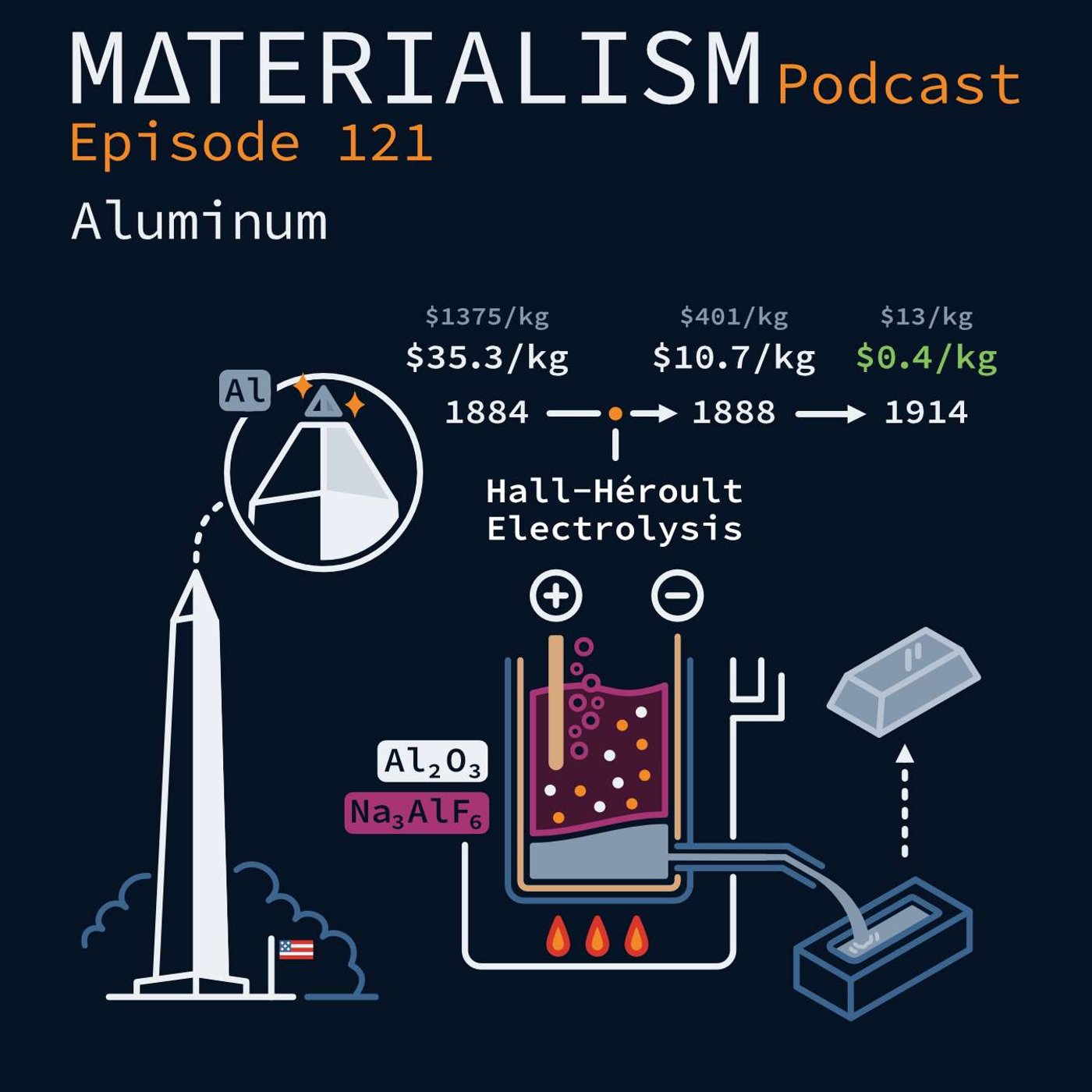
Aluminum may seem like a common metal today, but did you know it was once considered on par with silver? Taylor and Andrew sit down with Marat Latypov, a professor at the University of Arizona, to explore how aluminum went from a precious metal to one of the go-to metals of modern society. We talk about the discovery that collapsed the price from dollars to cents per pound and the patent dispute it caused. We explore how a metal so hungry for oxygen resists corrosion so well and how precipitation hardening was discovered after a weekend getaway. Finally, we look at more recent issues like the challenges of Ford's aluminum F-150, the fire hazards of 1970s aluminum house wiring, and why recycling scrap is harder than it sounds.
How Aluminum Foil is made [LINK]
The Materialism Podcast is sponsored by Materials Today, an Elsevier community dedicated to the creation and sharing of materials science knowledge and experience through their peer-reviewed journals, academic conferences, educational webinars, and more. [LINK]
Thanks to Kolobyte and Alphabot for letting us use their music in the show!
If you have questions or feedback please send us emails at materialism.podcast@gmail.com or connect with us on social media: Instagram, Twitter.
Materialism Team: Taylor Sparks, Andrew Falkowski, & Jared Duffy.
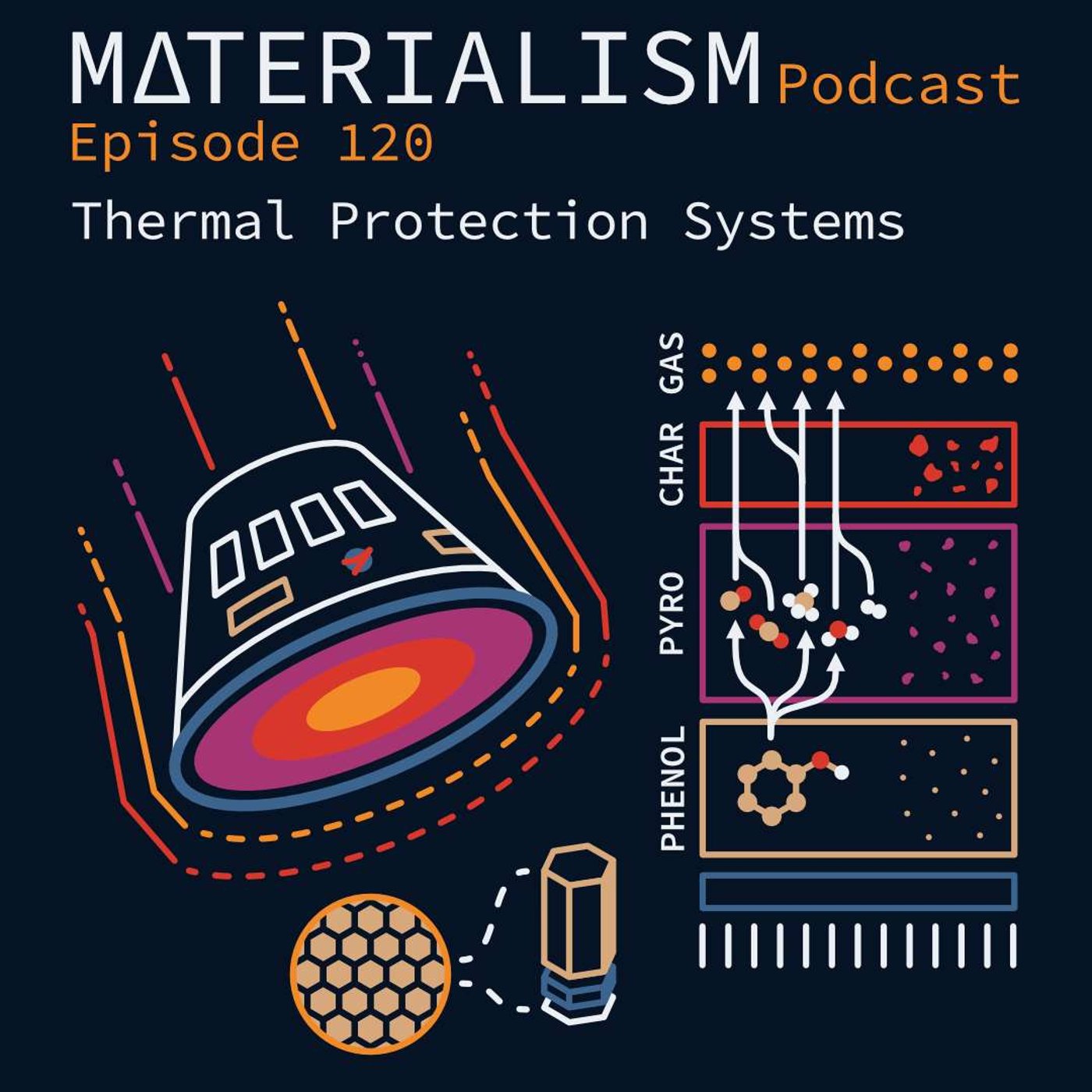
We have all seen the heat of atmospheric reentry depicted a thousand times in movies and TV shows, but how do we actually protect spacecraft from that danger? Taylor and Andrew sit down with Nate Olson, an aerospace engineer at NASA's Johnson Space Center, to explore the history of thermal protection systems. Nate unpacks the science of surviving atmospheric entry from the simple blunt-body design that made reentry physically possible, to the ~300,000 honeycomb cells hand-caulked with Avcoat on Apollo. We also touch on modern events like the Artemis I heat-shield anomaly and where he believes the technology could be headed.
This episode was sponsored by Expert Lab Services. Learn more about their services on their website [LINK]
The Materialism Podcast is sponsored by Materials Today, an Elsevier community dedicated to the creation and sharing of materials science knowledge and experience through their peer-reviewed journals, academic conferences, educational webinars, and more. [LINK]
Thanks to Kolobyte and Alphabot for letting us use their music in the show!
If you have questions or feedback please send us emails at materialism.podcast@gmail.com or connect with us on social media: Instagram, Twitter.
Materialism Team: Taylor Sparks, Andrew Falkowski, & Jared Duffy.
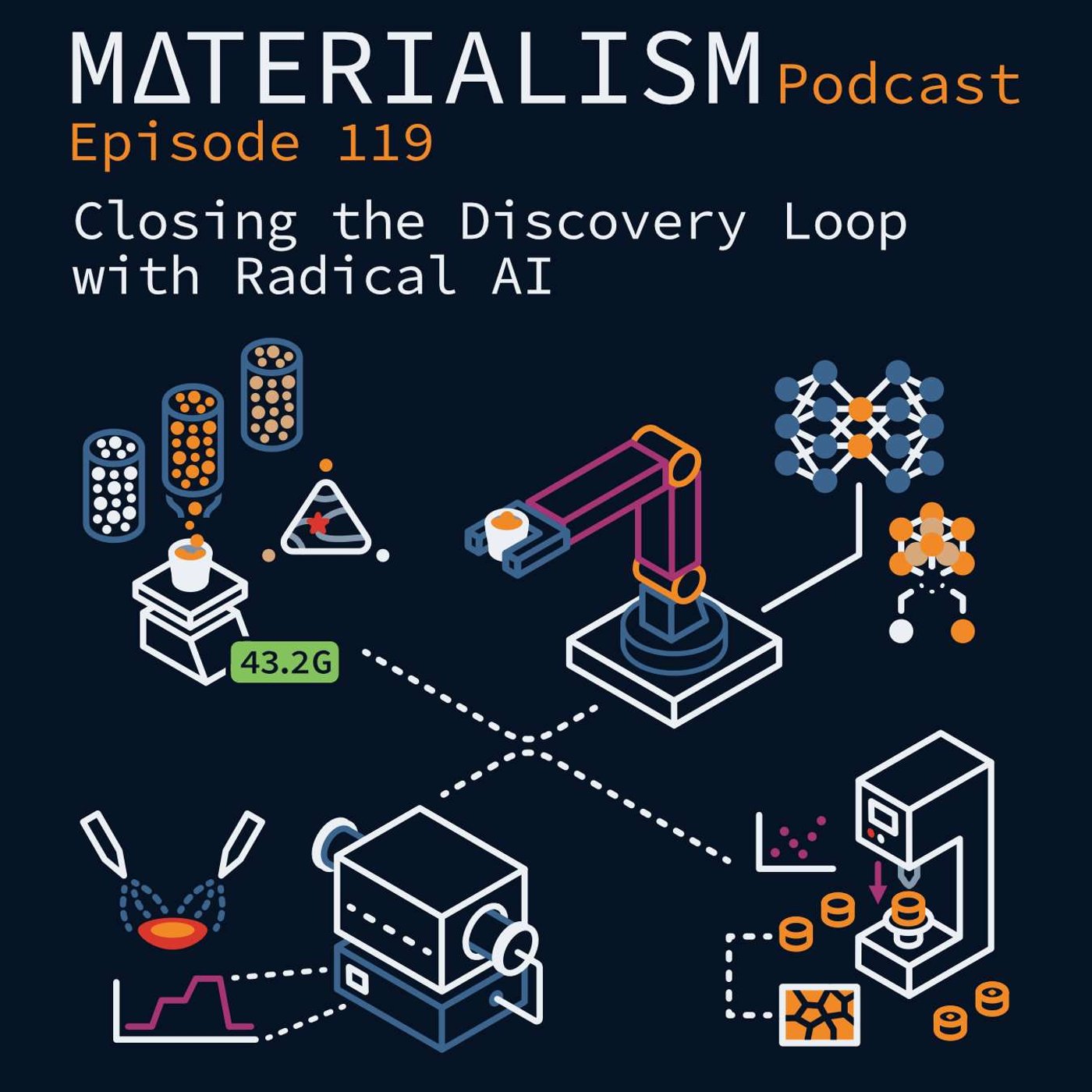
What if a materials lab on Earth could screen a hundred alloys a day with little input from the scientist? Taylor and Andrew sit down with Joseph Krause, CEO and co-founder of Radical AI, to dig into what it takes to build a self-driving lab and why most of the field is still missing the hard part. From discovering that flagship SEM and XRD instruments ship with no real data access (and rebuilding their entire OS around the workaround), to MATRIX — their multimodal vision-language model that hones in on a target property in roughly 20 experiments — Joseph walks through the technical bets that got them here. He explains why they're using language-model embeddings to teach Bayesian optimization what "28% titanium" actually means, why "scientific intuition" has to be measured as a delta between human and AI annotations, and why Radical is going all the way to manufacturing instead of licensing compositions — because the real IP, and the only training data that matters, lives on the production floor.
Nominations for the Materials Today Rising Star awards are currently open and close on July 31st. If you know an early career researcher in the fields of materials science and engineering you think deserves recognition you can submit them here. [LINK}
Check out Radical AI here [LINK] https://www.ses.ai/
This episode of the Materialism Podcast is sponsored by Momentum Transfer. Visit their website for more details about their measurement services. [LINK]
The Materialism Podcast is sponsored by Materials Today, an Elsevier community dedicated to the creation and sharing of materials science knowledge and experience through their peer-reviewed journals, academic conferences, educational webinars, and more. [LINK]
Thanks to Kolobyte and Alphabot for letting us use their music in the show!
If you have questions or feedback please send us emails at materialism.podcast@gmail.com or connect with us on social media: Instagram, Twitter.
Materialism Team: Taylor Sparks, Andrew Falkowski, & Jared Duffy.
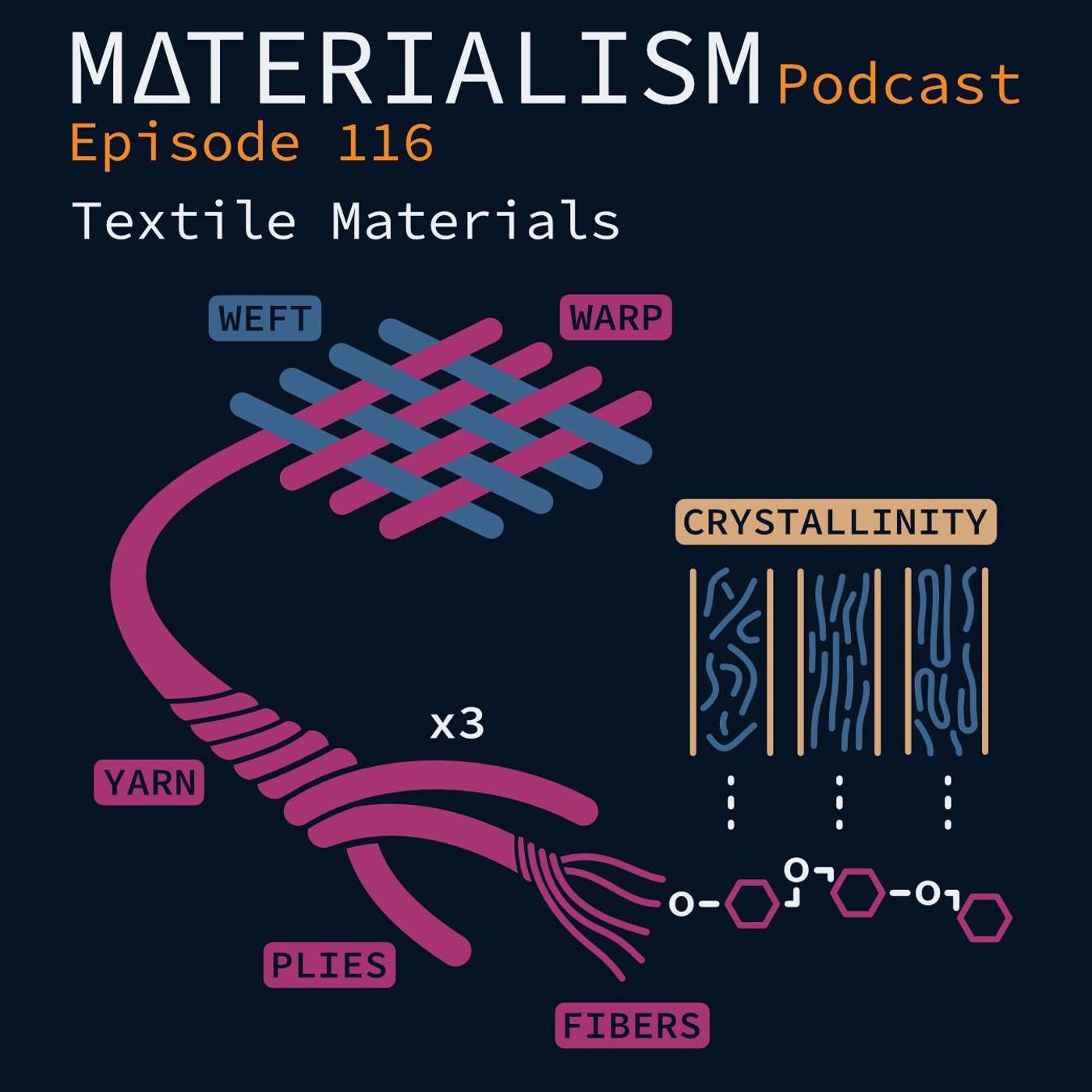
Textiles are all around us, they are literally woven into nearly every part of our daily lives. From the everyday materials in the clothes we wear to the specialty materials in parachutes, spacesuits, and even bulletproof armor. They play a bigger role than we often think about but what exactly is a textile? We sit down with Kate Winning from Oxford Space to explore the world of textiles, breaking down the different types, how they are turned from fiber into usable materials, and their wide-ranging applications.
Sparks Death Star Sweater [LINK]
This episode of the Materialism Podcast is sponsored by Momentum Transfer. Visit their website for more details about their measurement services. [LINK]
The Materialism Podcast is sponsored by Materials Today, an Elsevier community dedicated to the creation and sharing of materials science knowledge and experience through their peer-reviewed journals, academic conferences, educational webinars, and more. [LINK]
Thanks to Kolobyte and Alphabot for letting us use their music in the show!
If you have questions or feedback please send us emails at materialism.podcast@gmail.com or connect with us on social media: Instagram, Twitter.
Materialism Team: Taylor Sparks, Andrew Falkowski, & Jared Duffy.
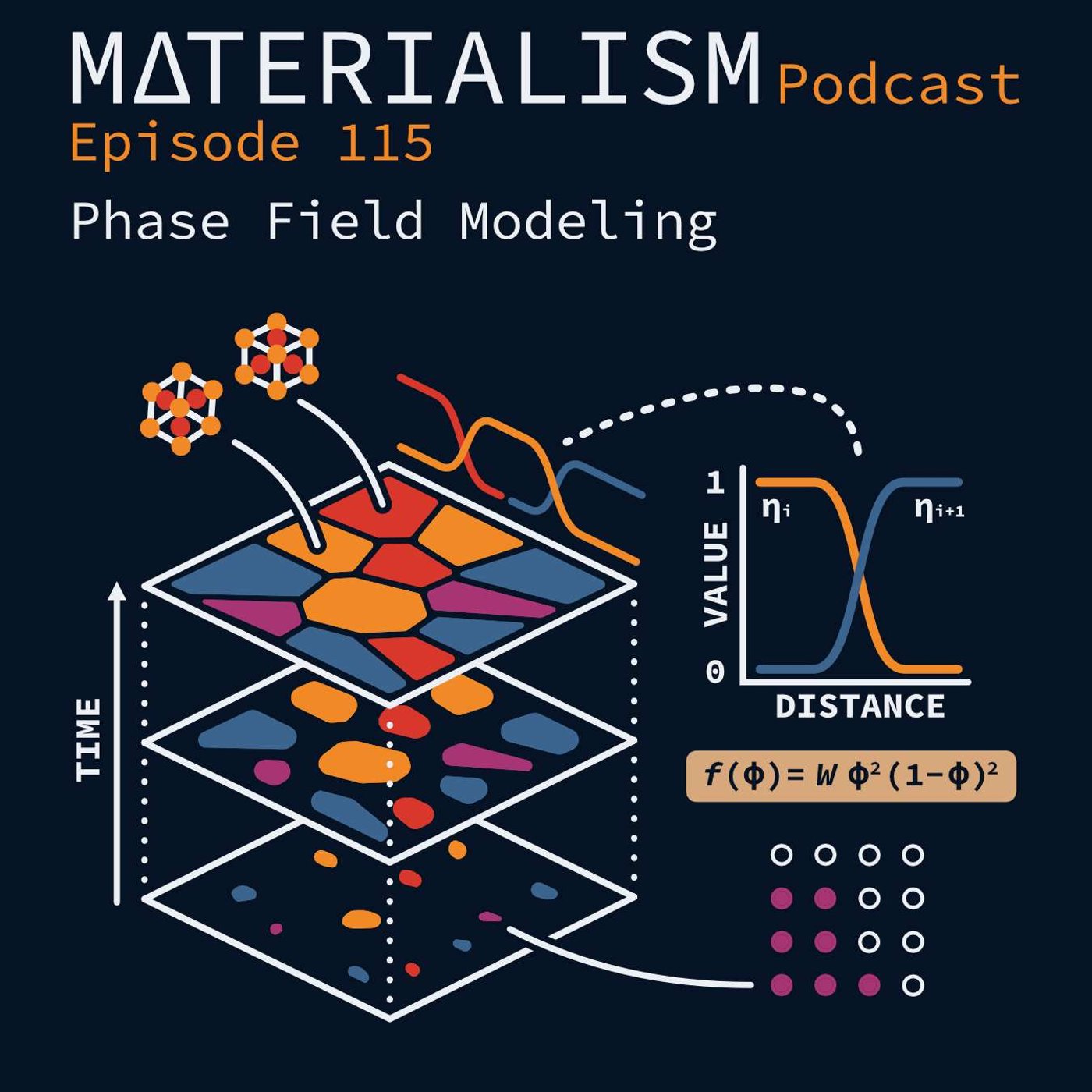
Many digital models use hard boundaries to simulate how materials change, but the real world is rarely that clean. Phase field modeling takes a more natural approach, capturing the gradual, messy transitions that actually occur. This makes it ideal for simulating things like crack growth or dendrite formation. Taylor sits down with Dr. Jake Bair, an assistant professor at Oklahoma State University to discuss how it works and the history behind it.
Link of NISTs Phase Field Hub [HERE]
This episode was Sponsored by California Nanotechnologies. Check out their upcoming SPS/FAST Experts Workshop in beautiful San Diego at the link. [HERE]
This episode of the Materialism Podcast is sponsored by Momentum Transfer. Visit their website for more details about their measurement services. [LINK]
The Materialism Podcast is sponsored by Materials Today, an Elsevier community dedicated to the creation and sharing of materials science knowledge and experience through their peer-reviewed journals, academic conferences, educational webinars, and more.
Thanks to Kolobyte and Alphabot for letting us use their music in the show!
If you have questions or feedback please send us emails at materialism.podcast@gmail.com or connect with us on social media: Instagram, Twitter.
Materialism Team: Taylor Sparks, Andrew Falkowski, & Jared Duffy.
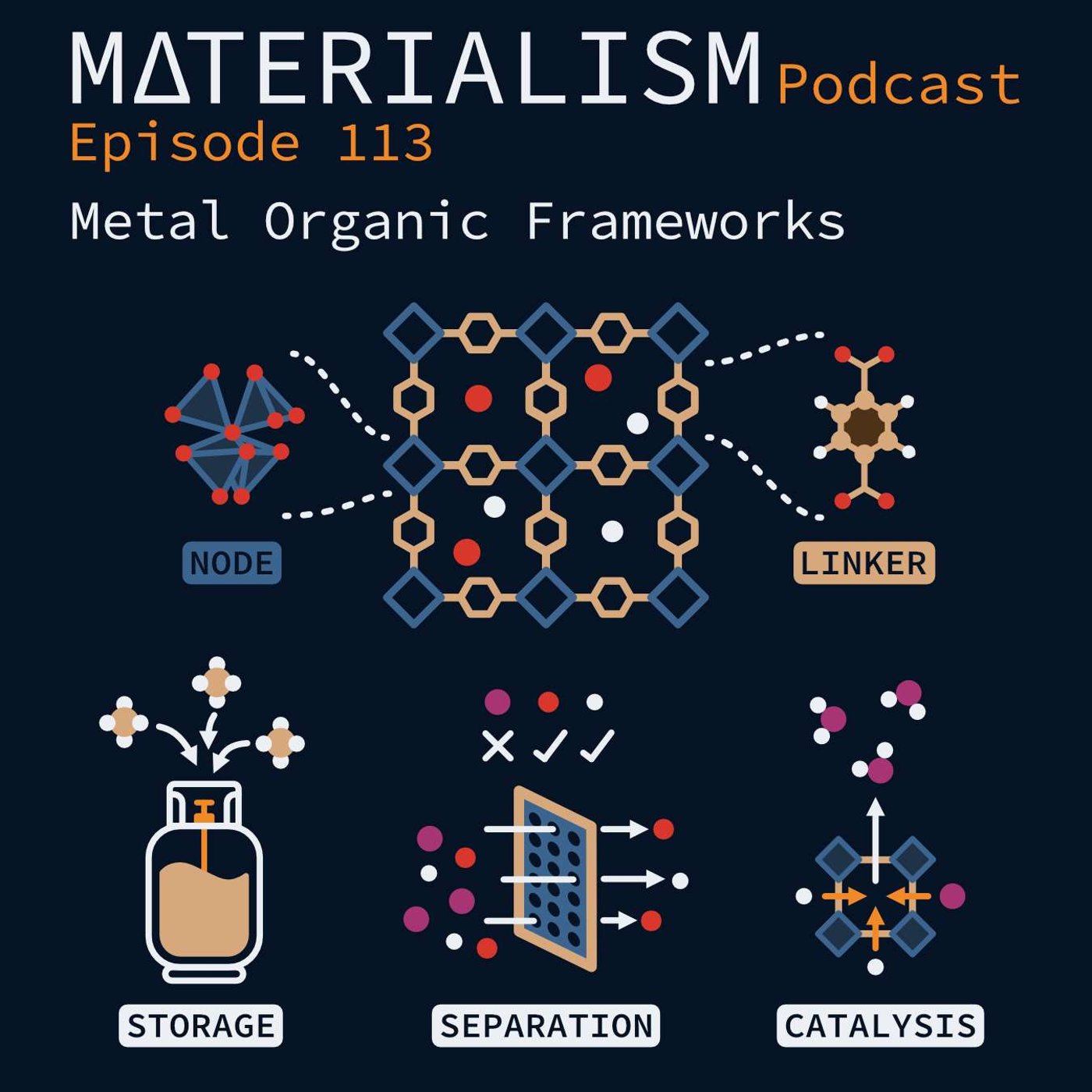
The 2025 Nobel Prize in Chemistry was awarded to pioneers in the field of MOFs, but what exactly is a MOF? We sit down with Dr. Matthew J. Cliffe, an associate professor at the University of Cambridge, to discuss what makes metal–organic frameworks deserving of a Nobel Prize. Our conversation ranges from their potential role in capturing CO₂ from the atmosphere to the unique methods used to characterize these remarkable materials.
Matthew's faculty page [LINK]
This episode is sponsored by the American Ceramics Society Learning Center. Visit ceramics.org/materialism to learn more or use code MATERIALISM to get $100 off your next On-Demand course registration.
This Materialism Podcast is sponsored by Materials Today, an Elsevier community dedicated to the creation and sharing of materials science knowledge and experience through their peer-reviewed journals, academic conferences, educational webinars, and more.
Thanks to Kolobyte and Alphabot for letting us use their music in the show!
If you have questions or feedback please send us emails at materialism.podcast@gmail.com or connect with us on social media: Instagram, Twitter.
Materialism Team: Taylor Sparks, Andrew Falkowski, & Jared Duffy.
https://www.msm.cam.ac.uk/people/academic-staff-overview/cliffe
51 minAbspielen in:
Warum PodAppear
Folge Menschen, nicht Podcasts.
Du hast Taylor in einer Sendung gehört. PodAppear findet für dich die nächste, und genauso für alle anderen, die du hören willst.
Eine Meldung, wenn die Person zu Gast istPer E-Mail: sofort oder gebündelt als Tages- oder Wochenübersicht. Dann nur noch auf Play drücken.
Gäste statt bloßer ErwähnungenFolgen, in denen ein Name nur fällt, landen getrennt. Eine Meldung heißt: Die Person ist wirklich in der Sendung.
Alle in einem FeedGründerinnen, Autoren, Sportler, Forscherinnen. Folge allen mit Namen, quer durch jede Sendung, in der sie auftreten.