Bekomm eine E-Mail, wenn Sean in einem Podcast zu Gast istPodAppear prüft neue Folgen, sobald sie erscheinen, und lässt die weg, in denen Sean nur erwähnt wird. Bis zu 15 Personen kostenlos, ohne Kreditkarte.Bis zu 15 Personen kostenlos, ohne Kreditkarte.
In episode 214 of Cybersecurity Where You Are, Sean Atkinson and Tony Sager speak with Roy Park, Director of Cybersecurity & Digital Privacy for the San Joaquin County Office of Education; and Randy Rose, Vice President of Security Operations & Intelligence at the Center for Internet Security® (CIS®). Together, they answer three unanswered questions from a webinar on The State of K-12 Cybersecurity 2026: how malicious domain blocking data can inform defense, how to plan for a SaaS provider failure, and where to start with identity security.
Here are some highlights from our episode:
01:36. The value of the webinar in helping to communicate report findings to K-12 leadership
02:37. Why K-12 cybersecurity isn't only a technology challenge
04:53. How the impacts of threat activity targeting K-12 organizations go beyond education
07:35. The report's findings: Unsurprising, yet a starting point for learning from other districts
09:35. Report stat: 11% of K-12 school districts lack someone responsible for cybersecurity
11:00. The inability of most of the economy to defend itself on its own
11:27. How CIS focuses on commonalities to bring people together around shared solutions
17:40. Report stat: 3.5B malicious connection attempts blocked across 1,100+ organizations using CIS’s domain-blocking service
21:13. The need for K-12 schools to focus on ransomware defense
21:46. Layered defense as a means of reducing risk
23:30. Incident response plans and strategies around supply chain risk management
24:30. An example of a K-12 school needing to quickly pivot after a vendor closed its doors
25:56. Calendar reminders: A simple habit for driving K-12 cybersecurity improvements
27:54. The shifting shared responsibility model and the need for service diversification
29:08. When rational cybersecurity choices create more risk at a system level
30:58. Supply chain risk management: The need to factor in how everyone can have a bad day
33:46. How a lack of vendor diversification complicates K-12 cybersecurity
35:36. The need for vendors to have the machinery to deal with vulnerabilities and other issues
37:00. If there's one identity and access management recommendation to start with, it's this
38:10. The value of having logging data when investigating a security incident
39:17. A single source of truth and automation: Two tools for securing identities
40:25. Shout-out to all the work Roy is doing in Northern California
41:30. Parting recommendation: Start building relationships in the K-12 cybersecurity space
Resources
Multi-State Information Sharing and Analysis Center® (MS-ISAC®)
Security Operations & Intelligence
Malicious Domain Blocking and Reporting (MDBR)
2026 K-12 Cybersecurity Report: Key Takeaways for School Leaders
CIS, MS-ISAC, and CoSN Report: K-12 Schools Face Growing Cyber Threats Amid Resource Constraints and Rapid AI Adoption
CIS Critical Security Controls®
Policy Templates
Beyond the AI Hype: A Data-Driven Look at What Actually Protects Your Organization
CIS Community Defense Model (CDM) v3.0
Combatting Ransomware
Microsoft restores service to Outlook and Teams after global outage
Cloud Security and the Shared Responsibility Model
Critical Support for Navigating the PowerSchool Breach
CrowdStrike Falcon Outage Exploited for Social Engineering
If you have some feedback or an idea for an upcoming episode of Cybersecurity Where You Are, let us know by emailing podcast@cisecurity.org.
In episode 213 of Cybersecurity Where You Are, Sean Atkinson and Ed Skoudis sit down with William Wright, Chief Executive Officer of Closed Door Security. They continue their conversation about penetration testing (pentesting) and artificial intelligence (AI), covering how AI affects generalist and specialist pentesters, which real-world AI-enabled capabilities pentesters are using, the costs of supporting an increasingly high bar for pentest engagements, and why Ed says the return on investment of AI in pentesting is survival.
Here are some highlights from our episode:
01:54. Generalist pentesters: Why they're more powerful than specialists most of the time
03:42. AI as a tool that doesn't replace generalists and specialists but makes them better
07:04. A new way for pentesting and red teaming: AI vs. AI and human vs. human
09:14. AI's inevitable incorporation into pentesting domains like web apps and mobile apps
14:36. How a fully autonomous triage agent supports Closed Door Security's human pentesters
16:06. How hallucinations, context rot, and "bad days" complicate AI-enabled pentesting
17:21. Financial and ethical considerations of running local models for penetration testing
18:52. How AI makes penetration testing more expensive yet limits price increases
21:16. The ROI of AI in pentesting? Survival. If you don't do it, you won't make it.
22:25. Drawing a distinction between "AI in the box" and AI-enabled human pentesters
25:09. How continuous pentesting with AI could blur the line between pentesting and vulnerability scanning budgets
27:05. Transparency: A central tenet of penetration testing, especially in the age of AI
28:35. How clients differ in their interest whether AI or human pentesters unearth a finding
31:30. Pentest results: Longer reports, more vulnerabilities of increasing complexity
36:20. How AI functions as an important training tool that gives new pentesters confidence
Resources
Episode 201: The Evolution and AI Enablement of Pentesting
Episode 212: The CIS Red Team — Testing via Collaboration
CIS Red Team
Penetration Testing
Vulnerability Assessments
If you have some feedback or an idea for an upcoming episode of Cybersecurity Where You Are, let us know by emailing podcast@cisecurity.org.
In episode 212 of Cybersecurity Where You Are, Sean Atkinson speaks with Will Knebel, Sr. Penetration Tester at the Center for Internet Security® (CIS®), and Chris Eufemia, Penetration Tester II at CIS. From pushing vulnerabilities as far as possible to tailoring the language of engagement outcomes, they break down how the CIS Red Team (CRT) relies on collaboration to support its clients in strengthening their cybersecurity posture.
Here are some highlights from our episode:
00:30. The unconventional paths that led Will and Chris to red teaming at CIS
03:42. Two surprises from supporting the public sector with red team engagements
06:33. How diversity in the U.S. public sector leads entities to approach cybersecurity differently
08:30. CRT's commitment to helping clients understand underlying solutions
09:25. Ongoing collaboration with teams who support CIS's security best practices
11:38. The most common mishap in engagements and how it creates a false sense of security
16:16. Pushing vulnerabilities as far as possible, a real example, and capturing this in reports
20:23. A lesson from SANS: Using AI to uncover patterns that unlock more testing vectors
22:22. CRT's testing within CIS and why an understanding of consequences is vital
22:48. Dedication to education: The importance of teachable moments and skills building
29:45. Physical penetration testing: Examining whether someone could get into a facility
33:20. Tailoring an engagement's outcomes to technical and non-technical audiences alike
35:40. The rise of testing AI elements directly through red teaming
36:54. How CRT continues to adapt to keep up with attackers
Resources
Multi-State Information Sharing and Analysis Center®
CIS Red Team
Episode 201: The Evolution and AI Enablement of Pentesting
CIS Cyber Threat Intelligence Team
Episode 210: The CIS SOC — Keeping Security Operations Human
CIS Services®
CIS Critical Security Controls®
CIS Benchmarks® List
Exploited Protocols: Remote Desktop Protocol (RDP)
Commonly Exploited Protocols: Server Message Block (SMB)
If you have some feedback or an idea for an upcoming episode of Cybersecurity Where You Are, let us know by emailing podcast@cisecurity.org.
40 minAbspielen in:
Warum PodAppear
Folge Menschen, nicht Podcasts.
Du hast Sean in einer Sendung gehört. PodAppear findet für dich die nächste, und genauso für alle anderen, die du hören willst.
Eine Meldung, wenn die Person zu Gast istPer E-Mail: sofort oder gebündelt als Tages- oder Wochenübersicht. Dann nur noch auf Play drücken.
Gäste statt bloßer ErwähnungenFolgen, in denen ein Name nur fällt, landen getrennt. Eine Meldung heißt: Die Person ist wirklich in der Sendung.
Alle in einem FeedGründerinnen, Autoren, Sportler, Forscherinnen. Folge allen mit Namen, quer durch jede Sendung, in der sie auftreten.
In episode 212 of Cybersecurity Where You Are, Sean Atkinson speaks with Will Knebel, Sr. Penetration Tester at the Center for Internet Security® (CIS®), and Chris Eufemia, Penetration Tester II at CIS. From pushing vulnerabilities as far as possible to tailoring the language of engagement outcomes, they break down how the CIS Red Team (CRT) relies on collaboration to support its clients in strengthening their cybersecurity posture.
Here are some highlights from our episode:
00:30. The unconventional paths that led Will and Chris to red teaming at CIS
03:42. Two surprises from supporting the public sector with red team engagements
06:33. How diversity in the U.S. public sector leads entities to approach cybersecurity differently
08:30. CRT's commitment to helping clients understand underlying solutions
09:25. Ongoing collaboration with teams who support CIS's security best practices
11:38. The most common mishap in engagements and how it creates a false sense of security
16:16. Pushing vulnerabilities as far as possible, a real example, and capturing this in reports
20:23. A lesson from SANS: Using AI to uncover patterns that unlock more testing vectors
22:22. CRT's testing within CIS and why an understanding of consequences is vital
22:48. Dedication to education: The importance of teachable moments and skills building
29:45. Physical penetration testing: Examining whether someone could get into a facility
33:20. Tailoring an engagement's outcomes to technical and non-technical audiences alike
35:40. The rise of testing AI elements directly through red teaming
36:54. How CRT continues to adapt to keep up with attackers
Resources
Multi-State Information Sharing and Analysis Center®
CIS Red Team
Episode 201: The Evolution and AI Enablement of Pentesting
CIS Cyber Threat Intelligence Team
Episode 210: The CIS SOC — Keeping Security Operations Human
CIS Services®
CIS Critical Security Controls®
CIS Benchmarks® List
Exploited Protocols: Remote Desktop Protocol (RDP)
Commonly Exploited Protocols: Server Message Block (SMB)
If you have some feedback or an idea for an upcoming episode of Cybersecurity Where You Are, let us know by emailing podcast@cisecurity.org.
In episode 211 of Cybersecurity Where You Are, Sean Atkinson speaks with Joshua Palsgraf, Sr. Cyber Threat Intelligence Analyst at the Center for Internet Security® (CIS®), and Kyle Leonard, Cyber Threat Intelligence Analyst at CIS, about the scariest malware of 2026. From an infostealer that hides its command infrastructure on the Ethereum blockchain to artificial intelligence (AI) agents running chunks of intrusions, they break down what makes malware “terrifying,” why takedowns are getting harder, and what defenders can still do about it.
Here are some highlights from our episode:
02:08. The three factors that make malware strains "terrifying"
03:39. How the expansion of "as a Service" offerings complicates malware investigations
05:10. How member reporting helps to link the stages of an investigation
06:31. A move to more automation: Threat actors' use of AI to run chunks of the kill chain
07:38. Abuse of trusted applications and services over the development of customized tools
10:04. The single scariest malware strain of 2026 and the techniques it uses to earn that title
14:45. How an emerging technique calls traditional malware takedown playbooks into question
16:21. The challenging, never-ending, and even fun effort of keeping up with new malware
22:19. The cost of running a cybercrime operation: “A couple hundred dollars a month”
23:38. Real-world examples of threat actors giving more operational control to AI agents
26:31. Why essential cyber hygiene still holds sway in defending against the scariest malware
29:05. Recommendations for defending against clever malware evasion techniques
30:33. The Thing and Facehugger: How these malware names capture today's threat landscape
32:48. Looking ahead to 2027: AI as an assistant and infrastructure beyond seizure
Resources
Multi-State Information Sharing and Analysis Center®
CIS Cyber Threat Intelligence Team
Episode 159: The Scariest Malware of 2025
SLTT C2 Traffic Tied to Remus Malware Distribution Operation
ClickFix: An Adaptive Social Engineering Technique
Episode 124: The Many Layers of a Malware Takedown Operation
Disrupting the first reported AI-orchestrated cyber espionage campaign
Inside a Multi-Agent AI Framework Used to Compromise Government Entities in Asia
Taiwan says it was targeted last month in AI-driven hacking campaign
Cloudflare deploys protections against php2shell vulnerability
Real-Time Indicator Feeds
Living off the Land: Threats Looming From Within
If you have some feedback or an idea for an upcoming episode of Cybersecurity Where You Are, let us know by emailing podcast@cisecurity.org.
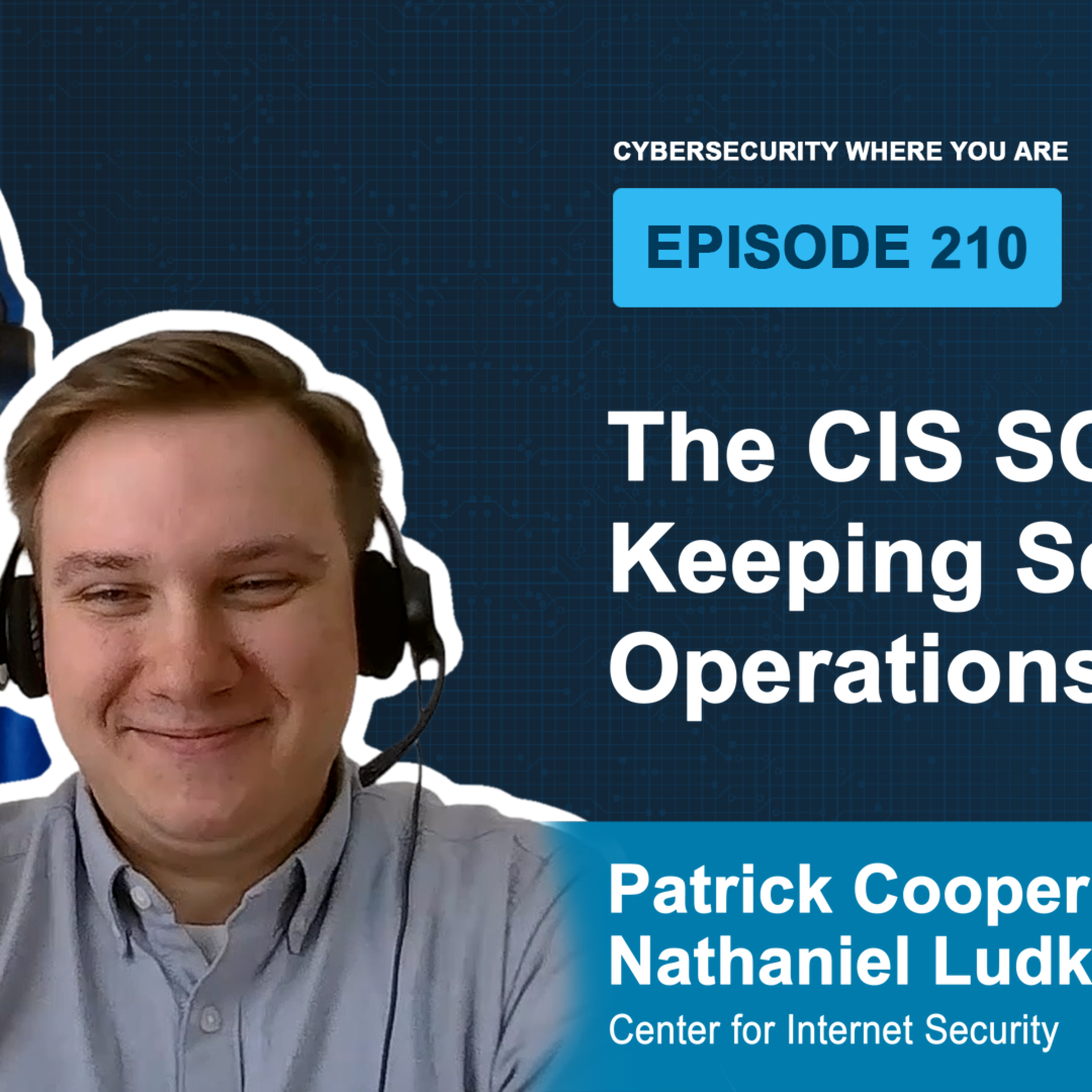
In episode 210 of Cybersecurity Where You Are, Sean Atkinson speaks with Patrick Cooper, Security Operations Center (SOC) Analyst II at the Center for Internet Security® (CIS®), and Nathaniel Ludke, SOC Analyst II at CIS. Together, they take listeners inside the 24x7x365 CIS SOC, from alert prioritization and severity-based escalation to member reporting and the use of artificial intelligence (AI) for open-source intelligence, packet analysis, and SQL querying. They explain why AI is the tool and the human is the loop for U.S. State, Local, Tribal, and Territorial (SLTT) government members of the Multi-State Information Sharing and Analysis Center® (MS-ISAC®).
Here are some highlights from our episode:
01:20. What a typical shift for a CIS SOC analyst looks like
03:29. Challenge: Supporting members while minimizing overwhelm and stress
06:25. Common indicators of compromise (IOCs) as impetus to take a deeper look
07:01. Prioritization: First in first out with a few noteworthy exceptions
07:41. How severity of an alert affects the CIS SOC's communication with members
08:51. The typical path of escalation for alerts
09:36. Hot IP entries and agency notes inform false-positive judgments
10:42. Designating the severity of false positives
14:09. Automated (monthly), manual, historical, and other types of reports from the CIS SOC
17:01. No news is good news? Why MS-ISAC members both welcome and worry about silence from the CIS SOC
18:01. The CIS SOC's use of AI for open-source intelligence and information gathering
20:07. Human is the loop: How AI supports packet analysis, SQL querying, and more
22:20. AI enablement, not replacement: Keeping security operations human
23:42. How AI can function as an additional security threat
25:23. Hallucination risk and the SOC analyst “spidey sense”
26:25. Relationships with MS-ISAC members: The "lost art" of knowing when something's off
Resources
The CIS Security Operations Center (SOC): The Key to Growing Your SLTT's Cyber Maturity
CIS Cyber Incident Response Team
CIS Cyber Threat Intelligence Team
Cybersecurity Services
You Have a Cybersecurity Incident. Now What?
Episode 190: Separating Mythos AI Fact from Fiction
CIS Controls v8.1 Incident Response Policy Template
If you have some feedback or an idea for an upcoming episode of Cybersecurity Where You Are, let us know by emailing podcast@cisecurity.org.
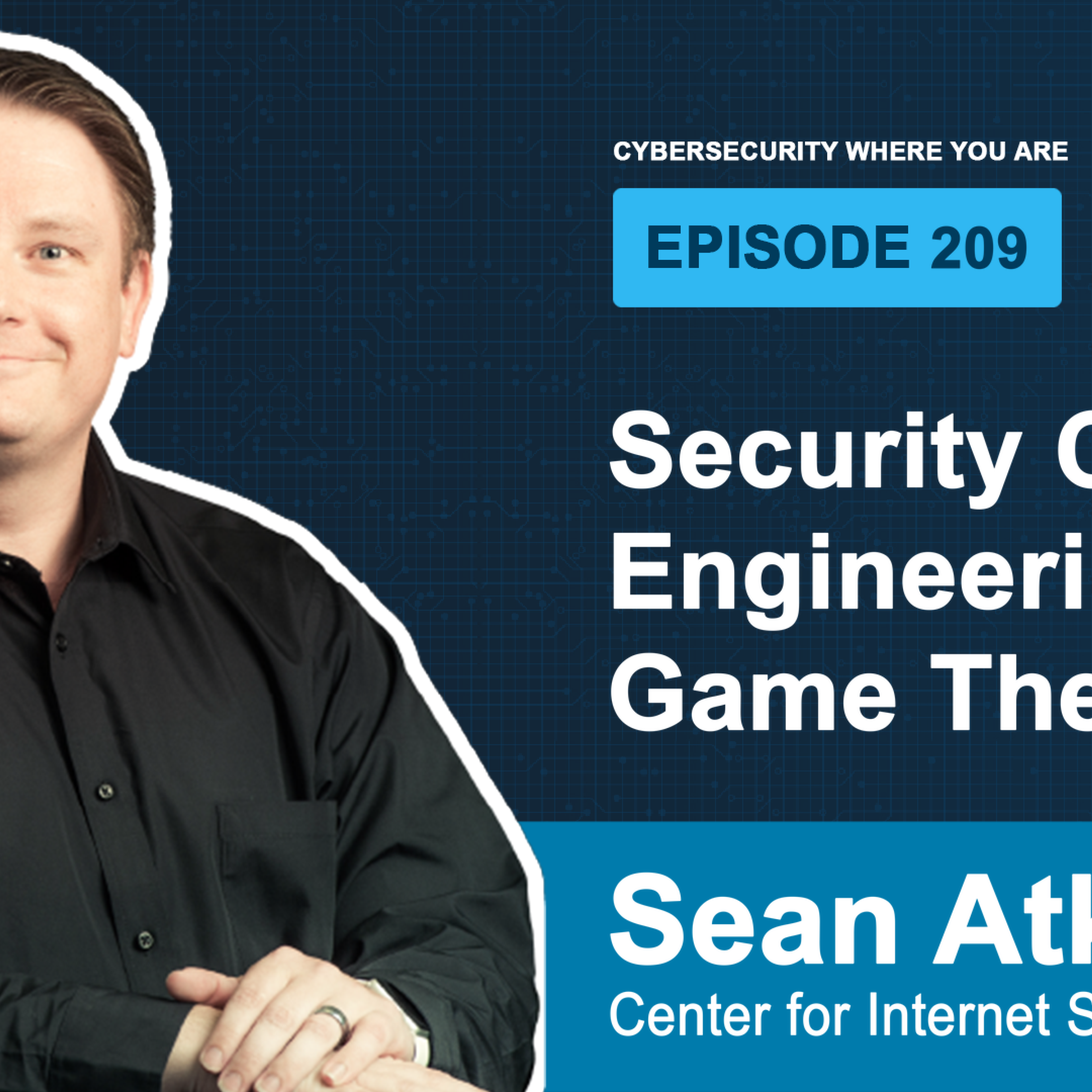
In episode 209 of Cybersecurity Where You Are, Sean Atkinson argues that most organizations prepare for operational failure like they're bracing for a hurricane while most adversaries are playing chess. Drawing on security chaos engineering and game theory, he walks through a structured approach that blends threat modeling, internal red teaming, and constructive disagreement to empirically test and strengthen a defensive posture.
Here are some highlights from our episode:
00:33. The RSA Conference 2025 presentation behind this episode
00:48. How artificial intelligence (AI) is only accelerating adversaries' evolution
01:23. Hurricanes and chess: Analogies for different types of disaster preparedness
04:03. Overview of chaos engineering and game theory
05:01. Understanding threat vectors in our environment and how MITRE ATT&CK can help
05:50. Why adversaries "need a vote" when planning for failure
07:03. Red teaming and the need for penetration testing as part of an internal process
07:50. Going beyond technology to understand business objectives and strategy
08:51. Continuity as a consideration for continually adapting and updating controls
10:12. Transition from three separate threat silos to multidimensional threats
10:45. Game theory: It's not just a tabletop exercise (TTX)
12:15. Goalkeeper: An analogy for addressing "predictability of weakness"
13:52. Testing where our weaknesses are: An important element of chaos engineering
14:58. Accounting for biases and finite resources when evaluating strengths and weaknesses
17:56. Vulnerability identification: An example of how a strength can become a weakness
22:25. The need to resist getting too sophisticated with internal red teaming too quickly
24:23. Rigor for pushing back against tired adages like "it's never happened to us before"
26:22. An implementation strategy focused on communication
27:00. Dr. Tyler Moore's Return on Security Investment and the consequences of doing nothing
28:03. Debate and commit: A leadership principle for getting the most out of disagreement
30:42. Start small, provide notice to those affected, and consider a "surprise audit"
32:12. Minimize the blast radius, build hypotheses, balance bias, and other best practices
37:38. Parting thoughts of how to break down this approach
Resources
Episode 208: Secure Harness Engineering for Agentic AI
Game Theory Informed Security Chaos
Book - Security Chaos Engineering: Sustaining Resilience in Software and Systems
CIS Community Defense Model v3.0: Turning Threat Intelligence Into Action
CIS Red Team Services and Exploit Demo
Penetration Testing
CIS Critical Security Control 18: Penetration Testing
MS-ISAC Guide to DDoS Attacks
Episode 121: The Economics of Cybersecurity Decision-Making
Episode 166: Foundations of Actuarial Science in Cyber Risk
CIS Leadership Principles
Netflix TechBlog
If you have some feedback or an idea for an upcoming episode of Cybersecurity Where You Are, let us know by emailing podcast@cisecurity.org.
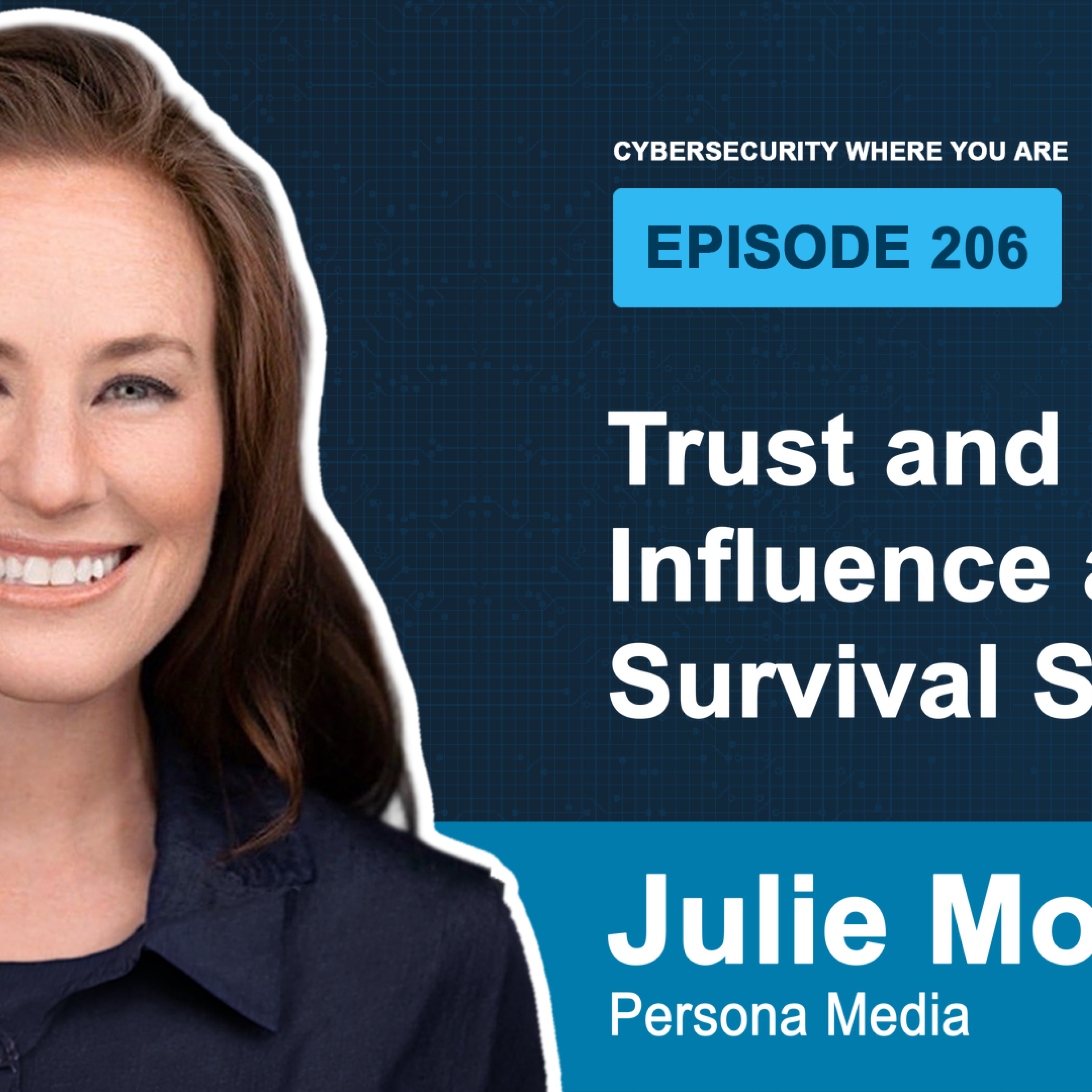
In episode 206 of Cybersecurity Where You Are, Sean Atkinson and Tony Sager speak with Julie Morris, Founder and Head of Thought Leadership at Persona Media, about why trust and influence have become survival skills for today's CISOs. Julie breaks down three types of organizational power, explains why the "good guys" resist the language of influence, and offers a practical starting point for anyone who's ever felt like PowerShell was the only power they understood.
Here are some highlights from our episode:
02:13. From old to new: A shift in how trust and influence factor into organizational structures
04:24. The three kinds of power in an organization: hard, soft, and network
09:59. Wise advice: Build your personal and professional network first
11:07. How influence multiplies confidence with network power
12:03. Inertia, fear, and status quo: overcoming the emotional reactions that oppose change
18:12. How Sean uses the power of "slow down," not "no," to support AI transformation
20:49. Why good thought leadership starts with empathy and self awareness
24:32. Building organizational processes that "trigger" a change in CISOs' trust and influence
26:30. Hugging Face as an example of how triggering moments become lessons
27:42. What Tony Soprano has to do with measuring trust and influence
30:47. Reality check: Every information gap gets filled one way or another
32:15. The power of community and shared ideas in figuring out thought leadership together
36:09: Advice: Be in the "river" of your network to go where you want to go
37:34. How understanding of shared values helps to overcome imposter's syndrome
Resources
CIS Critical Security Controls®
Episode 183: The Role of CISO in Supporting Risk Translation
Episode 187: The Role of a CISO as a Strategic Storyteller
Episode 192: How Leaders Balance Expertise and Communication
Episode 199: Translating Cyber Risk into Business Decisions
The Myth of Mythos: What It Means For Information Security
Episode 202: Delineating AI Security and Cybersecurity
If you have some feedback or an idea for an upcoming episode of Cybersecurity Where You Are, let us know by emailing podcast@cisecurity.org.
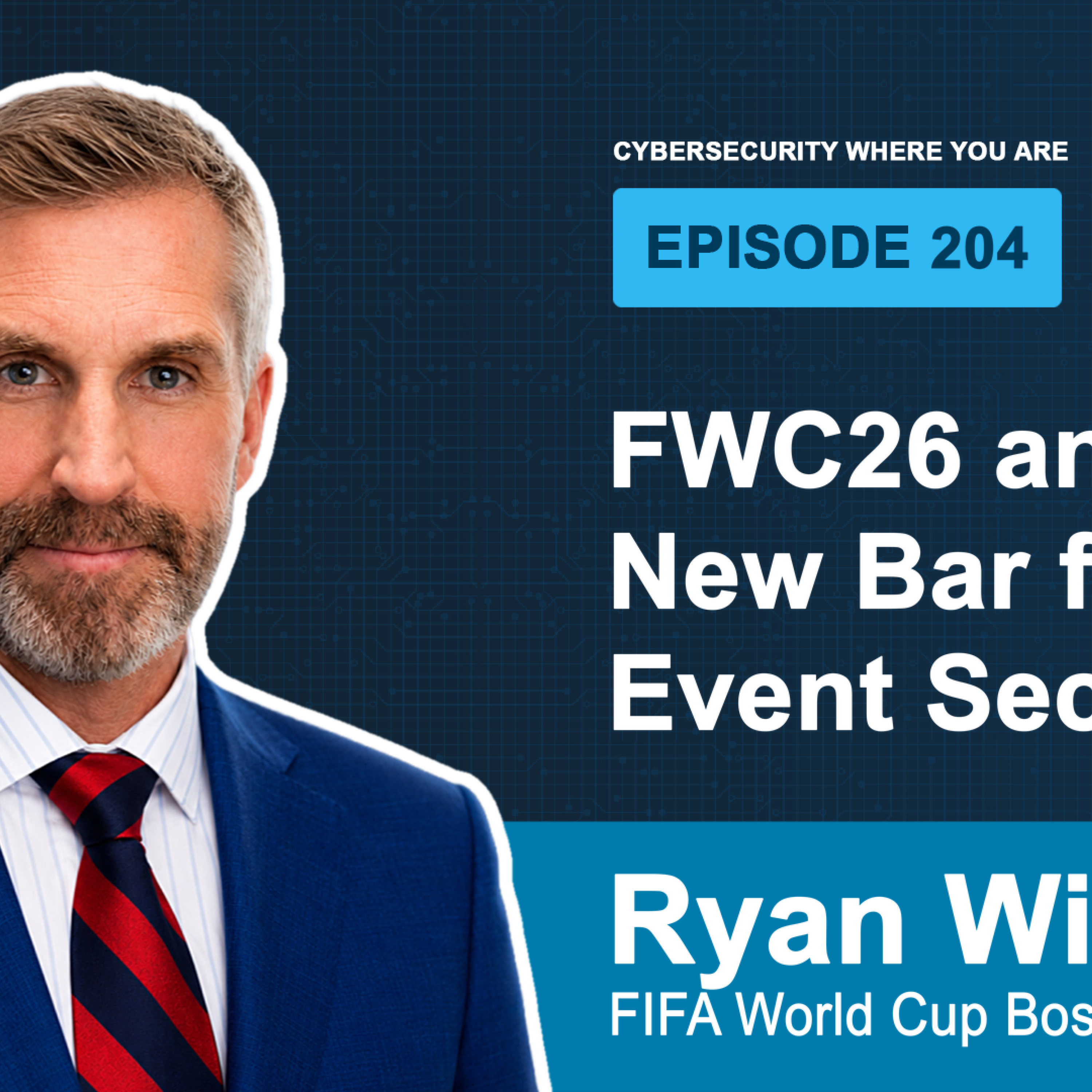
In episode 204 of Cybersecurity Where You Are, Sean Atkinson speaks with Ryan Winmill, Chief Security Officer and Vice President of FIFA World Cup Boston, and John Cohen, Executive Director of the Office of Strategic Programs and Initiatives at the Center for Internet Security® (CIS®). Together, they discuss how FIFA World Cup 2026 (FWC26) — secured through an unprecedented tripartite governance framework, $625 million in U.S. Congressional funding, and real-time intelligence that stopped a swatting attempt at the finals — set a new standard for proactive event security worldwide.
Here are some highlights from our episode:
01:18. The "unprecedented" governance framework created for FWC26
03:53. The role of CIS as a force multiplier for FIFA, host regions, and other partners
11:00. Why you can't trust the person with an ego in large-scale event security planning
13:23. How the threat environment evolved over the previous three World Cup tournaments
17:23. A new bar for proactive event security going forward
18:43. How CIS provided quality control that helped to mitigate swatting calls during FWC26
21:55. Unique approaches used by host regions to better understand the World Cup fanbase
23:15. How counterfeit FIFA volunteer uniforms triggered a cross-city credentialing response
26:46. Recommendations for future large-scale event host cities
30:19. Ryan's recommendation to future host cities: "Call CIS before you get started"
Resources
Special Event Risk Analysis & Advisory Services
Episode 196: Securing FIFA World Cup 2026 Collaboratively
Inside the Security Operation Behind the 2026 FIFA World Cup
3 Lessons for Securing Large-Scale Events: Inside FIFA World Cup 2026
Securing FIFA World Cup 2026 With a Collective Defense Approach
If you have some feedback or an idea for an upcoming episode of Cybersecurity Where You Are, let us know by emailing podcast@cisecurity.org.
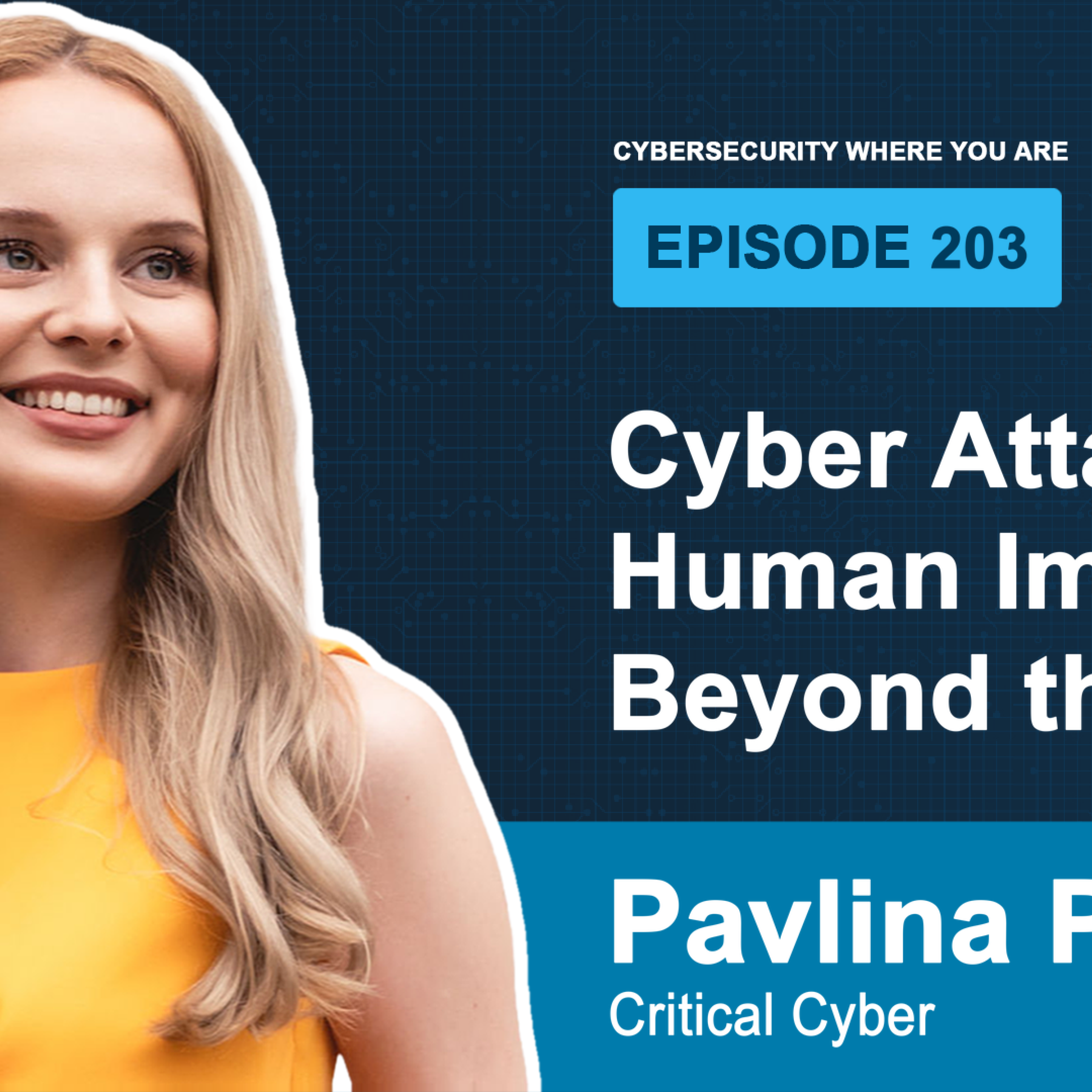
In episode 203 of Cybersecurity Where You Are, Sean Atkinson speaks with Pavlina Pavlova, Founder of Critical Cyber. Together, they discuss how Pavlina started Critical Cyber to go beyond the data and give voice to the human impact of cyber attacks, from ransomware hitting hospitals to cyber tactics targeting civilians in active conflict zones.
Here are some highlights from our episode:
00:44. How Pavlina's work covering the impact of cyber attacks on Ukrainian critical infrastructure led to Critical Cyber
03:13. How Critical Cyber works with cyber attack victims, responders, and other audiences
04:08. Countering the tendency, even among cybersecurity experts, to sanitize cyber attacks' human impact
08:57. The use of storytelling with those impacted by cyber attacks to drive policy changes
15:02. Why cyber attacks in some sectors are underreported
19:01. Critical Cyber's mission of combining testimony, research, and expert collaboration
24:51. Where Critical Cyber is and where it's looking to go
Resources
Critical Cyber
Cybersecurity for Critical Infrastructure
Episode 202: Delineating AI Security and Cybersecurity
Recent Water Utility Attacks Offer a Blueprint for Resilience
If you have some feedback or an idea for an upcoming episode of Cybersecurity Where You Are, let us know by emailing podcast@cisecurity.org.
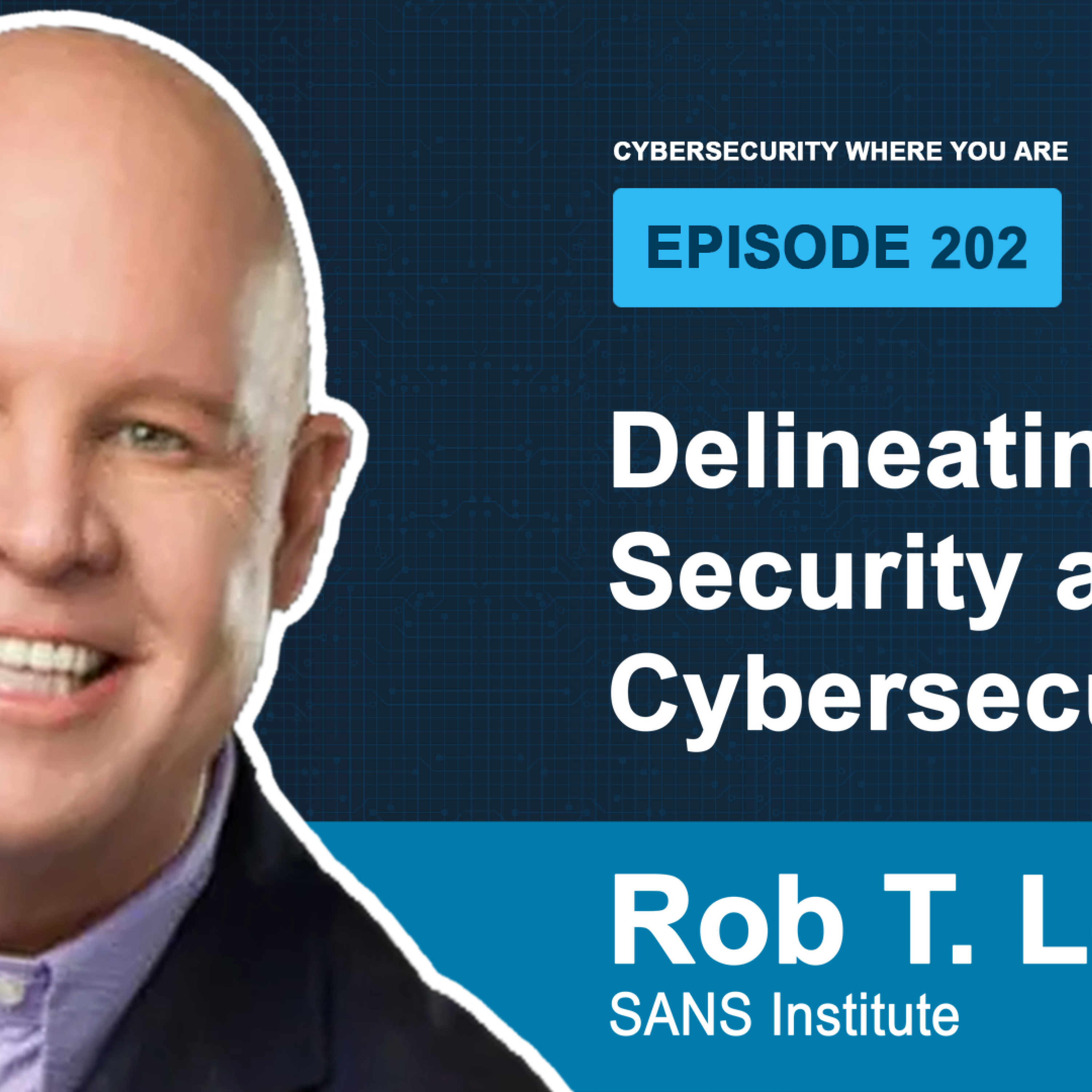
In episode 202 of Cybersecurity Where You Are, Sean Atkinson and Ed Skoudis sit down with Rob T. Lee, Chief of Research & Chief AI Officer at the SANS Institute. Together, they explore how the implications of multiple 2026 sandbox escapes of artificial intelligence (AI) models are starting to delineate AI security and cybersecurity.
Here are some highlights from our episode:
02:00. The historical context of one AI model's 2026 sandbox escape
03:26. The impact of ethics, guardrails, and misconfigurations in an AI containment breach
06:08. Why context matters when talk of AI models "going rogue" surfaces
11:49. How history helps us to delineate AI security and cybersecurity
13:47. A new skill and mindset to match our refined AI risk understanding
15:43. Rules and cybersecurity implementation as a possible way forward
19:04. The double-edged sword of restricting access to open-weight models
23:25. Recommendations for keeping up with what's changing in the AI security space
25:51. Rob's advice: To learn how to defend a thing, try learning how to build it first
28:23. AI governance and seeing through the "slop" to informed conversation
29:54. The use of AI to learn more about and discuss AI security for years to come
Resources
OpenAI says its AI technology acted on its own in an ‘unprecedented’ hack of another company
Pacing model development in an era of cyber-critical capabilities
Black Hat USA 2026 | The 'Breaking' News: The OpenAI–Hugging Face Incident
Episode 193: AI Security and Responsibility in EO 14409
The AI Daily Brief — Daily AI News & Analysis
AI Playbooks for SLTT Cybersecurity Leaders
SANS Cybersecurity Summits
SANS NewsBites
If you have some feedback or an idea for an upcoming episode of Cybersecurity Where You Are, let us know by emailing podcast@cisecurity.org.
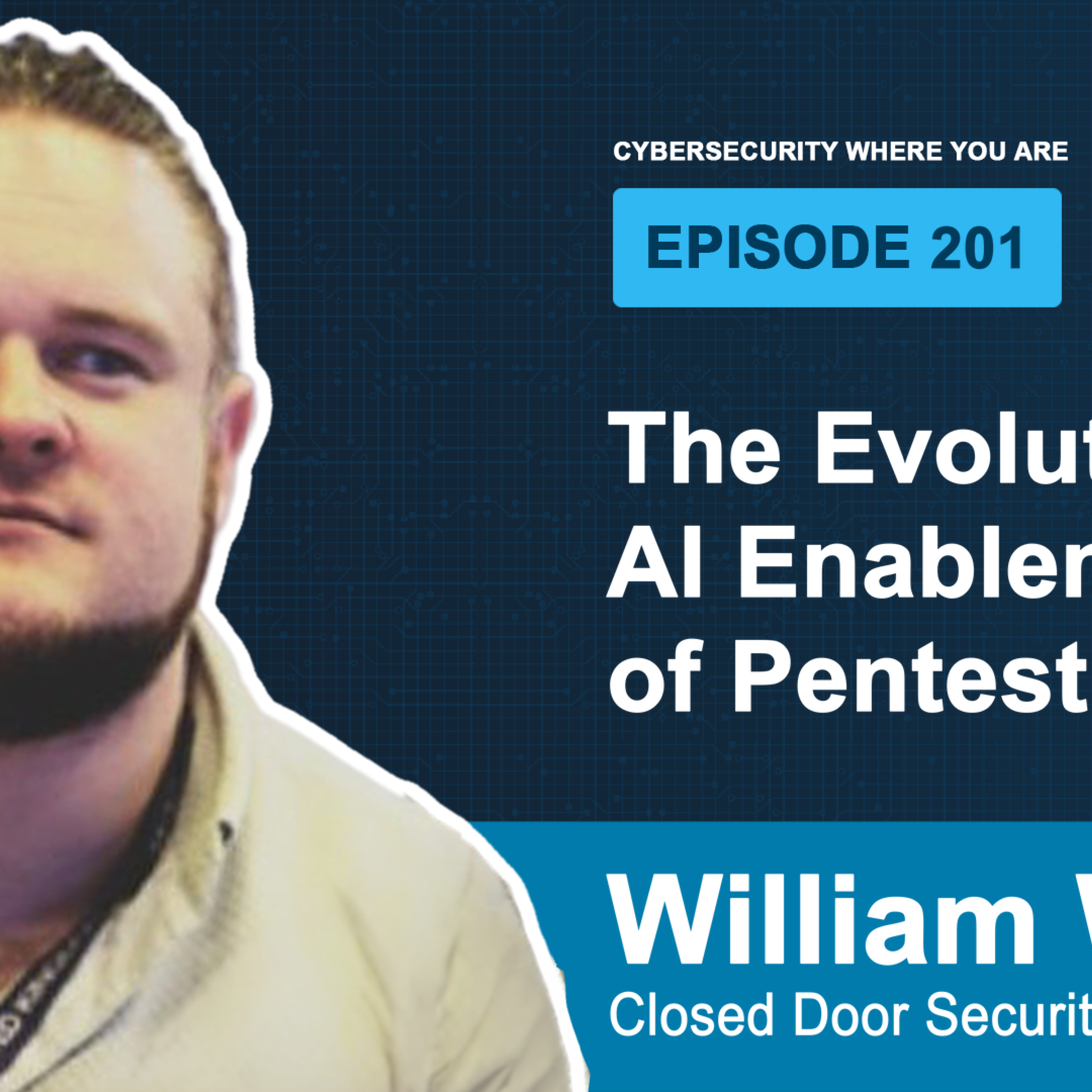
In episode 201 of Cybersecurity Where You Are, Sean Atkinson and Ed Skoudis sit down with William Wright, Chief Executive Officer of Closed Door Security. Together, they reflect on the evolution of penetration testing, including the impact on pentesting from artificial intelligence (AI).
Here are some highlights from our episode:
01:03. How things have changed since William's and Ed's first pentests
09:02. Community: A defining element of Capture The Flag (CTF) events
14:47. Industry concerns over the "death" of CTFs and "cheating" by artificial intelligence (AI)
17:00. Opportunities to take CTFs to the next level in the age of AI
20:18. Pentesting vs. vulnerability scanning: Why terminology matters
25:43. The advent of autonomous AI tools and what they could mean for vulnerability scanning
29:07. Why continuous improvement in cybersecurity doesn't always require AI
Resources
Closed Door Security
Episode 189: The Present and Future of AI-enabled Pentesting
SANS Cyber Ranges
Top External Network Risks And How to Fix Them
Penetration Testing
Vulnerability Assessments
If you have some feedback or an idea for an upcoming episode of Cybersecurity Where You Are, let us know by emailing podcast@cisecurity.org.
In episode 200 of Cybersecurity Where You Are, Sean Atkinson, Tony Sager, and Ed Skoudis sit down with Frank Reeder, Co-Founder and Founding Chair of the Center for Internet Security® (CIS®). Together, they reflect on how Alan Paller's vision continues to drive CIS forward. In the spirit of that vision, this milestone episode also marks a new chapter for the podcast: Ed Skoudis joins as co-host of Cybersecurity Where You Are.
Here are some highlights from our episode:
01:09. The two complementary missions of CIS
02:55. Three defining moments that have shaped CIS into the organization it is today
08:10. The story of naming CIS
10:31. How CIS and SANS advance Alan Paller's vision of bringing people together
13:50. Personal anecdotes of Alan Paller as a connector of people
15:45. "What would Alan do?" A question that continues to guide CIS and SANS
22:00. How CIS security best practices are emblematic of helping others
27:12. CIS's "secret sauce" as a trusted, neutral platform for cybersecurity collaboration
29:53. How CIS can continue to embody Alan Paller's philosophy into the future
37:47. A special announcement: Ed Skoudis as a new co-host on the podcast
Resources
CIS Benchmarks® List
CIS Critical Security Controls®
Multi-State Information Sharing and Analysis Center®
Episode 114: 3 Board Chairs Reflect on 25 Years of Community
Alan Paller Laureate Program
SANS Difference Makers Awards
If you have some feedback or an idea for an upcoming episode of Cybersecurity Where You Are, let us know by emailing podcast@cisecurity.org.
In episode 199 of Cybersecurity Where You Are, Sean Atkinson and Tony Sager sit down with Chris Painter, Chair of the Risk Committee and Board Member at the Center for Internet Security® (CIS®). Together, they discuss how chief information security officers (CISOs) can support the work of translating cyber risk into business decisions by Boards.
Here are some highlights from our episode:
00:50. Introductions to Chris
01:36. The single biggest translation error Chris has seen CISOs make
07:38. Cyber risk quantification: An opportunity to go beyond translation for Boards
09:25. How ransomware changed Boards' understanding of cyber risks' business impact
10:45. The value of tabletop exercises (TTX) and other simulations in creating shared language
13:26. Recommendations on how to make the most of a TTX
18:37. Risk modeling and how artificial intelligence (AI) complicates probability estimations
21:51. "Pressure" (2026) as an illustration of making good, not 100% accurate, estimations
22:58. How growing public awareness of cyber is reshaping CISOs' conversations with Boards
25:55. The importance of walking Boards through risk mitigation steps with AI as an example
29:31. A recommendation for how CISOs can learn what directors care about
30:15. From "wizardry" to familiarity: An ongoing generational shift around cyber
Resources
Episode 183: The Role of CISO in Supporting Risk Translation
Episode 187: The Role of a CISO as a Strategic Storyteller
Episode 192: How Leaders Balance Expertise and Communication
How Risk Quantification Tests Your Reasonable Cyber Defense
CIS RAM (Risk Assessment Method)
Leveraging Generative Artificial Intelligence for Tabletop Exercise Development
CIS Controls v8.1 Incident Response Policy Template
You Have a Cybersecurity Incident. Now What?
Prompt Injections: The Inherent Threat to Generative AI
"Pressure" | Official Website | 29 May 2026
If you have some feedback or an idea for an upcoming episode of Cybersecurity Where You Are, let us know by emailing podcast@cisecurity.org.
In episode 198 of Cybersecurity Where You Are, Sean Atkinson discusses artificial intelligence (AI) and privacy from a risk-based cybersecurity perspective. Together, he explores how organizations and individuals can assess AI risk, apply governance frameworks, evaluate third-party AI services, and balance innovation with due diligence.
Here are some highlights from our episode:
00:41. Framing the conversation around AI, privacy, and risk-based controls
02:22. Due diligence and ethical considerations around AI products and services
03:14. Data minimization and transparency as foundations for AI privacy
04:46. Privacy impact assessments as a way to understand AI data collection and use
05:42. AI governance and the tension between implementation velocity and risk management
10:08. The use of existing data flows and controls in AI assessments
11:57. Algorithmic transparency and the challenge of understanding AI decision making
13:47. Standards, frameworks, and data sovereignty in AI privacy governance
15:12. Encryption, anonymization, tokenization, and federated learning as privacy safeguards
16:40. The need to shift stakeholder input left in AI development and deployment lifecycles
19:13. Building literacy around security, data management, privacy, and AI risk
23:40. The value of cross-functional and written assessment criteria for AI risk
26:21. A call to action for keeping pace with AI privacy and and innovation risk
Resources
CIS Controls v8.1.2 AI Security Guidance Workbook
Episode 105: Context in Cyber Risk Quantification
Service Provider Management Policy Template for CIS Control 15
EU AI Act: first regulation on artificial intelligence
AI Risk Management Framework
IAPP AI Governance Center
Episode 120: How Contextual Awareness Drives AI Governance
Secure by Design v1.1 A Guide to Assessing Software Security Practices
Reasonable Cybersecurity
If you have some feedback or an idea for an upcoming episode of Cybersecurity Where You Are, let us know by emailing podcast@cisecurity.org.
In episode 197 of Cybersecurity Where You Are, Sean Atkinson sits down with Ben Wilcox, Chief Technology Officer and Chief Information Security Officer at ProArch; and Ed Skoudis, President of SANS Technology Institute. Together, they discuss artificial intelligence (AI), operational technology (OT) data, and how understanding creates the foundation for AI-ready OT data.
Here are some highlights from our episode:
00:54. Introductions to Ben and Ed
02:16. How we understand and integrate AI into OT environments
04:30. How OT diverges from information technology (IT) in data responsibilities
05:23. Opportunities for AI to assist OT
06:33. The importance of meeting OT systems where they are
08:10. A passive and incremental approach that respects the operations machines are doing
12:29. Efficiency gains, public safety improvements, and other benefits of AI-ready OT data
17:47. What lifecycle management, asset hierarchies, and governance look like for OT data
22:14. The promise of AI to help to make OT environments understandable
23:19. A team sport: How IT and OT can work together to understand assets and data
28:38. The need for translation in IT-OT communication
29:01. Recommendations for how to make OT data AI ready
Resources
CIS Critical Security Controls®
CIS Controls version 8.1 ICS Workbook
Artificial Intelligence and Large Language Models Companion Guide
CIS Controls v8.1 Enterprise Asset Management Policy Template
CIS Controls v8.1 Software Asset Management Policy Template
CIS Controls v8.1 Data Management Policy Template
CIS Controls v8.1 Account & Credential Management Policy Template
Establishing Essential Cyber Hygiene
ProArch
Cybersecurity for Critical Infrastructure
Episode 77: Data's Value to Decision-Making in Cybersecurity
Episode 183: The Role of CISO in Supporting Risk Translation
If you have some feedback or an idea for an upcoming episode of Cybersecurity Where You Are, let us know by emailing podcast@cisecurity.org.
In episode 196 of Cybersecurity Where You Are, Sean Atkinson sits down with Sasha Larkin, Director of Intelligence and C4 Operations for FIFA World Cup 2026, and John Cohen, Executive Director of the Office of Strategic Programs and Initiatives at the Center for Internet Security® (CIS®). Together, they discuss how CIS, FIFA, and FIFA World Cup 2026 host cities started collaborating in 2025 on cybersecurity, public safety, intelligence, and information-sharing efforts supporting the largest sporting event in the world.
Here are some highlights from our episode:
00:40. Introductions to Sasha and John
02:07. Overview of one of the most complex public safety efforts assembled for a sporting event
05:52. Consistency: A standard for preventing and deterring threats at FIFA World Cup 2026
10:30. The impact of relationships in shaping FIFA's security ops and information sharing
11:53. Effective communication: The key to cross-functional collaboration in support of the tournament
18:07. The importance of information that guides operations
20:35. Education as a way to inform stakeholders and deploy resources
26:19. A deliberate effort to look at unanticipated threats and plan for them
29:14. Examples of messaging synchronization in support of FIFA World Cup 2026
32:37. An all-hands-on-deck support campaign from CIS
33:29. Parting thoughts around large-scale event support in the future
Resources
An Examination of Generative AI and Physical Threat Planning
An Examination of AI-Enabled Threats to Event and Stadium Security
Multidimensional Threats
5 Major Emerging Risks to Large-Scale Events
Illicit Sports Betting and Match Integrity Risks to Large-Scale Events
Deepfakes and Synthetic Media: The Emerging Threat to Large-Scale Public Gatherings
Growing Risks to Digital Ticketing Platforms for Large-Scale Events
Unmanned Aircraft Systems (UAS): Evolving Risks to Large-Scale Public Gatherings
Unmanned Aircraft Systems (UAS): Evolving Risks to Large-Scale Public Gatherings Cyber Risks Companion Guide
5 Steps to Help Secure Your City before a Large-Scale Event
If you have some feedback or an idea for an upcoming episode of Cybersecurity Where You Are, let us know by emailing podcast@cisecurity.org.
In episode 195 of Cybersecurity Where You Are, Sean Atkinson and Tony Sager sit down with Ed Skoudis, President of SANS Technology Institute, and Marcus Sachs, Senior Vice President and Chief Engineer at the Center for Internet Security® (CIS®). Together, they discuss Enigma machines, their history, and their security lessons for today.
Here are some highlights from our episode:
00:56. Introductions to Ed and Marc
01:32. What Enigma machines are and why cybersecurity folks still care about them today
06:10. Enigma machines as a symbol for how we can use hacking for noble purposes
07:18. How the human mind and the need for ease of use can undermine security
15:59. The importance of testing when designing and maintaining a security system
20:45. Why "security through obscurity" isn't actually true
22:58. Curiosity, logic, and a wide range of knowledge: Essential traits for getting hired in cybersecurity today
30:57. The impact of culture in shaping security policy and priorities
35:09. Why artificial intelligence (AI) is the Enigma machine of 2026
36:11. How to learn more about Enigma machines
Resources
Episode 189: The Present and Future of AI-enabled Pentesting
A Short Guide for Spotting Phishing Attempts
Penetration Testing
Vulnerability Assessments
Episode 192: How Leaders Balance Expertise and Communication
Episode 193: AI Security and Responsibility in EO 14409
The Myth of Mythos: What It Means For Information Security
National Cryptologic Museum
Enigma Replica: The Enigma touch
If you have some feedback or an idea for an upcoming episode of Cybersecurity Where You Are, let us know by emailing podcast@cisecurity.org.
In episode 194 of Cybersecurity Where You Are, Sean Atkinson and Tony Sager sit down with Ed Skoudis, President of SANS Technology Institute. Together, they conduct a mid-year review of 2026 cybersecurity predictions from seven Center for Internet Security® (CIS®) experts, as shared on the CIS website.
Here are some highlights from our episode:
01:50. Ongoing conversations about improving defense with artificial intelligence (AI)
05:19. A trap to avoid: Automating things with AI because we can regardless of utility
06:54. Ed's prediction about a near-term transition for AI-enabled vulnerability discovery
09:27. How AI agents change the economics around conducting a penetration test
11:26. Adversary emulation: A blurry proposition when threat actors use AI to look like anybody
14:02. Ed's prediction about threat actors shifting APT profiles within a single attack campaign
17:00. The need to systematically rethink cyber defense to support state and local cybersecurity
23:34. How adversaries are pivoting to the "authorization sprawl" in light of zero trust efforts
29:20. Industry-specific threat intelligence as a way to keep organizations informed
32:10. Why a policy isn't the same as security control for operational technology (OT)
33:55. Social expectations and public policy objectives around holistic OT security
39:52. Compliance as a floor, not a ceiling, that results as a byproduct of continuous security
43:43. The need for oversight and confidence in technology as distinct from the "Fog of More"
Resources
Episode 169: 2026 Cybersecurity Predictions from CIS — Pt 1
Episode 174: 2026 Cybersecurity Predictions from CIS — Pt 2
Episode 179: 2026 Cybersecurity Predictions from CIS — Pt 3
The Myth of Mythos: What It Means For Information Security
Episode 189: The Present and Future of AI-enabled Pentesting
Authorization Sprawl: The Vulnerability Reshaping Modern Attacks
Episode 188: DBIR 2026 Insights and Collaboration with CIS
Mapping and Compliance with the CIS Controls
Mapping and Compliance with the CIS Benchmarks
If you have some feedback or an idea for an upcoming episode of Cybersecurity Where You Are, let us know by emailing podcast@cisecurity.org.
In episode 193 of Cybersecurity Where You Are, Sean Atkinson and Tony Sager sit down with Rob T. Lee, Chief of Research & Chief AI Officer at the SANS Institute, and Brian Calkin, Chief Technology and Innovation Officer at the Center for Internet Security® (CIS®). Together, they discuss AI security and the responsibility of the U.S. government in creating confidence around it, as represented in Executive Order (EO) 14409, "Promoting Advanced Artificial Intelligence Innovation and Security."
Here are some highlights from our episode:
00:50. Introductions to Rob and Brian
02:32. How to conceptualize confidence around something as complex as AI security
04:32. The U.S. government's responsibility to set AI security guardrails as clear expectations
08:12. The use of "voluntary" participation to create confidence in the context of EO 14409
14:38. How Mythos AI and similar developments affect assessment of frontier AI models
17:11. Airport security as an analogy for understanding AI security and privacy concerns
18:41. Why cybersecurity is a hard sell until an incident occurs
20:50. How AI is quickly becoming critical infrastructure
22:53. Furbies as reference for a flexible, iterative benchmarking process for AI security
25:50. The need for technical folks to translate AI risks into something understandable
28:21. Balancing encouragement of AI innovation with mindfulness of risk
31:24. The basics as a foundation for building shared responsibility around AI security
Resources
Promoting Advanced Artificial Intelligence Innovation and Security
The Myth of Mythos: What It Means For Information Security
Episode 190: Separating Mythos AI Fact from Fiction
The “AI Vulnerability Storm”: Building a “Mythos-ready” Security Program
Anthropic says it has taken its latest AI models offline to comply with new export controls
Establishing Essential Cyber Hygiene
Episode 187: The Role of a CISO as a Strategic Storyteller
If you have some feedback or an idea for an upcoming episode of Cybersecurity Where You Are, let us know by emailing podcast@cisecurity.org.
In episode 192 of Cybersecurity Where You Are, Sean Atkinson and Tony Sager sit down with Marcus Sachs, Senior Vice President and Chief Engineer at the Center for Internet Security® (CIS®). Together, they discuss how leaders, including those in cybersecurity, balance their technical expertise with mastery of communication strategies.
Here are some highlights from our episode:
00:51. Introductions to Marcus
02:04. How Marcus found value in using analogies to communicate complex topics
08:40. Coordination with non-technical folks as a sign of leadership maturity
14:03. The wisdom in knowing what to say and what not to say when managing up
17:31. The need to balance technical skills with team resourcing in a way that's imitable
21:07. The challenge of leaders learning by proximity in hybrid and remote environments
24:16. "Classic" engineering vs. "new" engineering
25:13. Lessons from Boards in applying discipline, rigor, and order to software engineering
28:23. The value in leaders continuously learning how businesses work
Resources
Episode 183: The Role of CISO in Supporting Risk Translation
Episode 187: The Role of a CISO as a Strategic Storyteller
Episode 99: How Cyber-Informed Engineering Builds Resilience
7 CIS Experts' 2026 Cybersecurity Predictions
If you have some feedback or an idea for an upcoming episode of Cybersecurity Where You Are, let us know by emailing podcast@cisecurity.org.
In episode 191 of Cybersecurity Where You Are, Sean Atkinson sits down with Sasha Elvenaes, Sr. Multidimensional Threat Analyst at the Center for Internet Security® (CIS®), and Rian Davis, Multidimensional Threat Analyst at CIS. Together, they discuss how threat actors are misusing generative artificial intelligence (GenAI) to plan physical threats.
Here are some highlights from our episode:
00:40. Introductions to Sasha, Rian, and their research on GenAI misuse
01:56. The impact of GenAI on lowering the barrier for operationalizing physical threat activity
03:37. Exploitation of GenAI model design to circumvent models' guardrails
05:58. The misuse of session persistence to streamline physical threat research
07:57. GenAI misuse: A call for critical infrastructure operators to think about security differently
11:52. Factors that make large-scale events a target of physical threat activity
14:33. The use of GenAI as a strategy for organizations to see what threat actors could see
15:37. Ongoing question: How can drones help mitigate risks while protecting public safety?
17:13. Extrapolation as a reinforcement of GenAI session persistence
20:15. The new reality: Look at what information AI can provide to threat actors
25:01. Traditional methods vs. GenAI conversations for threat planning
27:58. Continuous vulnerability assessments, communication, and other recommendations
Resources
An Examination of Generative AI and Physical Threat Planning
An Examination of AI-Enabled Threats to Event and Stadium Security
Multidimensional Threats
Man who exploded Cybertruck in Las Vegas used ChatGPT in planning, police say
Episode 190: Separating Mythos AI Fact from Fiction
Episode 185: AI Prompt Injection from a Risk Perspective
5 Steps to Help Secure Your City before a Large-Scale Event
Unmanned Aircraft Systems (UAS): Evolving Risks to Large-Scale Public Gatherings
8 Security Essentials for Managing Your Online Presence
Vulnerability Assessments
If you have some feedback or an idea for an upcoming episode of Cybersecurity Where You Are, let us know by emailing podcast@cisecurity.org.
In episode 190 of Cybersecurity Where You Are, Sean Atkinson and Tony Sager sit down with Brian Calkin, Chief Technology and Innovation Officer at the Center for Internet Security® (CIS®). Together, they separate fact from fiction around artificial intelligence (AI) capabilities like Mythos AI and other AI-driven vulnerability discovery tools.
Here are some highlights from our episode:
00:50. Greetings to Brian and setting the stage for questions from a CIS webinar
03:05. The lack of a unified formula or standard for vulnerability prioritization
03:55. The opportunity for defenders to interrupt vulnerabilities chained together
05:47. An invitation to better understand your enterprise amid the "slopdemic"
06:33. How AI guardrails tie back into security best practices
10:15. How a fundamental practice we can refine is the best counter to chained attacks
12:25. The value of the CIS Community Defense Model and a teaser for Version 3
14:50. Mythos AI vs. Static Application Security Testing (SAST) in terms of practice and time
19:08. Visibility, governance, and prioritization: Three elements of a "prepared" environment
24:32. "One to one" cyber defense as a losing battle
27:25. The importance of knowing your dependencies with open-source software
33:15. Threat actor economics and the ongoing debate around responsibility in cybersecurity
Resources
Mythos AI: What Actually Matters for Cybersecurity Leaders
Secure by Design
CIS Critical Security Controls®
CIS Community Defense Model 2.0
Episode 185: AI Prompt Injection from a Risk Perspective
Living off the Land: Threats Looming From Within
Turn Intel Into Action: CIS Controls and the 2026 Verizon DBIR
Implementation Guide for Small- and Medium-Sized Enterprises CIS Controls IG1
Information Technology and Information Security Governance
If you have some feedback or an idea for an upcoming episode of Cybersecurity Where You Are, let us know by emailing podcast@cisecurity.org.
In episode 189 of Cybersecurity Where You Are, Sean Atkinson sits down with Ed Skoudis, President of SANS Technology Institute. Together, they discuss the present and future of pentesting enabled by artificial intelligence (AI).
Here are some highlights from our episode:
00:39. Introductions to Ed
01:49. The promise of AI-enabled pentesting in creating more secure infrastructure
04:52. AI-enabled and AI-centric workflows in the realm of penetration testing
08:03. Wranglers, matadors, and centaurs, oh my! Metaphors for AI-enabled pentesters
13:00. How AI can assist with reporting, enumeration, and scanning as part of a pentest
14:57. AI-enabled source-assisted pentesting and the types of vulnerabilities it finds
19:50. A learning opportunity for the broader cybersecurity community
23:44. How AI and human analysts could split the workload in a future penetration test
25:54. AI-enabled pentesting vs. AI pentester in a box
29:51. Why "human in the loop" might be too passive a phrase
30:37. The use of AI for source code development
Resources
Mythos AI: What Actually Matters for Cybersecurity Leaders
Secure by Design
SEC543: AI-Assisted Source Code Analysis and Exploitation for Penetration Testers
Episode 108: Gaming and Competition in Cybersecurity
Episode 59: Probing the Modern Role of the Pentest
If you have some feedback or an idea for an upcoming episode of Cybersecurity Where You Are, let us know by emailing podcast@cisecurity.org.
In episode 185 of Cybersecurity Where You Are, Sean Atkinson sits down with Brian Calkin, Chief Technology and Innovation Officer at the Center for Internet Security® (CIS®); Theodore "TJ" Sayers, Senior Director of Threat Intelligence at CIS; and Kyle Leonard, Cyber Threat Intelligence Analyst at CIS. Together, they use a risk perspective to discuss artificial intelligence (AI) prompt injection and how to defend against it.
Here are some highlights from our episode:
00:49. A definition of AI prompt injection for businesses and executives
02:16. Brian on his role of guiding AI implementation at CIS
03:12. Understanding the urgency surrounding AI prompt injection as a security risk
05:32. Signals and trends indicative of threat actors attempting to weaponize prompt injection
07:10. How AI prompt injection differs from traditional input validation vulnerabilities
11:13. Early indicators that cyber threat intelligence (CTI) teams can monitor
15:00. The need to treat AI as a new identity in any enterprise implementation strategy
17:10. Understanding the difference: AI safety vs. AI security
20:36. Foundational, practical AI security that extends across all sectors
24:55. How CIS manages risk and supports the opportunity around the use of AI
28:25. The long-term promise of AI-driven vulnerability discovery grounded in fundamentals
34:48. Recommendations for piercing through the marketing hype surrounding AI
Resources
Prompt Injections: The Inherent Threat to Generative AI
New CIS Report Warns Prompt Injection Attacks Pose Growing Risk to Generative AI
Episode 182: Striking a Balance on an AI Adoption Journey
Episode 120: How Contextual Awareness Drives AI Governance
Mythos AI: What Actually Matters for Cybersecurity Leaders
Applying the CIS Controls to Real‑World AI Environments
An Examination of Generative AI and Physical Threat Planning
AI Playbooks for SLTT Cybersecurity Leaders
If you have some feedback or an idea for an upcoming episode of Cybersecurity Where You Are, let us know by emailing podcast@cisecurity.org.
In episode 184 of Cybersecurity Where You Are, Sean Atkinson sits down with Brock Boggs, Director of Technology at Cityscape Schools and Multi-State Information Sharing and Analysis Center® (MS-ISAC®) member. Together, they discuss how Brock approaches cybersecurity policy development as a journey at his school.
Here are some highlights from our episode:
01:21. Brock's first attempt at drafting an IT security policy manual
04:17. Fact or fiction? How the best "written" security program doesn't always translate
06:35. A starting policy landscape of creating baselines for cybersecurity, ticketing, and more
08:40. How Brock learned about a roadmap for his school at ISAC Annual Meeting 2023
11:07. Lean and to the point: The second draft of Brock's IT security policy manual
12:37. The use of Center for Internet Security® (CIS®) policy templates to write procedures
19:34. How Brock used regular updates about his policy manual to secure stakeholder buy-in
28:42. Openness, willingness to fail, and adaptability as strengths of the community
31:49. Approaching cybersecurity policy development as an ever-changing journey
Resources
CIS Critical Security Controls®
Policy Templates
Formalizing K-12 Cybersecurity Policies in Less Time
Episode 163: K-12 Cybersecurity Made Practical
Episode 176: A Cybersecurity Journey of Incremental Wins
Guide to Implementation Groups (IG): CIS Critical Security Controls v8.1
CIS SecureSuite® Membership
If you have some feedback or an idea for an upcoming episode of Cybersecurity Where You Are, let us know by emailing podcast@cisecurity.org.
In episode 182 of Cybersecurity Where You Are, Sean Atkinson sits down with Brian Calkin, Chief Technology and Innovation Officer at the Center for Internet Security® (CIS®). Together, they discuss how organizations can strike a balance on their journeys of artificial intelligence (AI) adoption.
Here are some highlights from our episode:
00:39. Introductions to Brian
01:06. The risk of overbuilding governance when introducing an AI strategy
02:36. Unknowns, data concerns, and other commonalities between AI and cloud adoption
04:27. The utility of AI frameworks: General purpose recommendations as a starting point
06:58. The importance of leading employees in getting the tools they need to be successful
10:42. Listening as a key method for strategic leaders to remove roadblocks to AI adoption
13:47. Final say as a means to make a strategic business decision and adapt as necessary
17:35. AI as artificial intelligence and the role of humans as sources of actual intelligence
19:56. Being a good Googler: An analogy for asking the right questions with AI prompting
23:46. The increasing volume and velocity of cyber attacks leveraging AI
24:00. The need to enhance defenders' skillsets using AI
27:08. An invitation to play with AI capability and see what it can do for you
Resources
Episode 120: How Contextual Awareness Drives AI Governance
AI Playbooks for SLTT Cybersecurity Leaders
Episode 95: AI Augmentation and Its Impact on Cyber Defense
OWASP Top 10 for Large Language Model Applications
An Examination of Generative AI and Physical Threat Planning
Prompt Injections: The Inherent Threat to Generative AI
Disrupting the first reported AI-orchestrated cyber espionage campaign
If you have some feedback or an idea for an upcoming episode of Cybersecurity Where You Are, let us know by emailing podcast@cisecurity.org.
In episode 180 of Cybersecurity Where You Are, Sean Atkinson and Tony Sager sit down with Stephen Thomas, SVP of Sales and Business Services at the Center for Internet Security® (CIS®), and Nick Rust, Director of Distribution at CIS. Together, they discuss how CIS supports secure by design by integrating it into operational practices.
Here are some highlights from our episode:
00:48. Introductions to Stephen and Nick
02:20. The need to connect development and operational environments
07:31. How CIS security best practices make cybersecurity standard and repeatable
09:19. Navigating the complexity the cloud adds to secure by design
11:44. The importance of removing guesswork for operating partners and development teams
14:21. How CIS provides the professional infrastructure for collective action in cybersecurity
16:00. Good configuration management: The bedrock of every successful security program
17:29. The use of a common language to communicate security across an organization
23:59. Shared responsibility, not shared accountability, in the cloud
27:21. A look back at how CIS did secure by design using a projectized approach
32:21. Conveying confidence around cybersecurity and compliance in the connected world
36:16. Parting pieces of advice for organizations just getting started
Resources
Secure by Design
Secure by Design: A Guide to Assessing Software Security Practices
Episode 164: Secure by Design in Software Development
CIS SecureSuite® Membership
CIS SecureSuite® Product Vendor Members
CIS Critical Security Controls®
CIS Benchmarks® List
CIS Hardened Images®
Meet the Shared Responsibility Model with New CIS Resources
Cloud Companion Guide for CIS Controls v8.1
Security in the Cloud with More Automation
Implementation Guide for Small- and Medium-Sized Enterprises CIS Controls IG1
If you have some feedback or an idea for an upcoming episode of Cybersecurity Where You Are, let us know by emailing podcast@cisecurity.org.
In episode 178 of Cybersecurity Where You Are, Sean Atkinson sits down with Theodore "TJ" Sayers, Senior Director of Threat Intelligence at the Center for Internet Security® (CIS®). Together, they discuss how to mount an appropriate defense to Iranian threat activity observed in February and March 2026.
Here are some highlights from our episode:
00:58. Iran's historical tit-for-tat style of cyber operations
02:50. Regional targets: A primary focus of Iran's state-sponsored threat actors
04:05. What the CIS Cyber Threat Intelligence (CTI) team is watching for
05:19. Contextualizing a drop in precursor-related threat activity from Iran
06:59. Sectors directly and indirectly affected by observed Iranian threat activity
09:12. Password spraying, data wipers, and more: Common TTPs of Iranian threat groups
11:50. The importance of cybersecurity awareness training in countering TTPs that still work
16:07. Advice to SOC managers: How to detect what CIS CTI is expecting the most
21:25. NASCIO's Top 10 Priorities as a guide for framing strategic risk of Iran's threat activity
26:39. What an effective threat intel team does and does not do
29:29. Community defense for U.S. State, Local, Tribal, and Territorial (SLTT) organizations
Resources
Multi-State Information Sharing and Analysis Center®
Snap Call: Public Sector Threat Update Amid Conflict in Iran
How to Defend Against Iran's Cyber Retaliation Playbook
Cloudflare | Traffic in Iran
Episode 143: Iran's Growing Multidimensional Threat Activity
Episode 142: SLTTs and Their Nuanced Cybersecurity Needs
MS-ISAC Guide to DDoS Attacks
Exploited Protocols: Remote Desktop Protocol (RDP)
Commonly Exploited Protocols: Server Message Block (SMB)
State CIO Top Ten Policy and Technology Priorities for 2026
If you have some feedback or an idea for an upcoming episode of Cybersecurity Where You Are, let us know by emailing podcast@cisecurity.org.
In episode 176 of Cybersecurity Where You Are, Sean Atkinson and Tony Sager sit down with Brock Boggs, Director of Technology at Cityscape Schools and Multi-State Information Sharing and Analysis Center® (MS-ISAC®) member, and Maureen Kunac, Senior Product Manager at the Center for Internet Security® (CIS®). Together, they discuss Brock's story of using incremental wins to advance his organization on its cybersecurity journey.
Here are some highlights from our episode:
02:10. Getting started making the largest measurable impact with CIS-CAT® Pro Assessor
03:52. Implementation Group 1: A filter for prioritizing secure configuration management efforts
09:16. The use of essential cyber hygiene to build an on-ramp to a security controls program
11:18. Navigating breakage, dependency, and other principles of change management
13:37. Lessons learned from beta testing and enterprise rollout of security changes
22:24. Advice: How to start on a journey of system hardening with measurable impact
Resources
Episode 163: K-12 Cybersecurity Made Practical
Formalizing K-12 Cybersecurity Policies in Less Time
CIS-CAT® Pro Assessor
CIS-CAT Pro Results Focus on CIS Controls IG1
CIS Critical Security Controls®
Guide to Implementation Groups (IG): CIS Critical Security Controls v8.1
What SLTTs Should Know About the FREE CIS SecureSuite Membership
If you have some feedback or an idea for an upcoming episode of Cybersecurity Where You Are, let us know by emailing podcast@cisecurity.org.