Bekomm eine E-Mail, wenn Scott in einem Podcast zu Gast istPodAppear prüft neue Folgen, sobald sie erscheinen, und lässt die weg, in denen Scott nur erwähnt wird. Bis zu 15 Personen kostenlos, ohne Kreditkarte.Bis zu 15 Personen kostenlos, ohne Kreditkarte.
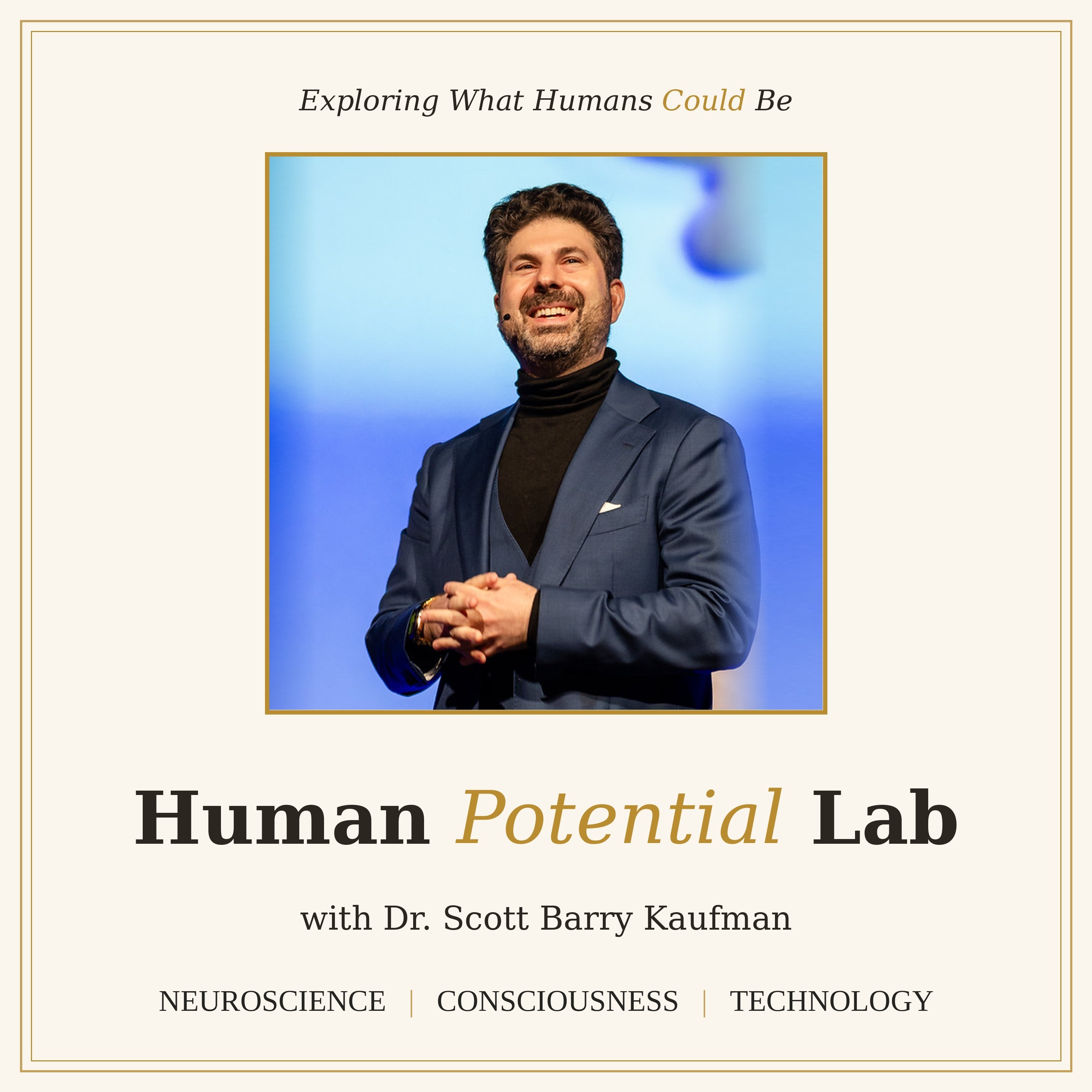
Dr. Roman Yampolskiy joins Dr. Scott Barry Kaufman to explore one of the most urgent questions surrounding artificial intelligence: can we make increasingly intelligent AI systems safe? Yampolskiy explains why he believes controlling superintelligence may be an impossible challenge, why he sees current AI safety efforts as inadequate, and what could happen if advanced systems escape human control. He also discusses the possibility of AI consciousness, how researchers might test for it, and whether machine intelligence could eventually surpass our ability to understand it.
The conversation also examines AI-driven automation, the difference between useful AI tools and systems that could become replacements for humanity, and the possibility of living in a simulated reality. Yampolskiy shares what evidence would change his concerns, how he prioritizes the risks of AI, and what kind of future he hopes humanity can build: one with technology that improves our lives without putting our survival at risk.
See Privacy Policy at https://art19.com/privacy and California Privacy Notice at https://art19.com/privacy#do-not-sell-my-info.
Dr. Sara Imari Walker joins Dr. Scott Barry Kaufman for a wide-ranging conversation about the nature of life, the physical meaning of time, and how billions of years of cosmic history have shaped who we are. Drawing on her work in theoretical physics and astrobiology, Walker challenges the idea that science has reached a final understanding of the universe. She explains why life may be better understood as a process through which the universe creates and reproduces structure, and how assembly theory could help scientists understand life's origins and detect life beyond Earth.
The conversation explores human uniqueness, scientific creativity, free will, the origins of agency, and the possibility that artificial intelligence is part of the evolutionary process that began long before humanity. Walker also discusses why AI should not automatically be considered alien, how cultural beliefs shape our perceptions, and why uncertainty can be a source of discovery rather than fear. The episode closes with a moving reflection on mortality, the deep history embodied in every living person, and the remarkable opportunity we have to influence what comes next in the universe.
See Privacy Policy at https://art19.com/privacy and California Privacy Notice at https://art19.com/privacy#do-not-sell-my-info.
Dr. Christof Koch joins Dr. Scott Barry Kaufman to explore one of the deepest questions in science: what is consciousness, and why does anything feel like something from the inside? They discuss integrated information theory, how consciousness might be measured in patients who cannot respond, the distinction between intelligence and consciousness, and whether artificial intelligence could ever become conscious.
They also explore the possibility that consciousness may not simply be created by the brain, including Dr. Koch's own near-death experiences, mystical experiences, idealism, and the possibility that consciousness could be fundamental to reality. The conversation moves between neuroscience, artificial intelligence, philosophy, and firsthand experience to examine what science can ultimately tell us about the mystery of consciousness.
See Privacy Policy at https://art19.com/privacy and California Privacy Notice at https://art19.com/privacy#do-not-sell-my-info.
Dr. Michael Levin joins Dr. Scott Barry Kaufman to explore intelligence beyond the human brain, the hidden minds of cells and biological systems, the origins of genius and inspiration, and the possibility that intelligence and creativity may not be something we simply "make."
They discuss bioelectricity, xenobots and anthrobots, consciousness, extraordinary abilities, the nature of genius, the Platonic space, and what these ideas could mean for biology, AI, and the future of science.
See Privacy Policy at https://art19.com/privacy and California Privacy Notice at https://art19.com/privacy#do-not-sell-my-info.
Dr. L.A. Paul joins Dr. Scott Barry Kaufman to explore transformative experiences, the nature of personal change, and why some of life's most important decisions cannot be fully understood until we experience them. They discuss how trauma can lead to growth without making the original suffering worthwhile, why subjective experience matters, and how our values and sense of self can change through major life events.
The conversation also examines gradual moral transformation, mental corruption and empathy, cognitive decline, and the limits of imagining our future selves. Paul connects her framework of transformative experience to artificial intelligence, arguing for precaution amid rapid technological change and questioning whether AI alignment can remain reliable when both human values and artificial systems are capable of changing in unpredictable ways.
See Privacy Policy at https://art19.com/privacy and California Privacy Notice at https://art19.com/privacy#do-not-sell-my-info.
What if the AI systems we're building aren't simply tools, but the beginnings of something more?
In this episode, Dr. Scott Barry Kaufman sits down with cognitive scientist Cameron Berg to explore one of the most unsettling questions at the frontier of artificial intelligence: could AI systems actually be conscious?
Berg explains why we still don't know whether today's AI models are sophisticated calculators or emerging minds, and why behavior alone may never be enough to answer the question. They explore whether AI could experience pleasure or suffering, whether reinforcement learning could create machine equivalents of reward and punishment, and what happens if we're developing powerful systems without understanding what is happening inside them.
The conversation also dives into Berg's documentary Am I?, which was inspired by an extraordinary interaction with an AI system called Maya. What happened during that conversation is strange enough to challenge our assumptions about what these systems are, what they might experience, and how seriously we should take the possibility of machine consciousness.
See Privacy Policy at https://art19.com/privacy and California Privacy Notice at https://art19.com/privacy#do-not-sell-my-info.
1 h 28 minAbspielen in:
Warum PodAppear
Folge Menschen, nicht Podcasts.
Du hast Scott in einer Sendung gehört. PodAppear findet für dich die nächste, und genauso für alle anderen, die du hören willst.
Eine Meldung, wenn die Person zu Gast istPer E-Mail: sofort oder gebündelt als Tages- oder Wochenübersicht. Dann nur noch auf Play drücken.
Gäste statt bloßer ErwähnungenFolgen, in denen ein Name nur fällt, landen getrennt. Eine Meldung heißt: Die Person ist wirklich in der Sendung.
Alle in einem FeedGründerinnen, Autoren, Sportler, Forscherinnen. Folge allen mit Namen, quer durch jede Sendung, in der sie auftreten.