Bekomm eine E-Mail, wenn Sarah in einem Podcast zu Gast istPodAppear prüft neue Folgen, sobald sie erscheinen, und lässt die weg, in denen Sarah nur erwähnt wird. Bis zu 15 Personen kostenlos, ohne Kreditkarte.Bis zu 15 Personen kostenlos, ohne Kreditkarte.
Sarah kostenlos folgen
SM

Sarah Marzi

Sarah Marzi war in den letzten 12 Monaten in 2 Podcast-Folgen aus 2 verschiedenen Sendungen zu Gast. Zuletzt: The Genetics Podcast, 30. Apr. 2026.

Zwei Jahre auf Sendung

GastHostErwähnt

Gastauftritte

Do30Apr
The Genetics Podcast

The Genetics Podcast

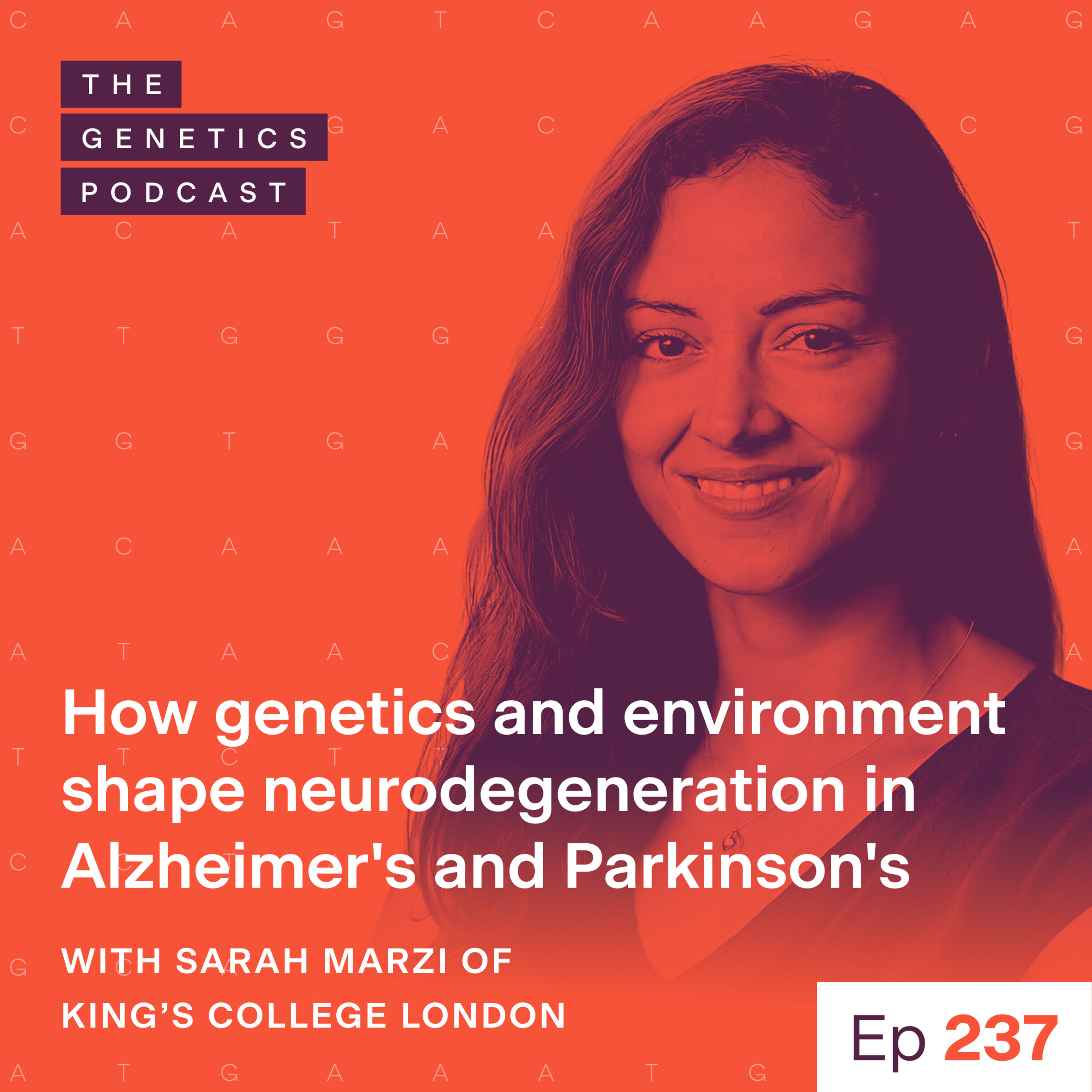
EP 237: How genetics and environment shape neurodegeneration in Alzheimer's and Parkinson's with Sarah Marzi of King’s College London

This week on The Genetics Podcast, Patrick is joined by Dr. Sarah Marzi, Senior Lecturer at King's College London and group leader at the UK Dementia Research Institute. They discuss the impact of genes and environment on neurodegenerative disease, including: how APOE genotype shapes microglial function, how cell type-specific epigenomics of postmortem brain tissue is revealing the role of microglia and oligodendrocytes in Alzheimer's disease, and how pesticide exposure drives selective dopaminergic neuron loss and neuroinflammation in Parkinson's. Show Notes 0:00 Intro to The Genetics Podcast 00:59 Welcome to Sarah 02:13 Environmental contributions to Parkinson’s disease and ALS 05:01 The role of microglia in Alzheimer’s disease and findings from a study on APOE variants in a mouse model 12:50 APOE4 effects on lipid accumulation, microglial activation, and vitamin D receptor signaling  14:20 Building a multi-omic atlas of the Alzheimer’s brain 18:01 Overview of the pathological cascade of events in the Alzheimer’s brain 20:31 Anti-amyloid therapies, early intervention, and combination treatment strategies  22:24 Rotenone exposure and microglial immune activation in Parkinson’s disease 29:24 Dopaminergic neuron vulnerability to pesticide exposure and mitochondrial dysfunction  31:04 Familial Parkinson’s genes, polygenic Alzheimer’s risk, and genetically targeted clinical trials 33:13 Polygenic risk and microglial cell state regulation in Alzheimer’s disease 34:13 Defining cell states in single cell RNA sequencing 35:30 Oligodendrocyte epigenetic and transcriptional changes in Alzheimer’s disease 37:23 Sarah’s most memorable hiking adventures 38:58 Closing remarks Find out more: Alzheimer’s APOE microglia xenotransplantation study Rotenone exposure Parkinson’s study
40 minAbspielen in:

Di17Feb
The Empowering Neurologist Podcast

The Empowering Neurologist Podcast

Toxins Rewrite Your Genes (And Trigger Brain Disease) with Dr. Sarah Marzi | E209

🧠 Stay ahead with the latest in science, nutrition, and wellness by subscribing to Dr. Perlmutter’s newsletter at: www.drperlmutter.com. ✉️🌱 Thank you to our sponsors: EVY - https://www.optoceutics.com/perlmutter and the code perlmutter26 will be auto-applied to your order to get $200 off & free shipping (90 days risk-free). Fresh Pressed Olive Oil - https://www.getfresh389.com For a complimentary bottle of one of the greatest olive oils I've ever discovered. 3X4 Genetics - http://3X4genetics.com/DrPerlmutter for a special offer when you sign up to decode your genetics and get personalized, science-backed health recommendations. ==== Dr. Perlmutter’s groundbreaking new book, Brain Defenders, is now available for pre-order. Discover how to protect your brain and future health - reserve your copy today at https://www.braindefenders.com. ==== On this episode of The Empowering Neurologist, I’m joined by Dr. Sarah Marzi, a neuroscientist at King’s College London and a principal investigator at the UK Dementia Research Institute, whose work is transforming how we understand neurodegenerative disease risk. Dr. Marzi’s research focuses on gene regulation in the human brain, particularly within microglia, the immune cells that orchestrate inflammation, synaptic pruning, and repair. Her studies show that genetic risk for diseases like Alzheimer’s is concentrated not in protein-coding genes, but in regulatory regions of the genome, epigenetic switches that control immune behavior in the brain. This conversation with Dr. Marzi is not just about disease. It’s about agency. Understanding epigenetics helps explain how lifestyle, environment, and immune balance can influence brain destiny. It’s science that empowers prevention, resilience, and hope. ==== 00:00 Intro 03:12 Epigenetics and Neurodegenerative Disease 04:49 Why Alzheimer’s Is Not a Single Gene Disorder 09:18 Protein Aggregation and Brain Cleanup Failure 10:55 Microglia vs Neurons in Alzheimer’s 19:04 Blood Brain Barrier and Inflammatory Signaling 20:39 ApoE Genetics Explained 23:37 Human Microglia Transplanted Into Mouse Brain 30:02 Vitamin D Receptor and Protective Gene Programs 38:18 Environmental Toxins and Parkinson’s 44:59 C1q Activation and Synapse Loss 49:33 Why Substantia Nigra Is Uniquely Vulnerable 51:39 Paraquat, Mitochondria and Converging Toxic Pathways 53:00 Epigenetic Memory of Toxic Exposure 54:09 Histones and Gene Regulation in Alzheimer’s 57:41 Oligodendrocytes as a Hidden Player 59:32 Why Single Target Drugs May Fail 01:02:10 Detecting Disease Through Blood and Machine Learning 01:04:41 Can Lifestyle Modify Epigenetics ==== Dr Sarah Marzi is a Senior Lecturer in Neuroscience at King’s College London and a Group Leader at the UK Dementia Research Institute. Her work focuses on how our genes and environment change cellular processes in the brain and can predispose us to neurodegenerative diseases such as Alzheimer’s, Parkinson’s and motor neuron disease. An expert in epigenetics – the chemical switches that turn genes on and off – Dr Marzi uses cuttingedge genomic techniques on human brain tissue as well as cell and animal models. Her team combines these experiments with advanced statistics, bioinformatics and AI to map the earliest molecular changes that make brain cells vulnerable to disease, particularly in immune cells of the brain called microglia. This work aims to reveal how both genetic variants and environmental exposures, including pesticides, contribute to disease risk and to uncover new avenues for therapy. ___________________________ Instagram: https://www.instagram.com/davidperlmutter/ Website: https://www.drperlmutter.com/ Subscribe to our channel: https://www.youtube.com/channel/UCDRl_UAXxbHyOOjklnA0dxQ/?sub_confirmation=1

1 h 13 minAbspielen in:

Warum PodAppear

Folge Menschen, nicht Podcasts.

Du hast Sarah in einer Sendung gehört. PodAppear findet für dich die nächste, und genauso für alle anderen, die du hören willst.

  • Eine Meldung, wenn die Person zu Gast istPer E-Mail: sofort oder gebündelt als Tages- oder Wochenübersicht. Dann nur noch auf Play drücken.
  • Gäste statt bloßer ErwähnungenFolgen, in denen ein Name nur fällt, landen getrennt. Eine Meldung heißt: Die Person ist wirklich in der Sendung.
  • Alle in einem FeedGründerinnen, Autoren, Sportler, Forscherinnen. Folge allen mit Namen, quer durch jede Sendung, in der sie auftreten.

Bis zu 15 Personen kostenlos, ohne Kreditkarte.