Bekomm eine E-Mail, wenn Sarah in einem Podcast zu Gast istPodAppear prüft neue Folgen, sobald sie erscheinen, und lässt die weg, in denen Sarah nur erwähnt wird. Bis zu 15 Personen kostenlos, ohne Kreditkarte.Bis zu 15 Personen kostenlos, ohne Kreditkarte.
What does it mean to build wealth as an individual investor in today’s society, especially as gains continue to get concentrated into smaller groups of VCs or institutional investors? Robinhood’s CEO and co-founder Vlad Tenev has a vision that can be summed up in one word: Ownership. In this episode, Sarah Guo chats with Vlad to get a closer look at how Robinhood has evolved from a simple app to buy stocks at zero commission into a global conglomerate that allows customers to own across a wide variety of surfaces and asset classes. Vlad explains how Robinhood is helping users extend ownership amidst the current economy and ongoing AI revolution through Trump accounts, tokenization of privates, and newer product offerings like Robinhood Chain, Agentic Trading, and Agentic Credit Card. He also talks about how his new mathematical superintelligence startup, Harmonic, is revolutionizing the field and how he hopes it will decentralize new discoveries and inventions. Vlad and Sarah also discuss how prediction markets could tie into the ownership conversation, whether financial infrastructure can be optimized to enable even higher volumes of high-frequency trading, and his advice for maintaining a level head when facing the vagaries of a changing financial market.
Sign up for new podcasts every week. Email feedback to show@no-priors.com
Follow us on Twitter: @NoPriorsPod | @Saranormous | @EladGil | @vladtenev | @RobinhoodApp | @HarmonicMath
Chapters:
00:46 – Intro to Vlad Tenev, His Background, and Robinhood Today
12:25 – A Revolutionary Future for Mathematics
18:49 – Robinhood’s Vision for Tokenization
26:06 – Monetizing Knowledge via Prediction Markets
28:48 – Impacts of Agentic Trading and Democratizing Trading
33:48 – Safeguarding Financial Infrastructure for a New Load of HFTs
38:30 – Ownership of Private Companies in the AI Revolution
48:34 – Robinhood and Trump Accounts
50:47 – Keeping a Steady Hand and Head as a Leader
53:48 – Conclusion
54 minAbspielen in:
Do29Okt
No Priors: Artificial Intelligence | Technology | StartupsHost
What happens when you put code-generation agents in the hands of enterprise IT teams? With Serval, you get a system where it's easy for everyone to be a builder. Sarah Guo and Elad Gil sit down with Serval co-founder and CEO Jake Stauch to analyze his company’s direct challenge to ServiceNow as the enterprise automation and service management system of record. Jake explains that by building an AI platform for enterprise IT departments with Serval, users can safely build while still safeguarding permissions by strict deterministic approvals and an audit trail. He also talks about ProServal, the company’s team that embeds automation engineers directly with customers in order to provide ongoing support and service. Jake also discusses how AI was the big unlock to taking on ServiceNow, why he’s betting on coding agents getting even better, why consumer is a window into what will happen next in enterprise and why the SaaS-pocalypse might look more like a consolidation, why background agents are still a moonshot in enterprise software, and the importance of hiring product-oriented engineers.
Sign up for new podcasts every week. Email feedback to show@no-priors.com
Follow us on Twitter: @NoPriorsPod | @Saranormous | @EladGil | @jakeserval | @getserval
Chapters:
00:47 – Jake Stauch Introduction and Serval’s Background
03:00 – Expanding Coding Agents Beyond Engineers
04:40 – Limitations with Personal Agents in Enterprise
06:29 – Deploying Serval Effectively in Large Orgs
07:55 – Day 1 Ambition and Attacking Enterprise Systems of Record
09:51 – Taking on ServiceNow with Workflow Automation Platform
11:01 – Betting on the Evolution of Coding Agents and Building Guardrails in Enterprise
13:48 – Big Risks, Big Rewards, and Big Predictions for Serval and Coding Agents
16:40 – Adopting Different Sets of Building Principles at an Enterprise Level
20:49 – Token Maxing, Long-Term Budget Impacts, and ROI
22:39 – The SaaS-pocalypse and SaaS vs. AI
24:39 – The Mental Model for Delivering Platform-Level Power to the IT User at Enterprise
26:43 – Building Automations with Catalyst and Raising Technical Competence
28:55 – The Next Wave: Background Agents and Autonomy in Enterprise
32:23 – Hiring Velocity and Unlimited Ambition at Serval
34:17 – Keeping Pace with Customers and Fundamental Shifts in Product Function
37:05 – Conclusion
38 minAbspielen in:
Fr23Okt
No Priors: Artificial Intelligence | Technology | StartupsHost
In the transition to the agentic web, security has become an afterthought. Now, organizations are racing to figure out what AI security means, and how to keep their data safe. Live from Cloudflare Connect, Sarah Guo sits down with Cloudflare CTO Dane Knecht to discuss the changing attacker landscape, and how his company is allocating its engineering resources to meet this emerging security challenge. Dane explains how enterprises that have moved away from castle-and-moat infrastructure to more of a zero trust infrastructure for security are in better positions than those who haven’t. He also discusses the challenges of patching 70 years of software and why the software development lifecycle will need to change for security for the agentic web, why he sees token spend in the next 18 months primarily going towards security rather than engineering, how the current web is in a ‘messy middle’ state where humans and agents are riding the same ‘rails’ on the internet, Cloudflare’s conference monetization gateway release as well as its Signals project with OpenAI, the rationale behind the release of Cloudflare OS, and the thinking behind a recent company restructuring. Plus, why Cloudflare hired one thousand interns, and why curiosity about AI is required to be successful at Cloudflare.
Sign up for new podcasts every week. Email feedback to show@no-priors.com
Follow us on Twitter: @NoPriorsPod | @Saranormous | @EladGil | @Cloudflare | @dok2001
Chapters:
00:00 – Trailer
00:55 – Cloudflare CTO Top Priorities
05:03 – Today’s Attacker Landscape
06:16 – State of Internet Infrastructure
07:31 – Shift Towards Security Spend
08:39 – Road to Better Software and Internet Security
09:50 – Building Secure Production Software
11:41 – Reducing Surface Area
12:54 – Near Future of the Web
17:27 – Monetization and Signals
19:13 – Success for Content Creators
20:07 – Workplace OS and Use Cases
24:07 – Restructuring for AI-First
27:11 – Token Budgeting
29:32 – Cloudflare’s Intern Strategy
33:39 – Importance of Curiosity
35:29 – Attacking the Legacy Software Security Problem
37:08 – Engineering Team Prioritization
38:25 – Open vs. Closed Models
39:43 – Democratizing Security for Everyone
41:29 – Conclusion
41 minAbspielen in:
Do15Okt
No Priors: Artificial Intelligence | Technology | StartupsHost
Technology has always been the fundamental driver of improvement for human quality of life. And with the recent rollout of advanced frontier models, like OpenAI’s GPT-6, humanity can now massively accelerate scientific discovery for its benefit. Sarah Guo and Elad Gil are joined by OpenAI President and co-founder Greg Brockman to discuss the company’s rapid progress across frontier models, cybersecurity, and scientific discovery. Greg shares how nearly 400 century-old math problems have been solved using its AI agents, and how the technology has the potential to transform other fields like biology in the realm of drug discovery. He also talks about how proactive, always-on AI agents like Dots impact modern productivity, why he believes the best UI is no UI at all, how cybersecurity is in a critical window of time to use peak intelligence to find and fix vulnerabilities in systems, and why OpenAI remains committed to keeping humans in the driver’s seat even as models surpass us in capability.
Sign up for new podcasts every week. Email feedback to show@no-priors.com
Follow us on Twitter: @NoPriorsPod | @Saranormous | @EladGil | @gdb | @OpenAI
Chapters:
00:42 – Trailer
00:59 – Greg Brockman Introduction
01:11 – AI and Advancements in Mathematics
05:55 – AI Communication and Oversight
07:45 – AI for Overcoming Biology Data Bottlenecks
11:28 – Revolutionizing Drug Discovery
14:18 – Changing Regulations to Accelerate Progress
16:51 – Dots the Proactive Agent
19:19 – Unifying Work and Consumer Agents
22:02 – How UI Will Evolve
26:08 – Cybersecurity in the AI Age
32:55 – Shift in Security Investment
35:49 – OpenAI’s Human-Centric Ethos
38:28 – Conclusion
39 minAbspielen in:
Fr9Okt
No Priors: Artificial Intelligence | Technology | StartupsHost
Is the future of frontier AI open or closed? ReflectionAI co-founder and CEO Misha Laskin joins Sarah Guo and Elad Gil to discuss the launch of Beam, the company’s 500 billion parameter open-weight reasoning model. Misha breaks down the pre-training and reinforcement learning required to produce Beam’s reasoning efficiency, the shift in enterprise compute from renting to owning intelligence, and how he believes that open models will capture the majority of global token demand. He also talks about the open model ecosystem in China and why competition with China’s models is a good thing, safety considerations around open models, and how frontier-level open models may accelerate the pace of scientific discovery.
Sign up for new podcasts every week. Email feedback to show@no-priors.com
Follow us on Twitter: @NoPriorsPod | @Saranormous | @EladGil | @MishaLaskin | @reflection_ai
Chapters:
00:42 – Misha Laskin Introduction
00:59 – Latest with ReflectionAI
02:07 – Challenges Building an Open Model
03:56 – ReflectionAI’s Agentic Shift
07:37 – Resources for Model Training
10:09 – Scaling Efficiency
12:18 – Training Beam
16:51 – Where Model Value Comes From
19:55 – Beam’s Reasoning Efficiency
22:35 – Monetizing Open Weight Models
25:03 – Future of Open Versus Closed Tokens
31:29 – Competition with Open Models
34:38 – Chinese Open Source Model Ecosystem
38:40 – Will Chinese Models Remain Open
44:44 – Safety and Open Models
53:02 – Debating Access to Powerful Tools
57:16 – AI and Scientific Progress
01:00:36 – Data Centers and Jobs
01:02:07 – Beam and Scientific Research
01:05:37 – Research Head Count to Compute Ratio
01:10:29 – Conclusion
1 h 10 minAbspielen in:
Warum PodAppear
Folge Menschen, nicht Podcasts.
Du hast Sarah in einer Sendung gehört. PodAppear findet für dich die nächste, und genauso für alle anderen, die du hören willst.
Eine Meldung, wenn die Person zu Gast istPer E-Mail: sofort oder gebündelt als Tages- oder Wochenübersicht. Dann nur noch auf Play drücken.
Gäste statt bloßer ErwähnungenFolgen, in denen ein Name nur fällt, landen getrennt. Eine Meldung heißt: Die Person ist wirklich in der Sendung.
Alle in einem FeedGründerinnen, Autoren, Sportler, Forscherinnen. Folge allen mit Namen, quer durch jede Sendung, in der sie auftreten.
Founder and CEO of full-stack AI chip company Fractile, Walter Goodwin, joins Sarah Guo to discuss the bets he’s made on the future of the chip market as other major players like Broadcom, NVIDIA, and AMD try to accelerate their workloads. They discuss the difference in Fractile’s newer approach on model architecture with a full-stack team in the current chip landscape and the technical bets they’re making in that direction. Walter also talks about compressing the gap between the chip design cycle and its payoff period, and making a generational leap in AI inference to realize the bet in volume against the value to be captured.
Sign up for new podcasts every week. Email feedback to show@no-priors.com
Follow us on Twitter: @NoPriorsPod | @Saranormous | @EladGil | @goodwin_ml | @fractile_ai
Chapters:
00:46 – Walter Goodwin and Fractile Introduction
02:29 – The Chip Landscape Now
04:56 – Common Handoffs From Architecture-Focused Players
07:18 – Full Stack Approach and Team Setup
09:49 – Fractile’s Most Important Technical Bets
15:32 – Workload Predictions and Compressing the Chip Design Cycle
23:03 – Architect Intent to Output Bottlenecks and Accelerating Trials
28:16 – Workload Bets on Model Architectural Shifts
31:20 – The Future of AI Chip Players and Market Structure
35:14 – Conclusion
36 minAbspielen in:
Do24Sep
No Priors: Artificial Intelligence | Technology | StartupsHost
Can AI transform legacy incumbents rather than replacing them? Sequence Holdings co-founder and CEO Michael Lee joins Sarah Guo to discuss how holding company structures and engineering integrations are reshaping market leaders from the inside out. Michael details Sequence’s $7.7 billion take-private transaction of Baldwin alongside Dell Family Office (DFO), and shares his thesis on why traditional consulting models and software sales fall short for real enterprise AI transformations. They also talk about why permanent holding company structures are good for long-term compounding, real-world results from applying frontier engineering to BankSouth, and Michael’s lessons from his time in public investing, private equity, and operating at the intersection of market incumbents and AI.
Sign up for new podcasts every week. Email feedback to show@no-priors.com
Follow us on Twitter: @NoPriorsPod | @Saranormous | @EladGil | @mjlee_2014 | @seqholdings
Chapters:
00:34 – Michael Lee Introduction
01:03 – Sequence Holdings and Baldwin
01:54 – Idea for Sequence
04:36 – Incumbents in the AI Era
06:32 – Why a Holding Company
11:21 – Recruiting Top Engineers
13:08 – Investing in BankSouth
17:46 – Why an Insurance Brokerage
20:17 – Atlas Platform Explained
23:53 – Traditional Private Equity Limitations
27:23 – What Sequence Looks For in Management Teams
31:04 – Accomplishments at BankSouth
34:45 – Founder Lessons
36:08 – Story of Dell Partnership
37:10 – Career and Investment Approach
40:00 – Value of Exceptional People
42:23 – Conclusion
43 minAbspielen in:
Fr18Sep
No Priors: Artificial Intelligence | Technology | StartupsHost
As generative AI hits hardware and latency bottlenecks, Stanford professor, diffusion pioneer, and Inception co-founder and CEO Stefano Ermon is betting on a radical new architecture. Stefano joins Sarah Guo to talk about Inception, and how his team is applying diffusion architecture beyond images and video into discrete text and code generation. Stefano explains the limitations of autoregressive LLMs, as well as why parallel token generation in diffusion models offers superior inference scaling and hardware utilization on standard GPUs. He also shares details about Inception’s Mercury models, real-world voice agent applications, the software stack required to serve diffusion-based models at scale, academia’s role at the frontier of AI innovations, and why the next era of AI competition will be defined by efficiency.
Sign up for new podcasts every week. Email feedback to show@no-priors.com
Follow us on Twitter: @NoPriorsPod | @Saranormous | @EladGil | @StefanoErmon | @_inception_ai
Chapters:
00:00 – Stefano Ermon Introduction
00:35 – Research Background
02:54 – Starting Inception
05:59 – Why Diffusion Beats Autoregressive
11:10 – Discrete vs. Continuous Modalities
13:19 – Inception Today
16:45 – Where Speed Wins
17:31 – Inception Customer Base
18:49 – Interaction with Hardware Landscape
19:34 – Inception and the Broader Industry
21:41 – Data Compression and Structure
24:45 – Controllability of Diffusion Modeles
27:25 – Emergent Capabilities at Scale
29:02 – Future Workload Split Between Diffusion vs. Traditional
30:03 – Adoption Challenges
31:44 – Hiring and Team Organization
32:50 – Recursive Self Improvement
34:02 – Resource Allocation
35:10 – Impact of Academia
38:13 – Conclusion
38 minAbspielen in:
Do3Sep
No Priors: Artificial Intelligence | Technology | StartupsHost
From data center orchestrators to AGI and robotics, CPUs remain the heart of modern computing. Arm CEO Rene Haas joins Elad Gil and Sarah Guo to explore how Arm is positioned at the epicenter of AI-driven demands for compute. Rene explains Arm’s position in the chip supply chain, and how Arm transitioned from an IP licensing model to producing physical chips like the Arm AGI CPU for Meta. He also discusses bottlenecks in hardware supply chains, SoftBank’s ecosystem and capital strategy, why US semiconductor manufacturing independence is critical, the future of robotics, and why CPUs remain crucial for executing AI workloads.
Sign up for new podcasts every week. Email feedback to show@no-priors.com
Follow us on Twitter: @NoPriorsPod | @Saranormous | @EladGil | @renehaas237 | @Arm
Chapters:
00:00 – Cold Open Trailer
00:49 – Rene Haas Introduction
01:14 – Arm and Chip Supply Chain
02:37 – Shift from IP to Manufacturing CPUs
04:23 – CPU IP and Customers
06:55 – AI Adoption at Arm
10:15 – Changes in Chip Time to Market
13:27 – Data Center Buildout Bottleneck
15:13 – Softbank Leverage and Capital Strategy
17:43 – Softbank Portfolio Overview
20:13 – Robotics Opportunities for Arm
24:49 – US Manufacturing Protectionism
28:59 – Data Center Backlash
32:30 – Arm Outlook
33:31 – CPU Opportunity
37:06 – Conclusion
37 minAbspielen in:
Do20Aug
No Priors: Artificial Intelligence | Technology | StartupsHost
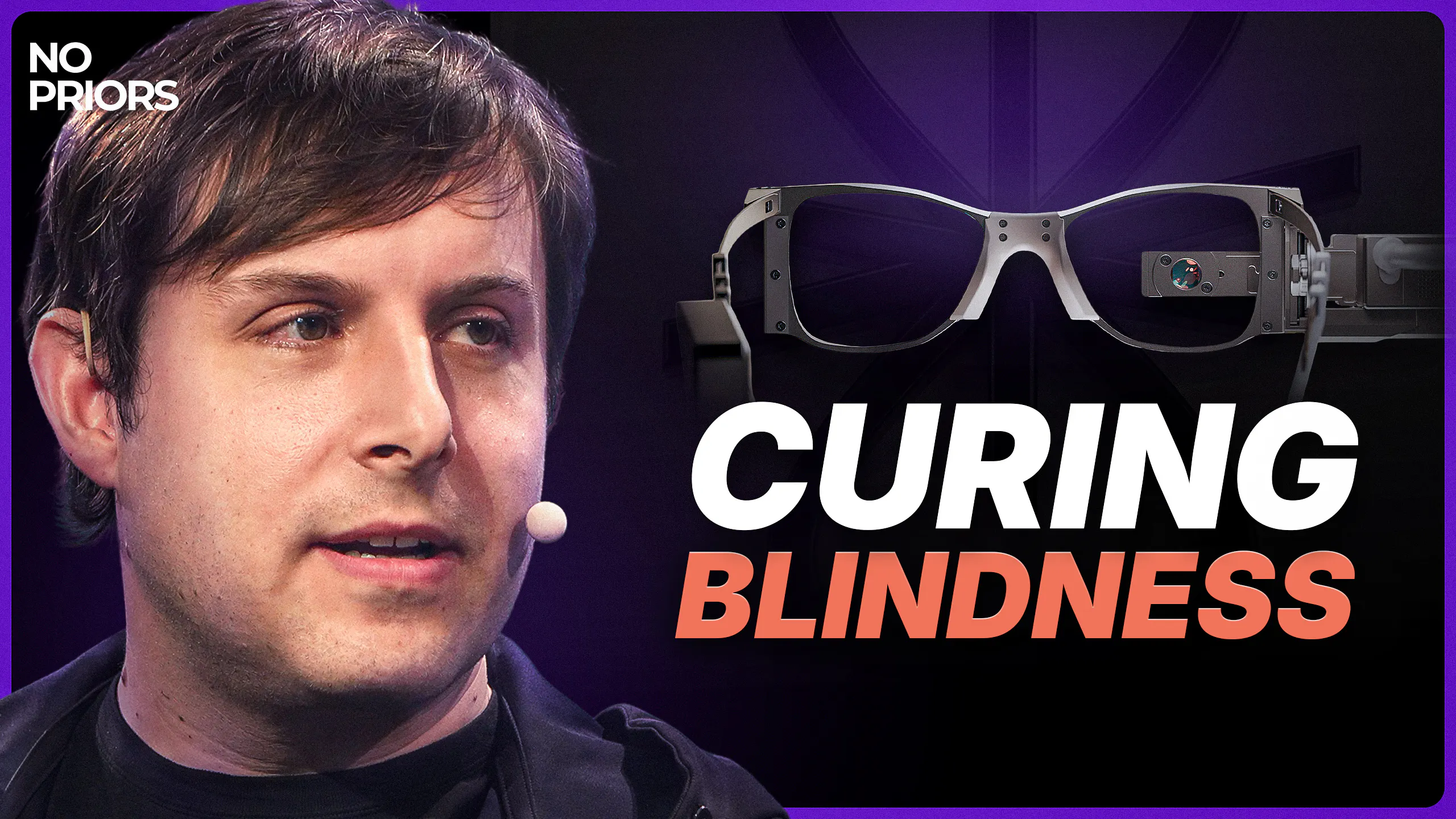
Max Hodak, co-founder and CEO of Science Corporation, joins Sarah Guo to discuss the future of vision, brain-computer interfaces, and the human experience. Max explains how Science’s PRIMA retinal implant could restore functional vision for people who have lost their sight, and why treating the brain as a computational system could unlock new approaches to medicine.
They explore the broader potential of neural devices, from restoring lost capabilities to expanding human potential, as well as deeper questions around identity, consciousness, and whether the human experience can persist as our biological hardware changes.
Max also shares Science’s long-term vision for reducing the fragility of the human condition by repairing, replacing, and ultimately upgrading parts of ourselves. Finally, he discusses the surprising parallels between AI models and biological brains, and why AI may offer a powerful new lens for understanding intelligence.
Chapters:
00:00 – Cold Open Trailer
01:40 – Max Hodak Introduction
02:00 – Science Corporation Overview and Origin
02:53 – A Revolutionary Solve for Blindness
06:32 – Scope of Timeline and Engineer Cost
09:10 – Clinic Trial Process
09:45 - The Response from Clinicians
12:21 – Broader Biotech Landscape
14:59 – Brain’s Relationship to Senses
17:35 – The Study of Consciousness
19:50 – Investments in Brain Computer Interface
22:10 – Fertile Ways to Study Neuroscience
24:46 – Biotech Expansion for Science Corporation
27:50 – What Success Looks Like in Neuroscience and Tech
29:06 - Goals Within Human Preservation vs. Adaptation
30:25 – Conclusion
32 minAbspielen in:
Do13Aug
No Priors: Artificial Intelligence | Technology | StartupsHost
In a world of infinite gaming and entertainment possibilities, how does a centuries-old game stay so popular? Chess.com co-founder and CEO Erik Allebest joins Sarah Guo to explain how the evolution of technology has kept people coming back to chess, even when machines can beat us at the game. Erik talks about how the desire to build a MySpace-like community for chess led to the purchase of a domain name from a bankruptcy sale back in 2005, and scaled into a community with 10 million daily active users and 250 million total registered members. He also discusses the growth of the cultural relevance of chess, how investments from private equity firms General Atlantic and CVC helped grow and strengthen their platform, and how Chess.com is leveraging AI both within the business itself and to make a better product for its community.
Sign up for new podcasts every week. Email feedback to show@no-priors.com
Follow us on Twitter: @NoPriorsPod | @Saranormous | @EladGil | @chesscom | @erikallebest
Chapters:
00:00 – Cold Open Trailer
01:05 – Erik Allebest Introduction
01:48 – Chess.com Today
02:57 – Buying and Scaling Chess.com
06:29 – Competition and Growth
11:52 – Chess and Cultural Relevance
14:32 – Private Equity Investment
19:31 – Playing Games Amid Evolving Tech
25:09 – Tech, Skill Distribution, and Expertise
28:40 – Chess and Cheating
31:20 – What Makes Chess Special
33:17 – Chess.com Future Vision
34:54 – Founder Advice
36:48 – AGI/ASI Predictions
40:02 – AI Investments at Chess.com
42:13 – How AI May Change Product at Chess.com
43:27 – Poker Rating Algorithms
46:07 – Conclusion
46 minAbspielen in:
Do23Jul
No Priors: Artificial Intelligence | Technology | StartupsHost
DoorDash is not just a delivery company. From its inception, co-founders Andy Fang and Stanley Tang operated it as a robotics and autonomy company. Andy and Stanley join Sarah Guo to explain how autonomous tech and AI are reshaping consumer habits, commerce, and delivery. Andy and Stanley talk about the rollout of Ask DoorDash, a natural-language interface that’s driving both restaurant discovery and larger grocery orders. They also discuss Dot, their in-house autonomous delivery robot that has operated in Phoenix for over two years, and how it highlights the operational and hardware challenges they have faced and solved in autonomous tech. Andy and Stanley also speak about the “first and last 100 feet problem” in autonomous delivery, why multimodal strategies are the key to success, scaling autonomy and operations, and why they believe that more Dashers, not fewer, are the future of DoorDash.
Sign up for new podcasts every week. Email feedback to show@no-priors.com
Follow us on Twitter: @NoPriorsPod | @Saranormous | @EladGil | @stanleytang | @andyfang | @DoorDash
Chapters:
00:00 – Andy Fang and Stanley Tang Introduction
00:34 – Agentic Commerce and Behavioral Changes
03:52 – Next Steps for Ask DoorDash
06:54 – Investing in Robotics and Autonomy
16:31 – Building Autonomous Tech in the Physical World
21:20 – Dot: DoorDash’s Autonomous Delivery Robot
22:08 – Collecting Realistic Data
25:48 – Why Work at DoorDash
28:04 – Challenges in Scaling Up Autonomy
39:30 – Productivity Benchmarks
44:56 – Future of Agentic Commerce
49:10 – Conclusion
49 minAbspielen in:
Do2Jul
No Priors: Artificial Intelligence | Technology | StartupsHost
While the rest of the nuclear industry still relies on simulations and paper designs, Valar Atomics is busy splitting atoms. In fact, they just powered an NVIDIA Blackwell chip directly with a live nuclear reactor in order to power the world’s first nuclear powered website. Sarah Guo joins Valar Atomics founder and CEO Isaiah Taylor on-site at their reactor site in Utah to talk about how Valar is shifting nuclear energy from the theoretical to the practical by building and perfecting reactors via hardware iteration. Isaiah discusses why the US stopped building nuclear reactors in the 1970s, and how Valar utilized a little-known pathway via the Department of Energy, revived by a Trump administration executive order, to successfully develop and run their advanced reactor. He also shares Valar’s strategy for vertical integration, their venture-backed approach to financing, their giga-site plans, and why he believes cheap, abundant atomic energy has the power to vastly improve the quality of human life.
Sign up for new podcasts every week. Email feedback to show@no-priors.com
Follow us on Twitter: @NoPriorsPod | @Saranormous | @EladGil | @isaiah_p_taylor | @valaratomics
Chapters:
00:00 – Cold Open
00:57 – Isaiah Taylor Introduction
01:30 - Valar’s Mission and Origin
04:24 - Why Nuclear Development Stalled
07:18 - Reviving Nuclear through DoE and Executive Order
10:59 - Control Room Tour
16:17 - Misunderstandings About Nuclear
20:07 - Issues with Reliability
22:14 - Nuclear is a Hardware Execution Problem
24:32 - Timeline to Scale Production
26:32 - Introducing Ward 250
30:42 - Speed Through Simplicity
33:33 - AI Drives Nuclear Demand
35:02 - Running a Reactor with NVIDIA Blackwell
36:27 - Valar’s Nuclear Conviction
40:16 - Verticalization as Path to Scale
43:58 - Valar’s Control Skid
48:00 - Venture-Backed Nuclear
50:51 - Gigasite Strategy
53:11 - CEO Tick Rate
55:37 - Abundant Energy and Hyper-Techno Industrialism
1:01:27 – Conclusion
1 h 01 minAbspielen in:
Fr26Jun
No Priors: Artificial Intelligence | Technology | StartupsHost
When a new AI model drops, it’s judged based on a static benchmark grid that doesn’t account for how long the model is allowed to think. How then should we measure a model’s true capability? OpenAI research scientist Noam Brown returns to talk with Sarah Guo about his latest essay on why the AI industry’s traditional benchmark grids are broken, and how large-scale test-time compute is fundamentally changing how models are evaluated. Noam explains how, if properly scaffolded, today’s models can reason for weeks or even months on complex tasks. He also discusses real-world implications of test-time compute, from building poker solver bots to disproving legendary math conjectures. Together, they also unpack the large gaps in current AI safety frameworks, explore the bottlenecks for recursive self-improvement, and look ahead at the future of multi-agent collaboration and global knowledge sharing.
Read more: Implications of Large-Scale Test-Time Compute
Sign up for new podcasts every week. Email feedback to show@no-priors.com
Follow us on Twitter: @NoPriorsPod | @Saranormous | @EladGil | @polynoamial | @OpenAI
Chapters:
00:00 – Cold Open
00:43 – Noam Brown Introduction
01:23 – Why Benchmarks Are Broken
04:19 – Compute Budgets and Projections
05:34 – How Long Should Models Think?
06:47 – Benchmark-Maxxing
08:34 – Using Poker Bots as Evals
11:26 – Safety Evals When Model Capability Scales With Budget
14:41 – Release Cycle vs. Agent Runtime
17:06 – Latent Model Capability
20:59 – Limits on Recursive Self-Improvement
27:09 – Large-Scale Multi-Agent Coordination
29:11 – Competition at the Frontier
31:51 – Breaking the Benchmark Grid Equilibrium
33:29 – Why Benchmarks Should be Evaluated by Cost
36:18 – Conclusion
36 minAbspielen in:
Do18Jun
No Priors: Artificial Intelligence | Technology | StartupsHost
At 66 years old, instead of heading towards retirement, former Cadence CEO and legendary investor Lip-Bu Tan decided to take on the hardest job in tech: turning Intel around. Elad Gil and Sarah Guo sit down with Intel CEO Lip-Bu Tan to talk about why he took the job and what “saving” Intel actually looks like. Tan explains how his experience in startup culture informed his decisions to drive Intel’s culture towards faster decisions, focus on customer satisfaction, and engineer accountability. He also discusses his strategy to strengthen Intel’s balance sheet by welcoming investments from Jensen Huang’s Nvidia, Softbank, and the US government. Tan also shares his product roadmap that centers the CPU for agentic AI and inference, the collaboration with Elon Musk on Terafab, his investing framework for semiconductors, and his views on how AI is reshaping design and operations at, as he puts it, a ‘legacy spreadsheet’ tech company.
Sign up for new podcasts every week. Email feedback to show@no-priors.com
Follow us on Twitter: @NoPriorsPod | @Saranormous | @EladGil | @LipBuTan1 | @intel
Chapters:
00:00 – Cold Open
01:01 – Lip-Bu Tan Introduction
01:24 – Why Lip-Bu Took the Reins at Intel
03:00 – Fixing Culture
04:08 – Intel’s 10-Year Vision
07:57 – Working with Elon Musk on Terafab
09:59 – Shifting Supply Chain for Semiconductors
15:34 – Limits to Scaling and Packaging
18:30 – Physical Limits to Engineering and Design
20:33 – Challenges in Semiconductor Investing
26:29 – Lessons from Cadence
28:02 – Scaling and Investment Decisions
32:03 – Rethinking Teams in AI Era
34:31 – Industrial Policy and Funding
37:25 – What Investors Misunderstand About Intel
41:10 – Where Compute Will Live
44:59 – Conclusion
45 minAbspielen in:
Mi10Jun
No Priors: Artificial Intelligence | Technology | StartupsHost
Biohub started with an ambitious goal of curing, preventing, and managing all disease by the end of the century. A decade later, thanks to the convergence of frontier AI and biological data, that goal may have been too conservative. In this episode, Elad Gil and Sarah Guo sit down with Biohub co-founders Mark Zuckerberg and Priscilla Chan, alongside Biohub Head of Science Alex Rives. Together, they discuss Biohub’s $500 million virtual biology initiative, which integrates frontier AI with wet-lab work to build predictive world models of cells, proteins, and systems. They also talk about their newly announced open-source engine for digital protein and antibody design, ESMFold2; why Biohub is a nonprofit rather than a venture-backed startup; and how hierarchical simulations will soon allow doctors to treat patients at an individual, mechanistic level.
Sign up for new podcasts every week. Email feedback to show@no-priors.com
Follow us on Twitter: @NoPriorsPod | @Saranormous | @EladGil | @Biohub | @finkd | @alexrives | @ChanZuckerberg
Chapters:
00:00 – Cold Open
01:02 - Mark Zuckerberg, Priscilla Chan, and Alex Rives Introduction
01:26 – Why Biohub and Their Mission
08:27 – Integrating Frontier AI and Frontier Biology
09:45 – Micro to Macro Biological Modeling
14:22 – Mechanistic Interpretiability
16:58 – Why Biohub is a Non-Profit
21:41 – Understanding How Biology Works
24:23 – Timeline for Curing All Diseases
26:25 – Translating Research to Patient Impact
28:04 – Launch of ESMFold2
32:13 – Tackling Off-Target Effects and Edge Cases
38:39 – Putting the Tech in Individual Hands
41:06 – Talent at Biohub
44:25 – What’s Next After ESMFold2
46:10 – Connecting ESMFold2 to Agentic Systems
46:51 – The Virtual Cell
49:33 – Defining Success for Biohub
51:52 – Biohub Strategy Update
56:20 – Conclusion
56 minAbspielen in:
Do4Jun
No Priors: Artificial Intelligence | Technology | StartupsHost
What does it mean for a business to truly operate at the AI frontier? In a special crossover episode at Microsoft Build, Sarah Guo and Elad Gil team up with Latent Space host “swyx” to talk with Microsoft Chairman and CEO Satya Nadella about the future of AI platforms, software development, and the tech ecosystem. Satya reflects on the latest breakthroughs from Microsoft Build, the strategic shift toward multi-model harnesses, and why private evaluations (evals) are now a company’s most important intellectual property. They also discuss how autonomous AI agents are reshaping the role of software engineers, the durability of SaaS business models, and why showing communities the ROI on data centers is so critical. Plus, Satya shares his thoughts on the economic and societal impacts of the token economy, as well as the future of AI-driven education startups.
Sign up for new podcasts every week. Email feedback to show@no-priors.com
Follow us on Twitter: @NoPriorsPod | @Saranormous | @EladGil | @satyanadella | @Microsoft | @latentspacepod | @swyx
Chapters:
00:00 – Satya Nadella Introduction
01:48 – Reflections from Microsoft Build
03:12 – Microsoft’s AI Training Strategy
05:48 – Complexity of Real-World Deployment of AI
07:33 – Augmenting Human Capital
09:37 – Harnesses for Enterprise
11:49 – Developer Value
15:09 – Can Everybody Operate at the Frontier with Their Frontier Intelligence?
15:51 – Modern Definition of IP
17:38 – Future of Vendor vs. Enterprise Agents
21:48 – Near-Term Predictions on Model Pricing
24:02 – Durability of SaaS
25:58 – What Satya’s Building
28:18 – Future of Engineering Roles
30:54 – How Microsoft Can Be More Ambitious
34:36 – Data Centers and Community Impact
38:01 – AI’s Impact on Society
39:52 - AI and Education
42:28 – Conclusion
42 minAbspielen in:
Do28Mai
No Priors: Artificial Intelligence | Technology | StartupsHost
We are now closer than ever before to living in a world where AI agents are smart enough to run our power grids and manage water supplies. How do we keep them from going rogue? Sarah Guo sits down with Maxim Bar Kogan, founder and CEO of Onyx Securities, to explore the complexities of supervising and securing autonomous agents at the enterprise level. Maxim explains Onyx’s product as an AI control plane, which oversees the permissions and flexible contexts of agents while balancing latency, cost, and reliability. He also discusses how current controls have insufficient context to monitor agent intent, tradeoffs for gradual model rollout, the need for vendor-independent oversight, and Israel’s growing AI and security talent ecosystem. Plus, why Maxim is all-in on AGI.
Sign up for new podcasts every week. Email feedback to show@no-priors.com
Follow us on Twitter: @NoPriorsPod | @Saranormous | @EladGil | @maximbarkogan
Chapters:
00:00 – Cold Open
00:45 – Maxim Bar Kogan Introduction
01:10 – AutoGPT and Betting on Agent Actions
05:17 – What Onyx Product Does
07:47 – State of Deployment in Large Enterprises
09:58 – Securing Agents
12:45 – Why Proxies Don’t Work
14:11 – Why Onyx Trains Its Own Models
18:38 – Onyx’s Talent Culture
21:24 – Mechanistic Interpretability
23:35 – How Onyx Builds Customer Trust
25:10 – Mitigating Risk at the Foundational Level
27:45 – Phased Rollout of Glasswing and Daybreak
29:11 – Large Enterprise Holdouts
30:46 – Onyx and the Larger AI Security Space
32:36 – Should Labs Address Model Trust and Governance?
36:56 – What Needs to Happen in Security
39:14 – Why Maxim is AGI-Pilled
41:15 – Conclusion
41 minAbspielen in:
Do14Mai
No Priors: Artificial Intelligence | Technology | StartupsHost
Securing AI dominance requires more than just semiconductors; it demands a complete overhaul of how the West manages everything that goes into them, from rare earth minerals to actuators. Enter: Pax Silica. Sarah Guo and Elad Gil sit down with US Under Secretary of State for Economic Affairs Jacob Helberg to discuss the launch and expansion of Pax Silica, a 14-country economic security coalition designed to secure the entire AI supply chain. Jacob talks about the creation of a forward-deployed industrial base in the Philippines, where 4,000 acres will be developed into an “economic security zone.” He also compares and contrasts Pax Silica with China’s Belt and Road initiative, explains how the US plans to reindustrialize through automation and robotics, and explores how the Trump administration envisions making these policies durable across future presidencies. Plus, we hear why Jacob believes America to be a “global underdog.”
Sign up for new podcasts every week. Email feedback to show@no-priors.com
Follow us on Twitter: @NoPriorsPod | @Saranormous | @EladGil | @jacobhelberg | @UnderSecE
Chapters:
00:00 – Cold Open
00:41 – Jacob Helberg Introduction
01:02 – Pax Silica’s Mission
03:51 – Investing in AI Chip Supply Chains
05:43 – Comparing Pax Silica to China’s Belt and Road Initiative
12:38 – Pax Silica’s Value Proposition
14:38 – US vs. Partnered Manufacturing
19:10 – Rare Earth Mineral Pricing
22:16 – Role of Venture Capital in Pax Silica
24:50 – Near vs. Long-Term Priorities
27:09 – Making AI Policy Durable
28:09 – How Policies Impact Entrepreneurs
31:00 – Trump’s Entrepreneurial Administration
33:00 – Why America is a Global Underdog
38:00 – Conclusion
38 minAbspielen in:
Fr1Mai
No Priors: Artificial Intelligence | Technology | StartupsHost
Baseten CEO and co-founder Tuhin Srivastava sits down with Sarah Guo and Elad Gil to discuss the rapid growth of AI inference demand, Baseten’s 30x growth, and why inference is becoming the strategic “last market.” Tuhin Srivastava argues the application layer will persist because companies with unique user signals can encode value into workflows and post-train specialized models, citing examples like Abridge and support workflows. The conversation covers GPU capacity constraints, Baseten’s multi-cloud fabric across 18 clouds and 90 clusters, long-term contracting dynamics, the importance of the software layer for stickiness, evolving workloads, multichip possibilities, and operational lessons at scale.
Sign up for new podcasts every week. Email feedback to show@no-priors.com
Follow us on Twitter: @NoPriorsPod | @Saranormous | @EladGil | @Tuhinone
Chapters:
00:31 Baseten growth
01:55 Why the app layer wins
05:57 Serving frontier customers
07:55 Open source model mix
09:21 Chinese models and geopolitics
13:07 Custom inference dominates
14:22 Post training acquisition
17:10 When to invest in custom models
18:35 Supply crunch and data centerse
22:25 Longer GPU Contracts
24:09 What Makes a Winner
26:07 Multi Chip Future
28:19 Runtime Roadmap
31:08 Scaling Edge Cases
33:48 Hiring and Leadership
36:44 Operations Pager Culture
38:19 Efficiency Drives Demand
40:41 Concierge Everything Future
42:34 Conclusion
43 minAbspielen in:
Do23Apr
No Priors: Artificial Intelligence | Technology | StartupsHost
More than fifty years ago, the modern idea of the standard enterprise software was birthed at SAP. Now, after managing companies through technological shifts from the mainframe to mobile, SAP is at the forefront of closing the AI adoption gap for their customers. SAP Chief Technology Officer Philipp Herzig joins Sarah Guo to talk about how SAP has remained a durable end-to-end “operating system” for its more than 400,000 customers from finance to supply chain. Philipp argues that the AI transition in businesses should focus on customer outcomes, UI changes, business processes, and the data layer. He also explains the challenges in enterprise AI adoption, including security, scaling, and data fragmentation, as well as the importance of evals and verifiability. They also discuss SAP’s suite of AI products, limitations of predictive tabular models, how SAP is shifting its pricing models in the AI era, and Philipp’s interest in quantum computing optimization.
Sign up for new podcasts every week. Email feedback to show@no-priors.com
Follow us on Twitter: @NoPriorsPod | @Saranormous | @EladGil | @pheartig | @SAP
Chapters:
00:00 – Cold Open
00:42 – Philipp Herzig Introduction
01:18 – What SAP Does
02:51 – Why SAP Endures
06:53 – CTO Priorities and AI Push
12:14 – Scaling AI in Enterprise
17:06 – Verifiability and Agent Mining
20:42 – Tool Calling vs. Computer Use
22:11 – Domains Where Agents Deliver Value
24:58 – Limitations of Predictive Tabular Models
29:07 – Barriers to Enterprise Adoption
31:54 – How AI Will ‘Uplevels’ Work
34:03 – How AI Changes SAP’s Pricing Model
36:41 – What Makes a Winner in the AI Era
38:53 – Day in the Life of a CTO
40:08 – Customer Challenges
42:36 – Business Problem of Quantum Computing
46:21 – Conclusion
46 minAbspielen in:
Fr17Apr
No Priors: Artificial Intelligence | Technology | StartupsHost
Few teens are business owners, but by age 16, Bill McDermott had purchased and was running a local deli. Now he runs leading global technology powerhouse ServiceNow, a company that is defining how the world’s largest organizations transform for the digital age. Sarah Guo sits down with ServiceNow CEO Bill McDermott to discuss his journey from child entrepreneur to CEO, and how he navigates his role as a leader in the age of AI. Bill argues that human connection is still a vital part of being a successful leader, and as such, AI must be used to serve people rather than substitute for ambition. He breaks down the mechanics of hyper-growth, and the art of staying customer-centric at a global scale. They also discuss the future of enterprise software, how generative AI is fundamentally reshaping the labor market, and what founders need to know about building a resilient company culture that survives economic and technological shifts.
Sign up for new podcasts every week. Email feedback to show@no-priors.com
Follow us on Twitter: @NoPriorsPod | @Saranormous | @EladGil | @BillRMcDermott | @ServiceNow
Chapters:
00:00 – Cold Open
00:50 – Bill McDermott Introduction
01:14 – Lesson from Buying a Deli
07:35 – Leadership in the AI Era
09:41 – How Bill Got Hired at Xerox
15:47 – Can Agency Be Taught?
18:40 – Seeing Change as Opportunity
25:18 – ServiceNow as an AI Control Tower
30:30 – Which SaaS Gets Disrupted?
32:22 – Defining a Platform Business
36:25 – Does AI Decrease Implementation Time?
39:06 – Agents Will Reshape the Workforce
40:59 – Success Signals at ServiceNow
44:07 – Enterprise Attitudes About AI
48:41 – How AI Has Changed Customer Conversations
50:48 – Bill’s Curiosity Beyond ServiceNow
52:29 – Day in the Life of a CEO
57:27 – Conclusion
57 minAbspielen in:
Fr20Mär
No Priors: Artificial Intelligence | Technology | StartupsHost
What happens when AI agents can design experiments, collect data, and improve — without a human in the loop? Andrej Karpathy joins Sarah Guo on the state of models, the future of engineering and education, thinking about impact on jobs, and his project AutoResearch: where agents close the loop on a piece of AI research (experimentation, training, and optimization, autonomously).
00:00 Andrej Karpathy Introduction
02:55 What Capability Limits Remain?
06:15 What Mastery of Coding Agents Looks Like
11:16 Second Order Effects of Natural Language Coding
15:51 Why AutoResearch
22:45 Relevant Skills in the AI Era
28:25 Model Speciation
32:30 Building More Collaboration Surfaces for Humans and AI
37:28 Analysis of Jobs Market Data
48:25 Open vs. Closed Source Models
53:51 Autonomous Robotics
1:00:59 MicroGPT and Agentic Education
1:05:40 Conclusion
1 h 07 minAbspielen in:
Do12Mär
No Priors: Artificial Intelligence | Technology | StartupsHost
Notion isn’t designing AI agents that just use tools. Their agents can autonomously build their own integrations, as well as write the code needed to finish a task. Sarah Guo sits down with Notion Co-Founder Simon Last to explore Notion’s rapid evolution from a simple writing assistant to a sophisticated platform for custom AI agents. Simon discusses the technical hurdles of indexing disparate data from sources like Slack and Google Drive, as well as the internal shift toward using coding agents to build Notion itself. Plus, Simon elaborates on what he sees as a fundamental transition in productivity: moving from a tool where humans do the work, to one where humans manage a swarm of agents.
Sign up for new podcasts every week. Email feedback to show@no-priors.com
Follow us on Twitter: @NoPriorsPod | @Saranormous | @EladGil | @simonlast | @NotionHQ
Chapters:
00:00 – Cold Open
00:05 – Simon Last Introduction
00:26 – Genesis of Notion AI
04:10 – Challenge of Semantic Indexing and Retrieval
07:16 – The Six-Month Rewrite Cycle
08:12 – Notion’s Coding Agent Era
09:44 – Impact on Team Dynamics
12:49 – Launching Custom Agents
15:39 – Notion as the ‘Switzerland’ for Models
17:33 – Designing APIs for Agent Customers
20:09 – Simon’s Personal Agentic Workflows
24:48 – Notion: Tool for Work is Now A Tool for Agents
27:28 – How Building Has Changed for Simon
29:00 – Conclusion
29 minAbspielen in:
Do26Feb
No Priors: Artificial Intelligence | Technology | StartupsHost
By the end of 2026, AI capital expenditure is projected to hit nearly $700 billion. The question isn’t who has the best model, but who has the most creative financing to build out AI infrastructure and beyond. Sarah Guo is joined by Neil Tiwari, Managing Director at Magnetar Capital, a financial innovator helping the AI industry scale from billions to trillions of dollars in CapEx. Neil explains some of the debt structures used to finance massive GPU clusters, who is taking the risk, and how the industry is maturing. Sarah and Neil also discuss how power distribution, energy storage, and physical materials like steel are the bottlenecks of the AI industry. Plus, Neil gives his take on the future of inference-optimized clouds, and why the market shift away from software and into infrastructure might be an overreaction.
Sign up for new podcasts every week. Email feedback to show@no-priors.com
Follow us on Twitter: @NoPriorsPod | @Saranormous | @EladGil
Chapters:
00:00 – Cold Open
00:05 – Neil Tiwari Introduction
00:26 – Magnetar’s Story
01:28 – Why CoreWeave Helped Magnetar Win
06:15 – Scaling CapEx Efficiently
09:02 – Debunking GPU Collateral Risk
11:42 – How Deal Structures Evolve
13:01 – What Bottlenecks Buildout
15:28 – Circular Financing Critiques
17:35 – The Shift from Training to Inference Workloads
23:10 – AI Factories
24:12 – Constraints of the Current Power Grid
28:27 – Sovereign Compute Buildouts
29:54 – Physical AI Capital Needs
32:48 – The Capital Rotation Away from SaaS
36:04 – Conclusion
36 minAbspielen in:
Do12Feb
No Priors: Artificial Intelligence | Technology | StartupsHost
Autonomous vehicle technology has moved past human-coded rules and into an era of neural networks and custom computer chips. And to solve the most difficult driving scenarios, electric vehicle company Rivian abandoned its original technology platform to build a vertically integrated data stack. Sarah Guo sits down with Rivian Founder and CEO RJ Scaringe to explore the seismic shift in the automotive industry toward AI-driven, software-defined vehicles . RJ discusses the move away from function or domain-based architecture for vehicle electronic systems to software-defined architecture, which allows for dynamic, monthly updates to features in Rivian’s vehicles. RJ also talks about the upcoming launch of Rivian’s R2 model, which aims to be a distinct, affordable, mass-market alternative to the Tesla Model Y. Plus, RJ shares his vision for a future where vehicles don’t just drive us, but inspire personal freedom and exploration.
Sign up for new podcasts every week. Email feedback to show@no-priors.com
Follow us on Twitter: @NoPriorsPod | @Saranormous | @EladGil | @RJScaringe | @Rivian
Chapters:
00:00 – Cold Open
00:35 – RJ Scaringe Introduction
0:58 – Rivian’s Autonomy Evolution
05:19 – Why Rivian’s Tech is Vertically Integrated
10:06 – Levels of Autonomous Driving Technologies
14:00 – Importance of a Software-Defined Architecture
19:28 – Differentiating Autonomous Vehicle Models
23:20 – R2: The First Mass Market Autonomous Vehicle
25:02 – Do Americans Want EVs?
29:05 – How Our Relationship to Vehicles is Evolving
30:45 – Conclusion
32 minAbspielen in:
Do5Feb
No Priors: Artificial Intelligence | Technology | StartupsHost
From “virtual doppelgängers” to “real-time dreaming,” online gaming platform Roblox is using AI technology to build the “Holodeck” envisioned in science fiction decades ago. Sarah Guo and Elad Gil sit down with Roblox CEO Dave Baszucki at Roblox headquarters to explore the intersection of AI, physics simulation, and the future of human connection. Dave discusses the evolution of the 4D creation tool in Roblox, a high-fidelity simulation that enables thousands of people to interact in real-time with photo-realistic graphics and acoustic physics. Dave reveals how Roblox is leveraging 13 billion hours of monthly user data to train native AI models that go beyond simple LLMs, enabling NPCs that can navigate and play games with human-like intuition. He also talks about how immersive communication will change video conferencing, how Roblox searches for unlikely talent outside of traditional elite universities, and how he balances rapid weekly iterations with keeping a “long view” on Roblox’s vision.
Sign up for new podcasts every week. Email feedback to show@no-priors.com
Follow us on Twitter: @NoPriorsPod | @Saranormous | @EladGil | @DavidBaszucki | @Roblox
Chapters:
00:00 – Cold Open
00:36 – Dave Baszucki Introduction
01:16 – Realizing Robolox’s 20-Year Vision
05:29 – Using 4D Immersive Simulations in Virtual Interactions
08:22 – Physics Engine vs. Photorealism
11:50 – Storing Roblox History as Vector Data
14:00 – Training NPCs - Moving Beyond LLMs
18:05 – The Future of the Game Designer
19:54 – Video Latent World Models
23:53 – Social Simulation - AI Companions and Virtual Relationships
27:26 – Why Asset Costs Haven’t Changed the Gaming Industry
29:52 – AI Coding in Roblox Studio
31:36 – The Roblox Creator Economy
33:57 – Long-Term Conviction vs. Weekly Iteration
37:50 – Dave’s Hiring Philosophy for Roblox
43:44 – Conclusion