Bekomm eine E-Mail, wenn Samir in einem Podcast zu Gast istPodAppear prüft neue Folgen, sobald sie erscheinen, und lässt die weg, in denen Samir nur erwähnt wird. Bis zu 15 Personen kostenlos, ohne Kreditkarte.Bis zu 15 Personen kostenlos, ohne Kreditkarte.
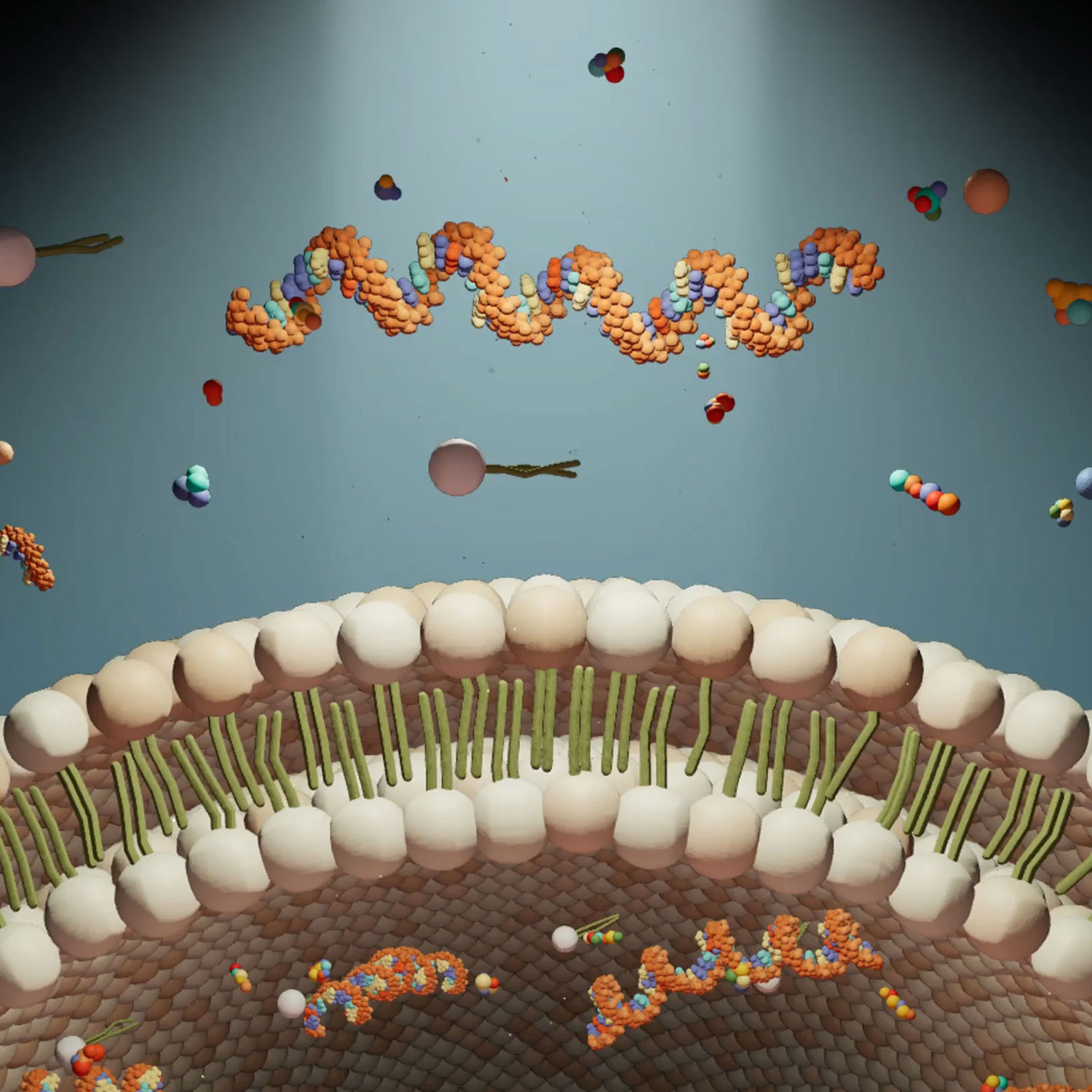
How did life begin? For researchers, pursuing an answer has been something of a saga. For decades, scientists have weathered sociological and scientific strife that challenged the fundamental approach to understanding the origins of life. Done arguing over which type of molecule started it all, a new wave of researchers are deconstructing what life is, does, and could be — and are even trying to create it themselves.
On this episode of The Quanta Podcast, host Samir Patel speaks with writer Yasemin Saplakoglu on this new, deeply collaborative and interdisciplinary era, and what it could mean for understanding life on Earth and elsewhere.
This topic was covered in a recent story for Quanta Magazine.
Each week on The Quanta Podcast, Quanta Magazine editor-in-chief Samir Patel and Senior Editor Hannah Waters speak with the people behind the award-winning publication to navigate through some of the most important and mind-expanding questions in science and math.
After over a century of studying introspection in humans and animals, researchers are beginning to explore the phenomenon in unlikely new subjects: large language models. These systems, which are based on mathematical structures called neural networks, excel at cognitive tasks that until recently seemed exclusive to humans. Can they introspect as well?
On this episode of The Quanta Podcast, host Samir Patel speaks with staff writer Ben Brubaker about “injecting” thoughts into LLM neural networks — and what researchers are doing to map out AI’s capacity for introspection.
This topic was covered in a recent story for Quanta Magazine.
Each week on The Quanta Podcast, Quanta Magazine editor-in-chief Samir Patel and Senior Editor Hannah Waters speak with the people behind the award-winning publication to navigate through some of the most important and mind-expanding questions in science and math.
The French mathematician Nicolas de Condorcet was a passionate believer in democracy, but he also discovered a frustrating paradox within it: A majority can sometimes vote itself into a logical loop. Mathematicians have now found that this “logical loop” maps onto a strange topological shape: the Klein bottle, a surface with no distinct inside or outside.
On this episode of The Quanta Podcast, host Samir Patel speaks with writer Alex Stone about this new connection between this centuries-old voting paradox and the Klein bottle — and how it illustrates just how difficult it is to translate a group of individual preferences into a single choice.
This topic was covered in a recent story for Quanta Magazine.
Each week on The Quanta Podcast, Quanta Magazine editor-in-chief Samir Patel and Senior Editor Hannah Waters speak with the people behind the award-winning publication to navigate through some of the most important and mind-expanding questions in science and math.
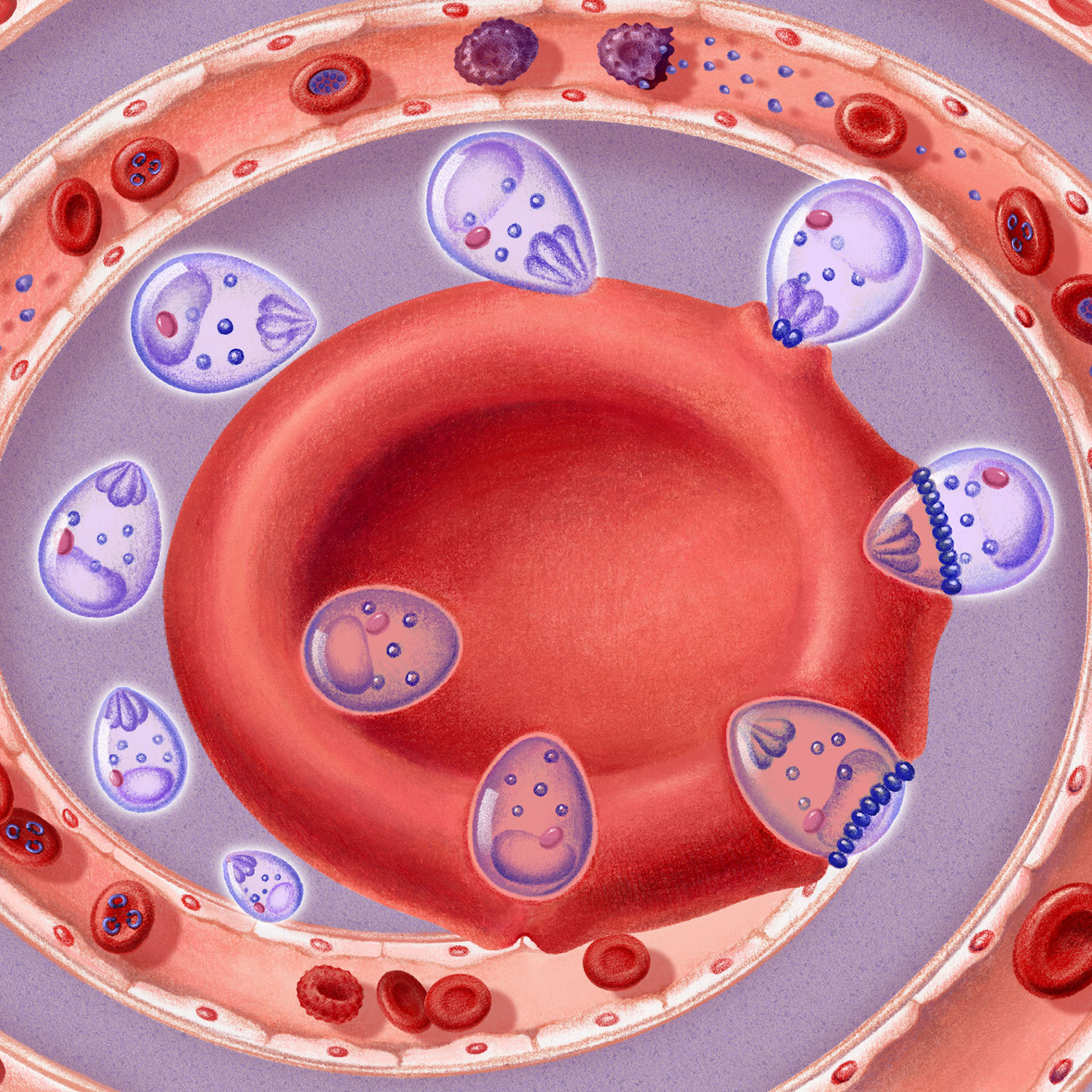
To invade red blood cells, malaria parasites create a temporary molecular portal that lets them slip into the cell — and then the door disappears behind it, gone in 60 seconds. Researchers have finally detailed the proteins that let it break in without tripping the alarms.
On this episode of The Quanta Podcast, host Samir Patel speaks with writer Joanna Thompson about these new images of Plasmodium’s moment of invasion — and what this breakthrough could mean for the next generation of malaria treatments and drug discovery for other parasitic diseases.
This topic was covered in a recent story for Quanta Magazine.
Each week on The Quanta Podcast, Quanta Magazine editor-in-chief Samir Patel and Senior Editor Hannah Waters speak with the people behind the award-winning publication to navigate through some of the most important and mind-expanding questions in science and math.
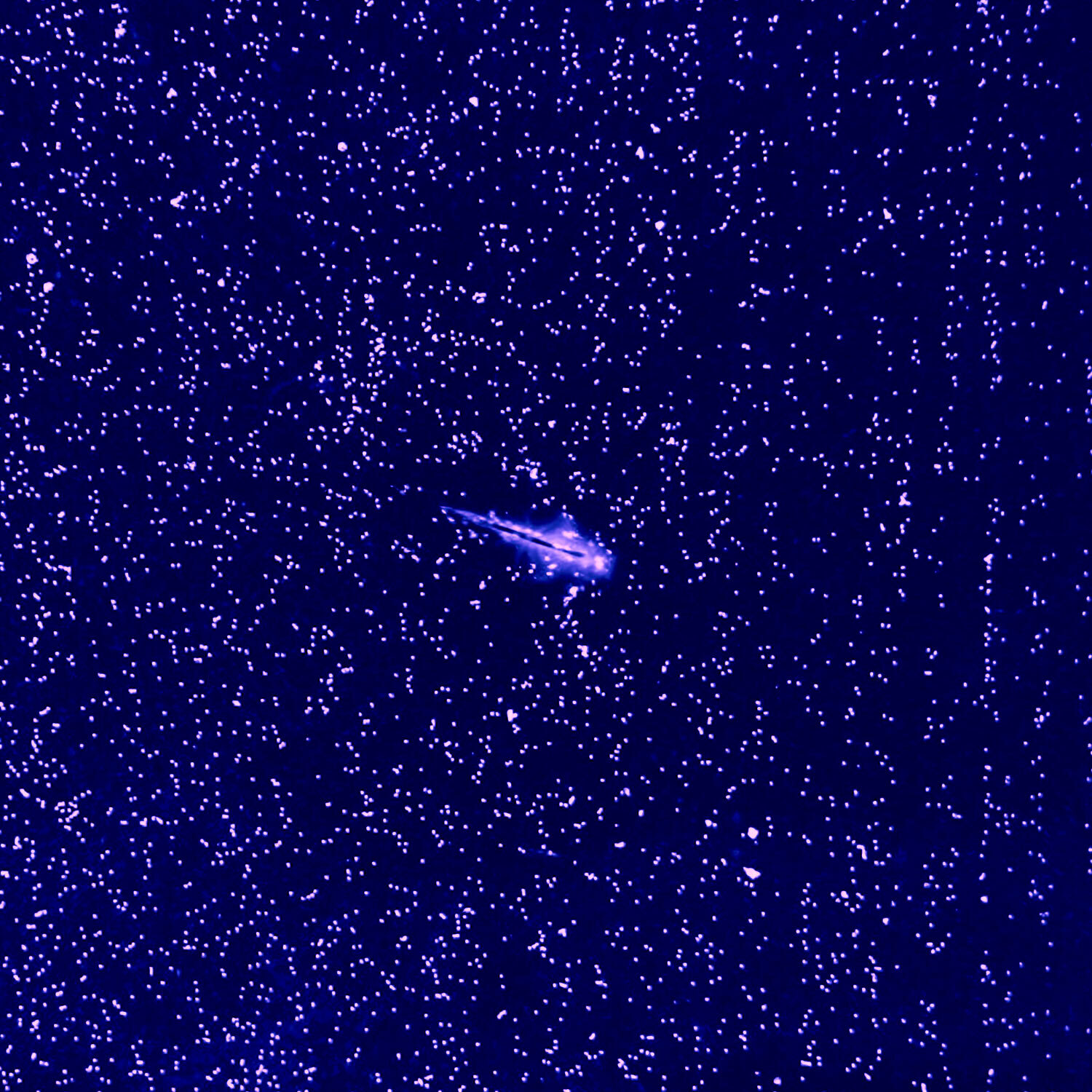
In 2018, using the Keck Observatory in Hawaiʻi, astronomers discovered the first known dark matter-deficient galaxy, DF2. It’s about the same size as the Milky Way, but way dimmer, with 200 times fewer stars. Since then, two more phantom galaxies (DF4 and DF9) have been spotted. All three of these strange galaxies exist along a line. Why?
On this episode of The Quanta Podcast, host Samir Patel speaks with writer Robin George Andrews about this triplet of ‘ghostly’ galaxies and what they can tell us about the mystery of dark matter.
This topic was covered in a recent story for Quanta Magazine.
Each week on The Quanta Podcast, Quanta Magazine editor-in-chief Samir Patel and Senior Editor Hannah Waters speak with the people behind the award-winning publication to navigate through some of the most important and mind-expanding questions in science and math.
26 minAbspielen in:
Warum PodAppear
Folge Menschen, nicht Podcasts.
Du hast Samir in einer Sendung gehört. PodAppear findet für dich die nächste, und genauso für alle anderen, die du hören willst.
Eine Meldung, wenn die Person zu Gast istPer E-Mail: sofort oder gebündelt als Tages- oder Wochenübersicht. Dann nur noch auf Play drücken.
Gäste statt bloßer ErwähnungenFolgen, in denen ein Name nur fällt, landen getrennt. Eine Meldung heißt: Die Person ist wirklich in der Sendung.
Alle in einem FeedGründerinnen, Autoren, Sportler, Forscherinnen. Folge allen mit Namen, quer durch jede Sendung, in der sie auftreten.
The uncertainty principle tells us that the more you know about where a quantum particle is, the less you can know about how fast it’s moving, and vice versa. In 2023, graduate student Alex Cohen stunned the math world when he posted a proof of the fractal uncertainty principle. The math, which combines chaos, quantum theory, and infinitely complex fractal structures, has been called a “foundational result.”
On this episode of The Quanta Podcast, host Samir Patel speaks with writer Shalma Wegsman on this incredible breakthrough and how this principle has revealed a new deep way that quantum particles differ from classical ones.
This topic was covered in a recent story for Quanta Magazine.
Each week on The Quanta Podcast, Quanta Magazine editor-in-chief Samir Patel and Senior Editor Hannah Waters speak with the people behind the award-winning publication to navigate through some of the most important and mind-expanding questions in science and math.
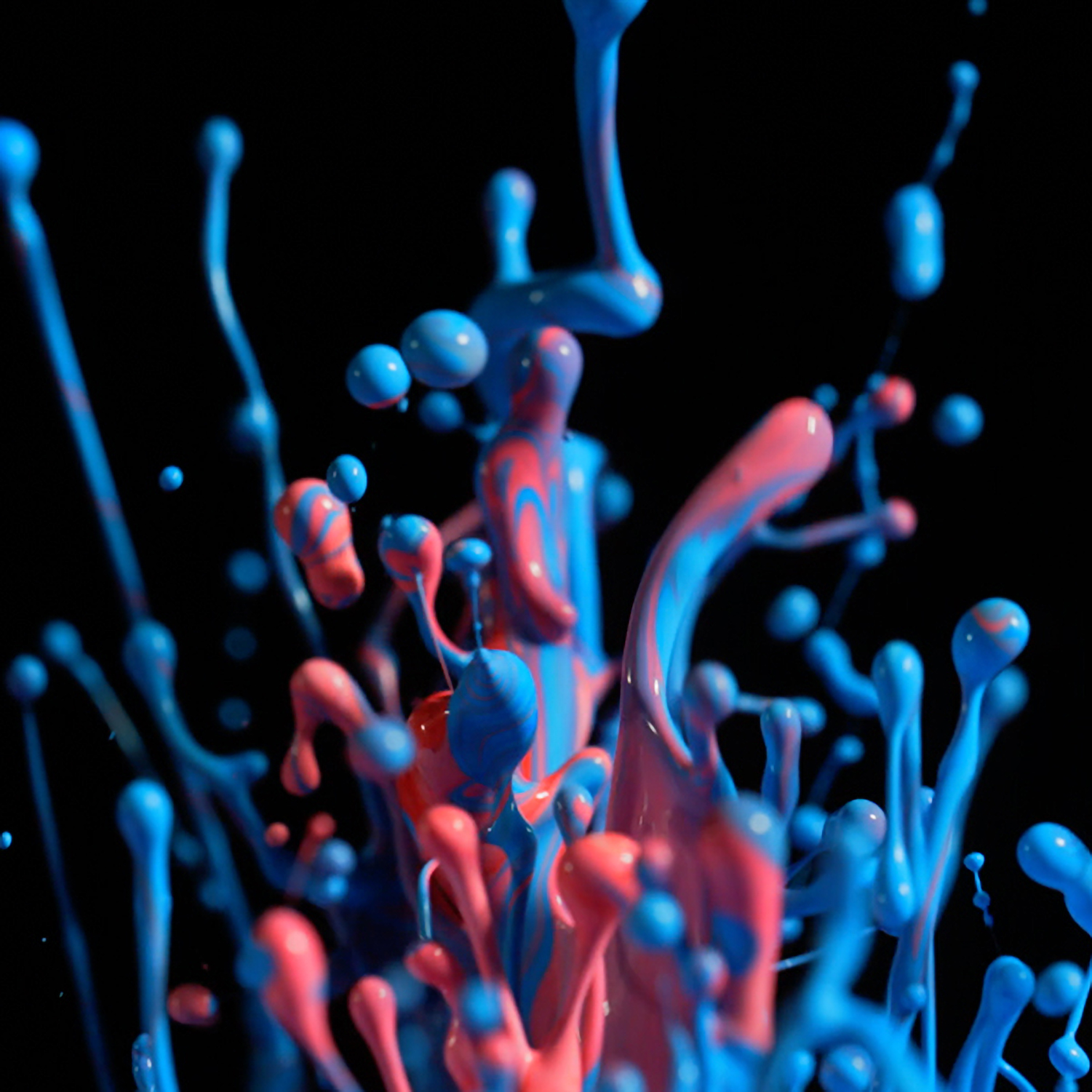
Turbulence is all around us: bumping our planes, roiling our rivers, swirling milk into our coffee. These systems quickly become extremely chaotic and complex. On this episode of The Quanta Podcast, host Samir Patel speaks with contributing writer Stephen Ornes about a recent study that used sea monkeys to complicate one of turbulence’s many mysteries. This topic was covered in a recent story for Quanta Magazine.
Each week on The Quanta Podcast, hear the people behind the award-winning publication navigate through some of the most important and mind-expanding questions in science and math.
We've been nominated for a few Signal Awards, including Best Science Show, Best Host, and Best Show Artwork! Visit the links below to vote for us:
https://vote.signalaward.com/PublicVoting#/2026/shows/genre/science
https://vote.signalaward.com/PublicVoting#/2026/shows/craft/best-show-artwork
https://vote.signalaward.com/PublicVoting#/2026/shows/craft/best-host
In popular culture, computer science is practically synonymous with programming. There are obviously branches of computer science in which computer hardware and software are essential, such as in the design of operating systems or the study of memory management. But in the theoretical side of the field, researchers need not ever touch a real, physical computer. Do computers play an essential conceptual role in that kind of theoretical work?
On this episode of The Quanta Podcast, host Samir Patel wades into an age-old debate with writer Ben Brubaker: If computer science isn’t about computers, then what is it about?
This topic was covered in a recent story for Quanta Magazine.
Each week on The Quanta Podcast, Quanta Magazine editor-in-chief Samir Patel speaks with the people behind the award-winning publication to navigate through some of the most important and mind-expanding questions in science and math.
The audio coda clip comes from the Computer History Museum. The use of this audio clip shall not be used to show or imply CHM endorsements of any commercial product or enterprise, or to indicate that the CHM concurs with the opinions expressed in the podcast.
The Navier-Stokes equations are enormously successful at predicting how fluids flow and swirl. But they fail to account for the microscopic bits that make up matter. But now math based on symmetries offers a new conception of fluids and why they behave the way that they do.
On this episode of The Quanta Podcast, host Samir Patel speaks with writer Charlie Wood on the longstanding effort to rebuild the theory of fluids from the bottom up, including a strange connection to black holes and models that simultaneously run time forward and backward.
This topic was covered in a recent story for Quanta Magazine.
Each week on The Quanta Podcast, Quanta Magazine editor in chief Samir Patel and Senior Editor Hannah Waters speak with the people behind the award-winning publication to navigate through some of the most important and mind-expanding questions in science and math.
Reasoning comes in many technically defined forms, but the basic procedure is easily recognizable: arriving at a sound conclusion by linking together intermediate steps that logically follow from each other. But when it comes to artificial intelligence, it appears AI can either solve famous mathematical research problems in one shot — or experience a “complete accuracy collapse” under the simplest conditions. So which is it: Can AI reason reliably or not?
On this episode of The Quanta Podcast, host Samir Patel speaks with writer John Pavlus on the intellectual whiplash surrounding artificial intelligence’s ability to reason.
This topic was covered in a recent story for Quanta Magazine.
Each week on The Quanta Podcast, Quanta Magazine editor in chief Samir Patel and Senior Editor Hannah Waters speak with the people behind the award-winning publication to navigate through some of the most important and mind-expanding questions in science and math.
Generally, dark energy and dark matter are regarded as separate entities, but recent astronomical observations have spurred scientists to look further into a less widespread idea — that the two are in fact physically intertwined.
On this episode of The Quanta Podcast, host Samir Patel speaks with Physics Editor Kathryn Jepsen about the theories surrounding dark energy’s ties to dark matter and the possibility of a shared dark universe.
This topic was covered in a recent story for Quanta Magazine.
Each week on The Quanta Podcast, Quanta Magazine editor in chief Samir Patel and Senior Editor Hannah Waters speak with the people behind the award-winning publication to navigate through some of the most important and mind-expanding questions in science and math.
There’s no scientific consensus about what makes living things so different from inorganic material. Some scientists cite replication or metabolism. Others have another answer: Living organisms are different because they do stuff — for reasons. On this episode of The Quanta Podcast, host Samir Patel speaks with writer Philip Ball on the hotly contested idea of “biological agency” and what it means to be alive.
This topic was covered in a recent story for Quanta Magazine.
Each week on The Quanta Podcast, Quanta Magazine editor in chief Samir Patel and Senior Editor Hannah Waters speak with the people behind the award-winning publication to navigate through some of the most important and mind-expanding questions in science and math.
In 1992, mathematicians Dave Bayer and Persi Diaconis proved that seven riffle shuffles are enough to shuffle a deck of cards — but only if you can cut your deck with precision. Decades later, a new proof has finally extended the finding to less precise cuts. On this episode of The Quanta Podcast, host Samir Patel speaks with math editor Jordana Cepelewicz about how a mathematical cutoff phenomenon still exists for riffle shuffling — randomness seems to happen all at once.
This topic was covered in a recent story for Quanta Magazine.
Each week on The Quanta Podcast, Quanta Magazine editor in chief Samir Patel and Senior Editor Hannah Waters speak with the people behind the award-winning publication to navigate through some of the most important and mind-expanding questions in science and math.
In "The Best (and Worst) Ways to Shuffle Cards" from the YouTube channel Numberphile, Persi Diaconis demonstrates different kinds of shuffles, why you might want to stick with a classic riffle shuffle instead of what is called the overhand method and explains his seven shuffles result: https://youtu.be/AxJubaijQbI?si=WctYYRtCZVupMldO
In the 60s, an eccentric behavioral psychologist pureed a bunch of planarian worms and fed them to other ones. For years after, he claimed that the cannibal worms learned the ground-up worms’ memories. Could he have been… right? On this episode of The Quanta Podcast, host Samir Patel and columnist Claire L. Evans discuss the weird history of memory transfer experiments, and their recent resurgence — and some them appear to be working. This topic was covered in a recent story for Quanta Magazine.
Each week on The Quanta Podcast, Quanta Magazine editor in chief Samir Patel speaks with the people behind the award-winning publication to navigate through some of the most important and mind-expanding questions in science and math.
At the end of the episode is a clip from a 1966 Sound Seminars lecture by Dr. James V. McConnell called Cannibals, Chemicals and Memory, where he describes how his experimental work led to the conclusion that flatworms can learn.
Audio coda credit: The Drs. Nicholas and Dorothy Cummings Center for the History of Psychology, The University of Akron, Ohio.
The groundbreaking proof assistant Lean acts as a sort of automatic quality control. It’s gaining ground in the math world — in part because it can interact with AI to open new avenues of inquiry. But there are concerns, too. On this episode of The Quanta Podcast, host Samir Patel speaks with author Kevin Harnett about his new book, the first release from Quanta Books, “The Proof in the Code.” It was featured in a recent excerpt for Quanta Magazine.
Each week on The Quanta Podcast, Quanta Magazine editor in chief Samir Patel speaks with the people behind the award-winning publication to navigate through some of the most important and mind-expanding questions in science and math.
How do you define a species? The question has been controversial since the days of Darwin. On this episode of The Quanta Podcast, host Samir Patel speaks with writer Marlowe Starling about how recent advances in genomics have both clarified and complicated the picture. This topic was covered in a recent story for Quanta Magazine.
Each week on The Quanta Podcast, Quanta Magazine editor in chief Samir Patel speaks with the people behind the award-winning publication to navigate through some of the most important and mind-expanding questions in science and math.
In 2026, shock at AI’s growing mathematical abilities turned into something more like wonder — and concern. On this episode of The Quanta Podcast, host Samir Patel speaks with writer Konstantin Kakaes about how AI is changing not only how mathematicians do math, but also why they do it. This topic was covered in a recent story for Quanta Magazine.
Each week on The Quanta Podcast, Quanta Magazine editor in chief Samir Patel speaks with the people behind the award-winning publication to navigate through some of the most important and mind-expanding questions in science and math.