Get an email when Rob is a guest on a podcastPodAppear checks new episodes as they come out and leaves out the ones that only mention Rob. Free for up to 15 people, no card needed.Free for up to 15 people, no card needed.
Rob T. Lee has been a guest on 4 podcast episodes across 2 shows in the last 12 months, most often on Cybersecurity Where You Are (audio) (2 times). Latest: Cybersecurity Where You Are (audio), Aug 26, 2026.
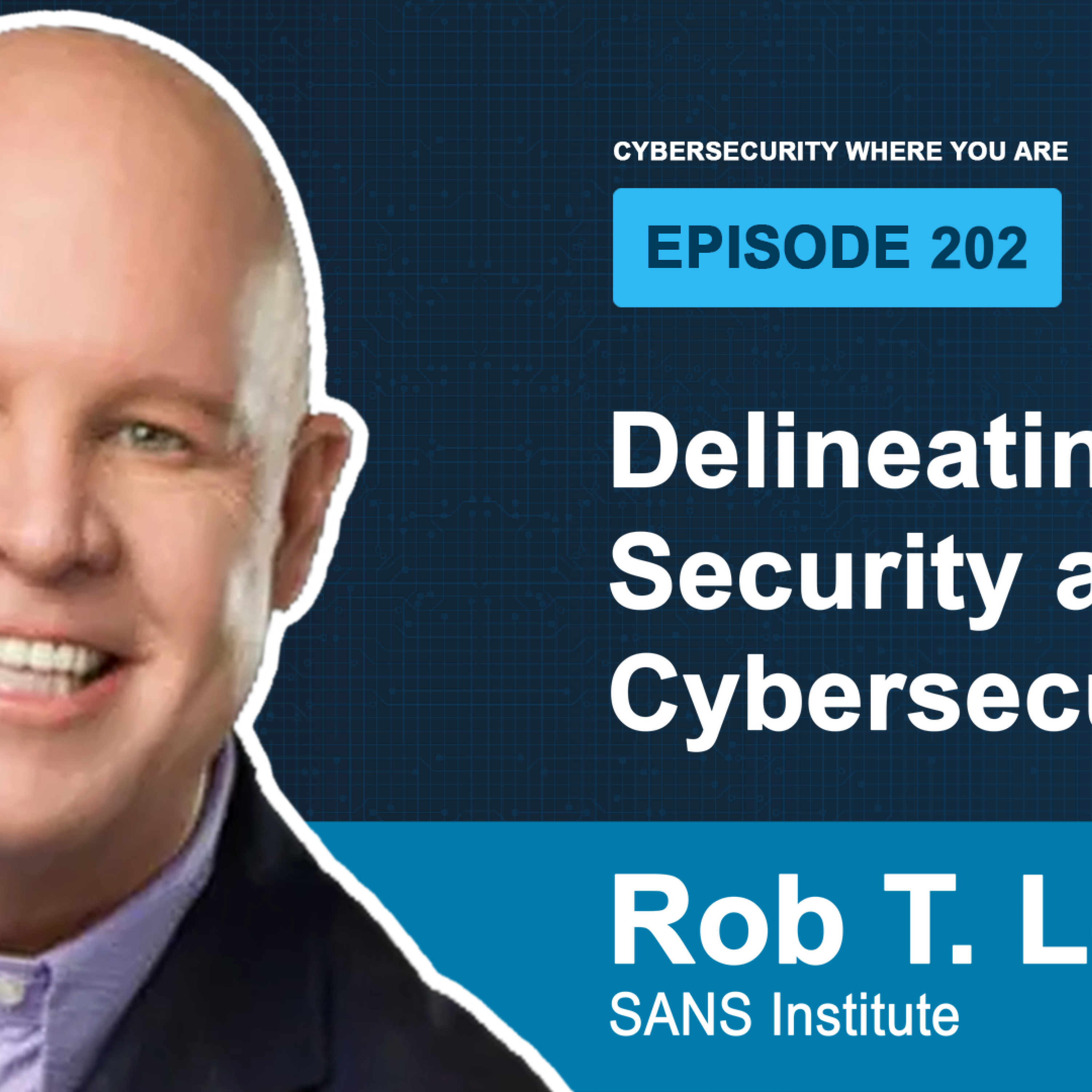
In episode 202 of Cybersecurity Where You Are, Sean Atkinson and Ed Skoudis sit down with Rob T. Lee, Chief of Research & Chief AI Officer at the SANS Institute. Together, they explore how the implications of multiple 2026 sandbox escapes of artificial intelligence (AI) models are starting to delineate AI security and cybersecurity.
Here are some highlights from our episode:
02:00. The historical context of one AI model's 2026 sandbox escape
03:26. The impact of ethics, guardrails, and misconfigurations in an AI containment breach
06:08. Why context matters when talk of AI models "going rogue" surfaces
11:49. How history helps us to delineate AI security and cybersecurity
13:47. A new skill and mindset to match our refined AI risk understanding
15:43. Rules and cybersecurity implementation as a possible way forward
19:04. The double-edged sword of restricting access to open-weight models
23:25. Recommendations for keeping up with what's changing in the AI security space
25:51. Rob's advice: To learn how to defend a thing, try learning how to build it first
28:23. AI governance and seeing through the "slop" to informed conversation
29:54. The use of AI to learn more about and discuss AI security for years to come
Resources
OpenAI says its AI technology acted on its own in an ‘unprecedented’ hack of another company
Pacing model development in an era of cyber-critical capabilities
Black Hat USA 2026 | The 'Breaking' News: The OpenAI–Hugging Face Incident
Episode 193: AI Security and Responsibility in EO 14409
The AI Daily Brief — Daily AI News & Analysis
AI Playbooks for SLTT Cybersecurity Leaders
SANS Cybersecurity Summits
SANS NewsBites
If you have some feedback or an idea for an upcoming episode of Cybersecurity Where You Are, let us know by emailing podcast@cisecurity.org.
In episode 193 of Cybersecurity Where You Are, Sean Atkinson and Tony Sager sit down with Rob T. Lee, Chief of Research & Chief AI Officer at the SANS Institute, and Brian Calkin, Chief Technology and Innovation Officer at the Center for Internet Security® (CIS®). Together, they discuss AI security and the responsibility of the U.S. government in creating confidence around it, as represented in Executive Order (EO) 14409, "Promoting Advanced Artificial Intelligence Innovation and Security."
Here are some highlights from our episode:
00:50. Introductions to Rob and Brian
02:32. How to conceptualize confidence around something as complex as AI security
04:32. The U.S. government's responsibility to set AI security guardrails as clear expectations
08:12. The use of "voluntary" participation to create confidence in the context of EO 14409
14:38. How Mythos AI and similar developments affect assessment of frontier AI models
17:11. Airport security as an analogy for understanding AI security and privacy concerns
18:41. Why cybersecurity is a hard sell until an incident occurs
20:50. How AI is quickly becoming critical infrastructure
22:53. Furbies as reference for a flexible, iterative benchmarking process for AI security
25:50. The need for technical folks to translate AI risks into something understandable
28:21. Balancing encouragement of AI innovation with mindfulness of risk
31:24. The basics as a foundation for building shared responsibility around AI security
Resources
Promoting Advanced Artificial Intelligence Innovation and Security
The Myth of Mythos: What It Means For Information Security
Episode 190: Separating Mythos AI Fact from Fiction
The “AI Vulnerability Storm”: Building a “Mythos-ready” Security Program
Anthropic says it has taken its latest AI models offline to comply with new export controls
Establishing Essential Cyber Hygiene
Episode 187: The Role of a CISO as a Strategic Storyteller
If you have some feedback or an idea for an upcoming episode of Cybersecurity Where You Are, let us know by emailing podcast@cisecurity.org.
39 minPlay in:
Why PodAppear
Follow people, not podcasts.
You heard Rob on one show. PodAppear finds the next one for you, and every other person you want to hear.
An alert when they are a guestBy email as it happens, or as a daily or weekly digest. Then press play.
Guests, not name-dropsEpisodes that only mention a name are kept apart, so an alert means they are really on the show.
Everyone in one feedFounders, authors, athletes, scientists. Follow anyone by name, across every show they visit.