Bekomm eine E-Mail, wenn Niraj in einem Podcast zu Gast istPodAppear prüft neue Folgen, sobald sie erscheinen, und lässt die weg, in denen Niraj nur erwähnt wird. Bis zu 15 Personen kostenlos, ohne Kreditkarte.Bis zu 15 Personen kostenlos, ohne Kreditkarte.
Niraj kostenlos folgen
NS

Niraj Sharma

Zwei Jahre auf Sendung

GastHostErwähnt

Selbst moderierte Folgen

Mo26Okt
EP Edge Journal Watch: Cardiac Electrophysiology Research

EP Edge Journal Watch: Cardiac Electrophysiology ResearchHost

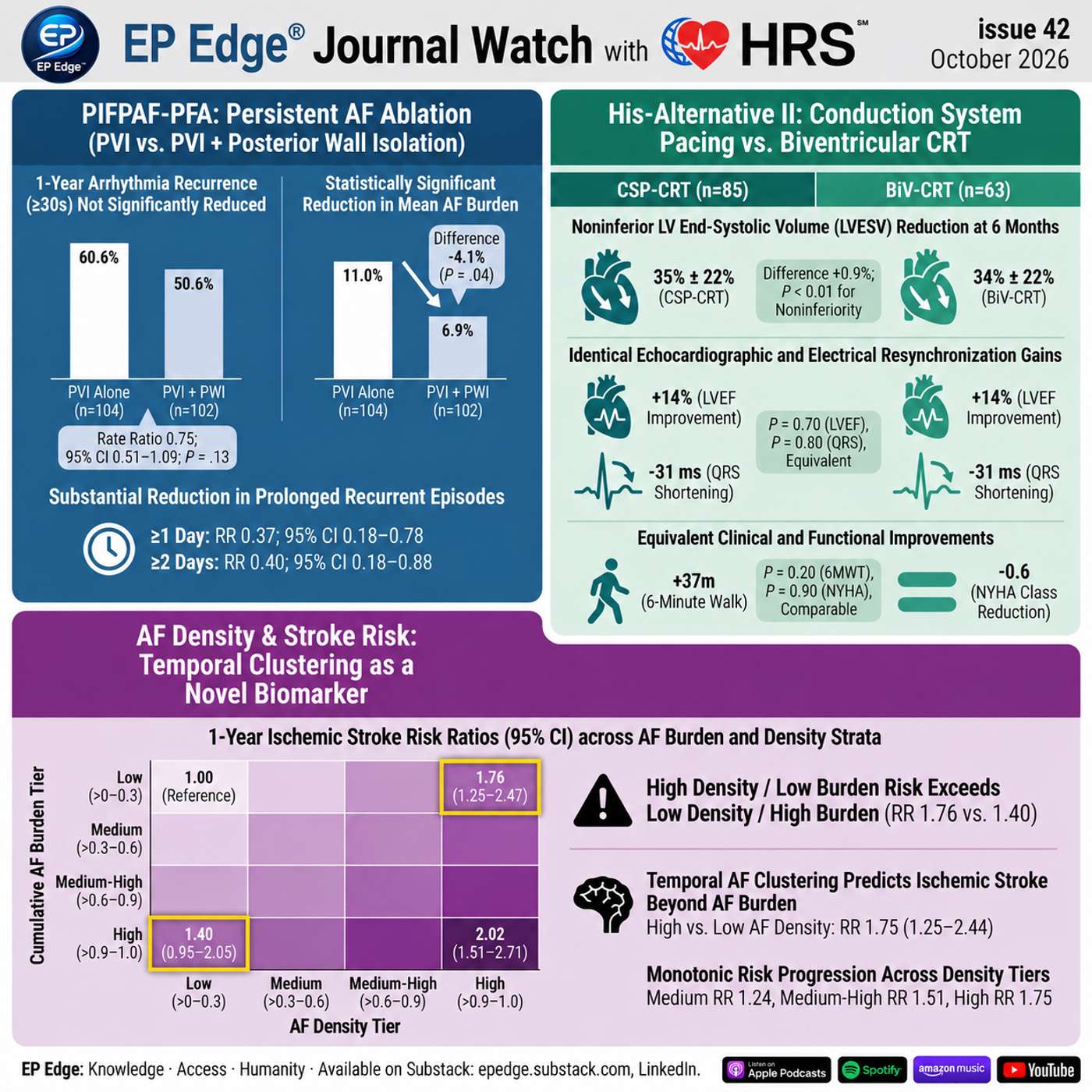
EP Edge® Journal Watch Issue 42, October 2026, with the Heart Rhythm Society: PIFPAF-PFA, His-Alternative II, and AF Density in Stroke Risk

Does more extensive atrial fibrillation ablation improve outcomes? Can conduction system pacing replace conventional biventricular cardiac resynchronization therapy? And does the temporal distribution of atrial fibrillation predict ischemic stroke better than cumulative AF burden alone? In Issue 42 of EP Edge® Journal Watch, October 2026, presented in collaboration with the Heart Rhythm Society (HRS), Drs. Niraj Sharma and Michael Llyod examines three important electrophysiology studies addressing atrial fibrillation ablation, physiological pacing, heart failure, and stroke risk stratification. This episode moves beyond headline results to examine study methodology, clinical endpoints, statistical uncertainty, and implications for everyday electrophysiology practice. 1. PIFPAF-PFA: Is Posterior Wall Isolation Necessary in Persistent Atrial Fibrillation? Roten et al. | JAMA | August 2026 The PIFPAF-PFA randomized clinical trial evaluated whether adding posterior wall isolation to pulmonary vein isolation using pulsed field ablation improves outcomes in patients with persistent atrial fibrillation. Among 206 randomized patients undergoing continuous rhythm monitoring, atrial tachyarrhythmia recurrence occurred in 50.6% receiving pulmonary vein plus posterior wall isolation versus 60.6% receiving pulmonary vein isolation alone (P = .13). Although the primary endpoint was not statistically significant, additional posterior wall isolation was associated with lower AF burden and fewer prolonged episodes in secondary analyses. We discuss the clinical importance of these findings, the limitations of the conventional 30-second recurrence criterion, and how PIFPAF-PFA relates to AVANT GUARD, ADVANTAGE AF, CAPLA, and IDEAL-AF. DOI: https://doi.org/10.1001/jama.2026.17598 2. His-Alternative II: Conduction System Pacing Versus Biventricular CRT Vinther et al. | JACC: Clinical Electrophysiology | August 2026 The His-Alternative II randomized noninferiority trial compared direct His bundle or left bundle branch area pacing with conventional biventricular cardiac resynchronization therapy in 150 patients with heart failure with reduced ejection fraction and left bundle branch block. At six months, left ventricular end-systolic volume decreased by 35% with conduction system pacing versus 34% with biventricular CRT, meeting the prespecified noninferiority criterion. We examine implantation success, crossover rates, lead performance, electrophysiological criteria confirming conduction system capture, and the distinction between true left bundle branch capture and left ventricular septal pacing. Does comparable short-term reverse remodeling justify broader adoption, or are longer-term data on heart failure hospitalization, mortality, and lead durability still necessary? DOI: https://doi.org/10.1016/j.jacep.2026.08.008 3. AF Density: A New Biomarker for Ischemic Stroke Risk? Rosman et al. | European Heart Journal | March 2026 online publication Can two patients with identical cumulative AF burden have different stroke risks because their arrhythmia episodes occur in different temporal patterns? This multicenter observational study evaluated 12,868 patients with cardiac implantable electronic devices and examined AF density, a measure of how concentrated or dispersed AF episodes are over time. Higher AF density was associated with increased ischemic stroke risk independently of cumulative AF burden. High versus low density was associated with a risk ratio of 1.75 (95% CI 1.25–2.44). We explore whether AF density provides genuinely new prognostic information beyond the duration of the longest AF episode, its relationship to atrial myopathy, and whether it could eventually improve anticoagulation decisions. The discussion also addresses the September 2026 published correction to the study's absolute stroke-risk figures, the subsequent methodological correspondence, and why observational association does not establish clinical utility or treatment benefit. Original Study DOI: https://doi.org/10.1093/eurheartj/ehag203 Published Correction DOI: https://doi.org/10.1093/eurheartj/ehag771 What This Episode Means for Clinical Practice Together, these studies examine three evolving areas of cardiac electrophysiology: optimizing ablation strategy beyond pulmonary vein isolation, defining the role of physiological pacing in cardiac resynchronization therapy, and improving stroke risk assessment through more sophisticated AF monitoring. The discussion emphasizes what randomized and observational evidence establishes, which findings remain hypothesis-generating, and what additional evidence is required before clinical practice should change. Intended audience: Cardiac electrophysiologists, cardiologists, heart failure specialists, electrophysiology fellows, researchers, and clinicians involved in cardiac rhythm management. Read and Subscribe EP Edge® on Substack: https://epedge.substack.com EP Edge® Website: https://epedge.org Listen to EP Edge® Journal Watch Apple Podcasts: https://podcasts.apple.com/us/podcast/ep-edge-journal-watch/id1849765834 Spotify: https://open.spotify.com/show/1g3bnieRPpdqTz3eMrpNiC Amazon Music: https://music.amazon.com/podcasts/b2f7fada-0af3-4142-a971-ee237a5a5606/ep-edge-journal-watch YouTube: https://www.youtube.com/playlist?list=PLALJKHJ_jmIpu1bisc67Go87XygJtYBM6 Questions, suggestions, or concerns: epedge.cast@gmail.com EP Edge®: Knowledge · Access · Humanity
33 minAbspielen in:

Mo28Sep
EP Edge Journal Watch: Cardiac Electrophysiology Research

EP Edge Journal Watch: Cardiac Electrophysiology ResearchHost

EP Edge® Journal Watch Issue 38 September 2026 with Heart Rhythm Society at HRX: AI ECG Interpretation, Wearable-Detected Ventricular Tachycardia, and LBBAP vs Deep Septal Pacing

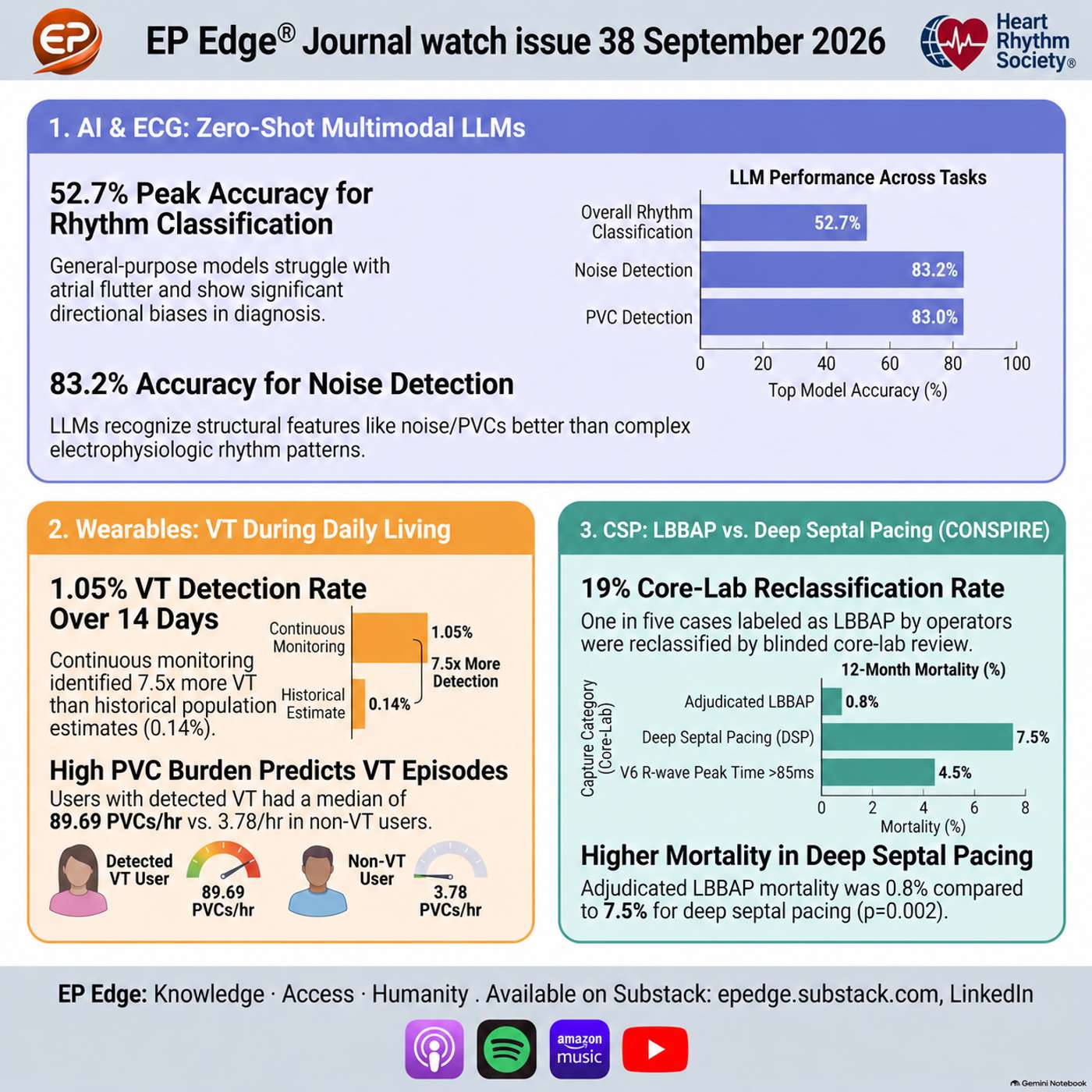
In this special EP Edge® Journal Watch Issue 38, recorded at HRX, with the Heart Rhythm Society Live 2026 in Atlanta, Dr. Niraj Sharma is joined by Dr. Michael Lloyd, Professor of Medicine at Emory University, for a focused discussion of three provocative studies with direct implications for contemporary cardiac electrophysiology. First, they examine the emerging role of large language models and artificial intelligence in ECG interpretation. How accurately can off-the-shelf, zero-shot LLMs interpret electrocardiograms, and are currently available general-purpose AI models ready to participate in clinical ECG analysis? The discussion then turns to ventricular tachycardia detected during everyday life by wearable devices. New data suggest that VT may be detected far more frequently in individuals using wearable monitoring than traditional estimates would suggest. Drs. Sharma and Lloyd discuss what these findings may mean for electrophysiologists increasingly confronted with rhythm data generated outside the clinic. Finally, the episode explores the continuing evolution of conduction system pacing, with new data comparing left bundle branch area pacing (LBBAP) and deep septal pacing (DSP). The conversation examines differences in clinical outcomes, the reported mortality signal associated with deep septal pacing, and an important practical problem for the field: inconsistent agreement about what actually constitutes successful LBBAP versus deep septal pacing. Recorded from HRX Live 2026, this episode goes beyond the abstracts to examine what the findings mean clinically, where the uncertainties remain, and how they may influence electrophysiology practice. Topics discussed include: Artificial intelligence and zero-shot LLMs for ECG interpretation Accuracy and limitations of AI-assisted electrocardiogram analysis Wearable cardiac monitoring and real-world ventricular tachycardia detection Ventricular arrhythmias detected outside traditional clinical monitoring Left bundle branch area pacing (LBBAP) Deep septal pacing (DSP) Conduction system pacing definitions and adjudication Mortality and clinical outcomes with physiologic pacing strategies Emerging research and innovation from HRX Live 2026 EP Edge® Journal Watch provides clinically focused analysis of important new research in cardiac electrophysiology, emphasizing not simply what a study found, but how the evidence should be interpreted and what it may mean for clinical practice. Hosted by Dr. Niraj Sharma Special HRX discussion with Dr. Michael Lloyd, MD, FACC, FHRS

16 minAbspielen in:

Mo13Jul
EP Edge Journal Watch: Cardiac Electrophysiology Research

EP Edge Journal Watch: Cardiac Electrophysiology ResearchHost

EP Edge × HRS Podcast: CT-Guided VT Ablation & LAA Closure Without AF: InEurHeart and OPINION, Caveolae, Alcohol and AFib, Pulse check and Afib Diagnosis

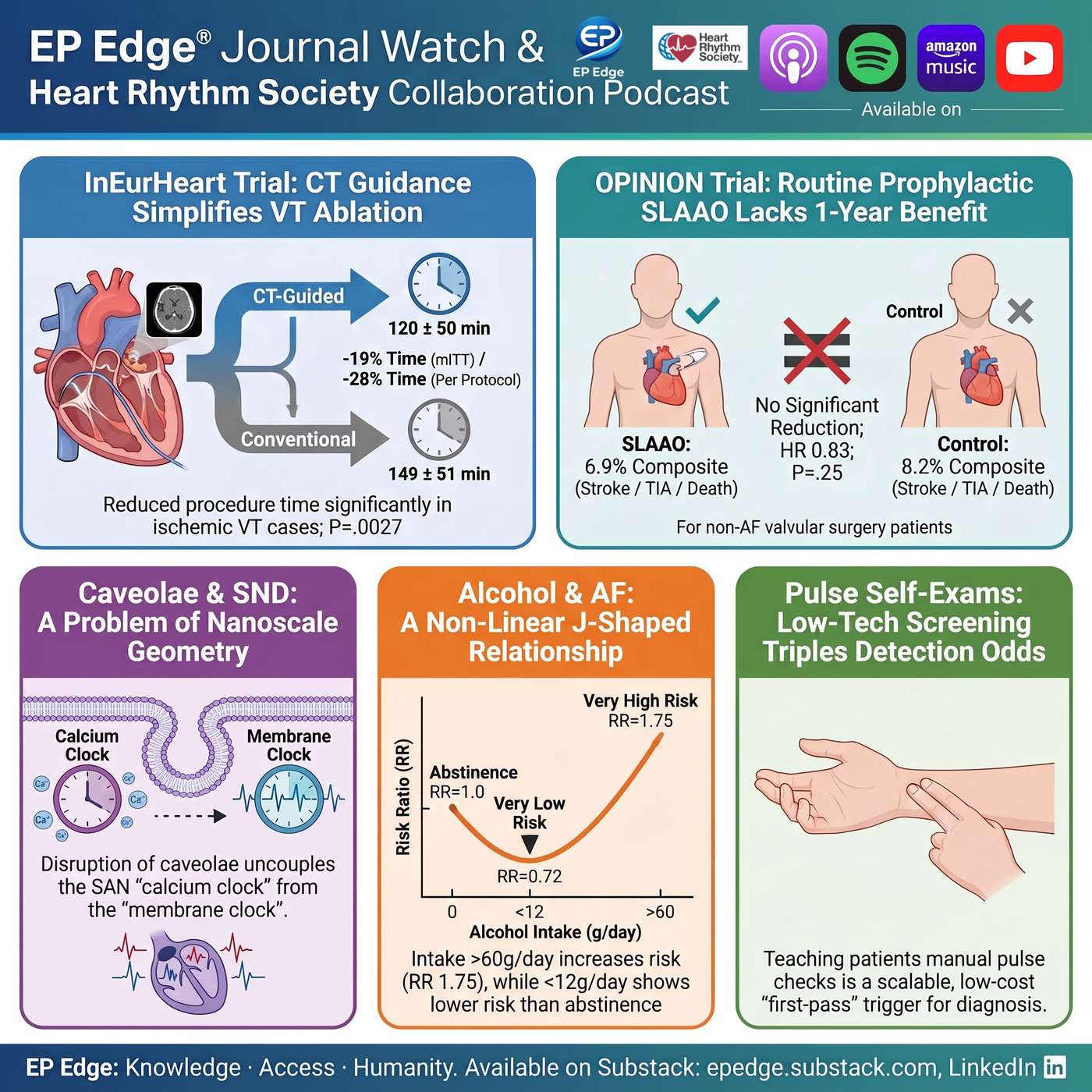
In this July 2026 episode of EP Edge Journal Watch, produced in collaboration with the Heart Rhythm Society (HRS), Mike Lloyd and Dr. Niraj Sharma review five studies with direct implications for contemporary cardiac electrophysiology practice. The anchor trials are InEurHeart, a randomized comparison of computed tomography-guided versus conventional catheter ablation for post–myocardial infarction ventricular tachycardia, and OPINION, which evaluates prophylactic surgical left atrial appendage occlusion during valvular heart surgery in patients without known pre-existing atrial fibrillation. Using the workflow gains seen with pulsed field ablation in AF as context, the discussion asks whether preprocedural cardiac CT can make ischemic VT ablation more efficient while preserving the essential role of functional mapping and why future AF risk should not automatically lead to surgical LAA closure. Rapid-fire analyses cover the relationship between alcohol consumption and incident atrial fibrillation, pulse self-examination as a simple strategy to improve AF detection, and emerging mechanistic research on caveolae, pacemaker signaling, sinus node dysfunction, and heart failure. The episode translates randomized trials, meta-analysis, screening research, and translational science into practical implications for the EP lab, clinic, patient counseling, and shared decision-making. Essential listening for electrophysiologists, cardiologists, fellows, advanced practice clinicians, and cardiac rhythm-management teams

30 minAbspielen in:

Mo1Jun
EP Edge Journal Watch: Cardiac Electrophysiology Research

EP Edge Journal Watch: Cardiac Electrophysiology ResearchHost

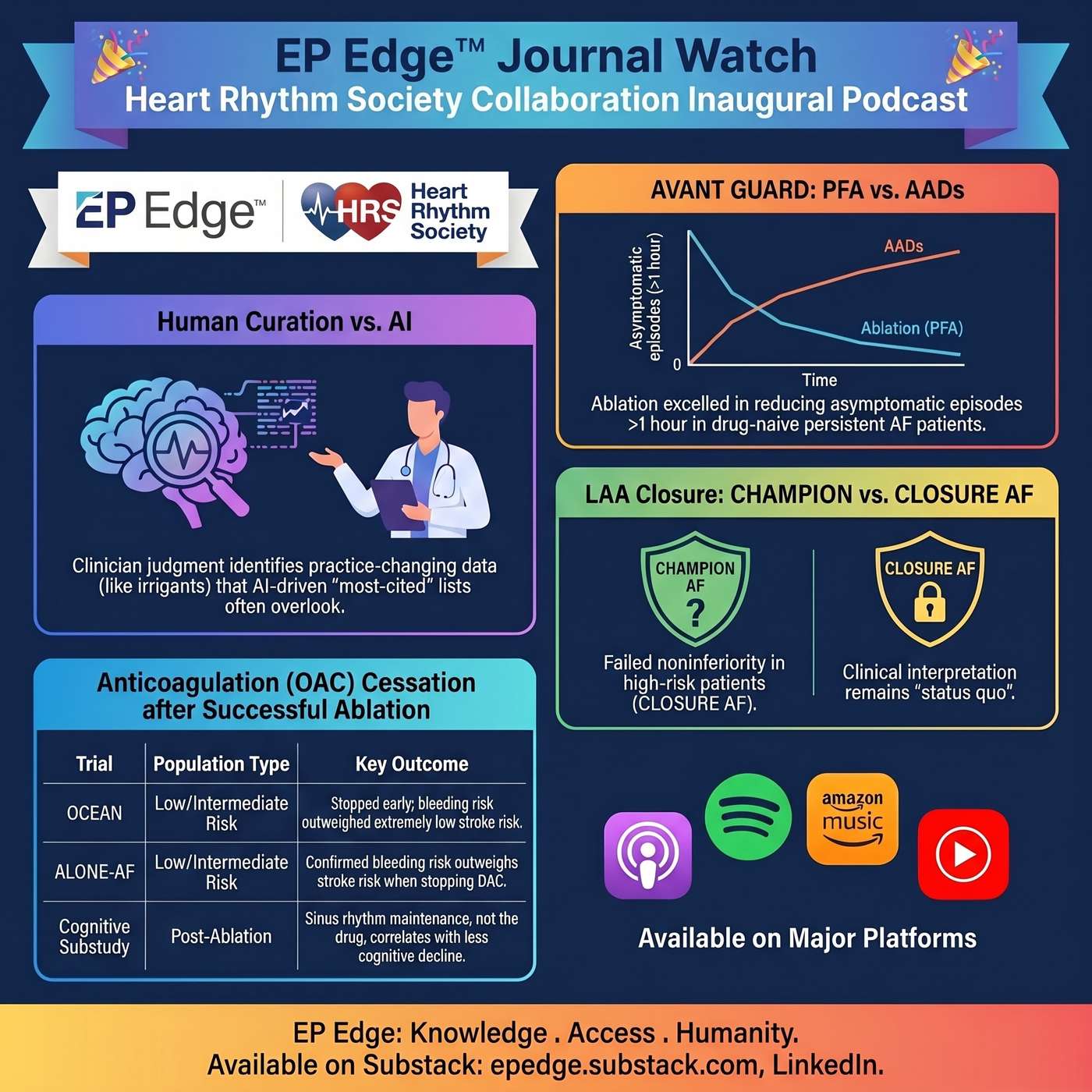
Inaugural EP EdgeTM Journal Watch with Heart Rhythm Society: AVANT GUARD, LAA Closure, OCEAN, and the ALONE-AF Cognitive Substudy

The inaugural EP Edge Journal Watch and Heart Rhythm Society collaboration is here. In this first episode, Dr. Michael Lloyd from the Heart Rhythm Society Digital Education Committee joins Dr. Niraj Sharma, creator of EP Edge, to launch a new monthly format focused on the most clinically relevant literature in cardiac electrophysiology. This is not a routine article summary. It is a practical, physician-led discussion of the studies that matter in the EP lab, in clinic, and at the bedside. Electrophysiology literature is moving quickly. Important trials now appear across major journals, late-breaking sessions, society meetings, and digital platforms. Algorithms can identify highly cited papers. Search tools can rank articles. But clinical relevance still requires judgment. EP Edge Journal Watch was created to help close that gap. The goal is simple: identify the papers that deserve attention, place them in clinical context, and ask what they mean for real patients. In this inaugural episode, Dr. Lloyd and Dr. Sharma begin with AVANT GUARD, a major trial evaluating first-line pulsed field ablation in patients with persistent atrial fibrillation. The discussion goes beyond the headline. They examine patient selection, drug-naive persistent AF, procedural safety, the stroke signal, modified enrollment criteria, anticoagulation requirements, endpoint design, and the difference between symptom reduction and true AF burden reduction. The episode then turns to one of the most active areas in atrial fibrillation care: left atrial appendage closure. Dr. Lloyd and Dr. Sharma discuss CLOSURE AF and CHAMPION AF, two trials that asked similar questions but studied very different patient populations. The discussion focuses on stroke risk, bleeding risk, frailty, procedural complications, endpoint construction, and how these trials should influence shared decision-making. The key clinical question is direct: should left atrial appendage closure be offered broadly as an alternative to anticoagulation, or should it remain focused on patients with a clear problem taking long-term oral anticoagulation? The final section focuses on anticoagulation after apparently successful AF ablation. Dr. Lloyd and Dr. Sharma discuss OCEAN and ALONE-AF, with attention to stroke risk, bleeding risk, patient selection, rhythm monitoring, and the limits of intermittent surveillance. For selected low-risk patients without recurrent atrial arrhythmia, stopping anticoagulation may be reasonable. But the decision is not automatic. It depends on the patient, the risk profile, the quality of rhythm follow-up, and the shared decision-making conversation. The episode also highlights the ALONE-AF cognitive substudy, one of the most interesting parts of the discussion. This substudy moves the conversation beyond stroke and bleeding. It asks whether stopping oral anticoagulation after successful AF ablation affects cognitive function. The key point is nuanced. In selected patients without recurrent atrial arrhythmia, stopping anticoagulation did not appear to produce a cognitive penalty. But the more provocative signal may be rhythm itself. Patients who maintained sinus rhythm appeared to have better cognitive trajectories than those with recurrence. That raises an important clinical question for the field: after AF ablation, is the long-term cognitive story less about the anticoagulant and more about durable rhythm control? This first episode sets the tone for the EP Edge Journal Watch and HRS collaboration. The format is concise, practical, and clinically grounded. It is built for busy electrophysiologists, cardiologists, fellows, advanced practice providers, and clinicians who care for patients with atrial fibrillation. The purpose is not just to summarize trials. It is to interpret them. Which patients were studied? Which endpoints matter? Which findings should change a clinic conversation? Which results should make us pause before changing practice? That is the mission of EP Edge Journal Watch with HRS.

20 minAbspielen in:

Mo6Apr
EP Edge Journal Watch: Cardiac Electrophysiology Research

EP Edge Journal Watch: Cardiac Electrophysiology ResearchHost

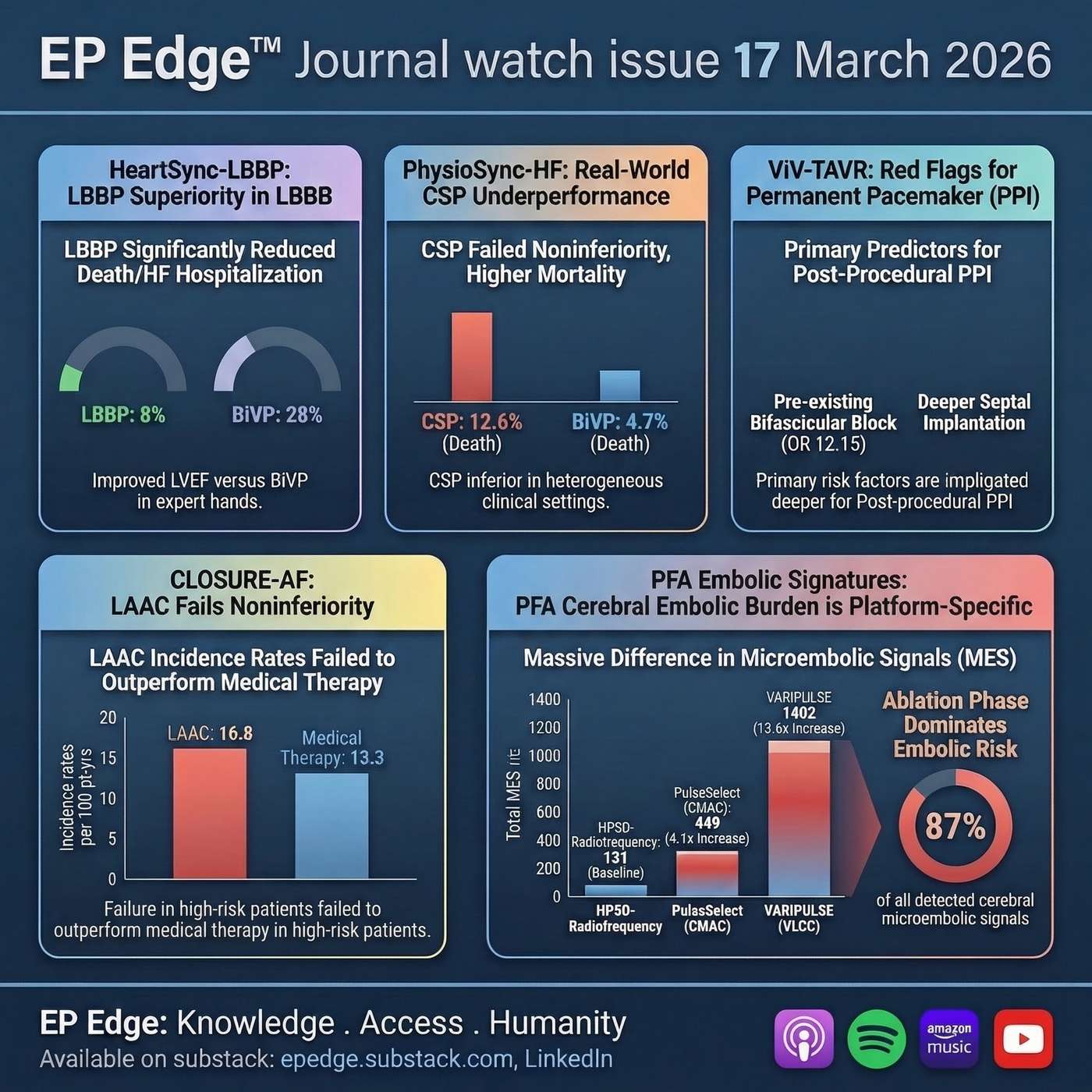
EP Edge Journal Watch Issue 17 April 2026: CLOSURE-AF, Left Atrial Appendage Closure vs Medical Therapy, CRT Pacing Trials, PFA Cerebral Emboli, and ViV-TAVR Pacemaker Risk

In this episode of EP Edge Journal Watch, Dr. Niraj Sharma reviews five clinically important studies spanning atrial fibrillation, structural heart intervention, heart failure pacing, and contemporary ablation safety. The episode opens with CLOSURE-AF, the randomized trial comparing left atrial appendage closure (LAAC) with physician-directed best medical therapy in older, high-risk patients with atrial fibrillation. The discussion examines whether LAAC can truly match or surpass modern anticoagulation-based care for stroke prevention, why the anticipated bleeding advantage did not clearly materialize, and how these findings should recalibrate clinical thinking around left atrial appendage closure and Watchman-era device strategies in 2026. The episode then turns to cardiac resynchronization therapy and the ongoing debate over conduction system pacing versus conventional biventricular pacing. Dr. Sharma contrasts the HeartSync-LBBP randomized trial with PhysioSync-HF, two studies that move in opposite directions and together provide a practical reality check for electrophysiologists. Key themes include left bundle branch pacing, conduction system pacing, operator experience, reverse remodeling, heart-failure hospitalization, and whether left bundle branch area pacing is ready to replace biventricular pacing as the default CRT strategy. The final segments focus on procedural safety and conduction risk. A mechanistic study comparing pulsed field ablation with high-power short-duration radiofrequency ablation evaluates cerebral micro-embolization detected by transcranial Doppler, emphasizing that embolic burden may be platform-specific rather than a generic property of PFA. The episode also reviews predictors of permanent pacemaker implantation after valve-in-valve TAVR, including bifascicular block, deeper septal implantation, and new bundle-branch block after the procedure. This episode is especially relevant for clinicians interested in atrial fibrillation, LAAC, CRT, conduction system pacing, pulsed field ablation, cerebral embolic risk, and TAVR-related conduction disease.

23 minAbspielen in:

Mo2Mär
EP Edge Journal Watch: Cardiac Electrophysiology Research

EP Edge Journal Watch: Cardiac Electrophysiology ResearchHost

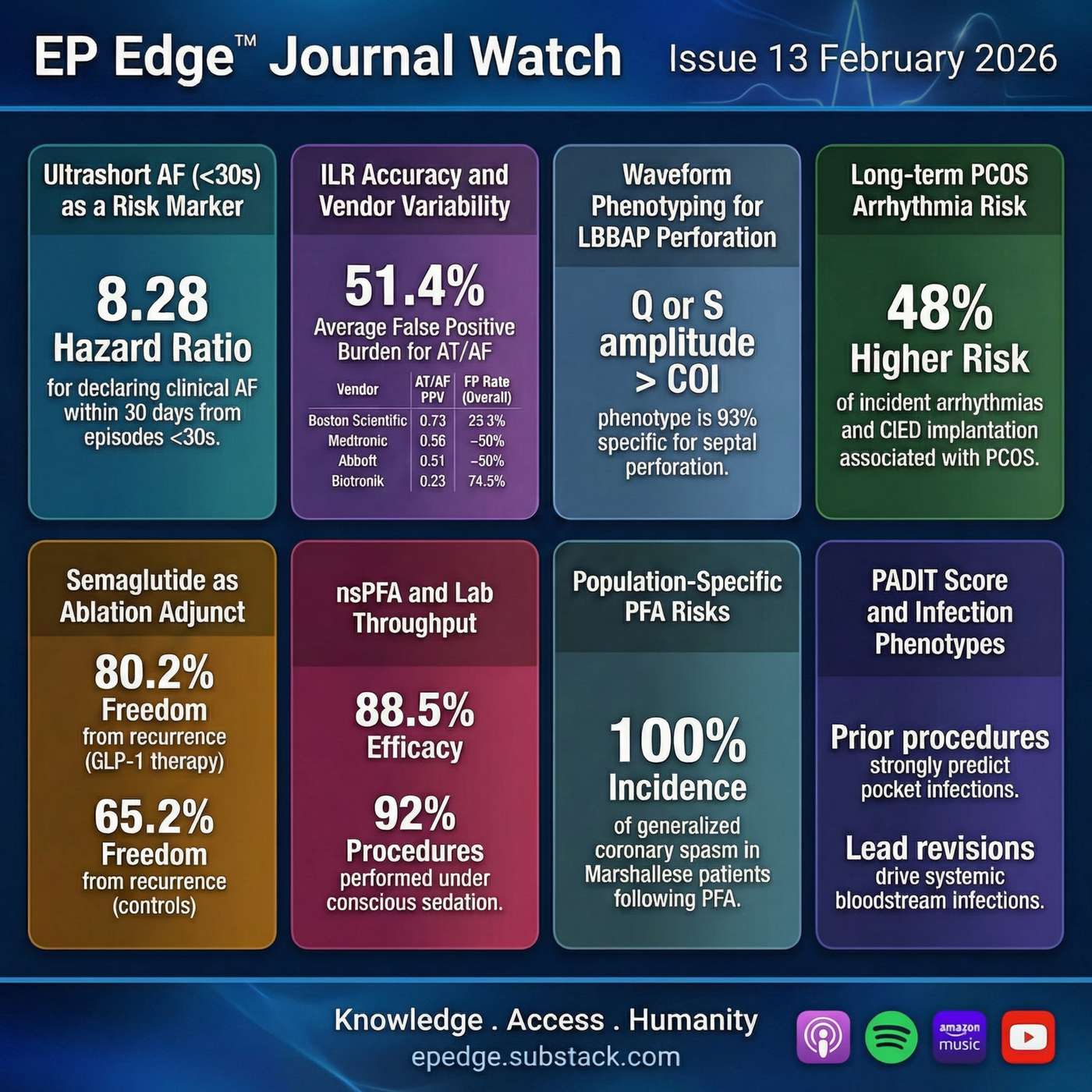
EP Edge Journal Watch Issue 13 (March 2026): Ultrashort AF, ILR Accuracy, Semaglutide + Ablation, PADIT, PCOS, LBBAP and Next-Gen nanosecond PFA (SCENA-AF)

EP Edge Journal Watch — Issue 13 (March 2026) explores a core 2026 EP problem: signal detection (wearables, patches, ILRs) and energy delivery (next-gen PFA) are advancing faster than the clinical rules we use to interpret risk and outcomes.  In this episode, Dr. Niraj Sharma breaks down what’s clinically actionable, what’s methodologically fragile, and what should change practice now versus what needs better evidence. Topics covered (high-level): Ultrashort atrial arrhythmias (<30 seconds) and what they may imply on continuous monitoring Implantable loop recorder (ILR) “AF alerts” and why vendor performance is not interchangeable  Semaglutide (GLP-1) and AF ablation in obesity: metabolic modulation as an EP strategy, not an afterthought Nanosecond pulsed field ablation (nsPFA) for paroxysmal AF (SCENA-AF) and what it means for workflow (including anesthesia strategy)  A high-stakes coronary spasm signal in a population-enriched cohort LBBAP perforation detection: interpreting iEGMs as phenotype, not just amplitude  PADIT score validation by infection subtype—toward phenotype-aware prevention PCOS and long-term arrhythmia risk: a women’s cardiovascular EP domain hiding in plain sight  Read the full newsletter (graphics + references): epedge.substack.com Subscribe on LinkedIn (EP Edge Journal Watch): https://lnkd.in/e-Wa4diC Subscribe to EP Edge (Monthly Deep Dives): https://lnkd.in/ep3NdZUz Subscribe Substack: epedge.substack.com

24 minAbspielen in:

Warum PodAppear

Folge Menschen, nicht Podcasts.

Du hast Niraj in einer Sendung gehört. PodAppear findet für dich die nächste, und genauso für alle anderen, die du hören willst.

  • Eine Meldung, wenn die Person zu Gast istPer E-Mail: sofort oder gebündelt als Tages- oder Wochenübersicht. Dann nur noch auf Play drücken.
  • Gäste statt bloßer ErwähnungenFolgen, in denen ein Name nur fällt, landen getrennt. Eine Meldung heißt: Die Person ist wirklich in der Sendung.
  • Alle in einem FeedGründerinnen, Autoren, Sportler, Forscherinnen. Folge allen mit Namen, quer durch jede Sendung, in der sie auftreten.

Bis zu 15 Personen kostenlos, ohne Kreditkarte.