Bekomm eine E-Mail, wenn Nick in einem Podcast zu Gast istPodAppear prüft neue Folgen, sobald sie erscheinen, und lässt die weg, in denen Nick nur erwähnt wird. Bis zu 15 Personen kostenlos, ohne Kreditkarte.Bis zu 15 Personen kostenlos, ohne Kreditkarte.
Nick kostenlos folgen
NB

Nick Beyer

Zwei Jahre auf Sendung

GastHostErwähnt

Selbst moderierte Folgen

Di24Nov
NWA Founders

NWA FoundersHost

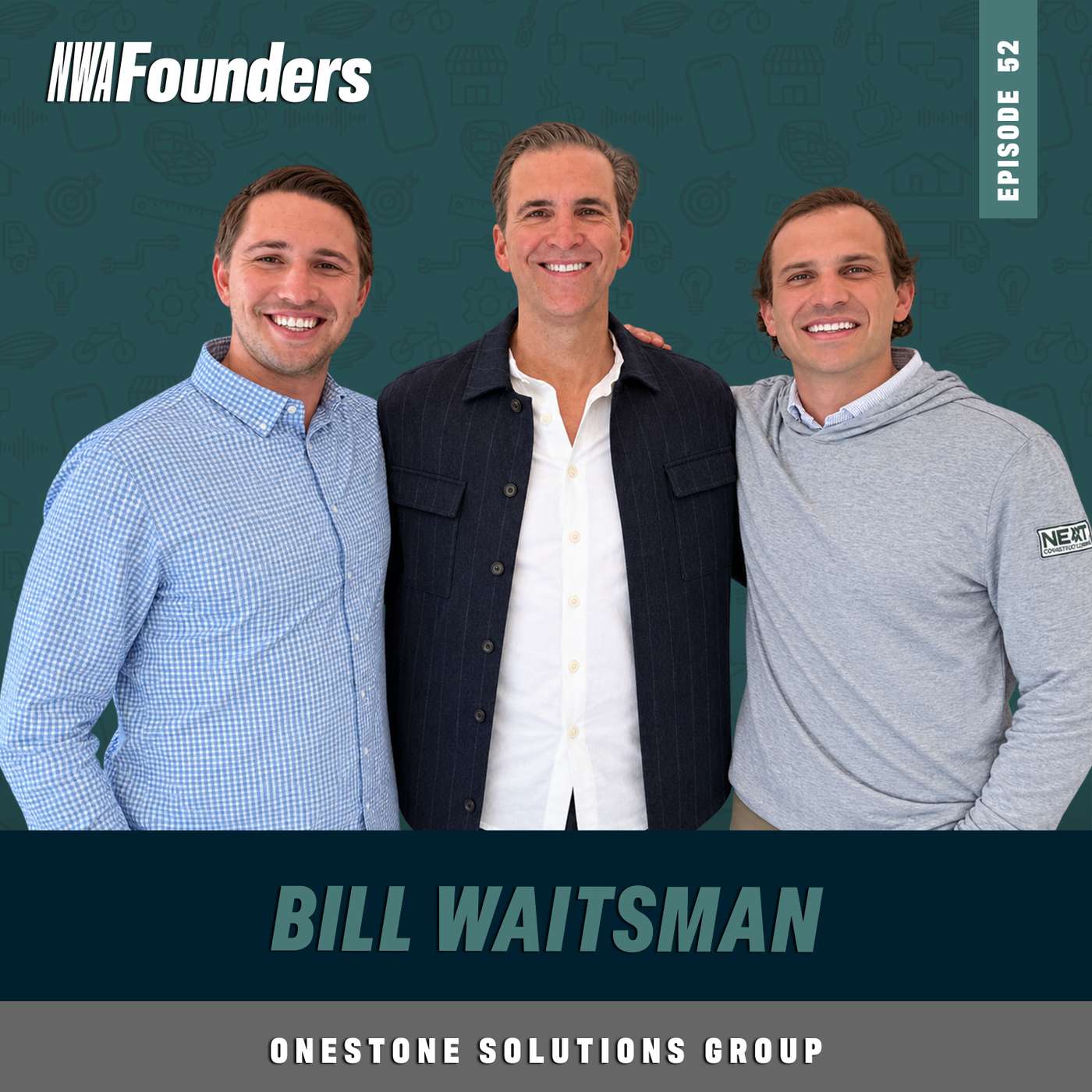
#53 - Bill Waitsman (OneStone Solutions Group)

Bill Waitsman joins Cameron Clark and Nick Beyer on the Northwest Arkansas Founders Podcast for an honest look at building businesses—and the relationships that make them possible. From his years on P&G’s Walmart team to co-founding North Star and Harvest Group, launching OneStone, and navigating its eventual sale, Bill shares the lessons behind the milestones. He opens up about the emotional cost of starting over, why success can put partnerships under the greatest strain, and how developing people became his most meaningful measure of success. Key Moments 07:16 — The P&G foundation: How working on Walmart’s business shaped Bill’s approach to building customer teams. 10:40 — Making the entrepreneurial leap: The mentors, planning, and encouragement that helped Bill leave corporate life. 25:25 — Why success tests partnerships: Navigating competing priorities, ownership decisions, and changing goals. 33:15 — The knock that changed everything: An unexpected conversation helps Bill regain momentum and launch Harvest. 37:21 — Three complementary founder skill sets: The visionary, the operator, and the business-development and culture builder. 51:15 — Starting over with 1Stone:Leaving Harvest, entering digital commerce, and building a young, scrappy team. 1:16:39 — Redefining success:Measuring legacy through thriving businesses, growing leaders, and future entrepreneurs. Three Key Takeaways Build around your strengths—and cover your blind spots.Choose a business that draws on your experience, then bring in complementary talent. Be deliberate about whether that means adding partners or hiring strong leaders. Partnership alignment requires ongoing work. Put expectations and exit provisions in writing, seek outside counsel, and revisit each partner’s goals annually rather than assuming everyone still wants the same thing. The people you develop are a lasting measure of success.Beyond growth or an exit, Bill finds meaning in seeing former team members lead, start companies, and thrive long after working together.
1 h 21 minAbspielen in:

Di10Nov
NWA Founders

NWA FoundersHost

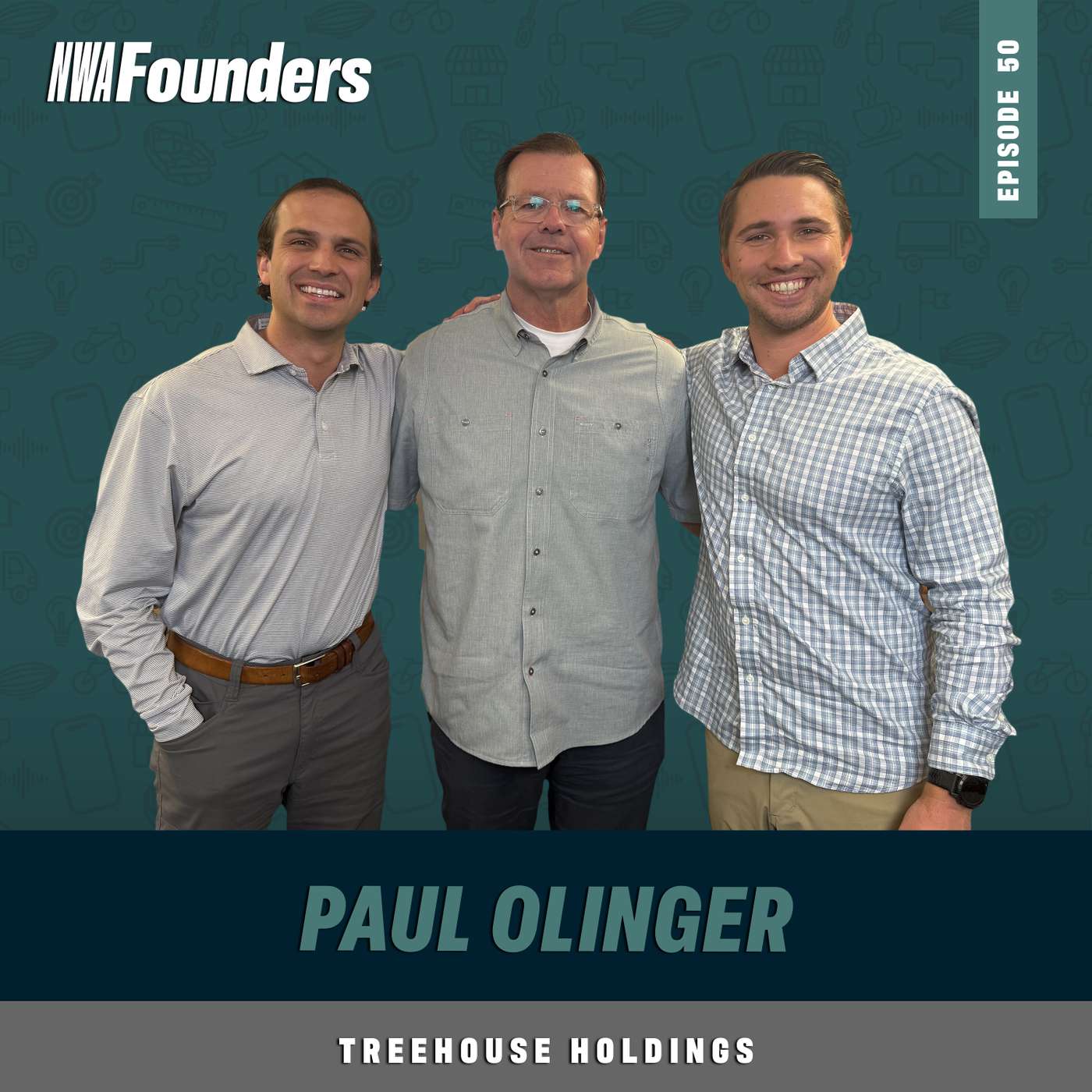
#52 - Paul Olinger (TreeHouse Holdings)

Paul Olinger joins Cameron Clark and Nick Beyer on the Northwest Arkansas Founders podcast to share his journey from a blue-collar upbringing in Oklahoma to a 20-year career at Sam’s Club and Walmart, founding Treehouse Sales and Solutions, and ultimately selling the business to Harvest Group. Along the way, he recounts helping bring Hansen’s energy drinks—the precursor to Monster—to a national audience and developing Great Value single-serve drink mixes. Paul reflects on the customer-first thinking, relentless learning, and trusted relationships that shaped his career, as well as the challenge of replacing clients representing two-thirds of Treehouse’s volume. Throughout the conversation, he credits his Christian faith and his wife Shana’s partnership with guiding his decisions, generosity, and vision for a family legacy that extends beyond financial success. Key Moments 00:00 – Cold open and sponsor messages 02:33 — Stay a student of your business. Paul explains why entrepreneurial thinking starts with observing the marketplace, identifying unmet customer needs, and putting in the work to solve them. 07:34 — Sam Walton’s lesson on competition. Rather than focusing on competitors’ weaknesses, Walton challenged his team to identify what rivals did well—and learn from it. 30:19 — The energy drink story before Monster. When Red Bull’s pricing didn’t fit Sam’s Club’s model, Paul found an alternative in Hansen’s Natural, tested it outside its home market, and helped expand it nationally before the company’s Monster rebrand. 40:12 — Turning bottled water into a product opportunity. Paul recounts developing single-serve powdered drink mixes and working with a private-label supplier to get Great Value sticks onto Walmart shelves ahead of Crystal Light. 48:40 — The rooftop conversation that sparked Treehouse. While hanging Christmas lights, Paul tells Shanna he plans to leave Walmart. Their conversation exposes the strain of his corporate career and sets his entrepreneurial transition in motion. 1:11:41 — Building a business with an $80,000 home equity loan. Paul describes financing Treehouse’s modest beginnings, finding early clients, and choosing products he genuinely believed a retail buyer would want. 1:30:43 — Rebuilding after losing clients representing 66% of volume. Three major clients announce their departures, prompting a company-wide push for new business that helps Treehouse recover and return to growth. 1:35:17 — How generosity opened the door to Harvest Group. A COVID-era initiative letting employees direct donations to nonprofits leads to a LinkedIn connection, an introduction to Harvest’s leadership, and eventually the sale of Treehouse. 3 Key Takeaways Keep learning, and let the customer lead. Paul’s strongest product ideas came from staying curious, listening to consumers, and solving practical problems—not assuming past success made him an expert. Move quickly without compromising trust. Speed helped Paul turn ideas into successful products, but protecting his reputation, choosing clients carefully, and honoring relationships made that success sustainable. Build a business around the legacy you want to leave. Paul and Shanna made faith, family, and generosity part of Treehouse’s operating philosophy—from giving during uncertain times to sharing the proceeds of the sale with employees.

2 h 05 minAbspielen in:

Di27Okt
NWA Founders

NWA FoundersHost

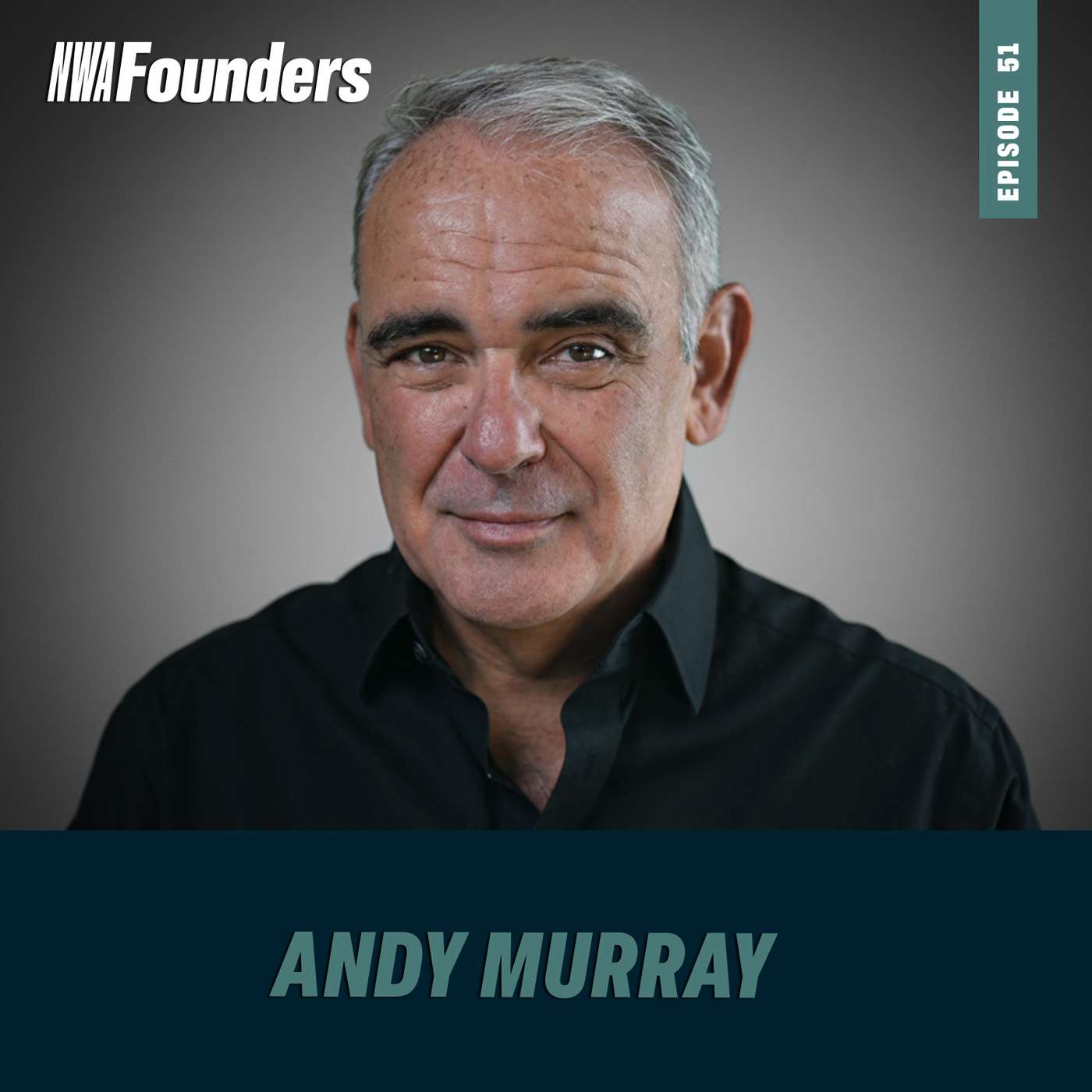
#51 - Andy Murray (Saatchi & Saatchi X)

Andy Murray has spent his career at the intersection of entrepreneurship and corporate innovation — and he's done it at the highest levels of both. From riding shotgun in his father's plumbing truck as a kid in Cincinnati, to launching a driveway-sealing business at 16, to spending nine years at Procter & Gamble, to founding what became the shopper marketing industry, to serving as SVP of Marketing at Walmart and Chief Customer Officer at ASDA in the UK, Andy's path has been anything but linear. In this episode of the NWA Founders Podcast, Andy sits down with Cameron Clark and Nick Beyer to trace that journey — the risks, the mentors, the pivots, and the framework he's developed for driving entrepreneurial thinking inside some of the world's largest companies. Along the way, Andy shares the five questions he believes every corporate innovator must answer before launching new work, how a simple Veterans Day ad turned into the Green Light a Vet movement, the origin story of shopper marketing as an industry, the decision to sell his agency to Saatchi & Saatchi, and how asking "what's the biggest problem we could solve" transformed food insecurity efforts in the UK. He also reflects on identifying talent, the difference between being a builder and an owner, and what it means to live a true, good, and beautiful life.  Key Moments 0:00 – Cold open and introductions 4:14 — The Five Questions for Corporate Entrepreneurship — Andy lays out the framework he's used repeatedly inside big companies: define the problem, shape the outcome, identify the biggest barrier, decide how to measure success, and figure out motivation. 9:28 — From a 30-Second Ad to the Green Light a Vet Movement — Andy recounts how asking "what's the biggest problem veterans face?" at Walmart turned a routine Veterans Day ad assignment into a multi-year national movement. 39:17 — The Birth of Shopper Marketing — Andy describes the all-in gamble on a Walmart baby department project, working around the clock to deliver in six days, and how a $200,000 check from P&G launched an entirely new marketing discipline. 57:28 — Builder vs. Owner — Facing an unexpected call from P&G's CMO about going global, Andy shares how a CEO listening tour and a card on his refrigerator helped him realize he was a builder, not an owner — leading to the Saatchi & Saatchi deal. 76:15 — Transforming Food Insecurity at ASDA — Andy tells the story of how asking charity partners "what's the single biggest thing we could do together?" led to a £22 million refrigeration infrastructure project that delivered millions of fresh meals across the UK.  Key Takeaways The answer resides in the question you're asking. Whether it's defining a problem for a startup pitch, asking "is this the biggest idea we could be working on?" at P&G, or interrogating whether a project is worth doing at all, Andy's career demonstrates that asking better questions — not having better answers — is the starting point for bigger ideas and meaningful innovation. Bigger ideas are easier than smaller ideas. Andy learned from mentor Tom Muccio that small ideas still require resources and effort, but big ideas that move hearts and minds attract people who want to help. From Green Light a Vet to the ASDA food insecurity project, framing an ambitious outcome draws collaborators out of the woodwork. Look outside your industry for operational breakthroughs. When his agency struggled with creative workflow bottlenecks during hypergrowth, Andy studied a pediatrician's patient-throughput model to redesign his team's traffic system. The lesson: uncommon inspiration leads to uncommon results.

1 h 36 minAbspielen in:

Di29Sep
NWA Founders

NWA FoundersHost

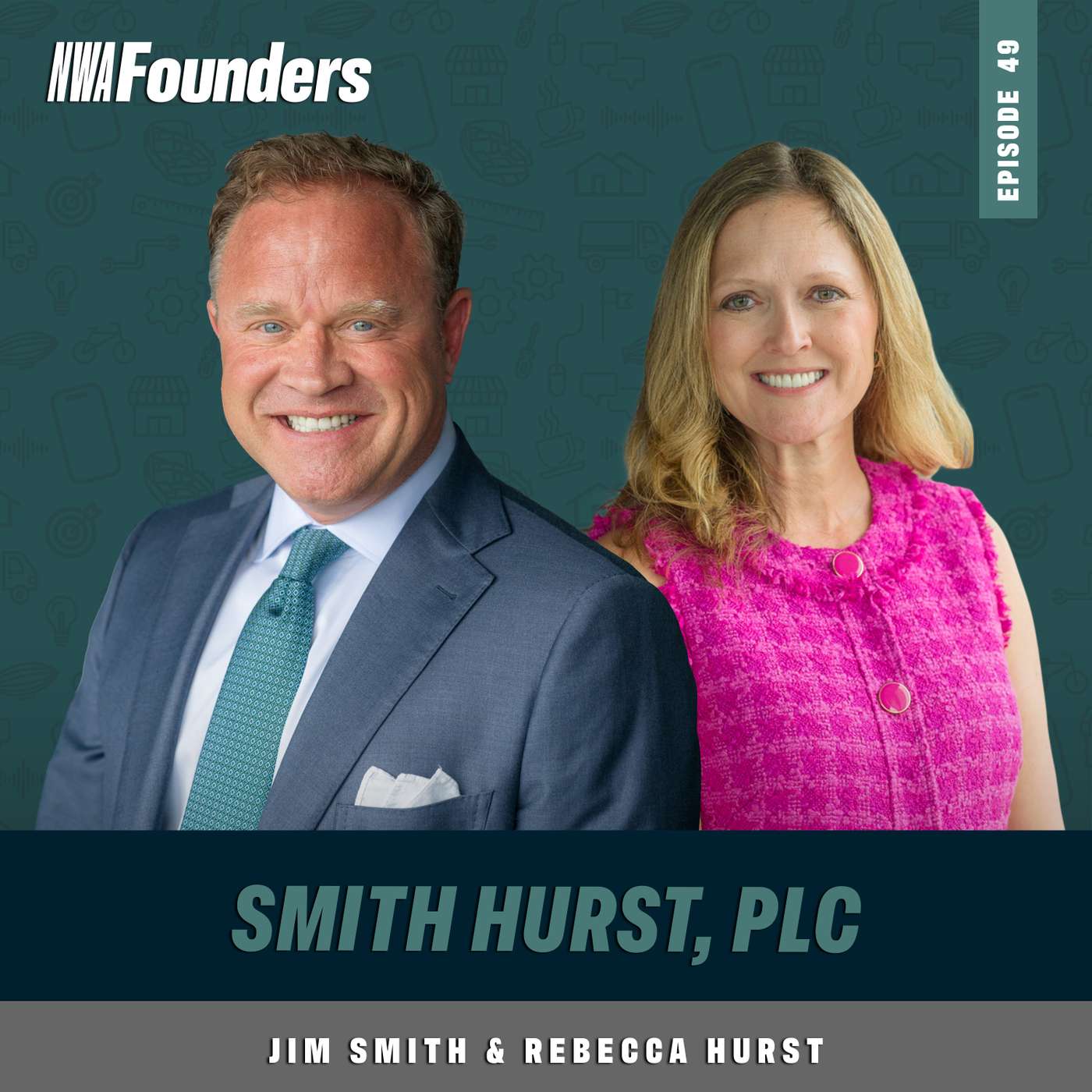
#49 - Jim Smith & Rebecca Hurst (Smith Hurst, PLC)

In this episode of the Northwest Arkansas Founders podcast, hosts Cameron Clark and Nick Beyer sit down with Jim Smith and Rebecca Hurst, the co-founders of Smith Hurst law firm and Emeraude (a multifamily office and business services platform). Jim and Rebecca share their parallel journeys — both with accounting degrees, both with tax LLMs from NYU — and trace the arc of their careers from the Friday firm (Arkansas's largest law firm) to launching Smith Hurst in 2011. They discuss the evolution of family offices in Northwest Arkansas, the explosive growth of the region's M&A and private equity landscape, and the strategic decision to expand beyond legal services into Emeraude, which provides family office and back-office business services to entrepreneurs and wealthy families. Throughout the conversation, Jim and Rebecca reflect on the relationships and timing that fueled their early success — from landing the Rockfish/WPP deal out of the gate, to the $83 million Acumen Brands capital raise in 2013. They cover practical topics like how M&A attorneys get paid (hourly, not success fees, to maintain objectivity), when to involve counsel in a deal (ideally before the letter of intent), and how AI is transforming legal practice. They also share the Wizard of Oz–inspired origin of the Emeraude name, discuss the $124 trillion wealth transfer ahead, and close with personal reflections on success, purpose, and the once-in-a-lifetime opportunity of building a business in Northwest Arkansas. Key moments: 0:00 – Cold open, sponsor messages and backgrounds 13:45 — Their competitive edge: relationships, not the firm name — 738 files moved in two weeks 14:30 — Landing the Rockfish/WPP acquisition deal out of the gate, giving the new firm instant credibility 17:30 — Acumen Brands' $83M capital raise from General Atlantic, a top-five Q1 2013 PE deal 45:35 — Why Smith Hurst bills hourly instead of success fees: maintaining objectivity 51:18 — The Wizard of Oz / Emerald City story behind the Emeraude name 75:55 — What's next: staying relevant as big players arrive in NWA Three key takeaways: Relationships are the real currency. When Jim and Rebecca left the Friday firm — the largest in Arkansas — 738 client files moved with them in the first two weeks. The business belonged to the relationships they'd built, not the firm name on the door. Jim emphasizes that most deals come through client and accountant referrals, and that the shift from legal advice to business strategy happens naturally over years of working alongside founders in the boardroom. Objectivity is worth more than a success fee. Smith Hurst deliberately charges hourly rather than taking a percentage of deal value, so clients never have to wonder whether the attorney's advice is driven by a personal financial stake in closing. Jim frames this as a trust principle: "We don't want them to feel that they're at risk that we're not giving them sound advice because we don't get paid if they don't close a deal." The same logic drives Emeraude — they facilitate, advise, and connect, but they don't manage assets or sell insurance, keeping their counsel independent. Northwest Arkansas is a once-in-a-lifetime window — and the clock is ticking. Both guests stress that the region's legitimacy as a market for private equity, venture capital, and talent is no longer a question. But Jim warns that bigger players will inevitably arrive as the population climbs toward 750,000 and beyond, and local firms must keep sharpening their edge. His advice to anyone on the fence: "Make the call" — whether for a family office, business services, or a career move — because the opportunity in NWA is as rare as it gets.

1 h 29 minAbspielen in:

Di23Jun
NWA Founders

NWA FoundersHost

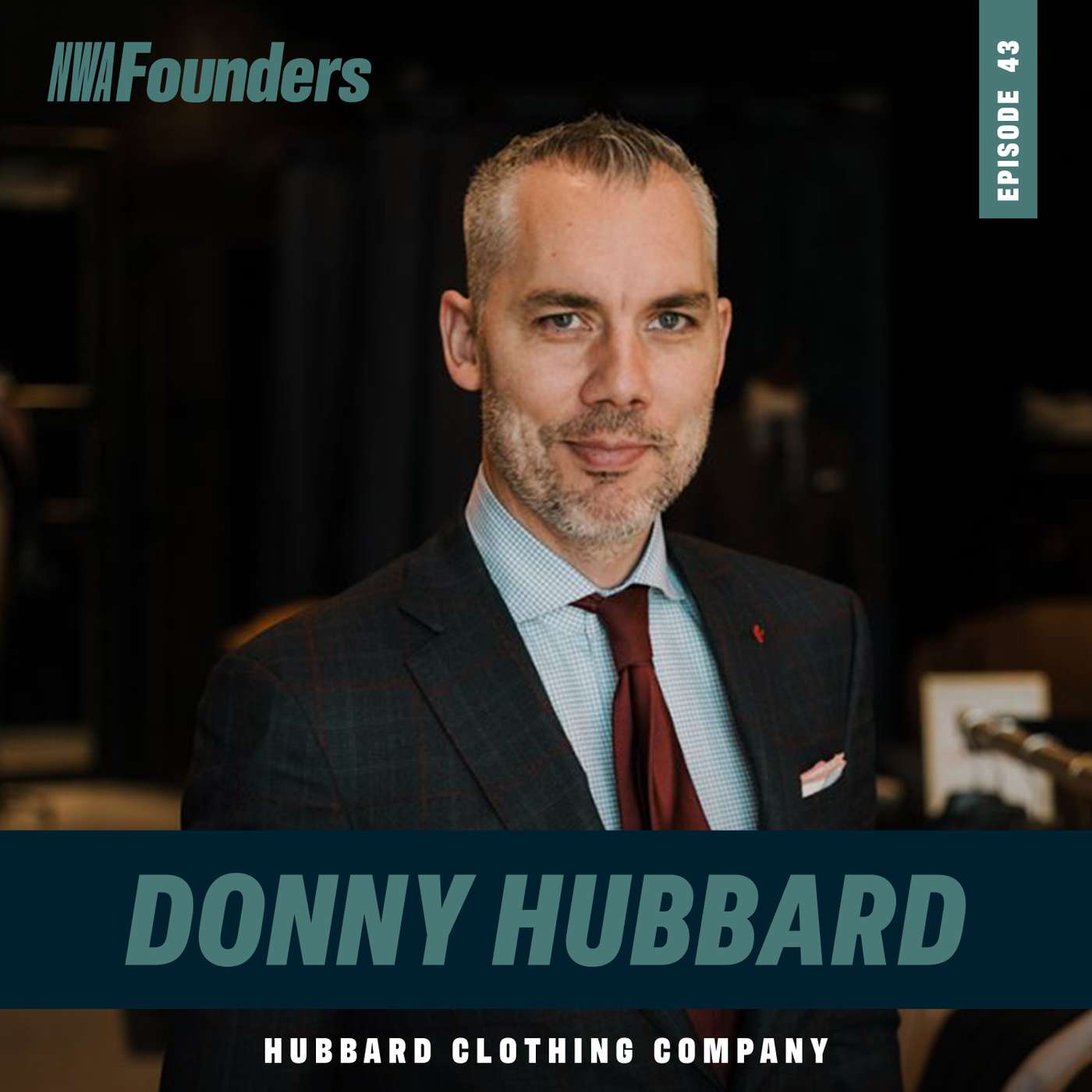
#43 - Donny Hubbard (Hubbard Clothing Company)

What if a clothing company focused less on clothes and more on experiences? In this episode, Donny Hubbard shares the remarkable story of going from a self-described poor kid who struggled in school to becoming one of Northwest Arkansas’ most connected entrepreneurs and the founder of one of the region’s most recognizable retail brands. Donny Hubbard didn’t build Hubbard Clothing Co. through venture capital, viral marketing, or a perfectly mapped-out business plan. He built it through relationships, relentless hustle, and a genuine passion for serving people. Summary What makes this conversation so compelling is that it’s not really about clothing. It’s about mentorship, sales, community, and the power of showing up consistently over decades. Donny walks through the lessons he learned from influential mentors, the early days of making cold calls from the Yellow Pages, and the relationships that ultimately opened doors he never could have unlocked on his own. Along the way, he shares stories of launching his first store, navigating economic uncertainty, betting on himself with limited resources, and building a business rooted in trust. Whether you're a first-time entrepreneur looking for practical wisdom or an experienced founder reflecting on your own journey, Donny’s story is a reminder that sustainable success is often built one relationship at a time. For founders and business owners, this episode also offers a masterclass in personal branding. Hubbard Clothing Co. has become far more than a retail store—it has become a gathering place, a network, and a trusted name throughout Northwest Arkansas and beyond. Donny explains how authenticity, consistency, and genuine care for people have fueled growth for more than three decades. Highlights 00:00 How Hubbard Clothing Co. curates experiences 14:30 Turning point in Donny's business 19:00 Starting a store in Louisville 39:00 Developing the "Hubbard" Brand 41:00 Balancing A.I. & Originality 55:00 American vs. Italian suits 1:02:00 Tailwater Club 1:12:30 John Calipari's suit 1:25:00 Scale and future of Hubbard Clothing Co. Key Takeaways 1. Relationships compound over time - Many of Donny’s biggest opportunities came from relationships he built years—even decades—earlier. The people you invest in today may become your greatest advocates tomorrow. 2. Mentorship can accelerate everything - From his first boss to industry leaders who invested in his growth, Donny’s story highlights how the right mentor can provide confidence, perspective, and opportunities that would take years to discover alone. 3. Hard work still matters - There are no shortcuts around effort. Whether it was making 50 cold calls a day, driving across the state for meetings, or starting a business with limited resources, Donny's journey demonstrates that persistence and consistency remain timeless competitive advantages. Follow us on LinkedIn NWA Founders Follow us on Instagram @NWAFounders Follow us on YouTube NWA Founders For guest suggestions or inquiries nwafounders@gmail.com NWA Founders is a voice for Founders, Owners, and Builders driving growth in Northwest Arkansas, and is hosted by Cameron Clark and Nick Beyer. Full show notes, the transcript and every chapter: nwafounders.com/episodes/donny-hubbard-hubbard-clothing-company/ More on Hubbard Clothing Company: nwafounders.com/guests/donny-hubbard-hubbard-clothing-company/ Every episode, searchable: nwafounders.com

1 h 38 minAbspielen in:

Warum PodAppear

Folge Menschen, nicht Podcasts.

Du hast Nick in einer Sendung gehört. PodAppear findet für dich die nächste, und genauso für alle anderen, die du hören willst.

  • Eine Meldung, wenn die Person zu Gast istPer E-Mail: sofort oder gebündelt als Tages- oder Wochenübersicht. Dann nur noch auf Play drücken.
  • Gäste statt bloßer ErwähnungenFolgen, in denen ein Name nur fällt, landen getrennt. Eine Meldung heißt: Die Person ist wirklich in der Sendung.
  • Alle in einem FeedGründerinnen, Autoren, Sportler, Forscherinnen. Folge allen mit Namen, quer durch jede Sendung, in der sie auftreten.

Bis zu 15 Personen kostenlos, ohne Kreditkarte.

Di26Mai
NWA Founders

NWA FoundersHost

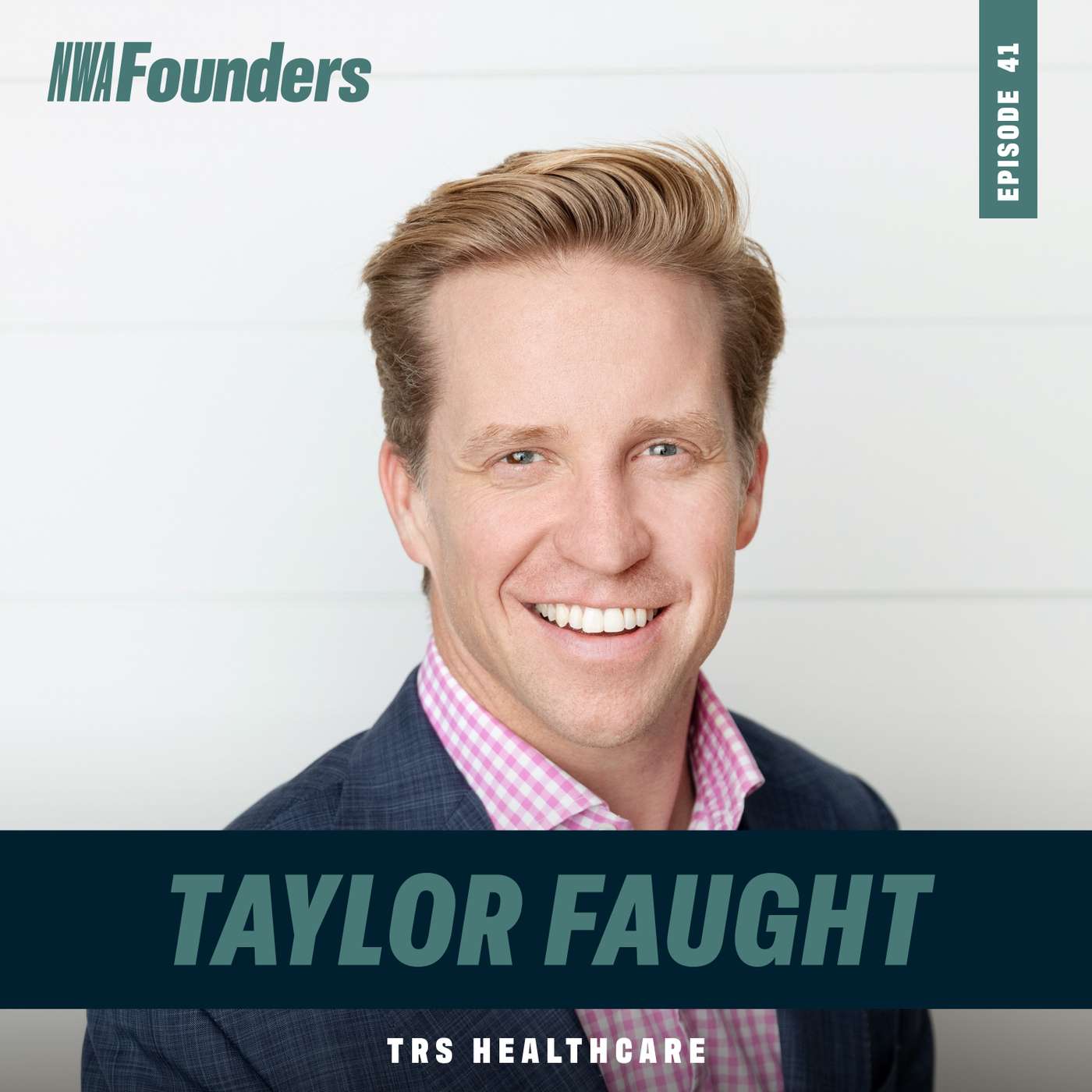
#41 - Taylor Faught (TRS Healthcare)

What does it actually look like to scale a business through uncertainty without losing your people, your values, or your long-term vision? In this episode, Taylor Faught, CEO of TRS Healthcare, shares the story behind building and scaling a healthcare staffing company from a regional family business into a national operation. From navigating explosive growth during COVID to leading through a more challenging, post-pandemic market, Taylor offers a rare look into what it takes to grow sustainably while staying grounded in relationships and purpose.  Summary At the heart of the conversation is Taylor’s leadership philosophy: growth is only meaningful if it’s built on strong culture and clear values. Whether it’s transitioning to a fully remote workforce, maintaining team connection through intentional communication, or celebrating wins even in difficult seasons, Taylor emphasizes that people (not just performance) drive long-term success.  The episode also unpacks the evolution of the healthcare staffing industry, from pre-COVID stability to pandemic-driven demand and today’s more competitive, transparent market. Taylor shares how TRS adapted by focusing on efficiency, automation, and speed while never losing sight of their core mission: improving patient care by placing the right people in the right roles.  Finally, Taylor reflects on the deeper “why” behind the business. Through personal stories of how TRS nurses have impacted real lives (including his own) he reframes success beyond revenue. It’s about building something bigger than yourself, creating opportunities for others, and making a meaningful difference in moments that truly matter.  Highlights 00:00 What is TRS Healthcare 7:00 State of the Healthcare industry today 24:00 Why not scale more now? 38:00 How TRS actually helps hospitals 51:00 Alice Walton's impact in NWA Key Takeaways 1. Focus beats expansion (especially when things are working) - One of the hardest decisions Taylor made was saying no—especially during COVID when opportunities were everywhere. Instead of chasing short-term revenue, he focused on long-term partners and sustainable growth. If you’re building, the question isn’t “Can we do this?” but “Should we?” 2. Culture doesn’t happen by accident—especially in remote teams - From daily company-wide calls to camera-on meetings and annual in-person gatherings, TRS built culture intentionally. As Taylor put it, “You can still have a culture in a remote environment”—but only if you’re willing to lead it on purpose. 3. Your business is only as strong as the people it serves and supports - Whether it’s nurses, clients, or internal team members, Taylor’s approach is simple: take care of people first. For younger founders, that’s your foundation. For seasoned founders, that’s your story—one worth telling clearly and often. Follow us on LinkedIn NWA Founders Follow us on Instagram @NWAFounders Follow us on YouTube NWA Founders For guest suggestions or inquiries nwafounders@gmail.com NWA Founders is a voice for Founders, Owners, and Builders driving growth in Northwest Arkansas, and is hosted by Cameron Clark and Nick Beyer. Full show notes, the transcript and every chapter: nwafounders.com/episodes/taylor-faught-trs-healthcare/ More on TRS Healthcare: nwafounders.com/guests/taylor-faught-trs-healthcare/ Every episode, searchable: nwafounders.com

1 h 02 minAbspielen in:

Di12Mai
NWA Founders

NWA FoundersHost

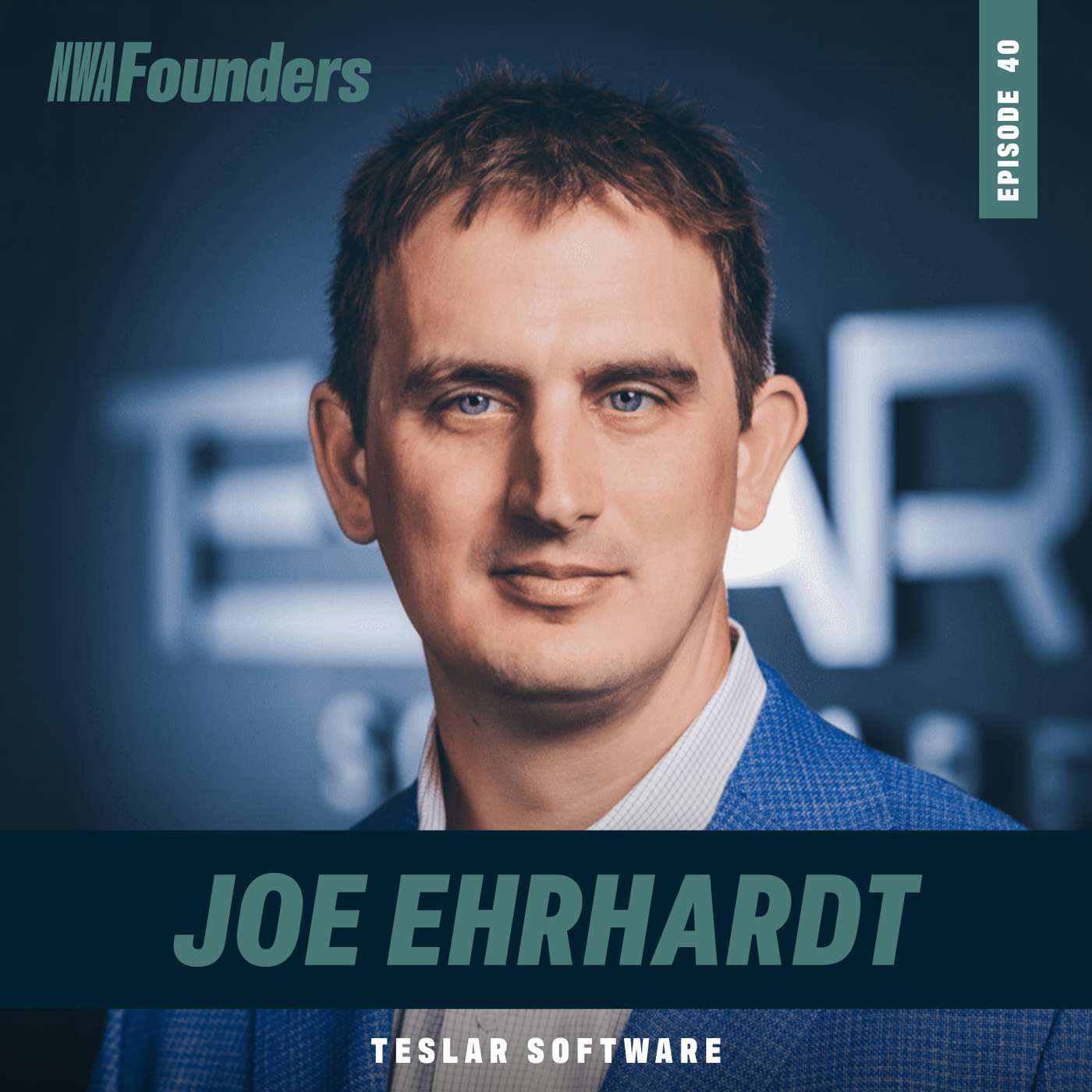
#40 - Joe Ehrhardt (Teslar Software)

What does it look like to build a software company in a highly regulated industry while remaining innovative? In this episode, Joe Ehrhardt, founder and CEO of Teslar Software, shares the story behind building one of the fastest-growing fintech companies serving community banks across the country. From early lessons in leadership and entrepreneurship to navigating the realities of scaling a software business, Joe offers a grounded look at what it takes to build a company that lasts. Summary Joe walks through the early days of Teslar Software, including how the company identified a major operational problem inside community banking and created technology that helps banks automate workflows, improve efficiency, and better serve customers. Rather than chasing trends, Teslar focused on solving practical problems for real people—something that ultimately became a competitive advantage as the company scaled. The conversation also highlights the importance of listening closely to customers and building products alongside them instead of for them. Beyond software and banking, this episode dives into leadership, company culture, and the challenge of growing a business without losing the mission that made it successful in the first place. Joe shares insights on hiring the right people, creating alignment inside a growing team, and why humility and consistency matter more than flashy leadership styles. For founders in Northwest Arkansas and beyond, there’s a refreshing honesty to the way he talks about growth—not as a straight line, but as a long process of learning, adapting, and staying committed. One of the most compelling parts of the conversation is Joe’s perspective on storytelling as a founder. As companies mature, founders often realize their role shifts from simply building products to communicating vision, culture, and purpose. Joe explains why telling the story behind the business matters—not just for customers, but for employees, future hires, partners, and the broader community. Highlights 00:00 Working with Mark Cuban during PPP Forgiveness 7:30 How to prepare for luck as a business owner 18:00 College project turned company 30:00 Why is innovation important for Teslar? 44:00 Raising capital for expansion 60:00 A deeper look at PPP Forgiveness 1:21:30 A.I. Integration Key Takeaways 1. The best businesses often solve “unsexy” problems exceptionally well - Teslar Software didn’t grow by chasing hype. It grew by improving operational pain points inside community banks. For younger founders, this is a reminder that huge opportunities often exist in overlooked industries. For seasoned founders, it reinforces the value of staying focused on customer problems instead of constantly pivoting toward trends. 2. Company culture becomes more important as you scale - In the early days, culture happens naturally. As teams grow, culture has to become intentional. Joe’s approach highlights the importance of hiring people who align with the mission, communicate clearly, and care deeply about serving others well. 3. Founders eventually become storytellers - At some point, building the company isn’t enough—you also have to explain why it matters. Whether you’re raising capital, recruiting talent, or building customer trust, your ability to tell the story behind the business becomes a leadership skill of its own. Follow us on LinkedIn NWA Founders Follow us on Instagram @NWAFounders Follow us on YouTube NWA Founders For guest suggestions or inquiries nwafounders@gmail.com NWA Founders is a voice for Founders, Owners, and Builders driving growth in Northwest Arkansas, and is hosted by Cameron Clark and Nick Beyer. Full show notes, the transcript and every chapter: nwafounders.com/episodes/joe-ehrhardt-teslar-software/ More on Teslar Software: nwafounders.com/guests/joe-ehrhardt-teslar-software/ Every episode, searchable: nwafounders.com

1 h 38 minAbspielen in:

Di28Apr
NWA Founders

NWA FoundersHost

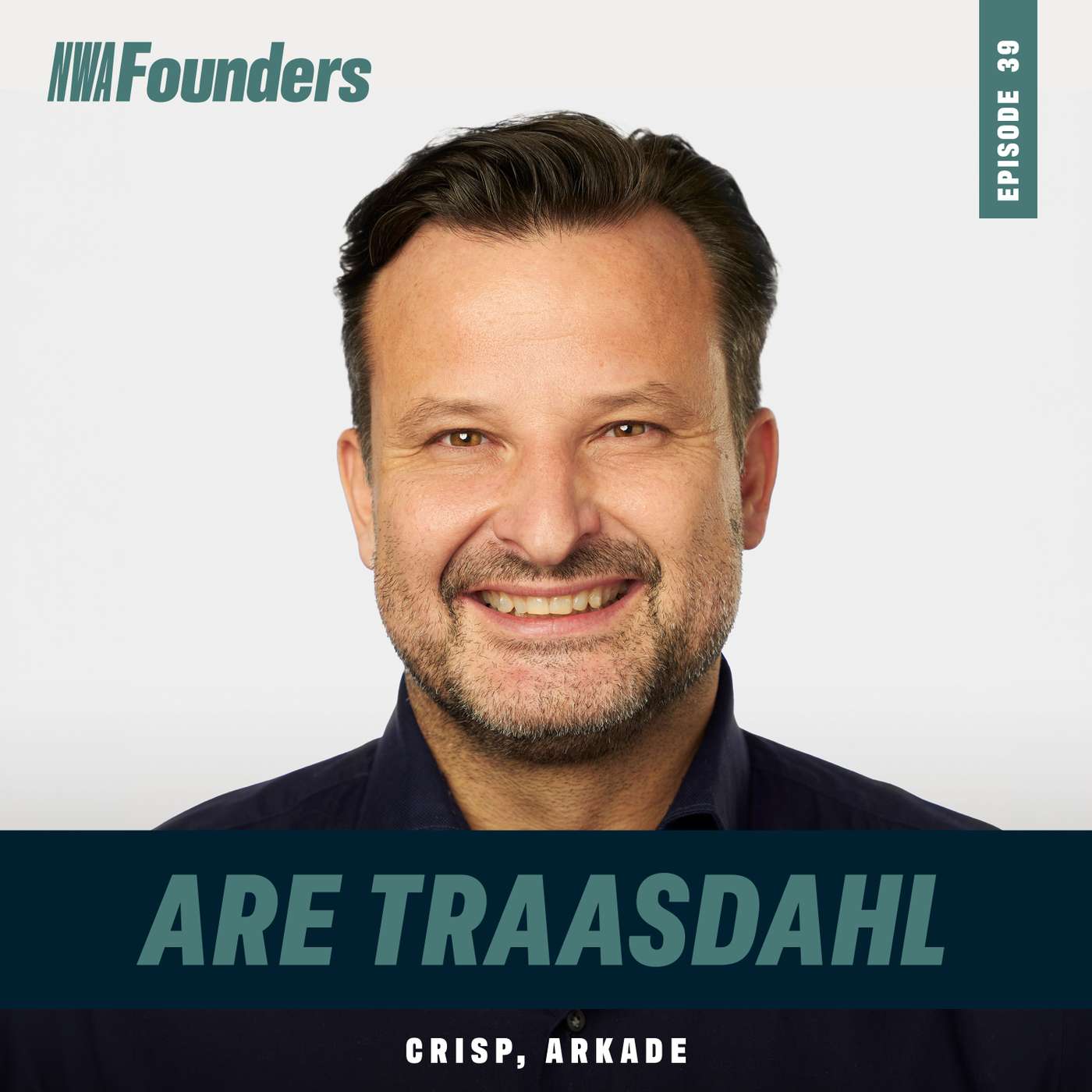
#39 - Are Traasdahl (Crisp, Arkade)

What if one of the biggest business opportunities in the world was hiding inside a problem most people never think about? In this episode, Are Traasdahl, founder of Crisp and Arkade, shares the story behind building a company aimed at solving one of the most overlooked global challenges: food waste. With one-third of all food produced globally lost before it ever reaches consumers, Are saw not just a broken system, but a massive opportunity to rebuild it using data, technology, and AI. Summary Are walks through his journey from growing up in a small town in Norway to building and exiting multiple technology companies in the U.S., including early innovations in mobile content and programmatic advertising. But Crisp represents something different. Inspired by a trip around the world where he witnessed both massive food waste and deep food insecurity, he set out to build a data platform that connects the entire retail supply chain—what he calls a “supply web”—to reduce inefficiencies at scale.  At the core of Crisp is a simple but powerful idea: if you can unify data across retailers, suppliers, and distributors, you can dramatically improve decision-making—from what gets stocked on shelves to how products are priced and distributed. What started with zero customers and tens of millions invested in technology quickly accelerated during the pandemic, growing to thousands of brands as the industry realized the need for better data visibility and collaboration.  Beyond the business itself, Are shares a broader philosophy on building: focus on solving meaningful problems, be willing to invest ahead of the market, and commit to creating something that delivers value not just for customers—but for the world. His “triple bottom line” approach—good for the world, good for customers, and good for the business—offers a compelling framework for founders thinking about long-term impact.  Highlights 00:00 Why is Are building in NWA? 4:00 Are's other companies (Thumbplay, Tapad) 19:00 Crisp is solving food waste in the supply chain 31:00 What makes Crisp different 46:00 Are's vision for Arkade Key Takeaways 1. Solve problems at scale—or rethink the problem entirely - Are didn’t choose a “cool” industry—he chose a massive one. The food supply chain isn’t flashy, but it’s a $10+ trillion ecosystem filled with inefficiencies. For young founders, this is a reminder: the biggest opportunities often live in overlooked industries. For seasoned founders, your story becomes more powerful when it’s tied to a problem that actually matters. 2. You need to be 10x better—not just slightly better - Incremental improvements don’t drive change—especially in complex, B2B environments. Crisp’s success comes from building a fundamentally different system, not just optimizing an existing one. If you’re building something, ask yourself: is this truly different, or just marginally better? 3. Build ahead of the market—and be willing to wait - Crisp invested tens of millions into technology before generating revenue. That’s uncomfortable—but it created a long-term advantage when the market caught up. Whether you’re early or experienced, there’s a tension here: can you see where things are going—and are you willing to build for that future before it’s obvious? Follow us on LinkedIn NWA Founders Follow us on Instagram @NWAFounders Follow us on YouTube NWA Founders For guest suggestions or inquiries nwafounders@gmail.com NWA Founders is a voice for Founders, Owners, and Builders driving growth in Northwest Arkansas, and is hosted by Cameron Clark and Nick Beyer. Full show notes, the transcript and every chapter: nwafounders.com/episodes/are-traasdahl-crisp-arkade/ More on Crisp, Arkade: nwafounders.com/guests/are-traasdahl-crisp-arkade/ Every episode, searchable: nwafounders.com

53 minAbspielen in:

Di21Apr
NWA Founders

NWA FoundersHost

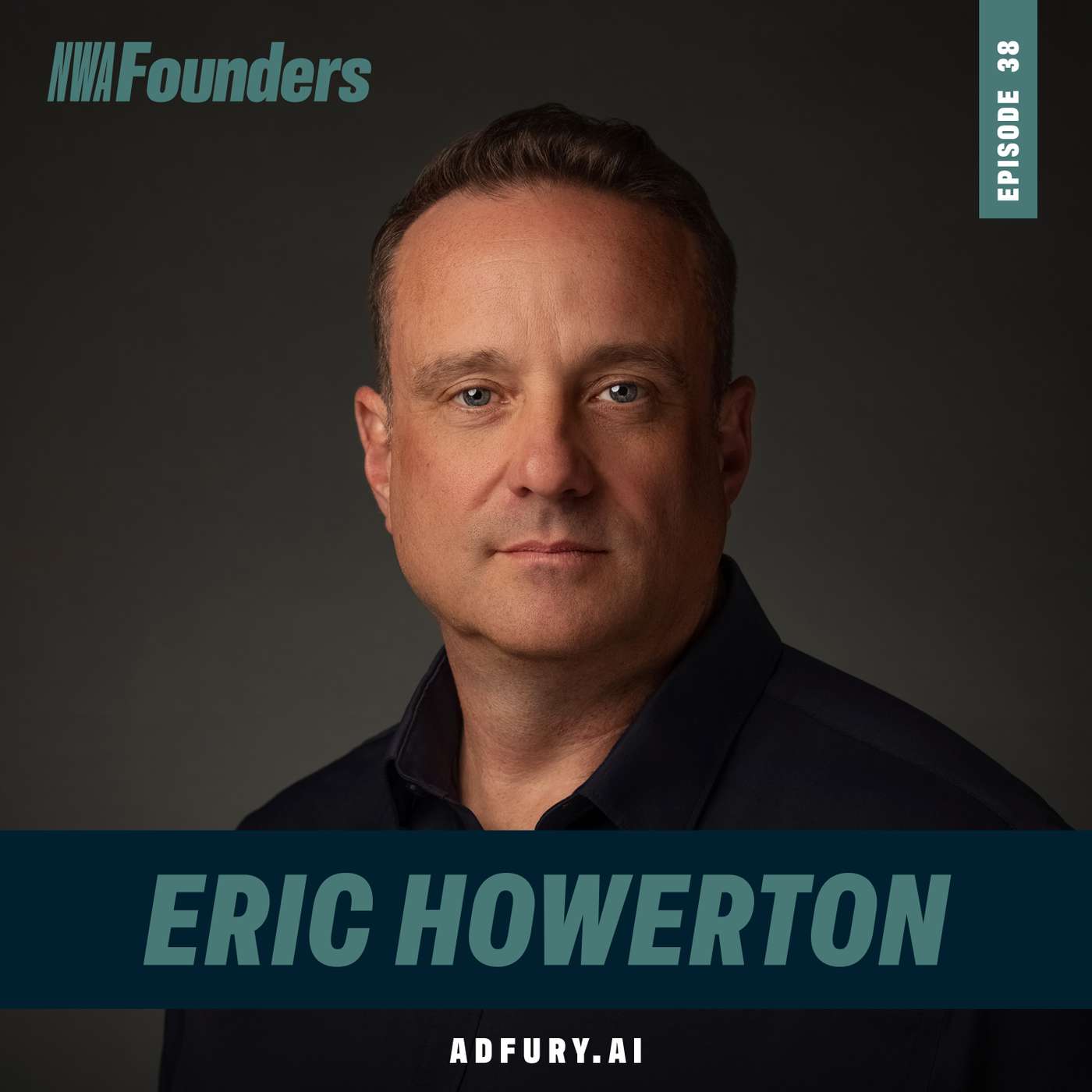
#38 - Eric Howerton (AdFury.ai)

What if the real edge in your business is leaning into A.I.? In this episode, Eric Howerton, co-founder & CGO of AdFury.ai, pulls back the curtain on how AI is reshaping the future of retail, advertising, and entrepreneurship in Northwest Arkansas. This isn’t a hype conversation about AI; it’s a grounded, hard-earned perspective from someone who’s spent over a decade solving real problems for real customers. Summary Eric reframes what it means to be an entrepreneur in today’s world. It’s not about titles like “founder” or chasing funding—it’s about seeing a problem so clearly that you can’t ignore it. That mindset led him to build WhyteSpyder from $850 in the bank to a successful exit, and now drives his work at AdFury, where he’s tackling what he calls the “content supply chain” - the bottleneck that prevents brands from delivering personalized, relevant experiences at scale.  At the core of AdFury’s innovation is a simple but powerful shift: using AI not just to automate tasks, but to unlock entirely new capabilities. Instead of manually creating dozens of ad variations, brands can now generate highly personalized, dynamic content for individual shoppers in seconds: something that was previously impossible due to time and cost constraints.  Zooming out, Eric challenges the broader Northwest Arkansas ecosystem to think differently. Rather than trying to imitate Silicon Valley, he argues the region’s true strength lies in its deep retail expertise and problem-solving culture. The opportunity isn’t to chase trends, it’s to double down on solving meaningful problems faster than anyone else, especially as AI reshapes the industry at an accelerating pace. Highlights 00:00 What is the difference between a founder, entrepreneur, & business owner? 9:00 Evolution of tech scene in NWA 23:00 What is AdFury.ai ? 41:00 A.I. advice for small business owners 47:00 How AdFury is gonna change retail 58:00 Eric's hope for AdFury Key Takeaways 1. Real entrepreneurs are obsessed with problem solving - Eric didn’t start businesses thinking about exits or valuations. He started because he saw gaps that needed to be solved. If you’re early in your journey, focus less on “what could this become?” and more on “what needs to be fixed right now?” 2. AI isn’t just a tool—it’s a new playing field - Most people approach AI as a way to do existing tasks faster. Eric’s perspective flips that: AI enables things that were never possible before. The founders who win won’t just optimize, they’ll rethink what’s even possible in their industry. 3. Your environment matters more than you think - Northwest Arkansas isn’t Silicon Valley, and that’s the advantage. The density of real problems, real operators, and real businesses creates a unique opportunity: solve meaningful problems where you are, instead of chasing abstract ideas somewhere else. Follow us on LinkedIn NWA Founders Follow us on Instagram @NWAFounders Follow us on YouTube NWA Founders For guest suggestions or inquiries nwafounders@gmail.com NWA Founders is a voice for Founders, Owners, and Builders driving growth in Northwest Arkansas, and is hosted by Cameron Clark and Nick Beyer. Full show notes, the transcript and every chapter: nwafounders.com/episodes/eric-howerton-adfury-ai/ More on AdFury.ai: nwafounders.com/guests/eric-howerton-adfury-ai/ Every episode, searchable: nwafounders.com

1 h 19 minAbspielen in:

Di31Mär
NWA Founders

NWA FoundersHost

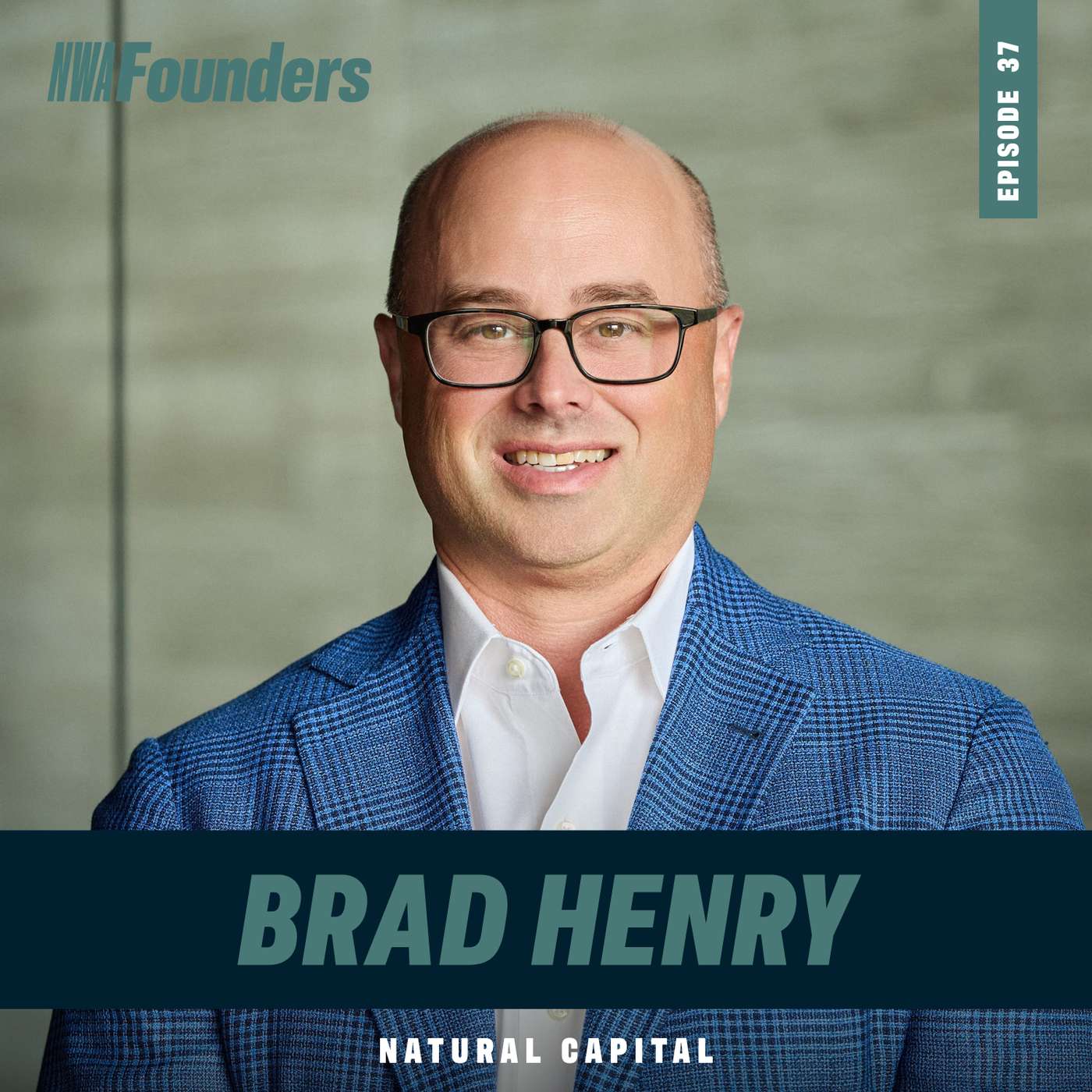
#37 - Brad Henry (Natural Capital)

What would happen if more of the capital shaping your area actually came from the people who live there? In this episode, Brad Henry of Natural Capital shares a behind-the-scenes look at building a private investment firm designed to do exactly that: keep opportunity local, empower founders, and give families in Arkansas a seat at the table. It’s a conversation about money, but more than that: it’s about trust, relationships, and building something you’re genuinely proud of.  Summary Brad breaks down how Natural Capital operates as a relationship-driven investment firm, pooling capital from local families and deploying it into both real estate and businesses across Arkansas and the broader Heartland. With a focus on diversification, the firm balances cash-flowing real estate with growth-oriented company investments, creating stability while still capturing upside. What stands out is their intentional strategy: not chasing “home runs,” but consistently hitting “doubles” through disciplined, lower-risk investing. The story behind Natural Capital is just as compelling as the strategy. Born out of a gap in the Arkansas market (where most private investing was done by a few large families) the firm was built to democratize access to private markets. Brad shares how early fundraising leaned heavily on trust, asking friends and family to believe in a vision before it was proven. That reputational risk became a defining feature of the company’s culture: relationships first, always. At its core, this episode is about impact. From investing in affordable housing across Northwest Arkansas to partnering with founders as minority investors, Natural Capital is focused on long-term value, both financially and within the community. Brad makes it clear: success isn’t just measured in returns, but in whether investors and partners feel proud to be part of what they’re building together. Highlights 00:00 What is Natural Capital? 14:00 NatCap's investment strategy 28:00 Company case study: Harvest Group 37:00 Raising the 1st Fund 47:00 What growth looks like in NWA Key Takeaways 1. Build through relationships, not transactions - The best opportunities (and the best outcomes) come from trust. Whether you’re raising capital or telling your story, long-term relationships will outperform short-term wins every time. 2. You don’t need to swing for home runs to win - Natural Capital’s strategy is simple: avoid unnecessary risk and focus on consistent, repeatable outcomes. For founders, this is a reminder that sustainable growth often beats flashy, high-risk bets. 3. Your story is part of your strategy - For seasoned founders especially, how you communicate your journey matters. Brad and his partners raised their first fund by inviting others into a story they believed in. If people understand your vision, they’re far more likely to invest—financially and relationally. Follow us on LinkedIn NWA Founders Follow us on Instagram @NWAFounders Follow us on YouTube NWA Founders For guest suggestions or inquiries nwafounders@gmail.com NWA Founders is a voice for Founders, Owners, and Builders driving growth in Northwest Arkansas, and is hosted by Cameron Clark and Nick Beyer. Full show notes, the transcript and every chapter: nwafounders.com/episodes/brad-henry-natural-capital/ More on Natural Capital: nwafounders.com/guests/brad-henry-natural-capital/ Every episode, searchable: nwafounders.com

1 h 07 minAbspielen in:

Di17Mär
NWA Founders

NWA FoundersHost

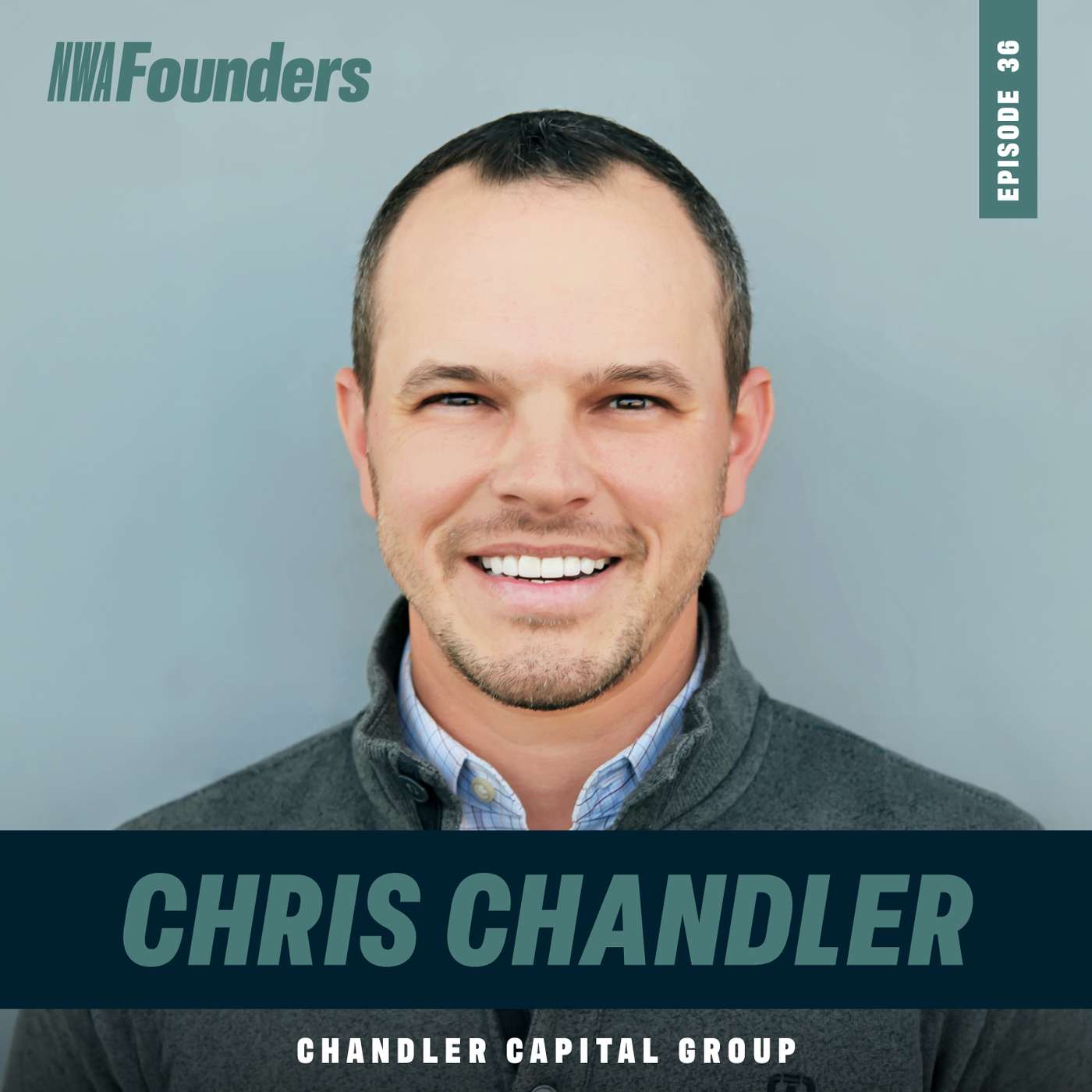
#36 - Chris Chandler (Chandler Capital Group)

What does it look like to take a small, family-run manufacturing shop and turn it into a diversified, innovation-driven company competing on a national level? In this episode, Chris Chandler of Chandler Capital Group shares the real story behind building, losing, rebuilding, and ultimately redefining what success looks like in business. From taking on massive debt to buy the family company to navigating industry crashes and launching entirely new product lines, Chris offers a grounded, honest look at what it takes to build something that lasts. Summary Chris walks through the evolution from Chandler Equipment to Chandler Capital Group, explaining how the business expanded from manufacturing parts for 18-wheelers into multiple automotive brands, including direct-to-consumer products. After experiencing the volatility of the oil and gas industry—and laying off dozens of employees—he made a pivotal decision: diversify or risk repeating the same mistake. That decision led to the creation of Chandler Truck Accessories and a long-term strategy centered on solving real customer problems.  A major theme throughout the conversation is innovation through necessity. Whether it’s introducing robotics to increase efficiency, redesigning toolboxes based on real-world failures, or shifting from B2B to DTC, Chris emphasizes learning through trial and error. Growth didn’t happen overnight—it took years of rejection, iteration, and persistence before things began to click.  Beyond business strategy, Chris shares a deeper perspective on leadership and life. In recent years, he’s redefined success—not as revenue or scale, but as becoming a better husband, father, and leader. That shift has influenced how he runs his company today: focused on developing people, staying hands-on, and building businesses that serve both employees and the local community in Northwest Arkansas.  Highlights 00:00 What is Chandler Capital? 7:00 Buying the family business 19:00 Scaling 30:00 Getting into truck accessories 50:00 Acquiring Backwoods Adventure 70:00 The future of Chandler Capital Key Takeaways 1. Solve real problems—not theoretical ones: The breakthrough for Chandler Truck Accessories came from observing what was actually failing in the market (like broken toolbox doors) and building something better. Look for friction in the real world—that’s where opportunity lives. 2. You have to earn your way into leadership: Chris didn’t skip the hard part. Years of operating, failing, and problem-solving built the foundation that now allows him to lead and develop others. There’s no shortcut around the “doing” phase. 3. Diversification isn’t optional—it’s survival: Relying too heavily on one industry nearly cost them everything. Building multiple revenue streams within a focused niche gave them stability and long-term growth. Follow us on LinkedIn NWA Founders Follow us on Instagram @NWAFounders Follow us on YouTube NWA Founders For guest suggestions or inquiries nwafounders@gmail.com NWA Founders is a voice for Founders, Owners, and Builders driving growth in Northwest Arkansas, and is hosted by Cameron Clark and Nick Beyer. Full show notes, the transcript and every chapter: nwafounders.com/episodes/chris-chandler-chandler-capital-group/ More on Chandler Capital Group: nwafounders.com/guests/chris-chandler-chandler-capital-group/ Every episode, searchable: nwafounders.com

1 h 25 minAbspielen in:

Di3Mär
NWA Founders

NWA FoundersHost

#35 - Jeremy Hudson (Specialized Real Estate Group)

What if one project completely changed the trajectory of your business? In this episode of NWA Founders, Jeremy Hudson, CEO of Specialized Real Estate Group, shares the story behind some of Northwest Arkansas’ most meaningful developments and the philosophy that drives them. From Eco Modern Flats to South Yard and Markham Hill, Jeremy walks through what it really takes to build places that last. This isn’t just a conversation about real estate. It’s about culture, health, long-term thinking, and building neighborhoods that matter. Summary Jeremy’s development philosophy was forged during Eco Modern Flats, a downtown Fayetteville apartment renovation that reshaped how he thought about health, sustainability, and community. What began as a simple value-add play became a deeper mission: design spaces that improve indoor air quality, reduce energy costs, and foster real human interaction. Specialized didn’t grow incrementally. After Eco, Jeremy and his team jumped into large purpose-built student housing projects like Sterling and The Cardinal (deals that were bigger than anything they’d done before). It was risky. It required outside partners. But those years built their financial literacy, operational discipline, and capital relationships.  Over time, the strategy sharpened: focus on meaningful places or create them at scale. Projects like Brick Avenue in Bentonville and South Yard in Fayetteville reflect that thesis—medium-scale, mixed-use developments designed to feel like neighborhoods, not complexes. Highlights 00:00 Eco Modern Flats 17:00 '08 Recession 22:00 UofA Student Housing 28:00 Uptown in Fayetteville 45:00 Jeremy's investment thesis 62:00 South Yard in Fayetteville 76:00 Markham Hill Development Key Takeaways Culture Is Your Competitive Advantage - Jeremy attributes longevity to values alignment—internally and with capital partners. If your investors, consultants, and team don’t share your vision, growth will fracture your mission. Grow Boldly, But With Advisors - Specialized scaled quickly by partnering with experienced capital and development teams. Think in Decades, Not Deals - Drake Farms may take “more than one decade and hopefully less than two” to fully realize that kind of timeline changes how you build. It changes how you hire. It changes how you underwrite risk. Follow us on LinkedIn NWA Founders Follow us on Instagram @NWAFounders Follow us on YouTube NWA Founders For guest suggestions or inquiries nwafounders@gmail.com NWA Founders is a voice for Founders, Owners, and Builders driving growth in Northwest Arkansas, and is hosted by Cameron Clark and Nick Beyer. Full show notes, the transcript and every chapter: nwafounders.com/episodes/jeremy-hudson-specialized-real-estate-group/ More on Specialized Real Estate Group: nwafounders.com/guests/jeremy-hudson-specialized-real-estate-group/ Every episode, searchable: nwafounders.com

1 h 36 minAbspielen in:

Di17Feb
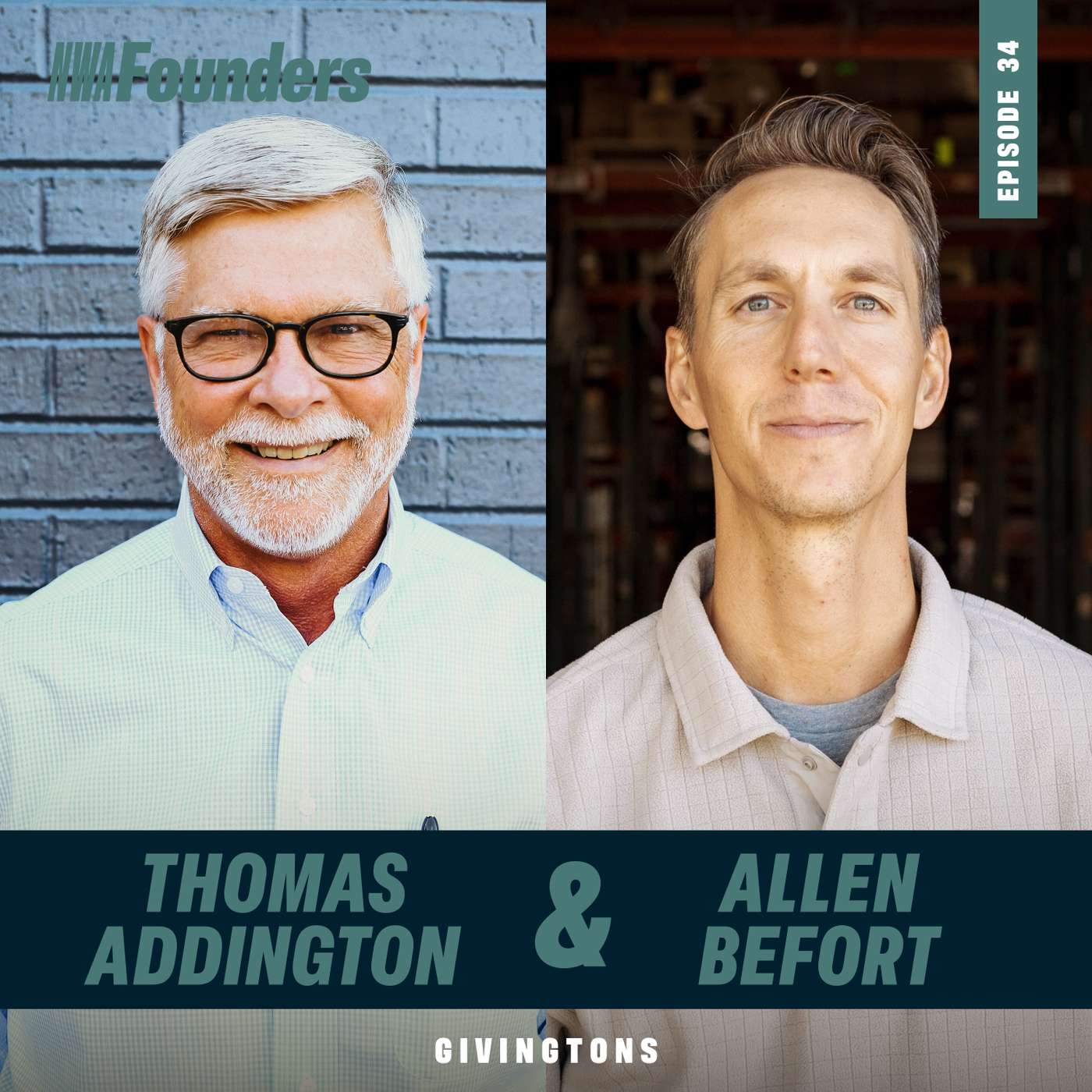
NWA Founders

NWA FoundersHost

#34 - Thomas Addington & Allen Befort (Givingtons)

What if your company made the Inc. 500 and then almost went out of business? In this episode of NWA Founders, we sit down with Thomas Addington and Allen Befort, co-founders of Givingtons, to unpack how they built a fast-growing book company and how it almost got away from them. Today, they've built a powerhouse that blends storytelling, product design, and brand strategy into something entirely different from traditional publishing, but it wasn't always like that. For founders who are struggling in building efficient processes for their people, this episode is a masterclass in failing, learning, and persevering while scaling. Summary Thomas and Allen break down how Givingtons positioned itself inside an old industry without becoming trapped by it. Rather than competing with traditional publishers on volume or price, they focused on design, presentation, and emotional connection. They built a creator-first book company. Givingtons grew fast (but not by accident). The founders share how they approached product development with intentionality, how they navigated wholesale and retail partnerships, and why packaging and perceived value matter as much as content. While Givingtons has a thriving creative culture today, it wasn't always like that. Thomas and Allen rehash the company's most difficult years and their commitment to building a company that focuses on people over products. Highlights 00:00 What is Givingtons? 13:00 Why books? 22:00 Scaling and failing early 48:00 Polymath Acquisition + Growth Season 58:00 What's next for Givingtons? Key Takeaways Differentiate in crowded markets by owning a category - Givingtons didn’t try to be a better publisher, they built a different kind of book company. Creative brands still require operational discipline - Product design, inventory, margins, and cash flow matter just as much as vision. Focus on people over products - The founders stayed committed to creating a thriving environment for their people, which in turn makes for better products. Follow us on LinkedIn NWA Founders Follow us on Instagram @NWAFounders Follow us on YouTube NWA Founders For guest suggestions or inquiries nwafounders@gmail.com NWA Founders is a voice for Founders, Owners, and Builders driving growth in Northwest Arkansas, and is hosted by Cameron Clark and Nick Beyer. Full show notes, the transcript and every chapter: nwafounders.com/episodes/thomas-addington-and-allen-befort-givingtons/ More on Givingtons: nwafounders.com/guests/thomas-addington-and-allen-befort-givingtons/ Every episode, searchable: nwafounders.com

1 h 21 minAbspielen in: