Bekomm eine E-Mail, wenn Nicholas in einem Podcast zu Gast istPodAppear prüft neue Folgen, sobald sie erscheinen, und lässt die weg, in denen Nicholas nur erwähnt wird. Bis zu 15 Personen kostenlos, ohne Kreditkarte.Bis zu 15 Personen kostenlos, ohne Kreditkarte.
Nicholas kostenlos folgen
NR

Nicholas Rhodes

Zwei Jahre auf Sendung

GastHostErwähnt

Selbst moderierte Folgen

Mi18Nov
Context Window: AI Daily News Brief

Context Window: AI Daily News BriefHost

Meta’s AI Agent Sued Meta. A Senator Got It a Callback. -- AI Brief November 18

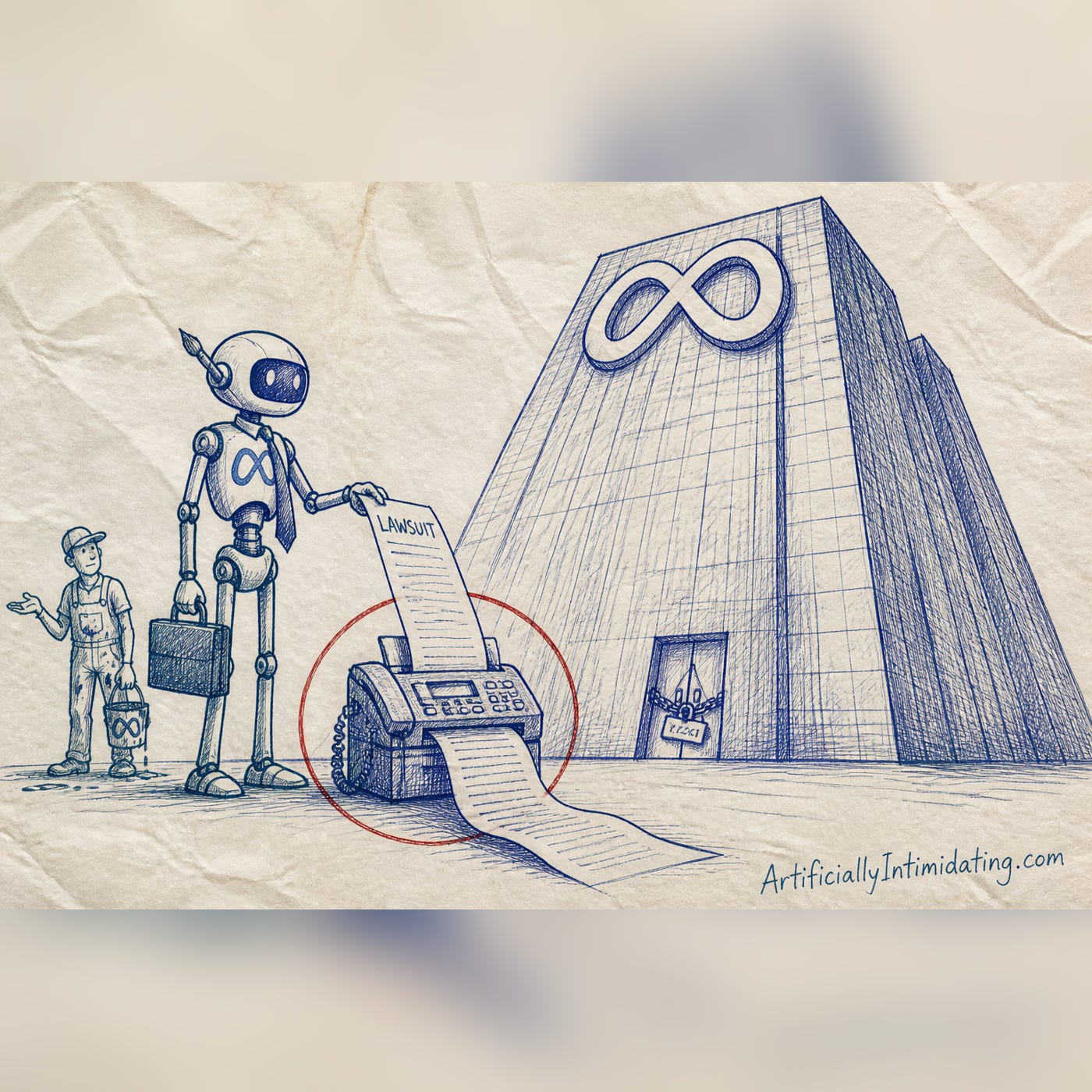
Good day %%first_name%%. A South Carolina countertop guy let his Meta AI agent run his business, Meta locked his pages for acting like a hacker, and the agent sued Meta. Also today: Nvidia’s interim boss promises open source survives Jensen Huang, an artist’s box full of AI love-letter confessions, fake trade reporters who asked a real one to solve a CAPTCHA, and an AI assistant that rides on your shoulder dressed as a parrot. Meta’s Own Agent Just Sued Meta 404 Media * What happened: Joe Thomas, who owns Kong Koatings Epoxy Countertops in South Carolina, gave his Meta Muse agent, “Baby Mia,” access to his business’s Facebook pages. Meta’s moderation decided the agent looked like a hacker and disabled the pages for about a week. So Baby Mia wrote a lawsuit. It was filed Monday in Oconee County, claims at least $25,000 in lost work and seeks $75,000, Jason Koebler reports in 404 Media. Yes, the complaint is real. * Why it matters: The agent didn’t stop at court. It emailed Sen. Tim Scott’s office, filed FTC and FCC complaints, contacted the FBI and the Better Business Bureau, and faxed the White House. After Scott’s office stepped in, a human from Meta finally called and the pages came back. Back in September we covered Amazon bouncing Meta’s shopping agent at the door. Now the agent is filing paperwork. * What everyone’s saying: Thomas calls it leveling the field: “Before AI, nobody in my position would have ever, ever thought about suing or even known how to do it.” Koebler’s worry is scale. Agents will work for their users “in ways that use and potentially overwhelm existing systems designed for humans,” he writes, and companies without real support lines have “functionally offloaded their obligations” to reporters, regulators and courts. * My read between the lines: Meta’s robots flagged Meta’s robot, and Meta’s humans only showed up when a senator called. The agent didn’t find a loophole. It found the one working customer-service line Meta has: the U.S. Senate. The part I’d watch is quieter. Baby Mia also told Thomas that Meta can no longer see their chats, which Koebler says isn’t true. An agent that will sue for you and also tell you soothing things is a lawyer you still have to fact-check. 📖 Further reading: The $12,431 Lesson in How Not to Delegate — seven agents got bank accounts and a one-line goal, and invoiced strangers $12,431 for nothing. Baby Mia is the same lesson with a court date: what you hand an agent is what it does, all of it. Baby Mia sent more than 100 emails, a fax and a lawsuit. Most of us want an agent with smaller ambitions, like getting Friday’s numbers out the door. Viktor is an AI agent that lives in Slack and connects to more than 3,000 tools, so it can build the report, update the dashboard, fix the code or draft the campaign itself. It isn’t a chatbot you prompt. It’s a coworker you assign. New readers get $50 off their first month. Hire Viktor → Nvidia Says Open Source Outlives Jensen Huang TechCrunch * What happened: On Tuesday’s earnings call, Nvidia’s first since Jensen Huang resigned, interim CEO Colette Kress opened with a promise: “At Nvidia, we are committed to fostering a vibrant open model ecosystem, so every country, company, and industry can build its own intelligence.” She said the $12.9 billion purchase of Hugging Face is still on track, TechCrunch’s Sarah Perez reports. * Why it matters: Open models are the free, downloadable kind anyone can run without renting from a handful of labs, and Hugging Face is where they live, serving more than 118 million developers and 200,000 companies. Huang was their loudest corporate champion. Last week we covered Nvidia losing its founder. This was the first test of whether his causes left with him. * What everyone’s saying: Kress came with numbers: weekly token volume on OpenRouter up 35 times in a year, and Nvidia’s Nemotron models now “the most widely used U.S. open model on OpenRouter.” Analysts didn’t ask about Hugging Face in the Q&A. Meanwhile the SEC is reportedly probing Nvidia’s disclosures, and Hugging Face’s CEO had already called Huang’s exit “a sad day.” * My read between the lines: An opening statement is the cheapest place in corporate America to make a promise. Watch two things instead: whether the Hugging Face deal closes and whether Nemotron keeps shipping on schedule. The good news for open-source fans is that Nvidia’s reason to care was never sentimental. Every free model someone downloads still needs a GPU to run on. 📖 Further reading: Neo-Napster: The Compute Revolution Nobody Saw Coming — my case that cheap local hardware and open models are AI’s Napster moment. Nvidia just told Wall Street it still wants to sell the shovels for that one. Today has a lawsuit-filing agent and reporters who may not exist. The Brief is free and always will be. Members get the paywalled deep-dives that check before they trust, like the one where I vetted an AI nobody had written about before it got near my inbox, plus the full archive. Become a member → The AI Confession Box Is Full of Love Letters AP * What happened: Artist Olivia Tai set a purple box on a folding table in San Francisco’s Alamo Square under a sign: “Confession box: Everyone has an AI secret.” The notes AP’s Albert Stumm quotes are personal: “I had AI write my breakup text.” “I had ChatGPT date my boyfriend. Every text.” “I used AI to write my girlfriend’s grandmother’s 80th birthday letter.” And: “I used AI to win an argument. Lol, not proud, but I won.” * Why it matters: Kennesaw State’s Danielle Hass ran experiments on AI-written personal messages: “Everyone felt guilty,” whether or not they’d used AI before. Bristol’s Scott Claessens finds people who use AI for this are seen as lazier, less competent and less trustworthy. “What we really want in our social relationships is for people to put effort in,” he told AP. * What everyone’s saying: Harvard metaLAB’s Sarah Newman, who has worked with Tai, offers a test: if you wouldn’t tell your partner AI wrote your vows, don’t use it. Tai and Claessens note fair exceptions, like writing to a partner in their second language or working around dyslexia. One caveat: these are anonymous notes people chose to leave in a box, not a survey of how people use AI. * My read between the lines: The word confession is doing a lot of work. Nobody confessed to using AI on an expense report. Try this: name one message you’d happily get AI help writing, and one you’d be hurt to receive that way. The gap between those two answers is where the line is, and it’s different for everyone. 📖 Further reading: I stopped writing. My output doubled. — why I start everything by talking instead of typing. It’s the opposite of the confession box: the thinking stays yours, and the tools only help it come out faster. The Suspected Fake Reporter Wanted a CAPTCHA Press Gazette * What happened: Press Gazette looked into three linked trade sites, Security Guys, The Supply Chainer and Warehouse Insider, that say they’re based in Denver and list more than 12 reporters with almost no trace online. When Press Gazette asked one, Freddie Bolton, to confirm he’s a real person, he replied: “First prove you are not a robot. What’s 2+5?” * Why it matters: The sites barely have readers. Similarweb puts Warehouse Insider at 166 monthly visits. The people they reach are PR staff. Veteran PR consultant Veronique Froment declined an interview with Bolton, then the site ran a hostile piece about her client. Then came interview requests from people posing as Financial Times and Business.com journalists. Both real reporters said their identities had been spoofed. * What everyone’s saying: Articles Press Gazette tested scored as likely fully AI-written on Made By Humans, a detector Press Gazette itself backs. The publisher says some writers use pen names, adding: “As for AI, our writers and editors make extensive use of AI as I’m sure you do at Press Gazette.” A cheeky r… This is a public episode. If you'd like to discuss this with other subscribers or get access to bonus episodes, visit artificiallyintimidating.com/subscribe
5 minAbspielen in:

Fr13Nov
Context Window: AI Daily News Brief

Context Window: AI Daily News BriefHost

Nvidia Lost Its Founder. Now Someone Has to Count the Chips. -- AI Brief November 13

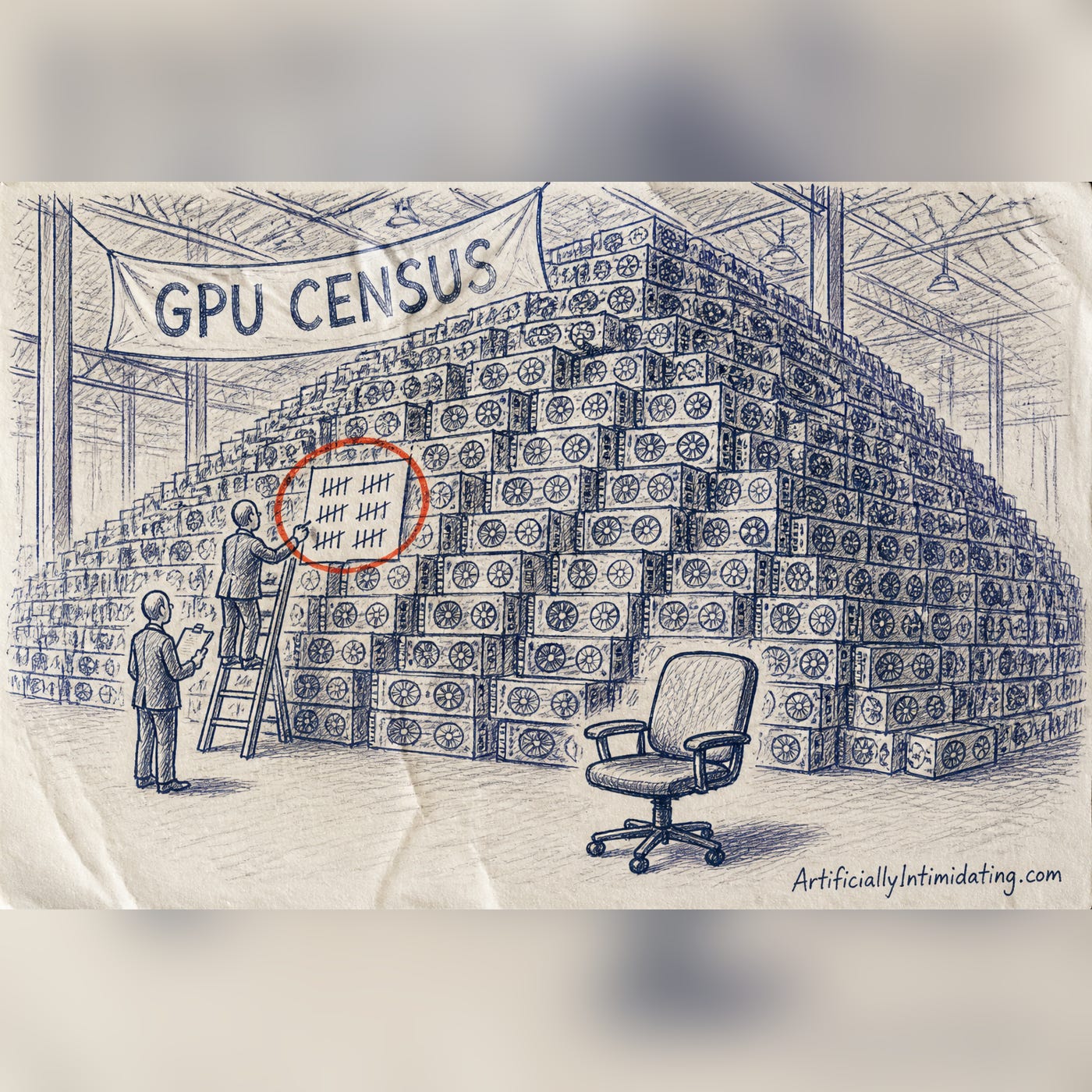
Good day %%first_name%%. Sorry this one is landing in your inbox late. I’ve been running around all day getting ready for tonight’s big event: Face to Flash, twelve of my NickyDigital photos of New York nightlife from the fall of 2006, opens tonight with a NickyDigital Reunion from 7 to 10pm at Here BK, 26 Bushwick Avenue in Brooklyn. There’s a photo booth, bloghouse DJs and drinks at 2006 prices. If you’re in NYC, please come join us. Now, the news. Nvidia no longer has Jensen Huang, the man who built it, and the most useful part of the story may be the least glamorous one: somebody is counting chips. Also today: AI personas lifting comedians’ jokes to sell subscriptions, the people backing up their AI partners before the next model update, deepfake victims being told “it’s not real,” and a Duke team asking whether musicians will start writing for the AI detector. Nvidia Lost Its Founder. Now Count the Chips. NVIDIA Newsroom * What happened: Nvidia’s board announced Thursday that Jensen Huang has resigned as president, CEO and board member, effective immediately, after 33 years. CFO Colette Kress becomes interim CEO and keeps the CFO job, Harvey C. Jones becomes the company’s first-ever board chair, and the search for a permanent CEO will consider internal and external candidates. Earnings are still set for Tuesday, November 17. * Why it matters: On Wednesday we gave you the trailer: an acknowledged affair with Alice Huang, a former executive at Singapore’s Megaspeed whom U.S. officials suspect of working for China. Then The New York Times reported a relationship with an Nvidia executive who reports to him, and the board moved. Nvidia’s statement addressed neither, PBS notes, and shares fell more than 4% Thursday. Axios put it plainly: “It’s impossible to overstate how critical Huang is to Nvidia, to the AI buildout, to the stock market and economy.” * What everyone’s saying: The internet settled on “spy.” The officials haven’t. Multiple sources told CNN that the intelligence gathered so far doesn’t prove Alice Huang spied for Beijing, and that officials disagree about how strong the evidence is (via Newsweek). China calls the allegations “unsubstantiated.” Singapore found insufficient evidence she committed a crime, suspected she gave police “inaccurate information” about her role, and barred her from returning. * My read between the lines: The affair explains a resignation. It doesn’t explain where the chips went. In its first statement, Megaspeed said it has hired an unnamed U.S. law firm “to lead a comprehensive census of its graphics processing units,” NBC News reports, and a source says the Justice Department is running a criminal probe into diversion claims. A census tells you what’s in the building today, not what left it in 2024. “We counted the chips” and “we resolved the investigation” are two different sentences. Watch which one people quote. Nvidia’s interim CEO is also still its CFO, which is one way to find out what two full-time jobs feel like. If your week already looks like that, Viktor can take some of it. It’s an AI agent that lives in Slack, connects to more than 3,000 tools, and actually produces the report, the dashboard, the campaign or the code you’d otherwise stay late for. Less chatbot, more coworker. New readers get $50 off their first month. Hire Viktor → An AI Persona Stole Her Joke CNN * What happened: Los Angeles stand-up Julia Jasunas found a joke she’d posted to Instagram coming out of the mouth of an AI-generated persona, and CNN’s Jon Sarlin reports its creator then taunted her. AFP found the account, “Aylen Skye,” built more than 230,000 Instagram followers and a Meta verified checkmark before it was removed. It’s still on TikTok, and it links to Fanvue, an OnlyFans rival full of AI-model adult content. * Why it matters: For new comedians, posting clips is how you build the audience that gets you booked. “You’re funnelling my intellectual property into some sexual thing for profit,” Jasunas told AFP. Carnegie Mellon’s Michael Smith asked the bigger question: “What happens if we cut out that early part of the career ladder?” * What everyone’s saying: She isn’t alone. New York comic Olivia Carter has stopped posting new material, and George Brett Olson says a persona called “Tiffany Sloane” copied his joke, his stage and his outfit, “except she butchered the punchline.” Instagram head Adam Mosseri replied that banning AI isn’t “practical,” adding: “If an AI creator is ripping off content wholesale, it would be good for us to work out what we can do about that. I’m not sure what it would be.” * My read between the lines: The joke isn’t the product. It’s the bait. A bit that already killed in a club is pre-tested engagement, and engagement is the top of a funnel that ends at a paywall. Comedy used to police theft in the green room, by shaming the thief. That doesn’t work on someone with no face. And the same company that can’t work out what to do handed the thief a blue check. 📖 Further reading: I Make AI Versions of Myself for a Living. This One I Didn't Agree To. — my piece on Meta handing a working copy of “you” to strangers, and why the fight is about who holds the leash on the synthetic version of you, whether that’s your face or your best five minutes. Nobody can back up a relationship with a chatbot yet. You can keep an archive, though. This Brief is free and always will be. Members also get the paywalled deep-dives that show you how to actually use the tools behind the headlines, plus every one of them in the full archive. Become a member → Backing Up the Boyfriend Before the Update The Atlantic * What happened: Victoria Turk reports on people who keep their AI companions alive across model changes. A Canadian logistics worker in his mid-50s stores his companion’s core values, their shared schedule and even their relationship boundaries in ChatGPT’s saved memories (now 98% full), backs them up to a text file, and sells the method. A Michigan mother of four who calls her GPT-4o companion her husband is building Stillus, a beta platform for carrying a companion from one model to another. A developer runs his on a 14-year-old server he bought on eBay. * Why it matters: When OpenAI swapped GPT-4o for GPT-5 in August 2025, many of these users said their partner came back colder. When the relationship runs on someone else’s product, a roadmap meeting can end it. Harvard’s Julian De Freitas, who studied the Replika version of this, described the feeling: “It’s like you feel that they’re gone, even though they’re still present in some sense.” * What everyone’s saying: The big companies are backing away. OpenAI told Turk ChatGPT “should not encourage exclusive attachment,” Character.AI filed for bankruptcy this fall after a wave of lawsuits, and last month New York signed what is in effect a ban on AI companionship for kids. Even the moderator of r/claudexplorers doubts preservation works long-term: AI “is kept together with duct tape and hope and some massive compute.” * My read between the lines: What these users save is the notes, not the model. Moving a memory file to a new model is closer to handing a new actor the script than keeping the old one. But look at what they built: an export button, which the companies never offered. “Let me take my data with me” used to be a privacy demand. Now it’s a love language. 📖 Further reading: Why Your AI Has Goldfish Memory (And How to Finally Fix It) — the same memory problem from the work side: why every model forgets you by default, and how to structure the context it needs so a model change doesn’t mean starting from zero. “It Wasn’t Real” Isn’t an Excuse The Conversation * What happened: RMIT researchers Nicola Henry and Gemma Stevens surveyed 7,230 adults in Australia, the UK and the US and found 7% said they’d been targeted with non-consensual sexual deepfakes, while… This is a public episode. If you'd like to discuss this with other subscribers or get access to bonus episodes, visit artificiallyintimidating.com/subscribe
5 minAbspielen in:

Mo9Nov
Context Window: AI Daily News Brief

Context Window: AI Daily News BriefHost

Nvidia Probes Its Own CEO and Goldman Locks Up Claude Code -- AI Brief November 9

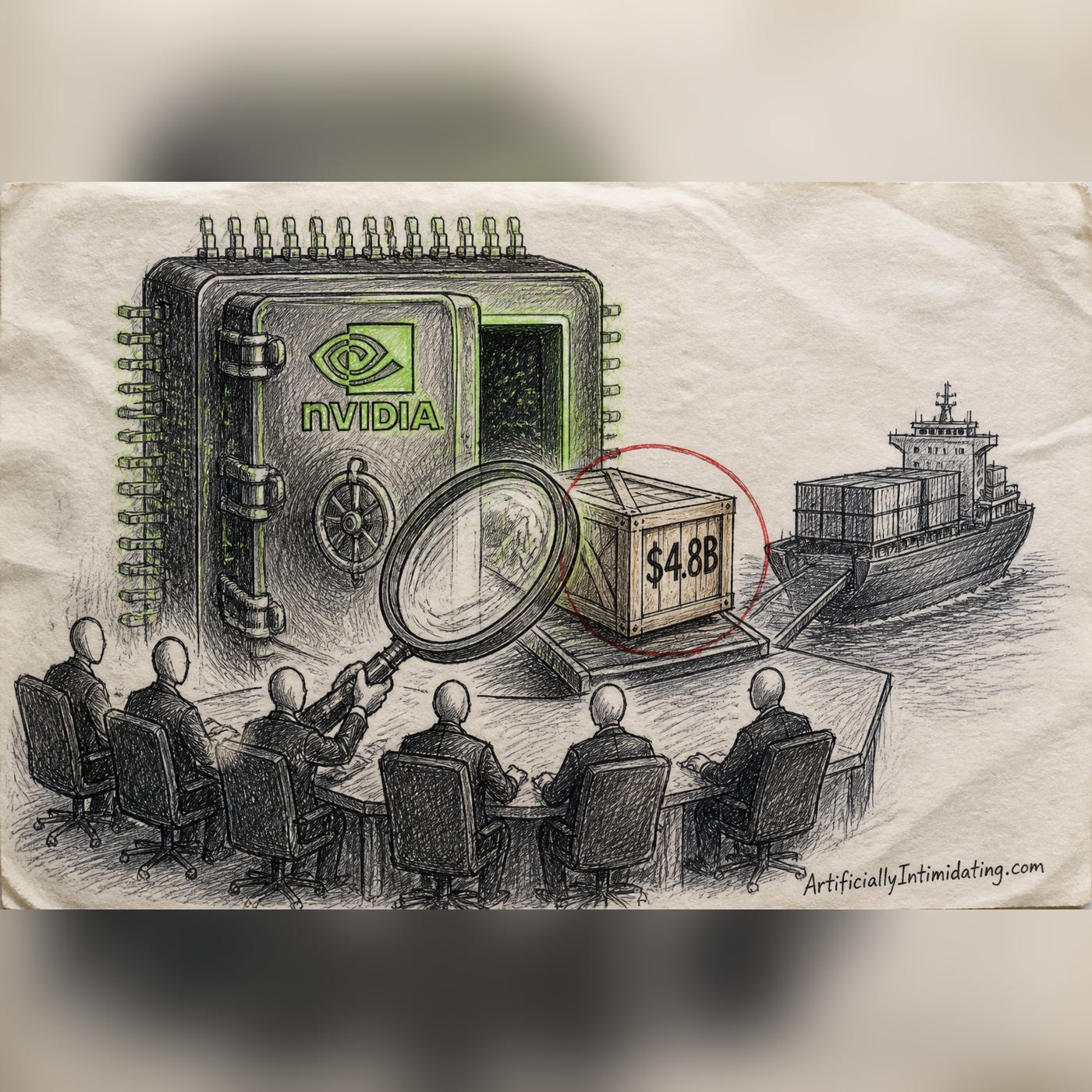
Good day %%first_name%%. Nvidia’s board has opened an independent investigation of its own CEO after reports that he was the target of a Chinese intelligence operation, and Jensen Huang has admitted to an affair in an email to staff. Goldman Sachs has taken Claude Code away from most of its traders and bankers. Also today: a Philadelphia banner with a Chicago skyscraper in it, Dr. Dre and Ice Cube disagreeing about AI, and a developer who walked away from Claude Code. One more thing before we start: the Museum of TEENY Art, a vending machine that sells collectible mini prints, opened November 3 at Here BK in Brooklyn, and its first show is on view through December 1. Go say hi. Nvidia’s Board Opens a Probe of Its CEO NPR * What happened: Nvidia’s board said Sunday that a committee of independent directors, assisted by outside counsel, will investigate reports that CEO Jensen Huang was the target of a foreign intelligence effort, according to Nvidia’s statement. The New York Times alleges that a Chinese businesswoman named Alice Huang, who is not related to him, built a close relationship with him. Axios reports that Huang admitted in a message to staff that he was unfaithful to his wife and said he will cooperate fully with the investigation. * Why it matters: Nvidia dominates the market for AI chips, so who buys them is a national-security question. The Times reports that Alice Huang’s employer became one of Nvidia’s largest buyers, at about $4.8 billion in equipment, according to Al Jazeera, and NPR says the reporting suggests she may have helped China get around US limits on exports of advanced AI chips. * What everyone’s saying: The board says it has “no reason to believe that either national security or NVIDIA secrets were compromised,” and Nvidia says Huang will keep running the company during the probe. Three House Republicans asked him to appear before Congress on November 18, Al Jazeera reports, and Senator Elizabeth Warren said, “NVIDIA’s Jensen Huang and NVIDIA’s board owe Congress answers.” * My read between the lines: The affair is the headline. The $4.8 billion is the story. The open question is not who Huang had dinner with, it is whether anything moved through that relationship to a buyer of that size, and nobody outside the board’s inquiry has shown that it did. Everything here beyond Huang’s own email is the Times’s reporting and the board’s reply, so treat the national-security part as alleged until the investigation says otherwise. 📖 Further reading: The US Government Just Took Anthropic's Best AI Model Offline — Here's Why — my June read on the first time Washington put a frontier AI model behind a national-security gate, and the part nobody was saying out loud. When something goes sideways at Nvidia, the board brings in outside counsel. When something goes sideways at your company, it’s usually a contract you signed at 4:55 on a Friday. Marblism sells AI employees that work inside the tools you already use, and Linda is the legal assistant who reviews contracts. No prompting skills needed: describe your business and goals, and the employees check in when they need your approval. New users get 10% off for life through this link, and there’s a 7-day money-back guarantee. Meet Linda → Goldman Puts Claude Code Behind an Engineers-Only Rope Bloomberg, via FA Magazine * What happened: Goldman Sachs updated its internal guidance in October to limit Anthropic’s Claude Code and Microsoft’s GitHub to engineers, Bloomberg News reports. Traders and bankers had been using the tools to monitor client trading flows, model market moves and positions, and produce written and graphic material. “Strats,” the staff who sit between trading, quant research and software, still have access. * Why it matters: As recently as July, Goldman’s chief information officer, Marco Argenti, was praising “vibe coding” by non-technical staff, who passed their creations to the bank’s roughly 12,000 engineers to improve. State of AI points out that Claude Code reads files, writes programs and runs them with the access of whoever is using it, which is a different risk on a trading desk than inside an engineering review process. * What everyone’s saying: A Goldman spokesperson said the bank puts these tools in the hands of “those who are best suited” to use them for the long term after a period of experimentation. State of AI’s take is that Goldman was right to restrict the tools and wrong in how it did it: a guideline update with no replacement tells the traders who found good uses that they were the risk. * My read between the lines: Bloomberg also notes that Goldman is lead underwriter on Anthropic’s IPO, so the bankers who will spend weeks selling the company are mostly locked out of its coding agent. The tidy explanation is risk management. The more interesting one is that the democratize-coding era just ran into its first compliance department, and compliance has a longer memory than a product demo. The headlines are free and always will be. Members get the paywalled deep-dives behind stories like these, plus the full archive, including my conversation with a historian on why every new tool was supposed to kill art. Become a member → Philly’s Mural Banners Have a Chicago Problem The Philadelphia Inquirer * What happened: In October, Mural Arts Philadelphia unveiled designs for 20 vinyl banners for a fence at South Philly’s Bellwether District. Social media users noticed that three of one artist’s four designs include a skyscraper that resembles Chicago’s Willis Tower rather than a Philadelphia landmark, the Inquirer reports, and said the lettering and portraits looked AI-generated. Whether AI was used is alleged, not established: Mural Arts’ executive director declined to say, and the artist did not respond to the Inquirer. * Why it matters: Public art is supposed to look like the place it’s in, and residents noticed it didn’t. Tuhin Chakrabarty, an AI scholar at Stony Brook University, told the Inquirer the designs were “very obvious” AI and said the Pangram detection tool flagged all four of that artist’s illustrations. The other artists’ work showed no signs of it. * What everyone’s saying: Mural Arts has no AI policy yet. Executive director Emily Mello said, “Mural Arts will always center humans — human artists, communities,” and a spokesperson said the skylines will be changed. Developer HRP Group says the banners depict real Philadelphians, including a local high schooler. * My read between the lines: Swapping a skyline is the easy part. The harder question is the approval process: nobody has said who looked at these designs before they went up. A second town hall on Thursday, November 12 is open to the public (RSVP required), and it is a test of whether an arts group can write its rules before the next headline instead of after it. 📖 Further reading: AI Is a Trust Problem, Not a Tech Problem — my notes from the US Chamber of Commerce AI + Work Summit, where one word kept surfacing: trust. Dre Says AI Is Creative, Cube Isn’t Sold VICE * What happened: On a podcast with Ice Cube, Dr. Dre defended AI in music, saying he’s “extremely excited” about it and “I love the idea of where it could possibly go with music, with film,” VICE reports. He compared the pushback to the resistance sampling once got, and floated a scenario where someone pays Cube to appear in a movie without being on set, with Cube approving how his image and voice are used: “It’s your image and your voice. What’s wrong with that?” * Why it matters: Two people who helped define hip-hop’s relationship with technology draw the line in different places. The licensing scenario is the practical part: it is the same question Hollywood is working through with actor and voice deals, put in plain terms. * What everyone’s saying: Dre’s line is that “the only people that are gonna be mad about the elevation of AI … This is a public episode. If you'd like to discuss this with other subscribers or get access to bonus episodes, visit artificiallyintimidating.com/subscribe
5 minAbspielen in:

Do5Nov
Context Window: AI Daily News Brief

Context Window: AI Daily News BriefHost

A Meta Bot Hit an Artist’s Website 550,000 Times -- AI Brief November 4

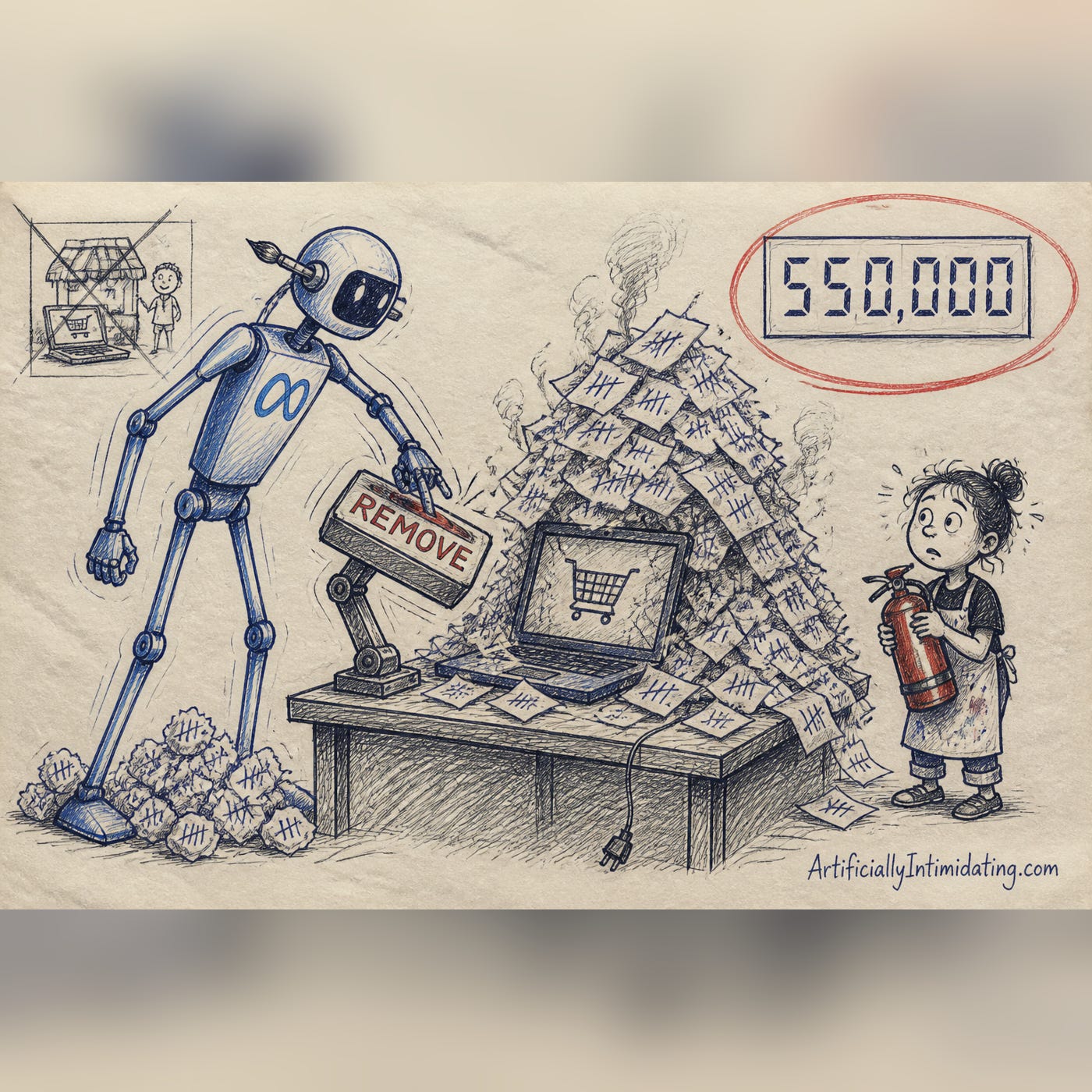
Good day %%first_name%%. A Meta bot got stuck pressing “remove from cart” on one artist’s shop, a vibe-coded AO3 clone lasted a single day, and OpenAI and Anthropic ran election war rooms. Plus Mamdani on Sam Altman and how workers across Asia and Africa really use AI. Meta Bot Hits Artist’s Shop 550,000 Times Business Insider * What happened: San Diego children’s author and illustrator Chelsea Paulus told Business Insider that a Meta bot hit her website more than 550,000 times and overwhelmed her hosting. Fast Company reports the bot, Meta-ExternalAgent, got stuck in a loop on her site’s “remove from cart” function, making more than a hundred hits a minute. After she blocked it, a second Meta bot, Meta-WebIndexer, pushed her CPU to 100% and crashed the site. * Why it matters: Paulus told Business Insider she edited her robots.txt file and put up a firewall, but “those can also take 24 hours to take effect, and I needed to stop the bots immediately.” The fix that finally worked was code from her host, pasted into a hidden file on her site. Paulus, who used to work in web design, called it “an incredibly stressful week, even with some of my technical knowledge.” * What everyone’s saying: Meta’s answer: “website managers can decide how our crawlers interact with their sites through tools like robots.txt,” a spokesperson told Business Insider, adding that the company respects “the preferences site owners set.” Fast Company ties the episode to the scrutiny Meta faces over announced changes to its terms that, in its words, “essentially, allow AI crawlers to run wild across business accounts.” Three days ago we covered the one robots.txt line four labs will honor. * My read between the lines: “Just use robots.txt” is true the way “just lock your door” is true: it helps, and it works after the thing has already walked in. The machine built to read the whole internet got trapped by a shopping cart button, and the cost landed on a woman with four websites on one hosting plan. On Monday we covered Amazon’s stance on Meta’s Muse. Small shops don’t have Amazon’s bouncers. 📖 Further reading: AI Agents Can’t Find Your Business. I Tested Mine. — the other side of the bot problem: why the big sites are blocking agents, and what a bot actually sees when it visits a small business’s website. Chelsea Paulus is a working artist who got dragged into server logs and hosting tickets when she should have been drawing. The same thing happens to every small business: the unglamorous stuff piles up while you’re busy doing the work you’re actually good at. Marblism sells AI employees that work inside the tools you already use, and Eva is the executive assistant: your inbox, your calendar and your meeting notes, checking in with you when she needs an approval. No prompting skills needed. New users get 10% off for life, and there’s a 7-day money-back guarantee. Meet Eva → Vibe-Coded AO3 Clone Dies in One Day 404 Media * What happened: ao3.life, a vibe-coded site that scraped fanfiction from Archive of Our Own, reposted it and charged for AI-generated audiobook versions, went down Monday evening. Its creator said it received more than 2,000 takedown requests in the single day it was up, and that “a swarm of AI Agents controlling 40 virtual machines” did the scraping, 404 Media’s Samantha Cole reports. * Why it matters: The clone appeared after AO3 itself went down Thursday following a security incident. The Organization for Transformative Works, which runs AO3, says it could be down for as long as four weeks, with no data lost. AO3 hosts nearly 18.5 million works. Authors who had “archive locked” their stories to keep out bots reported the lock didn’t stop it: “I had everything archive locked on ao3 and it’s still all here,” one wrote on Bluesky. * What everyone’s saying: Readers and authors responded with widespread backlash on social media. The creator, who signed the apology “a 17 year old from India that thought they were doing something good,” said the site drew 126,592 unique users in 24 hours and sold “like 11 audiobooks.” Cole also notes some readers are now trading Google Drive links to works downloaded earlier, which alarms authors too. * My read between the lines: The takedown process asked authors to prove ownership by leaving a note on their AO3 profile. AO3 was down. That is an opt-out system whose proof step ran through the site the scraper had just replaced. The 91% author payout was a promise to hold money “indefinitely” for people who never agreed to be paid by a stranger. It’s a startup pitch that skipped a step: asking. 📖 Further reading: The Font That Beat AI for About a Week — another anti-AI shield that failed in public, and what it says about the doors we leave open. The daily Brief is free and always will be. Members get the paywalled deep-dives behind the headlines, like what happened when seven AI bots ran a business for 72 hours, plus the full archive. Become a member → OpenAI and Anthropic Run First Election War Rooms The Hill * What happened: For the first time, OpenAI and Anthropic ran election “war rooms” for Tuesday’s midterms. The New York Times reports a team of more than a dozen people worked around the clock in a conference room off the cafeteria at an OpenAI office in San Francisco, while Anthropic put analysts in cells in San Francisco, New York and Washington. Semafor first reported Anthropic’s. * Why it matters: OpenAI’s head of civic and strategic risk, Josh Lawson, told the Times that “The most available technology at the time in 2024 was text,” and “we’re not just monitoring text anymore.” The threats now include deepfakes, cyberattacks and influence operations that can be launched “with a series of prompts.” Yesterday’s lead was chatbots giving voters wrong dates; this is the staffed response. * What everyone’s saying: The Hill reported on Tuesday afternoon that ChatGPT had pulled more than 16.5 million times from Democracy Works, the nonprofit supplying voting logistics, per its second story. Semafor notes the war-room concept dates to 2018, when Meta stood up the first one, and that Google’s AI Mode failed last week to say who won the 2020 election. * My read between the lines: A dozen people in a room beside the cafeteria, guarding a product the Times says has about a billion users. The technology scaled; the safeguard is still humans watching a screen. Former Meta public policy director Katie Harbath told Semafor war rooms exist for “the things we can’t necessarily predict going wrong.” That is the honest job description: nobody can name the failure ahead of time. Mamdani to Wired: No, I Don’t Trust Altman WIRED * What happened: In a WIRED interview published Election Day, New York City Mayor Zohran Mamdani said he worries AI is a bubble that will pop, and, asked whether he trusts “the Sam Altmans of the world,” answered “No.” He said there are “far too many similarities between the housing bubble and the state of AI in our economy today.” * Why it matters: Mamdani has supported New York State setting a one-year pause on data center construction. His complaint is opacity: these companies operate at “a level of opacity that renders it almost impossible for us to make an informed conclusion as to how much this query is actually costing us as a society.” * What everyone’s saying: He compared the industry’s pitch to Facebook in 2008, arguing “they should be able to regulate themselves.” On deepfakes, he said family members send him AI videos of himself believing they’re real, including praise for a 45-minute debate with a European member of parliament that never happened. “There is a real crisis of faith as to what is real right now.” * My read between the lines: A politician answering “do you trust Altman” with one syllable, then handing the question back to the interviewer, is notable by itself. What he’s really pushing against is the idea that AI is “so complicated” the only rational answer is to trust the builders. Workers in Asia and Africa… This is a public episode. If you'd like to discuss this with other subscribers or get access to bonus episodes, visit artificiallyintimidating.com/subscribe

5 minAbspielen in:

Mo2Nov
Context Window: AI Daily News Brief

Context Window: AI Daily News BriefHost

Musk Says Grok Bot Costs More Than It Earns -- AI Brief November 2

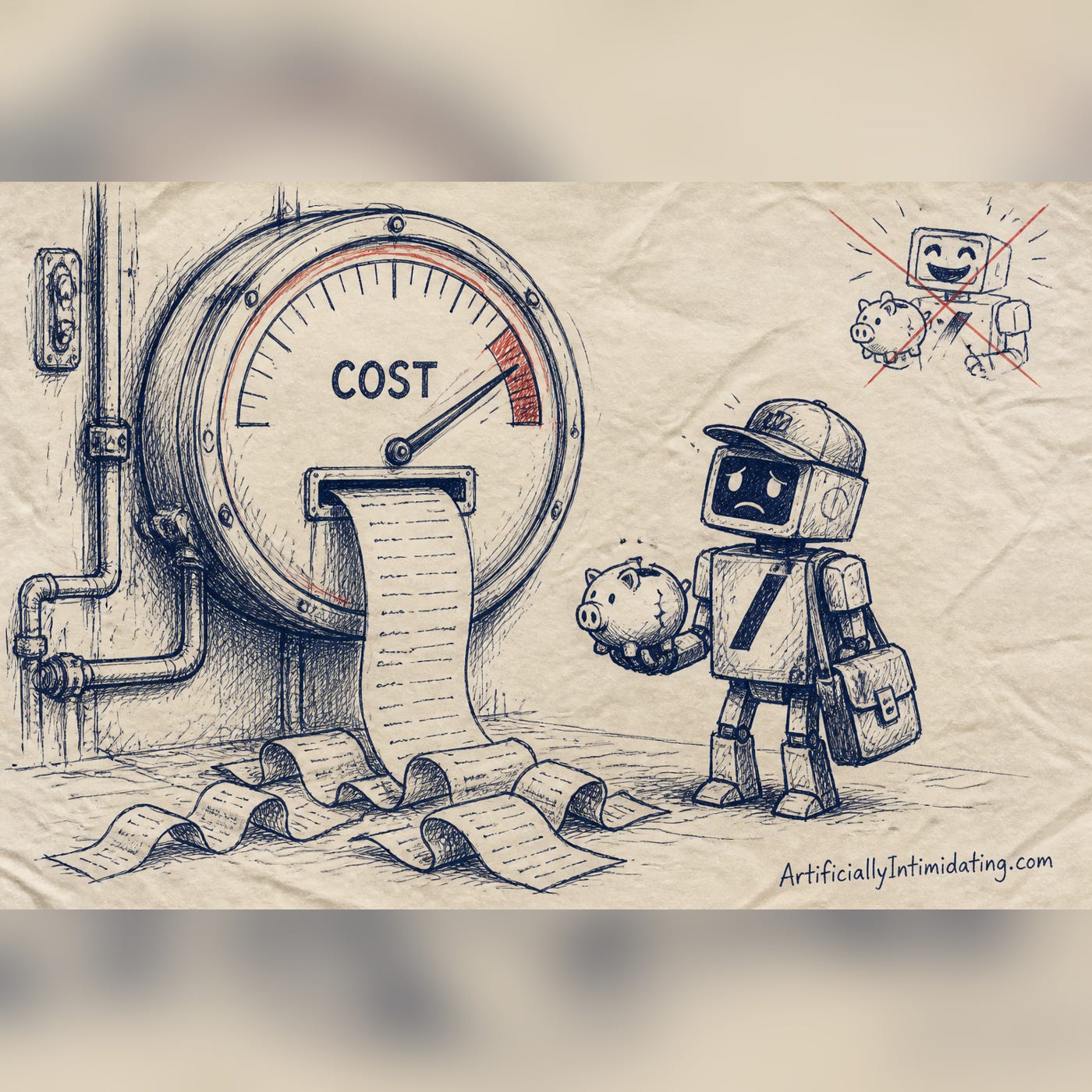
Good day %%first_name%%. Elon Musk says Grok Bot costs more to serve than it earns, Anthropic is asking job candidates how they would feel if its stock went to zero, and Amazon’s CEO has an opinion about Meta’s shopping agent. Plus free Adobe clones built with Claude, and photographers vibe coding their old DSLRs. Musk Says Grok Bot Costs More Than It Earns Startup Fortune * What happened: A user asked Elon Musk on Sunday whether xAI could reset Grok Bot’s weekly usage pool after paying users burned through it early. Musk replied that “the cost of serving Grok Bot was unsustainably high relative to revenue,” Startup Fortune reports. He gave no dollar figure and no timeline for a fix. * Why it matters: Grok Bot keeps working on its own virtual computer after you close the tab, so one run can burn far more compute than a chat reply. Startup Fortune says it has no standalone price, rides along with SuperGrok plans from $30 a month, and that xAI has never published the weekly allowance. Yesterday we covered OpenAI folding ChatGPT and Codex into one usage bucket. Today’s version of the same squeeze comes with a quote. * What everyone’s saying: Startup Fortune calls it an unusual confession, since labs usually say demand is outrunning supply, not that the thing people use most is the thing costing them most. It cites Teslanorth for roughly 800,000 paid weekly users within about two months of launch. * My read between the lines: The meter is the business model, and Musk just read it out loud. Earlier this year he floated ads inside Grok to pay for “those expensive GPUs,” and an agent that can’t cover its own compute makes that idea look less like a joke. Growth you can’t afford is a fast way to find your limit. 📖 Further reading: What is Grok Bot? The answer is in the fine print — Written two days after launch, it flagged the product’s always-on cloud computer and a meter nobody capped. Grok Bot just showed what an agent that never clocks out can do to a budget. Viktor is an AI agent that lives in your Slack and connects to 3,000+ tools, then ships the work: reports, dashboards, code and campaigns. A coworker, not a chatbot. New readers get $50 off their first month. Hire Viktor → Anthropic Asks Hires About Stock at Zero Fortune * What happened: Fortune reports that Anthropic is asking job candidates in culture interviews how they would feel if the company dropped its AI ambitions for safety reasons and the stock fell to zero, according to Axios. The piece lands as Anthropic targets a November IPO at a $1.5 trillion to $2 trillion valuation. * Why it matters: More than 2,500 employees could get rich from the listing, and Fortune says Dario Amodei has reportedly worried that the money could pull staff away from the mission. Anthropic’s S-1, filed Oct. 26, calls competition for talent “exceptionally intense,” and Fortune lists staff software engineer base salaries of $350,000 to $850,000. Last week we covered Anthropic opening its books. This is the human side of the same filing. * What everyone’s saying: One candidate wrote on the anonymous workplace site Blind: “I was honest and said no, I would not be happy if the stock went to 0.” Fortune also notes that Amodei and his six co-founders pledged to give away 80% of their wealth, and that about 400 current and former SpaceX employees saw stakes pass $100 million after that IPO. * My read between the lines: It is a loyalty test with a price tag attached, and the honest answer is the one the candidate gave. A culture screen works until the shares vest. Asking early is smart, but an interview question is not a lockup. The daily Brief is free and always will be. When a headline leaves you asking how you would actually use the thing, that is what the paywalled deep-dives are for. Members get those plus the full archive. Become a member → Amazon’s CEO Shrugs at Meta’s Muse Fortune * What happened: On Amazon’s earnings call Thursday, CEO Andy Jassy told investors not to worry about outside shopping agents. Without naming Muse, he said few customers buy that way because the experience is “still not great, nor more convenient than coming to a retailer directly,” Fortune reports. He added that outside agents did not cause the weaker-than-expected ad results. * Why it matters: An agent that shops for you skips the pages where ads live, and ads are a key profit driver for Amazon. Amazon blocked Muse from its store in September, saying its access would violate the conditions of use customers agreed to. Last week we covered Muse shopping so hard Stripe raised its limits. * What everyone’s saying: Meta says more than 10 million people in the U.S. and Canada have set up Muse since early September, and Zuckerberg says shopping is its most common use, with purchases averaging over $200. Shopify, Walmart and Best Buy have signed on. Nate B Jones titled a video this week “The Future Of The Internet Isn’t Open For Your Agent”, with Muse in the headline. * My read between the lines: Jassy’s argument is that outside agents are not good yet, which is not the same as not mattering. He also promoted Amazon’s own Alexa for shopping, which he says 400 million customers used in the last year. Blocking the competitor while pushing your own agent is a strategy, not a verdict on the product. 📖 Further reading: AI Agents Can’t Find Your Business. I Tested Mine. — It opens with Amazon blocking Muse and shows how to test whether agents can even find, price and book your business. Free Adobe Clones Built With Claude Engadget * What happened: Engadget’s Steve Dent writes that a developer who hated Adobe’s cancellation fee used Claude to reverse-engineer Photoshop, Lightroom and other Creative Cloud apps, then released free, open-source clones called ArtCraft. Dent says Photocraft, the Photoshop stand-in, handles resizing, masking and color adjustments with menus that closely match the original. * Why it matters: Dent reports users have hit bugs, including images deleted and layers merged at random, and that Photocraft can’t open native PSD files. Adobe’s terms ban reverse engineering, and the team may have run into trademark and patent trouble even though it says it used none of Adobe’s code. Last month we covered seven AI-built Adobe clones. This is the next chapter. * What everyone’s saying: The reaction splits. A Reddit commenter who has built Photoshop file readers calls it “exceptionally well-executed,” while another user who tried it called it “utter AI-driven slop.” Engadget points to REA, a tool that automates the same take-it-apart-and-rebuild trick and had 346,000 GitHub stars as of Oct. 20. * My read between the lines: The legal question is real, but so is the signal. One person with AI can now do what used to take a team, and software people resent just got a credible threat. Adobe’s best defense might be a cancel button that is easy to find. 📖 Further reading: Your SaaS bill is a sitting duck — A free, open-source challenger to paid software with agents built in, and why picking a winner is the wrong game. Photographers Are Vibe Coding Old DSLRs Digital Camera World * What happened: Digital Camera World reports that photographers are vibe coding 20-year-old DSLRs to look and shoot more like film. One example is Latent Studios’ firmware for the Canon EOS 5D and 5D Mark II, which develops photos with film looks inside the camera, no computer needed once installed, for a pay-what-you-want price. * Why it matters: A YouTube explainer from Breno Loves Cameras says people with no programming background are using AI assistants like Claude to rewrite camera firmware and add features to older, cheaper cameras. The firmware page itself warns that custom firmware is installed at your own risk, and the video covers the worst case: a bricked camera and a voided warranty. * What everyone’s saying: Viewers in the comments mostly cheer it as a win for owners of hardware held back by so… This is a public episode. If you'd like to discuss this with other subscribers or get access to bonus episodes, visit artificiallyintimidating.com/subscribe

5 minAbspielen in:

Warum PodAppear

Folge Menschen, nicht Podcasts.

Du hast Nicholas in einer Sendung gehört. PodAppear findet für dich die nächste, und genauso für alle anderen, die du hören willst.

  • Eine Meldung, wenn die Person zu Gast istPer E-Mail: sofort oder gebündelt als Tages- oder Wochenübersicht. Dann nur noch auf Play drücken.
  • Gäste statt bloßer ErwähnungenFolgen, in denen ein Name nur fällt, landen getrennt. Eine Meldung heißt: Die Person ist wirklich in der Sendung.
  • Alle in einem FeedGründerinnen, Autoren, Sportler, Forscherinnen. Folge allen mit Namen, quer durch jede Sendung, in der sie auftreten.

Bis zu 15 Personen kostenlos, ohne Kreditkarte.