Bekomm eine E-Mail, wenn Nathaniel in einem Podcast zu Gast istPodAppear prüft neue Folgen, sobald sie erscheinen, und lässt die weg, in denen Nathaniel nur erwähnt wird. Bis zu 15 Personen kostenlos, ohne Kreditkarte.Bis zu 15 Personen kostenlos, ohne Kreditkarte.
Nathaniel Ludke war in den letzten 12 Monaten in 2 Podcast-Folgen aus 2 verschiedenen Sendungen zu Gast. Zuletzt: Cybersecurity Where You Are (audio), 21. Okt. 2026.
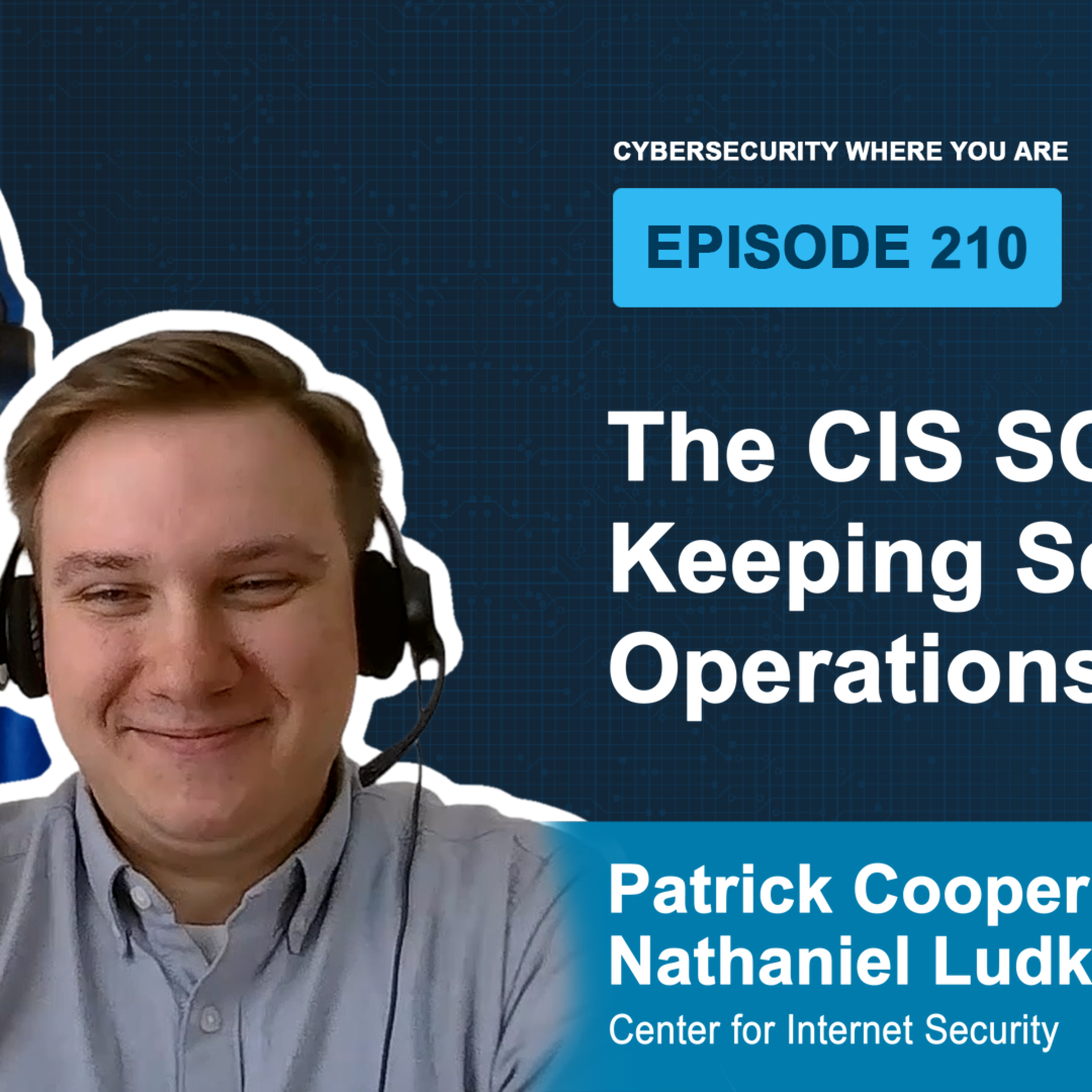
In episode 210 of Cybersecurity Where You Are, Sean Atkinson speaks with Patrick Cooper, Security Operations Center (SOC) Analyst II at the Center for Internet Security® (CIS®), and Nathaniel Ludke, SOC Analyst II at CIS. Together, they take listeners inside the 24x7x365 CIS SOC, from alert prioritization and severity-based escalation to member reporting and the use of artificial intelligence (AI) for open-source intelligence, packet analysis, and SQL querying. They explain why AI is the tool and the human is the loop for U.S. State, Local, Tribal, and Territorial (SLTT) government members of the Multi-State Information Sharing and Analysis Center® (MS-ISAC®).
Here are some highlights from our episode:
01:20. What a typical shift for a CIS SOC analyst looks like
03:29. Challenge: Supporting members while minimizing overwhelm and stress
06:25. Common indicators of compromise (IOCs) as impetus to take a deeper look
07:01. Prioritization: First in first out with a few noteworthy exceptions
07:41. How severity of an alert affects the CIS SOC's communication with members
08:51. The typical path of escalation for alerts
09:36. Hot IP entries and agency notes inform false-positive judgments
10:42. Designating the severity of false positives
14:09. Automated (monthly), manual, historical, and other types of reports from the CIS SOC
17:01. No news is good news? Why MS-ISAC members both welcome and worry about silence from the CIS SOC
18:01. The CIS SOC's use of AI for open-source intelligence and information gathering
20:07. Human is the loop: How AI supports packet analysis, SQL querying, and more
22:20. AI enablement, not replacement: Keeping security operations human
23:42. How AI can function as an additional security threat
25:23. Hallucination risk and the SOC analyst “spidey sense”
26:25. Relationships with MS-ISAC members: The "lost art" of knowing when something's off
Resources
The CIS Security Operations Center (SOC): The Key to Growing Your SLTT's Cyber Maturity
CIS Cyber Incident Response Team
CIS Cyber Threat Intelligence Team
Cybersecurity Services
You Have a Cybersecurity Incident. Now What?
Episode 190: Separating Mythos AI Fact from Fiction
CIS Controls v8.1 Incident Response Policy Template
If you have some feedback or an idea for an upcoming episode of Cybersecurity Where You Are, let us know by emailing podcast@cisecurity.org.
31 minAbspielen in:
Warum PodAppear
Folge Menschen, nicht Podcasts.
Du hast Nathaniel in einer Sendung gehört. PodAppear findet für dich die nächste, und genauso für alle anderen, die du hören willst.
Eine Meldung, wenn die Person zu Gast istPer E-Mail: sofort oder gebündelt als Tages- oder Wochenübersicht. Dann nur noch auf Play drücken.
Gäste statt bloßer ErwähnungenFolgen, in denen ein Name nur fällt, landen getrennt. Eine Meldung heißt: Die Person ist wirklich in der Sendung.
Alle in einem FeedGründerinnen, Autoren, Sportler, Forscherinnen. Folge allen mit Namen, quer durch jede Sendung, in der sie auftreten.