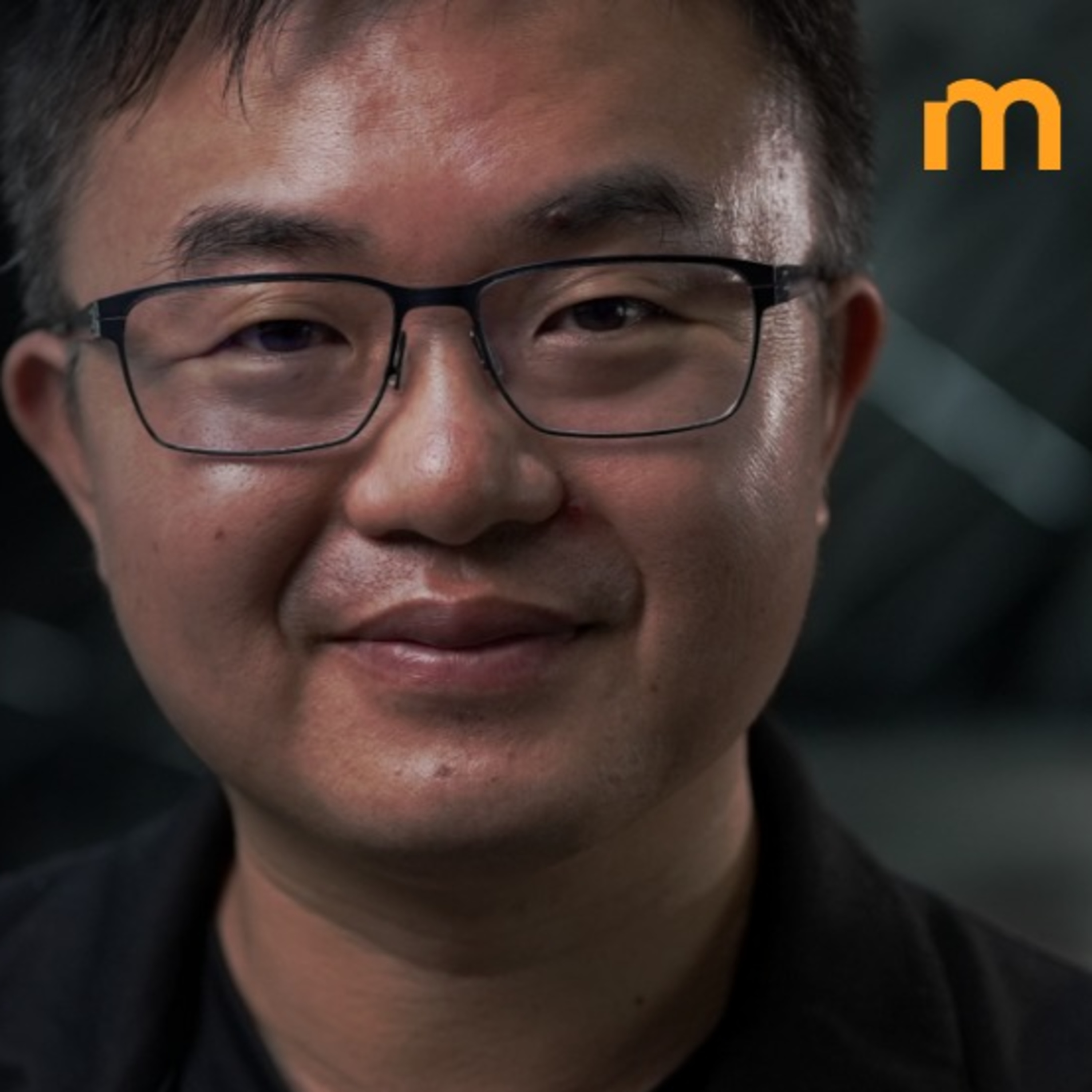
As AI moves beyond the cloud and into robots, vehicles, and other physical systems, new approaches to models, simulation, and inference are emerging. Daniel and Chris are joined by Ming-Yu Liu, Vice President of Cosmos Lab at NVIDIA, who shares his perspective on open models, world models, and the future of physical AI. They explore why open models matter for innovation, how world models can help AI understand and simulate the physical world, and what it could take to build increasingly capable physical AI systems.
Featuring:
Ming-Yu Liu – LinkedIn
Daniel Whitenack – Website, GitHub, X
Chris Benson – Website, LinkedIn, Bluesky, GitHub, X
Links:
NVIDIA Cosmos
Sponsors:
Midwest AI Summit: Join AI practitioners on October 15 in Indianapolis for practical sessions, hands-on discussions, and real-world AI solutions. Use code PracticalAI20 to save 20% on your registration. https://midwestaisummit.com/#tickets
Prediction Guard: A self-hosted AI control plane for running agents in high impact environments. predictionguard.com/practicalai
Resources and Events:
Register for upcoming webinars here!
Prior Webinars from our partner Prediction Guard
Midwest AI Summit 2026
The car making a left turn at the start of this episode was never filmed. Cosmos 3 generated it. Ming-Yu Liu, who leads the Cosmos research at NVIDIA, explains how one model can describe a video, generate one, and produce robot actions.
He walks Tim through the architecture. A vision language model reasons one token at a time; its weights then initialise a bidirectional diffusion generator for video, audio and action, and a shared temporal position scheme lines up signals that run at different rates. Ming-Yu treats "world model" as a set of tools, not one definition: forward dynamics, inverse dynamics and policy, trained together under a capacity limit so that each helps the others. He also explains why plentiful first-person human video carries over to robots, which have far less data of their own, and why a Cosmos model post-trained on the DROID dataset is a good starting point for pick-and-place policies.
The most practical thread is testing. A neural simulator does not need accurate success rates. It only needs to rank policy A above policy B the way the real world would, so a team can narrow down which checkpoints deserve a real trial. Cosmos Dreams applies that closed-loop idea to driving and robotics, and Ming-Yu argues that humanoids around children and pets make safety matter even more than it does for cars. The conversation ends on the Super, Nano and Edge sizes (Edge targets Jetson Thor, Orin and DGX Spark) and where to find the open weights, code and data.
This episode is a paid partnership with NVIDIA.
Learn more about Cosmos: https://nvda.ws/4cJoY1S
Explore Cosmos Lab: https://research.nvidia.com/labs/cosmos-lab/cosmos3/
---
TIMESTAMPS:
00:00:00 A road that was never filmed
00:02:28 Inside Cosmos 3: reasoning and generator towers
00:05:02 World models: dynamics, policy and one clock
00:08:59 Learning robot skills from human video
00:11:06 Ambiguous tasks and system 2 planning
00:12:53 Neural simulators for policy verification
00:16:41 Cosmos as a starting point for robot policies
00:19:00 Cosmos Dreams and robot safety
00:22:04 Super, Nano and Edge model sizes
00:24:24 Open models, the Cosmos repo and feedback
---
REFERENCES:
tool:
[00:00:13] Cosmos 3 (NVIDIA Cosmos Lab project page)
https://research.nvidia.com/labs/cosmos-lab/cosmos3/
[00:18:27] NVIDIA Cosmos GitHub repository
https://github.com/NVIDIA/cosmos
[00:22:05] Cosmos3-Edge model card
https://huggingface.co/nvidia/Cosmos3-Edge
[00:22:15] Cosmos3-Super model card
https://huggingface.co/nvidia/Cosmos3-Super
[00:22:16] Cosmos3-Nano model card
https://huggingface.co/nvidia/Cosmos3-Nano
[00:22:50] NVIDIA Jetson Thor
https://www.nvidia.com/en-us/autonomous-machines/embedded-systems/jetson-thor/
[00:22:52] NVIDIA Jetson Orin
https://www.nvidia.com/en-us/autonomous-machines/embedded-systems/jetson-orin/
[00:22:53] NVIDIA DGX Spark
https://www.nvidia.com/en-us/products/workstations/dgx-spark/
[00:24:42] Cosmos 3 collection on Hugging Face
https://huggingface.co/collections/nvidia/cosmos3
other:
[00:01:07] Cosmos-Dreams closed-loop simulators (NVIDIA SIGGRAPH 2026 blog)
https://blogs.nvidia.com/blog/siggraph-news-2026/
paper:
[00:08:54] Cosmos 3: Omnimodal World Models for Physical AI
https://arxiv.org/abs/2606.02800
[00:17:43] DROID: A Large-Scale In-The-Wild Robot Manipulation Dataset
https://arxiv.org/abs/2403.12945
---
RESCRIPT: https://app.rescript.info/share/e2385948cf465f0d6a2c0930150fc3ab