Get an email when Michael is a guest on a podcastPodAppear checks new episodes as they come out and leaves out the ones that only mention Michael. Free for up to 15 people, no card needed.Free for up to 15 people, no card needed.
Follow Michael free
ML

Michael Lloyd

Michael Lloyd has been a guest on 3 podcast episodes across 2 shows in the last 12 months, most often on EP Edge Journal Watch: Cardiac Electrophysiology Research (2 times). Latest: EP Edge Journal Watch: Cardiac Electrophysiology Research, Sep 28, 2026.

Two years on the air

GuestHostMentioned

Guest appearances

Mon28Sep
EP Edge Journal Watch: Cardiac Electrophysiology Research

EP Edge Journal Watch: Cardiac Electrophysiology Research

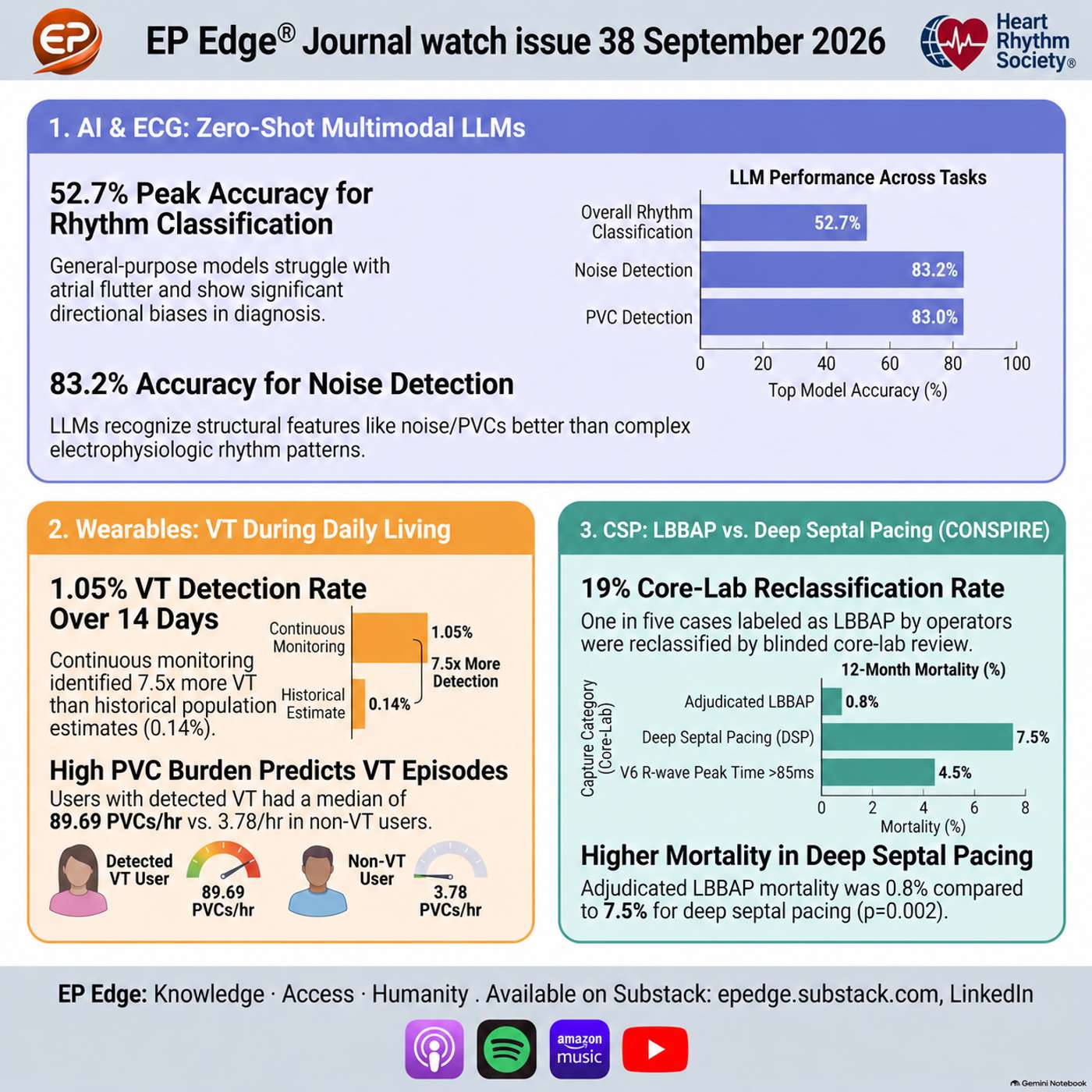
EP Edge® Journal Watch Issue 38 September 2026 with Heart Rhythm Society at HRX: AI ECG Interpretation, Wearable-Detected Ventricular Tachycardia, and LBBAP vs Deep Septal Pacing

In this special EP Edge® Journal Watch Issue 38, recorded at HRX, with the Heart Rhythm Society Live 2026 in Atlanta, Dr. Niraj Sharma is joined by Dr. Michael Lloyd, Professor of Medicine at Emory University, for a focused discussion of three provocative studies with direct implications for contemporary cardiac electrophysiology. First, they examine the emerging role of large language models and artificial intelligence in ECG interpretation. How accurately can off-the-shelf, zero-shot LLMs interpret electrocardiograms, and are currently available general-purpose AI models ready to participate in clinical ECG analysis? The discussion then turns to ventricular tachycardia detected during everyday life by wearable devices. New data suggest that VT may be detected far more frequently in individuals using wearable monitoring than traditional estimates would suggest. Drs. Sharma and Lloyd discuss what these findings may mean for electrophysiologists increasingly confronted with rhythm data generated outside the clinic. Finally, the episode explores the continuing evolution of conduction system pacing, with new data comparing left bundle branch area pacing (LBBAP) and deep septal pacing (DSP). The conversation examines differences in clinical outcomes, the reported mortality signal associated with deep septal pacing, and an important practical problem for the field: inconsistent agreement about what actually constitutes successful LBBAP versus deep septal pacing. Recorded from HRX Live 2026, this episode goes beyond the abstracts to examine what the findings mean clinically, where the uncertainties remain, and how they may influence electrophysiology practice. Topics discussed include: Artificial intelligence and zero-shot LLMs for ECG interpretation Accuracy and limitations of AI-assisted electrocardiogram analysis Wearable cardiac monitoring and real-world ventricular tachycardia detection Ventricular arrhythmias detected outside traditional clinical monitoring Left bundle branch area pacing (LBBAP) Deep septal pacing (DSP) Conduction system pacing definitions and adjudication Mortality and clinical outcomes with physiologic pacing strategies Emerging research and innovation from HRX Live 2026 EP Edge® Journal Watch provides clinically focused analysis of important new research in cardiac electrophysiology, emphasizing not simply what a study found, but how the evidence should be interpreted and what it may mean for clinical practice. Hosted by Dr. Niraj Sharma Special HRX discussion with Dr. Michael Lloyd, MD, FACC, FHRS

16 minPlay in:

Thu13Aug
The Slippery

The Slippery

EP 32 | DEBRIEF: Chiefsaholic: Super Fan Super Criminal

The wild story of Xaviar Babudar—better known to Chiefs Kingdom as “Chiefsaholic”—takes another crazy turn. In this episode of The Slippery Debrief, we continue our deep dive into the viral superfan-turned-serial bank robber, but this time from the perspective of the man left holding the bag. Bail bondsman Michael Lloyd joins us to pull back the curtain on why he took a chance on Xaviar, what really went down when Babudar cut his ankle monitor and went on the run, and how a $80,000 bond turned into an intense, high-stakes hunt. But it’s not just a story of betrayal—Michael shares surprisingly candid insights into Xaviar’s complex family life, nomadic upbringing, and why, despite everything, he still harbors empathy for the man behind the mask. Learn more about your ad choices. Visit podcastchoices.com/adchoices

59 minPlay in:

Mon1Jun
EP Edge Journal Watch: Cardiac Electrophysiology Research

EP Edge Journal Watch: Cardiac Electrophysiology Research

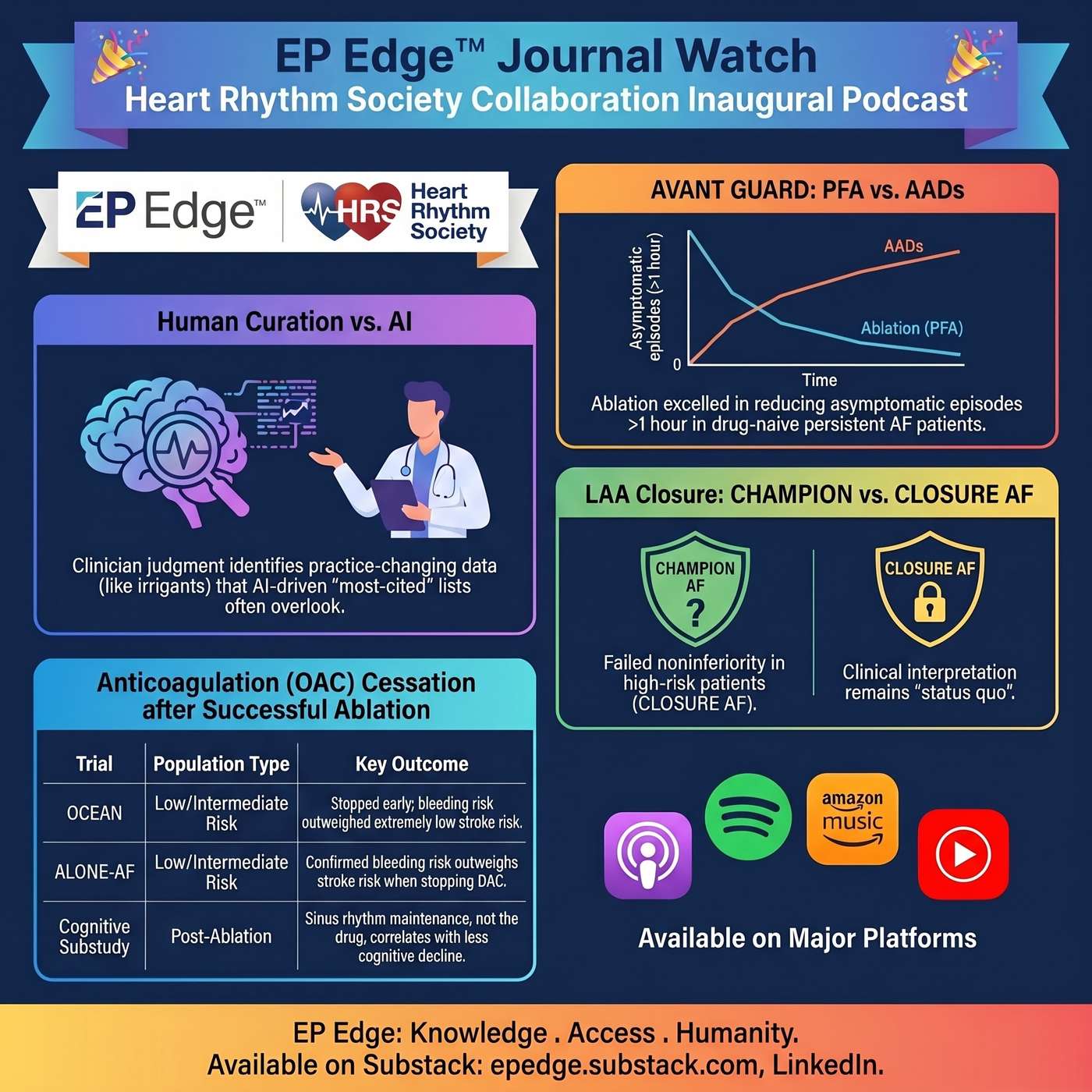
Inaugural EP EdgeTM Journal Watch with Heart Rhythm Society: AVANT GUARD, LAA Closure, OCEAN, and the ALONE-AF Cognitive Substudy

The inaugural EP Edge Journal Watch and Heart Rhythm Society collaboration is here. In this first episode, Dr. Michael Lloyd from the Heart Rhythm Society Digital Education Committee joins Dr. Niraj Sharma, creator of EP Edge, to launch a new monthly format focused on the most clinically relevant literature in cardiac electrophysiology. This is not a routine article summary. It is a practical, physician-led discussion of the studies that matter in the EP lab, in clinic, and at the bedside. Electrophysiology literature is moving quickly. Important trials now appear across major journals, late-breaking sessions, society meetings, and digital platforms. Algorithms can identify highly cited papers. Search tools can rank articles. But clinical relevance still requires judgment. EP Edge Journal Watch was created to help close that gap. The goal is simple: identify the papers that deserve attention, place them in clinical context, and ask what they mean for real patients. In this inaugural episode, Dr. Lloyd and Dr. Sharma begin with AVANT GUARD, a major trial evaluating first-line pulsed field ablation in patients with persistent atrial fibrillation. The discussion goes beyond the headline. They examine patient selection, drug-naive persistent AF, procedural safety, the stroke signal, modified enrollment criteria, anticoagulation requirements, endpoint design, and the difference between symptom reduction and true AF burden reduction. The episode then turns to one of the most active areas in atrial fibrillation care: left atrial appendage closure. Dr. Lloyd and Dr. Sharma discuss CLOSURE AF and CHAMPION AF, two trials that asked similar questions but studied very different patient populations. The discussion focuses on stroke risk, bleeding risk, frailty, procedural complications, endpoint construction, and how these trials should influence shared decision-making. The key clinical question is direct: should left atrial appendage closure be offered broadly as an alternative to anticoagulation, or should it remain focused on patients with a clear problem taking long-term oral anticoagulation? The final section focuses on anticoagulation after apparently successful AF ablation. Dr. Lloyd and Dr. Sharma discuss OCEAN and ALONE-AF, with attention to stroke risk, bleeding risk, patient selection, rhythm monitoring, and the limits of intermittent surveillance. For selected low-risk patients without recurrent atrial arrhythmia, stopping anticoagulation may be reasonable. But the decision is not automatic. It depends on the patient, the risk profile, the quality of rhythm follow-up, and the shared decision-making conversation. The episode also highlights the ALONE-AF cognitive substudy, one of the most interesting parts of the discussion. This substudy moves the conversation beyond stroke and bleeding. It asks whether stopping oral anticoagulation after successful AF ablation affects cognitive function. The key point is nuanced. In selected patients without recurrent atrial arrhythmia, stopping anticoagulation did not appear to produce a cognitive penalty. But the more provocative signal may be rhythm itself. Patients who maintained sinus rhythm appeared to have better cognitive trajectories than those with recurrence. That raises an important clinical question for the field: after AF ablation, is the long-term cognitive story less about the anticoagulant and more about durable rhythm control? This first episode sets the tone for the EP Edge Journal Watch and HRS collaboration. The format is concise, practical, and clinically grounded. It is built for busy electrophysiologists, cardiologists, fellows, advanced practice providers, and clinicians who care for patients with atrial fibrillation. The purpose is not just to summarize trials. It is to interpret them. Which patients were studied? Which endpoints matter? Which findings should change a clinic conversation? Which results should make us pause before changing practice? That is the mission of EP Edge Journal Watch with HRS.

20 minPlay in:

Why PodAppear

Follow people, not podcasts.

You heard Michael on one show. PodAppear finds the next one for you, and every other person you want to hear.

  • An alert when they are a guestBy email as it happens, or as a daily or weekly digest. Then press play.
  • Guests, not name-dropsEpisodes that only mention a name are kept apart, so an alert means they are really on the show.
  • Everyone in one feedFounders, authors, athletes, scientists. Follow anyone by name, across every show they visit.

Free for up to 15 people, no card needed.