Bekomm eine E-Mail, wenn Matthew in einem Podcast zu Gast istPodAppear prüft neue Folgen, sobald sie erscheinen, und lässt die weg, in denen Matthew nur erwähnt wird. Bis zu 15 Personen kostenlos, ohne Kreditkarte.Bis zu 15 Personen kostenlos, ohne Kreditkarte.
Matthew Yglesias war in den letzten 12 Monaten in 3 Podcast-Folgen aus 3 verschiedenen Sendungen zu Gast. Zuletzt: Conversations with Coleman, 3. Aug. 2026.
Is there a meaningful difference between a commonsense Democrat and a center-right Republican? Matthew Yglesias thinks so. But he also thinks the Democrats have spent the last decade making it harder and harder to tell. He cofounded Vox and writes the essential Slow Boring Substack. He has been one of the most consistent voices calling for a Democratic politics that is practical and winnable. He joins Coleman Hughes to make that case.
They start with the big picture: why people have started asking politics to give their lives meaning, what that has done to our culture, and whether the loss of monoculture has made us lonelier and more tribal. From there they get into the Democratic Socialists of America’s rise, why housing is the most important issue nobody campaigns on, and why Yglesias thinks public schools should go back to teaching straightforward patriotism.
Learn more about your ad choices. Visit megaphone.fm/adchoices
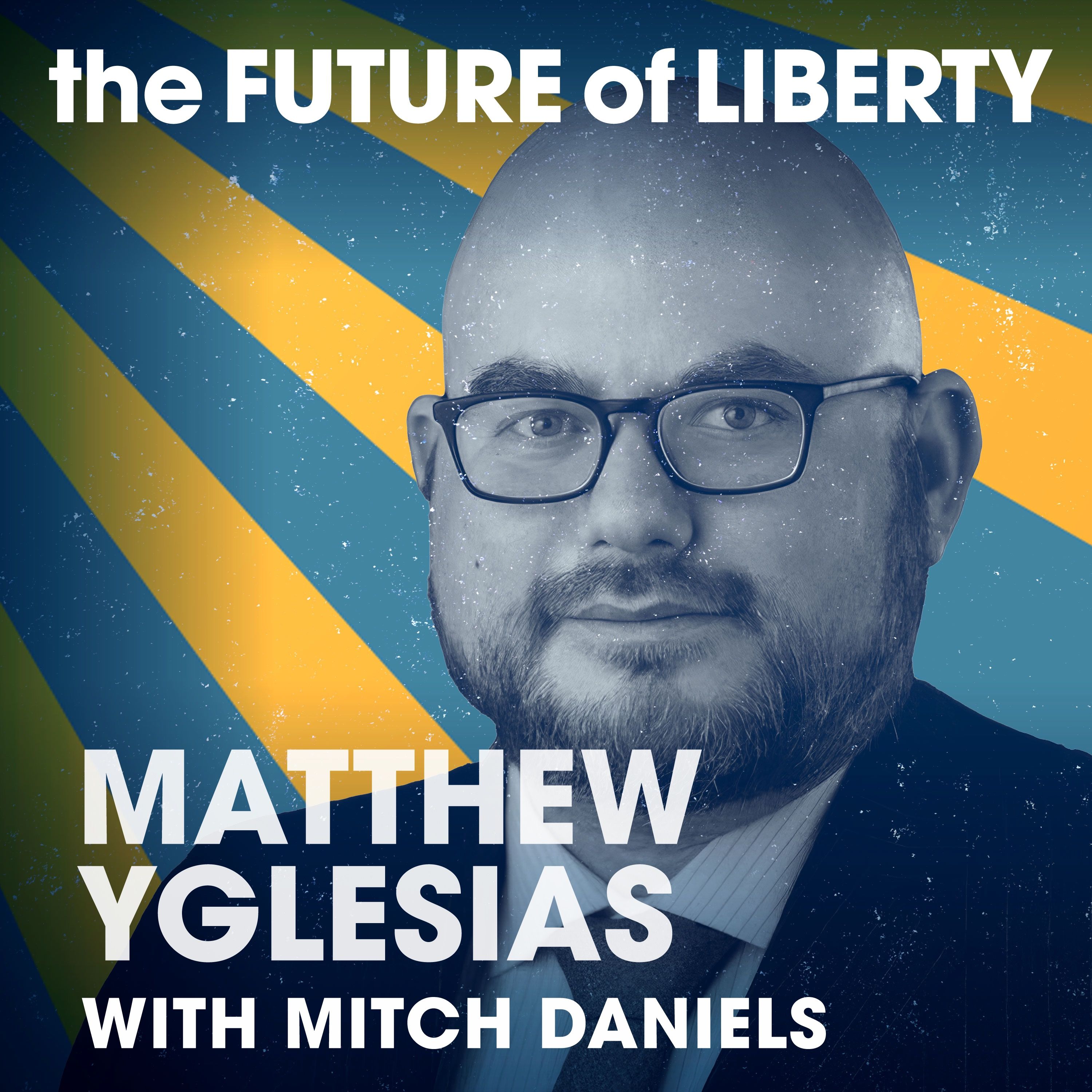
In this episode of The Future of Liberty, Mitch Daniels speaks with journalist and author Matthew Yglesias about affordability, the social safety net, and the conditions required for economic dynamism in a free society. Their wide-ranging conversation examines housing, energy, transportation, education, and entitlement policy, with attention to the “sacred cows” that often shape political debate and influence approaches to reform.
Civil Discourse & the Search for Truth (02:31)
Energy Policy, Environmental Tradeoffs, & Reality (13:25)
Artificial Intelligence & the Future of Learning (26:24)
Work, Human Dignity, & Universal Basic Income (28:27)
Liberty, Rule of Law, & National Prosperity (41:40)
About The Future of Liberty: Former Indiana governor and Purdue University president Mitch Daniels investigates the prospects for liberty and more through conversations with prominent thinkers and leaders across diverse fields. New episodes are available wherever you listen, including Apple Podcasts, Spotify, and YouTube. Visit thefutureofliberty.org to learn more.
Want more from Liberty Fund? Get the latest ideas and conversations on liberty delivered straight to your inbox by signing up for the LF Weekly Digest. You can also follow Liberty Fund on Facebook, Instagram, LinkedIn, X, and YouTube.
A recent proposal by Lina Khan, co-chair of Zohran Mamdani's mayoral transition team, to cap the price of beer at stadiums in New York City sparked a debate on X last month. At the center of that debate was Matthew Yglesias, editor and author of the Slow Boring newsletter, who argued that the modern antitrust movement has become "slipshod" and is ignoring basic economic trade-offs in favor of political wins.
In this episode, Yglesias joins Luigi and Bethany to discuss his views on the theoretical and practical limitations of the "Neo-Brandeisian" approach to antitrust. He contends that proposals like price caps for complementary goods like stadium concessions reveals a lack of economic rigor, arguing that such measures often result in higher ticket prices rather than consumer savings . He suggests that the movement increasingly attempts to use antitrust law as a universal tool for societal grievances.
Bethany and Luigi debate Yglesias on the limits of this modern anti-monopoly movement, arguing that he sounds like a "Chicago economist circa 1970" who assumes markets are always efficient and rational. From the lobbying might of the banking industry to the extractive fees of Amazon, Luigi argues that economic concentration inevitably morphs into political power. He posits that even if consolidated industries remain price-efficient, their size allows for the capture of the regulatory process—citing the banking and tobacco industries as historical precedents.
Of course, antitrust enforcement isn't the only proposal on the table to address people's concerns about price levels, as the current excitement around the "affordability" and "abundance" movements demonstrate. But Yglesias argues neither abundance, affordability nor antitrust is going to drive down nominal prices. As he puts it: the only thing that could do that is “a catastrophic depression…but that's not going to make people happier".
Hosted by Simplecast, an AdsWizz company. See pcm.adswizz.com for information about our collection and use of personal data for advertising.
58 minAbspielen in:
Warum PodAppear
Folge Menschen, nicht Podcasts.
Du hast Matthew in einer Sendung gehört. PodAppear findet für dich die nächste, und genauso für alle anderen, die du hören willst.
Eine Meldung, wenn die Person zu Gast istPer E-Mail: sofort oder gebündelt als Tages- oder Wochenübersicht. Dann nur noch auf Play drücken.
Gäste statt bloßer ErwähnungenFolgen, in denen ein Name nur fällt, landen getrennt. Eine Meldung heißt: Die Person ist wirklich in der Sendung.
Alle in einem FeedGründerinnen, Autoren, Sportler, Forscherinnen. Folge allen mit Namen, quer durch jede Sendung, in der sie auftreten.