Bekomm eine E-Mail, wenn Leidy in einem Podcast zu Gast istPodAppear prüft neue Folgen, sobald sie erscheinen, und lässt die weg, in denen Leidy nur erwähnt wird. Bis zu 15 Personen kostenlos, ohne Kreditkarte.Bis zu 15 Personen kostenlos, ohne Kreditkarte.
Leidy kostenlos folgen
Leidy Klotz

Leidy Klotz

American professor and retired soccer player

Leidy Klotz war in den letzten 12 Monaten in 4 Podcast-Folgen aus 4 verschiedenen Sendungen zu Gast. Zuletzt: Good Life Project, 27. Juli 2026.

Kurzbiografie aus WikipediaFoto: Hiddenfigures14, CC BY-SA 4.0, über Wikimedia Commons

Zwei Jahre auf Sendung

GastHostErwähnt

Gastauftritte

Mo27Jul
Good Life Project

Good Life Project

The 3 Things Every Room You Live In Must Have to Be Okay | Leidy Klotz

Most of us think the biggest decision about a room is whether it's functional. Leidy Klotz thinks that's the wrong question, and the right one changes how a desk, a kitchen, or an entire return-to-office policy actually lands on the person living inside it. Leidy Klotz is a behavioral scientist and engineering professor at the University of Virginia who studies how and why humans design. His research has appeared in Nature and Science, and he's been interviewed everywhere from Hidden Brain to Freakonomics to The Atlantic. Before any of that, he spent 22 years as a professional soccer player and then built schools for a living, which is part of why his take on space is so physical and so lived-in. In this conversation, you'll explore: The three psychological needs that every space either feeds or starves, and why they trace straight back to hunter-gatherer survival Why Susan Cain's open-office backlash and today's return-to-office mandates are the same failure wearing different clothes The strange, well-documented phenomenon of "habituation," including the story of an architecture student who walked past a six-story landmark building for years without ever seeing it A simple practice called "space before screen," and why the top of a parking garage might be the cheapest awe you'll ever find What it means to build a space that keeps someone's memory alive, drawn from one of the most personal stories Leidy has ever told on a podcast If you've ever felt something shift the moment you walked into a certain room and couldn't say why, this conversation gives you the language for it. You can find Leidy at: Website | LinkedIn | Episode Transcript Next week, we're sitting down with Chris Guillebeau to talk about why the anxious feeling that you're running out of time might be less about your calendar and more about a story you've never questioned. Be sure to follow Good Life Project wherever you get your podcasts so you don't miss any upcoming episodes! Check out our sponsors and resources: Visit Our Sponsor Page Share your midlife reinvention story with us HERE. Hosted on Acast. See acast.com/privacy for more information.

47 minAbspielen in:

Mo25Mai
Behavioral Grooves Podcast

Behavioral Grooves Podcast

How the Spaces Around Us Shape Our Lives | Leidy Klotz

Why do some spaces energize us while others drain us? This week, Leidy Klotz joins us to explore how our homes, workplaces, and everyday environments shape our behavior, creativity, and well-being. Drawing from his new book, In a Good Place, Leidy explains why humans crave agency, competence, and connection, and how the spaces around us can either support or suppress those needs. Topics [0:00] Intro and Speed Round with Leidy Klotz [11:01] The Concept of “Good Place” [18:26] Psychological Needs and Space [26:44] Making Purposeful Decisions for Spaces [34:02] Designing Spaces for Growth and Belonging [45:09] Creating Groovy Spaces [50:03] Grooving Session: Practical Tips for Designing Better Spaces ©2026 Behavioral Grooves Links About Leidy Klotz In a Good Place by Leidy Klotz Join us on Substack! Join the Behavioral Grooves community Subscribe to Behavioral Grooves on YouTube Support Behavioral Grooves Musical Links Bruce Springsteen - Racing in the Street Bruce Springsteen - No Surrender

1 h 04 minAbspielen in:

Mi29Apr
Wannabe Clutter Free | Declutter, Simplify, Find Freedom

Wannabe Clutter Free | Declutter, Simplify, Find Freedom

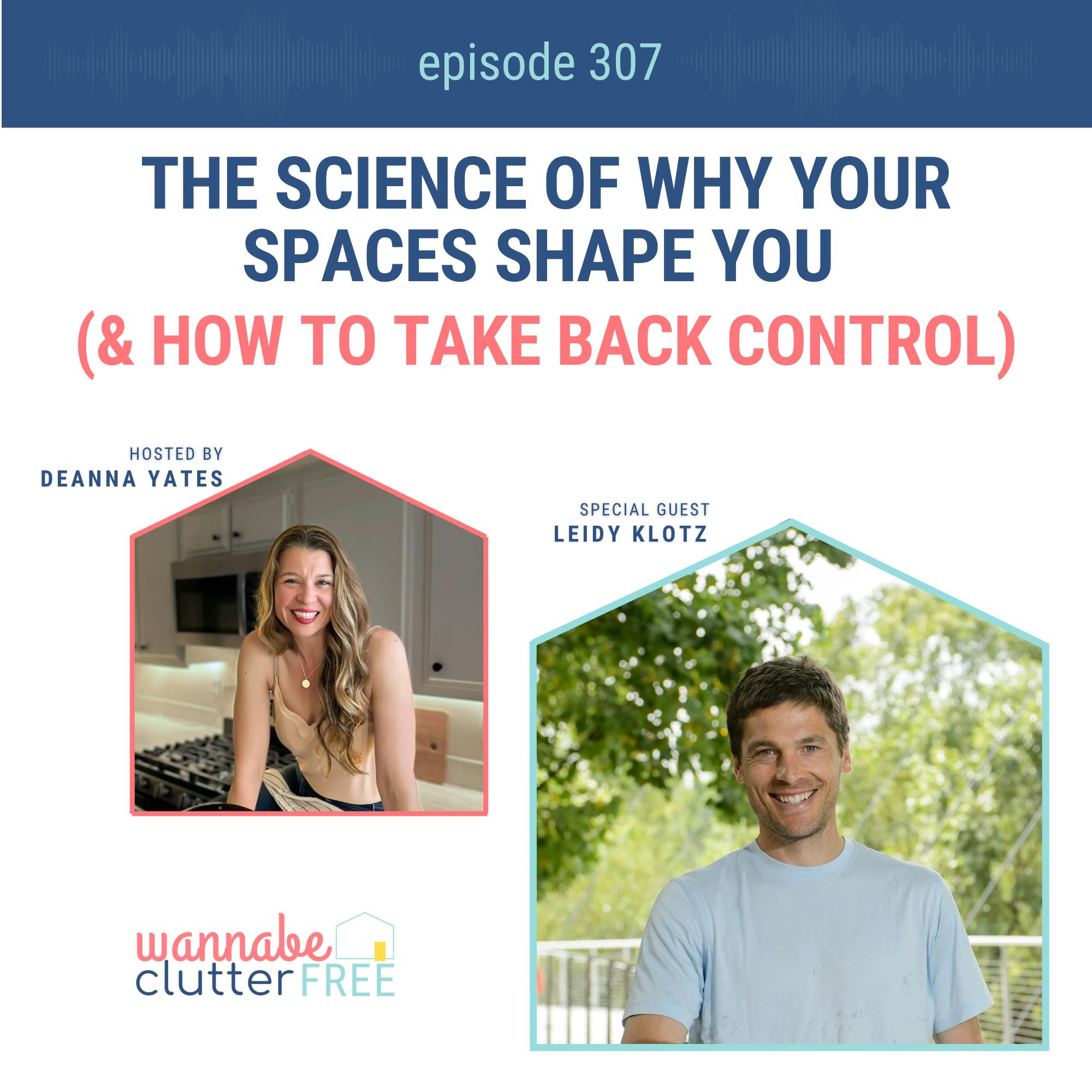
The Science of Why Your Spaces Shape You (And How to Take Back Control) with Leidy Klotz | Ep. 307

Behavioral scientist Leidy Klotz reveals how your home feeds or starves three core psychological needs, why clutter blocks connection, and how to make your spaces actually work for your family. **************** ⁠⁠⁠⁠RESOURCES⁠⁠⁠⁠ ⁠⁠⁠⁠⁠⁠⁠⁠⁠⁠⁠⁠⁠⁠⁠⁠⁠⁠⁠⁠⁠⁠⁠⁠⁠⁠⁠⁠⁠Get the transcripts and more at wannabeclutterfree.com/307⁠⁠⁠⁠⁠⁠⁠⁠⁠⁠⁠⁠⁠⁠ Connect with Leidy: ⁠In a Good Place by Leidy Klotz: Available wherever you get your books Subtract by Leidy Klotz Leidy's website: leidyklotz.com Follow Deanna Yates, the host of Wannabe Clutter Free on: ⁠⁠⁠⁠⁠⁠⁠⁠⁠⁠⁠⁠⁠⁠⁠⁠⁠⁠⁠⁠⁠⁠⁠⁠⁠⁠⁠⁠⁠Instagram⁠⁠⁠⁠⁠⁠⁠⁠⁠⁠⁠⁠⁠⁠⁠⁠⁠⁠⁠⁠⁠⁠⁠⁠⁠⁠⁠⁠⁠ ⁠⁠⁠⁠⁠⁠⁠⁠⁠⁠⁠⁠⁠⁠⁠⁠⁠⁠⁠⁠⁠⁠⁠⁠⁠⁠⁠⁠⁠Website⁠⁠⁠⁠⁠⁠⁠⁠⁠⁠⁠⁠⁠⁠⁠⁠⁠⁠⁠⁠⁠⁠⁠⁠⁠⁠⁠⁠⁠ ⁠⁠⁠⁠⁠⁠⁠⁠⁠⁠⁠⁠⁠⁠⁠⁠⁠⁠⁠⁠⁠⁠⁠⁠⁠⁠⁠⁠⁠Effortless Home: Run your home in less than 20 minutes a day⁠⁠⁠⁠⁠⁠⁠⁠⁠⁠⁠⁠⁠⁠⁠⁠⁠⁠ **************** What if the reason you feel stuck, distracted, or disconnected at home has less to do with your habits and more to do with your spaces? Leidy Klotz, an engineering professor at the University of Virginia, is the author of Subtract and his brand-new book In a Good Place. He has spent over a decade studying the relationship between our physical environments and our psychological well-being, and today he is breaking it all down for us. This conversation changed how I think about my home. We are not just talking about decluttering (although we do get into that). We are talking about why our spaces either feed or starve our deepest needs, and what we can do about it. In this episode you will learn: The three core psychological needs your home either supports or works against How clutter literally gets between you and the people you love Why you use your spaces the same way every day (and a simple research-backed way to break out of it) The renovation trap: when updating your home actually makes it less meaningful How to involve your kids in decisions about your home (and why it changes everything) The beautiful story of Josie's Way and what it teaches us about legacy and space Content note: Leidy shares openly about his daughter Josie, who passed away unexpectedly at four years old. Her story is woven throughout this conversation and is both heartbreaking and deeply beautiful. Time Stamps: 00:00 Introduction and Leidy's background 05:40 The intersection of environment and behavior 11:24 The three core psychological needs: agency, growth, and connection 17:25 Agency and connection in the home (plus tips for renters) 20:30 How clutter literally blocks connection 26:50 Behavioral changes through environmental cues 32:23 The family that moved dinner outside 36:06 Functional fixedness: why adults are worse at this than kids 40:42 Nostalgia, the renovation trap, and protecting what matters 50:57 Josie's Way: remembering through spaces and stories **************** Music: Fresh Lift by Shane Ivers - ⁠⁠⁠⁠⁠⁠⁠⁠⁠⁠⁠⁠⁠⁠⁠⁠⁠⁠⁠⁠⁠⁠⁠⁠⁠⁠⁠⁠⁠https://www.silvermansound.com⁠⁠⁠⁠⁠⁠⁠⁠⁠⁠⁠⁠⁠⁠⁠⁠⁠⁠⁠⁠⁠⁠⁠⁠⁠⁠⁠⁠⁠ **************** We’d love to hear how you’re applying the strategies discussed in this episode. Share your stories and tips with us on social media (@wannabeclutterfree). Don’t forget to subscribe for more insightful episodes designed to make your busy life a bit easier. Learn more about your ad choices. Visit podcastchoices.com/adchoices Our Sponsors: * Check out BetterHelp and use my code betterhelp.com for a great deal: https://www.betterhelp.com Advertising Inquiries: https://redcircle.com/brands Privacy & Opt-Out: https://redcircle.com/privacy

1 h 04 minAbspielen in:

Mi4Mär
Beyond The Prompt - How to use AI in your company

Beyond The Prompt - How to use AI in your company

How to Subtract: The Most Underrated Skill of the AI Era - with Leidy Klotz

Leidy Klotz has spent years studying a simple but overlooked phenomenon: when we try to improve something, our first instinct is to add rather than remove. He shares the Lego bridge experiment that sparked his research and explains how this additive bias scales from small design decisions to entire organizations. Over time, companies accumulate reporting lines, meetings, software, and policies without questioning what no longer serves them. Henrik and Jeremy explore how AI tools intensify this pattern. When generating ideas, launching projects, writing code, or producing content becomes effortless, the temptation to add grows stronger. The cost of producing information drops, but the cost of consuming it rises. Without guardrails, organizations risk what Leidy calls “organizational indigestion.” The discussion moves from insight to implementation. Leidy outlines practical ways to counteract additive bias, including stop-doing lists, default kill dates on projects, and designing environments that make subtraction visible and acceptable. In a world of accelerating AI output, leaders must intentionally decide what to remove, what to protect, and what truly matters. Key Takeaways: We default to adding, not subtracting When faced with a problem, our instinct is to introduce something new. Subtraction rarely occurs to us, even when removing something would improve clarity and performance. Generative AI amplifies additive bias AI makes producing content, code, and ideas easier than ever. Without constraints, this frictionless creation can accelerate complexity instead of progress. More organizations die from indigestion than starvation Over time, companies accumulate tools, processes, and policies that quietly slow them down. The real risk is often not too few ideas, but too many unexamined additions. Architecture beats willpower Rather than relying on discipline alone, leaders can design systems that encourage subtraction. Stop-doing lists and default expiration dates make removal expected instead of exceptional. Protect what matters before adding more Before introducing new tools, workflows, or AI systems, leaders must define what is already working and worth protecting. Subtraction requires clarity about what should stay, not just what should go. Subtract: amazon/Subtract-Untapped-Science-Leidy-Klotz In a Good Place: amazon/Good-Place-Spaces-Where-Thrive/ Leidy's Speaking: https://leidyklotz.com/ Clip from Bear: Subtract - this is how you do better 00:00 Intro: Our Instinct to Add 00:28 Meet Leidy Klotz 01:15 The Subtract Idea 02:56 Organizations Get Bloated 03:49 Scandinavian Design Mindset 04:32 New Book: In a Good Place 05:59 AI Abundance and Indigestion 08:12 Curate Context, Not More 11:38 Cues and Stop-Doing Lists 15:00 Default Debt and Kill Dates 17:10 Odysseus Contracts and Biases 21:28 Reengage the Physical World 29:17 Bike Shedding and Priorities 36:10 Making Is Thinking 49:16 The Debrief 📜 Read the transcript for this episode: how-to-subtract-the-most-underrated-skill-of-the-ai-era-with-leidy-klotz/transcript For more prompts, tips, and AI tools. Check out our website: https://www.beyondtheprompt.ai/ or follow Jeremy or Henrik on Linkedin: Henrik: https://www.linkedin.com/in/werdelin Jeremy: https://www.linkedin.com/in/jeremyutley Show edited by Emma Cecilie Jensen.

59 minAbspielen in:

Warum PodAppear

Folge Menschen, nicht Podcasts.

Du hast Leidy in einer Sendung gehört. PodAppear findet für dich die nächste, und genauso für alle anderen, die du hören willst.

  • Eine Meldung, wenn die Person zu Gast istPer E-Mail: sofort oder gebündelt als Tages- oder Wochenübersicht. Dann nur noch auf Play drücken.
  • Gäste statt bloßer ErwähnungenFolgen, in denen ein Name nur fällt, landen getrennt. Eine Meldung heißt: Die Person ist wirklich in der Sendung.
  • Alle in einem FeedGründerinnen, Autoren, Sportler, Forscherinnen. Folge allen mit Namen, quer durch jede Sendung, in der sie auftreten.

Bis zu 15 Personen kostenlos, ohne Kreditkarte.