Bekomm eine E-Mail, wenn Kim in einem Podcast zu Gast istPodAppear prüft neue Folgen, sobald sie erscheinen, und lässt die weg, in denen Kim nur erwähnt wird. Bis zu 15 Personen kostenlos, ohne Kreditkarte.Bis zu 15 Personen kostenlos, ohne Kreditkarte.
Kim kostenlos folgen
KS

Kim Scott

Zwei Jahre auf Sendung

GastHostErwähnt

Selbst moderierte Folgen

Di24Nov
Radical Candor: Communication at Work

Radical Candor: Communication at WorkHost

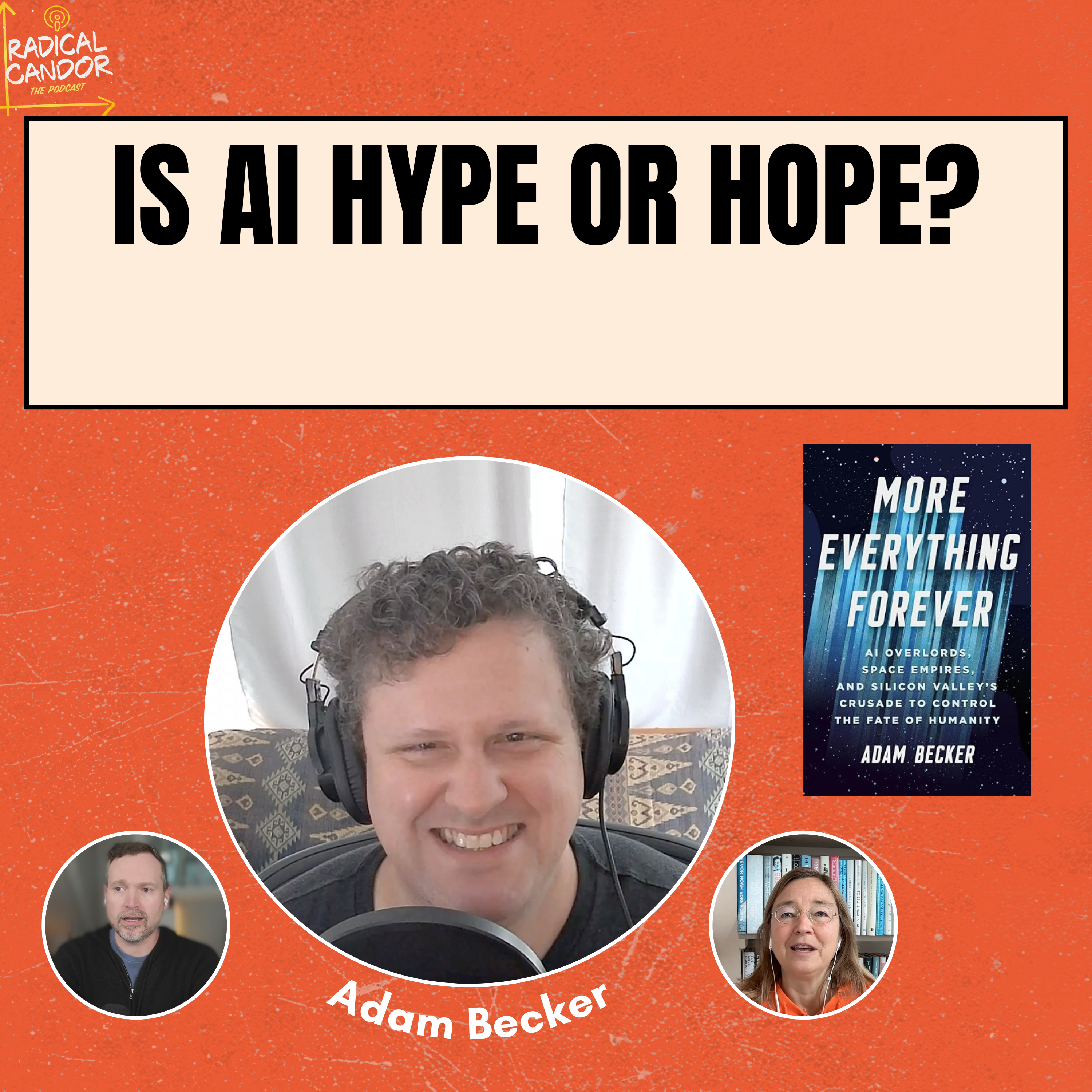
Cutting Through the AI Hype (with Adam Becker)

While the podcast team is taking a Radical Sabbatical, Kim Scott and Radical Candor co-founder Jason Rosoff are interviewing authors whose books have had a big impact on them over the past two years. In this episode, Kim and Jason sit down with Adam Becker, science journalist and author of More Everything Forever, to cut through the noise, the hype, and the fear surrounding AI — and help listeners think more clearly about what is actually going on. Adam’s central message: we are in an AI bubble, and almost everything you read in the news about AI is designed, wittingly or unwittingly, to keep that bubble inflated. The AI Bubble — What It Is and Why It Matters The valuations of the major AI companies only make sense if you believe in the Singularity — the idea that AI will soon become so powerful it transforms all of human civilization. Adam argues there is no scientific basis for this belief, and that the stories pushed by AI utopians and AI doomers alike all serve the same financial interests. The Singularity — Built on Science Fiction, Not Science At the heart of almost every extreme AI claim is the concept of recursive self-improvement — the idea that AI will make itself smarter and smarter until it becomes superintelligent. Adam’s response is characteristically direct: that’s a little like getting really good at neurosurgery by doing neurosurgery on the neurosurgery part of your brain. That is not how intelligence works. Who Are the Rationalists — and Why Do They Matter? The beliefs driving the major AI companies trace directly to a Bay Area community called the Rationalists, led by Eliezer Yudkowsky — not a computer scientist or AI researcher, but a self-taught internet poster. His famous paperclip machine thought experiment sounds absurd, yet Anthropic CEO, Dario Amodei came from this community, the co-founders of DeepMind met at a rationalist meetup, and OpenAI CEO, Sam Altman has suggested Yudkowsky might deserve the Nobel Peace Prize. The Harms That Are Happening Right Now By obsessing over imaginary future AI risks, we risk ignoring the very real harms AI is causing today — deepfake pornography, teen suicides linked to AI conversation loops, algorithmic bias in hiring, massive fossil fuel consumption, and worker displacement. As Jason puts it: these are not future risks. They are risks today. What AI Is Actually Good For The episode ends on a genuinely optimistic note. AI is showing real promise in mathematics research, software engineering, and automating genuinely tedious tasks. The key distinction: use AI to automate the drudgery, not the things that make life worth living. Writing is thinking — and we should not be offloading our thinking to machines. In this episode you’ll learn: Why we are in an AI bubble — and what that means for everything you read in the news What the Singularity actually is — and why there is no scientific basis for believing in it Why AI utopians and AI doomers are more similar than they appear What recursive self-improvement is — and why it doesn’t work the way its proponents claim Who the Rationalists are and why their influence on the AI industry matters What harms AI is causing right now that we risk ignoring Where AI genuinely shines — and how to think about deploying it wisely Why you should use AI to automate the drudgery and protect the thinking that makes life worth living About Adam Becker: Adam Becker is a science journalist, astrophysicist, and author of More Everything Forever. His previous book, What Is Real, explored the foundations of quantum mechanics. He hosts the podcast Dreaming Against the Machine and can be found on Bluesky at adambecker.bsky.social. CHAPTERS (00:31) Introduction to AI Conversations (02:15) Understanding the AI Bubble (05:35) The Singularity and Its Myths (12:06) Science Fiction vs. Reality (13:23) The Hype and Reality of AI (14:25) The Potential AI Bubble Burst (15:07) The Inevitability Debate (21:37) Regulating AI and the Future (24:39) Rationalism and AI Doom (24:52) The Golem and AI Hubris (25:43) Rationalism and AI Development (27:09) The Paperclip Maximizer Argument (30:13) Critique of AI Safety Narratives (33:06) Cult-like Dynamics in AI Communities (36:55) Skepticism Towards AI Doomsaying (38:15) Current AI Risks and Harms (40:05) Potential Positive Uses of AI (42:42) Regulating AI for a Better Future Connect with the Radical Candor team: ⁠⁠⁠⁠⁠⁠Website⁠⁠⁠⁠⁠⁠ ⁠⁠⁠⁠⁠⁠LinkedIn⁠⁠⁠⁠⁠⁠ ⁠⁠⁠⁠⁠⁠YouTube⁠⁠⁠ KEYWORDS: AI hype, AI bubble, artificial intelligence news, how to think about AI, AI skeptic, cutting through AI hype, AI utopia, AI doom, AI doomsday predictions, Silicon Valley hype, what is the singularity, singularity explained, recursive self improvement, AGI explained, what is AGI, superintelligent AI, AI and science fiction, rationalists explained, effective altruism, Eliezer Yudkowsky, paperclip machine argument, AI safety myths, AI regulation, how to regulate AI, antitrust and big tech, AI and climate change, AI environmental impact, AI deepfakes, AI harms today, AI worker displacement, algorithmic bias, AI and fossil fuels, what is AI good for, AI and software engineering, AI and mathematics, how to use AI wisely, AI and drudgery, writing is thinking, AI bubble collapse, More Everything Forever, Adam Becker, Dreaming Against the Machine, what is real quantum mechanics, Sam Altman, Dario Amodei, OpenAI criticism, big tech criticism, AI and democracy, how to read AI news, media literacy AI Learn more about your ad choices. Visit megaphone.fm/adchoices
50 minAbspielen in:

Di20Okt
Radical Candor: Communication at Work

Radical Candor: Communication at WorkHost

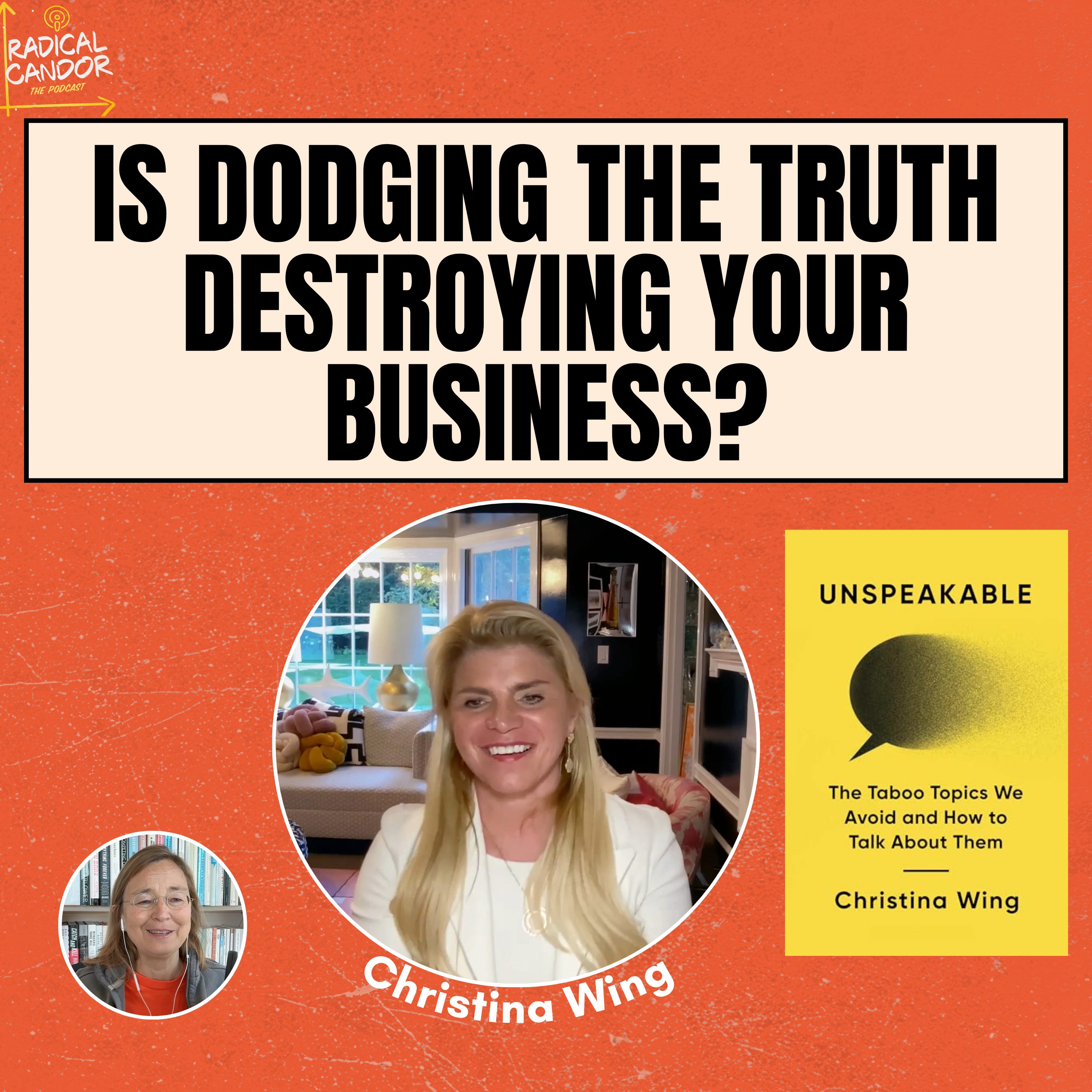
How can you confront a bullying boss without losing your job? (with Christina Wing)

While the podcast team takes a Radical Sabbatical, Kim interviews authors of books that have had a big impact on her over the past two years. We live in a world where the list of off-limits topics keeps growing. Age, failure, succession, failure, death, work-family conflict, money, fear, layoffs, governance, race, religion, and politics: these subjects often feel too hot to touch. So we avoid them and stick to small talk. But avoidance comes at an enormous cost. When we can't address the realities shaping our lives and careers, trust and relationships suffer, making it impossible to achieve results together. There IS a better way! In this episode, Kim Scott speaks with Christina Wing about her latest book, Unspeakable: The Taboo Topics We Avoid and How to Talk About Them. They start their conversation by talking about explained how and why Christina decided to take the risk to confront an abusive boss, and why staying silent would have been more risky in the end. Her Radical Candor paid off for both of them. He hadn't realized how his behavior was affecting others, and ultimately his career. When she explained the consequences, he changed his behavior. Christina and Kim explore the costs of avoiding uncomfortable conversations, and some tactics for how and why to embrace the discomfort. Christina shares a story about a family business where people were arguing about where to invest–but nobody knew how much was available to invest. Next, Christina explains how she’s learned to be more open about race, religion, and politics. Guest Background: Christina Wing is a Senior Lecturer in the Technology and Operations Management Unit at Harvard Business School. Her research focuses on families in business, and she is the creator of Demystifying the Family Enterprise, a course that explores family dynamics, operating companies, family offices, and legacy opportunities. In recognition of her contributions to the field, she was named a Top 25 Family Enterprise Academic by Family Capital. CHAPTERS (00:40) Introduction to Radical Sabbatical and Christina Wing (01:30) Facing Bullying in the Workplace (03:58) Confronting a Difficult Boss (06:54) The Transformation of a Bully (09:21) The Importance of Direct Communication (10:41) Ruinous Empathy vs. Radical Candor (13:14) The Consequences of Avoiding Difficult Conversations (13:14) The Role of Respect in Communication (13:14) The Need for Open Conversations (14:11) Curiosity and Understanding in Conversations (17:20) Navigating Difficult Moments vs. Difficult Conversations (19:07) The Art of Role-Playing in Conversations (21:21) Understanding Different Perspectives (23:40) Navigating Difficult Conversations (27:43) The Importance of Timing in Discussions (29:49) The Impact of Technology on Communication (33:50) Addressing Money Matters in Family Dynamics (38:25) The Power of Money and Its Societal Impact (41:00) The Necessity of Open Dialogue Connect with the Radical Candor team: ⁠⁠⁠⁠⁠⁠Website⁠⁠⁠⁠⁠⁠ ⁠⁠⁠⁠⁠⁠LinkedIn⁠⁠⁠⁠⁠⁠ ⁠⁠⁠⁠⁠⁠YouTube⁠⁠⁠ Keywords Christina Wing, Unspeakable, workplace bullying, direct communication, radical candor, empathy, difficult conversations, respect, curiosity role-playing, perspectives, timing, technology, money matters, family dynamics, societal impact, open dialogue, emotional intelligence Learn more about your ad choices. Visit megaphone.fm/adchoices
44 minAbspielen in:

Di22Sep
Radical Candor: Communication at Work

Radical Candor: Communication at WorkHost

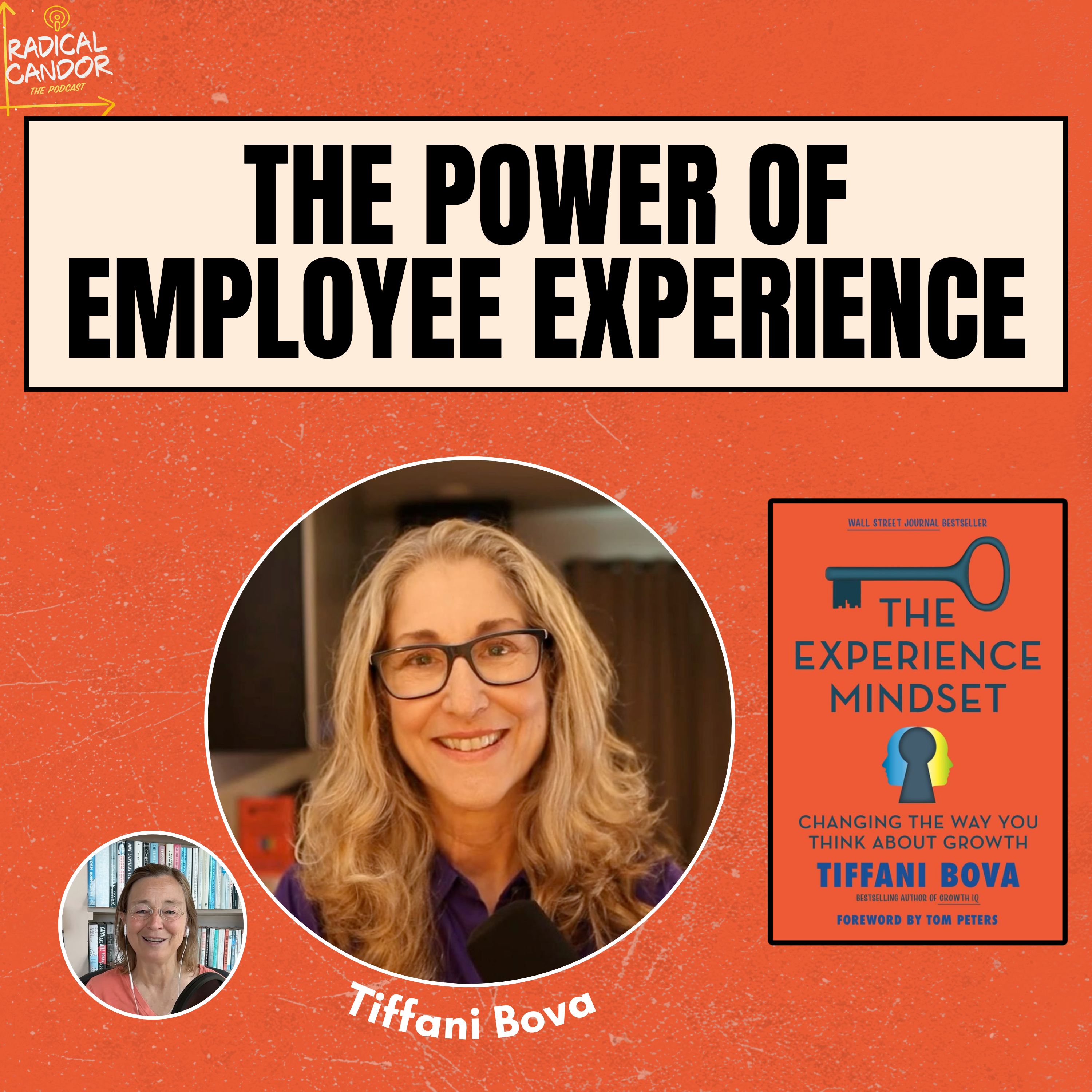
Fixing the Employee Experience (with Tiffani Bova)

While the podcast team is taking a Radical Sabbatical, Kim is interviewing authors of the books that have had a big impact on her in the past two years. Today, employees working in organizations both large and small are faced with incredible pressure to integrate AI into their workflows both to save costs and to do more. But many of those same employees express fears, “am I just training robots to put me out of a job?!” While it can be tempting for leaders in the C-suites to use AI to “finally get the upper hand on these whiny/needy/entitled employees!”, they risk damaging their core mission, specifically providing value to their customers. In fairness, those same leaders in the C-suite are rightly under pressure to integrate these new tools or risk getting wiped out by more nimble competition. So, what’s the best way to go about this? In this episode, Kim Scott speaks with Tiffani Bova about her latest book The Experience Mindset. In this conversation, they explore the critical relationship between employee experience and customer experience, emphasizing the importance of self-reflection, effective feedback mechanisms, and the necessity of training employees. The discussion also highlights the disconnect between executives and employees regarding training and feedback, illustrated through real-world examples like the 'Undercover Boss' show. Ultimately, the conversation underscores the need for organizations to prioritize employee engagement and actionable feedback to foster a positive workplace culture and drive business success. They discuss specifics such as the importance of addressing workplace irritations, the need for effective management training, and the significance of streamlining processes to enhance productivity. Tiffani especially stresses the critical role of office culture in fostering open communication and the necessity of training managers to improve employee satisfaction. The discussion also highlights the impact of automation and technology in optimizing processes and the importance of aligning incentives to encourage growth and innovation. They explore the intersection of technology and human experience, particularly focusing on the role of AI in the workplace. They discuss the importance of understanding the human element in technology adoption, the balance between tech and human interaction, and the critical role of company culture in driving business success. The conversation highlights real-world examples of AI implementation, the challenges of technology overload, and the necessity of fostering a cohesive culture that aligns with organizational values. Guest Background: As both a practitioner and academic Tiffani Bova offers a unique perspective and has helped lead the tech industry through several evolutions over her nearly 30-year career as Salesforce’s former Growth and Innovation Evangelist, and previously as a Research Fellow at Gartner and a sales, marketing and customer service executive for start-ups and Fortune 500 companies. She is the author of two Wall Street Journal bestsellers: GrowthIQ and The Experience Mindset. At The Futurum Group, she runs the research and strategy organization, while working closely with the entire leadership team to develop and scale its data and intelligence platform and insights for its clients. She also leads the team’s efforts within the technology and telecom channels, demonstrating the power and performance of connected go-to-market strategies and alliances. While at Gartner, her forward-looking insights and guidance helped some of the largest technology companies in the world including Microsoft, Cisco, Salesforce, Hewlett-Packard, IBM, Oracle, SAP, AT&T, Dell, Amazon-AWS, expand their market share and grow their revenues. She was a trusted advisor to multiple senior executives who were responsible for shifting from on-premise to as-a-service business models resulting in new billion-dollar divisions. In the late 90’s and early 2000s she was a pioneer of cloud computing, she previously led direct and indirect sales, marketing and customer service for two of the largest web-based start-ups in the US and spearheaded a newly formed division of a Fortune 500 company to $300 million in revenue over two and a half years. Tiffani has been featured in Harvard Business Review, Fortune, Fast Company, Bloomberg, MSNBC-TV, Yahoo Finance, INC and Forbes. She is also the host of the podcast What’s Next! with Tiffani Bova. More info here: https://www.tiffanibova.com/ [links for YouTube description] (Bio) https://www.tiffanibova.com/biography/ (book: The Experience Mindset) https://www.tiffanibova.com/the-experience-mindset/ (how to contact) https://www.tiffanibova.com CHAPTERS (00:44) Introduction to the Experience Mindset (02:19) Self-Reflection and Critical Feedback (04:56) The Importance of Employee Experience (05:39) Understanding Employee Feedback (07:23) The Undercover Boss Example (11:25) The Value of Training Employees (15:29) Disconnect Between Executives and Employees (17:30) Real-World Application of Employee Feedback (20:05) Identifying and Fixing Workplace Irritations (24:31) The Importance of Management Training (27:58) Understanding Processes and Their Impact (36:36) Streamlining Processes for Productivity (41:51) Understanding the Human Element in Technology (44:33) AI: Triumphs and Disasters in Implementation (47:32) The Balance of Technology and Human Experience (50:17) Creating a Cohesive Company Culture (55:20) The Impact of Culture on Business Success Connect with the Radical Candor team: ⁠⁠⁠⁠⁠⁠Website⁠⁠⁠⁠⁠⁠ ⁠⁠⁠⁠⁠⁠LinkedIn⁠⁠⁠⁠⁠⁠ ⁠⁠⁠⁠⁠⁠YouTube⁠⁠⁠ Learn more about your ad choices. Visit megaphone.fm/adchoices
60 minAbspielen in:

Mi16Sep
Radical Candor: Communication at Work

Radical Candor: Communication at WorkHost

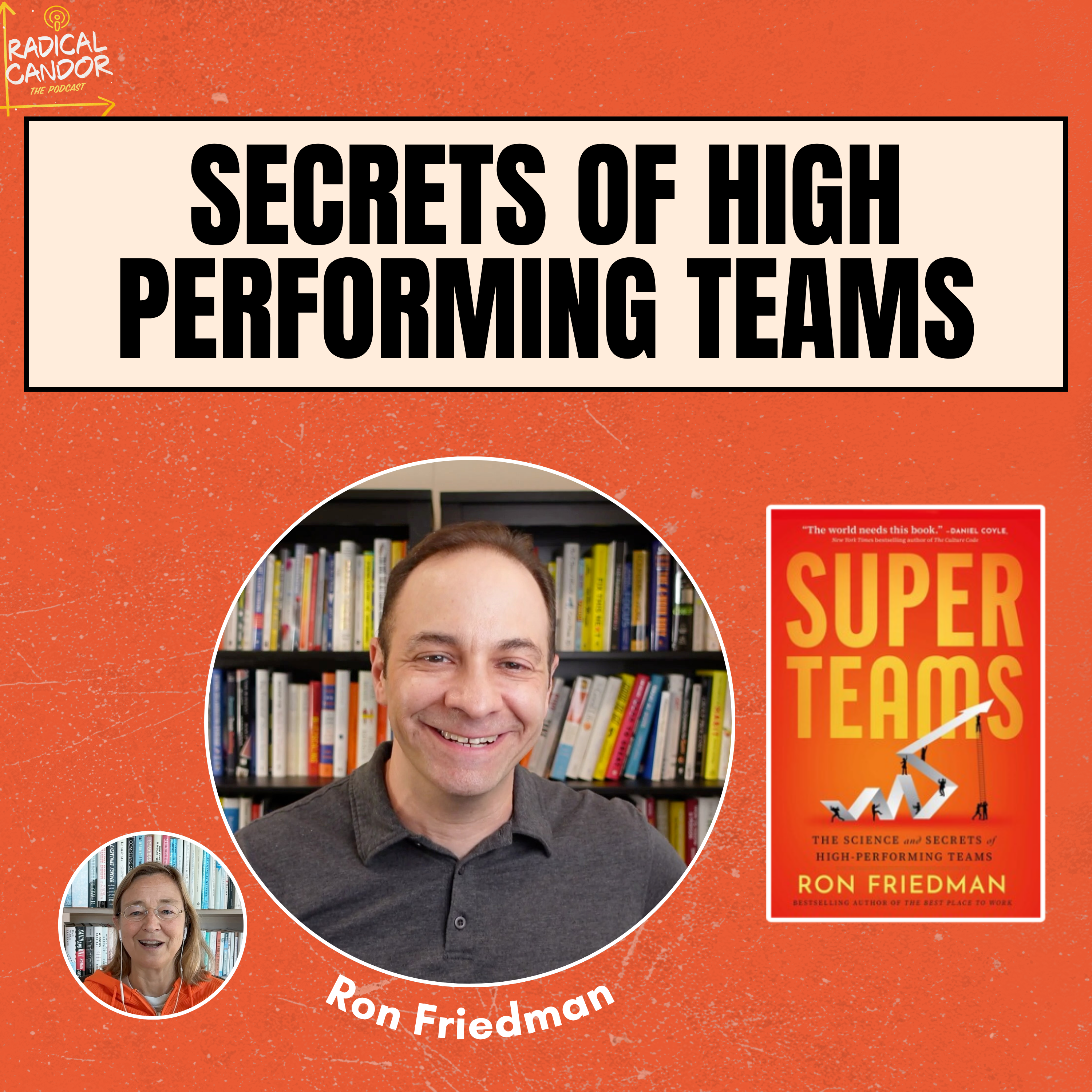
The Science Behind High-Performing Teams (with Ron Friedman)

While the podcast team is taking a Radical Sabbatical, Kim is interviewing authors whose books have had a big impact on her over the past two years. In this episode, Kim Scott speaks with Ron Friedman, PhD. Ron has written extensively about the sciences of building high-performing teams. Ron’s latest book is Superteams: The Science and Secrets of High-Performing Teams. They discuss the importance of the creative process, the role of restoration in productivity, and the key strengths that distinguish super teams from average teams. The conversation delves into effective meeting strategies, communication norms, and the significance of laughter in fostering team cohesion. Ultimately, they emphasize the need for customized approaches to team dynamics and the value of building supportive relationships within teams. They also explore the dynamics of effective teamwork, the importance of maintaining focus in a distracted world, and the role of hobbies in enhancing productivity. They discuss the attributes of great teammates, the significance of productive disagreement, and the necessity of effective feedback for continuous improvement. The dialogue emphasizes that super teams thrive on collaboration, shared goals, and a culture of open communication. Guest Background: Ron Friedman, PhD, is an award-winning psychologist who helps leaders build high-performing teams. He is the bestselling author of The Best Place to Work and Decoding Greatness, and the founder of Superteams, Inc., where he delivers keynotes, workshops, and executive advisory to senior leaders around the world. An expert on human motivation, Friedman has served on the faculties of the University of Rochester, Nazareth College, and Hobart and William Smith Colleges. He contributes regularly to Harvard Business Review, and his work has been featured in The New York Times, Financial Times, Bloomberg, NPR, CBS, FOX, NBC, Fast Company, The Washington Post, Forbes, and Inc. To learn more about his work, visit SuperteamsInc.com. CHAPTERS (00:41) Introduction to Super Teams (01:45) The Creative Process and Incubation (04:12) Restoration and Productivity (06:27) Research Behind Super Teams (07:50) Key Strengths of Super Teams (09:00) Meetings: The Double-Edged Sword (11:24) Effective Meeting Strategies (12:51) Customizing Team Dynamics (15:06) Communication Norms and Email Management (18:05) The Role of Laughter in Teams (20:57) Building Relationships Through Support (23:00) Navigating Humor and Inclusivity (26:52) Time Affluence and Productivity Strategies (30:08) Staying Focused in a Distracted World (32:51) The Power of Hobbies and Side Hustles (36:10) Attributes of Great Teammates (39:10) Building Effective Teams (41:40) The Importance of Productive Disagreement (45:02) Mastering Feedback for Improvement Connect with the Radical Candor team: ⁠⁠⁠⁠⁠⁠Website⁠⁠⁠⁠⁠⁠ ⁠⁠⁠⁠⁠⁠LinkedIn⁠⁠⁠⁠⁠⁠ ⁠⁠⁠⁠⁠⁠YouTube⁠⁠⁠ Keywords Super Teams, productivity, creative process, meetings, team dynamics, communication, laughter, leadership, time management, workplace culture focus, hobbies, teamwork, feedback, productivity, super teams, attributes, disagreement, communication, leadership Learn more about your ad choices. Visit megaphone.fm/adchoices
54 minAbspielen in:

Mi9Sep
Radical Candor: Communication at Work

Radical Candor: Communication at WorkHost

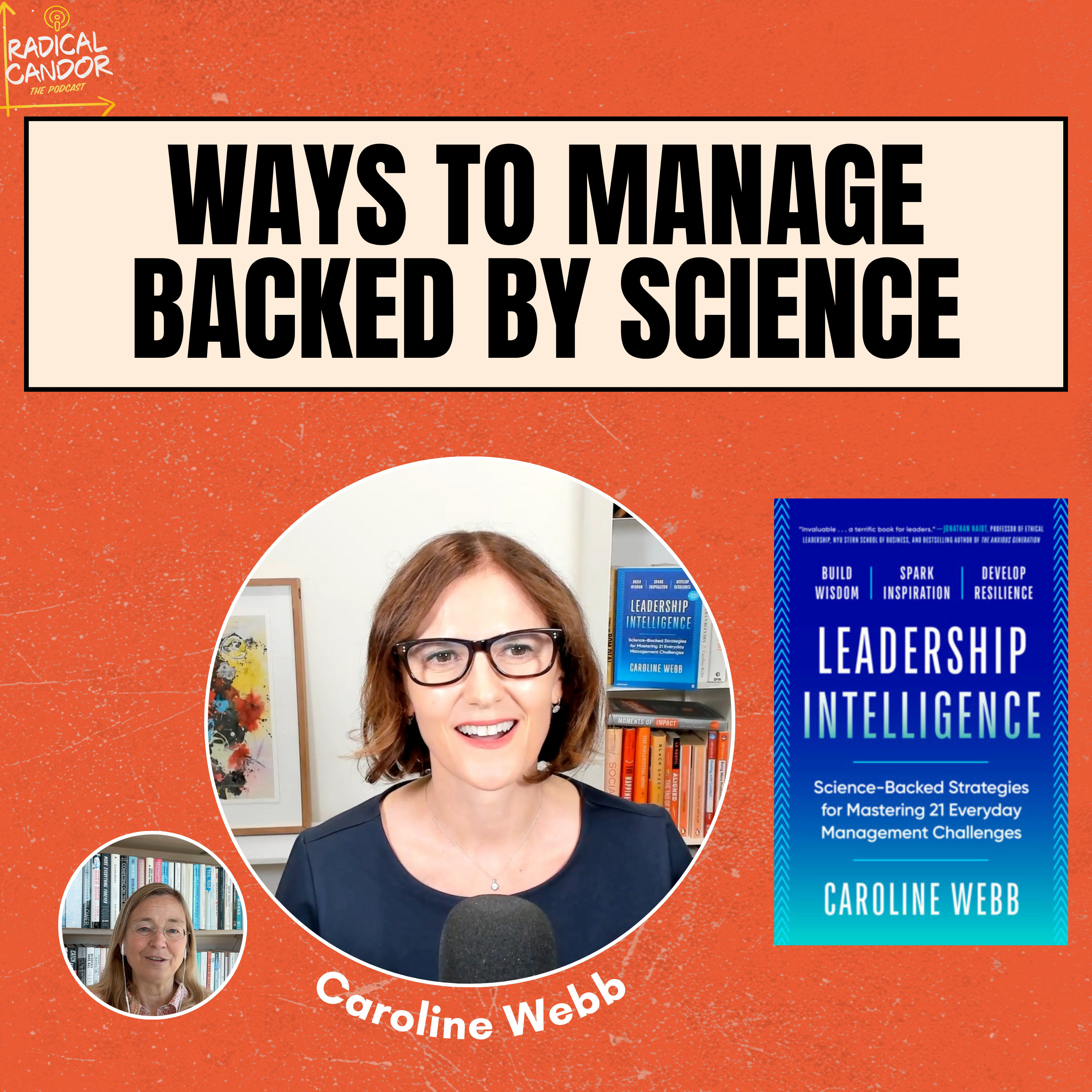
Ways to Manage - Back by Brain Science (with Caroline Webb)

While the podcast team is taking a Radical Sabbatical, Kim is interviewing authors whose books have had a big impact on her over the past two years. In this episode, Kim Scott speaks with Caroline Webb about her latest book, Leadership Intelligence. They explore the principles of effective leadership: the importance of widening perspectives; the role of cognitive load in decision-making; and the significance of intrinsic motivation through competence and connection. The conversation also delves into the dynamics of disagreement, the necessity of feedback, and practical strategies for fostering a collaborative team environment. They review effective feedback techniques and the significance of public praise. Caroline also emphasizes the role of gratitude and giving praise in building strong workplace relationships, the importance of understanding stress and resilience in leadership, and how leaders can foster team resilience through structured conversations and practices. The discussion culminates in the introduction of the five C's of team resilience, emphasizing the need for communication, clarity, calm, connection, and capacity in creating a supportive work environment. Guest Background: Caroline Webb is a leadership coach, economist, and speaker known for being one of the world's leading experts in using insights from behavioral science to improve professional life. She is the author of Leadership Intelligence and of How To Have A Good Day, a global bestseller published in 20 editions and over 60 countries. She is also a Senior Advisor to McKinsey, where she was previously a Partner. She has been rated one of the top 50 leadership and management thinkers by Inc. magazine, and one of Thinkers50's top 50 executive coaches in the world. CHAPTERS (00:38) Introduction to Leadership Intelligence (03:24) Deliberate Wisdom: Widening Perspectives (06:29) Causal Maps and Driver Trees (09:27) Navigating Disagreements in Leadership (12:30) The Importance of Turn-Taking in Discussions (15:22) Lightening Cognitive Load for Better Leadership (19:19) Intrinsic Inspiration: Competence and Connection (22:21) The Power of Feedback in Engagement (30:29) Effective Feedback and Praise Techniques (32:57) The Importance of Public Praise (37:01) Cultivating Gratitude and Appreciation (37:32) Understanding Stress and Resilience (44:45) Building Team Resilience with the Five C's Connect with the Radical Candor team: ⁠⁠⁠⁠⁠⁠Website⁠⁠⁠⁠⁠⁠ ⁠⁠⁠⁠⁠⁠LinkedIn⁠⁠⁠⁠⁠⁠ ⁠⁠⁠⁠⁠⁠YouTube⁠⁠⁠ Learn more about your ad choices. Visit megaphone.fm/adchoices
53 minAbspielen in:

Warum PodAppear

Folge Menschen, nicht Podcasts.

Du hast Kim in einer Sendung gehört. PodAppear findet für dich die nächste, und genauso für alle anderen, die du hören willst.

  • Eine Meldung, wenn die Person zu Gast istPer E-Mail: sofort oder gebündelt als Tages- oder Wochenübersicht. Dann nur noch auf Play drücken.
  • Gäste statt bloßer ErwähnungenFolgen, in denen ein Name nur fällt, landen getrennt. Eine Meldung heißt: Die Person ist wirklich in der Sendung.
  • Alle in einem FeedGründerinnen, Autoren, Sportler, Forscherinnen. Folge allen mit Namen, quer durch jede Sendung, in der sie auftreten.

Bis zu 15 Personen kostenlos, ohne Kreditkarte.

Di1Sep
Radical Candor: Communication at Work

Radical Candor: Communication at WorkHost

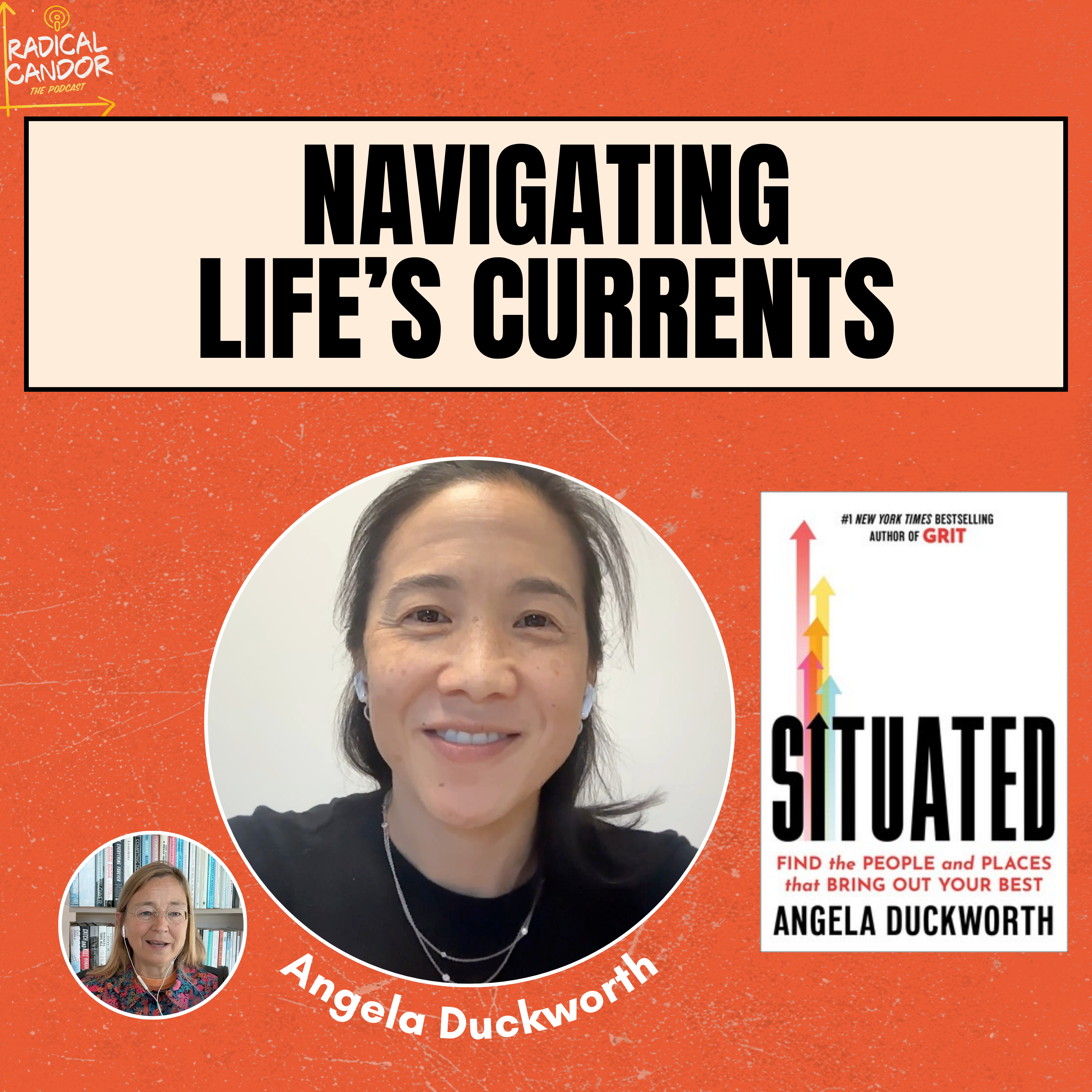
Get Situated for Success (with Angela Duckworth)

While the podcast team is taking a Radical Sabbatical, Kim is interviewing authors of the books that have had a big impact on her in the past two years. In this episode, Kim Scott speaks with Angela Duckworth. Her first book Grit: The Power of Passion and Perseverance, is a #1 New York Times bestseller. Her second book is Situated: Find the People and Places That Bring Out Your Best. In this conversation, Kim interviews Angela about her new book, 'Situated.' They explore a deceptively simple three-box model that explains all of human behavior. Angela emphasizes the power of environment in shaping our thoughts and leading us to–or away from–the results we want. She and Kim discuss the limitations of willpower. Angela describes the two key ingredients of a good situation: challenge and support. Kim and Angela explore why it is important to seek managers and peers who both challenge and support us. They discuss the importance of feedback and why Ruinous Empathy is so damaging to both personal and professional growth. If you’re looking for one thing you can control to get better situated, Angela shares some practical advice on curating your personal space to foster positive habits and growth. Guest Background: Prof. Angela Duckworth, PhD, is the Rosa Lee and Egbert Chang Professor at the University of Pennsylvania and faculty co-director of the Penn-Wharton Behavior Change for Good Initiative. Prior to her career in research, Angela founded an academic enrichment program for low-income children that was profiled as a Harvard Kennedy School case study and today serves hundreds of students each year. She has also been a McKinsey management consultant and a math and science teacher at public schools in New York City, San Francisco, and Philadelphia. Angela co-founded Character Lab, a nonprofit dedicated to advancing scientific insights that help children thrive. Angela completed her undergraduate degree in Advanced Studies Neurobiology at Harvard, graduating magna cum laude. With the support of a Marshall Scholarship, she completed an MSc with Distinction in Neuroscience from Oxford University. She completed her PhD in Psychology as a National Science Foundation Graduate Fellow at the University of Pennsylvania. Angela's TED talk is among the most viewed of all time. CHAPTERS (00:00) Introduction to Radical Sabbatical and Angela Duckworth's New Book (03:23) The Snorkeling Incident: A Metaphor for Situational Awareness (05:58) Finding Your Best Situations: The Power of Environment (08:31) The Three Boxes Model: Understanding Behavior and Thoughts (11:13) The Role of Situations in Shaping Our Thoughts (14:16) Changing Your Situation vs. Changing Your Thoughts (17:10) The Limitations of Willpower and Self-Control (20:13) The Quest for Control: Understanding Human Nature (23:15) Creating Supportive and Challenging Situations (27:11) Understanding Radical Candor (32:56) Navigating Ruinous Empathy (33:19) The Dilemma of Short-Term Comfort vs Long-Term Growth (34:30) Feeding the Good Wolf: A Metaphor for Growth (36:40) Economic Disparities and Their Impact (39:23) Agency and the Power of Choice (43:09) Curating Your Personal Space for Better Outcomes Connect with the Radical Candor team: ⁠⁠⁠⁠⁠⁠Website⁠⁠⁠⁠⁠⁠ ⁠⁠⁠⁠⁠⁠LinkedIn⁠⁠⁠⁠⁠⁠ ⁠⁠⁠⁠⁠⁠YouTube⁠⁠⁠ Learn more about your ad choices. Visit megaphone.fm/adchoices
52 minAbspielen in:

Mi25Mär
Radical Candor: Communication at Work

Radical Candor: Communication at WorkHost

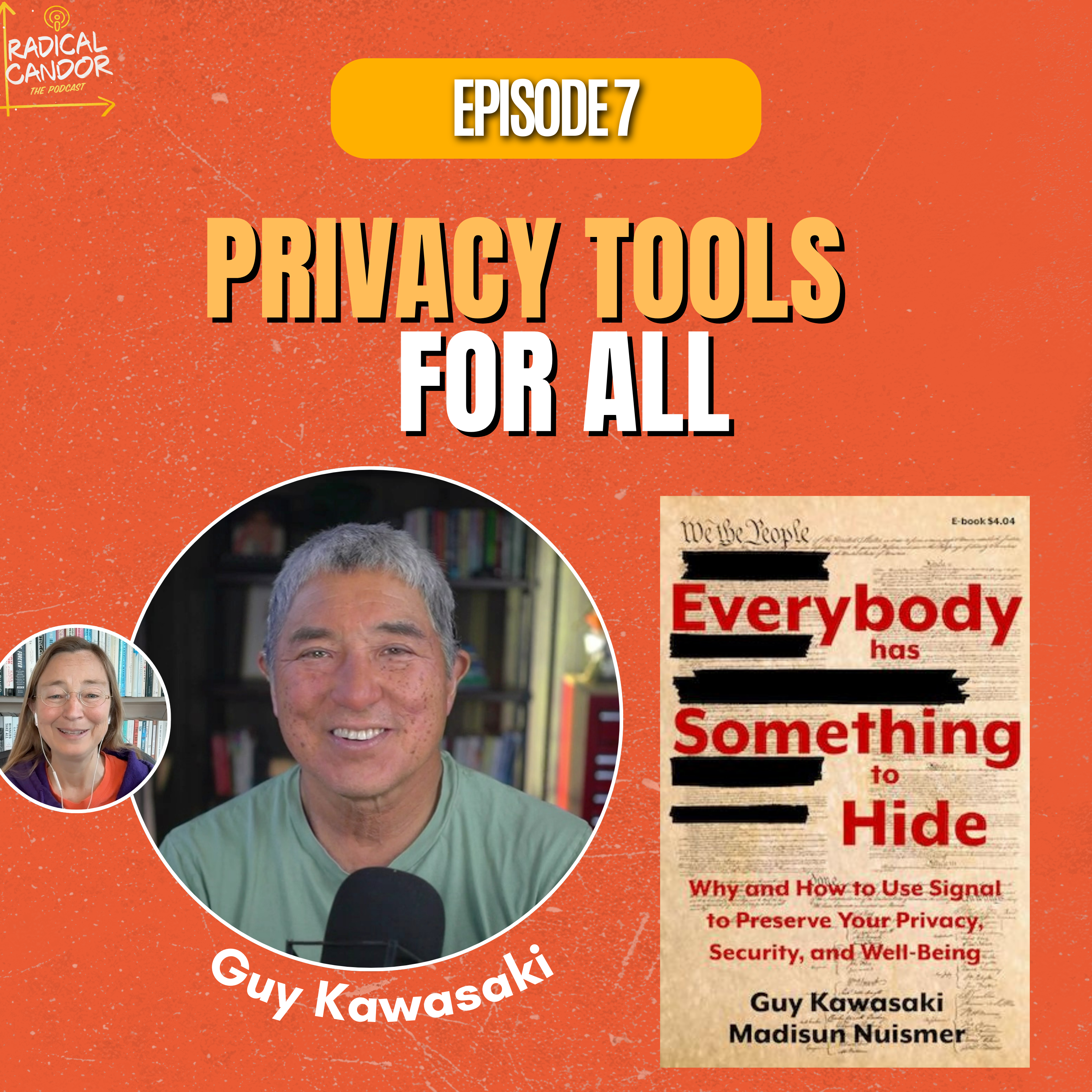
Your Privacy: Why You Should Care and Tools to Protect It 8 | 7

We all love the convenience of our digital devices and connected services.  But what about our ever expanding pile of digital breadcrumbs we leave behind as we go about our day? These breadcrumbs can be swept up by private companies to learn quite about us and target us with specific goods and services.  They can also be collected by government agencies who might use this information for legitimate police work or in some instances, political repression.  So, many people are asking themselves, should I be doing more to protect my personal privacy and how should I go about this.    Tech evangelist and prolific author Guy Kawasaki had asked that same question about a year ago. It started him on a journey to learn more about how to use some of the latest communications tools built from the ground up with personal privacy as its primary goal.  This led Guy to install and use Signal, one of the most popular tools today for personal privacy protection.  But as he started to put Signal into his communications work flow, he realized it was not obvious how to use Signal to its full potential. So, Guy collaborated with Madisun Nuismer to publish a “how to” book for using Signal, “Everybody Has Something to Hide” in January of 2026.   In this episode of the Radical Candor Podcast, Kim and Guy have a wide ranging conversation about Guy’s concerns about privacy that inspired him to start using Signal and then to write the book.  They discuss the centrality of privacy in a free and democratic society and how tools like Signal can enhance privacy. Kim also shares her experiences with privacy and censorship in her years working in the Soviet Union (and later Russia) in the early 1990s.  They also debate how much we should all trust so much of our personal data with these large tech companies.  As Guy mentions the old saying, “If you aren’t paying for the product, you ARE the product!”.   In the media rollercoaster, tech’s reputation is at a low point right now. It’s worth remembering that there are a lot of idealistic people in tech who are working hard to solve problems with the goal of making the world a better place. That is part of why we want to highlight Guy’s messages and what Meredith Whitaker, Brian Acton, Moxie Marlinspike, and the whole team at Signal are doing. Background on Guy Kawasaki: Guy Kawasaki is the chief evangelist of Canva and the creator of Guy Kawasaki’s Remarkable People podcast. He is an executive fellow of the Haas School of Business (UC Berkeley), and adjunct professor of the University of New South Wales. He was the chief evangelist of Apple and a trustee of the Wikimedia Foundation. He has written Wise Guy, The Art of the Start 2.0, The Art of Social Media, Enchantment, and eleven other books. Kawasaki has a BA from Stanford University, an MBA from UCLA, and an honorary doctorate from Babson College. Resources:  Electronic Freedom Foundation (EFF) information on how to use Signal.   Interviews with Meredith Whittaker is the President of The Signal Foundation.   Guy’s interview with Meredith Whittaker on his Remarkable People Podcast. Also an informative interview with Meredith on Scott Galloway’s Podcast.   CHAPTERS: (00:00) Exploring the New Book: Everybody Has Something to Hide (00:51) The Importance of Signal and Privacy (06:46) Personal Experiences with Privacy and Censorship (11:57) Trust in Tech Companies and Data Privacy (14:27) The Idealistic Problem Solvers in Tech (15:01) Philanthropy vs. Government Aid (15:38) Universal Basic Income as an Experiment (17:02) The Importance of Privacy in Democracy (19:09) The Role of Technology in Privacy (21:04) Evangelizing Signal for Privacy Protection Connect with the Radical Candor team: ⁠⁠⁠⁠⁠⁠Website⁠⁠⁠⁠⁠⁠ ⁠⁠⁠⁠⁠⁠Instagram⁠⁠⁠⁠⁠⁠ ⁠⁠⁠⁠⁠⁠TikTok⁠⁠⁠⁠⁠⁠ ⁠⁠⁠⁠⁠⁠LinkedIn⁠⁠⁠⁠⁠⁠ ⁠⁠⁠⁠⁠⁠YouTube⁠⁠⁠ ⁠⁠⁠⁠⁠⁠⁠⁠⁠⁠⁠⁠⁠⁠Bluesky⁠⁠⁠⁠ Learn more about your ad choices. Visit megaphone.fm/adchoices
23 minAbspielen in:

Mi18Mär
Radical Candor: Communication at Work

Radical Candor: Communication at WorkHost

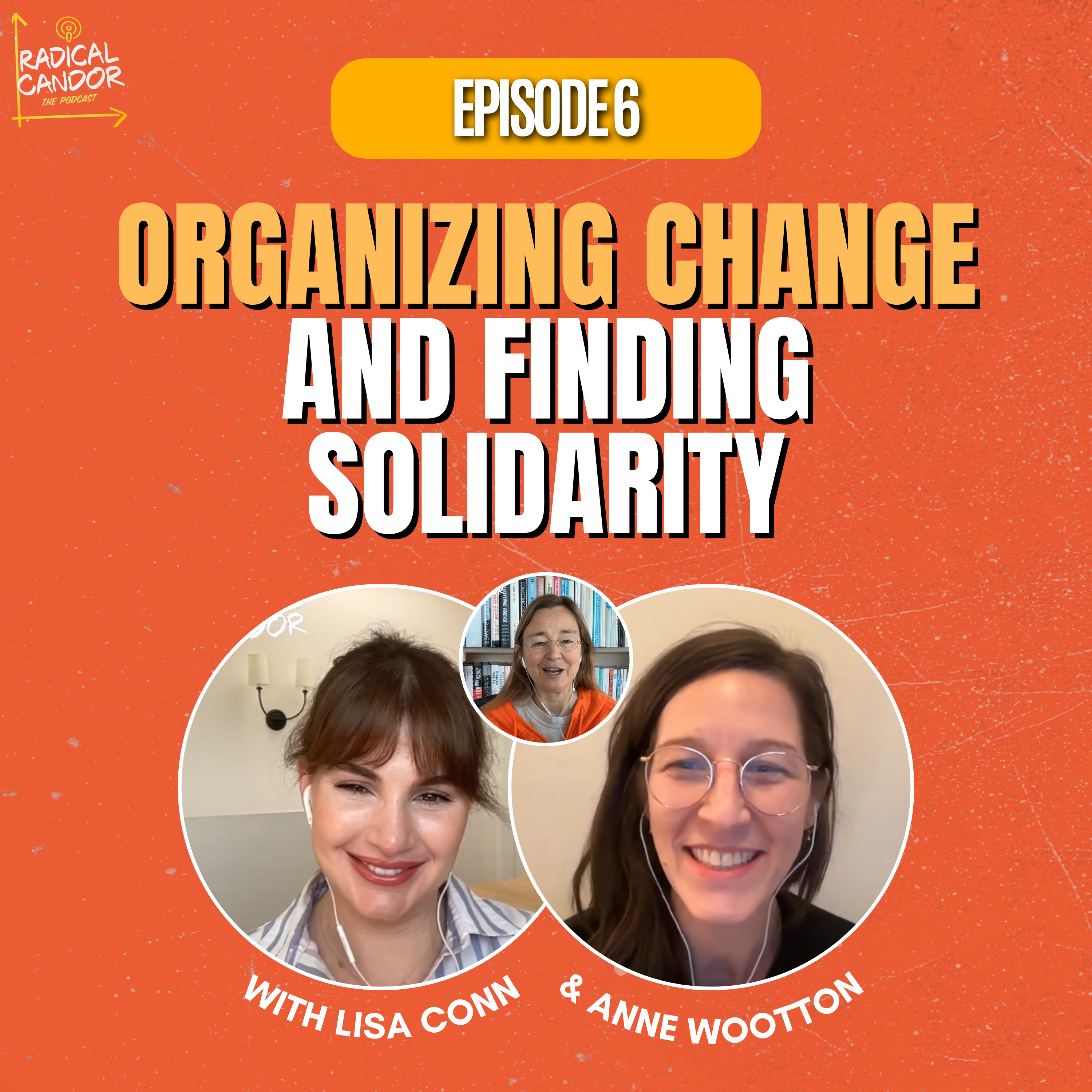
How Tech Employees Can Organize for Change (with Lisa Conn and Anne Wootton)

When tech is at its best, it is a group of people working together to solve hard problems in a way that makes the world a better place. That goal is what motivated so many folks in Silicon Valley to come here. How then did we cede the microphone to a small number of people who espouse an authoritarian, rich get richer algorithm? How can people working inside tech companies grab the bullhorn away from the authoritarians to describe the world we want to create? How we can take action to advocate for our vision of a better future? One recent manifestation of this is the ⁠ICEout.tech⁠ movement. In this episode, Kim speaks with Lisa Conn, founder of Gatheround and former Meta employee, and Anne Wootton, co-founder of Pop Up Archive and current senior engineering manager at Apple, about why they signed the pledge and what they hope it can accomplish. Kim, Lisa and Anne also discuss more generally ideas for people who are frustrated with the state of affairs at their companies or in tech more broadly, but are not sure where to start and how to find a community of similarly civic-minded people to take action. They discuss ways to host meetups for your like-minded co-workers while still working hard at your day job and staying within your company’s policies. They also talk about how important it is to speak respectfully with people who disagree with you. A good goal is to deepen your own thinking, not to change a person's mind. You probably won’t change their mind, and you probably won’t change yours. That doesn’t mean you’re wasting your breath. When you invite discussion about your beliefs with people who disagree, two good things can happen. One, you get to know them a bit better. Two, you challenge yourself to think more deeply. JS Mill said that belief without discussion can give way to prejudice. Background on ICEout.tech: ⁠⁠ICEout.tech⁠⁠, started by and for people in tech, wants the tech industry to use its influential position in our economy to stop ICE. The pledge, which was started after Renee Good was murdered in Minneapolis, has more than 2,000 verified signatures from people across major companies including NVIDIA, Anthropic, OpenAI, Google, Microsoft, Amazon, Meta, and dozens more. The call to speak up against ICE in tech gained momentum after Border Patrol agents killed Alex Pretti, an ICU nurse, and has drawn public support from leaders like Dario and Daniela Amodei (Anthropic), Reid Hoffman, and Vinod Khosla. Tech professionals want their CEOs to join them in this effort, to protect our neighbors and communities and stop ICE's terror. Resources: ⁠⁠ICEout.tech⁠⁠ information and how to get involved. Resist and Unsubscribe Resist and Unsubscribe - movement by Prof. Scott Galloway to encourage individuals to use their economic power by unsubscribing from big tech web services as a way to press these leaders to push for government reforms. CHAPTERS: (00:00) Introduction to iceOut.tech Movement (02:00) Understanding the Pledge and Its Impact (04:59) Navigating Ethical Dilemmas in Tech (10:02) The Role of Affluence and Courage (15:20) Building Solidarity and Taking Action (20:04) Employee Power and Organizing for Change (22:53) The Role of Technology in Society (26:10) Tactics for Influencing Corporate Decisions (29:51) Building Internal Solidarity and Communication (34:04) Navigating Polarization and Finding Common Ground (39:03) Self-Care and Community Engagement Connect with the Radical Candor team: ⁠⁠⁠⁠⁠⁠Website⁠⁠⁠⁠⁠⁠ ⁠⁠⁠⁠⁠⁠Instagram⁠⁠⁠⁠⁠⁠ ⁠⁠⁠⁠⁠⁠TikTok⁠⁠⁠⁠⁠⁠ ⁠⁠⁠⁠⁠⁠LinkedIn⁠⁠⁠⁠⁠⁠ ⁠⁠⁠⁠⁠⁠YouTube⁠⁠⁠ ⁠⁠⁠⁠⁠⁠⁠⁠⁠⁠⁠⁠⁠⁠Bluesky⁠⁠⁠⁠ Learn more about your ad choices. Visit megaphone.fm/adchoices
41 minAbspielen in:

Mi11Mär
Radical Candor: Communication at Work

Radical Candor: Communication at WorkHost

Rethinking Authenticity and What to Do Instead with Dr. Tomas Chamorro-Premuzic 8|5

“Be yourself.” “Bring your whole self to work.” “Don’t worry what people think.” These phrases sound empowering—but in real workplaces, they can create confusion, conflict, and even harm. In this episode of The Radical Candor Podcast, Kim Scott and Amy Sandler sit down with organizational psychologist Tomas Chamorro-Premuzic—Chief Science Officer at Russell Reynolds Associates, professor of business psychology at University College London and Columbia University, and author of Don’t Be Yourself: Why Authenticity Is Overrated and What to Do Instead. They start with a moment of actual Radical Candor: Kim reached out after Tomas and Amy Edmondson accidentally conflated Radical Candor with “brutal honesty.” Instead of stewing, she did the hard (and human) thing—she talked to him. That conversation sets the tone for a bigger question: What does it really mean to be “authentic” at work? Tomas breaks down four “authenticity traps” that sound like wisdom but often backfire: Always be honest with yourself and others Don’t worry what people think of you Always stay true to your values, no matter what Bring your whole self to work Together, they explore what replaces these traps: self-complexity, emotional intelligence, feedback you can absorb without defensiveness, and the discipline to regulate your impulses so you can build trust and safety—without turning the workplace into either chaos or conformity. If you’ve ever felt stuck between being “real” and being effective, this episode offers a more useful frame: your right to be you should never override your obligation to others. ⁠⁠⁠Website⁠⁠⁠ ⁠⁠⁠Instagram⁠⁠⁠ ⁠⁠⁠TikTok⁠⁠⁠ ⁠⁠⁠LinkedIn⁠⁠⁠ ⁠⁠⁠YouTube⁠⁠⁠ ⁠⁠Bluesky Resources: Fast Company: To create psychological safety, don't bring your whole self to work TEDx Talk: Why Do So Many Incompetent Men Become Leaders? Next Big Idea Club: The Surprising Science of Why Being Authentic Can Hold You Back HBR Podcast: Why Are We Still Promoting Incompetent Men? Why Do So Many Incompetent Men Become Leaders? (And How To Fix It) [book] Don't Be Yourself: Why Authenticity Is Overrated and What to Do Instead [book] I, Human: AI, Automation, and the Quest to Reclaim What Makes Us Unique [book] Dr. Tomas Chamorro-Premuzic [website] Mentioned on the podcast:  Infantilised: How Our Culture Killed Adulthood [book] Seinfeld episode: Life Hack “Do the opposite” [YouTube short] The Best Leaders are Great Followers HBR article by Tomas Chamorro-Premuzic and Amy C. Edmondson Chapters: (00:00) IntroductionKim and Amy welcome Tomas Chamorro-Premuzic and reflect on how this conversation began with Radical Candor. (03:10) Radical Candor vs. “Brutal Honesty”How a misinterpretation sparked a real conversation about kindness, nuance, and impact. (07:20) Why “Don’t Be Yourself”The meaning behind the provocative title and why authenticity advice often backfires at work. (14:10) The Four Authenticity TrapsAlways be honest, don’t care what people think, never compromise your values, and bring your whole self to work. (19:30) Confidence, Competence, and FeedbackWhy developing skill comes first—and how confidence is often about timing and delivery. (27:30) Staying True to Values Without Becoming DogmaticWhy uncompromising values can divide teams and what leadership actually requires. (30:10) Authenticity as PrivilegeWhy complete self-expression is often a luxury of the powerful, not a universal standard. (36:15) Psychological Safety Isn’t ComfortWhy safety should enable productive discomfort, not chaos or bullying. (41:55) Emotional Intelligence vs. Unfiltered AuthenticityWhy adapting to others is a strength, not a lack of integrity. (49:10) Regulating Impulses as a LeaderHow filtering behavior builds trust without sacrificing humanity. (01:03:50) Conclusion Connect:Resources for show notes:  Learn more about your ad choices. Visit megaphone.fm/adchoices
1 h 04 minAbspielen in:

Mi4Mär
Radical Candor: Communication at Work

Radical Candor: Communication at WorkHost

Why We Don’t Do What We Know We Should: Beliefs, Habits, and AI Practice with Nir Eyal 8|4

What if the reason you don’t give feedback, follow through, or change your habits… isn’t willpower? What if it’s a belief? In this episode of The Radical Candor Podcast, Kim Scott talks with Nir Eyal — author of Hooked, Indistractable, and his new book Beyond Belief — about the hidden force behind motivation: the stories we tell ourselves. They explore: Why AI can’t replace human relationships — but can help us practice hard conversations The limiting belief that keeps people silent at work Why knowing what to do isn’t enough How pain (not pleasure) drives behavior The difference between addiction and habit Why “time management is pain management.” How to reinterpret anxiety as readiness And why beliefs are tools — not truths If you’ve ever struggled to speak up, follow through, or break a bad habit — this conversation will help you see what’s really getting in the way.Chapters (00:00) Introduction Kim welcomes Nir Eyal and introduces AI portraits and scaling human insight. (04:30) Can AI Replace Relationships? Why AI can’t replace human connection — but may be the safest place to practice hard conversations. (10:15) Refining AI Voice & Identity What it means to “scale yourself” without losing your humanity. (16:40) The Limiting Belief That Keeps You Silent “If you don’t have anything nice to say…” — and why that belief causes harm. (23:10) Beliefs Are Tools, Not Truths Nir explains the core thesis of Beyond Belief. (29:30) Placebos, Pain, and Perception What belief can change — and what it can’t. (36:20) Stage Fright vs. Readiness Reinterpreting anxiety as oxygen for performance. (43:10) Time Management Is Pain Management Why distraction is about escaping discomfort. (50:40) Addiction vs. Habit Why addiction is about escaping pain — not seeking pleasure. (57:00) Why We Don’t Do What We Know The missing link between knowledge and action. (01:04:00) Radical Candor and the “Nice” Trap The story of Bob — and why staying silent isn’t kind. (01:10:00) If It’s Yellow, Let It Mellow Marriage, feedback, and choosing what truly matters. (01:13:00) Conclusion Learn more about your ad choices. Visit megaphone.fm/adchoices

48 minAbspielen in:

Mi18Feb
Radical Candor: Communication at Work

Radical Candor: Communication at WorkHost

AI Gods, Space Empires, and the Stories Tech Uses to Justify Power with Adam Becker 8|3

What if the loudest stories about the future—AI gods, Mars colonies, digital immortality—aren’t science at all, but science fiction masquerading as inevitability? In this episode of The Radical Candor Podcast, Kim Scott and Amy Sandler are joined by science journalist and astrophysicist Adam Becker (PhD in computational cosmology), author of More Everything Forever. Adam breaks down the “big three” myths that dominate Silicon Valley’s imagination: space colonization, superintelligent god-like AI, and the singularity. He explains why both the utopian and apocalyptic versions of AI stories often share the same assumption—unimaginable AI power—and why that assumption doesn’t match reality. They also explore the deeper pattern underneath these myths: the belief that every problem can be solved with technology (usually computer technology), even when the barriers are political and social—collective action, persuasion, solidarity, and power. Along the way, Adam shares how he stayed sane while writing about “seriously disturbing ideas,” and why reconnecting with the natural world (and real human relationships) is a necessary antidote to screen-mediated life. If you’ve ever felt overwhelmed by the “AI will save us” vs. “AI will doom us” debate, this conversation offers a clearer, more grounded frame—and a reminder that being human matters. ⁠⁠⁠⁠Website⁠⁠⁠⁠ ⁠⁠⁠⁠Instagram⁠⁠⁠⁠ ⁠⁠⁠⁠TikTok⁠⁠⁠⁠ ⁠⁠⁠⁠LinkedIn⁠⁠⁠⁠ ⁠⁠⁠⁠YouTube⁠ ⁠⁠⁠⁠⁠⁠⁠⁠Bluesky⁠⁠⁠ Resources for show notes: ⁠Adam Becker’s website⁠ ⁠More, Everything, Forever book page⁠ ⁠Adam Becker on Star Talk podcast⁠ ⁠Dave Troy presents: Understanding TESCREAL with Dr. Timnit Gebru and Émile Torres⁠ ⁠Why Silicon Valley’s Most Powerful People Are So Obsessed With Hobbits⁠ Referenced in conversation: Blade Runner (as an example of dystopian sci-fi being misunderstood) Star Wars / Jabba the Hutt (as an example of misreading stories) Lord of the Rings / Palantír (as a cautionary reference) Jurassic Park (“they didn’t stop to consider whether they should”) Public libraries (as a civic good worth supporting) Chapters: (00:00) Introduction Kim and Amy welcome Adam Becker to unpack Silicon Valley’s stories about the future. (06:06) The Myths Driving Tech Ideology Space colonization, superintelligent AI, and the singularity—and why they don’t hold up. (11:52) When Sci-Fi Turns into Strategy How dystopian stories get misread as roadmaps (Palantir, “Torment Nexus,” and more). (15:06) More Everything Forever Why endless expansion feels inevitable in tech—and why Adam argues it’s flawed. (21:24) “Can” vs. “Should” Why tech leaders dodge both questions—and what that reveals about power. (23:19) You Can’t Escape Politics by Going to Space Why “Mars as a reset button” is a fantasy—and politics follows humans everywhere. (33:22) AI Doom vs. AI Utopia Why both narratives rely on the same shaky assumption about “AGI.” (37:21) Solidarity as a Counterbalance Why labor organizing matters when leadership values diverge from workers’ values. (41:02) “AGI Will Fix Climate” Why betting on future AI while burning more energy now is a dangerous logic trap. (01:03:50) Conclusion Learn more about your ad choices. Visit megaphone.fm/adchoices
1 h 05 minAbspielen in:

Mi11Feb
Radical Candor: Communication at Work

Radical Candor: Communication at WorkHost

The 7 Hidden Beliefs That Hold Leaders Back with Muriel Wilkins 8|2

Why do so many leaders work hard to change — only to end up in the same place months later? What if the problem isn’t effort, but the beliefs running in the background? In this episode of The Radical Candor Podcast, Kim Scott and Amy Sandler are joined by Muriel Wilkins — executive coach, C-suite advisor, host of Coaching Real Leaders, and author of Leadership Unblocked. Together, they unpack why high performers default to action, how action bias can backfire when internal beliefs stay the same, and what it takes to create sustainable leadership growth. Muriel introduces seven common “hidden blockers,” including I need it done now, I can’t say no, and I don’t belong here, and explains how these beliefs drive behavior that feels productive in the short term but creates dissonance over time. The conversation also explores how leaders can build the muscle of noticing what’s happening internally, ask better coaching questions without attachment, and reduce unnecessary suffering by changing how they respond to challenges. If you’ve ever wondered, “Why do I keep ending up here again?” this episode offers a grounded, practical way forward. Connect: ⁠⁠⁠Website⁠⁠⁠ ⁠⁠⁠Instagram⁠⁠⁠ ⁠⁠⁠TikTok⁠⁠⁠ ⁠⁠⁠LinkedIn⁠⁠⁠ ⁠⁠⁠YouTube⁠⁠⁠ ⁠⁠Bluesky⁠⁠ Resources for show notes:  Leadership Unblocked: Break Through the Beliefs That Limit Your Potential book  The Hidden Beliefs That Hold Leaders Back Harvard Business Review article Coaching Real Leaders podcast Own the Room: Discover Your Signature Voice to Master Your Leadership Presence book Muriel Wilkins website Muriel Wilkins on Radical Candor podcast Chapters: (00:00) Introduction + Muriel Returns (01:20) Why Muriel Wrote Leadership Unblocked (01:50) Action Bias: Why Change Doesn’t Stick (03:00) Actions vs. Your Internal Operating System (04:04) The Fix-It Reflex in Work and Life (06:01) Discomfort, Control, and the Urge to Solve (09:25) Hidden Blockers: What They Are and Why They’re Hidden (10:57) The 7 Hidden Blockers (Overview) (11:48) “I Need It Done Now” and Reframing Time (17:03) Building the Noticing Muscle (39:58) Coaching Yourself Before Coaching Others (53:33) Conclusion Learn more about your ad choices. Visit megaphone.fm/adchoices

55 minAbspielen in:

Mi10Dez 25
Radical Candor: Communication at Work

Radical Candor: Communication at WorkHost

From Optimism to Reckoning: Reflections on Silicon Valley with Steven Levy 7|43

The early internet was built on big hopes—access, openness, connection, and the belief that technology could make the world fairer. In this episode of The Radical Candor Podcast, Kim & Jason are in conversation with Steven Levy. His recent article, “I thought I knew Silicon Valley. I was wrong.”, becomes the lens through which they revisit tech’s early promise and its reality today. They take an honest look at the optimism that shaped Silicon Valley’s early culture and how those ideals unraveled. Kim & Steven candidly share their unique perspective of  how it feels to recognize the gap between what they believed and what actually happened as two people who had a front row seat.  If you’re looking for a thoughtful, grounded, and honest conversation about how tech’s story was written—and rewritten—in real time, and what today’s leaders can learn from examining both intention and impact, this episode offers clarity and perspective you can apply right now. Get all of the show notes at ⁠⁠⁠⁠⁠⁠⁠⁠⁠⁠⁠⁠⁠⁠⁠⁠⁠⁠⁠RadicalCandor.com/podcast⁠⁠⁠⁠⁠⁠⁠⁠⁠⁠⁠⁠⁠⁠⁠⁠⁠⁠⁠. Episode Links:⁠⁠⁠⁠⁠⁠⁠⁠⁠⁠⁠⁠⁠ ⁠⁠⁠⁠⁠⁠⁠⁠⁠⁠⁠⁠⁠⁠⁠⁠⁠⁠⁠⁠"I Thought I Knew Silicon Valley, I was Wrong" ⁠⁠⁠⁠⁠⁠⁠⁠⁠⁠⁠⁠⁠⁠⁠⁠⁠⁠⁠⁠About Steven Levy⁠⁠⁠⁠⁠⁠⁠⁠⁠⁠⁠⁠⁠⁠⁠⁠⁠⁠⁠⁠ ⁠⁠⁠⁠⁠⁠⁠⁠⁠⁠⁠⁠⁠⁠⁠⁠⁠⁠⁠⁠Steven Levy's Newsletter⁠⁠⁠⁠⁠⁠⁠ ⁠⁠⁠⁠⁠⁠⁠⁠⁠⁠⁠⁠⁠⁠⁠⁠⁠⁠⁠⁠Steven Levy's Books⁠⁠⁠⁠⁠⁠⁠⁠⁠⁠⁠⁠⁠⁠ ⁠⁠⁠⁠⁠⁠⁠⁠⁠⁠⁠⁠⁠⁠⁠⁠⁠⁠⁠⁠⁠"Virtual Love" by Kim Scott ⁠⁠⁠⁠⁠⁠⁠⁠⁠⁠⁠⁠⁠⁠⁠⁠⁠⁠⁠⁠"Enshittification" by Cory Doctorow⁠⁠⁠⁠⁠⁠⁠⁠⁠⁠⁠⁠⁠⁠ ⁠⁠⁠⁠⁠⁠⁠⁠⁠⁠⁠⁠⁠⁠⁠⁠⁠⁠⁠"The Age of Extraction" by Tim Wu⁠⁠⁠⁠⁠⁠⁠⁠⁠⁠⁠⁠⁠ Connect: ⁠⁠⁠⁠⁠⁠⁠⁠⁠⁠⁠⁠⁠⁠⁠⁠⁠⁠⁠Website⁠⁠⁠⁠⁠⁠⁠⁠⁠⁠⁠⁠⁠⁠⁠⁠⁠⁠⁠ ⁠⁠⁠⁠⁠⁠⁠⁠⁠⁠⁠⁠⁠⁠⁠⁠⁠⁠⁠Instagram⁠⁠⁠⁠⁠⁠⁠⁠⁠⁠⁠⁠⁠⁠⁠⁠⁠⁠⁠ ⁠⁠⁠⁠⁠⁠⁠⁠⁠⁠⁠⁠⁠⁠⁠⁠⁠⁠⁠TikTok⁠⁠⁠⁠⁠⁠⁠⁠⁠⁠⁠⁠⁠⁠⁠⁠⁠⁠⁠ ⁠⁠⁠⁠⁠⁠⁠⁠⁠⁠⁠⁠⁠⁠⁠⁠⁠⁠⁠LinkedIn⁠⁠⁠⁠⁠⁠⁠⁠⁠⁠⁠⁠⁠⁠⁠⁠⁠⁠⁠ ⁠⁠⁠⁠⁠⁠⁠⁠⁠⁠⁠⁠⁠⁠⁠⁠⁠⁠⁠YouTube⁠⁠⁠⁠⁠⁠⁠⁠⁠⁠⁠⁠⁠⁠⁠⁠⁠⁠⁠ ⁠⁠⁠⁠⁠⁠⁠⁠⁠⁠⁠⁠⁠⁠⁠⁠⁠⁠Bluesky⁠⁠⁠⁠⁠⁠⁠⁠⁠⁠⁠⁠⁠ Chapters: (00:00) Introduction Kim, Jason, and Steven set the stage for a reflective look at Silicon Valley’s promise and reality. (01:39) “I Thought I Knew Silicon Valley. I Was Wrong.” Steven shares what led him to write the article and how his perspective shifted. (03:38) From Idealism to Influence: When Tech’s Culture Shifted Exploring the moment Silicon Valley’s playful, rebellious spirit hardened into something more powerful—and less accountable. (06:30) Recalling the Internet We Hoped For Revisiting the early optimism that shaped the web and the disillusionment that followed. (12:27) The Claims of AI Examining the bold promises tech leaders make about AI—and why skepticism matters. (15:01) The Long Tail Early optimism about the internet’s potential to democratize opportunity. (16:56) Enshittification & The Age of Extraction Cory Doctorow’s framework, antitrust debates, and how market consolidation reshaped the online ecosystem. (20:05) Do a CEO’s Values Matter? A look at how leaders like Mark Zuckerberg and Jeff Bezos have evolved—and what that means for their companies. (24:37) What to Do When You Don’t Align With Your Company Reflecting on how to stay true to your values when the culture around you shifts. (29:36) Looking Back with Clearer Eyes Kim reckons with past choices, blind spots, and what accountability looks like now. (32:29) What Corrupted Silicon Valley When too much money and power are concentrated in too few hands. (33:56) Conclusion Learn more about your ad choices. Visit megaphone.fm/adchoices

36 minAbspielen in: