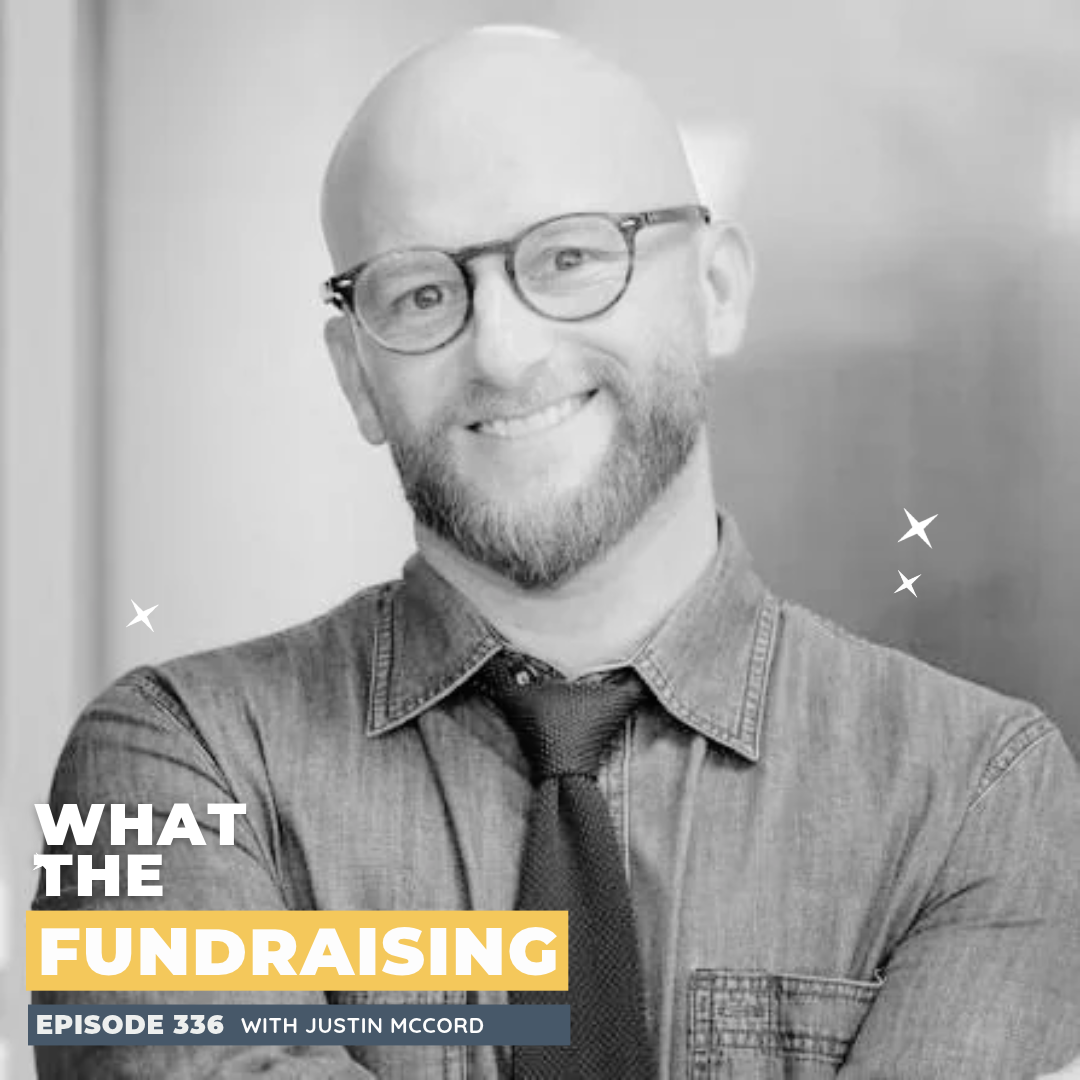
What the Fundraising
336: Storytelling is the Last True Unfair Advantage in Business with Justin McCord
When pressure and noise pile up on nonprofit leaders, we start making decisions to survive this year’s goals, even when those decisions weaken the foundation we’ll need two years from now. In this in-person episode recorded in the What the Fundraising studio, Justin McCord of RKD Group joins Mallory to talk about what that pressure does to our choices, and why story and presence are still the most powerful tools we have. Justin brings 15 years in nonprofit marketing and a decade before that in minor league baseball and Major League Soccer, where he first fell in love with direct response. He and Mallory talk about a Jenga tower that’s quietly getting top-heavy, why the smallest possible story cuts through the most noise, and how a founder recording an unpolished video from their car can do more than a polished campaign. They also get into using donor data to spark curiosity instead of assumptions, why fear crowds out curiosity, and what’s missing when content feels AI-generated even without the obvious tells. Key takeaways from this episode. Pressure and noise change our behavior. Under pressure, leaders lean toward decisions that hit this year’s number no matter what happens downstream, and under noise they tell the broadest story possible instead of the most personal one. Watch out for the Jenga problem. Pulling easy blocks from the bottom to stack on top solves today’s pressure but weakens your base. Justin’s team pushes for decisions that look 18 to 24 months ahead instead of 12. Make the story smaller. One person helped, one life changed, one table provided for. There’s a reason this works: in Darley and Latané’s classic 1968 bystander study, people who believed they were the only one hearing an emergency were far more likely to help than people who thought others were listening too. One-to-one makes it personal. Presence is what makes it land. A handwritten note, a voice memo, a founder’s unpolished iPhone video all ask the reader to show up fully, and they show up because you did. Let data create wonder, not certainty. For one hospital, every consecutive-year donor they lost took 10 new first-year donors to replace. Data should tell you where to focus and make you more curious about the people in it, not more sure you already know them. Fear drowns out curiosity. Real curiosity means sitting with uncertainty, which is hard when you’re under pressure. But walking in with the answer already decided leaves no room for the donor, or for creativity. Support for this show is brought to you by Practivated. Practivated delivers AI-powered donor conversation simulations that let fundraisers practice in a private, judgment‑free space—building confidence, refining messaging, and improving outcomes before the real conversation even begins. Developed by fundraising experts with real‑time coaching at its core, it’s the smart way to walk into every donor interaction calm, prepared, and ready to connect. Learn more at practivated.com. Connect with me: Instagram: https://www.instagram.com/_malloryerickson/ Facebook: https://www.facebook.com/whatthefundraising YouTube: https://www.youtube.com/@malloryerickson7946 LinkedIn: https://www.linkedin.com/mallory-erickson-bressler/ Website: malloryerickson.com/podcast Loved this episode? Leave us a review and rating here: https://podcasts.apple.com/us/podcast/what-the-fundraising/id1575421652 If you haven’t already, please visit our new What the Fundraising community forum. Check it out and join the conversation at this link. If you’re looking to raise more from the right funders, then you’ll want to check out my Power Partners Formula, a step-by-step approach to identifying the optimal partners for your organization. This free masterclass offers a great starting point.
