Bekomm eine E-Mail, wenn Justin in einem Podcast zu Gast istPodAppear prüft neue Folgen, sobald sie erscheinen, und lässt die weg, in denen Justin nur erwähnt wird. Bis zu 15 Personen kostenlos, ohne Kreditkarte.Bis zu 15 Personen kostenlos, ohne Kreditkarte.
Justin kostenlos folgen
JL

Justin Lehmiller

Zwei Jahre auf Sendung

GastHostErwähnt

Selbst moderierte Folgen

Di17Nov
Sex and Psychology Podcast

Sex and Psychology PodcastHost

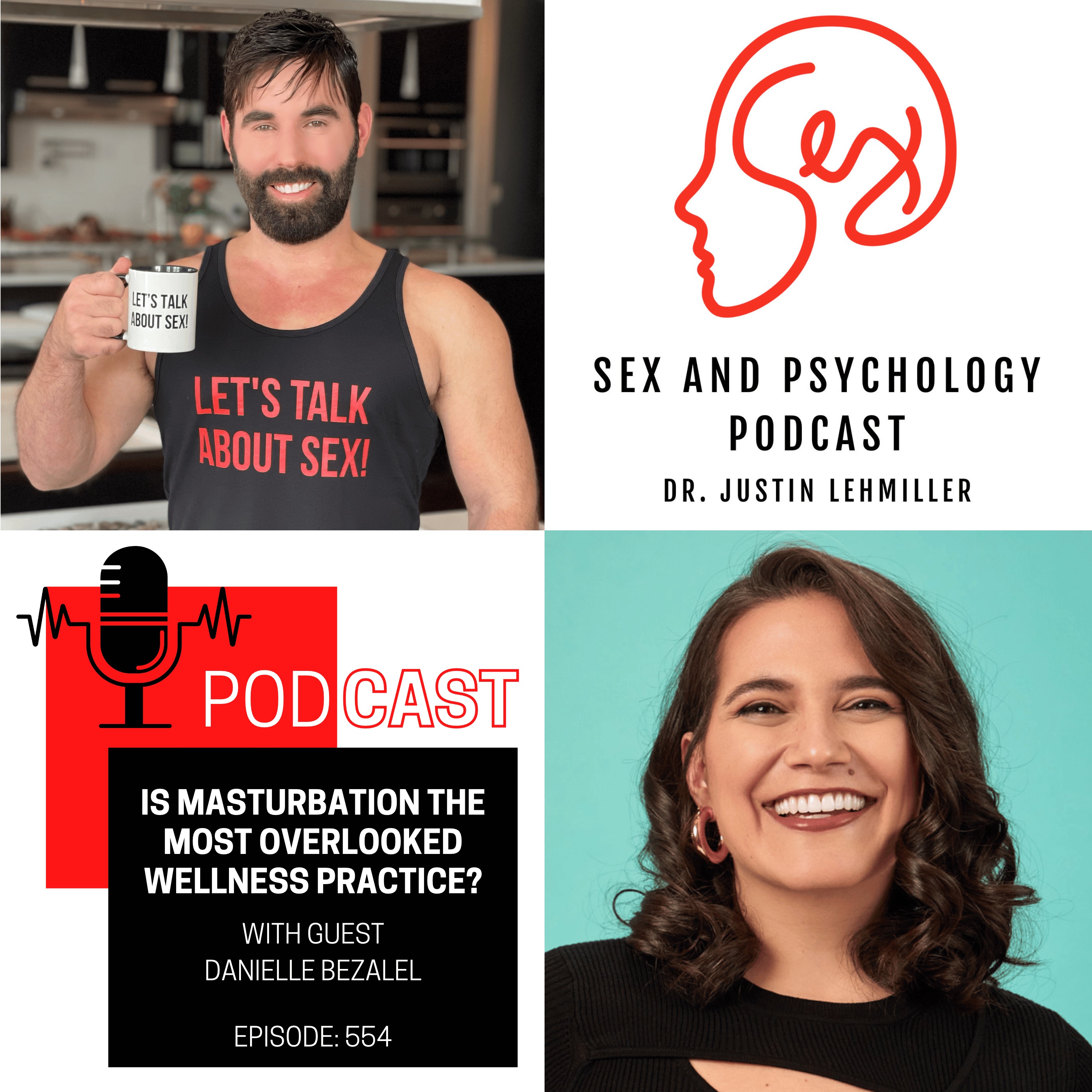
Episode 554: Is Masturbation The Most Overlooked Wellness Practice?

We hear a lot about the importance of sleep, exercise, nutrition, and mindfulness for our health. But what about sexual pleasure? In this episode, we’ll explore a fascinating new study on how masturbation affects our well-being, whether there’s an optimal amount of self-pleasure, and how to prioritize pleasure without turning it into another wellness obligation. My guest is Danielle Bezalel, aka DB. Danielle earned a Master of Public Health with a focus on sexuality and reproductive health from Columbia University, and she is the Creator, Executive Producer, and Host of Sex Ed with DB. She is also the host of Pleasure People, a new 6-part limited audio series exploring what happens when we treat pleasure as a legitimate part of our health and well-being. Some of the specific topics we cover include: Why is self-pleasure often overlooked as a wellness practice? How can masturbation improve stress and sleep? What does science tell us about the link between masturbation, pleasure, and confidence? Is there an optimal masturbation frequency for health benefits? What are the biggest gaps in our understanding of how sexual pleasure affects well-being? You can learn more about DB's work here. Got a sex question? Send me a podcast voicemail to have it answered on a future episode at speakpipe.com/sexandpsychology. *** Thank you to our sponsors!  If you're ready to ditch the shady stuff and choose a libido supplement that’s effective and that you can feel confident about, it's time to check out Soaking Wet. Visit vb.health and use code JUSTIN for 10% off.  If you're looking to gain a broad understanding of human sexuality or refresh your knowledge, check out the upcoming Human Sexuality Intensive courses at the Kinsey Institute: https://kinseyinstitute.org/learning/human-sexuality-intensive.html  Born from over 10 years of longevity research, OneSkin is helping you unlock your healthiest skin now and as you age. Get 15% off OneSkin with the code JUSTIN at https://www.oneskin.co/justin *** Want to learn more about Sex and Psychology? Click here for previous articles or follow the blog on Facebook, Twitter, or Bluesky to receive updates. You can also follow Dr. Lehmiller on YouTube and Instagram. Listen and stream all episodes on Apple, Spotify, or Amazon. Subscribe to automatically receive new episodes and please rate and review the podcast! Credits: Precision Podcasting (Podcast editing) and Shutterstock/Florian (Music). Image created with Canva; photos used with permission of guest.
36 minAbspielen in:

Di10Nov
Sex and Psychology Podcast

Sex and Psychology PodcastHost

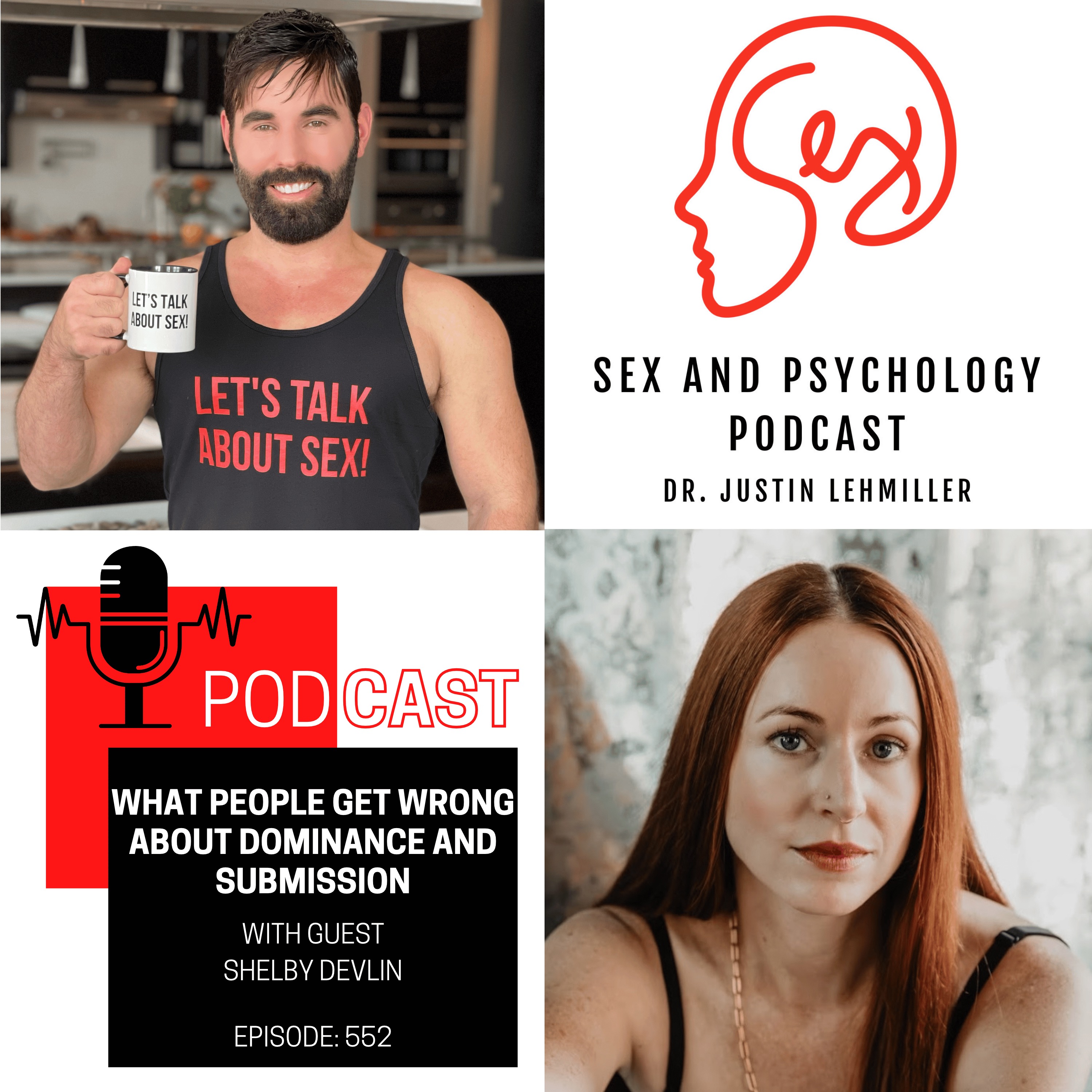
Episode 552: What People Get Wrong About Dominance and Submission

BDSM has become increasingly visible in popular culture, but how much do people really understand about dominance and submission? Being dominant doesn't necessarily mean being aggressive or controlling, just as being submissive doesn't mean being weak or powerless. In fact, healthy power exchange often looks very different from what we see in the media. In this episode, we're separating fact from fiction and exploring the real psychology of kink. My guest is Shelby Devlin, a sex and intimacy coach, educator, and author specializing in BDSM, kink, and fetish. With over twenty years of experience in the BDSM community, she blends academic expertise with hands-on practice as a coach and instructor at the Somatica Institute. She is author of the new book The Pleasure Protocol: A Contemporary Guide to BDSM. Some of the specific topics we cover include: What does popular culture get wrong about kink? What separates a skilled dominant from someone who simply wants control? Why might highly independent people find sexual submission appealing? How can kink provide a space for exploring gender identity and roles? What are the warning signs that someone is using BDSM as a cover for abuse? You can check out Shelby's website to learn more. Got a sex question? Send me a podcast voicemail to have it answered on a future episode at speakpipe.com/sexandpsychology. *** Thank you to our sponsors!  For a limited time, get 20% off your entire order at loveunlimited.com/justin with code JUSTIN. 90 day love it guarantee on every order. Unspeakable Things is an adult card game designed for couples who already have a great sex life, but are looking to turn up the heat and explore new territory together. Ready to find out just how adventurous you and your partner can get? Head to https://playunspeakablethings.com/justin and use code JUSTIN for 10% off your order. If you're looking to gain a broad understanding of human sexuality or refresh your knowledge, check out the upcoming Human Sexuality Intensive courses at the Kinsey Institute: https://kinseyinstitute.org/learning/human-sexuality-intensive.html  *** Want to learn more about Sex and Psychology? Click here for previous articles or follow the blog on Facebook, Twitter, or Bluesky to receive updates. You can also follow Dr. Lehmiller on YouTube and Instagram. Listen and stream all episodes on Apple, Spotify, or Amazon. Subscribe to automatically receive new episodes and please rate and review the podcast! Credits: Precision Podcasting (Podcast editing) and Shutterstock/Florian (Music). Image created with Canva; photos used with permission of guest (credit: Alyssa Keys).

33 minAbspielen in:

Di3Nov
Sex and Psychology Podcast

Sex and Psychology PodcastHost

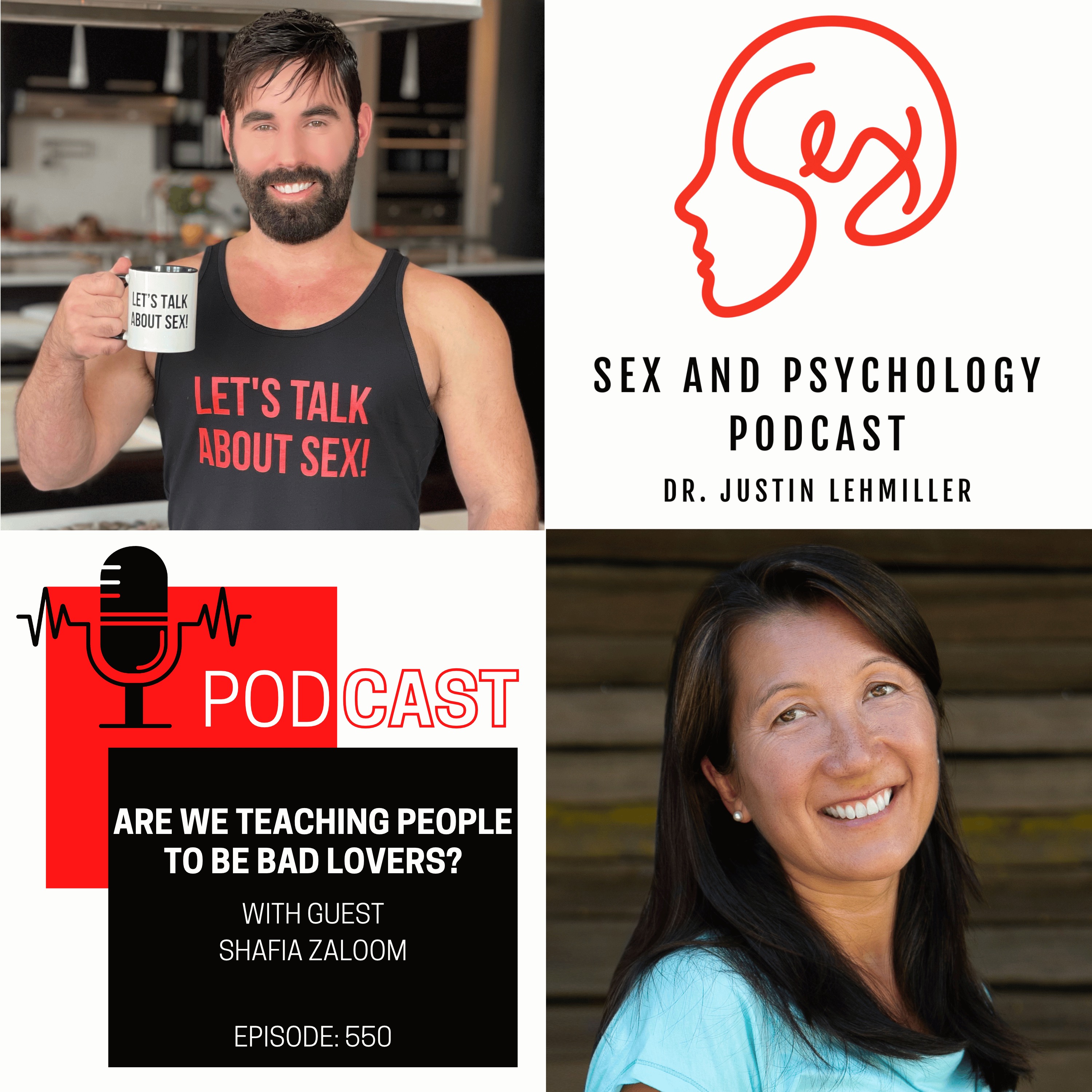
Episode 550: Are We Teaching People To Be Bad Lovers?

Most of us spend years learning about sex before we ever have it. We absorb messages from our families, friends, schools, pornography, and popular culture about what sex is supposed to look like and how we're supposed to behave. But what if some of those lessons are actually setting us up for disappointment? What if the way we're taught about sex is making it harder to have healthy, pleasurable, and satisfying relationships? My guest is Shafia Zaloom, a health educator, consultant, and author whose work centers on human development, community building, ethics and social justice. She is the author of Sex, Teens, and Everything in Between as well as the new book Getting Real About Sex Ed: What Today’s Students Need. Some of the specific topics we cover include: How do the messages we receive about sex growing up shape our sexual relationships as adults? What are some of the most influential lessons about sex we learn outside the classroom? What unrealistic expectations can pornography create about sex? How can we unlearn harmful sexual messages and develop healthier expectations? You can check our Shafia's website to learn more about what she's working on. Got a sex question? Send me a podcast voicemail to have it answered on a future episode at speakpipe.com/sexandpsychology. *** Thank you to our sponsors!  If you’re ready to make passion a priority, see what Arya can do for you. Right now, Arya is offering our listeners $10 off your first month at getarya.com/JUSTIN. This offer is only for our podcast listeners so use my link to get this discount. If you're ready to ditch the shady stuff and choose a libido supplement that’s effective and that you can feel confident about, it's time to check out Drive Boost. Visit vb.health and use code JUSTIN for 10% off.  If you're looking to gain a broad understanding of human sexuality or refresh your knowledge, check out the upcoming Human Sexuality Intensive courses at the Kinsey Institute: https://kinseyinstitute.org/learning/human-sexuality-intensive.html  *** Want to learn more about Sex and Psychology? Click here for previous articles or follow the blog on Facebook, Twitter, or Bluesky to receive updates. You can also follow Dr. Lehmiller on YouTube and Instagram. Listen and stream all episodes on Apple, Spotify, or Amazon. Subscribe to automatically receive new episodes and please rate and review the podcast! Credits: Precision Podcasting (Podcast editing) and Shutterstock/Florian (Music). Image created with Canva; photos used with permission of guest.
35 minAbspielen in:

Di20Okt
Sex and Psychology Podcast

Sex and Psychology PodcastHost

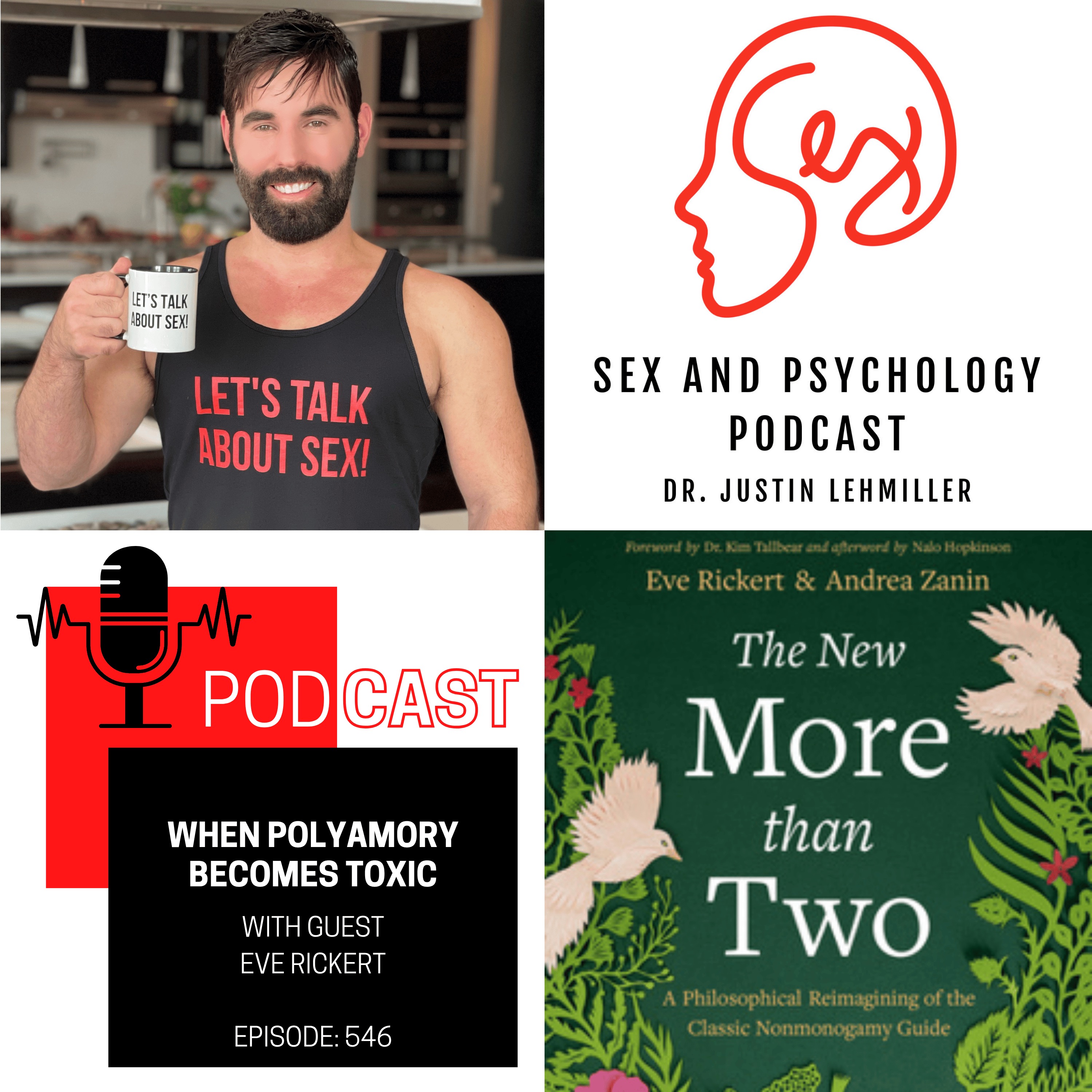
Episode 546: When Polyamory Becomes Toxic

Polyamory is sometimes described as a more “evolved” approach to relationships, built around radical honesty, open communication, and personal autonomy. This can create the impression that polyamorous relationships are somehow immune to the problems that plague other relationships. But the reality is that non-monogamous relationships can become unhealthy, toxic, and even abusive, just like any other relationship. And that's what we're exploring in today's episode. My guest is Eve Rickert, the co-author of The New More Than Two: A Philosophical Reimagining of the Classic Nonmonogamy Guide. She is also author of Nonmonogamy and Betrayal, curator of the More Than Two Essentials series, the founder and publisher of Thornapple Press, and the mastermind behind the science communications firm Talk Science to Me. Some of the specific topics we cover include: Does abuse look different in consensually non-monogamous relationships compared to monogamous ones? What's the difference between coercive control and toxic behavior? Can having multiple partners make it harder to recognize abuse? What are the warning signs that a relationship has become more harmful than healthy? What resources are available for people experiencing abuse in a non-monogamous relationship? You can check out Eve's Linktree to learn about everything she's working on. Got a sex question? Send me a podcast voicemail to have it answered on a future episode at speakpipe.com/sexandpsychology. *** Thank you to our sponsors!  If you’re ready to make passion a priority, see what Arya can do for you. Right now, Arya is offering our listeners $10 off your first month at getarya.com/JUSTIN. This offer is only for our podcast listeners so use my link to get this discount. If you're ready to ditch the shady stuff and choose a libido supplement that’s effective and that you can feel confident about, it's time to check out Load Boost. Visit vb.health and use code JUSTIN for 10% off.  If you're looking to gain a broad understanding of human sexuality or refresh your knowledge, check out the upcoming Human Sexuality Intensive courses at the Kinsey Institute: https://kinseyinstitute.org/learning/human-sexuality-intensive.html  *** Want to learn more about Sex and Psychology? Click here for previous articles or follow the blog on Facebook, Twitter, or Bluesky to receive updates. You can also follow Dr. Lehmiller on YouTube and Instagram. Listen and stream all episodes on Apple, Spotify, or Amazon. Subscribe to automatically receive new episodes and please rate and review the podcast! Credits: Precision Podcasting (Podcast editing) and Shutterstock/Florian (Music). Image created with Canva; photos used with permission of guest.
29 minAbspielen in:

Di13Okt
Sex and Psychology Podcast

Sex and Psychology PodcastHost

Episode 544: Where Do Fetishes Come From?

Why are some people sexually aroused by things like balloons, orthopedic casts, or even sneezing—things that most people don’t see as sexual at all? Fetishes can develop around an astonishing range of objects, body parts, and sensations. In this episode, we’re going to explore the psychology behind fetishes. We’ll talk about what it actually means to have a fetish, clear up some common misconceptions, and look at different theories for how fetishes develop. My guest is Niki Davis-Fainbloom, a New York- and New Orleans-based sex educator, writer, researcher, and coach. She has facilitated hundreds of sexuality education workshops, and her writing has been featured in several major media outlets. She is the author of the new book Fetish: Smash Taboos and Celebrate What Turns You On. Some of the specific topics we cover include: What's the difference between a kink and a fetish? Are fetishes exclusive requirements for arousal, or can they simply be enhancers? What does research tell us about where fetishes come from? How can things like media, porn, and culture influence the types of fetishes people develop? Is it possible to change or get rid of a fetish you don't want? You can check out Niki's website to learn more about her work. Got a sex question? Send me a podcast voicemail to have it answered on a future episode at speakpipe.com/sexandpsychology. *** Thank you to our sponsors!  Born from over 10 years of longevity research, OneSkin is helping you unlock your healthiest skin now and as you age. Get 15% off OneSkin with the code JUSTIN at https://www.oneskin.co/justin If you’re ready to make passion a priority, see what Arya can do for you. Right now, Arya is offering our listeners $10 off your first month at getarya.com/JUSTIN. This offer is only for our podcast listeners so use my link to get this discount. For a limited time, get 20% off your entire order at loveunlimited.com/justin with code JUSTIN. 90 day love it guarantee on every order. The Kinsey Institute is where the world turns to understand sex and relationships. You can help continue its expert-led research by donating to the Kinsey Institute Research Fund. Learn more and make a donation here: https://give.myiu.org/centers-institutes/I380010749.html  *** Want to learn more about Sex and Psychology? Click here for previous articles or follow the blog on Facebook, Twitter, or Bluesky to receive updates. You can also follow Dr. Lehmiller on YouTube and Instagram. Listen and stream all episodes on Apple, Spotify, or Amazon. Subscribe to automatically receive new episodes and please rate and review the podcast! Credits: Precision Podcasting (Podcast editing) and Shutterstock/Florian (Music). Image created with Canva; photos used with permission of guest.
36 minAbspielen in:

Warum PodAppear

Folge Menschen, nicht Podcasts.

Du hast Justin in einer Sendung gehört. PodAppear findet für dich die nächste, und genauso für alle anderen, die du hören willst.

  • Eine Meldung, wenn die Person zu Gast istPer E-Mail: sofort oder gebündelt als Tages- oder Wochenübersicht. Dann nur noch auf Play drücken.
  • Gäste statt bloßer ErwähnungenFolgen, in denen ein Name nur fällt, landen getrennt. Eine Meldung heißt: Die Person ist wirklich in der Sendung.
  • Alle in einem FeedGründerinnen, Autoren, Sportler, Forscherinnen. Folge allen mit Namen, quer durch jede Sendung, in der sie auftreten.

Bis zu 15 Personen kostenlos, ohne Kreditkarte.

Fr25Sep
Sex and Psychology Podcast

Sex and Psychology PodcastHost

Episode 539: The Most Common Questions Sex Therapists Get Asked

What are the most common questions that come up in sex therapy? In this episode, we're revisiting an important conversation from the archives that dives into five questions that come up over and over again. We’re also going to address when you should consider seeing out professional help for a sex problem and explore a few tips for maintaining happy, healthy, and exciting sex lives for the long haul. My guest is Rachel Zar, a Licensed Marriage and Family Therapist and AASECT-Certified Sex Therapist. She holds a Master’s of Science in Marriage and Family Therapy from The Family Institute at Northwestern University, a PhD in Clinical Sexology, and certificates in sex therapy and sexuality education from the University of Michigan. Dr. Zar is a clinical supervisor at Avid Intimacy, a sex and relationship therapy private practice in Chicago. Some of the questions we answer include: What if I can’t orgasm during sex? What if my partner wants more sex than I do? How do I ask my partner to try something new? We’re having less sex than we used to. Is something wrong? Are my sexual fantasies normal? You can check out Rachel's website to learn more about her work and follow her on the socials @rachelzartherapy. Got a sex question? Send me a podcast voicemail to have it answered on a future episode at speakpipe.com/sexandpsychology. *** Thank you to our sponsors!  If you're ready to ditch the shady stuff and choose a libido supplement that’s effective and that you can feel confident about, it's time to check out Drive Boost. Visit vb.health and use code JUSTIN for 10% off.  Passionate about building a career in sexuality? Check out the Sexual Health Alliance. With SHA, you’ll connect with world-class experts and join an engaged community of sexuality professionals from around the world. Visit SexualHealthAlliance.com and start building the sexuality career of your dreams today. *** Want to learn more about Sex and Psychology? Click here for previous articles or follow the blog on Facebook, Twitter, or Bluesky to receive updates. You can also follow Dr. Lehmiller on YouTube and Instagram. Listen and stream all episodes on Apple, Spotify, or Amazon. Subscribe to automatically receive new episodes and please rate and review the podcast! Credits: Precision Podcasting (Podcast editing) and Shutterstock/Florian (Music). Image created with Canva; photos used with permission of guest.
33 minAbspielen in:

Di8Sep
Sex and Psychology Podcast

Sex and Psychology PodcastHost

Episode 534: The Complicated Relationship Between BDSM And Mental Health

BDSM can be a powerful source of pleasure, connection, and self-expression. But when mental health challenges enter the picture, they can also raise important questions about consent, communication, triggers, and emotional safety. So how can people navigate kink in ways that support their mental health rather than undermine it? My guest is Rebecca Blanton (AKA Auntie Vice,) a writer and kink educator. She runs the award-winning blog LoveLettersToAUnicorn.com and has published several books, including The Big Workbook for Submissives, a finalist for the 2018 Golden Flogger Award. She is also author of the forthcoming book, Kinky & Curious: Navigating BDSM with Mental Illness or Neurodivergence. Some of the specific topics we cover include: How can mental health affect consent in BDSM? Do people have an obligation to disclose mental health conditions to sexual partners? What does research say about the link between trauma and BDSM? What psychiatric medication effects should be considered in BDSM safety planning? You can check our Rebecca's website to learn more about her work. Got a sex question? Send me a podcast voicemail to have it answered on a future episode at speakpipe.com/sexandpsychology. *** Thank you to our sponsors!  Born from over 10 years of longevity research, OneSkin is helping you unlock your healthiest skin now and as you age. Get 15% off OneSkin with the code JUSTIN at https://www.oneskin.co/justin The Kinsey Institute is where the world turns to understand sex and relationships. You can help continue its expert-led research by donating to the Kinsey Institute Research Fund. Learn more and make a donation here: https://give.myiu.org/centers-institutes/I380010749.html  Load Boost is a supplement designed to improve the taste, volume, and overall health of your semen. If you want to elevate your sexual performance, check out Load Boost from VB Health. Visit vb.health to learn more and save 10% with code JUSTIN. *** Want to learn more about Sex and Psychology? Click here for previous articles or follow the blog on Facebook, Twitter, or Bluesky to receive updates. You can also follow Dr. Lehmiller on YouTube and Instagram. Listen and stream all episodes on Apple, Spotify, or Amazon. Subscribe to automatically receive new episodes and please rate and review the podcast! Credits: Precision Podcasting (Podcast editing) and Shutterstock/Florian (Music). Image created with Canva; photos used with permission of guest.
32 minAbspielen in:

Di25Aug
Sex and Psychology Podcast

Sex and Psychology PodcastHost

Episode 530: The Surprising Science Of The Dad Brain

Becoming a parent changes just about every aspect of life. But it doesn’t just change your routines, priorities, and relationships—it can actually change your brain and body. And while we’ve long recognized the profound biological transformation that accompanies motherhood, we’re only beginning to understand what happens to men when they become fathers. So what exactly is a “dad brain?” How does fatherhood reshape the male brain, hormones, and even the body? My guest is Darby Saxbe, a clinical psychologist and tenured full professor of psychology at the University of Southern California. She has published over eighty scientific articles in peer-reviewed journals. Her research focuses on the transition to parenthood, particularly the neural and hormonal underpinnings of fatherhood. Her latest book is titled Dad Brain: The New Science of Fatherhood and How It Shapes Men’s Lives. Some of the specific topics we cover include: How (and why) does becoming a parent change the brain? How similar are “dad brain” and “mom brain?" What happens to testosterone when men become fathers? Is there a biological reason for the "dad bod?" You can visit Darby's website to learn more about Dad Brain and follow her on Instagram @darbysaxbephd Got a sex question? Send me a podcast voicemail to have it answered on a future episode at speakpipe.com/sexandpsychology. *** Thank you to our sponsors!  Cozy Earth’s Labor Day Sale is happening now through September 8th. Head to cozyearth.com and use my code JUSTIN for an exclusive 30% off, the biggest savings of the season. And if you see a post-purchase survey, mention that you heard about Cozy Earth right here! Born from over 10 years of longevity research, OneSkin is helping you unlock your healthiest skin now and as you age. Get 15% off OneSkin with the code JUSTIN at https://www.oneskin.co/justin The Kinsey Institute is where the world turns to understand sex and relationships. You can help continue its expert-led research by donating to the Kinsey Institute Research Fund. Learn more and make a donation here: https://give.myiu.org/centers-institutes/I380010749.html  *** Want to learn more about Sex and Psychology? Click here for previous articles or follow the blog on Facebook, Twitter, or Bluesky to receive updates. You can also follow Dr. Lehmiller on YouTube and Instagram. Listen and stream all episodes on Apple, Spotify, or Amazon. Subscribe to automatically receive new episodes and please rate and review the podcast! Credits: Precision Podcasting (Podcast editing) and Shutterstock/Florian (Music). Image created with Canva; photos used with permission of guest.
34 minAbspielen in:

Fr21Aug
Sex and Psychology Podcast

Sex and Psychology PodcastHost

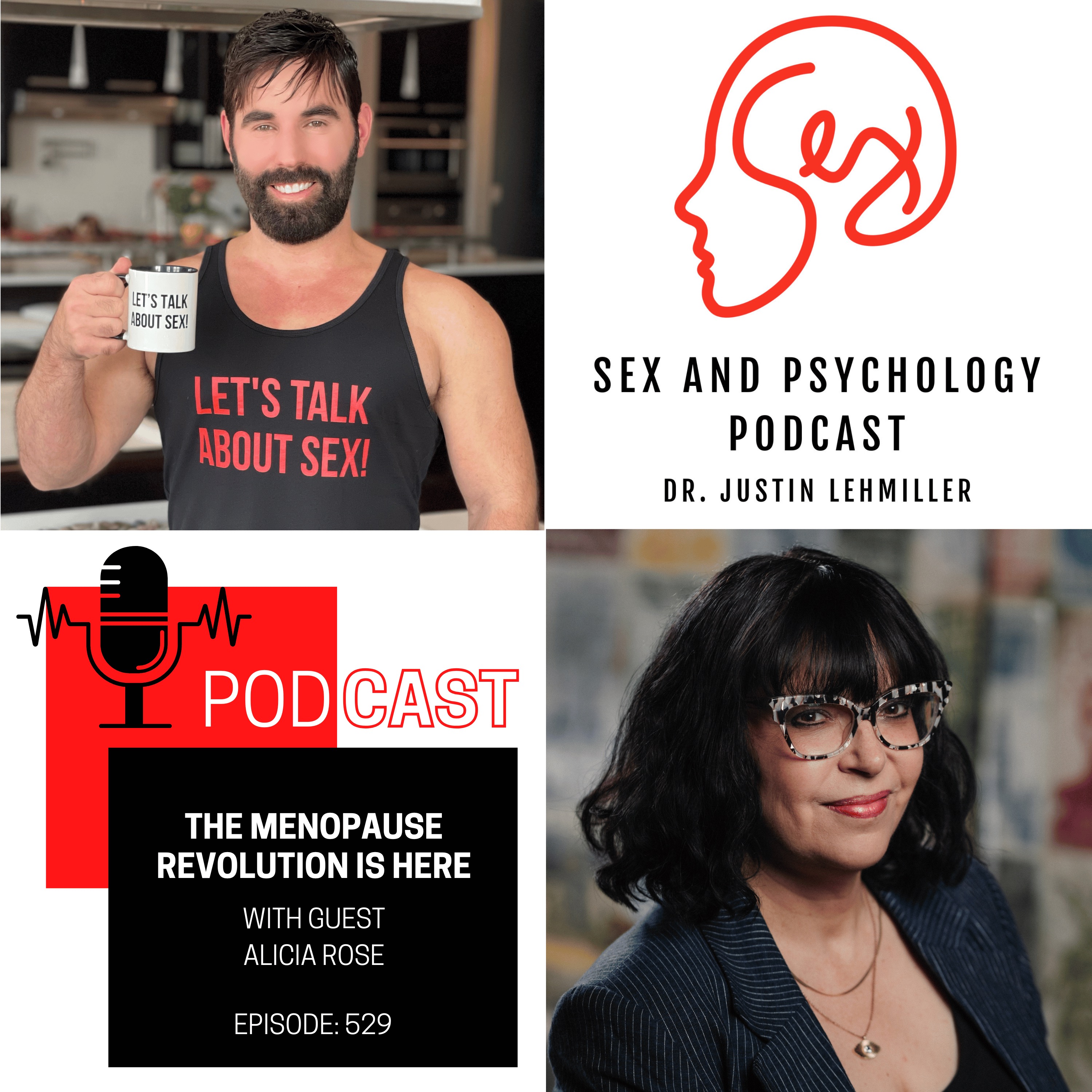
Episode 529: The Menopause Revolution Is Here

Menopause is finally getting the attention it deserves, with growing recognition of its impact on sexual health, relationships, work, and quality of life. At the center of this conversation is hormone therapy, which has been surrounded by fear and confusion since the Women’s Health Initiative study in the early 2000s, which dramatically changed how it was perceived and prescribed. Today, scientists are revisiting that history as a new generation pushes for better information, better care, and greater choice in managing menopause. My guest is Alicia Rose, an award-winning director and the Founder of Menopunks—a documentary, podcast, and activist movement championing hormonal education, access, and reproductive justice. A prolific filmmaker with deep roots as both a musician and indie music industry leader, she has directed more than three dozen music videos for global artists. Some of the specific topics we cover include: What have women missed out on due to fears about hormone therapy? Why is menopause often left out of conversations about bodily autonomy and reproductive justice? What’s driving the recent surge in attention to menopause? Beyond sexual function, how does menopause affect women's lives? You can check out the Menopunks website to learn more about Alicia's work. Got a sex question? Send me a podcast voicemail to have it answered on a future episode at speakpipe.com/sexandpsychology. *** Thank you to our sponsors!  Passionate about building a career in sexuality? Check out the Sexual Health Alliance. With SHA, you’ll connect with world-class experts and join an engaged community of sexuality professionals from around the world. Visit SexualHealthAlliance.com and start building the sexuality career of your dreams today. If you're ready to ditch the shady stuff and choose a libido supplement that’s effective and that you can feel confident about, it's time to check out Soaking Wet. Visit vb.health and use code JUSTIN for 10% off.  *** Want to learn more about Sex and Psychology? Click here for previous articles or follow the blog on Facebook, Twitter, or Bluesky to receive updates. You can also follow Dr. Lehmiller on YouTube and Instagram. Listen and stream all episodes on Apple, Spotify, or Amazon. Subscribe to automatically receive new episodes and please rate and review the podcast! Credits: Precision Podcasting (Podcast editing) and Shutterstock/Florian (Music). Image created with Canva; photos used with permission of guest.
46 minAbspielen in:

Di18Aug
Sex and Psychology Podcast

Sex and Psychology PodcastHost

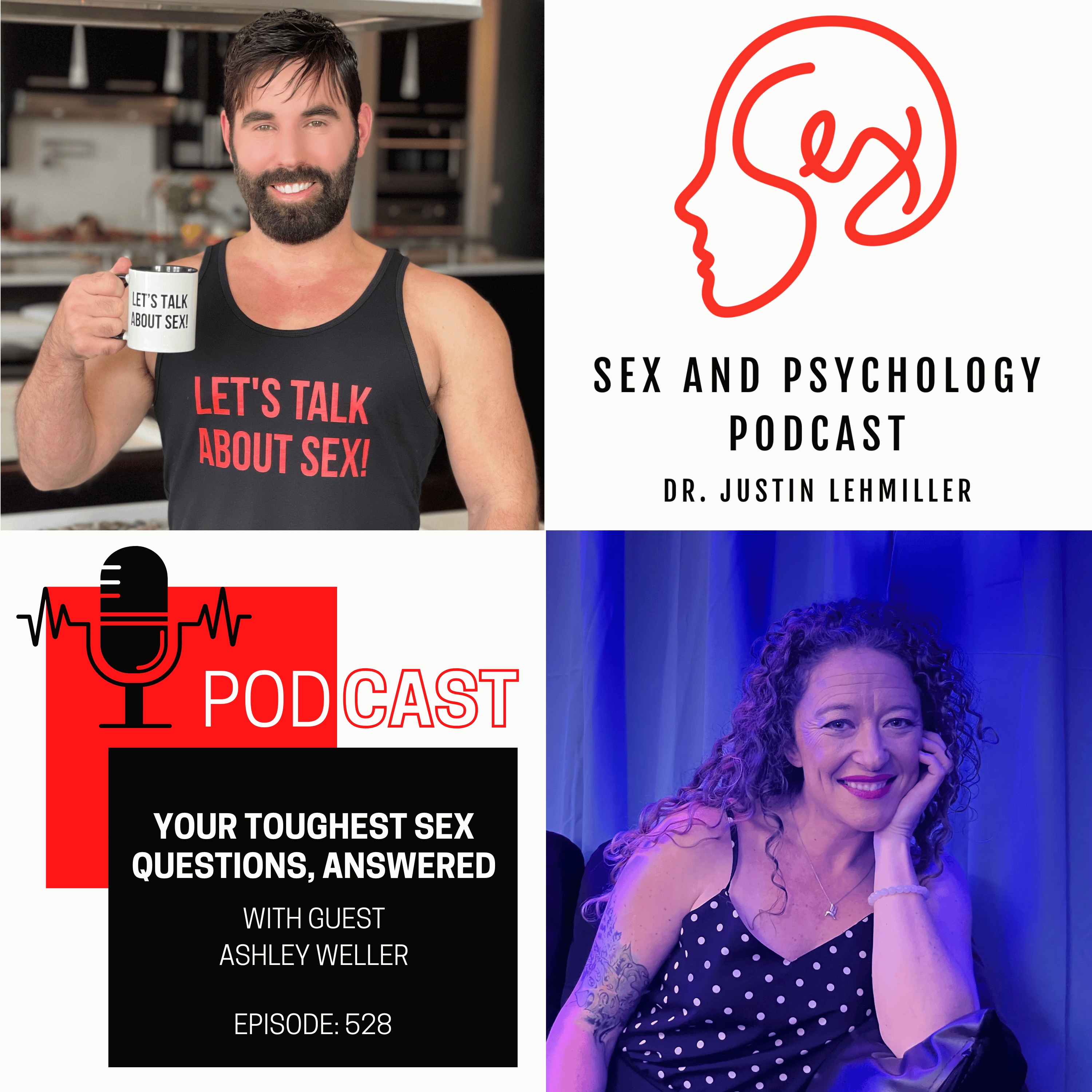
Episode 528: Your Toughest Sex Questions, Answered

What happens when two people in a long-term relationship have dramatically different sex drives? How do couples navigate intimacy when aging or health problems make sex difficult, or even impossible? And why do some people experience a sudden surge in sexual desire after losing a partner, a phenomenon sometimes referred to as “widow’s fire”? In this episode, we're answering more listener sex questions! My guest is Ashley Weller. She is a Human Sexuality and Health Psychology Professor at Chapman University in Southern California. Ashley also works in mental health clinical research and has more than 15 years of experience in sex education. She also has a podcast called What's Your Position which tackles issues surrounding sexuality, relationships, life, and love from a comedic yet educational point of view. Some of the specific topics we cover include: How can couples navigate differences in sexual values? Can non-monogamy help with desire discrepancies? How do couples successfully adapt when one partner develops a sexual difficulty? Why can grief sometimes increase sexual desire? You can check out Ashley's website to learn more about her work. Got a sex question? Send me a podcast voicemail to have it answered on a future episode at speakpipe.com/sexandpsychology. *** Thank you to our sponsors!  If you're ready to ditch the shady stuff and choose a libido supplement that’s effective and that you can feel confident about, it's time to check out Soaking Wet. Visit vb.health and use code JUSTIN for 10% off.  The Kinsey Institute is where the world turns to understand sex and relationships. You can help continue its expert-led research by donating to the Kinsey Institute Research Fund. Learn more and make a donation here: https://give.myiu.org/centers-institutes/I380010749.html  Attached Therapy offers personalized therapy for individuals and couples navigating infidelity, sexual disconnection, relationship strain, and other complex intimacy concerns. Founder Jason Powell, LMFT and AASECT Certified Sex Therapist, offers in-person sessions in Manhattan and Brooklyn Heights, as well as virtual therapy in multiple states. Learn more at https://www.attachedtherapy.com/ *** Want to learn more about Sex and Psychology? Click here for previous articles or follow the blog on Facebook, Twitter, or Bluesky to receive updates. You can also follow Dr. Lehmiller on YouTube and Instagram. Listen and stream all episodes on Apple, Spotify, or Amazon. Subscribe to automatically receive new episodes and please rate and review the podcast! Credits: Precision Podcasting (Podcast editing) and Shutterstock/Florian (Music). Image created with Canva; photos used with permission of guest.
55 minAbspielen in:

Fr7Aug
Sex and Psychology Podcast

Sex and Psychology PodcastHost

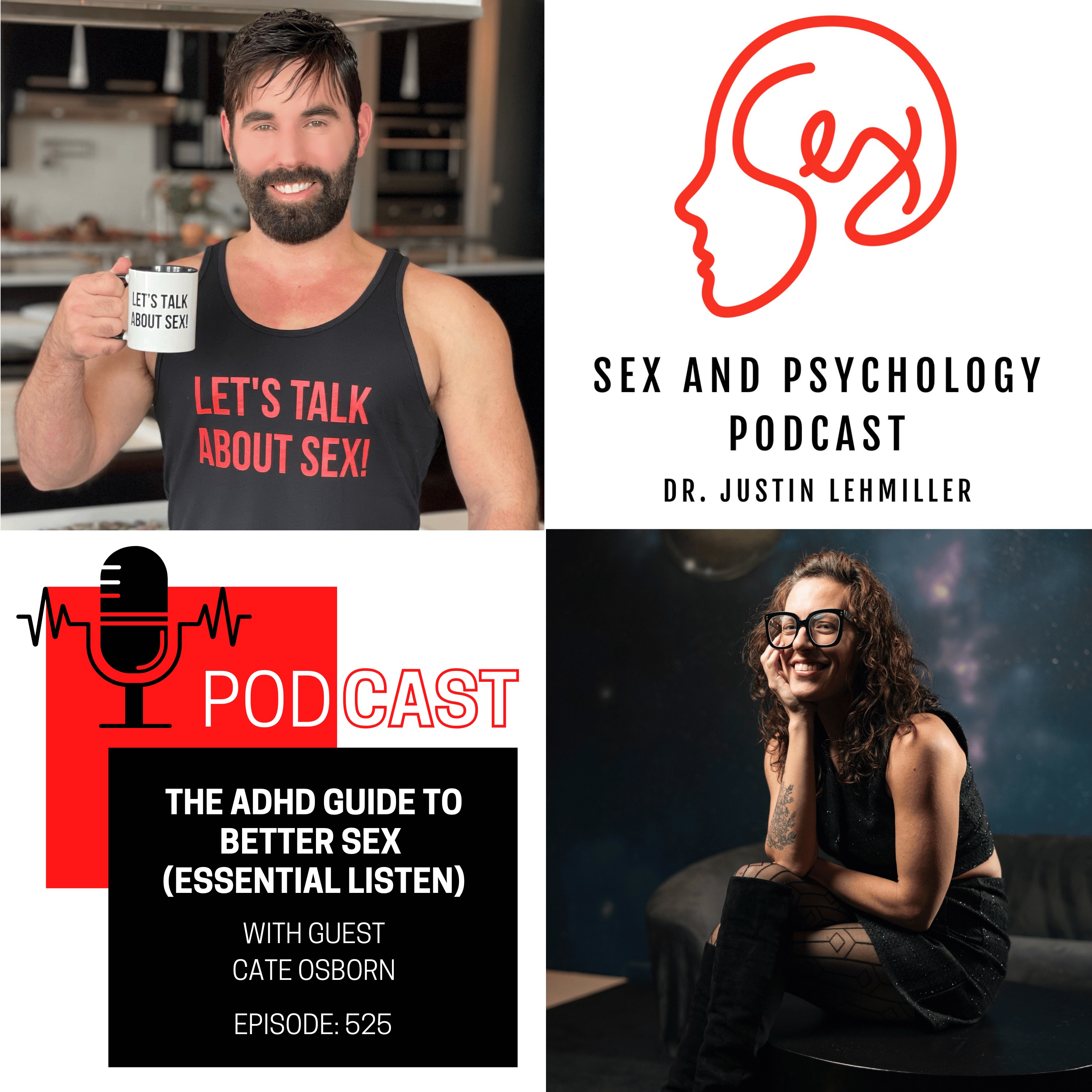
Episode 525: The ADHD Guide To Better Sex (Essential Listen)

Despite how much we hear about ADHD, its impact on our intimate lives is often overlooked. Research suggests that around 40% of adults with ADHD experience at least one form of sexual dysfunction. ADHD can also contribute to frustration, misunderstanding, and conflict in relationships. In today's show, we’re revisiting a classic episode from the archives that takes a closer look at the intersection of ADHD and sex. My guest is Cate Osborn, a certified sex educator, a mental health advocate, and full-time content creator, with ADHD. As a professional table top role-playing game performer, she is passionate about opening conversations about neurodiversity and accessibility in the gaming and BDSM/kink communities. Some of the specific topics we cover include: How is ADHD related to sexual desire? Why is ADHD linked to both premature orgasm and delayed orgasm? How can medications to treat ADHD affect sex? Are there gender differences in how ADHD relates to sexual difficulties? If you find yourself constantly distracted during sex, what can you do about this? You can check out Cate's website to learn more about her work. Got a sex question? Send me a podcast voicemail to have it answered on a future episode at speakpipe.com/sexandpsychology. *** Thank you to our sponsors!  Passionate about building a career in sexuality? Check out the Sexual Health Alliance. With SHA, you’ll connect with world-class experts and join an engaged community of sexuality professionals from around the world. Visit SexualHealthAlliance.com and start building the sexuality career of your dreams today. If you're ready to ditch the shady stuff and choose a libido supplement that’s effective and that you can feel confident about, it's time to check out Drive Boost. Visit vb.health and use code JUSTIN for 10% off.  *** Want to learn more about Sex and Psychology? Click here for previous articles or follow the blog on Facebook, Twitter, or Bluesky to receive updates. You can also follow Dr. Lehmiller on YouTube and Instagram. Listen and stream all episodes on Apple, Spotify, or Amazon. Subscribe to automatically receive new episodes and please rate and review the podcast! Credits: Precision Podcasting (Podcast editing) and Shutterstock/Florian (Music). Image created with Canva; photos used with permission of guest.
45 minAbspielen in:

Di21Jul
Sex and Psychology Podcast

Sex and Psychology PodcastHost

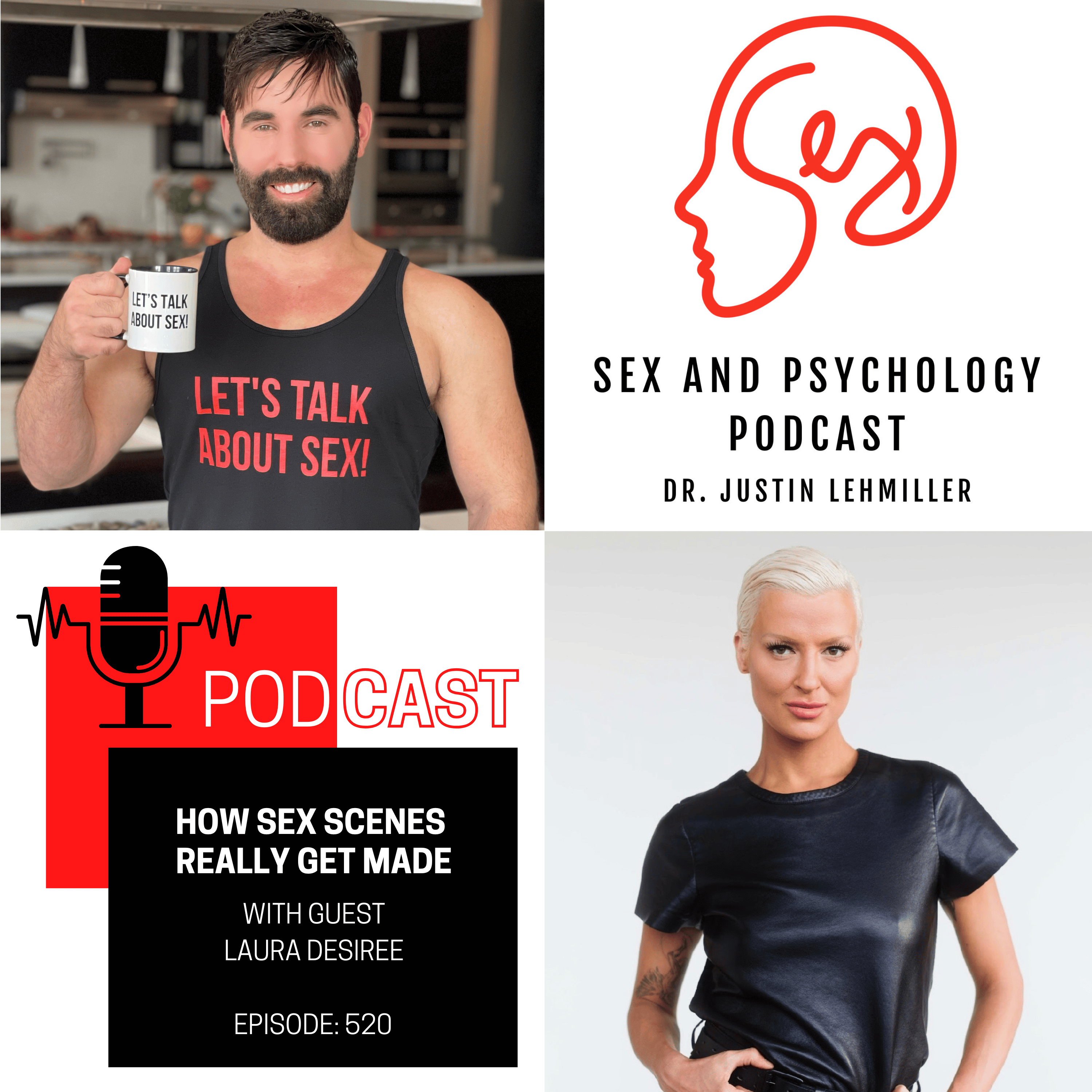
Episode 520: How Sex Scenes Really Get Made

Sex scenes have been part of film and television for decades, but the way they’re created has changed dramatically. Today, many productions rely on intimacy coordinators to help choreograph intimate scenes while fostering safety, collaboration, and creativity on set. In this episode, we’re pulling back the curtain on this fascinating profession to explore how intimate scenes are actually made. My guest is Laura Desiree, the creative director of SNCTM, a private members-only erotic society known for its immersive events that blend live performance, fantasy, intimacy and consent-driven exploration. She is a Level II certified intimacy coordinator with years of experience in erotic media and sex-positive storytelling. Through her work with SNCTM, Laura curates experiences that are culturally relevant, artistically elevated and rooted in clear boundaries, consent, and discretion. Some of the specific topics we explore in this episode include: How did intimacy coordinators become part of film and television? What does an intimacy coordinator do from pre-production to filming? Why can choreographed intimacy create better chemistry? What kinds of scenes require an intimacy coordinator? What qualifies someone to work as an intimacy coordinator? You can check out Laura’s website to learn more about her work. Got a sex question? Send me a podcast voicemail to have it answered on a future episode at speakpipe.com/sexandpsychology. *** Thank you to our sponsors!  Soaking Wet from VB Health is the world’s first probiotic specifically designed for vaginal and vulva health and wellness. It’s a doctor formulated blend of prebiotics, probiotics, and vitamins specifically designed to restore balance and increase lubrication. Visit vb.health and use code JUSTIN for 10% off. Passionate about building a career in sexuality? Check out the Sexual Health Alliance. With SHA, you’ll connect with world-class experts and join an engaged community of sexuality professionals from around the world. Visit SexualHealthAlliance.com and start building the sexuality career of your dreams today. *** Want to learn more about Sex and Psychology? Click here for previous articles or follow the blog on Facebook, Twitter, or Bluesky to receive updates. You can also follow Dr. Lehmiller on YouTube and Instagram. Listen and stream all episodes on Apple, Spotify, or Amazon. Subscribe to automatically receive new episodes and please rate and review the podcast! Credits: Precision Podcasting (Podcast editing) and Shutterstock/Florian (Music). Image created with Canva; photos used with permission of guest.

34 minAbspielen in: