Bekomm eine E-Mail, wenn Julian in einem Podcast zu Gast istPodAppear prüft neue Folgen, sobald sie erscheinen, und lässt die weg, in denen Julian nur erwähnt wird. Bis zu 15 Personen kostenlos, ohne Kreditkarte.Bis zu 15 Personen kostenlos, ohne Kreditkarte.
Julian kostenlos folgen
JR

Julian Rodgers

Zwei Jahre auf Sendung

GastHostErwähnt

Selbst moderierte Folgen

Fr4Sep
Electronic Music

Electronic MusicHost

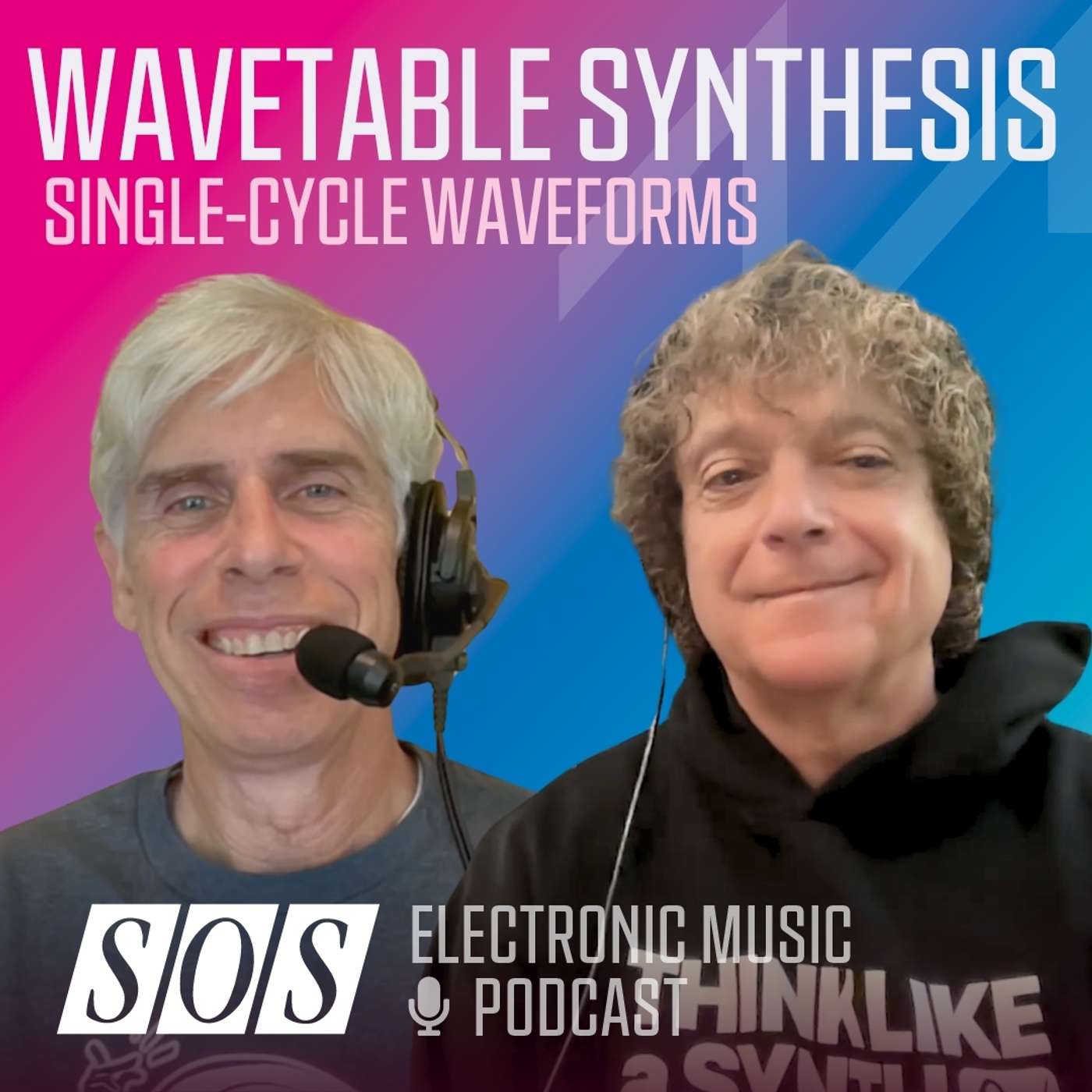
Wavetable Synthesis - Single-Cycle Waveforms

Bob Coover and Anthony Marinelli join Julian Rodgers to explore the history, evolution and creative potential of wavetable synthesis, from its early origins to modern instruments, discussing waveform morphing, iconic sounds and where the technology is heading next. Chapters 00:00 - Introduction 01:43 - What Is Wavetable Synthesis 11:08 - Morphing Between Waveforms 14:42 - History Of Wavetable Synthesis 19:05 - The Wavetable Sound 24:41 - Software Using Wavetables 26:46 - New Instruments With Wavetable Synthesis 30:05 - Morphing Sounds With Tactile Controls 34:01 - Examples In Popular Recordings 39:12 - The Future Of Wavetable Synthesis #3rdwave #fairlight #ppg #serum Bob Coover Biog Bob Coover is co-founder and Principal DSP Engineer at Groove Synthesis, where he helped create the award-winning 3rd Wave series of advanced wavetable synthesisers. A veteran synth designer and software engineer, he previously worked with Sequential alongside Dave Smith, contributing to instruments including the Prophet-12, Pro 3 and OB-6. Before co-founding Groove Synthesis in 2021 with Andrew Silverman, Coover also spent many years developing music technology for companies including Avid/Digidesign. His passion for classic PPG wavetable synthesis inspired the creation of the 3rd Wave, a modern instrument that combines vintage-inspired sound with contemporary synthesis techniques. Through his work, Coover continues to push the boundaries of hardware synth design, creating instruments that balance deep sound-design capabilities with an intuitive, musician-focused workflow. https://groovesynthesis.com/ https://www.instagram.com/groovesynthesis/ Anthony Marinelli Biog Anthony Marinelli is an American composer, synthesist, producer and educator whose career spans more than four decades across film, television and popular music. A pioneer of synth programming, he contributed to Michael Jackson's Thriller and has worked with artists including James Brown, Lionel Richie, Van Halen, Supertramp and Herb Alpert. As a film composer he has ammassed more than 100 credits, including Young Guns, Leaving Las Vegas, Internal Affairs and 2 Days in the Valley. An award-winning composer and sound designer, Marinelli is also recognised for his expertise in synthesis and music technology, sharing his knowledge through educational videos, courses and workshops that explore the creative potential of electronic instruments and sound design. https://www.anthonymarinelli.com/ http://instagram.com/anthonymarinellimusic https://www.facebook.com/anthonymarinellimusic https://x.com/amarinellimusic Julian Rodgers Biog Julian Rodgers is a freelance writer and audio engineer with a background in live sound. After many years working in education introducing new users to Pro Tools, he now lives by the sea in West Cornwall, where he plays keyboards in a couple of bands. He also plays bass and guitar equally badly, and remains an enthusiastic collector of microphones and opinions about all things audio. https://www.linkedin.com/in/julian-rodgers-04621926 Catch more shows on our other podcast channels: https://www.soundonsound.com/sos-podcasts

46 minAbspielen in:

Mi22Apr
Electronic Music

Electronic MusicHost

Modular Synthesis for Studio and Stage

James Richmond and Julian Rodgers dive into the world of modular synthesis, explaining what it is and how it fits into both studio production and live performance. They explore the process of creating unique sounds from scratch, the challenges of patch recall and share practical advice for anyone looking to get started with modular gear. Chapters 00:00 - Introduction 00:52 - Modular Synth Definition 01:50 - Semi-Modular 02:59 - James' Modular Synthesis Work 04:05 - Reaktor And Max 07:32 - The Appeal Of Modular 09:54 - Generating Your Own Sounds 11:24 - Creating A System 13:11 - Software Vs Hardware Systems 14:02 - Creating Brand New Sounds 16:16 - Stochastic Modulation 21:31 - Handling Recall 22:57 - Gigging With Modular 26:42 - Preparing For Performance 28:12 - East Coast Vs West Coast 29:44 - Practical Performance Challenges 31:34 - Careful Onstage Monitoring 33:08 - Starting Out In Modular 37:08 - Affordable Synthesis #NIreaktor #cycling74max #makenoisemaths #mutableinstrumentsrings #mutableinstrumentsclouds #doepfer #verbos James Richmond Biog James Richmond is a composer, producer and audio engineer working across electronic and guitar-based music. He is the guitarist and producer for Liam Vincent & The Odd Foxes, has released experimental electronic work under the name Euclidean Circuits and has a solo project called The Deathbird. He also develops bespoke audio tools through EventFieldAudio and writes about music production, studio systems and monitoring from his hybrid modular and analogue studio. https://www.jamesrichmond.com/ https://www.facebook.com/jamesrichmondaudio/ https://twitter.com/octatonic https://www.instagram.com/jamesrichmondaudio Julian Rodgers Biog Julian Rodgers is a freelance writer and audio engineer with a background in live sound. After many years working in education introducing new users to Pro Tools, he now lives by the sea in West Cornwall, where he plays keyboards in a couple of bands. He also plays bass and guitar equally badly, and remains an enthusiastic collector of microphones and opinions about all things audio. https://www.linkedin.com/in/julian-rodgers-04621926 Catch more shows on our other podcast channels: https://www.soundonsound.com/sos-podcasts

40 minAbspielen in:

Warum PodAppear

Folge Menschen, nicht Podcasts.

Du hast Julian in einer Sendung gehört. PodAppear findet für dich die nächste, und genauso für alle anderen, die du hören willst.

  • Eine Meldung, wenn die Person zu Gast istPer E-Mail: sofort oder gebündelt als Tages- oder Wochenübersicht. Dann nur noch auf Play drücken.
  • Gäste statt bloßer ErwähnungenFolgen, in denen ein Name nur fällt, landen getrennt. Eine Meldung heißt: Die Person ist wirklich in der Sendung.
  • Alle in einem FeedGründerinnen, Autoren, Sportler, Forscherinnen. Folge allen mit Namen, quer durch jede Sendung, in der sie auftreten.

Bis zu 15 Personen kostenlos, ohne Kreditkarte.